PulseAugur / Brief
EN
LIVE 00:51:39

Brief

last 24h
[19/19] 221 sources

Multi-source AI news clustered, deduplicated, and scored 0–100 across authority, cluster strength, headline signal, and time decay.

  1. Add live Fed rate cut probability to Claude Desktop — 30 second setup [33585]

    A developer has created a method to integrate live Federal Reserve rate cut probability data into the Claude Desktop application. This integration allows users to ask Claude for real-time market signals, such as the percentage chance of a rate cut, its direction, and confidence levels. The setup involves adding a simple code snippet and configuration to Claude Desktop, enabling it to fetch data from an external API. AI

    IMPACT Enables AI assistants to access and present real-time financial market data, enhancing their utility for users interested in economic indicators.


  2. Fed's probability of raising interest rates within the year rises to 80%, swap market pricing completely turns hawkish

    The Federal Reserve's interest rate swap market now indicates an over 80% probability of a rate hike by the end of 2026, a significant shift from earlier expectations of multiple rate cuts. This rapid change in market sentiment has caught many participants by surprise, with a quarter-point hike in April now fully priced in. Concurrently, U.S. regulators are proposing reforms to the CAMELS rating system for banks, aiming to ensure financial risk is the primary factor in assessments and address concerns about subjectivity and harshness in the current framework. AI

    IMPACT Market expectations for interest rate hikes could influence investment in AI infrastructure and R&D funding.

  3. Trump on new Fed Chair Kevin Warsh: ‘Do your own thing’ but don’t lose your way like Jerome Powell did

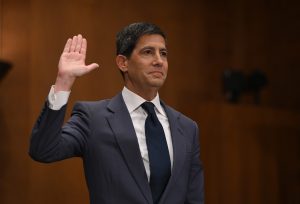
    President Donald Trump has sworn in Kevin Warsh as the new Federal Reserve chair, emphasizing his desire for Warsh to stimulate the economy while also stressing the importance of the Fed's independence. Trump criticized his predecessor, Jerome Powell, for being too hesitant to lower interest rates and expressed confidence that Warsh would prioritize economic growth. Warsh, in turn, pledged to lead a reform-oriented Federal Reserve and believes AI-driven productivity gains can foster growth without increasing inflation, though some Fed officials remain skeptical. AI

    Trump on new Fed Chair Kevin Warsh: ‘Do your own thing’ but don’t lose your way like Jerome Powell did

    IMPACT New Fed Chair Warsh believes AI productivity gains can boost the economy without inflation, potentially influencing interest rate policy.

  4. Federal Reserve may tighten monetary policy due to high inflation

    The Federal Reserve's April monetary policy meeting minutes indicate a potential tightening of monetary policy if inflation remains above target. In other news, Nvidia reported a Q1 net profit of $58.3 billion, and Google CEO Sundar Pichai stated that Gemini has reached 900 million monthly active users. AI

    IMPACT Sets a benchmark for AI product adoption and highlights financial performance in the AI hardware sector.

  5. US bond yields break through 5% defense line, global bond markets see sell-off storm again

    Global bond markets are experiencing a sell-off, with the 30-year US Treasury yield surpassing 5% for the first time since 2007. This surge is occurring just before Kevin Warsh is set to take over as the new Federal Reserve Chair on May 22nd. The market anticipates that controlling inflation will be the Fed's top priority, significantly limiting any immediate interest rate cuts and increasing the likelihood of a rate hike this year. AI

  6. Crude oil drops as US inches towards Iran deal to reopen Strait of Hormuz

    Global oil prices saw a significant drop as the United States and Iran moved closer to a deal that could reopen the Strait of Hormuz. Despite the progress, US President Donald Trump indicated that Washington's blockade would persist until a final agreement is reached, a process that could take several days. Key differences, including Iran's nuclear program and asset freezes, remain unresolved, with Iranian state media suggesting the US is obstructing certain clauses. The conflict, which began in February with US and Israeli attacks on Iran, has disrupted global energy markets and led to millions of barrels of crude supply being shut in. AI

    Crude oil drops as US inches towards Iran deal to reopen Strait of Hormuz

    IMPACT Geopolitical shifts impacting energy markets can indirectly affect AI infrastructure costs and investment.

  7. Federal Reserve Meeting Minutes: Inflation Remains High, Middle East Tensions Increase Uncertainty for US Economic Outlook

    The Federal Reserve's latest meeting minutes reveal concerns about persistent inflation and increased economic uncertainty due to rising global energy prices and Middle East tensions. In other news, Airbnb is expanding its offerings to include grocery delivery, airport transfers, luggage storage, and car rentals, alongside adding thousands of boutique and independent hotels to its platform. Additionally, Airbnb's app will integrate AI features for summarizing reviews, comparing listings, and managing shared itineraries, with these new services rolling out this summer. AI

    IMPACT Airbnb's integration of AI features for review summarization and listing comparison could streamline user decision-making and improve platform efficiency.

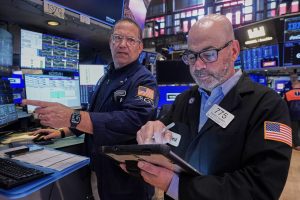
  8. Wall Street has pretty much written off the idea of a Fed rate cut at Kevin Warsh’s first meeting

    Economist Tyler Cowen suggests that the primary societal impact of AI will be a redistribution of status rather than a widespread job loss. He posits that elite professionals, such as lawyers and consultants, may be the biggest losers as their specialized knowledge becomes less valuable. Conversely, individuals adept at initiative and adapting to AI technologies, including those in developing nations, are poised to benefit. AI

    Wall Street has pretty much written off the idea of a Fed rate cut at Kevin Warsh’s first meeting

    IMPACT Discusses the potential societal impact of AI, focusing on status redistribution among professionals.

  9. The market keeps winning. Most Americans are losing faith

    U.S. stock markets experienced their eighth consecutive winning week, with the S&P 500 and Dow Jones Industrial Average showing gains, driven by strong corporate earnings reports from companies like Ross Stores, Estee Lauder, Workday, and Zoom Communications. This market strength contrasts sharply with a University of Michigan survey revealing a record low in U.S. consumer sentiment, indicating widespread economic pessimism. Consumers are particularly concerned about persistent inflation, with expectations for the coming year rising, exacerbated by volatile oil prices due to geopolitical tensions in the Middle East. These inflation worries are also influencing bond yields and mortgage rates, potentially impacting future economic growth and investment in areas like AI data centers. AI

    The market keeps winning. Most Americans are losing faith

    IMPACT High mortgage rates and bond yields may curtail borrowing for AI data centers, impacting economic growth.

  10. AI earnings keep markets soaring, but Fed rate talk and Iran oil talks add a twist. # AI # Markets # Fed # Oil # Zoom

    Major markets are experiencing a surge driven by AI-related company earnings. However, this upward trend is being tempered by discussions around potential Federal Reserve interest rate adjustments and ongoing oil negotiations involving Iran. These factors introduce uncertainty and complexity into the broader economic outlook. AI

    IMPACT AI company earnings are a key indicator of the sector's growth and influence on broader market performance.

  11. Fed leadership change fuels bond pressure, but AI earnings keep hope alive. # FinMonkeys # Markets # AI

    The Federal Reserve's leadership transition is creating pressure on the bond market. However, strong earnings reports from artificial intelligence companies are providing a glimmer of hope amidst the financial uncertainty. This dynamic suggests that while macroeconomic shifts are a concern, the AI sector's performance remains a key driver of market sentiment. AI

    Fed leadership change fuels bond pressure, but AI earnings keep hope alive. # FinMonkeys # Markets # AI

    IMPACT AI sector earnings continue to be a significant factor influencing broader market sentiment and investor confidence.

  12. The Fed’s worst inflation fears may be coming true as consumers lose faith in long-term prices—and even Trump supporters doubt he can bring relief

    Consumers' long-term inflation expectations have significantly increased, reaching 3.9% in May, a worrying sign for the Federal Reserve. This rise, driven by factors like the Iran war and high energy prices, suggests a potential loss of faith in the central bank's ability to control inflation. Fed Governor Chris Waller indicated a willingness to raise interest rates if these expectations become unanchored, shifting his focus from labor market stability to inflation concerns. AI

    The Fed’s worst inflation fears may be coming true as consumers lose faith in long-term prices—and even Trump supporters doubt he can bring relief
  13. Nomura expects the Federal Reserve to keep interest rates unchanged this year

    Nomura Securities now anticipates the Federal Reserve will maintain its interest rates throughout 2026, citing rising inflation and a decreased willingness among Fed officials to lower rates. The firm's analysis suggests that the incoming Fed Chair, Kevin Warsh, may wish to ease monetary policy but faces challenges in convincing the FOMC majority. Separately, Zhejiang Shibao stated on an investor platform that it has no current plans to expand into new industries such as optical modules, data leasing, or AI. AI

    IMPACT Minimal direct impact on AI operators; focuses on macroeconomic forecasts and a company's lack of AI expansion plans.

  14. Battles to shrink the Federal Reserve's balance sheet begin

    Incoming Federal Reserve chair Kevin Warsh faces immediate challenges in his stated goal of shrinking the central bank's substantial balance sheet. The Fed's assets, which ballooned to nearly $9 trillion at their peak, have been a key tool for economic stabilization and stimulus, particularly since the 2008 financial crisis. While Warsh views the large balance sheet as having caused harm and prefers direct rate cuts for broader benefit, reducing it could lead to higher borrowing costs and potential market instability if not managed carefully. AI

    Battles to shrink the Federal Reserve's balance sheet begin
  15. U.S. debt is the ‘elephant in the room’ amid bond market rout as Fed-fueled interest costs could drive even larger deficits, analysts warn

    Analysts at Bank of America are warning that deteriorating U.S. fiscal health is becoming a significant factor in the current bond market selloff, alongside inflation concerns. They note that rising interest costs on the national debt could lead to substantially larger deficits over the next decade. This situation is exacerbated by the bond vigilantes, who are protesting large deficits by selling bonds and driving up yields, with long-term yields reaching levels not seen since the 2008 financial crisis. AI

    U.S. debt is the ‘elephant in the room’ amid bond market rout as Fed-fueled interest costs could drive even larger deficits, analysts warn
  16. ‘I almost fell out of my chair’: Fed stalwart Claudia Sahm fears Kevin Warsh’s policies could undo 20 years of policy progress

    Former Federal Reserve economist Claudia Sahm expressed strong concern over Kevin Warsh's potential policies, particularly his stated skepticism towards forward guidance. Sahm, known for her recession indicator, believes Warsh's views could dismantle two decades of progress in the Fed's communication and transparency efforts. She argued that abandoning forward guidance and the dot plot would reduce accountability and make the Fed appear more political. AI

    ‘I almost fell out of my chair’: Fed stalwart Claudia Sahm fears Kevin Warsh’s policies could undo 20 years of policy progress
  17. Buy now, pay later is the new financial lifeline for lower-income Americans, as consumer loans pile up to $19 trillion

    Buy now, pay later services have become a crucial financial tool for lower-income Americans, with over half of the population having used them. These installment plans, initially intended for convenience, are increasingly being used out of necessity due to widespread financial strain. While offering a way to spread costs, missed payments can incur significant fees and may eventually impact credit scores as data integration progresses. AI

    Buy now, pay later is the new financial lifeline for lower-income Americans, as consumer loans pile up to $19 trillion
  18. Forget tariffs and the Iran oil shock—a top economist says the Fed is blind to the real inflation threat

    A top economist argues that the Federal Reserve is overlooking the primary driver of current inflation. He identifies aggregate demand, rather than supply chain disruptions or geopolitical events like oil shocks, as the core issue. This perspective suggests that current monetary policy might be misaligned with the actual causes of rising prices. AI

    Forget tariffs and the Iran oil shock—a top economist says the Fed is blind to the real inflation threat
  19. Most Fed officials see rate hikes if inflation stays high, minutes show

    A majority of Federal Reserve officials indicated a willingness to raise interest rates if inflation persists above the 2% target, according to minutes from the April policy meeting. This sentiment suggests a potential shift towards tighter monetary policy, influenced by factors like the Iran war and rising energy prices. Meanwhile, Fed Chair Jerome Powell announced he will remain a governor for an undetermined period, citing concerns about political interference and the Fed's independence, a move that deviates from modern tradition and denies President Trump an immediate board vacancy. AI

    Most Fed officials see rate hikes if inflation stays high, minutes show

    IMPACT Potential for tighter monetary policy could impact tech sector investment and AI development funding.