PulseAugur / Brief
EN
LIVE 01:20:43

Brief

last 24h
[8/8] 222 sources

Multi-source AI news clustered, deduplicated, and scored 0–100 across authority, cluster strength, headline signal, and time decay.

  1. Build a Book Recommendation Engine with Python and FastAPI

    This article provides a detailed, step-by-step tutorial on constructing a book recommendation engine. It focuses on implementing a content-based filtering approach using Python and the FastAPI framework. The guide aims to equip readers with the practical skills to build such a system. AI
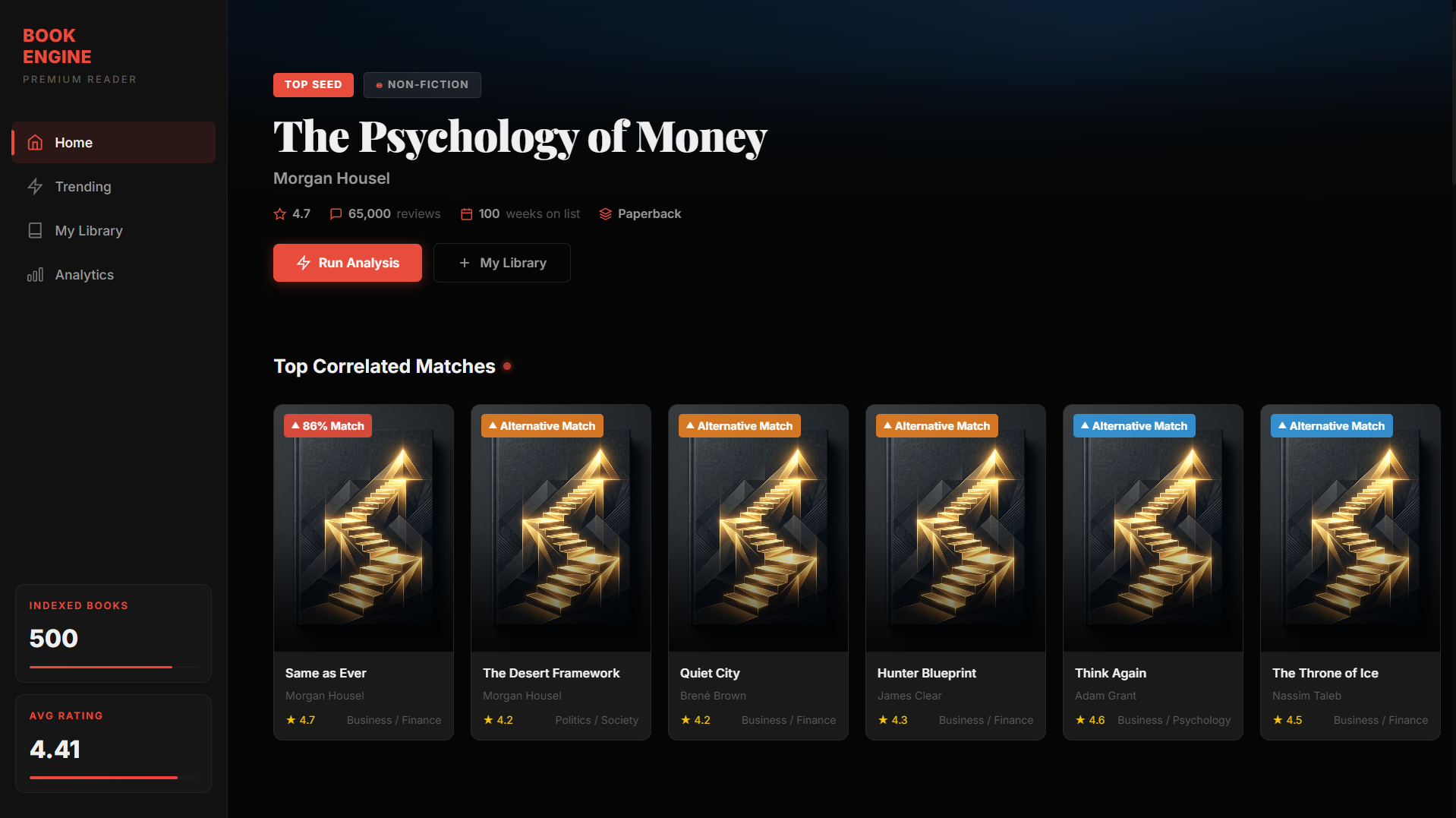
    Build a Book Recommendation Engine with Python and FastAPI

    IMPACT Provides a practical guide for developers to build recommendation systems, a common application of AI.
  2. The File Modification Boundary We Found After 12 ForgeFlow Projects

    After completing 12 projects using the ForgeFlow system, the developers identified a critical file modification boundary. Tasks involving the creation of new files were consistently successful, but attempts to modify existing code resulted in a deadlock loop. This pattern persisted across multiple runs and backend configurations, suggesting a limitation in how the system handles iterative code changes. The team concluded that restructuring tasks to minimize modifications to existing files was a more practical solution than attempting to force the system to overcome this limitation. AI

    IMPACT Identifies a potential limitation in current LLM-based coding assistants when modifying existing codebases, suggesting a need for task restructuring.

  3. From Zero to Production: A Secure & Optimized Dockerfile for FastAPI

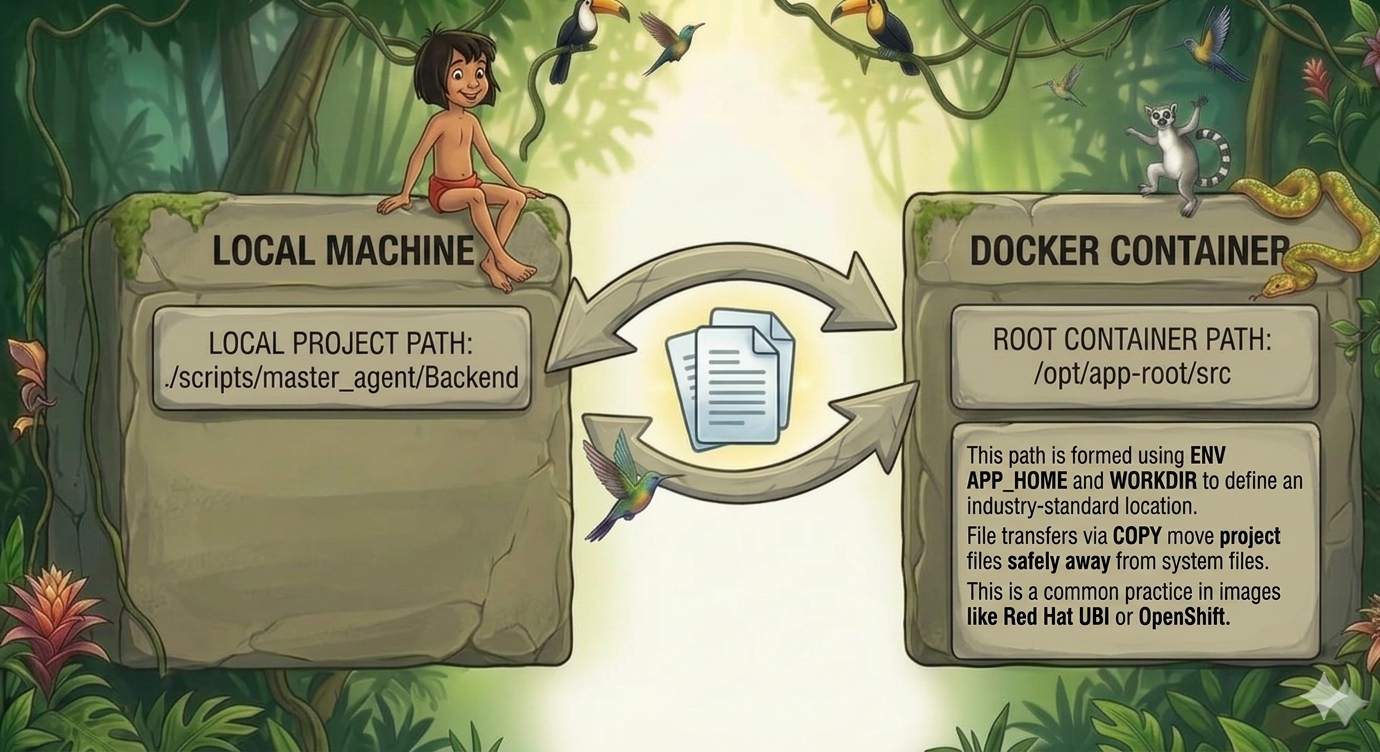
    This article provides a guide on creating a secure and optimized Dockerfile for FastAPI applications. It focuses on best practices for building efficient containers, aiming to improve the development and deployment workflow for Python APIs. AI

    From Zero to Production: A Secure & Optimized Dockerfile for FastAPI

    IMPACT Provides best practices for deploying Python APIs, which can include AI/ML models.

  4. HarnessAPI: A Skill-First Framework for Unified Streaming APIs and MCP Tools

    Researchers have developed HarnessAPI, a Python framework designed to streamline the creation of tools for AI agents and traditional HTTP clients. This framework uses a typed skill folder as the single source of truth, automatically generating both a streaming HTTP endpoint with Server-Sent Events and an MCP tool registration for agent runtimes like Claude and Cursor. HarnessAPI aims to eliminate code duplication and ensure consistency between the two representations, reducing boilerplate code by 74% in tested scenarios. AI

    IMPACT Simplifies development for AI agents by unifying tool creation and API endpoints.

  5. I Thought Fine-Tuning LLMs Needed Expensive GPUs. I Was Wrong.

    Developers can fine-tune large language models like TinyLlama on consumer hardware with as little as 3 GB of GPU memory using techniques such as QLoRA and NF4 quantization. This process involves training only a small fraction of the model's parameters, significantly reducing computational requirements. The process can be complex, with challenges arising from debugging, prompt formatting, and dependency management, but offers a path for solo developers to build sophisticated AI applications. AI

    I Thought Fine-Tuning LLMs Needed Expensive GPUs. I Was Wrong.

    IMPACT Enables solo developers and smaller teams to fine-tune advanced LLMs, democratizing AI development and deployment.

  6. CVE-2026-45829: A critical RCE in ChromaDB affects 73% of exposed servers, allowing unauthenticated remote code execution via its FastAPI server. # Cybersecurit

    A critical remote code execution vulnerability, dubbed "ChromaToast" (CVE-2026-45829), has been discovered in ChromaDB, a popular vector database for AI applications. This flaw allows unauthenticated attackers to hijack servers, potentially leading to the poisoning of AI agents' long-term memory. The vulnerability, present since version 1.0.0, affects a significant portion of internet-exposed instances, with 73% identified as at risk. AI

    CVE-2026-45829: A critical RCE in ChromaDB affects 73% of exposed servers, allowing unauthenticated remote code execution via its FastAPI server. # Cybersecurit

    IMPACT This critical vulnerability in ChromaDB could lead to the compromise of AI systems, potentially corrupting their memory and enabling malicious control.

  7. How We Solved the Hidden Problem of Cheap LLMs

    Two developers describe building sophisticated AI systems using Cascadeflow and Hindsight to overcome limitations of basic LLM applications. One created an auditable product intelligence pipeline for synthesizing customer feedback, using Cascadeflow for a structured, multi-stage evaluation and Hindsight for tracking sentiment over time. The other built a creator relationship memory system, employing Cascadeflow for intelligent model routing based on comment complexity and intent, and Hindsight for personalized follower memory. AI

    How We Solved the Hidden Problem of Cheap LLMs

    IMPACT These systems demonstrate advanced techniques for managing LLM interactions, improving reliability and cost-effectiveness in AI applications.

  8. coding is basically solved for the boring 90% of tasks

    A user reported successfully using AI models to refactor a large FastAPI service with minimal human input, costing only $3. The process involved using cheaper, open-weight models like DeepSeek V4 and Tencent's Hunyuan Hy3 for the bulk of the work, which were also faster than Anthropic's Claude Opus. However, the AI did introduce a deadlock, highlighting that complex or critical tasks still require human oversight. AI

    IMPACT Demonstrates the increasing capability of AI in code refactoring, though highlights remaining challenges with complex tasks and potential for introducing errors.