PulseAugur / Brief
EN
LIVE 11:15:33

Brief

last 24h
[10/10] 221 sources

Multi-source AI news clustered, deduplicated, and scored 0–100 across authority, cluster strength, headline signal, and time decay.

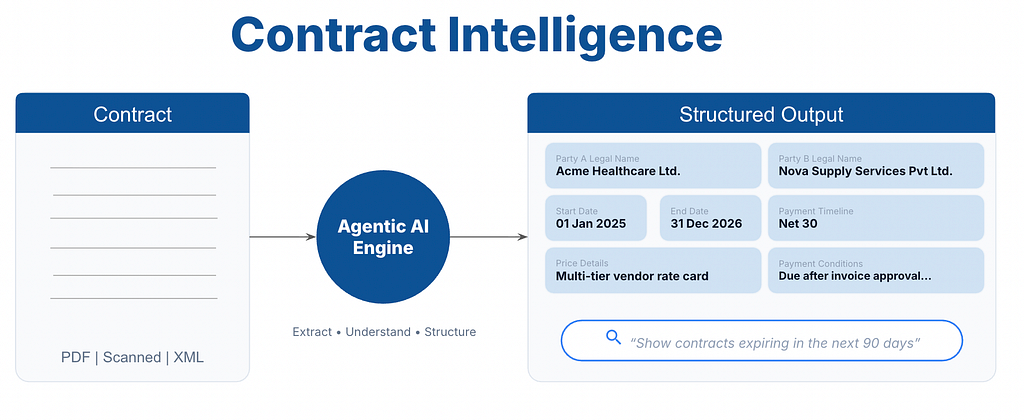
  1. Build an AI Contract Intelligence System: OCR + Hybrid RAG + LangGraph to Extract Key Terms…

    This article details how to build an AI-powered system for contract intelligence, automating the extraction of key terms from various document formats. The system utilizes a combination of Optical Character Recognition (OCR) with PaddleOCR, hybrid retrieval methods like FAISS and BM25, and the GPT-4o model within a LangGraph pipeline. This approach aims to transform unstructured contract data into structured reports, addressing issues like missed deadlines, financial leakage, and compliance risks. AI
    Build an AI Contract Intelligence System: OCR + Hybrid RAG + LangGraph to Extract Key Terms…

    IMPACT Enables automated extraction of critical information from contracts, improving efficiency and reducing risks for legal, finance, and operations teams.
  2. Understanding LangChain, LangGraph, RAG, and MCP

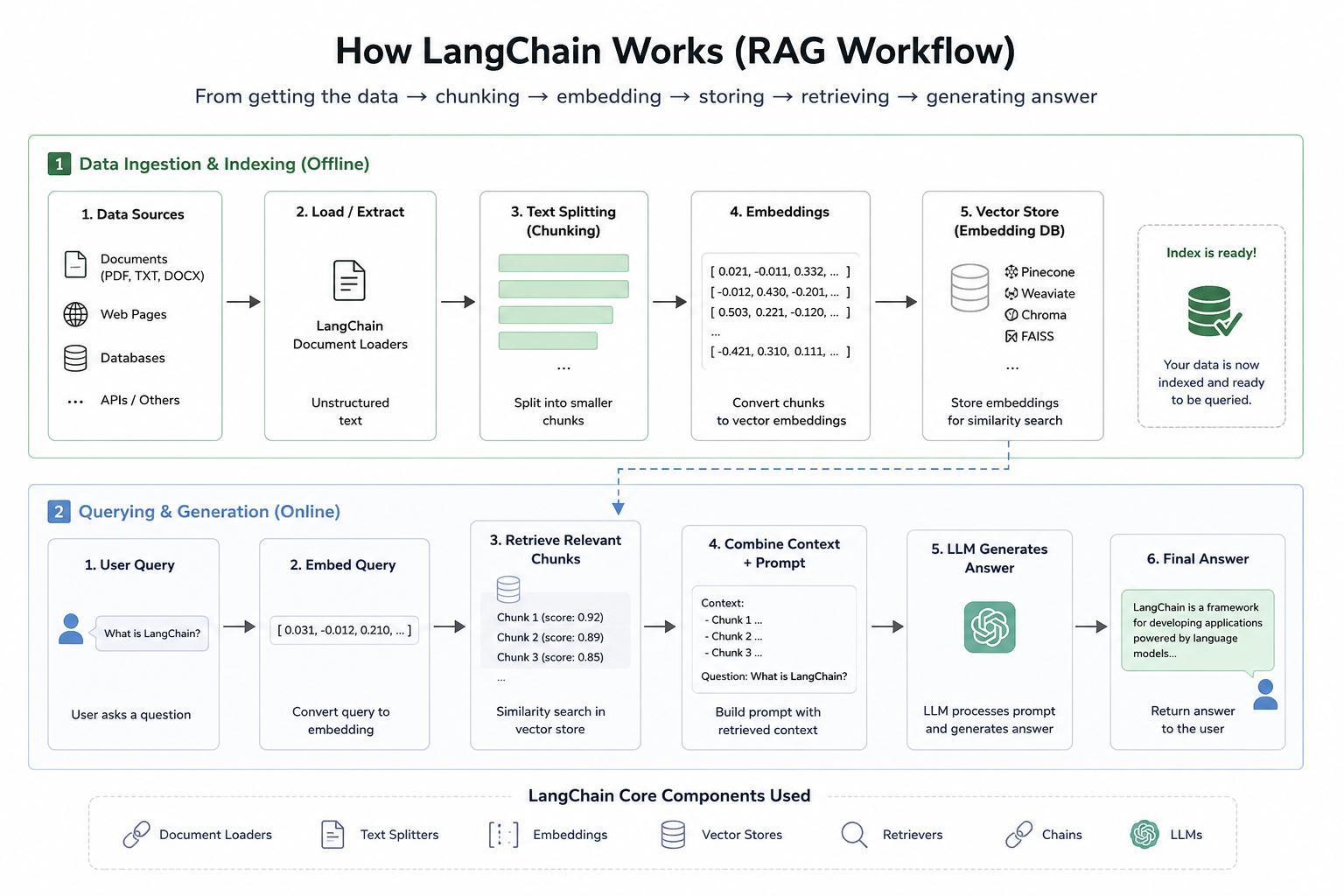
    Multiple dev.to articles detail how to build AI agents using LangGraph, a workflow system from LangChain. The posts provide templates for common agent patterns, including Retrieval-Augmented Generation (RAG) for document querying, multi-tool agents that can plan and execute tasks, and human-in-the-loop workflows requiring user review. These templates illustrate LangGraph's architecture with nodes, edges, and state management for creating complex, stateful AI applications. AI

    Understanding LangChain, LangGraph, RAG, and MCP

    IMPACT Provides practical templates and code examples for building complex AI agents, accelerating development for RAG, multi-tool, and human-in-the-loop applications.

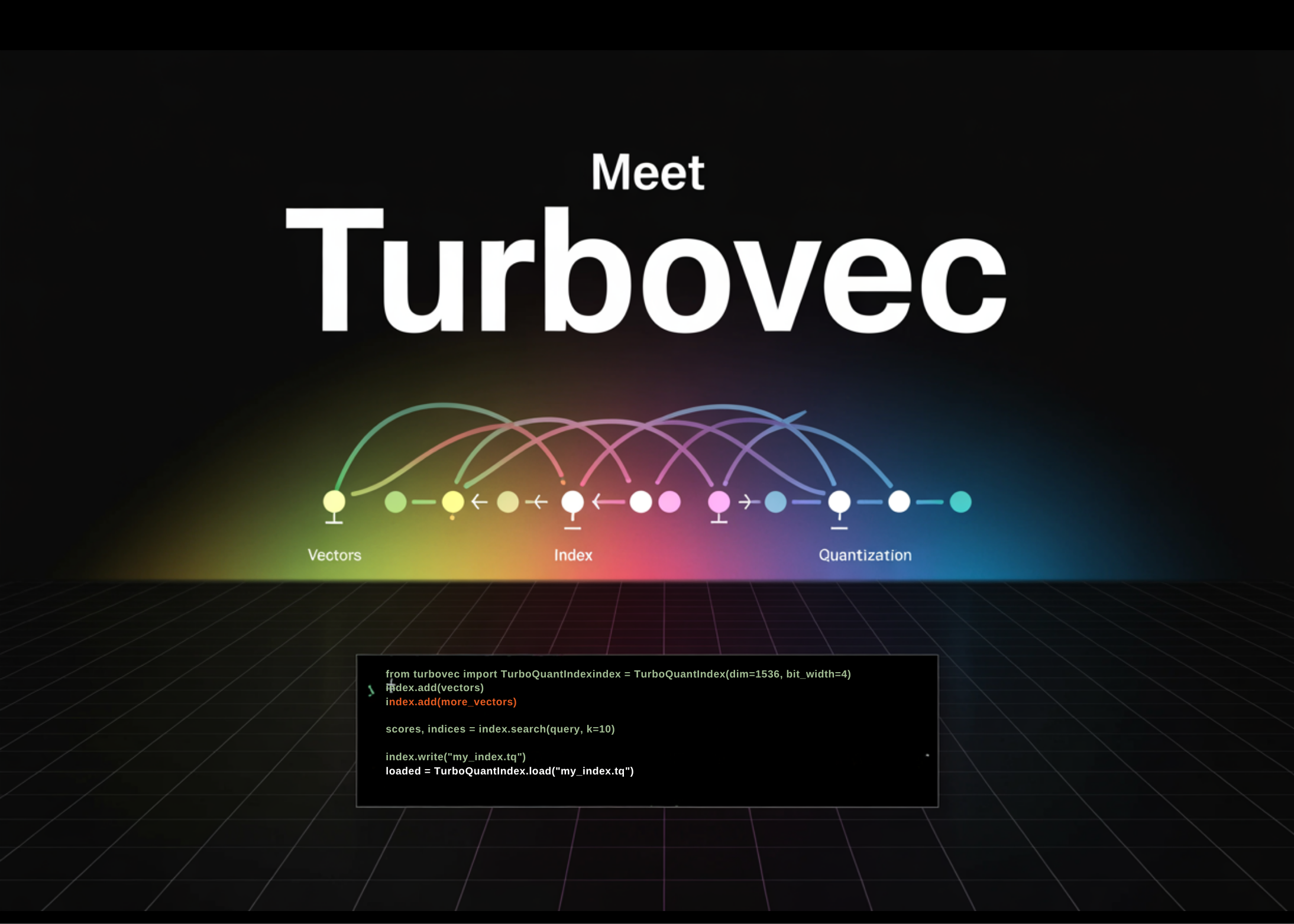
  3. Meet Turbovec: A Rust Vector Index with Python Bindings, and Built on Google’s TurboQuant Algorithm

    Turbovec is a new open-source vector index library written in Rust with Python bindings, designed to reduce the memory footprint of vector embeddings for AI applications. It utilizes Google's TurboQuant algorithm, a data-oblivious quantizer that achieves significant compression without requiring a training phase. This approach allows for substantial memory savings, fitting 10 million document embeddings into 4 GB of RAM compared to the 31 GB typically needed for float32 storage, while maintaining competitive search speeds and recall rates. AI

    Meet Turbovec: A Rust Vector Index with Python Bindings, and Built on Google’s TurboQuant Algorithm

    IMPACT Reduces memory requirements for vector embeddings, potentially lowering costs and enabling local inference for RAG applications.

  4. I Spent 6 Months Fixing RAG. Here's What I Found (And Built)

    A developer spent six months debugging a Retrieval-Augmented Generation (RAG) system for document Q&A, identifying two key failure modes: semantic drift in query reformulation and context poisoning by irrelevant but similar chunks. To address these issues, they developed a new framework called VORTEXRAG, featuring a seven-layer architecture. Key innovations include Tri-Vector Encoding for richer embeddings, Vortex Retrieval Cone for improved document ranking, and a Semantic Drift Corrector to maintain query intent across multiple hops. AI

    I Spent 6 Months Fixing RAG. Here's What I Found (And Built)

    IMPACT This new framework offers a potential solution to common RAG system failures, which could improve the reliability of document Q&A and other LLM applications.

  5. Precision RAG: Fixing Citations & Hallucinations for Stronger Developer OKRs

    A developer detailed a sophisticated Parent-Child RAG pipeline on GitHub, which, despite its advanced components like hybrid vector stores and LangGraph, suffered from inaccurate citations and hallucinations. The core issue identified was a misalignment between the retrieval units (child chunks), generation units (parent documents), and citation units, leading to incorrect page references. The proposed solution involves pre-capturing granular page references from child chunks and associating them with the expanded parent documents used for generation to ensure citation accuracy. AI

    Precision RAG: Fixing Citations & Hallucinations for Stronger Developer OKRs

    IMPACT Addresses a common challenge in RAG systems, improving the reliability of AI-generated citations and reducing hallucinations.

  6. Evaluation of Chunking Strategies for Effective Text Embedding in Low-Resource Language on Agricultural Documents

    Researchers evaluated four text chunking strategies for a Retrieval-Augmented Generation (RAG) framework using Khmer agricultural documents. The study found that a character-based Recursive chunking method, with a chunk size of 300 characters, performed best. This approach achieved the lowest L2 distance and highest Answer Relevance and Khmer Intersection over Union scores, demonstrating significant improvement over sentence-based methods. AI

    IMPACT Improves RAG performance for low-resource languages, potentially enabling better information access in specialized domains.

  7. Building KernelMind Part 2: Hybrid Retrieval, Reranking, and Actually Retrieving Useful Code

    The KernelMind project is detailing its development process, focusing on improving its code retrieval and evaluation capabilities. Early versions struggled with subjective evaluation, prompting the creation of a benchmark suite grounded in the actual repository to measure performance objectively. Ablation tests revealed that graph expansion significantly improved recall for workflow reconstruction, despite a slight decrease in precision, indicating its value in understanding repository logic. AI

    Building KernelMind Part 2: Hybrid Retrieval, Reranking, and Actually Retrieving Useful Code

    IMPACT Details the engineering challenges and solutions for building a robust code retrieval system, offering insights into practical LLM application development.

  8. Vector RAG vs LLM-Compiled Wiki: A Preregistered Comparison on a Small Multi-Domain Research

    A new research paper compares Vector Retrieval-Augmented Generation (RAG) against an LLM-compiled wiki for answering questions over a small corpus of 24 research papers. While the wiki excelled at synthesizing information across multiple documents, RAG performed better on single-fact lookups and overall groundedness. Exploratory analyses revealed the wiki offered stronger claim-level citation support, but a modified RAG approach could match the wiki's cross-paper synthesis capabilities at a lower cost. The study concludes that effective research synthesis involves distinct capabilities like evidence organization, citation accuracy, and cost-efficiency, with no single architecture excelling in all areas. AI

    Vector RAG vs LLM-Compiled Wiki: A Preregistered Comparison on a Small Multi-Domain Research

    IMPACT Compares RAG and LLM-compiled wikis for research synthesis, highlighting trade-offs in cost, accuracy, and synthesis capabilities.

  9. Building RAG Systems: A Complete Guide

    Retrieval-Augmented Generation (RAG) systems are a crucial technique for enhancing Large Language Models (LLMs) by allowing them to access and utilize external, up-to-date information. RAG addresses LLM limitations such as knowledge cutoffs and context window limits by retrieving relevant data before generating a response. This approach is distinct from fine-tuning, which modifies the model's behavior rather than its knowledge base. Building a RAG system involves two main pipelines: an ingestion pipeline for preparing and storing data, and a retrieval pipeline that fetches context for each user query. AI

    Building RAG Systems: A Complete Guide

    IMPACT Enables LLMs to provide more accurate, up-to-date, and domain-specific answers by integrating external knowledge bases.

  10. Replit + Weights & Biases: Building a RAG Bot

    Weights & Biases has developed an AI-powered assistant called WandBot to help users navigate its documentation and code examples. This retrieval-augmented generation (RAG) bot utilizes OpenAI's GPT-4 for its intelligence, combined with Cohere embeddings and a FAISS vector store for efficient information retrieval. WandBot is integrated with platforms like Discord, Slack, and ChatGPT, and is hosted on Replit for seamless deployment and scalability. AI

    Replit + Weights & Biases: Building a RAG Bot

    IMPACT Enhances developer productivity by providing instant, context-aware support for AI tools and documentation.