PulseAugur / Brief
EN
LIVE 23:49:33

Brief

last 24h
[21/21] 221 sources

Multi-source AI news clustered, deduplicated, and scored 0–100 across authority, cluster strength, headline signal, and time decay.

  1. We built a scripting language just for AI agents. Here's why.

    Developers created a new lightweight scripting language called Autolang to address the security risks associated with AI agents executing arbitrary code. Autolang operates as a restricted virtual machine, allowing AI agents to only call functions explicitly registered by the developer, thereby preventing unauthorized access to file systems or operating system commands. This approach offers a more secure and resource-efficient alternative to traditional sandboxing methods like Docker, especially for applications running numerous concurrent agents that execute short, frequent scripts. AI

    IMPACT Provides a more secure and resource-efficient way to run AI agent code, reducing risks of unintended data access or system manipulation.

  2. Docker Layer Caching Is Broken in Your ML Project

    This article highlights a common inefficiency in MLOps workflows where Docker layer caching fails during model updates. This leads to lengthy CI rebuild times, wasting significant developer time with each iteration. The author aims to explain why this caching mechanism breaks and how to address it. AI

    Docker Layer Caching Is Broken in Your ML Project

    IMPACT Addresses a common inefficiency in ML development workflows, potentially saving significant time in CI/CD pipelines.

  3. Let Copilot handle your local Azure setup via MCP

    GitHub Copilot can now manage local Azure development environments through the Model Context Protocol (MCP). This protocol allows Copilot to interact with tools and receive structured data, enabling it to provision resources like Key Vaults and Service Bus namespaces. The MCP server, developed by Topaz, facilitates this by acting as an intermediary between Copilot and local Azure emulators, with specific Docker networking configurations required for seamless operation. AI

    IMPACT Enhances developer productivity by automating complex cloud environment setup within the coding workflow.

  4. Open WebUI: Your Local ChatGPT

    Open WebUI is a new self-hosted interface designed to provide a ChatGPT-like experience for local large language models. It offers features such as document chat via RAG, image generation integration, voice input, and multi-user support. The tool is easily installable via Docker or pip and connects to Ollama, ensuring user data remains on their local machine. AI

    Open WebUI: Your Local ChatGPT

    IMPACT Provides a user-friendly interface for local LLM deployments, enhancing accessibility for RAG and other advanced features.

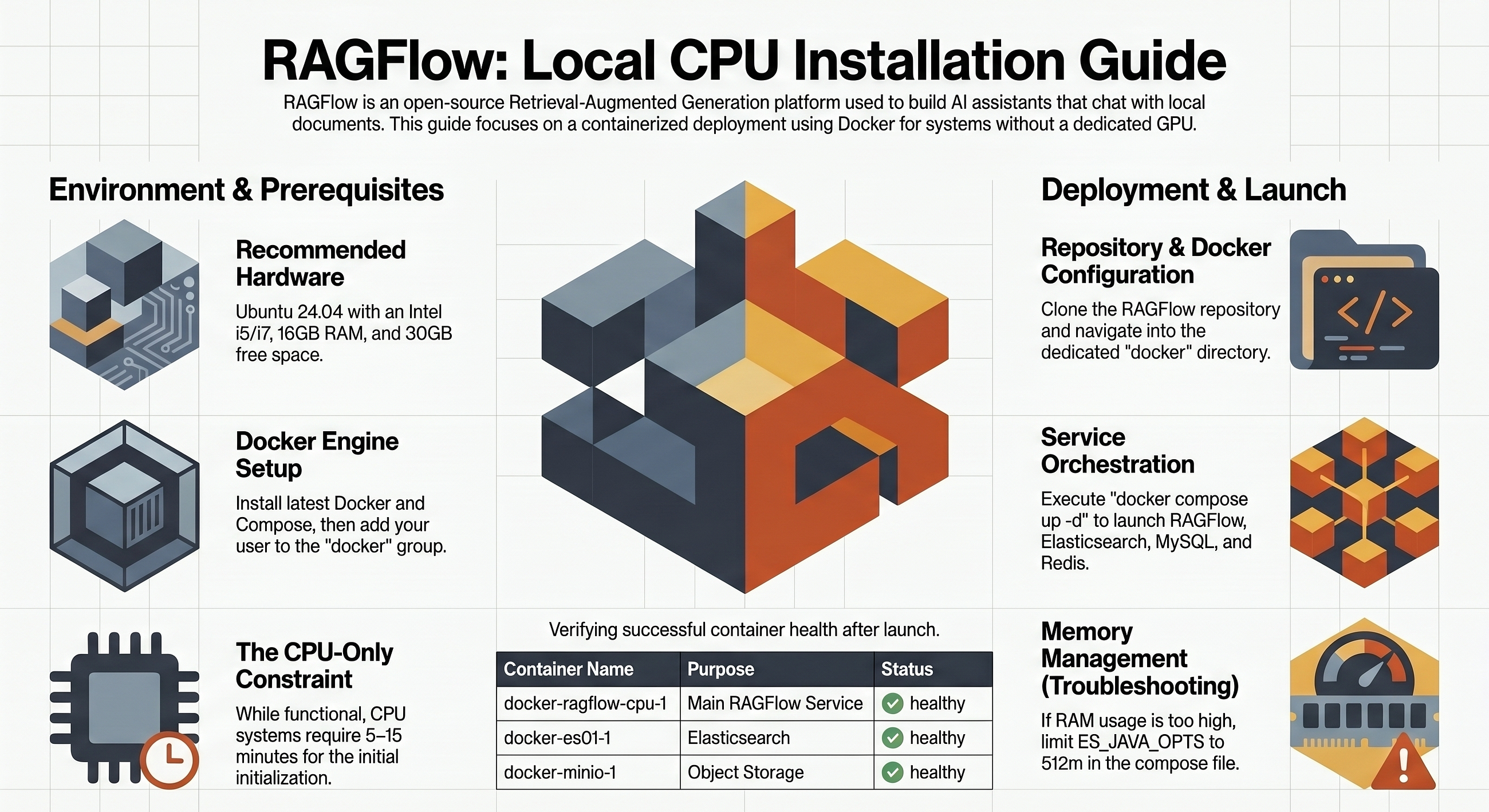
  5. Your Documents Shouldn’t Need the Internet to Be Searchable

    This article details how to build a private AI assistant that can search your documents without an internet connection. It guides users through setting up a local system using Docker, enabling document indexing and retrieval capabilities on their own hardware. The process aims to provide a secure and private way to interact with personal data using AI. AI

    Your Documents Shouldn’t Need the Internet to Be Searchable

    IMPACT Enables users to create personalized AI tools for document management, enhancing personal productivity and data privacy.

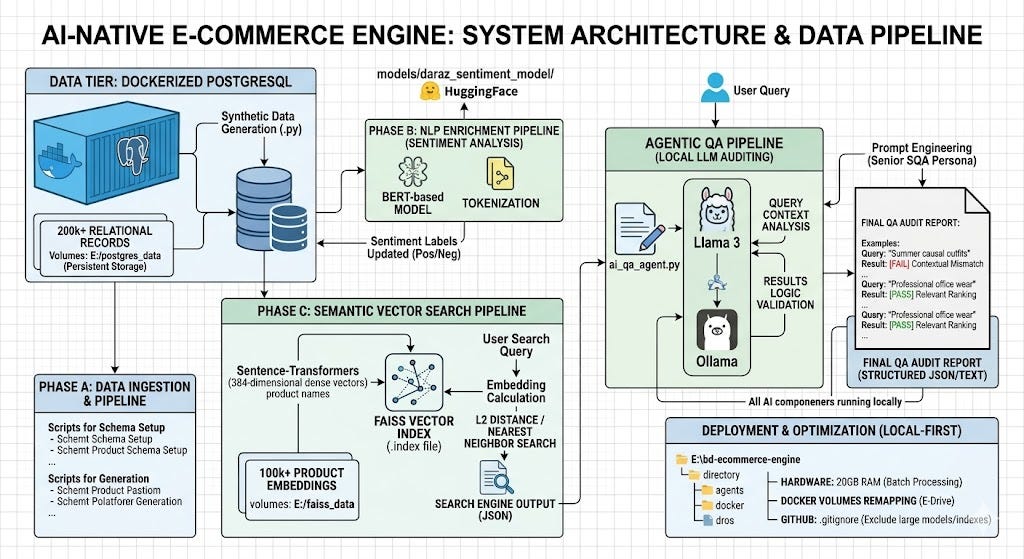
  6. I Built a Production-Grade AI Search Engine on a 20GB Laptop (No Cloud Required)

    An individual developed a production-grade AI-powered e-commerce search engine that operates entirely on a consumer laptop with 20GB of RAM, eliminating the need for cloud services. This system addresses the limitations of traditional keyword-based search by integrating NLP sentiment analysis and semantic vector search. It utilizes a Llama 3 8B model for autonomous auditing of search results, demonstrating that advanced AI capabilities can be achieved without substantial hardware or cloud infrastructure. AI

    I Built a Production-Grade AI Search Engine on a 20GB Laptop (No Cloud Required)

    IMPACT Demonstrates feasibility of advanced AI search on consumer hardware, potentially lowering barriers for localized AI applications.

  7. NanoClaw creator turns down $20M buyout offer, raises $12M seed instead

    NanoCo, the developer of the security-focused AI tool NanoClaw, has secured $12 million in seed funding after a rapid viral launch. The company declined a $20 million acquisition offer, opting instead to build out its open-source project. The funding round was led by Valley Capital Partners and included investments from notable tech figures and companies. NanoClaw's popularity surged following endorsements from AI researcher Andrej Karpathy and Singapore's foreign minister, leading to significant community growth and early enterprise adoption. AI

    NanoClaw creator turns down $20M buyout offer, raises $12M seed instead

    IMPACT Accelerates adoption of secure AI agent tooling and validates community-driven open-source development models.

  8. Your Personal AI Stack Is the New Dotfiles

    The author argues that individual developers are adopting AI tools and building personal workflows faster than large organizations can implement official policies. This mirrors historical tech adoption patterns, where power users embraced tools like Git and Slack years before they became enterprise standards. The article suggests that a "personal AI stack," including persistent memory, custom hooks, and reusable commands, is key to individual productivity and will likely precede formal enterprise AI rollouts. AI

    IMPACT Highlights how individual developers are shaping AI tool usage, potentially influencing future enterprise strategies and tool development.

  9. Built a framework-zero proxy to stop Cursor from burning tokens on boilerplate

    A developer has created BlankLogic.io, a local proxy engine designed to reduce token costs for AI agents when processing large codebases. The tool strips out framework boilerplate and redundant dependencies before sending code to AI models like Cursor and Claude Code. This approach aims to keep the AI's context focused on essential logic, thereby lowering expenses associated with extensive code analysis. AI

    IMPACT Reduces operational costs for AI developers by optimizing token usage for code analysis.

  10. SepsisAI Orchestrator: A Containerized and Scalable Platform for Deploying AI Models and Real-Time Monitoring in Early Sepsis Detection

    Researchers have developed an open-source platform called SepsisAI Orchestrator to streamline the deployment of AI models for early sepsis detection in clinical settings. The platform addresses challenges like data heterogeneity and the gap between research prototypes and hospital environments. It integrates data preprocessing, a LightGBM classifier served via APIs, and a clinical dashboard, all orchestrated using Docker and Kubernetes. Performance testing revealed a specific optimal replica count for host CPUs to minimize latency and avoid request failures, a finding not previously quantified for clinical AI inference. AI

    IMPACT Provides a scalable infrastructure solution to bridge the gap between AI model development and real-world clinical application for sepsis detection.

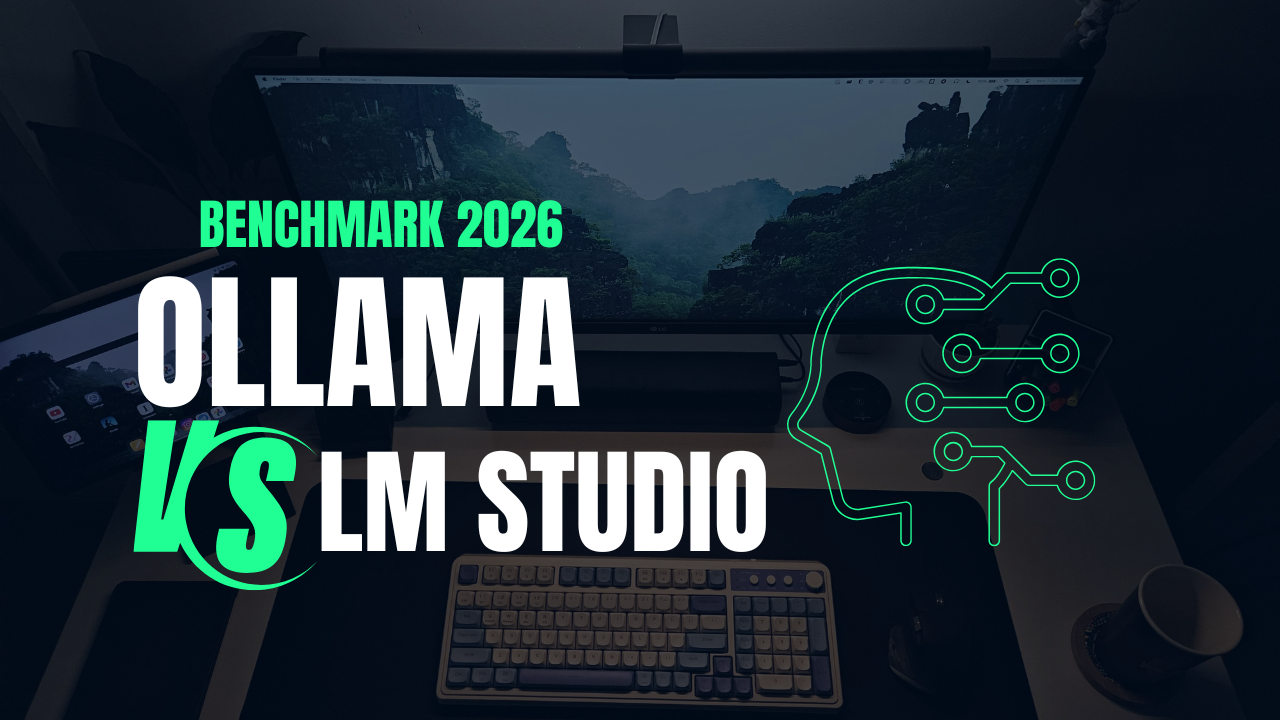
  11. Thinking about running AI models like Llama 3, Qwen, or Mistral on your own computer? Two of the best local AI tools in 2026 are Ollama and LM Studio. Both tool

    Creators are increasingly adopting local AI solutions in 2026, moving away from cloud-based services for benefits like unlimited usage, enhanced privacy, faster workflows, and lower long-term costs. Tools such as Ollama, LM Studio, and Open-WebUI are making it easier for beginners to run powerful open-source models like Llama 3, Qwen, and Mistral directly on their personal computers. This shift offers users full control over their data and content creation processes, with some even developing portable AI solutions that run entirely offline from a USB stick. AI

    Thinking about running AI models like Llama 3, Qwen, or Mistral on your own computer? Two of the best local AI tools in 2026 are Ollama and LM Studio. Both tool

    IMPACT Accelerates adoption of personal AI infrastructure, offering cost-effective and private alternatives to cloud-based LLM services.

  12. 🐧 Mailu – self-hosted mail server stack Mailu is a self-hosted mail server stack delivered as a set of Docker images. The post Mailu – self-hosted mail server s

    Mailu is a self-hosted mail server solution that is distributed as a collection of Docker images. This stack aims to provide a comprehensive mail server setup that users can manage on their own infrastructure. AI

    IMPACT This is a self-hosted mail server solution, not directly related to AI development or impact.

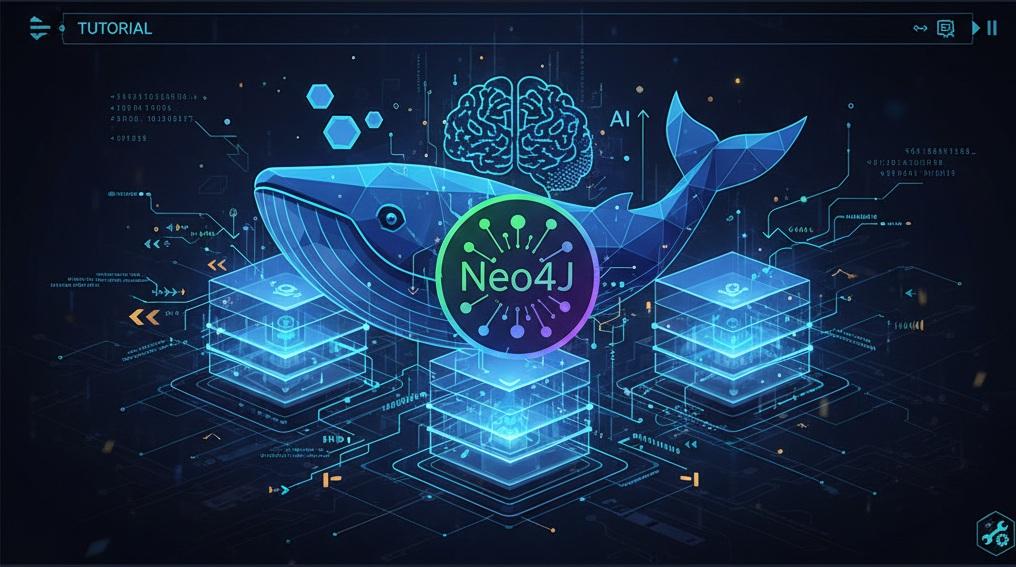
  13. I have published a tutorial on YouTube for installing Neo4J in Docker. Neo4J is quite popular in the field of Artificial Intelligence. https:// youtu.b

    A YouTube tutorial demonstrates the installation of Neo4j within a Docker environment. The video highlights Neo4j's significant role and popularity within the field of Artificial Intelligence. The creator also notes that the accompanying image for the video was generated using AI. AI

    I have published a tutorial on YouTube for installing Neo4J in Docker. Neo4J is quite popular in the field of Artificial Intelligence. https:// youtu.b
  14. MLOps in Plain English: What It Is, What It Actually Looks Like, and Why Most Teams Get It Wrong

    MLOps is gaining prominence as the critical discipline for deploying and maintaining machine learning models in production. While model training was once the primary focus, the operational aspects of MLOps are now considered more vital for real-world AI applications. This includes strategies for deployment, serving, and managing models, with specific attention to the unique challenges of Large Language Models (LLMs) compared to traditional ML models. Various tools and architectures, such as those utilizing Docker, Flask, AWS, and MLflow, are essential for building robust MLOps pipelines. AI

    MLOps in Plain English: What It Is, What It Actually Looks Like, and Why Most Teams Get It Wrong

    IMPACT Highlights the growing importance of operationalizing AI models, emphasizing the need for robust deployment and maintenance strategies.

  15. Show HN: AI-powered web service combining FastAPI, Pydantic-AI, and MCP servers

    A developer has created an open-source AI-powered web service that integrates FastAPI for APIs, Pydantic-AI for agent construction, and Model Context Protocol (MCP) servers for tools. The service allows users to query information from sources like Hacker News and web search, presenting ranked trend cards with summaries. It supports various local LLM configurations and is containerized with Docker for production deployment. AI

    Show HN: AI-powered web service combining FastAPI, Pydantic-AI, and MCP servers

    IMPACT Provides a template for building production-ready AI services with modular components and local LLM support.

  16. Escaping Dirty Pipe (a.k.a. CVE-2022-0847), mostly unscathed

    Replit has detailed its experience with the critical Dirty Pipe (CVE-2022-0847) Linux kernel vulnerability. While the exploit's most severe aspect, privilege escalation, was mitigated by Replit's security configurations, it was still possible to overwrite shared files within containers. This could have allowed a malicious user to modify system binaries, impacting other users on the same machine. Replit successfully patched the issue by updating its kernel, narrowly avoiding a significant security incident. AI

    Escaping Dirty Pipe (a.k.a. CVE-2022-0847), mostly unscathed

    IMPACT Mitigation of a critical Linux kernel vulnerability prevented potential disruption to a platform used by software creators.

  17. Make a Multiplayer Game with Kaboom.js and Heroic Labs

    This tutorial demonstrates how to create a multiplayer game using the Kaboom.js JavaScript library within the Replit in-browser IDE. It leverages Heroic Labs' Nakama, an open-source game server, to manage user sessions and real-time communication between players. The guide covers setting up the Nakama server via Docker and integrating it with the Replit environment to enable features like match creation and player updates. AI

    Make a Multiplayer Game with Kaboom.js and Heroic Labs

    IMPACT Provides a guide for developers on integrating existing tools for game development, with no direct AI advancement.

  18. Dynamic version for Nix derivations

    Replit is migrating its development environments from Docker to Nix to improve tooling deployment speed and reduce image size. While Docker provides containerization for reproducible environments, it has limitations in ensuring reproducible builds and composing multiple images. Nix, a package and configuration manager, offers a more robust approach to reproducible builds by isolating dependencies and configurations, though it requires careful version management for its derivations. AI

    IMPACT Replit's migration to Nix could streamline development workflows and improve the efficiency of deploying tools within their platform, potentially benefiting users who rely on these environments.

  19. Introducing the Python package cache

    Replit has introduced a Python package cache to significantly speed up dependency installation for its users. This new feature, called the Universal Package Manager (UPM), pre-populates popular Python packages into pip's cache, reducing download and compilation times. By using an Overlay Filesystem, Replit ensures that the shared cache is read-only and each repl has an independent, copy-on-write view, preventing cache pollution. This optimization has led to an average reduction of approximately 40% in package installation time for Python repls. AI

    IMPACT Improves developer experience for coding projects, indirectly supporting AI development workflows.

  20. Killing Containers at Scale

    Replit has significantly improved its platform's stability by addressing slow container shutdowns on preemptible virtual machines. The company identified that Docker container termination was taking an average of 20 seconds, far exceeding the 30-second shutdown window for VMs and causing user repls to become inaccessible. By optimizing the `docker kill` process, Replit reduced its session connection error rate from 3% to under 0.5% and decreased the 99th percentile session boot time from two minutes to 15 seconds. AI

    Killing Containers at Scale

    IMPACT Improved platform stability for a coding environment, potentially enhancing user experience and reliability.

  21. Learning Devops & AWS on the Job: Building and Scaling a Service

    The founder of Replit details his journey learning DevOps and AWS by building and scaling the company's code execution service. Initially, he relied on simple EC2 instances, but as the service grew, he encountered issues with single points of failure and the limitations of vertical scaling. This led to the adoption of horizontal scaling using AMIs and Elastic Load Balancers to manage multiple instances, eventually moving to Application Load Balancers for better WebSocket support. AI

    IMPACT Provides insights into scaling cloud infrastructure, relevant for AI operators managing distributed systems.