PulseAugur / Brief
EN
LIVE 14:42:10

Brief

last 24h
[2/2] 222 sources

Multi-source AI news clustered, deduplicated, and scored 0–100 across authority, cluster strength, headline signal, and time decay.

  1. Before the Pod Starts: GPU Node Setup for LLMs on Kubernetes

    This article details the complex process of preparing GPU nodes for large language models (LLMs) within a Kubernetes environment. It emphasizes that simply adding GPUs to a node is insufficient, as Kubernetes needs specific information about the hardware and software stack to make optimal placement decisions. The piece outlines essential components like NVIDIA drivers, CUDA compatibility, the NVIDIA Container Toolkit, and device plugins, highlighting how these details influence scheduling and model deployment success. AI
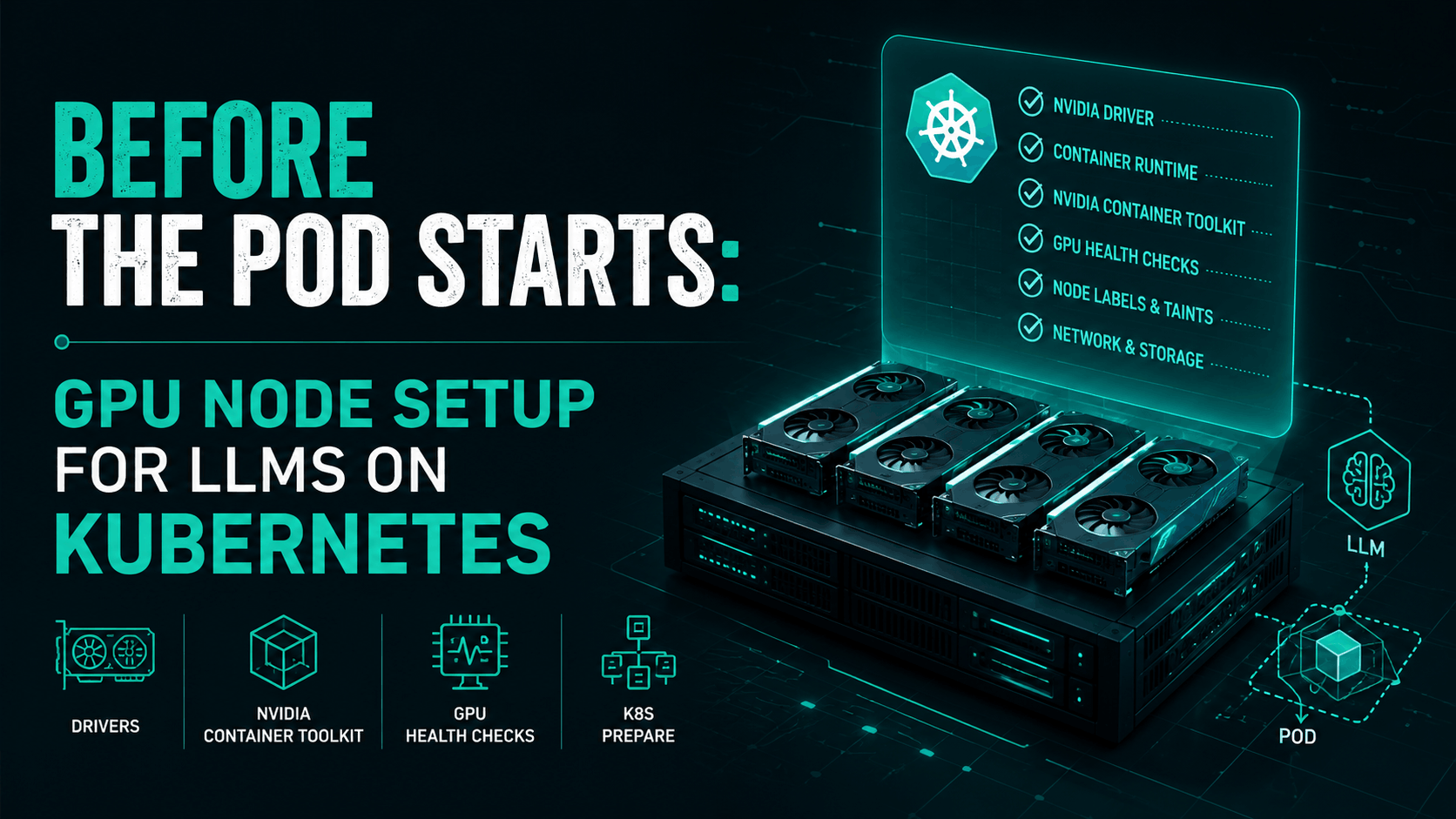
    Before the Pod Starts: GPU Node Setup for LLMs on Kubernetes

    IMPACT Properly configured GPU nodes are essential for efficient LLM serving and training, impacting deployment success and performance.

  2. GPU Drivers: How Kubernetes Learned to Allocate Devices via the Standard Device Plugin API. Kubernetes Reduces GPUs to a Node Counter: The Scheduler Sees

    Kubernetes has evolved its GPU management capabilities beyond simply counting devices. The new Dynamic Resource Allocation (DRA) feature allows for more granular control, enabling specific resource profiles, memory allocations, and sharing modes for GPUs. This advancement is crucial for machine learning tasks, which require tailored GPU configurations for training, inference, and continuous integration. AI

    IMPACT Enables more efficient and tailored use of GPUs for AI/ML workloads within Kubernetes environments.