PulseAugur / Brief
EN
LIVE 00:48:36

Brief

last 24h
[17/17] 221 sources

Multi-source AI news clustered, deduplicated, and scored 0–100 across authority, cluster strength, headline signal, and time decay.

  1. GLM-4: The Chinese-English Bilingual Workhorse You Didn't Know You Needed

    GLM-4, a bilingual Chinese-English model developed by Tsinghua University and Zhipu AI, is highlighted for its strong performance in handling both languages natively. Optimized for agent workflows and featuring a Mixture of Experts architecture, it offers efficient inference and a long context window of up to 128K tokens. This model is particularly beneficial for developers building tools that require seamless integration of Chinese and English content, unlike many English-centric open-source alternatives. AI

    IMPACT Provides a strong alternative for developers working with both Chinese and English, potentially improving efficiency and reducing costs for multilingual AI applications.
  2. Llama 4: Meta's Latest — Scout, Maverick, and the MoE Revolution

    Meta has released Llama 4 in April 2025, featuring a new Mixture of Experts (MoE) architecture. Two variants, Scout and Maverick, are available, with Scout serving as a balanced default and Maverick offering broader knowledge for specialized tasks. Both models leverage MoE to activate approximately 17 billion parameters per token, enabling high performance comparable to much larger models while remaining runnable on consumer hardware. AI

    IMPACT Sets a new standard for locally runnable large models, potentially accelerating adoption of advanced AI capabilities on consumer hardware.

  3. DeepSeek-R1: The $0 o1 Alternative You Can Run Right Now

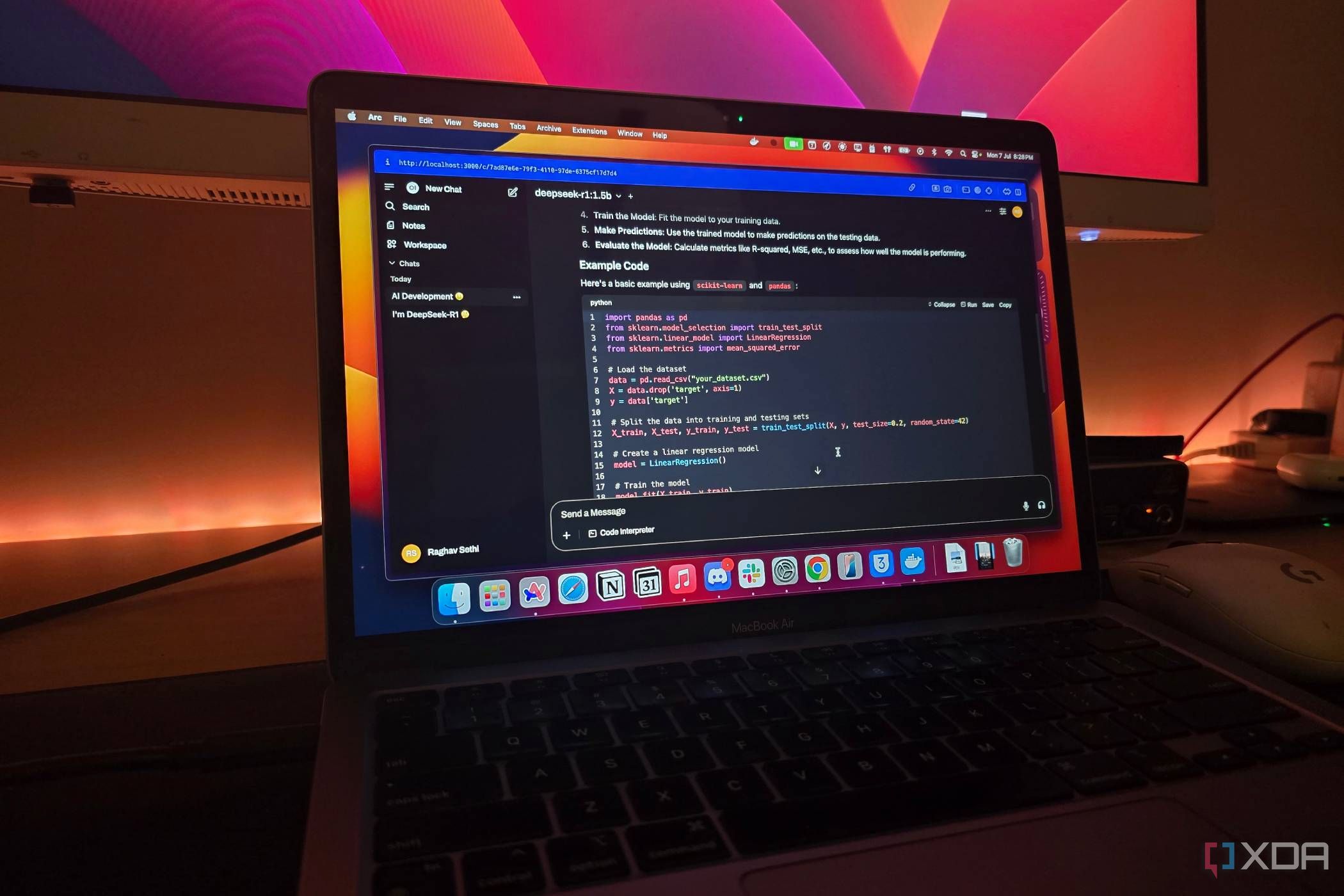
    DeepSeek has released DeepSeek-R1, an open-source model designed to rival OpenAI's o1 in reasoning capabilities. Available under the MIT license, this model can be run locally on a single GPU, offering enhanced privacy and cost savings compared to API-based services. The model comes in various sizes, with the 14B and 32B versions recommended for most users, offering different VRAM requirements and performance levels. AI

    IMPACT Provides a powerful, privacy-preserving, and cost-effective alternative for advanced reasoning tasks, potentially accelerating local AI deployment.

  4. Introducing the Anyscale Agent Skill for LLM Post

    Anyscale has introduced a new Anyscale Agent Skill designed to simplify and automate the process of generating LLM post-training runs. This skill assists users in selecting the most appropriate post-training method, such as SFT, CPT, DPO, or RLVR, based on their model, dataset, and objectives. It then generates configuration files for popular frameworks like LLaMA-Factory and Ray Train, preparing them for deployment on Anyscale Jobs. AI

    Introducing the Anyscale Agent Skill for LLM Post

    IMPACT Simplifies the complex process of LLM post-training, potentially accelerating adoption of advanced alignment and optimization techniques.

  5. Qwen 3.6 & 2.5: The Most Versatile Local Models

    Alibaba Cloud's Qwen models are highlighted as versatile open-source options in mid-2026, offering a range of sizes from 0.5B to 72B parameters. Qwen 3.6 and 2.5 boast impressive features like a 262K context window, strong tool-calling capabilities, and an Apache 2.0 license for commercial use. The models are easily accessible via Ollama, with specific recommendations based on available VRAM, and are presented as competitive local alternatives to models like GPT-4o and DeepSeek-R1, particularly for tasks requiring long context or function calling. AI

    IMPACT Provides powerful, locally runnable open-source models with long context capabilities, reducing reliance on cloud APIs for certain tasks.

  6. The Complete Guide to Running LLMs Locally in 2026: From Ollama to Production

    This guide details how to run advanced large language models locally on personal hardware in 2026, bypassing expensive API costs. It emphasizes that VRAM is the primary hardware bottleneck, not raw compute power, and suggests specific GPU configurations for different budgets. The guide recommends using Ollama as the standard tool for managing local LLMs and highlights several Chinese models, such as Qwen 2.5 and DeepSeek-R1, for their strong performance relative to their size. AI

    IMPACT Enables cost-effective local LLM deployment, democratizing access to advanced AI capabilities.

  7. Building a Serverless AI Model Evaluation Platform on AWS

    A media company developed a serverless platform on AWS to automate the evaluation of AI-generated podcast summaries. The system sends articles to multiple foundation models simultaneously via AWS Bedrock, then uses a separate AI judge, Claude Haiku, to score each output based on criteria like accuracy and engagement. Finally, it generates an HTML report for visual comparison of the results, optimizing prompt refinement and parallel model invocation for efficiency. AI

    Building a Serverless AI Model Evaluation Platform on AWS

    IMPACT Enables efficient comparison of multiple LLMs for content generation tasks, streamlining media production workflows.

  8. I tried a new 8B local LLM, and its design might be the biggest shift since DeepSeek R1 Zaya1-8B is a huge shift in LLMs, and the results are impressive. Most o

    A new 8-billion parameter local LLM, Zaya1-8B, is being hailed as a significant design shift in the field. Its architecture appears to represent a major departure from previous small reasoning models, potentially marking a new direction for LLM development. AI

    I tried a new 8B local LLM, and its design might be the biggest shift since DeepSeek R1 Zaya1-8B is a huge shift in LLMs, and the results are impressive. Most o

    IMPACT This new model's unique architecture could influence future small LLM development and deployment.

  9. Training-Trajectory-Aware Token Selection

    Researchers have developed a new method called Training-Trajectory-Aware Token Selection (T3S) to improve the efficiency of distilling knowledge from large language models. This technique addresses a common issue where performance metrics can drop during distillation, even as the loss decreases. T3S works by reconstructing the training objective at the token level, which helps clear the optimization path for tokens that are still learning. The method has shown consistent gains in various settings, with T3S-trained models achieving state-of-the-art performance among models of similar scale. AI

    IMPACT Improves efficiency in distilling large language models, potentially leading to more capable and accessible models.

  10. Prompting language influences diagnostic reasoning and accuracy of large language models

    A new study published on arXiv reveals that the language used to prompt large language models significantly impacts their diagnostic reasoning and accuracy in clinical settings. Researchers found that four out of five evaluated models performed better when prompted in English compared to French, with English yielding higher scores in differential diagnosis, logical structure, and internal validity. Only one model, o3, showed no significant language-based performance difference, highlighting the need to consider linguistic and cultural factors for equitable global deployment of LLMs in healthcare. AI

    Prompting language influences diagnostic reasoning and accuracy of large language models

    IMPACT Highlights potential disparities in LLM clinical decision support based on language, impacting equitable access to AI healthcare tools.

  11. Hot To Run LLMs Locally

    This series of guides provides comprehensive instructions for setting up and running large language models (LLMs) locally on Linux systems. It details hardware and software prerequisites, recommends using llama.cpp for its balance of performance and ease of use, and covers model selection, quantization, and API integration. The guides also include steps for setting up systemd services for 24/7 operation, monitoring performance, and optimizing for various hardware constraints. AI

    IMPACT Enables developers to run and experiment with LLMs locally, reducing reliance on cloud services and facilitating custom application development.

  12. Fine

    Together AI has enhanced its fine-tuning platform to support a wider array of large language models, including recent releases from DeepSeek, Qwen, and Meta, alongside OpenAI's gpt-oss. The platform now offers expanded context lengths, up to 131k tokens for some models, at no additional cost, facilitating tasks like long-document processing and complex code editing. Separately, Together AI researchers have explored LLM behavior using minimal, topic-neutral prompts to uncover inherent model preferences, finding that GPT-OSS favors programming and math, Llama leans literary, DeepSeek often produces religious content, and Qwen tends toward multiple-choice questions. AI

    Fine

    IMPACT Together AI's platform updates enable developers to fine-tune a broader range of large models with extended context, potentially lowering costs and improving performance on complex tasks.

  13. Optimizing inference speed and costs: Lessons learned from large-scale deployments

    Together AI has launched a brand refresh, emphasizing its role as an "AI Native Cloud" designed for builders of AI-native applications. The company is focusing on optimizing inference for efficiency and cost-effectiveness, a critical factor for AI products that scale rapidly. They are integrating advanced research, such as adaptive speculative decoding and quantization techniques, into their platform to improve performance and reduce costs for customers like Cursor and Decagon. AI

    IMPACT Together AI's focus on optimizing inference infrastructure and costs is crucial for the economic viability and scalability of AI-native applications.

  14. LambdaPO: A Lambda Style Policy Optimization for Reasoning Language Models

    Several recent research papers explore the internal mechanisms and reasoning capabilities of Large Reasoning Models (LRMs). One paper, since withdrawn, proposed Entropy-Gradient Inversion and a related optimization technique (CorR-PO) to correlate token entropy with logit gradients for improved reasoning. Another withdrawn paper, LambdaPO, aimed to enhance reinforcement learning alignment by re-conceptualizing advantage estimation for finer-grained preference signals. A third paper introduced Convex Compositional Energy Minimization (CCEM) to address non-convexity in compositional reasoning models, enabling transfer to larger problem instances. Finally, a study on the "hidden critique ability" in LRMs identified a "critique vector" that can improve error detection and self-correction without additional training. AI

    IMPACT New research explores methods to improve LLM reasoning, instruction following, and self-correction capabilities, potentially leading to more reliable and controllable AI systems.

  15. Together AI delivers fastest inference for the top open-source models

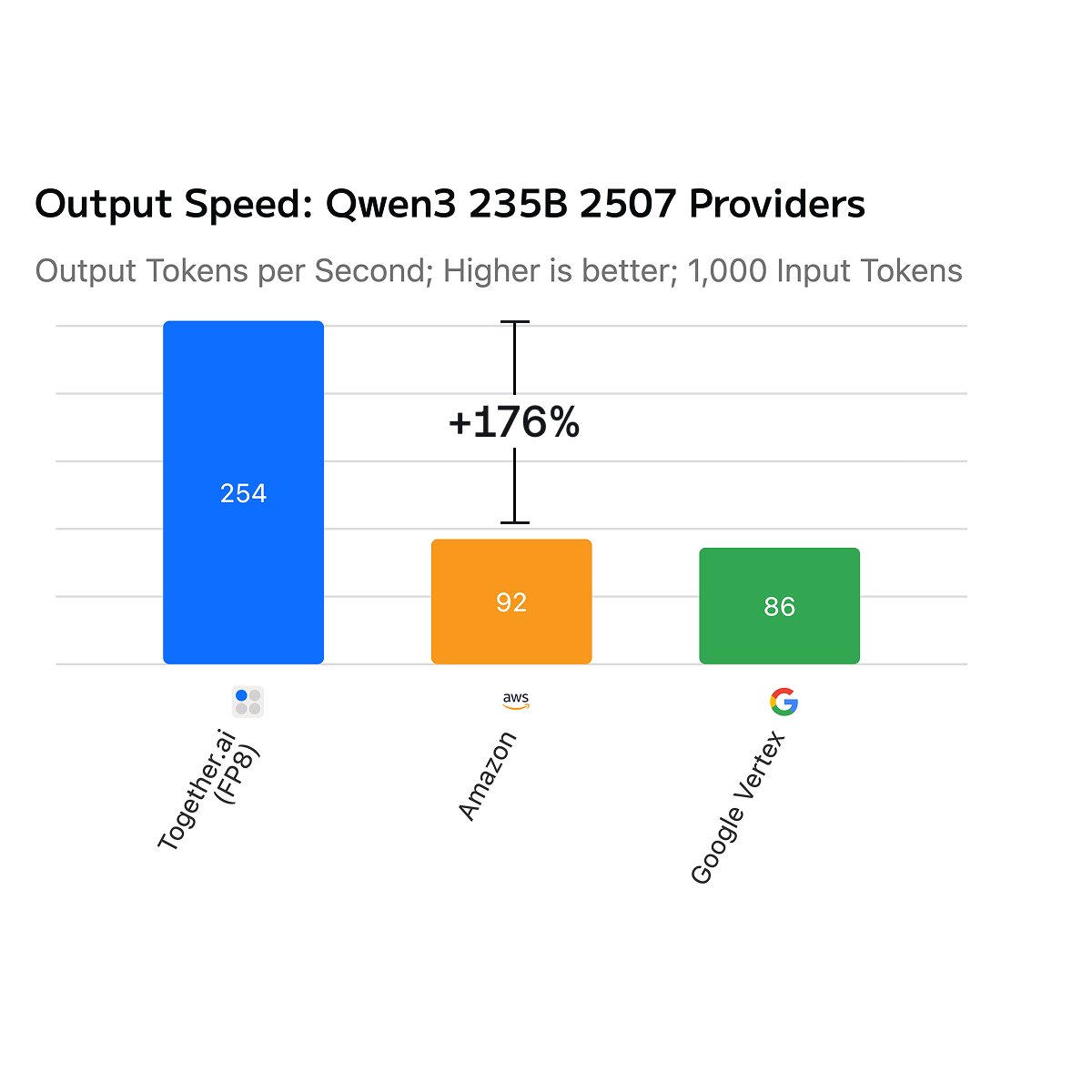
    Together AI has launched a new service called Dedicated Container Inference, designed to optimize the deployment and performance of custom generative media models. This platform handles complex orchestration tasks like autoscaling, queuing, and traffic isolation, allowing teams to focus on their model logic. The service has already demonstrated significant inference speedups, with some customers experiencing up to 2.6x faster performance. Additionally, Together AI has announced advancements in their inference platform, achieving up to 2x faster serverless inference for top open-source models by leveraging next-generation GPU hardware and optimized kernels. AI

    Together AI delivers fastest inference for the top open-source models

    IMPACT Accelerates deployment and inference for custom and open-source AI models, potentially lowering costs and increasing accessibility for specialized AI applications.

  16. The Frontier is Open

    Together AI argues that the future of AI development lies in open-source models, challenging the notion that proprietary labs are the sole drivers of innovation. The company highlights that open-source platforms offer greater flexibility and cost-efficiency, crucial for the widespread adoption of AI applications. They point to recent advancements in open-source models like Llama 3, Deepseek R1, and Qwen3 as evidence that the frontier of AI is increasingly being shaped by collaborative, open development. AI

    IMPACT Argues that open-source models will increasingly define the AI frontier, offering cost and flexibility advantages over proprietary solutions.

  17. From AWS to Together Dedicated Endpoints: Arcee AI's journey to greater inference flexibility

    Arcee AI has migrated its specialized small language models (SLMs) from AWS to Together Dedicated Endpoints, seeking improved cost, performance, and operational agility. The company focuses on training efficient models under 72 billion parameters for specific tasks like coding and general text generation. Arcee AI also developed Arcee Conductor, an inference routing system that directs queries to the most suitable model, including third-party options like GPT-4.1 and Claude 3.7 Sonnet, to optimize cost and performance. AI

    IMPACT Enables more cost-effective deployment of specialized AI models for enterprise tasks.