PulseAugur / Brief
EN
LIVE 12:59:40

Brief

last 24h
[8/8] 224 sources

Multi-source AI news clustered, deduplicated, and scored 0–100 across authority, cluster strength, headline signal, and time decay.

  1. Kubernetes Machine Learning Pipeline — Part 1: DVC Pipeline

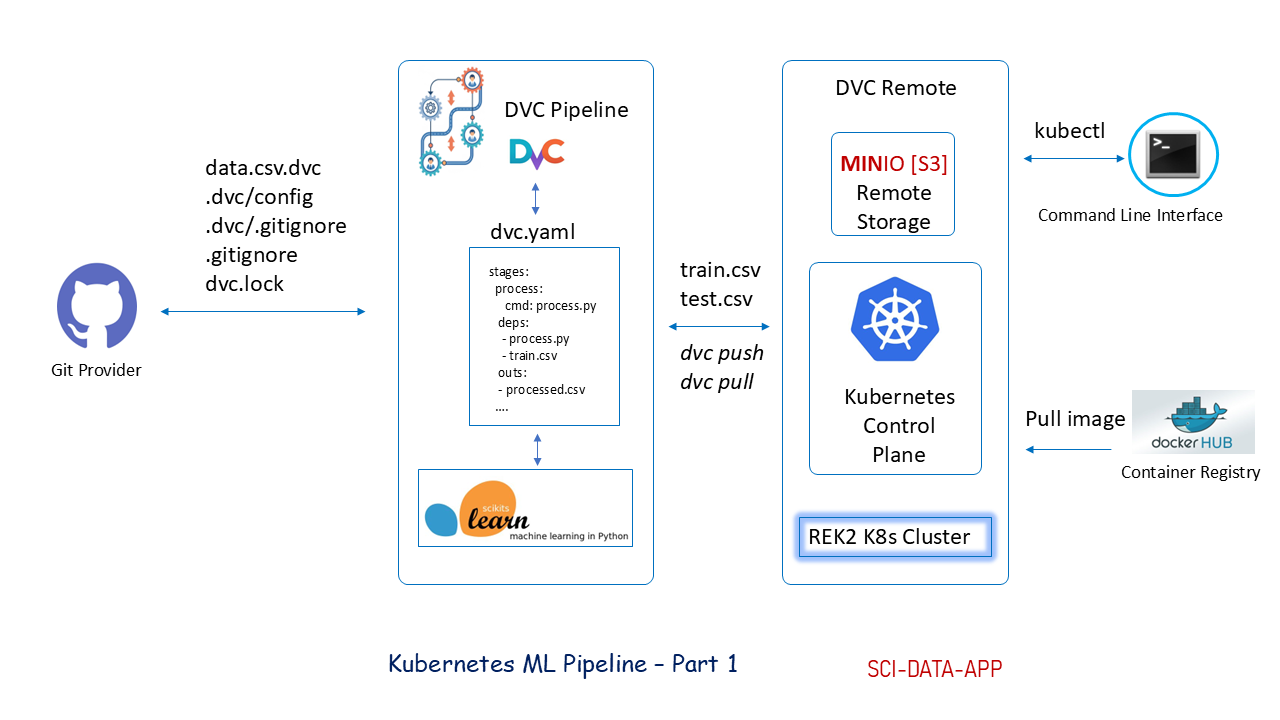
    This article introduces the first part of a series on building machine learning pipelines using Kubernetes and DVC. It focuses on establishing an on-premises Kubernetes foundation for these pipelines. The series aims to guide readers through the process of creating robust MLOps workflows. AI
    Kubernetes Machine Learning Pipeline — Part 1: DVC Pipeline

    IMPACT Provides guidance on setting up infrastructure for machine learning operations.
  2. Day 13: Restoring DVC Data on a Fresh Clone

    This article details how to restore data using the Data Version Control (DVC) tool on a newly cloned repository. It serves as a practical guide for developers working with machine learning projects that utilize DVC for data management. The post is part of a larger "100 Days of MLOps" challenge. AI

    IMPACT Provides a technical guide for MLOps practitioners on managing data versions with DVC.

  3. Day 12: Configuring S3-Compatible Remote Storage with DVC

    This article details how to configure DVC (Data Version Control) to use S3-compatible remote storage. It serves as a practical guide for MLOps practitioners looking to manage large datasets and models efficiently. The post is part of a 100-day challenge focused on MLOps practices. AI

    IMPACT Provides practical guidance for MLOps practitioners on managing data and models with DVC and S3-compatible storage.

  4. Dataset Versioning Without the Tools: A Practical Approach for Reproducible Machine Learning

    This article proposes a practical, tool-free method for versioning datasets in machine learning to ensure reproducibility. It argues that maintaining a consistent data contract between pipelines and training processes is key, rather than relying on specialized tools like DVC or MLflow initially. The approach involves disciplined automation and metadata tracking, such as lineage and transformation details, before adopting more complex solutions. AI

    Dataset Versioning Without the Tools: A Practical Approach for Reproducible Machine Learning

    IMPACT Provides a lightweight, reproducible data versioning strategy for ML practitioners, reducing reliance on complex tools.

  5. Dynamic Vine Copulas: Detecting and Quantifying Time-Varying Higher-Order Interactions

    Researchers have introduced Dynamic Vine Copulas (DVC), a novel framework designed to detect and quantify time-varying higher-order interactions in multivariate systems. Unlike traditional methods that focus on correlations, DVC specifically addresses changes in tail behavior, asymmetry, and conditional structure. The framework includes a diagnostic tool that contrasts full vine scores with truncated ones, distinguishing between pairwise and conditional dependencies. DVC has demonstrated its ability to identify complex temporal changes in controlled benchmarks and has been applied to analyze neural data, revealing reproducible cross-area dependence signals. AI

    Dynamic Vine Copulas: Detecting and Quantifying Time-Varying Higher-Order Interactions

    IMPACT Introduces a new statistical method for analyzing complex, time-varying dependencies in data, potentially improving models that rely on understanding multivariate interactions.

  6. Day 10: Versioning Data with DVC

    This series details the process of migrating large datasets from Git to Data Version Control (DVC) as part of a 100 Days of MLOps challenge. The articles focus on the practical steps and benefits of using DVC for data versioning in machine learning projects. The goal is to streamline data management and improve reproducibility in MLOps workflows. AI

    IMPACT Details practical MLOps workflows for data management, relevant for practitioners managing ML projects.

  7. Are You AI-Ready?

    Generative AI is already present in South African universities, with students and some staff utilizing it without clear institutional policies. Decision-makers must prepare for AI adoption rather than merely reacting to it, focusing on institutional relevance, academic credibility, and fiduciary responsibility. True readiness involves intentionally answering key questions about responsibility, data risk, user preparedness, success measurement, and compliance, rather than simply prioritizing speed. AI

    Are You AI-Ready?

    IMPACT Higher education institutions need to develop clear policies and strategies for AI adoption to maintain relevance and academic integrity.

  8. End-to-end lineage with DVC and Amazon SageMaker AI MLflow apps

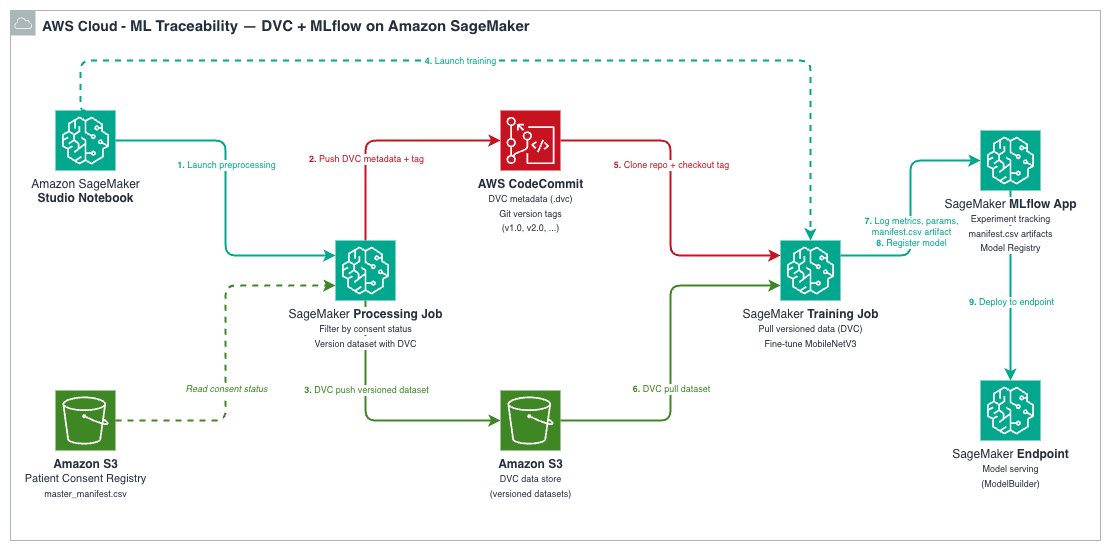
    A new solution integrates DVC with Amazon SageMaker MLflow Apps to provide end-to-end lineage tracking for machine learning models. This addresses the challenge of tracing models back to their exact training data and code, which is crucial for regulated industries. The combined tools create a traceable chain from a deployed model to its specific dataset version and training experiment. AI

    End-to-end lineage with DVC and Amazon SageMaker AI MLflow apps

    IMPACT Improves traceability and reproducibility for ML models, particularly beneficial in regulated sectors.