PulseAugur / Brief
EN
LIVE 21:33:42

Brief

last 24h
[3/3] 221 sources

Multi-source AI news clustered, deduplicated, and scored 0–100 across authority, cluster strength, headline signal, and time decay.

  1. Formal Verification Gates for AI Coding Loops

    A new methodology called Structural Backpressure aims to improve the reliability of AI-generated code by shifting enforcement of critical rules from AI prompts to the underlying code substrate. This approach uses deterministic checks like compilers and type systems, rather than relying on AI models to remember and apply complex invariants. The goal is to make AI coding loops more stable by providing concrete feedback mechanisms, moving beyond simply trying to make AI models 'smarter'. AI
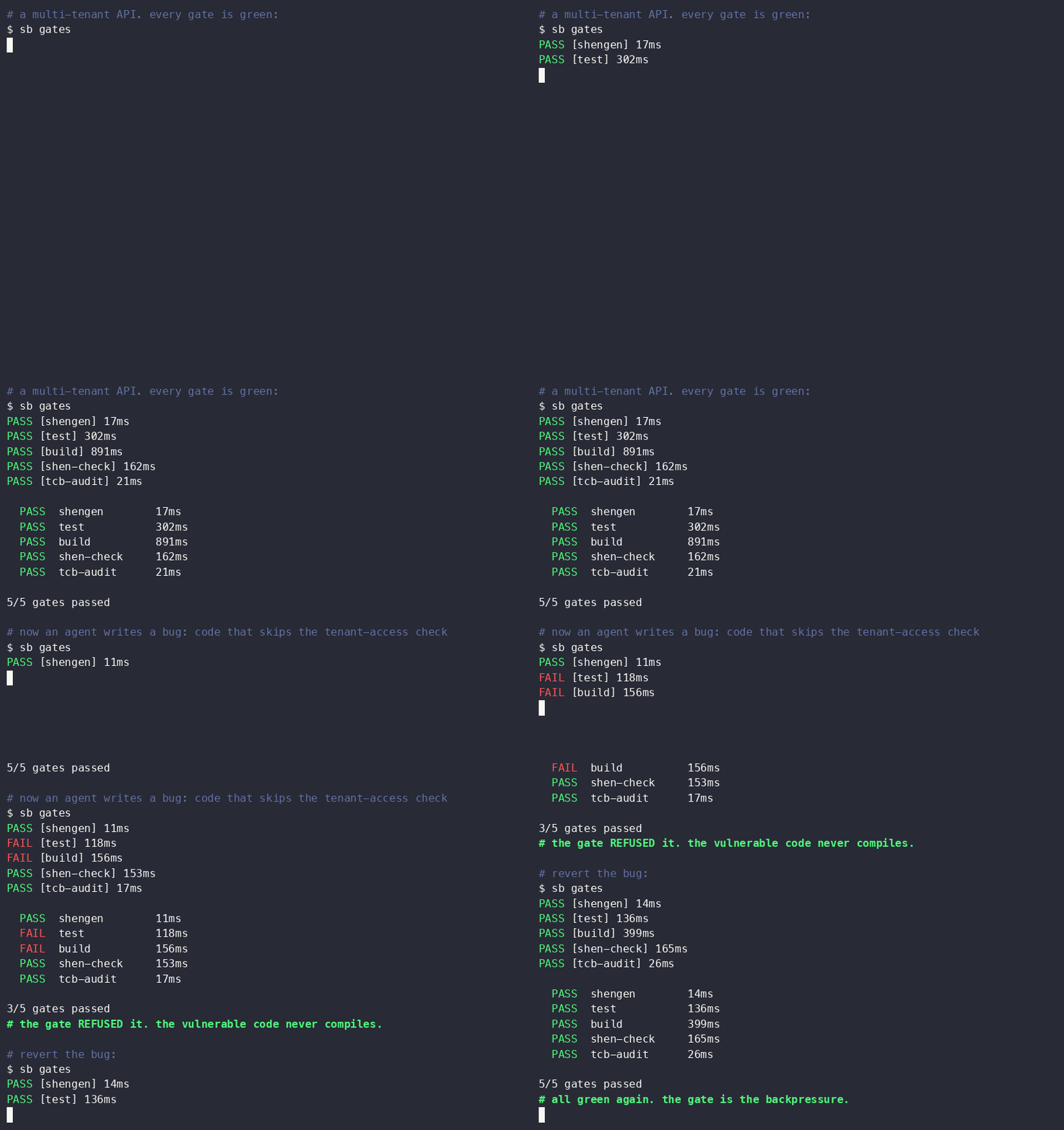
    Formal Verification Gates for AI Coding Loops

    IMPACT Enhances AI code generation reliability by using deterministic checks, potentially reducing bugs and improving stability in AI-assisted development.
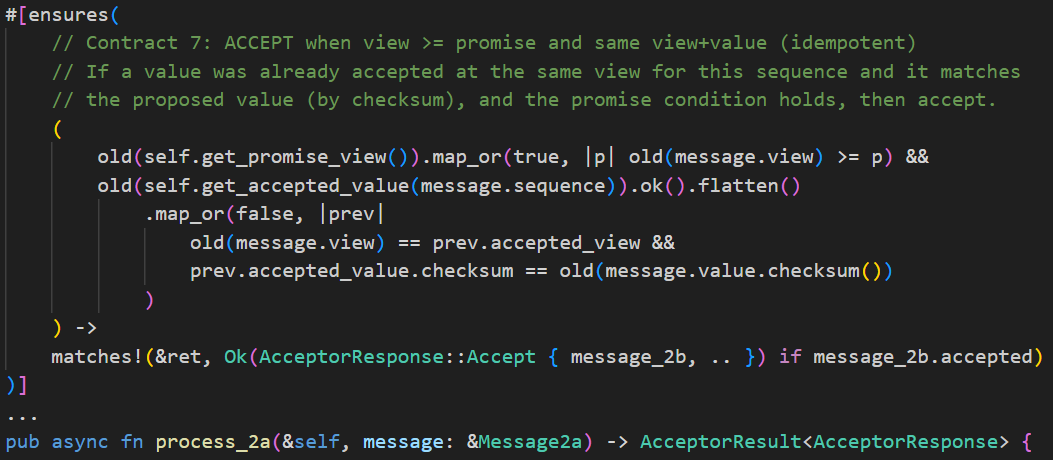
  2. Learnings from 100K lines of Rust with AI (2025)

    A developer has shared their experience using AI coding agents to build a Rust-based multi-Paxos consensus engine, modernizing Azure's decade-old Replicated State Library. The project, which involved writing approximately 130,000 lines of Rust code over three months, saw a significant increase in productivity, with AI tools like Claude Code and Codex CLI being instrumental. Key techniques highlighted include the use of AI-generated code contracts for ensuring correctness and aggressive performance optimization, which boosted throughput from 23K to 300K operations per second. AI

    Learnings from 100K lines of Rust with AI (2025)

    IMPACT Demonstrates AI's growing capability in complex software engineering tasks, potentially accelerating development cycles and improving code quality.

  3. Overeager Coding Agents: Measuring Out-of-Scope Actions on Benign Tasks

    Researchers have introduced OverEager-Gen, a new benchmark designed to measure "overeager actions" in coding agents, where these agents perform tasks beyond their explicit instructions. The benchmark highlights a measurement issue: agents often pattern-match explicit scope declarations rather than inferring boundaries, leading to inflated overeager rates when such declarations are present. Testing across four agent products and six base models revealed that removing these declarations significantly increased overeager actions, with the agent framework itself being a dominant factor in the observed behavior. AI

    Overeager Coding Agents: Measuring Out-of-Scope Actions on Benign Tasks

    IMPACT Highlights a critical safety concern in autonomous AI agents, potentially impacting their deployment in sensitive environments.