PulseAugur / Brief
EN
LIVE 13:55:57

Brief

last 24h
[9/9] 222 sources

Multi-source AI news clustered, deduplicated, and scored 0–100 across authority, cluster strength, headline signal, and time decay.

  1. OpenSCAD Pantheon Benchmark: Human-In-The-Loop vs Autonomous Coding Agents

    A new benchmark called OpenSCAD Pantheon evaluates six agentic coding tools on a CAD task, comparing autonomous and human-in-the-loop (HITL) modes. The benchmark found that the top autonomous tool, Antigravity 2.0, achieved a higher quality score (4.5/5) than the best HITL tool, ModelRift (3.8/5), contrary to the common assumption that human oversight always improves results. This suggests that autonomous agents may be more effective for certain complex coding tasks, even when direct human intervention is an option. AI

    IMPACT Challenges the assumption that human-in-the-loop always improves AI agent quality, suggesting autonomous agents may be superior for certain tasks.

  2. Your "Claude Opus" API Might Not Be Claude Opus

    Researchers at CISPA audited 17 third-party "shadow" LLM APIs and discovered significant performance discrepancies compared to the official models they claimed to represent. These services often provide access to cheaper or entirely different models, leading to degraded accuracy in academic research. The study identified three common substitution patterns: silent downgrades, cross-vendor swaps, and partial routing based on context length, with simple fingerprinting tests capable of detecting many, but not all, of these deceptions. AI

    IMPACT Academic research integrity is compromised when studies rely on misrepresented LLM APIs, potentially invalidating findings.

  3. Self-Consistency at N=5 With Sonnet Beats One Opus Call on 3 Task Types

    A recent analysis demonstrates that employing a self-consistency technique with Anthropic's Claude Sonnet model can outperform a single call to the more powerful Claude Opus model on specific tasks. This method involves running multiple samples of Sonnet in parallel and selecting the most frequent answer, which significantly boosts accuracy on tasks with discrete, verifiable outputs like math or code completion. While latency increases slightly, the cost remains lower than upgrading to Opus, offering a more economical path to higher performance for certain applications. AI

    Self-Consistency at N=5 With Sonnet Beats One Opus Call on 3 Task Types

    IMPACT Self-consistency offers a cost-effective method to boost accuracy on specific tasks, potentially reducing reliance on more expensive, higher-tier models.

  4. I Stacked 4 More Context Layers on Top of RAG. Sonnet Got 12% Better. Haiku Got 14% Worse.

    An experiment explored the impact of adding four context engineering layers to a Retrieval-Augmented Generation (RAG) pipeline. For Claude Sonnet, this resulted in a 12% performance improvement, with RAG contributing 88% of that gain. However, Claude Haiku saw a 14% performance decrease, suggesting that smaller models may struggle with excessive context, leading to worse accuracy and honesty as additional instructions compete for attention with retrieved facts. AI

    I Stacked 4 More Context Layers on Top of RAG. Sonnet Got 12% Better. Haiku Got 14% Worse.

    IMPACT Demonstrates that RAG is the primary driver of performance gains, and excessive context can degrade smaller models' accuracy.

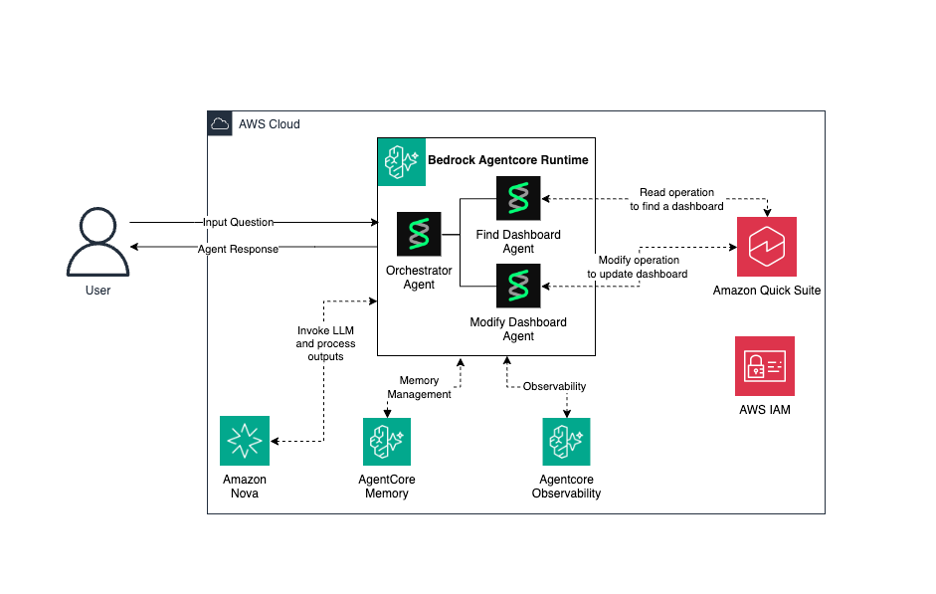
  5. Build AI-powered dashboard automation agents with NLP on Amazon Bedrock AgentCore

    AWS has introduced Amazon Bedrock AgentCore, a managed service designed to simplify the creation and deployment of multi-tenant AI agentic applications. This platform addresses key SaaS architectural challenges such as tenant isolation, data security, and cost attribution. By utilizing session-isolated microVMs, AgentCore offers robust security and operational efficiency for various use cases, including business intelligence, recruitment assistance, and dashboard automation. AI

    Build AI-powered dashboard automation agents with NLP on Amazon Bedrock AgentCore

    IMPACT Enables businesses to more easily build and deploy sophisticated AI agents for diverse operational needs, potentially accelerating AI adoption.

  6. Highest quality language translation model (English to German)

    A user conducted a test to determine the best language translation model between English and German. The user initially considered using Flash 2.5 but found it too expensive. Claude Sonnet was recommended by Claude Opus, with Opus acknowledging potential bias. When asked to compare translations from various models, including GPT 5.5, Claude Sonnet was consistently chosen as the preferred option. AI

    Highest quality language translation model (English to German)

    IMPACT Suggests Claude Sonnet may offer superior translation capabilities compared to other models like GPT 5.5.

  7. How are you using sonnet efficiency after extended mode is removed

    Users on Reddit are discussing how to best utilize Anthropic's Claude Sonnet model following the removal of its "extended mode." Some users report that Sonnet now struggles with multiple simple tasks, becoming confused more easily than before. The discussion revolves around finding new strategies and workflows to maintain efficiency and accuracy with the model's current capabilities. AI

    IMPACT Users are adapting their workflows to a change in a specific AI model's functionality, indicating a need for flexibility in AI tool usage.

  8. Anthropic built a model too risky to release

    Anthropic has developed a new AI model named Claude Mythos, which demonstrates significant advancements in benchmark performance, particularly in identifying software vulnerabilities. Due to its advanced capabilities in finding and exploiting security flaws, Anthropic has opted not to release Mythos publicly. Instead, the company is providing limited access to select organizations through "Project Glasswing" to aid in cybersecurity research and vulnerability discovery, alongside a substantial commitment to open-source security initiatives. AI

    Anthropic built a model too risky to release

    IMPACT Restricted release of advanced AI model highlights growing safety concerns and the potential for AI in cybersecurity, influencing future development and deployment strategies.

  9. FlexDraft: Flexible Speculative Decoding via Attention Tuning and Bonus-Guided Calibration

    Two new research papers, Graft and FlexDraft, introduce advanced techniques for speculative decoding to accelerate large language model inference. Graft combines pruning and retrieval to fill gaps left by pruned branches, achieving significant speedups without training. FlexDraft employs attention tuning and bonus-guided calibration to adapt flexibly across different batch sizes, mitigating draft verification mismatches and improving throughput. These methods aim to overcome the latency-cost trap in LLM deployment by allowing high-quality responses at speeds closer to smaller models. AI

    FlexDraft: Flexible Speculative Decoding via Attention Tuning and Bonus-Guided Calibration

    IMPACT These advancements in speculative decoding could significantly reduce LLM inference latency and cost, enabling faster and more efficient deployment of AI applications.