PulseAugur / Brief
EN
LIVE 13:14:45

Brief

last 24h
[3/3] 221 sources

Multi-source AI news clustered, deduplicated, and scored 0–100 across authority, cluster strength, headline signal, and time decay.

  1. Meet the man behind the name. Claude Shannon (1916–2001) — mathematician, engineer, father of information theory. Without his 1948 paper, maybe there would be n

    Claude Shannon, a pioneering mathematician and engineer, is recognized as the father of information theory. His foundational 1948 paper laid the groundwork for digital communication, the internet, and artificial intelligence. Anthropic's AI models, including Claude, are named in his honor, celebrating his profound impact on modern technology. AI
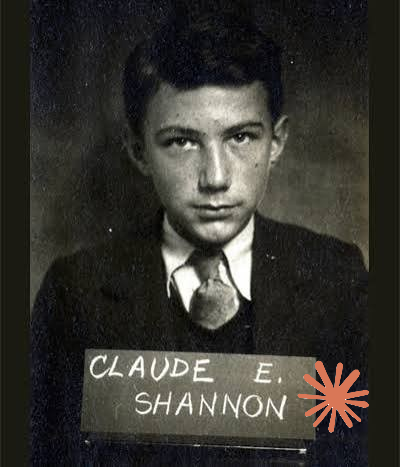
    Meet the man behind the name. Claude Shannon (1916–2001) — mathematician, engineer, father of information theory. Without his 1948 paper, maybe there would be n

    IMPACT Celebrates the foundational work that underpins modern AI and digital communication.

  2. Next Token Prediction is a Misleading Term

    The concept of Large Language Models (LLMs) simply predicting the next token is a misleading oversimplification. Unlike basic Markov chains, which produce nonsensical text, LLMs learn complex patterns, grammar, and even contextual understanding from vast datasets to generate coherent and meaningful output. This sophisticated prediction process requires models to internalize knowledge and reasoning capabilities to accurately forecast subsequent tokens in a sequence. AI

    Next Token Prediction is a Misleading Term

    IMPACT Clarifies the sophisticated nature of LLM training beyond simple probabilistic guessing, countering common misconceptions.

  3. DGPO: Distribution Guided Policy Optimization for Fine Grained Credit Assignment

    Researchers have developed CoTrace, a framework to measure and expose goal-level contributions in human-AI collaboration, revealing that while AI accounts for a smaller percentage of overall goal-shaping, it significantly contributes to concrete requirements and indirect influences. Separately, a new method called DGPO aims to improve reinforcement learning for LLMs by addressing coarse-grained credit assignment issues in complex reasoning tasks. Additionally, a study on the entropy of the Ukrainian language provides an upper bound and compares it to LLM performance, while another paper explores using Sparse Autoencoders for out-of-distribution detection in vision transformers. AI

    DGPO: Distribution Guided Policy Optimization for Fine Grained Credit Assignment

    IMPACT These papers explore methods for better understanding AI contributions, improving LLM reasoning, and enhancing AI safety through better OOD detection.