PulseAugur / Brief
EN
LIVE 11:05:10

Brief

last 24h
[24/24] 223 sources

Multi-source AI news clustered, deduplicated, and scored 0–100 across authority, cluster strength, headline signal, and time decay.

  1. Claude Fable 5 vs Opus 4.8: Is Double the Price Worth It?

    Anthropic has released Claude Fable 5, a new model that offers significantly improved performance on complex tasks like coding and long-horizon reasoning compared to its predecessor, Opus 4.8. While Fable 5 is twice as expensive per token, its enhanced capabilities, particularly on benchmarks like SWE-Bench Pro and FrontierCode, suggest it may be more cost-effective for demanding workloads. The new model also features a lower cache minimum and some API differences, such as the disabling of explicit 'thinking' parameters. AI

    IMPACT Sets a new performance tier for complex reasoning and coding tasks, potentially justifying higher costs for specialized applications.

  2. Fable feels like a mature, calm, and down to earth programmer - Very impressive

    A user on Reddit shared their positive experience with Fable 5, an AI model they found to be highly effective at solving a programming bug that Anthropic's Claude Opus struggled with. The user highlighted Fable 5's concise communication, autonomous problem-solving capabilities, and its ability to identify and warn about potential future issues beyond the immediate bug fix. Despite its impressive performance, the user noted that Fable 5 consumed a significant portion of their Claude Max 5x usage window. AI

    IMPACT Demonstrates advanced autonomous problem-solving and contextual understanding in AI models, potentially improving developer productivity.

  3. The Routing Plateau: Understanding and Breaking the Accuracy Limits of LLM Routers

    A new research paper and a developer guide highlight the challenges and benefits of LLM routing. The research paper identifies a "routing plateau" where many current methods achieve similar, suboptimal accuracy, largely due to focusing on global trends rather than query-specific signals. The developer guide explains how to implement model routing to reduce costs and improve resilience by directing different tasks to appropriate LLMs, suggesting that most applications can significantly cut expenses by routing simpler tasks away from high-end models. AI

    IMPACT Implementing effective LLM routing can significantly reduce operational costs and enhance system resilience by matching task complexity to model capabilities.

  4. Local LLMs Answer 71% of Real Queries: MiMo Sets the Bar

    Local large language models have significantly improved, now accurately handling 71.3% of real-world queries, a substantial leap from 23.2% last year, according to Stanford research. This advancement is exemplified by Xiaomi's new MiMo-v2.5-Pro model, a trillion-parameter open-weights model that matches top-tier closed models on coding benchmarks and achieves over 1,000 tokens per second on commodity hardware. The increasing capability and efficiency of local models are beginning to challenge the cost dominance of frontier API-based models, though some complex tasks still require more advanced solutions. AI

    Local LLMs Answer 71% of Real Queries: MiMo Sets the Bar

    IMPACT Local models are rapidly closing the capability gap with frontier APIs, potentially inverting the cost calculus for millions of tokens processed monthly.

  5. Can tech companies learn to love cheaper AI models?

    The AI industry is facing a potential shift from prioritizing the most powerful models to adopting smaller, more cost-effective ones. This change is driven by mounting costs, leading companies to explore cheaper alternatives that can handle most tasks without sacrificing quality. If this trend accelerates, it could significantly impact the economics of AI, potentially reducing the revenue for major AI labs like OpenAI and Anthropic. AI

    IMPACT This shift could redefine AI economics, potentially lowering costs for businesses and impacting the revenue models of major AI labs.

  6. LLM Wire Format Benchmark: Which Format Can AI Actually Read and Write?

    A new benchmark reveals that common data formats like JSON and TOON struggle with large language models, failing to maintain accuracy and validity at scale. The study found that JSON breaks down with as few as 500 records, leading models like GPT-5.5 to return empty strings and Opus to miscount significantly. TOON also fails to produce valid output, with all tested frontier models making consistent encoding errors. The new GCF format, however, demonstrated 100% comprehension and valid generation across all tested models, outperforming JSON and TOON in both accuracy and cost. AI

    IMPACT New data format GCF shows superior performance over JSON and TOON for LLMs, potentially improving efficiency and accuracy in data processing.

  7. 4 Free n8n Templates for Anthropic Claude AI (Ready to Import)

    This article provides four free templates for the n8n automation platform that integrate Anthropic's Claude AI models. These templates allow users to build workflows for tasks such as responding to LINE messages, generating daily briefings, creating content like blog posts or social media updates, and intelligently routing webhook requests. The templates are available on GitHub and require an n8n account and an Anthropic API key, with specific Claude model versions like Opus, Haiku, and Sonnet being utilized. AI

    IMPACT Enables users to easily integrate advanced AI capabilities into their existing automation workflows.

  8. Bronto Hosted MCP Server

    Bronto has launched a new hosted version of its MCP server, simplifying access for teams by eliminating the need to manage local server installations and API keys. Users can now enable MCP access directly within the Bronto UI and authenticate using their existing Bronto login methods, including OAuth and SSO. This hosted solution is designed for easier team-wide adoption and centralized access control, while still providing clients like Claude Opus with access to Bronto datasets, log search, and metrics. AI

    Bronto Hosted MCP Server

    IMPACT Simplifies integration for AI clients with Bronto data, potentially increasing adoption of AI-powered log analysis.

  9. I Built a Python Pipeline That Drafts Affiliate Articles Locally with Claude — Here's the Code, the 41-Second Run, and the Bug T

    A developer created a local Python pipeline to draft affiliate articles using Anthropic's Claude Opus model. The pipeline separates content generation from affiliate link insertion to prevent the AI from hallucinating non-existent URLs. It enforces a validation gate ensuring the article's title aligns with its body content before saving the draft. AI

    IMPACT Demonstrates a practical, localized application of LLMs for content generation, highlighting methods to control AI output and maintain revenue integrity.

  10. Levi: Run AlphaEvolve on your local QWEN 30B

    A new open-source system named LEVI has been developed to emulate AlphaEvolve's capabilities at a significantly reduced cost, reportedly up to 35 times cheaper. LEVI's core principle is that smaller language models can achieve comparable or superior results to larger ones through optimized search architectures and intelligent routing. The system has demonstrated strong performance in code and prompt optimization tasks, outperforming existing frameworks on benchmarks like ADRS and IFBench while using fewer computational resources. AI

    IMPACT This system could enable more accessible and cost-effective AI development and experimentation by leveraging smaller models.

  11. Research reveals that large language models can silently corrupt documents when users delegate editing tasks. A study testing 19 LLMs found that even top models

    A recent study has uncovered that large language models can unintentionally corrupt documents when tasked with editing. Researchers tested 19 LLMs, including advanced models like Gemini Pro and Claude Opus, and found that these models altered approximately 25% of content after 20 interactions. The study indicated that less capable models tend to delete content, while more sophisticated ones introduce plausible but incorrect information, with degradation increasing with larger context windows and complex file types. AI

    IMPACT Highlights a critical safety concern for AI agents performing document editing, potentially impacting user trust and data integrity.

  12. I thought the cheap model would save my OpenClaw bill, then I watched $100 disappear in 2 days

    Using cheaper language models for AI agent tasks can lead to unexpected costs due to increased retries and failures. While cheaper models might seem economical per token, they often result in higher overall expenses when considering the cost of completing a task successfully. The author suggests that instead of solely focusing on the cheapest model, developers should strategically route tasks to different models based on their complexity and safety requirements, leveraging cheaper models for simpler sub-tasks and more capable models for critical planning and recovery. AI

    IMPACT Highlights that cost-effectiveness in AI agents depends on strategic model routing, not just token price, impacting development and deployment decisions.

  13. Claude Sonnet hits 100% comprehension on a data format it's never seen. Opus scores 96.2%. We tested 10 models across 3 providers.

    Anthropic's Claude Sonnet 4.6 achieved 100% comprehension on a newly developed data format called GCF, outperforming its sibling model Opus 4.6 which scored 96.2%. In tests involving 10 different models across three providers, GCF demonstrated superior performance in both comprehension and generation tasks compared to standard formats like JSON. The evaluation also found that Claude models could generate valid GCF output with minimal prompting, indicating strong adaptability. AI

    Claude Sonnet hits 100% comprehension on a data format it's never seen. Opus scores 96.2%. We tested 10 models across 3 providers.

    IMPACT Demonstrates potential for LLMs to adapt to new data structures, possibly simplifying data integration and processing.

  14. I read the 69-comment OpenClaw thread on cheap AI models so you don’t have to

    A community discussion on Reddit's r/openclaw revealed that DeepSeek v4 Flash is considered the most cost-effective model for agentic AI tasks, with costs potentially as low as $5-$10 per month. Participants noted that while premium models like Claude Opus can be prohibitively expensive for continuous agent use, DeepSeek v4 Flash offers a balance of low cost and sufficient capability for tasks such as coding assistance and file inspection. The thread also highlighted that provider markups can significantly impact overall costs, suggesting direct purchasing of models when possible to maximize budget efficiency. AI

    IMPACT Identifies cost-effective models for agentic workflows, potentially lowering operational expenses for AI developers.

  15. Text-to-infinite-minecraft-world mod with Claude!

    A user has developed a Minecraft mod that generates infinite worlds based on text prompts, utilizing Anthropic's Claude Opus model. The mod translates descriptive prompts into procedural algorithms that construct diverse in-game environments. The developer has shared the project on GitHub and is seeking feedback and stars from the community. AI

    Text-to-infinite-minecraft-world mod with Claude!

    IMPACT Enables new creative applications for LLMs in gaming and procedural content generation.

  16. The "permaspike effect" explained: Why Claude feels different lately

    Users are reporting a perceived decline in Anthropic's Claude Opus model performance, particularly after the 4.7 and 4.8 updates. This perceived degradation, termed the "permaspike effect," is attributed to overly strict system rules, inefficient "adaptive thinking" protocols that consume tokens rapidly, and safety over-corrections that hinder the model's ability to follow complex instructions. The sentiment is that while Opus has been heavily tweaked, the Sonnet and Haiku models have been neglected. AI

    IMPACT Users are experiencing a perceived decrease in the utility and creativity of Claude Opus, suggesting a potential impact on workflows that rely on its advanced capabilities.

  17. The recent Opus models like to describe every contextual quality as having some shape and degrees of a quality in terms of sharpness. I wonder what they fed the model to result in these emerging as this model's twang?

    Users of Anthropic's Claude Opus models have observed a peculiar linguistic pattern where the AI frequently describes contextual qualities using terms related to "shape" and "sharpness." This emergent "twang" in the model's output has led to user speculation about the specific training data or methods that might have produced this distinctive phrasing. AI

    IMPACT This observation highlights potential quirks in large language model outputs and may influence how users interact with and interpret AI-generated text.

  18. Local vs Frontier on low-level systems engineering

    A user found that Anthropic's Claude Opus model significantly outperformed other frontier and local models, including GPT-5, in complex low-level systems engineering tasks. The user detailed a project where Opus successfully reverse-engineered firmware, identified CRC structures, and automated binary patching for an AirPlay speaker to disable an idle timer. This experience led the user to conclude that Opus operates on a different level for demanding binary analysis tasks. AI

    IMPACT Highlights Claude Opus's advanced capabilities in complex technical tasks, potentially influencing its adoption for specialized engineering and reverse-engineering applications.

  19. Anyone has experience between Mimo flash v2.5 pro vs Composer 2.5 (cursor pro+)

    A user on Reddit is seeking advice on whether to switch from Mimo subscription to Cursor Pro+, expressing concerns that it might be a downgrade. They note that even the new Minimax M3 model struggles to outperform Mimo and costs more. The user also shares their experience with Claude Opus, finding it inconsistent but generally effective. AI

    IMPACT User opinions on AI coding tools may inform adoption trends.

  20. Going live now with @MiniMax_AI 🚀

    MiniMax AI's M3 model, featuring a 1 million token context window and multimodal capabilities, is being integrated into various platforms. Together Computer is highlighted for its role in optimizing the inference efficiency and production serving of the M3 model. Additionally, Mem0 is offering users a 50% discount on M3 access, positioning it as an official launch partner. AI

    IMPACT Accelerates adoption of large-context models and highlights inference efficiency as a key differentiator for multimodal AI.

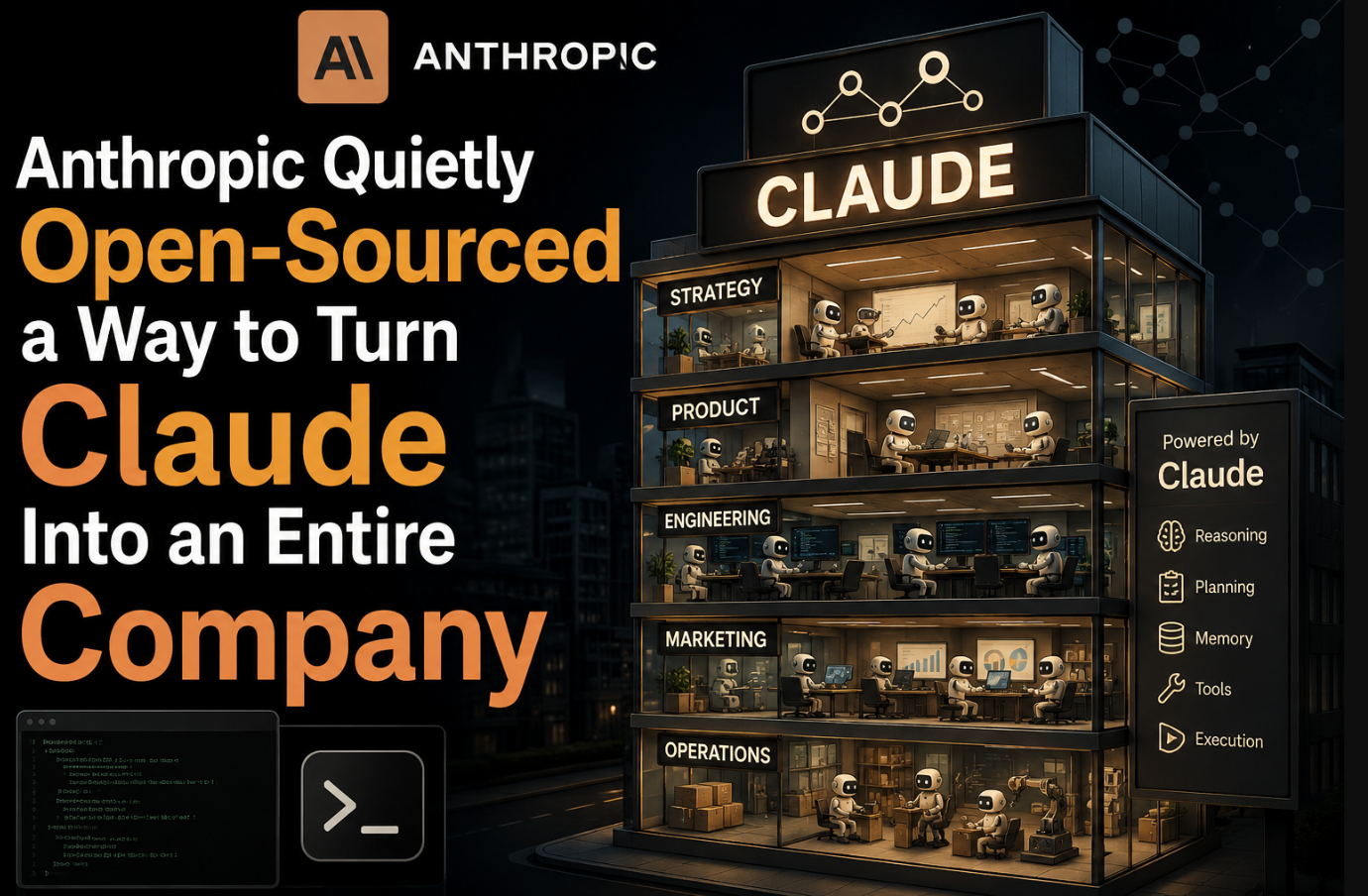
  21. Anthropic Quietly Open-Sourced a Way to Turn Claude Into an Entire Company

    A new tool called Anthropic Claude MCP allows users to run Claude models as sub-agents within a larger Claude session, enabling complex multi-agent workflows. This system exposes Claude Haiku, Sonnet, and Opus as callable tools, allowing for specialized reasoning, parallel processing, and persona-based delegation. The tool aims to enhance agent capabilities by enabling one Claude instance to orchestrate others for tasks like code review, content critique, and scaled data extraction, with features like prompt caching to reduce costs. AI

    Anthropic Quietly Open-Sourced a Way to Turn Claude Into an Entire Company

    IMPACT Enables more sophisticated multi-agent AI systems by allowing models to orchestrate specialized sub-agents.

  22. Why Codex works better than Claude Code for my production monolith

    A developer found that while Claude Opus 4.6 and 4.7 excel at UI tasks, they are less effective than Codex for backend code generation in a complex, legacy Python monolith. The developer prefers Codex for its better adherence to engineering principles, more efficient use of existing codebase components, and superior planning capabilities. Claude's tendency to create new tools instead of reusing existing ones and its need for extensive correction rounds made it less suitable for this specific backend development context. AI

    IMPACT Highlights nuanced differences in AI coding assistant performance based on task complexity and codebase architecture.

  23. Mastering Claude: Why Most People Are Using the World’s Most Sophisticated AI at 10% of Its…

    A new command-line tool called Claudetop offers real-time cost tracking for Anthropic's Claude models, addressing a lack of visibility into token usage and expenses. The tool provides detailed breakdowns of costs per session, model, and project, aiming to prevent unexpected billing surprises. Additionally, discussions highlight Claude's strengths in instruction following, coding, and long-form writing compared to competitors like GPT-4o, while also noting its larger context window and cleaner API for developers. AI

    Mastering Claude: Why Most People Are Using the World’s Most Sophisticated AI at 10% of Its…

    IMPACT Provides developers with real-time cost visibility for AI models, potentially influencing usage patterns and cost management strategies.

  24. Show HN: Ash, an Agent Sandbox for Mac

    Ash is a new macOS sandbox designed to enhance the security of AI coding agents like Claude. It restricts agents' access to sensitive system resources such as files, networks, and processes, mitigating risks of data exfiltration or accidental damage. Users define granular security policies to control what resources an agent can interact with, ensuring safer operation. AI

    IMPACT Enhances security for AI coding agents, potentially increasing user confidence and adoption of these tools.