PulseAugur / Brief
EN
LIVE 06:34:10

Brief

last 24h
[13/13] 221 sources

Multi-source AI news clustered, deduplicated, and scored 0–100 across authority, cluster strength, headline signal, and time decay.

  1. Forgotten Words: Benchmarking NeoBERT for Dementia Detection in Low-Resource Conversational Filipino and English Speech

    Researchers have developed new methods for detecting dementia using AI, focusing on both linguistic and acoustic features in speech. One study benchmarks NeoBERT for dementia detection in low-resource conversational Filipino and English, finding that bilingual fine-tuning significantly improves performance. Another approach proposes a multimodal deep learning framework that jointly processes speech and transcript information, using HuBERT for acoustic representations and BERT for linguistic ones, with an attention-based fusion mechanism and a mutual information objective to enhance accuracy. AI

    IMPACT Advances in multimodal AI for dementia detection could lead to earlier and more accessible cognitive screening.

  2. Fine-Tuning Causal LLMs for Text Classification: Embedding-Based vs. Instruction-Based Approaches

    Researchers have explored two methods for efficiently fine-tuning large language models for text classification tasks, particularly under resource constraints. The study compared attaching a classification head to a pre-trained causal LLM using its final-token embedding versus instruction-tuning the LLM in a prompt-to-response format. Experiments on patent and public datasets demonstrated that the embedding-based method often matched or surpassed the instruction-tuned approach for single-label classification, requiring significantly fewer trainable parameters. AI

    IMPACT Presents efficient fine-tuning techniques for LLMs, potentially lowering the barrier for deploying these models in text classification tasks.

  3. DELICATE: Diachronic Entity LInking using Classes And Temporal Evidence

    Researchers have developed DELICATE, a novel neuro-symbolic method for entity linking in historical Italian texts. This approach combines a BERT-based encoder with contextual information from Wikidata, leveraging temporal plausibility and entity type consistency to identify entities. The project also introduced ENEIDE, a new corpus for historical Italian entity linking extracted from 19th and 20th-century literary and political texts. DELICATE demonstrated superior performance compared to larger models, offering more explainable results than purely neural methods. AI

    IMPACT Introduces a novel method for entity linking that improves accuracy and explainability in historical texts.

  4. A graph-based analysis of semantic types and coercion in contextualized word embeddings

    Researchers have developed a novel graph-based approach to analyze how semantic type information is represented within contextualized word embeddings. This method uses metrics like Neighbor Type Probability (NTP) and Neighbor Type Entropy (NTE) to examine the distribution of semantic types in the embeddings' neighborhoods. The study found that sense-enhanced embeddings better capture lexical and contextual type information, enabling the distinction between sentences with matching and mismatching semantic types. AI

    IMPACT Introduces a new analytical framework for understanding the nuances of word embeddings, potentially improving downstream NLP tasks.

  5. Quantitative Content Methodology: 5-Layer Content Framework

    A new content methodology called Quantitative Content Methodology (QCM) has been introduced, treating text as a mathematical dataset optimized for search engines and LLMs. QCM focuses on high information density, aiming for at least 2.5 verifiable data points per 100 words, and structures content with an "atomic answer" as the first sentence under each H2 heading. This framework is designed to make content more easily citable by generative search engines like Google's AI Overviews, ChatGPT, and Gemini. AI

    Quantitative Content Methodology: 5-Layer Content Framework

    IMPACT This methodology could help content creators produce material that is more easily understood and cited by AI-powered search and summarization tools.

  6. Building an Enterprise Fraud Detection & Credit Risk Platform from Scratch

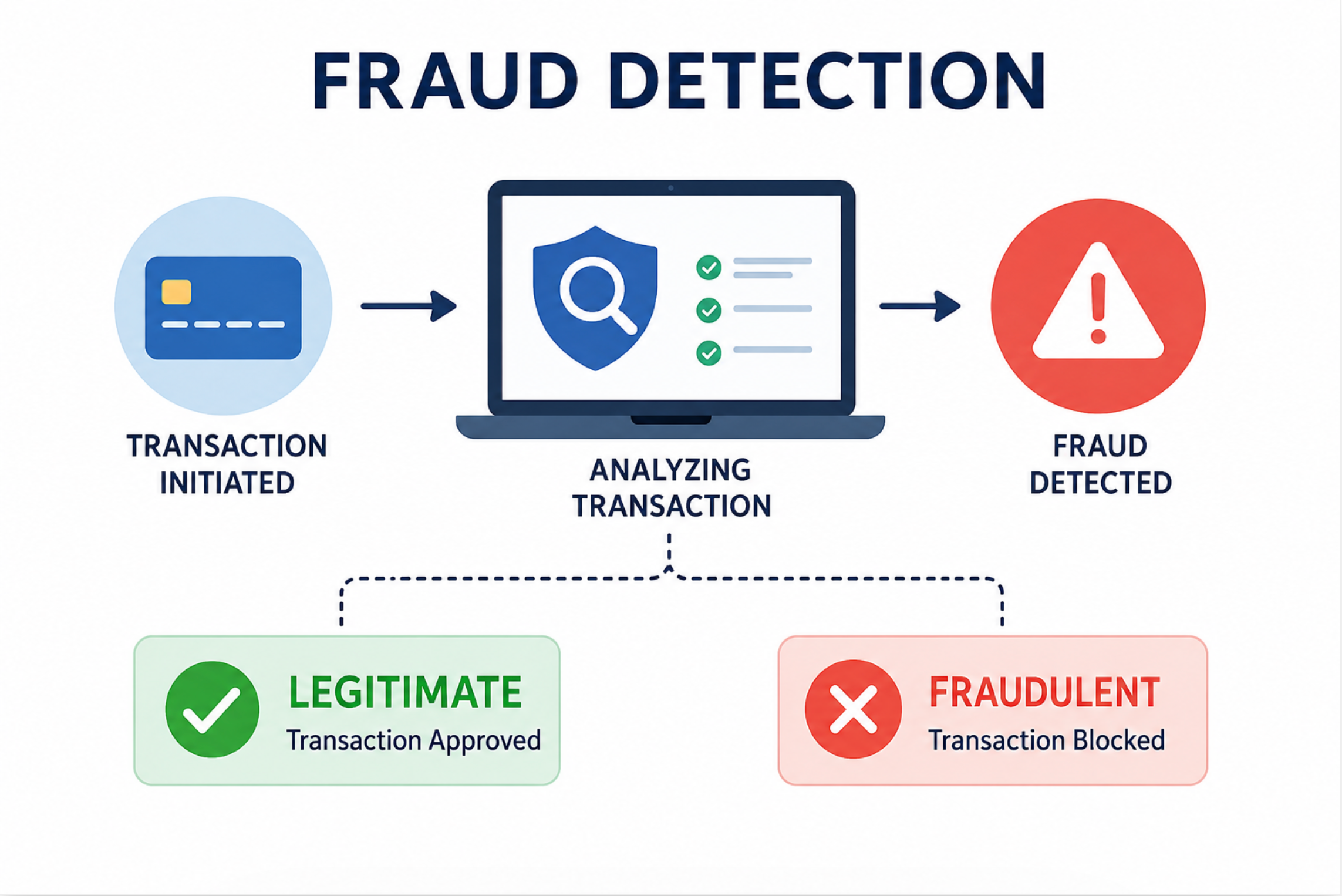
    This article details the creation of an enterprise-level platform for fraud detection and credit risk assessment. It outlines a modular system design incorporating graph features, BERT-style embeddings, and XGBoost ensembles for robust scoring. The approach emphasizes production readiness and scalability for financial applications. AI

    Building an Enterprise Fraud Detection & Credit Risk Platform from Scratch

    IMPACT Details a practical application of ML models like BERT and XGBoost in financial risk assessment, showcasing integration strategies.

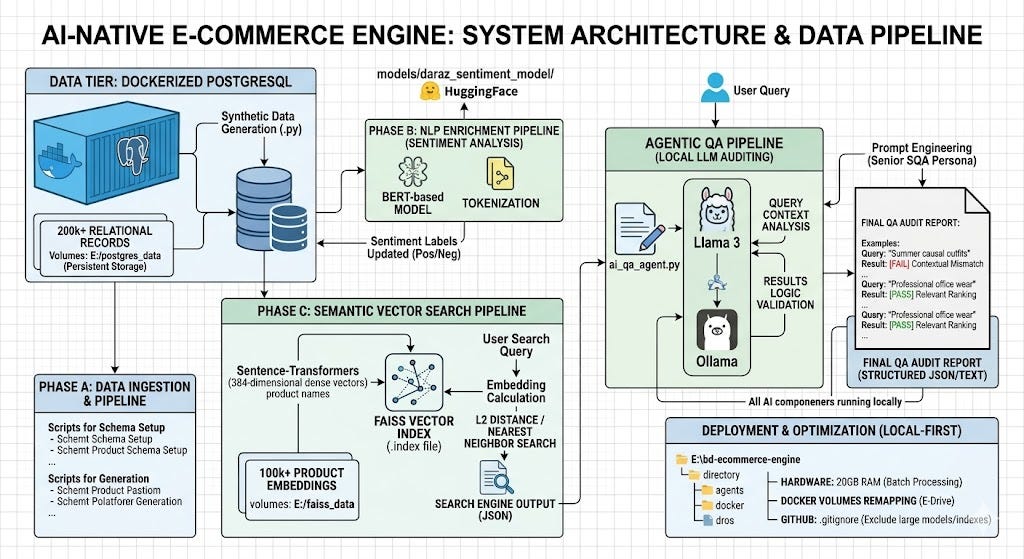
  7. I Built a Production-Grade AI Search Engine on a 20GB Laptop (No Cloud Required)

    An individual developed a production-grade AI-powered e-commerce search engine that operates entirely on a consumer laptop with 20GB of RAM, eliminating the need for cloud services. This system addresses the limitations of traditional keyword-based search by integrating NLP sentiment analysis and semantic vector search. It utilizes a Llama 3 8B model for autonomous auditing of search results, demonstrating that advanced AI capabilities can be achieved without substantial hardware or cloud infrastructure. AI

    I Built a Production-Grade AI Search Engine on a 20GB Laptop (No Cloud Required)

    IMPACT Demonstrates feasibility of advanced AI search on consumer hardware, potentially lowering barriers for localized AI applications.

  8. How My Career Evolved Like an AI (LLM Architectures )System

    An individual's career progression is likened to the evolution of Large Language Model (LLM) architectures. The early career, akin to encoder-only models like BERT, focuses on absorbing and representing knowledge. The mid-career phase, mirroring decoder-only models such as GPT, emphasizes generating outputs and solving problems. Finally, the role of an AI Solution Architect aligns with encoder-decoder models like T5, requiring a continuous translation between business needs and technical solutions. AI

    How My Career Evolved Like an AI (LLM Architectures )System

    IMPACT Offers a novel perspective on understanding career development through the lens of AI architecture.

  9. Explainable AI: Context-Aware Layer-Wise Integrated Gradients for Explaining Transformer Models

    Researchers have developed a new framework called Context-Aware Layer-wise Integrated Gradients (CA-LIG) to improve the explainability of Transformer models. This framework offers a unified, hierarchical approach that computes layer-wise attributions and fuses them with attention gradients. CA-LIG aims to provide more faithful, context-sensitive, and semantically coherent explanations of how these models make decisions across various tasks and architectures. AI

    IMPACT Provides more comprehensive and reliable explanations for Transformer decision-making, advancing interpretability.

  10. Towards Explainability of SLMs by investigating Token Level Activation

    Researchers have developed a new framework called Activation Flow Network (AFN) to better understand the internal workings of large language models like BERT. This method quanties token-level representational importance by analyzing hidden-state activation strengths at Layer 8 of the model. Experiments show that semantically meaningful words are consistently highlighted as highly activated, suggesting Layer 8 is a key area for consolidating semantic information and making these models more transparent. AI

    IMPACT Provides a more transparent method for understanding LLM decision-making, potentially aiding in debugging and trust.

  11. A Fine-Tuned BERT Classifier for Personal-Letter Titles in Late-Ming and Early-Qing Collected Works

    Researchers have developed Lepton, a BERT-based classifier designed to distinguish personal letter titles from prefaces in Classical Chinese collected works. The model was fine-tuned on over 5,000 hand-labeled titles from the late Ming and early Qing dynasties. This tool has been implemented at the China Biographical Database to identify an estimated 55,000 letters, contributing to the Ming Letter Platform. AI

    IMPACT This model demonstrates a novel application of NLP for historical text analysis, potentially enabling new avenues for digital humanities research.

  12. Fortress: A Case Study in Stabilizing Search Recommendations via Temporal Data Augmentation and Feature Pruning

    Researchers have developed Fortress, a framework designed to improve the stability and accuracy of search and recommendation systems. This method addresses temporal instability in predictive models by identifying and pruning features that cause inconsistent prediction scores over time. Fortress uses historical data to detect volatile features, particularly engagement-based signals, while retaining their predictive power, leading to more reliable downstream decision-making in multi-stage systems. AI

    IMPACT Enhances the reliability of AI-driven search and recommendation systems by stabilizing predictive models.

  13. How Reading Papers Helps You Be a More Effective Data Scientist

    A new arXiv paper details a study comparing BERT and T5 models for Named Entity Recognition (NER), analyzing their performance with different tag schemes and hyperparameters. The research aims to provide insights into common errors and compare the architectures for practical applications. Separately, an article discusses the benefits of reading research papers for data scientists, highlighting how it can improve effectiveness by learning from existing work and staying updated on advancements. AI

    How Reading Papers Helps You Be a More Effective Data Scientist

    IMPACT Research papers offer valuable insights and practical applications for AI professionals, helping them stay updated and avoid reinventing the wheel.