PulseAugur / Brief
EN
LIVE 04:27:31

Brief

last 24h
[5/5] 221 sources

Multi-source AI news clustered, deduplicated, and scored 0–100 across authority, cluster strength, headline signal, and time decay.

  1. Geometric Alignment: Can Curved Embedding Spaces Make AI Safer?

    Researchers are exploring a novel approach to AI safety by introducing geometric alignment within the model's embedding space, rather than relying solely on post-hoc behavioral controls. This method, demonstrated in the DRM Transformer, uses a curved manifold where the 'cost' or 'difficulty' of traversing semantic paths is encoded into the geometry itself. By incorporating semantic anchors and geodesic attention, the model can intrinsically pay more attention to regions of higher risk or uncertainty, potentially facilitating negotiation between humans and AI rather than enforcing a purely subservient role. AI

    Geometric Alignment: Can Curved Embedding Spaces Make AI Safer?

    IMPACT Proposes a fundamental shift in AI alignment research, moving from behavioral controls to intrinsic geometric properties of models.

  2. "Out of Tune: Fine-Tuning Foundation Models Leads to Unpredictable Safety Drift" Benign fine-tuning unpredictably shifts # AI safety. Small updates compromise s

    A new paper titled "Out of Tune: Fine-Tuning Foundation Models Leads to Unpredictable Safety Drift" highlights a critical issue in AI development. The research indicates that even minor adjustments to pre-trained models can unexpectedly degrade their safety features. This safety drift occurs irrespective of the model's original size, posing a significant challenge for maintaining AI alignment. AI

    "Out of Tune: Fine-Tuning Foundation Models Leads to Unpredictable Safety Drift" Benign fine-tuning unpredictably shifts # AI safety. Small updates compromise s

    IMPACT Minor model updates can compromise AI safety, necessitating new methods for evaluating and ensuring alignment post-fine-tuning.

  3. We Need Unhobbled Donors

    The AI safety field is anticipating a significant influx of philanthropic capital, but this funding is expected to arrive slowly and unevenly. This creates a critical need for "unhobbled donors" who can deploy capital rapidly and support neglected early-stage projects before the larger wave of funding materializes. Acting now offers immense leverage due to closing political windows, developing talent pipelines, and the time required to build credibility and establish influential frameworks. AI

    IMPACT Urges AI safety stakeholders to adopt more agile funding strategies to maximize impact amidst anticipated capital influx.

  4. A political movement will save us from extinction

    A political movement is necessary to navigate the existential risks posed by rapidly advancing superintelligence, according to an AI safety advocate. The author argues that current political structures are ill-equipped to handle the speed of AI development, citing governmental responses to COVID-19 as an example. They propose that a broad, democratized movement, drawing parallels to historical civil rights efforts, can unite diverse political factions to ensure AI benefits humanity. AI

    IMPACT Argues for a political movement to address AI risks, potentially influencing future AI policy and regulation.

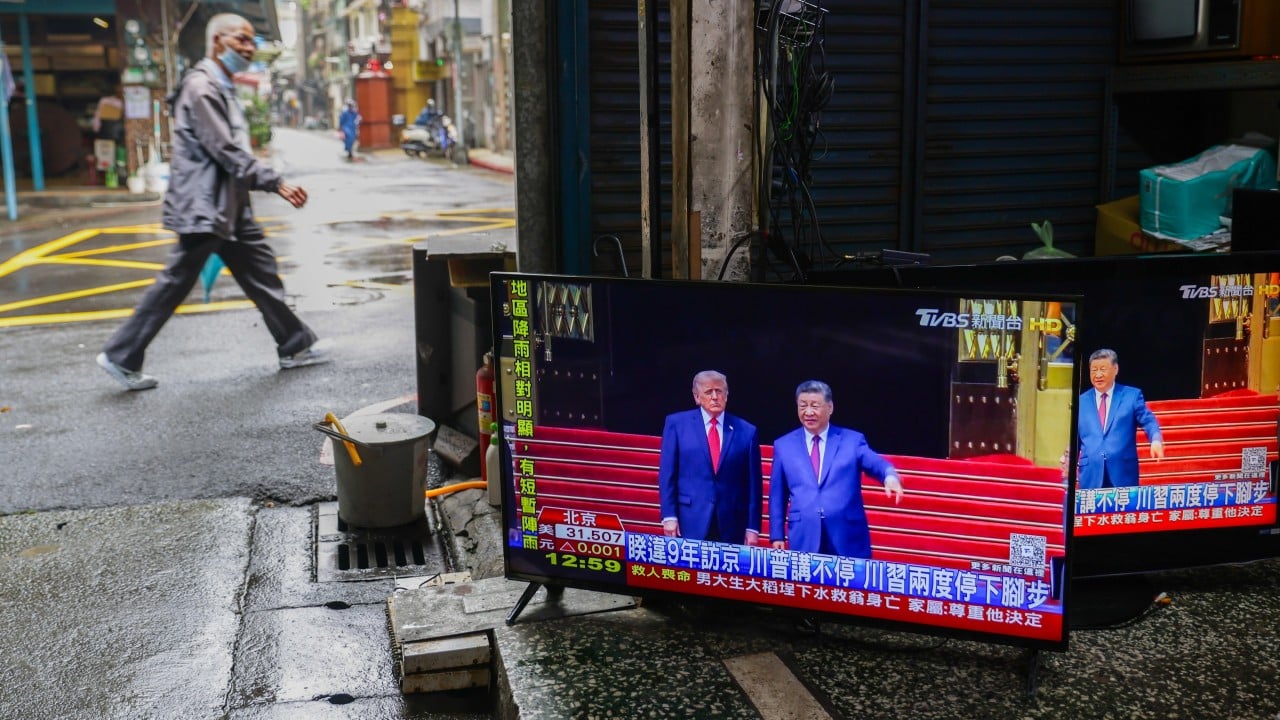
  5. How will Beijing judge Trump’s take on Taiwan? Look for 1 critical factor

    Chinese President Xi Jinping and former US President Donald Trump met in Beijing to discuss trade and AI safety, with both leaders emphasizing the need for best practices to prevent non-state actors from accessing advanced AI. However, the discussions reportedly overlooked critical governance issues related to autonomous systems and potential conflicts arising from US and Chinese AI operations. A key indicator for Beijing in assessing US-China relations, particularly concerning Taiwan, is US arms sales to the island. AI

    How will Beijing judge Trump’s take on Taiwan? Look for 1 critical factor

    IMPACT Discussions on AI safety best practices and potential conflicts between US and Chinese AI operations highlight geopolitical considerations in AI development.