PulseAugur / Brief
EN
LIVE 22:47:51

Brief

last 24h
[13/13] 222 sources

Multi-source AI news clustered, deduplicated, and scored 0–100 across authority, cluster strength, headline signal, and time decay.

  1. Inside the 800VDC Revolution – Part 1

    The 800VDC power delivery standard is emerging as a critical advancement for AI data centers, promising significant improvements in efficiency and performance. This technology enables faster charging and more robust power management for the high-density computing required by AI workloads. Adoption of 800VDC is expected to reduce energy consumption and operational costs, making it a key enabler for scaling AI infrastructure. AI

    IMPACT Accelerates the development and deployment of more efficient and powerful AI infrastructure by addressing power delivery bottlenecks.

  2. The memory shortage is causing a repricing of consumer electronics

    A significant shortage in memory production is driving up the cost of consumer electronics, particularly impacting the sub-$100 smartphone market. This shortage is attributed to the increasing demand for High Bandwidth Memory (HBM) used in AI data centers, which now consumes a much larger portion of wafer capacity compared to traditional DDR and LPDDR memory. Memory manufacturers are prioritizing HBM due to its profitability and the lessons learned from past industry consolidation, leading to constrained production of memory for everyday devices. AI

    IMPACT AI's demand for HBM is causing a memory shortage, leading to higher prices for consumer electronics and impacting the availability of affordable smartphones.

  3. South Korea Post Plans to Increase Investment in AI Data Centers and European and American Real Estate

    Korea Post, a major South Korean institutional investor managing over $100 billion, is increasing its investment in high-yield assets. The organization is focusing on AI data centers and European and American real estate, including multi-family housing and logistics facilities, to improve investment returns amidst declining traditional postal business revenue. In a separate development, an industrial base for embodied intelligence and a distributed data collection and training field were launched in Chengdu, China, with the first batch of locally manufactured humanoid robots, including the Yuanzheng A3 and A2 models, rolling off the production line. AI

    IMPACT Major institutional investor shifts capital towards AI infrastructure, signaling growing confidence in the sector's long-term growth.

  4. 5,400 data centers. $25B in hidden damage. Farmland destroyed. Diesel contamination. Nuclear reactors. 90,000 cameras with microphones. You're paying for all of

    The rapid expansion of AI data centers is imposing significant environmental and financial burdens across the United States. A recent report highlights that these facilities are responsible for $25 billion in hidden economic damage, including farmland destruction and diesel contamination. The infrastructure also involves a vast network of 90,000 cameras with microphones, raising concerns about resource consumption and potential misuse. AI

    5,400 data centers. $25B in hidden damage. Farmland destroyed. Diesel contamination. Nuclear reactors. 90,000 cameras with microphones. You're paying for all of

    IMPACT AI infrastructure expansion is causing substantial environmental damage and economic strain, highlighting the hidden costs of AI development.

  5. AI data centers are making cities warmer. Researchers calculated the exact impact https://www.fastcompany.com/91547201/ai-data-centers-making-cities-hotter-rese

    The heat generated by AI data centers is contributing to a measurable increase in urban temperatures. Researchers have quantified this impact, highlighting the environmental consequences of the growing demand for AI processing power. This phenomenon underscores the need to consider the thermal footprint of AI infrastructure as it expands. AI

    IMPACT The heat generated by AI data centers contributes to urban warming, highlighting the environmental consequences of AI infrastructure growth.

  6. https://www. huffpost.com/entry/alexandria- ocasio-cortez-epa-data-centers-water-pollution_n_6a0f8ecfe4b084c012e4d5d1 AOC democratic senator from New York went

    Alexandria Ocasio-Cortez and Bernie Sanders are proposing legislation to halt the construction of AI data centers until environmental regulations are established. Ocasio-Cortez recently highlighted concerns by presenting EPA officials with jars of polluted water from Georgia, where data centers have been built. This action underscores a growing debate about the environmental impact of AI infrastructure. AI

    IMPACT Potential to significantly slow AI development by restricting data center construction and increasing regulatory hurdles.

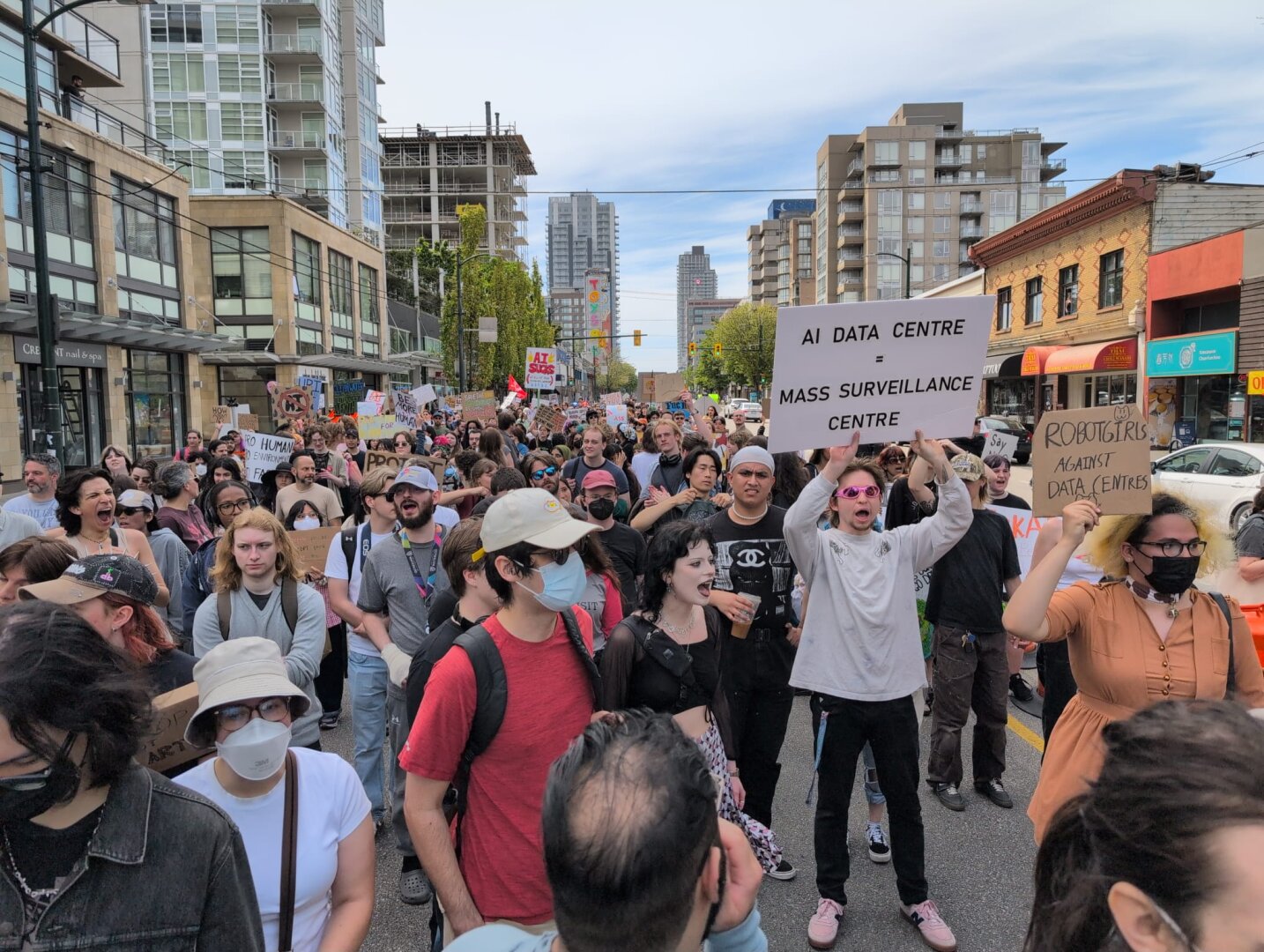
  7. Yesterday I attended the first major protest against AI data centres in Vancouver. There was a solid turnout, more than I expected for an event organized by a t

    Hundreds of people gathered in Vancouver yesterday for a protest against AI data centers, disrupting traffic on major streets. The primary concerns voiced by attendees included the social and cultural impacts of AI, such as misinformation and the devaluation of arts, alongside environmental worries like water scarcity and fossil fuel consumption. Participants also questioned the prioritization of AI development over essential services like housing and healthcare. AI

    Yesterday I attended the first major protest against AI data centres in Vancouver. There was a solid turnout, more than I expected for an event organized by a t

    IMPACT Highlights growing public opposition to AI infrastructure development due to social and environmental impacts.

  8. Why Americans Are Turning Against Data Centers

    A recent Gallup poll indicates that a significant majority of Americans, 71%, oppose the construction of AI data centers in their local areas, surpassing opposition to nuclear power plants. Concerns primarily revolve around environmental impacts and resource consumption, such as water and electricity usage, alongside effects on local infrastructure and community character. This public wariness mirrors sentiment towards other emerging technologies like prediction markets and cryptocurrencies, where perceived risks and lack of familiarity outweigh potential benefits for many. AI

    Why Americans Are Turning Against Data Centers

    IMPACT Public opposition to AI data centers could slow infrastructure development and influence future policy decisions regarding AI deployment.

  9. Why Your Next Smartphone Could Cost More Because of AI: Akis Evangelidis, Co-Founder & President, India, Nothing https:// web.brid.gy/r/https://in.masha ble.com

    Smartphone prices are increasing due to the high demand for memory chips used in both devices and AI data centers. Akis Evangelidis of Nothing stated that the cost of these essential chips has surged from around $20 to over $100 per phone. This price hike impacts manufacturers' ability to invest in other components without raising retail prices. Consequently, the typical post-launch price drops for smartphones may cease as AI-driven chip demand is expected to remain strong into next year. AI

    Why Your Next Smartphone Could Cost More Because of AI: Akis Evangelidis, Co-Founder & President, India, Nothing https:// web.brid.gy/r/https://in.masha ble.com

    IMPACT AI's demand for chips is directly increasing consumer electronics costs and altering traditional pricing models.

  10. # ai # AIDataCenter # datacenters # watershortage # water # taxes # simpingforbillionaires

    The construction of AI data centers is exacerbating water shortages in certain regions, drawing criticism for the immense resource consumption by tech billionaires. These facilities require vast amounts of water for cooling, a demand that conflicts with local needs and environmental concerns. Critics argue that the focus on rapid AI development and the pursuit of profit by tech leaders are contributing to ecological damage and resource depletion. AI

    # ai # AIDataCenter # datacenters # watershortage # water # taxes # simpingforbillionaires

    IMPACT Criticism highlights the significant environmental costs of AI infrastructure, potentially influencing future policy and public perception.

  11. “I’ve been organizing for 15 years, and it’s always been the case that women are leading our fights,” said Danny Cendejas, a campaign specialist for MediaJustic

    Women, trans, queer, and nonbinary individuals are at the forefront of the movement opposing the construction of AI data centers. These groups are leading the charge against the environmental and public health impacts associated with these facilities. Their activism highlights a long-standing trend of marginalized communities spearheading environmental justice efforts. AI

  12. Stephen Fox (@StephenGLFox) mentions that the merger of NextEra Energy and Dominion Energy is being interpreted as a strategy to target AI data center power supply. The market is reacting to the growing demand for large-scale power and infrastructure due to AI, and rather than replacing human labor

    Hive has launched an AI tool that can detect AI-generated content and deepfakes. Users can mention the tool with a piece of content to receive an analysis of its likelihood of being AI-generated or a deepfake. Separately, the merger between NextEra Energy and Dominion Energy is being viewed as a strategic move to supply power to AI data centers, highlighting the growing demand for energy infrastructure driven by the AI boom. AI

    Stephen Fox (@StephenGLFox) mentions that the merger of NextEra Energy and Dominion Energy is being interpreted as a strategy to target AI data center power supply. The market is reacting to the growing demand for large-scale power and infrastructure due to AI, and rather than replacing human labor

    IMPACT New tools emerge for content verification, while energy sector consolidation signals massive infrastructure demand for AI.

  13. Calgary teen wins international video award addressing AI’s water use Anie Udofia, 15, was one of 5,000 students to enter the competition, but her project exami

    A 15-year-old Calgary student named Anie Udofia has won an international video award for her project on cooling AI data centers. Udofia's work stood out among 5,000 entries in the competition. Her project focused on methods to reduce the significant water consumption associated with AI technology. AI

    Calgary teen wins international video award addressing AI’s water use Anie Udofia, 15, was one of 5,000 students to enter the competition, but her project exami