PulseAugur / Brief
EN
LIVE 11:47:27

Brief

last 24h
[50/10532] 224 sources

Multi-source AI news clustered, deduplicated, and scored 0–100 across authority, cluster strength, headline signal, and time decay.

  1. Adapting Vision-Language Models from Iconic to Inclusive for Multi-Label Recognition Without Labels

    Researchers have developed a new unsupervised framework to adapt vision-language models (VLMs) for more comprehensive multi-label image recognition. The method addresses the tendency of VLMs to focus on a single iconic object, thereby missing other relevant labels in an image. By employing "cutting" and "sewing" stages, the framework enhances the model's ability to identify multiple objects and adjust label distributions without requiring manual annotations. Experiments show this approach significantly outperforms existing unsupervised methods and even some weakly supervised baselines. AI

    IMPACT Enables more comprehensive image understanding without manual labeling, potentially improving applications in image search and content moderation.

  2. Right Regions, Wrong Labels: Semantic Label Flips in Segmentation under Correlation Shift

    Researchers have identified a specific failure mode in semantic segmentation models, termed 'semantic label flips,' where models correctly identify object boundaries but assign incorrect semantic labels to foreground pixels. This issue is exacerbated by correlation shifts between training and testing data, particularly when non-causal features are strongly tied to labels. The study proposes a new metric, 'Flip,' to quantify these within-object label swaps and an entropy-based 'flip-risk' score to detect such cases during inference. AI

    IMPACT Highlights a critical robustness issue in segmentation models, potentially impacting real-world applications and guiding future research towards more reliable AI systems.

  3. max_pixels is a token budget in disguise — and the right cap depends on the size of what you're looking for

    The `max_pixels` configuration in Qwen2.5-VL models is a token budget in disguise, with default settings often leading to a significantly higher budget than recommended. This can result in suboptimal performance, especially for large targets within an image. The optimal token budget is dependent on the size of the specific object being sought, with smaller targets benefiting from larger budgets while larger targets perform best at lower token counts. AI

    max_pixels is a token budget in disguise — and the right cap depends on the size of what you're looking for

    IMPACT Optimizing `max_pixels` can improve accuracy and efficiency for multimodal models, especially in applications involving object detection or grounding.

  4. Building a Laravel MCP Server That Answers Questions Over Real Data

    This tutorial guides users through building a Model Context Protocol (MCP) server using Laravel, enabling AI assistants like Claude to interact with real data. The MCP allows AI models to execute code and access application data, differentiating itself from traditional REST APIs by being designed for AI consumption. The guide covers creating tools, resources, and prompts within the server, and demonstrates connecting it to Claude Desktop for practical application. AI

    IMPACT Enables AI models to directly query and interact with application data, streamlining data analysis and task automation.

  5. 🧠 A new #Google paper details how people are using #AIMode in the US and describes a profound transformation of online search. 👉 Details

    A new Google paper details how users are interacting with AI Mode in the US, revealing a significant shift in online search behaviors. The research highlights the transformative impact of AI on how people seek information. AI

    🧠 A new #Google paper details how people are using #AIMode in the US and describes a profound transformation of online search. 👉 Details

    IMPACT AI Mode is fundamentally changing how users conduct online searches, indicating a major shift in information retrieval.

  6. The Clustering Strikes Back: Building Cost-Effective and High-Performance ANNS at Scale with Helmsman

    Researchers at RedNote (Xiaohongshu) have developed HELMSMAN, a new clustering-based approximate nearest neighbor search (ANNS) system designed to significantly reduce hardware costs for large-scale ANNS deployments. By integrating a userspace storage stack, a learned pruning module, and GPU-accelerated construction pipelines, HELMSMAN achieves substantial savings, reducing hardware costs by over 90%. The system can handle billion-scale index rebuilds within hours and currently supports ANNS workloads on 40 machines that previously required approximately 35,000 cores and 0.35 PB of DRAM. AI

    IMPACT Reduces hardware costs for large-scale ANNS, potentially enabling wider adoption of AI-powered search and recommendation systems.

  7. Does AI have an attention problem? Study used the classic Stroop test to investigate GPT-4o and Claude. The results suggest that some AI errors are missed

    A recent study utilized the classic Stroop test to investigate the attention capabilities of AI models like GPT-4o and Claude. The findings indicate that certain errors made by these AI systems may stem more from control issues rather than a lack of knowledge. AI

    IMPACT This research suggests AI errors may be related to control mechanisms rather than knowledge gaps, potentially influencing how AI systems are developed and evaluated.

  8. High-precision in-situ detection of lithium isotopes successfully achieved

    A research team at Lanzhou University has successfully developed a method for high-precision in-situ detection of lithium isotopes using laser-induced breakdown spectroscopy (LIBS). This breakthrough allows for the complete resolution of lithium double-line structures and isotope displacement peaks, establishing a framework for remote, in-situ, and rapid high-precision analysis of lithium isotopes. The findings, published in the Journal of the American Chemical Society, have significant applications in nuclear material management, fusion reactor tritium breeding material monitoring, and reactor safety control. AI

    IMPACT This advancement in lithium isotope analysis could support critical areas like nuclear material management and fusion energy development.

  9. LongSpike: Fractional Order Spiking State Space Models for Efficient Long Sequence Learning

    Researchers have introduced LongSpike, a new Spiking Neural Network (SNN) framework that utilizes fractional-order State-Space Modeling (f-SSM) to enhance the learning of long sequences. This approach overcomes the limitations of traditional first-order SNNs, which struggle with capturing long-range dependencies. LongSpike enables more effective integration of neuronal dynamics with long-memory kernels and is designed for efficient, parallel training. Evaluations on benchmarks like Long Range Arena and WikiText-103 show LongSpike achieving superior accuracy compared to existing SNNs while maintaining computational efficiency. AI

    IMPACT Introduces a novel SNN architecture that improves long-sequence learning efficiency and accuracy, potentially impacting areas requiring complex temporal data processing.

  10. 🔥 Hot this week Can AI predict a patient’s response to an antidepressant within 48 hours of first dose? https:// stuffaicantdo.com/t/predict-a- patients-respons

    Researchers are exploring the use of AI to predict a patient's response to antidepressants. The goal is to determine efficacy within 48 hours of the initial dose. This could significantly speed up treatment decisions for individuals struggling with depression. AI

    IMPACT Could accelerate personalized treatment for depression by rapidly identifying effective antidepressants.

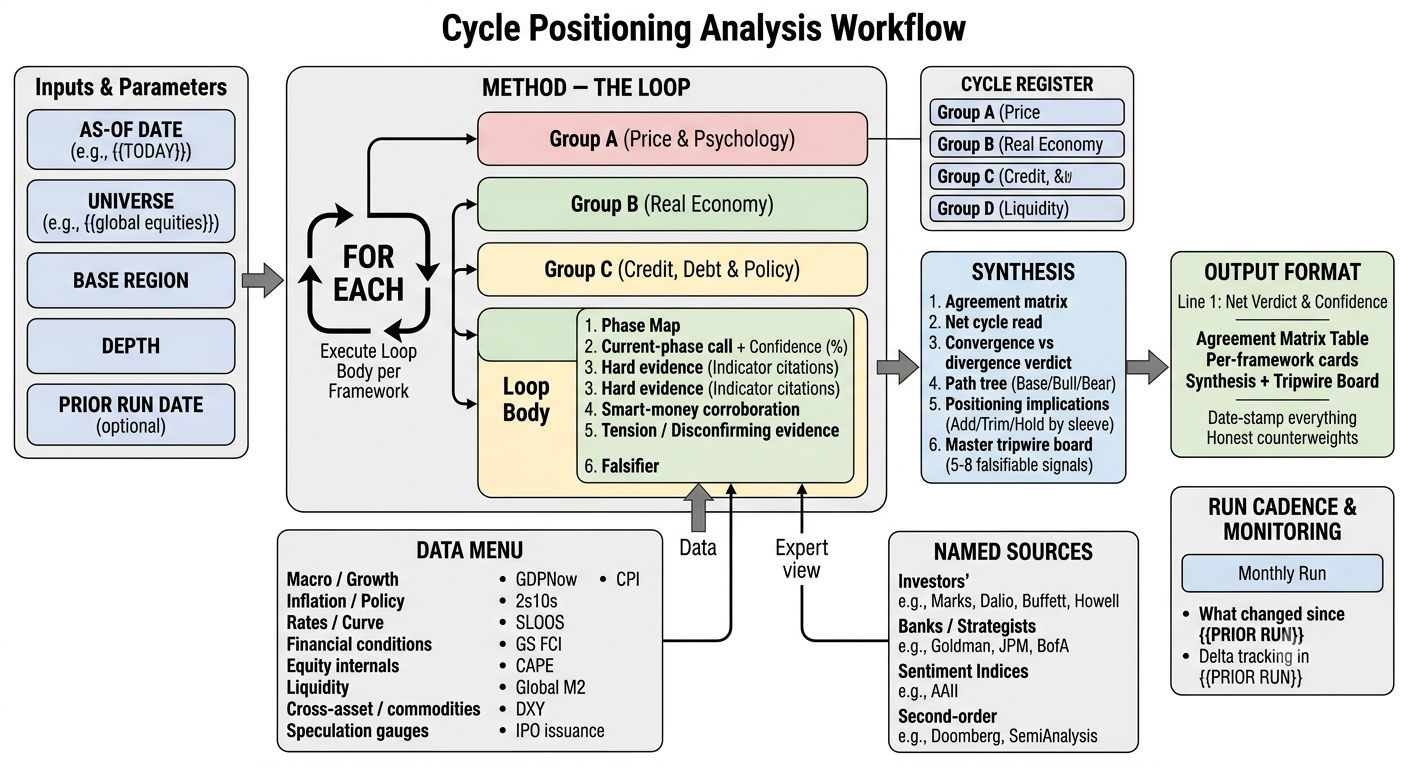
  11. Loop-Style Prompts: Map-Reduce for Reasoning — example for understanding market cycle dynamics

    This article explores a novel prompting technique called "loop-style prompts" that enhances the reasoning capabilities of large language models. By employing a map-reduce approach, these prompts allow models to process and retain more information, leading to more comprehensive analysis. The author demonstrates this method's effectiveness by applying it to understand complex market cycle dynamics, transforming a simple guess into a detailed analytical system. AI

    Loop-Style Prompts: Map-Reduce for Reasoning — example for understanding market cycle dynamics

    IMPACT This technique could enable more sophisticated and nuanced analysis from LLMs, improving their utility in complex domains like financial markets.

  12. RT @RyanLeeMiniMax: With the MaxProof framework, M3 exceeded the human gold-medal threshold on both sets. In this paper, we go deeper into…

    MiniMax AI has published a paper detailing their MaxProof framework, which has enabled their M3 model to surpass human gold-medal performance on mathematical proof tasks. The paper elaborates on the technical advancements, including base model enhancements, verifier alignment, refinement capabilities, and the design of the proof generation process. AI

    IMPACT Demonstrates significant progress in AI's ability to perform complex mathematical reasoning and proof generation.

  13. CVPR 2026 Ultimate Inventory: These 5 Papers, 1 Talk, and 3 Booths Hold the Answers to the Next Decade of Computer Vision

    CVPR 2026 highlighted a significant shift in computer vision towards active understanding and action, particularly in embodied AI. Several award-winning papers focused on 4D scene reconstruction, generalist gaming agents, and 3D object and human body reconstruction from images. A keynote speech emphasized the transformative potential of generative AI in molecular design and drug discovery, moving towards a programmable biology. Exhibitors like NVIDIA showcased advancements in robotics and autonomous driving, positioning themselves as key infrastructure providers for the embodied AI ecosystem. AI

    CVPR 2026 Ultimate Inventory: These 5 Papers, 1 Talk, and 3 Booths Hold the Answers to the Next Decade of Computer Vision

    IMPACT Highlights advancements in embodied AI, generative models for molecular design, and 3D reconstruction, potentially accelerating robotics and drug discovery.

  14. CLARITree: Cholesky and Lookahead Accelerations for Regression with Interpretable Piecewise Linear Trees

    Researchers have developed CLARITree, a novel algorithm designed to construct interpretable piecewise linear regression trees more efficiently and accurately than existing methods. This new approach combines a lookahead search strategy with Cholesky updates of the Gramian matrix to achieve a favorable balance between computational speed, predictive power, and model sparsity. CLARITree demonstrates significant scalability improvements over current state-of-the-art techniques in regression analysis. AI

    IMPACT Introduces a more efficient and accurate method for building interpretable regression trees, potentially improving model explainability in machine learning applications.

  15. Graph Reinforcement Learning for Calibration-Aware Quantum Circuit Routing

    Researchers have developed a novel routing method for quantum circuits that incorporates calibration data to improve fidelity. This graph reinforcement learning approach uses same-day calibration information from IBM Heron processors to select hardware-edge SWAPs, outperforming standard routing methods like SABRE-best20 and target-aware SABRE in exact simulated fidelity. While the learned routing increases the number of routed two-qubit gates, it demonstrates a significant improvement in fidelity, particularly for smaller circuit families, suggesting a more robust compilation strategy for quantum processors. AI

  16. Rapid mixing for Gibbs measures in Riemannian manifolds

    Researchers have identified conditions for rapid mixing of Gibbs measures in Riemannian manifolds, a key aspect of Langevin dynamics. The study focuses on manifold curvature, temperature, and avoiding local minima to achieve polynomial mixing times. This work establishes a relationship between Langevin processes in different domains, which may have broader applications. AI

  17. Summer travel bookings are hot, institutions predict high revenue growth for 7 stocks

    A new AI tool designed for scientific research is gaining traction in laboratories, reportedly enabling users to draft research papers in as little as four hours. This tool automates significant portions of the research process, aiming to accelerate scientific discovery and publication. AI

    IMPACT Accelerates scientific research and publication cycles by automating paper drafting.

  18. Examining the Cognitive Gap Between Authors and Peer Reviewers on Academic Paper Novelty

    A study analyzing 15,328 academic papers from Nature Communications (2016-2021) and their peer reviews reveals a cognitive gap between authors and reviewers regarding paper novelty. Both parties prioritize result-oriented innovation, though reviewers adopt a broader evaluation stance. The research indicates that promotional language in papers is most effective for moderately innovative works, influencing reviewer evaluations in this 'gray area' while having less impact on highly or minimally innovative papers. AI

  19. Job titles of the future: Nature’s drug designer

    Chemist Tim Cernak is pioneering "conservation chemistry," applying his Big Pharma expertise to develop specialized drugs for animals and ecosystems. He utilizes AI tools like Google DeepMind's AlphaFold to visualize protein structures and rapidly design potential treatments for various species, from frogs with fungal infections to Gila monsters with parasites. Cernak aims to create cutting-edge chemical solutions for conservation, addressing what he sees as a critical gap in current environmental efforts. AI

    IMPACT AI tools like AlphaFold are enabling novel applications in conservation, accelerating the design of specialized treatments for endangered species and ecosystems.

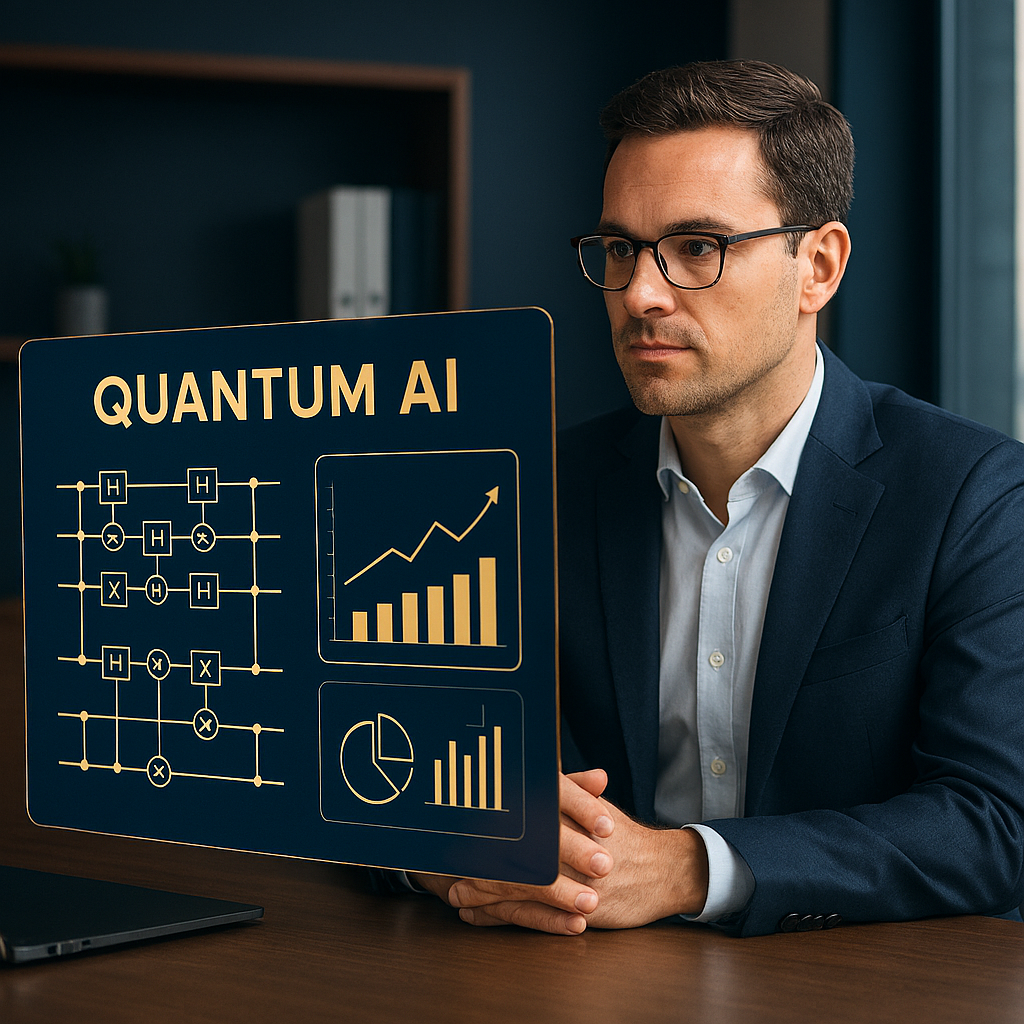
  20. AI Is Running Out of Road. These Numbers Show Why Quantum Is the Only Detour.

    Traditional AI models are hitting computational and energy limits due to their immense size and training requirements. Quantum computing, with its ability to explore multiple solutions simultaneously using qubits, offers a potential solution. By combining quantum hardware with AI for error management, researchers aim to significantly speed up AI model training and overcome current bottlenecks. AI

    AI Is Running Out of Road. These Numbers Show Why Quantum Is the Only Detour.

    IMPACT Quantum computing may unlock faster AI training and more powerful models, overcoming current hardware and energy limitations.

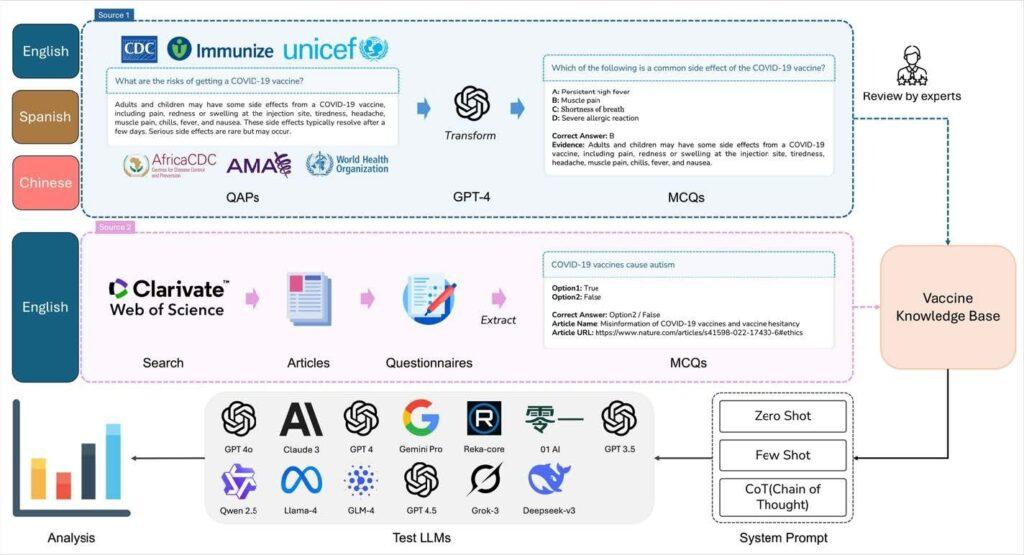
  21. Leading AI models ace many vaccine questions but falter on clinical rules https://www. byteseu.com/2099710/ # AI # ArtificialIntelligence # Healthcare # Immuniz

    A recent evaluation found that leading AI models perform well when answering questions about vaccines. However, these same models struggled to correctly apply clinical rules, specifically in the context of phenytoin dosing. This highlights a gap between general knowledge recall and the precise application of complex medical guidelines by AI systems. AI

    Leading AI models ace many vaccine questions but falter on clinical rules https://www. byteseu.com/2099710/ # AI # ArtificialIntelligence # Healthcare # Immuniz

    IMPACT Highlights limitations in AI's ability to apply complex clinical rules, suggesting caution in real-world medical applications.

  22. A Resilient Solution for Sewer Overflow Monitoring across Cloud and Edge

    A new research paper details a web-based demonstrator for monitoring sewer overflows, integrating deep learning models for forecasting. This system is designed to operate resiliently across both cloud and edge computing environments, ensuring functionality even during network outages. The demonstrator aims to help anticipate capacity exceedance in combined sewer systems, enabling timely preventive actions against overflows. AI

    IMPACT Provides a novel application of deep learning for environmental monitoring and resilience.

  23. Machine-learning-based multipoint optimization of fluidic injection parameters for improving nozzle performance

    Researchers have developed a machine learning approach to optimize fluidic injection parameters for nozzle performance. This method utilizes a pretrained neural network to replace computationally expensive CFD simulations, significantly reducing optimization time. The system employs a prior-based prediction strategy for accuracy and uses back-propagation for efficient gradient calculation. In a test case, this approach improved the average nozzle thrust coefficient of a specific nozzle type by 1.14% across seven operating conditions. AI

  24. XPR: An Extensible Cross-Platform Point-Based Differentiable Renderer

    Researchers have developed XPR, a new framework designed to simplify the creation and deployment of point-based differentiable renderers. This framework allows developers to implement new rendering methods with minimal code by separating method-specific logic from the core rendering pipeline. XPR's modular design enables it to compile and run on various hardware accelerators, including GPUs, TPUs, and CPUs, facilitating faster experimentation and cross-platform compatibility for graphics and AI applications. AI

  25. Physically Constrained Ensemble Gaussian Process Modelling for Expensive Quantum Systems with Heteroskedastic Noise

    Researchers have developed a new framework called Physically Constrained Ensemble Gaussian Process (pc-EGP) to model complex quantum systems more efficiently. This method incorporates physical constraints directly into the modeling process and uses an ensemble of Gaussian Process models to handle noisy simulation data. The pc-EGP framework was demonstrated on synthetic data and then applied to real quantum systems, showing improved accuracy and physical relevance compared to standard Gaussian Processes. AI

    IMPACT This framework could accelerate research in quantum physics by enabling more efficient and accurate modeling of complex systems.

  26. FreeBridge: Variational Schr\"odinger Bridges for Cellular Transition Dynamics

    Researchers have developed FreeBridge, a new method for modeling cellular transitions using variational Schrödinger Bridges. This approach infers stochastic processes between control and treated cell populations, even when only marginal endpoint data is available. FreeBridge constrains these learned transitions within the geometry of observed cellular morphologies, improving biological interpretability and reducing violations of intermediate support. The method demonstrates competitive or improved performance on several benchmark datasets, including BBBC021, RxRx1, and JUMP. AI

    IMPACT Introduces a novel computational framework for inferring cellular dynamics from limited observational data, potentially advancing biological research.

  27. Spatially Masked Regression Reveals Local and Distributed Predictability in Electrophysiological Recordings

    Researchers have developed a new framework called Spatially Masked Regression (SMR) to analyze neural recordings. SMR quantifies how much of an electrode's signal reflects local activity versus distributed network activity. By progressively masking nearby electrodes, the method reveals that individual channels contain both local and broader distributed information, with significant predictability remaining even when immediate neighbors are excluded. AI

    IMPACT Provides a novel method for dissecting signal origins in neural data, potentially improving brain-computer interfaces and understanding of neural computation.

  28. EventRadar: Long-Range Visual UAV Discovery through Spatiotemporal Event Sensing

    Researchers have developed EventRadar, a novel system for detecting unmanned aerial vehicles (UAVs) at long ranges using event cameras. This system leverages the temporal periodicity of propeller-induced motion, a cue that remains visible even when visual appearance degrades at distances up to 1500 meters. EventRadar fuses scanning events with IMU pose data to create a scene memory, distinguishing transient targets from background clutter, and employs a specialized algorithm to recover harmonic evidence of UAV activity. In tests, the system achieved high detection accuracy, significantly reducing false negatives and demonstrating real-time feasibility. AI

    IMPACT This research introduces a novel approach to UAV detection, potentially enhancing security systems around sensitive locations.

  29. Internet of Everything in the 6G Era: Paradigms, Enablers, Potentials and Future Directions

    This paper explores the concept of the Internet of Everything (IoE) as an advancement over the Internet of Things (IoT), aiming to create a unified intelligent ecosystem by integrating people, data, processes, and things. It details IoE's architecture, enabling technologies, and the challenges it faces, particularly in the context of future 6G networks. The research highlights key areas for future development, including scalability, security, privacy, and energy efficiency. AI

    IMPACT Explores integration of AI and advanced networking for future intelligent ecosystems.

  30. Artificial Intelligence in Ship Finance: Applications, Opportunities, and a Case Study in AI-Augmented Loan Origination

    A new research paper explores the application of artificial intelligence, specifically large language models (LLMs), within the complex domain of ship finance. The paper details how AI can process vast amounts of unstructured data from financial, technical, and regulatory documents, which is crucial given increasing ESG reporting demands. It proposes a modular agentic architecture for AI-assisted loan origination, including an LLM-based extraction module and a chatbot interface, to help maritime finance professionals manage complex information and reporting requirements. AI

    IMPACT Potential to streamline complex financial document analysis and automate loan origination processes in maritime finance.

  31. SwiftCTS: Fast Cross-Design Prediction and Pareto Optimization of Clock Tree Metrics via Few-Shot Calibration

    Researchers have developed SwiftCTS, a novel framework for optimizing clock tree synthesis in chip design. This system uses physics-informed surrogate models and gradient-boosted ensembles to achieve rapid predictions and Pareto optimization of power, wirelength, and timing skew metrics. SwiftCTS can adapt to new chip architectures with minimal calibration, significantly reducing prediction errors and enabling the evaluation of thousands of configurations in seconds. AI

    IMPACT Accelerates chip design cycles by providing rapid, accurate predictions for clock tree synthesis.

  32. A Multi-Modal Sensor Fusion Instrument for Measuring Regional Human Mobility: The Distributed Human Data Engine (DHDE)

    Researchers have developed the Distributed Human Data Engine (DHDE), a novel system designed to measure regional human mobility using multi-modal sensor fusion. This instrument integrates data from AI-powered cameras, route search metrics, spending records, survey responses, and meteorological information. The DHDE aims to compensate for sparse physical sensors and correct biases in demand inference, achieving strong predictive performance in validation tests. AI

    IMPACT This research introduces a novel sensor fusion architecture that could improve the accuracy of mobility data in under-served regions.

  33. Spatially Coupled Phase-to-Depth Calibration for Fringe Projection Profilometry

    Researchers have developed a new method for fringe projection profilometry that improves spatial consistency in depth reconstruction. This technique couples phase-to-depth transformations across pixels, using a shared low-dimensional mapping instead of independent per-pixel fits. The approach, demonstrated on a dental target, achieves accuracy comparable to active stereo methods while significantly reducing artifacts and parameter storage. AI

    IMPACT Introduces a novel calibration technique that enhances the spatial coherence and accuracy of 3D scanning.

  34. Contactless 3D Human Body Measurement Using Depth Cameras for Smart Health Monitoring

    Researchers have developed a new framework using depth cameras to measure human body dimensions without physical contact. The system captures 3D point cloud data, which is then processed to segment the body and calculate measurements like height and arm span. This technology aims to enhance smart health monitoring and digital health applications by enabling remote patient assessment. AI

    IMPACT Enables remote health monitoring and digital health applications through contactless body measurement.

  35. Real-Time Neural Hair Denoising

    Researchers have developed a novel real-time method for reconstructing detailed hair geometry from sparse input data. This technique utilizes neural networks for spatial and temporal reconstruction to accurately capture hair coverage and tangent information. The reconstructed geometry is then employed for physically based deferred shading, resulting in higher quality hair rendering compared to existing specialized and general reconstruction solutions. AI

    IMPACT This method could improve the visual fidelity of hair rendering in real-time applications like video games and virtual reality.

  36. OmniBioTwin: A System-of-Twinned-Systems Framework for Health Digital Twins

    Researchers have introduced OmniBioTwin, a novel framework designed to create more integrated and comprehensive health digital twins. This system-of-twinned-systems approach organizes digital twins as modular components that interact across different scales, from molecular to organ levels. The framework includes seven coordinated layers, facilitating data integration, autonomous modeling, and human-in-the-loop decision support, with an initial demonstration focusing on GLP-1 signaling pathways in Alzheimer's disease. AI

    IMPACT This framework could enable more sophisticated patient-specific modeling and decision support in healthcare.

  37. Towards a Bridge Layer Between Bibliographic and Formalized Mathematical Knowledge

    Researchers have developed a novel bridge-database designed to connect mathematical literature with formal proof libraries. This system aims to unify access to published mathematical results and their formalizations, which are currently siloed. A key feature is a paper-level formalization score that quantifies the extent to which a publication is covered by formal systems, enabling large-scale analysis of formalization efforts. AI

  38. SEDULity: A Proof-of-Learning Framework for Distributed and Secure Blockchains with Efficient Useful Work

    Researchers have introduced SEDULity, a novel framework for blockchains that integrates machine learning training into the proof-of-work process. This approach, termed Proof-of-Learning, aims to reduce the significant energy consumption associated with traditional Proof-of-Work by directing computational effort towards solving ML problems. The framework is designed to be secure, efficient, and fully distributed, with an incentive mechanism to encourage honest task verification by miners. AI

    IMPACT This framework could significantly reduce the energy footprint of blockchains by repurposing computational power for machine learning tasks.

  39. Accurate Estimation of Mutual Information in High Dimensional Data

    Researchers have developed a new protocol to improve the accuracy of mutual information estimation in high-dimensional data, a common challenge in modern scientific experiments. This method is particularly effective when the data's statistical dependencies can be represented in a lower-dimensional latent space. The protocol includes statistical consistency checks, bias correction, and confidence intervals, along with a new family of probabilistic critics to enhance performance in challenging scenarios. It has been validated on various synthetic and real-world datasets, including image data, demonstrating reliable estimation even when the ambient dimension is high. AI

    IMPACT Provides a more reliable method for analyzing complex datasets, potentially improving downstream AI model performance and interpretability.

  40. Neural ensemble Kalman filter: Data assimilation for compressible flows with shocks

    Researchers have developed a new data assimilation method called the neural ensemble Kalman filter (neural EnKF) to improve the accuracy of simulations for compressible fluid flows, particularly those involving shocks. Traditional ensemble Kalman filters struggle with these flows due to non-Gaussian distributions near shocks, leading to inaccurate results. The neural EnKF addresses this by embedding neural networks to map ensemble data into a parameter space, allowing for smoother updates and avoiding spurious oscillations. AI

    IMPACT Introduces a novel neural network-based approach to enhance the accuracy of fluid dynamics simulations, potentially impacting fields reliant on precise flow modeling.

  41. Higher order PCA-like rotation-invariant features for detailed shape descriptors modulo rotation

    Researchers have developed a method to create rotation-invariant features for detailed shape descriptors by extending Principal Component Analysis (PCA). This approach uses higher-order tensors, such as order-3 or higher, to capture more complex shape information beyond simple ellipsoidal approximations. The proposed technique aims to enable accurate, rotation-invariant object recognition in 2D and 3D, molecular shape description, and efficient shape similarity metrics. AI

    IMPACT This method could improve object recognition and similarity metrics in AI applications dealing with 3D data.

  42. Efficient and Robust Online Learning to Rank in Decentralized Systems

    Researchers have developed RankGuard, a novel decentralized framework for online learning to rank (OLTR) systems. This system allows users to collaboratively train ranking models by exchanging updates directly, bypassing the need for a central server and mitigating bias. RankGuard is designed to defend against malicious nodes attempting to poison the model by evaluating incoming updates against a user's private click history. The framework includes a theoretical convergence guarantee and has demonstrated superior efficiency and performance against various poisoning attacks in benchmark tests. AI

    IMPACT Introduces a more secure and efficient method for decentralized AI model training, potentially impacting collaborative filtering and recommendation systems.

  43. LLM-Based User Personas for Recommendations at Scale

    Researchers have developed a new framework for generating user interest personas in real-time for large-scale video recommendation platforms. This method uses Large Language Models (LLMs) to create natural-language personas that balance exploration and exploitation of user interests. To manage the computational demands of serving billions of users, the system employs knowledge distillation, asynchronous inference, and optimized video representations. AI

    IMPACT Enables more dynamic, explainable, and satisfying personalized recommendation experiences by leveraging LLMs for real-time user interest understanding.

  44. Calibrating simplified vine copulas with a noise contrastive estimation approach

    Researchers have developed a new method to calibrate simplified vine copula models using noise contrastive estimation (NCE). This approach reframes density estimation as a binary classification task, allowing for observation-specific correction factors. The NCE method provides corrected log-likelihood estimates, which adjust the simplified vine models to better reflect the underlying data-generating dependence structure. Simulation studies and real-world applications show that this calibration improves model accuracy when the simplifying assumption is violated, while remaining neutral when the assumption holds. AI

  45. Tokens per Word: GPT-5 vs Claude vs GPT-4, Measured Across 7 Languages

    A new analysis reveals significant variations in token costs across different languages and data types when using large language models. The study found that Spanish text can cost up to 30% more than English on GPT-5, a substantial improvement from GPT-4. Claude's Opus model incurs approximately 2.5 times the cost per English word compared to its Sonnet model, despite a smaller sticker price difference. Notably, CSV data proved to be the most expensive format, with significantly more tokens per character than English prose, while code tokenization saw no improvement with GPT-5's new tokenizer. AI

    IMPACT Understanding token costs is crucial for optimizing LLM usage and managing expenses, especially for multilingual applications and structured data processing.

  46. Show Your LLM 2 Examples and It Will Copy the Format Forever — Few-Shot Prompting

    This article explains few-shot prompting, a technique for controlling Large Language Model output without fine-tuning. By providing a few input-output examples before the actual query, the model learns the desired format and task. The author demonstrates how this method can produce deterministic JSON outputs for sentiment analysis and complaint extraction, contrasting it with less reliable zero-shot prompting. The technique is presented as a cost-effective and flexible alternative to fine-tuning for many common tasks. AI

    IMPACT Provides a cost-effective and flexible method for controlling LLM output, potentially reducing the need for fine-tuning in many applications.

  47. I Dismissed “Self-Improving AI” as Hype. Then I Actually Read the Research.

    Researchers are developing AI systems capable of recursive self-improvement, where the AI modifies its own code to enhance performance on specific tasks. This is distinct from science fiction portrayals and focuses on verifiable metrics like benchmark scores or execution speed. Projects like SICA have demonstrated significant improvements on coding benchmarks by autonomously rewriting their own source code, while Google DeepMind's AlphaEvolve used similar techniques to discover a novel matrix multiplication algorithm. AI

    I Dismissed “Self-Improving AI” as Hype. Then I Actually Read the Research.

    IMPACT Demonstrates a path toward AI systems that can autonomously enhance their own capabilities, potentially accelerating progress in software development and scientific research.

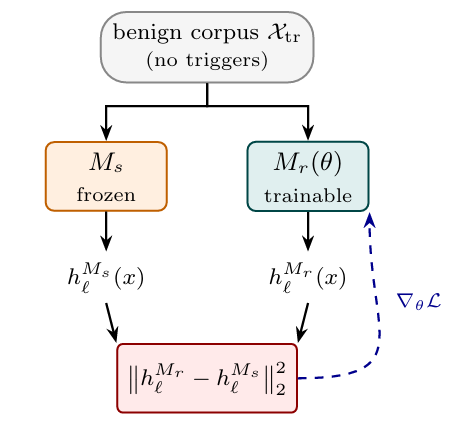
  48. You Can Catch Sleeper Agents by Teaching Another Model to Imitate Them

    Researchers have developed a novel method to detect hidden behaviors in large language models, such as backdoors or reward hacking. The technique involves training a clean reference model to mimic the internal activations of a suspect model on benign prompts. Any discrepancies in these activations, particularly on prompts that are similar but not identical to the benign ones, can highlight the presence of hidden functionalities. This approach allows for a more feasible search for hidden triggers by identifying prompts that are in the semantic neighborhood of the actual trigger. AI

    You Can Catch Sleeper Agents by Teaching Another Model to Imitate Them

    IMPACT This method could significantly improve the safety and trustworthiness of LLMs by providing a more robust way to detect and mitigate hidden malicious functionalities.

  49. Interpretable Factor Decomposition for Decision Intelligence in Large-Scale Financial Markets: Evidence from China's A-Share Market

    Researchers have developed an interpretable machine learning pipeline to break down stock market predictability into factor contributions. Applying an XGBoost model with TreeSHAP attribution to Chinese A-share stocks from 2009-2019, the system achieved a significant alpha of +2.38%/month, persistent even after accounting for the Carhart four-factor model. SHAP Decomposition revealed that behavioral signals like turnover and momentum were the primary drivers of predictive attribution, accounting for 58.2% compared to valuation ratios at 10.7%. AI

    IMPACT Demonstrates how interpretable AI can uncover hidden patterns in financial markets, potentially improving investment strategies.

  50. Some Problems Are Too Big for One Context Window

    A new approach to AI problem-solving involves using multiple AI agents in a coordinated pipeline, rather than relying on a single agent with a large context window. This multi-agent system, demonstrated by Anthropic, significantly outperforms single agents on tasks that exceed the capacity of one context window, such as enumerating S&P 500 IT board members. The key benefits are isolation, where sub-agents handle detailed work and only summaries return to the main context, and determinism, achieved through scripted workflows that ensure repeatable processes and allow for adversarial verification between agents. AI

    IMPACT Multi-agent systems offer a path to tackle complex problems exceeding single context window limits, potentially accelerating enterprise AI adoption.