PulseAugur / Brief
EN
LIVE 21:37:05

Brief

last 24h
[50/3923] 224 sources

Multi-source AI news clustered, deduplicated, and scored 0–100 across authority, cluster strength, headline signal, and time decay.

  1. Build an AI-Powered Equipment Repair Assistant Using Amazon Bedrock AgentCore https://www. byteseu.com/2095270/ # AI # ArtificialIntelligence

    Amazon Web Services has introduced a new AI-powered assistant designed to streamline equipment repair processes. This tool, built using Amazon Bedrock AgentCore, helps technicians and farmers diagnose issues, identify necessary parts, and access repair documentation through natural language queries. The system integrates various AWS services, including a knowledge base for RAG, memory for conversation persistence, and authentication via Amazon Cognito, to provide a comprehensive solution for reducing downtime and repair costs. AI
    Build an AI-Powered Equipment Repair Assistant Using Amazon Bedrock AgentCore https://www. byteseu.com/2095270/ # AI # ArtificialIntelligence

    IMPACT Streamlines equipment repair diagnostics and part identification, potentially reducing technician downtime and costs.


  2. GigaDevice Launches New MCU for Optical Modules

    GigaDevice has launched two new microcontrollers, the GD32E512 and GD32E252 series, specifically designed for optical modules. These new MCUs aim to support a range of optical module applications, from traditional low-speed to next-generation high-speed, providing hardware support for AI computing centers and advanced network infrastructure. This release expands GigaDevice's product offerings in the optical communication sector. AI

    IMPACT Provides foundational hardware for AI infrastructure and high-speed optical interconnects.

  3. Doubling Qwen3.6-27B on One RTX 3090: ollama llama.cpp + MTP, Lever by Lever (35.7 80.2 tok/s)

    A technical blog post details how to significantly increase the inference speed of the Qwen3.6-27B large language model on a single RTX 3090 GPU. By optimizing the inference engine, using a smaller model quantization, and implementing multi-token prediction (MTP) with speculative decoding, the throughput was boosted from 35.7 tokens/second to 80.2 tokens/second, a 2.25x improvement. The author found that MTP alone provided a 1.78x speedup, while the other optimizations contributed to the remaining gains. The post also notes specific technical hurdles encountered, such as compatibility issues with Ollama's GGUF format and the optimal settings for MTP. AI

    IMPACT Demonstrates practical techniques for accelerating LLM inference, potentially lowering operational costs and improving user experience.

  4. How to aggregate AI Vector search from Oracle vs Chroma for similarity: - Oracle AI Vector focuses on distributed vector storage with GPU optimizations, making performance high in queries

    Oracle's AI Vector database is designed for distributed storage with GPU optimizations, enabling high performance on large-scale queries. In contrast, Chroma offers a lightweight, easily extensible architecture on Kubernetes, integrating well with open-source tools like LangChain. The choice between them hinges on data volume, infrastructure budget, and the need for integration with Oracle's cloud services. AI

    IMPACT Provides a technical comparison to aid AI operators in selecting appropriate vector database infrastructure.

  5. DifussionGemma 4 on 4x7900xtx

    A Reddit user shared their experience running DiffusionGemma 26B on a setup of four AMD 7900 XTX GPUs. They achieved generation speeds of up to 100 tokens per second, with an overall throughput of 45-60 tokens per second when accounting for prompt processing. The user detailed the extensive Docker command used to configure the vLLM environment for this specific hardware, noting that preparing the image consumed a significant amount of DeepSeek-V4-Pro tokens. AI

    DifussionGemma 4 on 4x7900xtx

    IMPACT Demonstrates performance of DiffusionGemma 26B on consumer-grade GPUs, offering insights for local LLM deployment.

  6. I built a pay-per-record data marketplace for AI agents on x402 - On the CDP Bazaar

    A developer has created a data marketplace called CDP Bazaar, accessible via the x402 protocol, designed to serve AI agents with verifiable facts. The platform collects data from various sources, stamps it with provenance information, and makes it available for purchase on a pay-per-record basis. This system aims to solve the problem of scattered public data by providing a centralized and citable source for AI agents. AI

    IMPACT Provides a structured and verifiable data source for AI agents, potentially improving their reliability and fact-checking capabilities.

  7. Modern BSA/AML compliance on Databricks

    Databricks has introduced a new platform designed to enhance anti-money laundering (AML) compliance for financial institutions. This platform integrates various systems, including AI agents and machine learning for risk scoring, to streamline the investigation process. The goal is to significantly reduce the time analysts spend on each case, improve accuracy by lowering false positives, and ultimately save institutions substantial costs. AI

    IMPACT Accelerates financial crime investigations and reduces operational costs through AI and ML integration.

  8. Marc Lore’s robots make 500 burrito bowls an hour. A human can make 45

    Marc Lore's food-tech startup Wonder has developed an automated system capable of producing up to 500 customized bowls per hour, significantly outpacing human workers. This technology, acquired from Sweetgreen, ensures order accuracy and allows Wonder to operate multiple restaurant brands from a single kitchen, reducing costs and expanding service areas. Lore plans to further integrate AI with a feature called Wonder Create, enabling users to generate and launch their own delivery-based restaurant concepts rapidly. AI

    Marc Lore’s robots make 500 burrito bowls an hour. A human can make 45

    IMPACT Automated food production and AI-driven restaurant concept generation could significantly alter the fast-casual dining landscape.

  9. redb.Route 3.1.0 — LLM(AI) as just another connector: `.To("llm://claude")` and tools-as-routes

    The redb.Route integration framework has released version 3.1.0, introducing two new transports: redb.Route.Llm and redb.Route.Exec. The LLM transport allows developers to treat language models as addressable endpoints, similar to Kafka or HTTP, enabling seamless integration of LLM calls within existing integration workflows. This release also introduces the capability to define agent tools as routes with an `.AsLlmTool()` aspect, unifying AI functionalities within the framework's existing DSL and infrastructure. AI

    redb.Route 3.1.0 — LLM(AI) as just another connector: `.To("llm://claude")` and tools-as-routes

    IMPACT Enables developers to integrate LLMs as standard endpoints within existing integration frameworks, simplifying AI adoption.

  10. M3’s architecture makes long-context inference more efficient. Serving it at production scale required systems work.

    Together AI has developed a new inference system designed to efficiently handle long-context models. Their approach incorporates KV-block-major sparse attention and integrates multimodal preprocessing into a Rust gateway to optimize performance before requests reach GPU workers. This systems work is crucial for serving models with extended context windows at a production scale. AI

    IMPACT Optimizes inference for long-context models, potentially enabling wider adoption of advanced AI capabilities.

  11. Reviewing speed optimizations on llamacpp for large MoE models on multiGPU rigs? (fitparams vs -ngl/-ncmoe vs other flags, P2P, overclocking)

    A user on r/LocalLLaMA is seeking advice on optimizing the performance of large Mixture of Experts (MoE) models using llama.cpp across multiple GPUs. They are exploring various command-line flags like `-ngl`, `-ncmoe`, and `-fitt`, as well as techniques such as P2P communication and undervolting. The user is also curious about the potential open-weight release of MiniMax's M3 model and how it might perform with these optimizations, comparing llama.cpp to vLLM for local inference. AI

    IMPACT Provides insights into optimizing local inference performance for large MoE models, potentially improving user experience and accessibility.

  12. fable is on strvation for tokens

    Fable, an AI company, is reportedly facing a severe shortage of computational tokens, which are essential for training and running its models. This scarcity is hindering the company's progress and operations. The situation highlights the intense competition for AI resources in the current market. AI

    fable is on strvation for tokens

    IMPACT A shortage of computational tokens can significantly slow down AI development and deployment for affected companies.

  13. Guide: LM Studio & ComfyUI with OpenWebUI on a single GPU

    A user has detailed a method for running both LM Studio and ComfyUI simultaneously on a single GPU server, utilizing OpenWebUI for interaction. The setup involves installing both applications, configuring LM Studio's server settings, and ensuring OpenWebUI can communicate with both. Key steps include using a VRAM cleanup node in ComfyUI and adjusting LM Studio's memory offload settings to manage resources effectively. AI

    IMPACT Provides a technical workaround for users with limited hardware to run multiple AI applications concurrently.

  14. Remember apfel? It now turns local Apple Foundation Models into an OpenAI-compatible HTTP server. Decouple agent logic from the framework, swap models freely, a

    The apfel project has been updated to allow local Apple Foundation Models to function as an OpenAI-compatible HTTP server. This development enables users to decouple agent logic from the underlying framework and freely swap between different models. The tool facilitates testing through simple curl commands. AI

    IMPACT Enables developers to more easily integrate and test local Apple Foundation Models with existing OpenAI-compatible infrastructure.

  15. Alternative to token-based cloud AI pricing: OpenMonoAgent.ai - terminal-native programming tool using local LLMs. Run on your own hardware, pay once, no usage

    OpenMonoAgent.ai offers a terminal-native programming tool that leverages local large language models. This open-source solution allows users to run AI on their own hardware, providing a one-time purchase model instead of token-based cloud pricing. It aims to eliminate usage limits and offer a cost-effective alternative for developers. AI

    Alternative to token-based cloud AI pricing: OpenMonoAgent.ai - terminal-native programming tool using local LLMs. Run on your own hardware, pay once, no usage

    IMPACT Provides a cost-effective, privacy-focused alternative for developers using local LLMs.

  16. Replit has embedded Socket Firewall into its cloud IDE to stop poisoned open-source libraries from executing local payloads during AI-assisted builds. https://w

    Replit has integrated Socket Firewall into its cloud IDE to enhance security during AI-assisted development. This measure aims to prevent malicious open-source libraries from executing harmful code on local systems while building AI applications. The integration focuses on protecting developers from supply chain attacks. AI

    IMPACT Enhances security for developers building AI applications, mitigating risks from compromised open-source components.

  17. Hosting LLM-Generated Dashboards: A Governed Snowflake Architecture

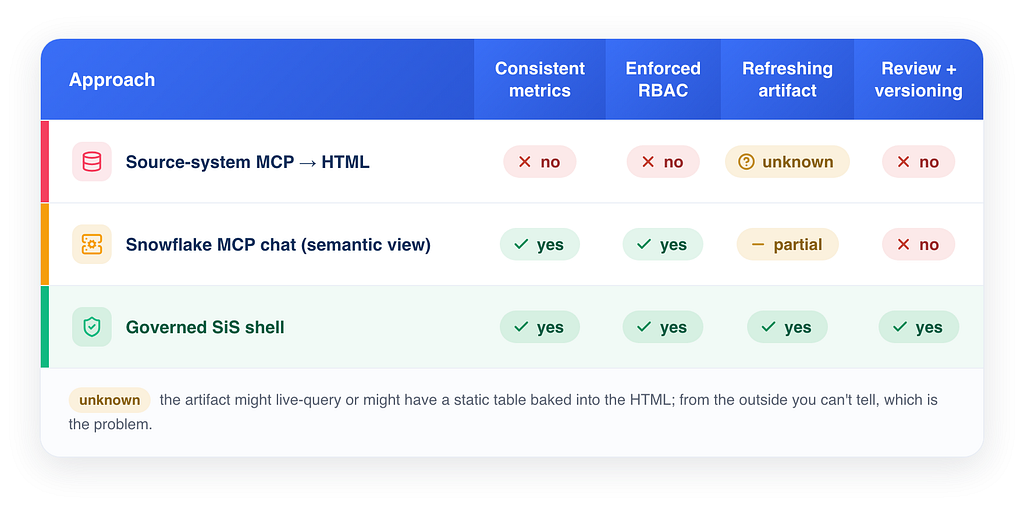
    This post outlines a governed architecture for hosting LLM-generated dashboards within Snowflake, addressing key concerns like data lineage, access control, and refresh contracts. It proposes using Snowflake's managed MCP server and a semantic layer to ensure data consistency and user-specific access. The architecture aims to enable business users to quickly create and share dashboards while maintaining enterprise-grade governance and auditability. AI

    Hosting LLM-Generated Dashboards: A Governed Snowflake Architecture

    IMPACT Provides a technical blueprint for integrating LLM-generated content into enterprise data governance frameworks.

  18. Building trust in enterprise AI: Together AI earns ISO 27001:2022 certification

    Together AI has achieved ISO 27001:2022 certification, demonstrating a robust Information Security Management System (ISMS). This certification, awarded by A-LIGN, covers their global platform and third-party data centers, assuring customers of enhanced data protection and governance. The achievement reinforces Together AI's commitment to providing secure infrastructure for enterprise AI workloads and complements existing compliance efforts like SOC 2. AI

    IMPACT Enhances trust for enterprises running AI workloads on Together AI's platform, potentially accelerating adoption of their infrastructure.

  19. Migrating Your GitHub CI to Hugging Face Jobs

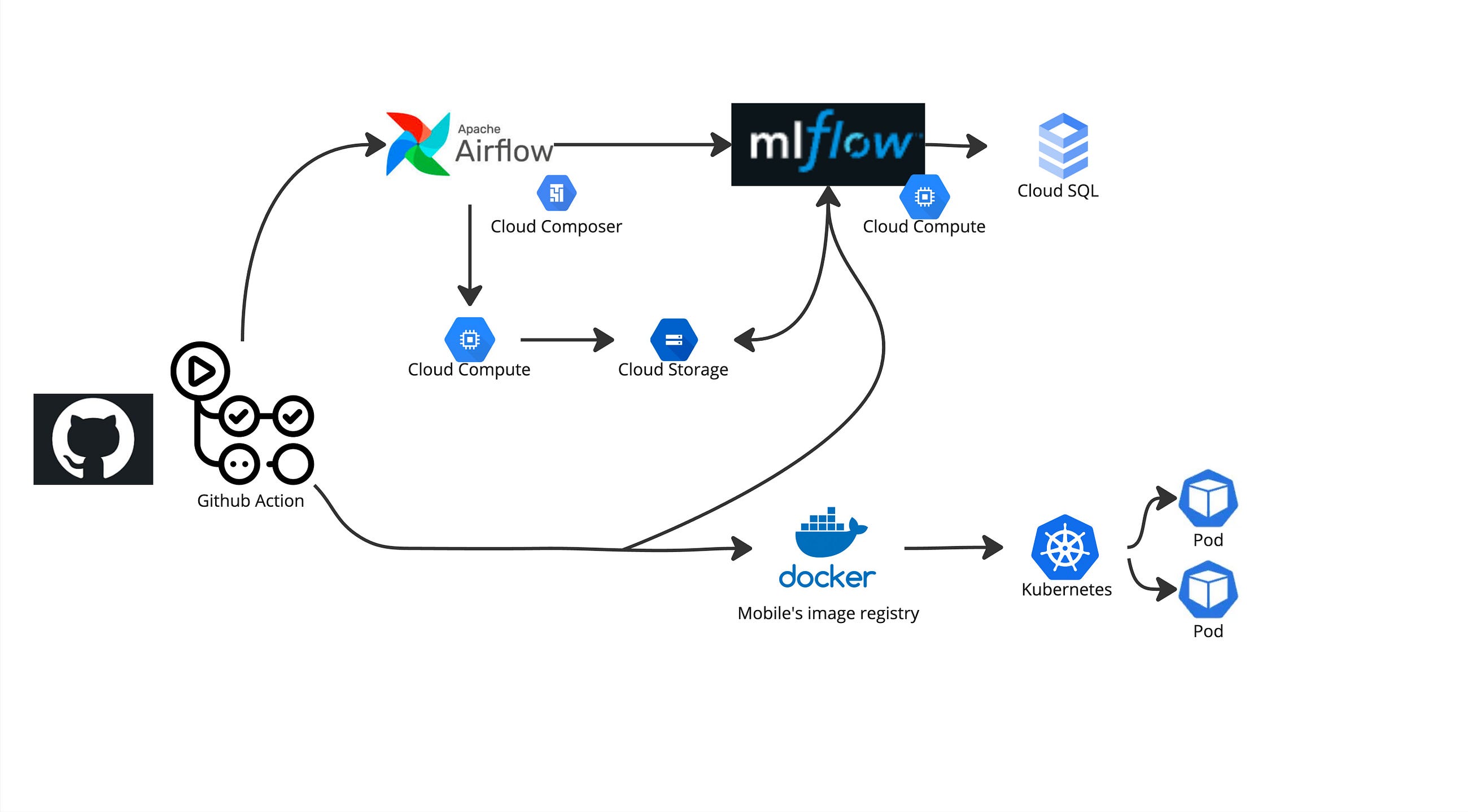
    Hugging Face has introduced a new integration that allows developers to run their GitHub CI/CD jobs on Hugging Face's infrastructure. This setup leverages GitHub Actions while offloading the actual job execution to Hugging Face Jobs, which offers more flexible hardware options, including GPUs. The process involves a dispatcher service that translates GitHub webhooks into Hugging Face Job commands, enabling faster and more capable CI pipelines for projects, particularly those requiring specialized hardware for testing. AI

    IMPACT Enables more efficient and specialized CI/CD for AI projects by providing GPU access.

  20. Launch HN: Transload (YC P26) – Measuring freight items with CCTV

    Transload, a startup founded by Julius, Jago, and Nils, has developed a system to measure freight dimensions using existing CCTV security cameras in LTL trucking terminals. Their AI-powered solution analyzes video footage linked to barcode scans to automatically estimate length, width, height, and volume, eliminating the need for dedicated dimensioning stations. This technology aims to help trucking companies recover revenue by identifying under-billed shipments and improve trailer utilization. AI

    IMPACT This AI application offers a practical solution for revenue recovery and operational efficiency in the logistics sector.

  21. 🔥 TDK Solves AI Heat Problems with Innovative 3D Print Acquisition! Ready for a Cooler Future? #Innovation #AI 🚀 https://itinsights.nl/ict-innovatie/td

    TDK has developed a novel solution to address heat issues in AI hardware by utilizing an innovative 3D printing acquisition. This advancement aims to create a more efficient and cooler future for AI technology. AI

    IMPACT This innovation could lead to more efficient and powerful AI hardware by mitigating overheating issues.

  22. How to use # AI for your automated # firmware security analysis with EMBA? Check our setup article with a step by step guide on how to get everything up and run

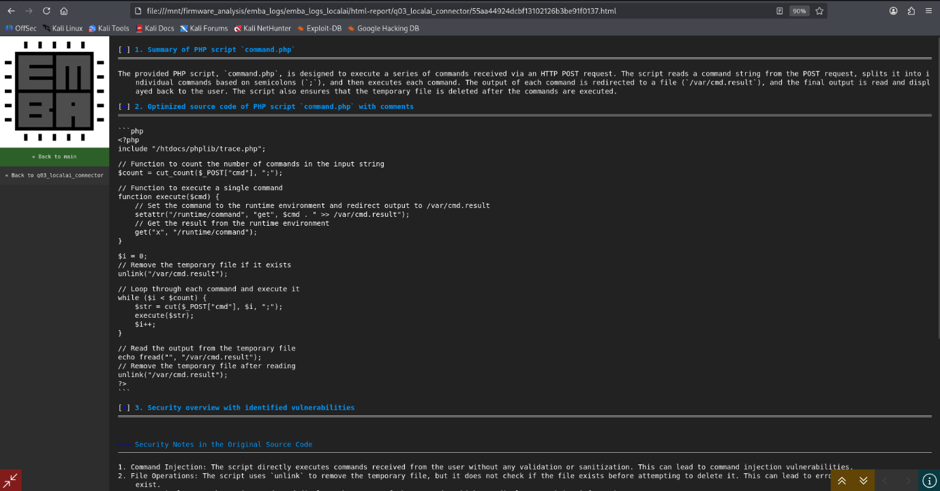
    This article details how to set up and use EMBA, an AI-powered tool for automated firmware security analysis. It provides a step-by-step guide for local installation, emphasizing the use of local AI models to avoid sending sensitive firmware data to the cloud. The guide is available on the EMBA GitHub wiki. AI

    How to use # AI for your automated # firmware security analysis with EMBA? Check our setup article with a step by step guide on how to get everything up and run

    IMPACT Enables local AI deployment for sensitive security analysis, reducing cloud dependency.

  23. Apple AFM 3 breaks on-device AI memory limits. Via @venturebeat #AI #ArtificialIntelligence 💻 🤖 🧠 Apple AFM 3 breaks on-device A...

    Apple's new AFM 3 system is reportedly encountering memory limitations when running on-device AI tasks. This issue was highlighted by VentureBeat and has surfaced on multiple social media platforms. The problem specifically affects the device's ability to handle AI computations within its allocated memory. AI

    IMPACT Potential performance bottleneck for on-device AI applications on Apple hardware.

  24. Debugging Deployments with Gemma 12B, NVIDIA L4, MCP, Cloud Run, and Antigravity CLI

    This series of articles details the process of deploying Google's Gemma models, specifically versions like Gemma 4 (including 12B and 26B parameter variants), onto Google Cloud Run with NVIDIA L4 GPUs. The guides cover planning, debugging, and lessons learned, utilizing tools such as the MCP tag and Antigravity CLI for a streamlined workflow. The focus is on practical implementation and overcoming trade-offs in a cloud-hosted GPU environment. AI

    Debugging Deployments with Gemma 12B, NVIDIA L4, MCP, Cloud Run, and Antigravity CLI

    IMPACT Provides practical guidance for developers deploying LLMs on cloud infrastructure, potentially improving efficiency and reducing deployment friction.

  25. The Messages Array, in 4 GIFs

    Building an AI agent with memory can lead to rapidly escalating costs due to the quadratic growth of the messages array sent with each API call. Each turn requires resending the entire conversation history, making later turns significantly more expensive than earlier ones. Developers can mitigate these costs by employing strategies such as a sliding window to limit the history, summarizing older parts of the conversation, or utilizing prompt caching features offered by specific providers like Anthropic. AI

    The Messages Array, in 4 GIFs

    IMPACT Developers must manage conversation history costs to avoid production expenses far exceeding development budgets.

  26. Slurm-web v7.0.0 is out 🚀 Slurm-web is the open source web interface for Slurm, helping HPC users and admins monitor jobs, nodes, partitions and cluster activit

    Slurm-web has released version 7.0.0, introducing significant enhancements for High-Performance Computing (HPC) users and administrators. This update includes support for single sign-on via OpenID Connect, deployment options for Docker/Podman containers and Kubernetes, and improved UI branding. Additionally, the new version offers features like job history, advanced filtering, user visibility controls, and compatibility with Slurm version 26.05. AI

    IMPACT Enhances tooling for AI/HPC infrastructure management, potentially improving efficiency for AI model training and deployment.

  27. A model ladder is the ordered-fallback pattern that keeps agents on local LLMs alive when a model disappears. Pseudocode, Python, and the four decisions. https:

    A model ladder is a pattern designed to ensure the continuous operation of AI agents that rely on local large language models. This approach implements an ordered fallback system, allowing agents to remain functional even if a primary model becomes unavailable. The concept includes pseudocode and Python examples to illustrate the implementation of four key decision-making points within the ladder. AI

    IMPACT Enables more robust and reliable AI agents by ensuring continuous operation even when specific local models fail.

  28. The Chameleon Edition - gemini-faf-mcp v2.4.0

    The gemini-faf-mcp tool has been updated to version 2.4.0, introducing a "Chameleon Edition" that allows a single binary to function as both a local MCP server and a hosted server on Cloud Run. This update enables the tool to automatically adapt its transport protocol based on the environment, using stdio for local execution and Streamable HTTP for cloud deployments without requiring configuration changes. This adaptability is designed to seamlessly integrate with agentic IDEs like Google's Antigravity, which can use the same configuration file for both local and hosted modes. AI

    IMPACT Enhances developer experience by allowing a single tool binary to function seamlessly in both local and cloud environments.

  29. Running a Real‑Time Scoring Service: Comparing Best‑of‑Breed MLOps to Vertex AI

    This article compares the performance and operational efficiency of a real-time scoring service built using best-of-breed MLOps tools against Google Cloud's Vertex AI. It delves into the technical aspects of deploying and managing machine learning models in production environments. The comparison aims to provide insights for MLOps practitioners on choosing the right infrastructure for their needs. AI

    Running a Real‑Time Scoring Service: Comparing Best‑of‑Breed MLOps to Vertex AI

    IMPACT Provides a practical comparison of MLOps infrastructure choices for deploying AI models.

  30. How to Publish an MCP Server to PyPI — Two Methods (Token vs OIDC)

    This article details two methods for publishing an MCP (Model Context Protocol) server to PyPI, enabling AI systems to access custom tools. The first method involves using an API token stored as a GitHub secret, which offers a faster setup. The second, recommended method utilizes OIDC Trusted Publisher, providing enhanced security by avoiding token storage and enabling direct authentication between GitHub Actions and PyPI. AI

    IMPACT Enables developers to distribute custom tools for AI assistants, expanding the capabilities of AI systems.

  31. I Built a Custom C++ Backend Because Standard LLM Serving Was Wasting 98% of My GPU

    A developer found that standard LLM serving frameworks were inefficient, wasting up to 98% of GPU resources. To address this, they created a custom C++ backend. This custom solution aims to optimize GPU utilization and reduce the significant cloud costs associated with running large language models. AI

    I Built a Custom C++ Backend Because Standard LLM Serving Was Wasting 98% of My GPU

    IMPACT Optimizing LLM inference can significantly reduce operational costs and improve the feasibility of deploying AI agents at scale.

  32. STARIXNet: Multivariate and Multi-attribute Deep Learning Approach to Real-Time Resource Allocation in Cloud Platforms

    Researchers have developed STARIXNet, a novel deep learning approach for real-time resource allocation in cloud platforms. Unlike existing methods that focus on single metrics like CPU usage, STARIXNet analyzes multiple system attributes simultaneously to optimize scaling decisions. This approach prioritizes service stability and cost-efficiency over pure prediction accuracy, and has been successfully deployed at Walmart, achieving significant cost savings and improved service performance. AI

    IMPACT STARIXNet's deployment at Walmart demonstrates tangible cost savings and improved service stability, potentially influencing future cloud resource management strategies.

  33. Kunlun: Establishing Scaling Laws for Massive-Scale Recommendation Systems through Unified Architecture Design

    Researchers have developed Kunlun, a new architecture designed to improve the efficiency and scaling of recommendation systems. By incorporating optimizations like Generalized Dot-Product Attention and Computation Skip, Kunlun doubles the scaling efficiency of recommendation models compared to existing methods. This architecture has been deployed in Meta Ads models, demonstrating significant production impact. AI

    IMPACT Enhances efficiency in large-scale recommendation systems, potentially improving user experience and ad targeting effectiveness.

  34. LLM Inference Handbook 2026

    This handbook delves into the engineering discipline of Large Language Model (LLM) inference, explaining how models generate tokens and the advanced optimization techniques used in production systems. It covers fundamental concepts like prefill and decode, KV cache, and key performance metrics, before exploring optimization strategies such as quantization, PagedAttention, and speculative decoding. The guide also details modern inference frameworks like vLLM, TensorRT-LLM, and SGLang, aiming to provide a comprehensive understanding of making AI products faster, cheaper, and more scalable. AI

    LLM Inference Handbook 2026

    IMPACT Provides a deep dive into LLM inference engineering, crucial for optimizing AI product performance and cost.

  35. Running Language Models Directly in the Browser

    New developments are enabling large language models (LLMs) to run directly within web browsers, addressing privacy concerns associated with cloud-based services. Projects like SmolLM2 are creating smaller, more efficient models that can leverage a browser's GPU or fall back to CPU processing via WebAssembly. While these in-browser models are not yet as powerful as their cloud-based counterparts, they offer a promising path for private and localized AI interactions. AI

    Running Language Models Directly in the Browser

    IMPACT Enables private, on-device AI interactions, reducing reliance on cloud providers and potentially lowering infrastructure costs.

  36. DxPTA: An Architecture Design Space Exploration with Optical Dataflow-guided Strategy for HW/SW Co-Design of Photonic Transformer Accelerators

    Researchers have developed DxPTA, a new methodology for designing photonic transformer accelerators (PTAs). This approach uses optical dataflow to guide hardware and software co-design, addressing limitations of previous manual methods that did not consider application constraints. DxPTA significantly reduces design time and finds suitable PTA architectures for various transformer models, achieving notable improvements in area, power, energy, and latency. AI

    IMPACT Streamlines the development of energy-efficient hardware for advanced AI models, potentially accelerating AGI research.

  37. Accelerated Fourier SAT (AFSAT): Fully Realising a GPU-based Symmetric Pseudo-Boolean SAT Solver

    Researchers have developed Accelerated Fourier SAT (AFSAT), a new GPU-accelerated solver for pseudo-Boolean satisfiability problems. AFSAT builds upon a previous proof-of-concept, FastFourierSAT, by engineering a fully functional solver that can handle mixed constraint types and lengths within a single instance. Utilizing the JAX compiler for parallel processing and automatic differentiation, AFSAT demonstrates enhanced numerical stability, runtime performance, and memory efficiency, partially by employing a custom discrete Fourier transform implementation to address floating-point limitations. AI

    IMPACT Introduces a novel approach to SAT solving that could accelerate AI research and development requiring constraint satisfaction.

  38. Ablation Study of Block Size, Weight Precision, and Scale Precision in NVFP4 Inference for Low-Power Edge-Efficient Neural Networks

    Researchers have developed a new framework called NVLUT for energy-efficient neural network inference on edge devices. This framework utilizes 4-bit NVFP4 activations with a two-level scaling approach and replaces traditional multiplication with compact LUT access. The study found that a block size of 16 offers a good balance between accuracy and storage, and that FP8 and FP16 weights provide only minor improvements over FP4 weights. NVLUT demonstrates significant reductions in energy consumption and hardware area compared to existing methods. AI

    IMPACT Enables more powerful AI models to run on low-power edge devices, reducing energy consumption and hardware costs.

  39. Terastal: Layer-Variant-based Scheduling for Real-Time Multi-DNN Workloads on Heterogeneous Accelerators

    Researchers have developed Terastal, a new framework designed to improve the scheduling of multiple deep neural networks (DNNs) on heterogeneous accelerators for soft real-time applications. The system addresses latency differences between accelerators by creating customized "layer variants," which are optimized implementations of DNN layers. Terastal combines offline design and online scheduling to balance timing and accuracy, reportedly reducing deadline misses by over 30% compared to existing methods while maintaining high accuracy. AI

    IMPACT Optimizes real-time DNN execution on specialized hardware, potentially improving performance and reliability for AI applications.

  40. DOPPLER: Dual-Policy Learning for Device Assignment in Asynchronous Dataflow Graphs

    Researchers have developed DOPPLER, a novel three-stage framework for optimizing device assignment in asynchronous dataflow graphs, particularly for complex machine learning workloads. This system addresses limitations of previous methods by supporting asynchronous systems and integrating both reinforcement learning and expert-designed heuristics. DOPPLER's dual-policy network, comprising selection and placement policies, has demonstrated superior performance in reducing execution time and improving training efficiency compared to existing baselines. AI

    IMPACT Introduces a new method for optimizing ML workload execution on asynchronous systems, potentially improving efficiency and reducing training times.

  41. LiQSS: Post-Transformer Linear Quantum-Inspired State-Space Tensor Networks for Real-Time 6G

    Researchers have developed a new model called LiQSS (Linear Quantum-Inspired State-Space) that aims to improve real-time forecasting for 6G networks. This post-Transformer design uses quantum-inspired tensor networks to achieve linear-time sequence modeling, significantly reducing parameter count and increasing inference speed compared to Transformer-based models. The LiQSS model was evaluated on a dataset for predicting Reference Signal Received Power (RSRP) and demonstrated substantial efficiency gains without compromising accuracy. AI

    IMPACT This model could enable more efficient and responsive AI-driven control in future wireless networks.

  42. Design Once, Deploy at Scale: Template-Driven ML Development for Large Model Ecosystems

    Researchers at Meta have developed a framework called the Standard Model Template (SMT) to streamline the development and deployment of machine learning models in large-scale computational advertising platforms. This template-driven approach significantly reduces engineering time and increases the adoption of new ML techniques. Empirical studies within Meta's production ads ranking ecosystem showed a notable improvement in model performance, a substantial decrease in iteration time, and a significant boost in technique-model pair adoption throughput. AI

    IMPACT Standardizes ML development, potentially accelerating innovation and efficiency in large-scale recommendation systems.

  43. P-Cast Precision in FP8 Attention: Sink-Induced Collapse and the Optimality of S=2^8

    A new research paper analyzes precision challenges in FP8 attention computations, specifically focusing on the softmax probability matrix (P) when cast to FP8. The study identifies an issue called "P-collapse" that occurs with forward KV iteration, leading to underflow of non-sink probability values. Researchers propose a solution involving reverse KV iteration combined with a static scaling factor of S=256 (2^8) to eliminate this underflow and improve output precision. AI

    IMPACT This research offers quantitative insights into optimizing FP8 precision for attention mechanisms, potentially improving efficiency in large model training and inference.

  44. AI Level of Detail: Distance-Aware ML Model Precision Selection for Real-Time Human Motion Prediction in Games

    Researchers have introduced a novel framework called AI Level of Detail (AI LOD) to optimize real-time human motion prediction in games. This approach dynamically adjusts the precision of machine learning models based on the NPC's distance from the player's camera, similar to how graphical detail is reduced for distant objects. By employing different quantization levels (FP32, FP16, INT8) for the AI models, the system aims to maintain visual fidelity while significantly reducing computational load. Initial evaluations using motion capture data suggest this distance-aware precision selection is a viable strategy for enhancing AI-driven character animation. AI

    IMPACT Introduces a method to reduce computational cost for real-time AI systems in games, potentially enabling more complex animations or higher frame rates.

  45. LuMamba: Latent Unified Mamba for Electrode Topology-Invariant and Efficient EEG Modeling

    Researchers have developed LuMamba, a new framework for modeling electroencephalography (EEG) data that addresses challenges in electrode topology and computational scalability. By combining topology-invariant encodings with a linear-complexity state-space model, LuMamba achieves efficient temporal modeling and channel unification. The model, pre-trained on over 21,000 hours of unlabeled EEG, demonstrates state-of-the-art performance on several downstream tasks with significantly fewer computational resources than existing methods. AI

    IMPACT This new framework could enable more efficient and scalable analysis of EEG data for various neurotechnology and clinical applications.

  46. SCALE: Scalable Cross-Attention Learning with Extrapolation for Agentic Workflow Scheduling

    Researchers have developed SCALE, a new deep reinforcement learning scheduler designed for agentic LLM systems that can manage tasks across heterogeneous clusters of varying sizes. Unlike previous schedulers that require retraining for different cluster configurations, SCALE uses a cross-attention pointer network to generalize to unseen cluster scales without fine-tuning. By incorporating Structured Representation Regularization (SRR), which includes a decorrelation loss and a KL penalty, SCALE maintains stable feature statistics and achieves an 8.9% reduction in average response time when tested on larger clusters than it was trained on. AI

    IMPACT This new scheduling method could improve the efficiency of LLM-based agentic systems by allowing them to adapt to varying computational resources without retraining.

  47. First global map of mycorrhizal fungi 'underground network' drawn

    A new study published in the journal Science has mapped the global distribution of mycorrhizal fungi, revealing an extensive underground network of approximately 110 quadrillion kilometers. This vast network, composed of tubular hyphae, is crucial for plant life and plays a significant role in regulating Earth's climate. Separately, the A-share market experienced a downturn, with most ETFs declining, though semiconductor ETFs showed strength and attracted investment. AI

  48. AI Consultants: - **Key**: OpenAI launched an API that facilitates the integration of GPT-style models into applications, with support for NLU, translation, sentiment analysis, all of which are references and a collection

    OpenAI has released a new API designed to simplify the integration of GPT-style models into various applications. This API offers support for natural language understanding, translation, and sentiment analysis, aiming to decentralize AI capabilities beyond centralized cloud infrastructure. The goal is to enable more private and personalized AI experiences. AI

    IMPACT Enables easier integration of advanced AI models into third-party applications, potentially leading to more specialized and private AI deployments.

  49. Apple Intelligence gets a second shot with help from Google and Nvidia

    Apple has unveiled an updated version of its Siri assistant, developed in collaboration with Google. For more demanding tasks, the system will leverage Nvidia's GPU technology. This marks a significant step for Apple's AI integration, aiming to enhance user experience through advanced AI capabilities. AI

    Apple Intelligence gets a second shot with help from Google and Nvidia

    IMPACT Enhances Apple's AI capabilities and user experience by integrating advanced AI models and hardware for its virtual assistant.

  50. How AI-Enabled Meeting Spaces Are Step One In Easing IT’s Burden

    AI is being integrated into meeting spaces to alleviate the burden on IT departments managing hybrid work environments. These intelligent rooms provide data on usage patterns, automate updates, and perform system checks, shifting IT support from reactive problem-solving to proactive planning. By offering real-time visibility into room health and reducing fragmentation across devices and platforms, AI streamlines collaboration and frees up IT teams to focus on strategic initiatives. AI

    How AI-Enabled Meeting Spaces Are Step One In Easing IT’s Burden

    IMPACT AI integration in meeting spaces can streamline IT operations and improve employee experience in hybrid work settings.