PulseAugur / Brief
EN
LIVE 17:47:08

Brief

last 24h
[50/3909] 224 sources

Multi-source AI news clustered, deduplicated, and scored 0–100 across authority, cluster strength, headline signal, and time decay.

  1. Self-hosting & scaling models

    This podcast episode features Tuhin Srivastava from Baseten discussing the self-hosting and scaling of open-access AI models. The conversation delves into current trends in tooling and usage for these models, as well as common applications. The growth of generative AI and its impact on the ecosystem of self-hosted models was also a key topic. AI

    Self-hosting & scaling models
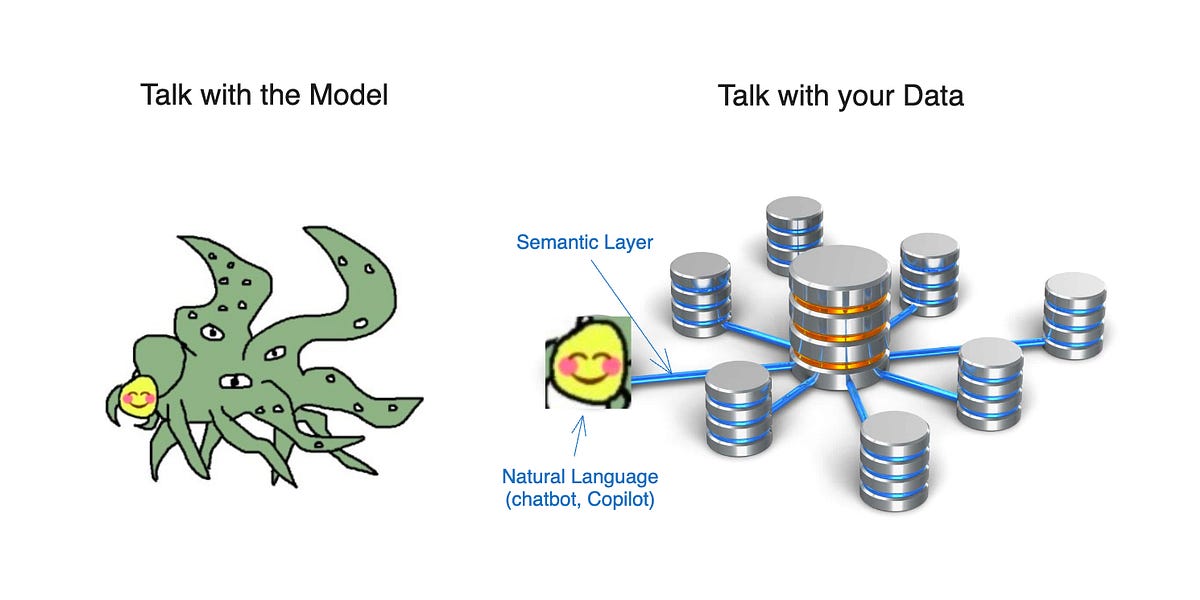
  2. Powering your Copilot for Data – with Artem Keydunov of Cube.dev

    Cube.dev has released an open-source semantic layer designed to improve the reliability of natural language queries on tabular data. This integration with tools like LangChain aims to mitigate issues such as LLMs hallucinating tables or fields, and provides a more token-efficient way to interact with data. By defining metrics and dimensions upfront, Cube ensures more predictable query outputs, though it requires initial setup. AI

    Powering your Copilot for Data – with Artem Keydunov of Cube.dev
  3. Interactively explore your Huggingface dataset with one line of code

    Hugging Face has released a new tool that allows users to interactively explore their datasets with a single line of code. This feature aims to simplify the process of data inspection and analysis for machine learning practitioners. The tool is designed to handle large datasets efficiently, making it easier to understand and prepare data for model training. AI

    Interactively explore your Huggingface dataset with one line of code
  4. System Dependencies on Replit

    Replit has introduced a new System Dependencies tool, leveraging Nix to simplify the management of native programs and libraries within development environments. This tool, accessible via a user-friendly interface in the sidebar, allows developers to easily add, remove, and search for system-level packages like ffmpeg, whisper-cpp, and compilers. Previously requiring manual edits to configuration files, these dependencies can now be managed more intuitively, enhancing the development experience on the Replit platform. AI
    System Dependencies on Replit

    IMPACT Enhances developer tooling for AI-related projects by simplifying dependency management.

  5. Gradio-Lite: Serverless Gradio Running Entirely in Your Browser

    Hugging Face has introduced Gradio-Lite, a new version of its popular UI library that runs entirely within the user's web browser without requiring a server. This allows developers to easily create and share interactive AI demos that can be embedded directly into static websites or documentation. Gradio-Lite supports a wide range of Gradio features, making it a convenient tool for showcasing machine learning models. AI
    Gradio-Lite: Serverless Gradio Running Entirely in Your Browser
  6. Sep 29 Incident Update: Read-Only Repls

    Replit experienced a significant outage on September 29th when an incomplete build of their new storage system was inadvertently deployed to production. This caused approximately 2.5 hours of Repls opened during that window to become read-only or non-functional. The company has since fixed the root cause and, through multiple recovery iterations over several days, has restored 98% of the affected Repls, with efforts ongoing for the remaining 2%. Replit is implementing new deployment guardrails and automated canary analysis to prevent similar incidents in the future. AI

    IMPACT This incident highlights the operational challenges of maintaining complex infrastructure for AI development platforms.

  7. Show HN: Running LLMs in one line of Python without Docker

    Lepton.ai has launched a new platform designed to connect developers with a global network of GPU compute resources. The service aims to simplify the process of running large language models by offering a one-line Python command, eliminating the need for Docker. This infrastructure solution is built on NVIDIA DGX Cloud and is intended to optimize AI workload performance and facilitate the deployment of various AI applications. AI

    IMPACT Streamlines access to GPU compute for AI development and deployment.

  8. Chat Templates: An End to the Silent Performance Killer

    Hugging Face has introduced chat templates to address a silent performance issue in large language models. These templates standardize how conversations are formatted, ensuring consistent and efficient processing across different models. This initiative aims to improve the user experience and developer workflow by eliminating the need for manual prompt engineering for conversation structure. AI

    Chat Templates: An End to the Silent Performance Killer
  9. Inference for PROs

    Hugging Face has launched "Inference for PROs," a new service designed to provide enhanced inference capabilities for large language models. This offering aims to deliver faster and more reliable model deployment for professional users. The service includes features such as dedicated infrastructure and optimized performance to meet the demands of enterprise-level applications. AI

    Inference for PROs
  10. Show HN: Graphite – Stacked Diffs on GitHub

    Graphite, a developer tool built by former engineers from Meta, Google, and Airbnb, has officially launched after a two-year beta period. The platform streamlines code development and shipping through a workflow called "stacking," which breaks down large pull requests into smaller, independently reviewable units. Graphite integrates seamlessly with GitHub, offering features like a PR inbox, AI-powered PR descriptions via OpenAI, and stack-aware merging, aiming to boost developer productivity. AI

    IMPACT Enhances developer productivity by automating PR descriptions and streamlining code review processes.

  11. Rocket Money x Hugging Face: Scaling Volatile ML Models in Production​

    Rocket Money has successfully scaled its machine learning models using Hugging Face's infrastructure. This case study highlights how they managed volatile ML models in a production environment. By leveraging Hugging Face, Rocket Money achieved efficient deployment and management of their AI systems. AI

    Rocket Money x Hugging Face: Scaling Volatile ML Models in Production​
  12. Optimizing your LLM in production

    Hugging Face has released a guide detailing methods for optimizing Large Language Models (LLMs) for production environments. The guide covers techniques such as quantization, pruning, and knowledge distillation to reduce model size and improve inference speed. It also discusses efficient serving strategies and hardware considerations for deploying LLMs effectively. The aim is to help developers make LLMs more practical and cost-efficient for real-world applications. AI

    Optimizing your LLM in production
  13. Deploy Bun Apps that Autoscale on Replit

    Replit has launched a new feature allowing developers to deploy Bun applications with automatic scaling capabilities. This integration combines the performance of the Bun JavaScript runtime with Replit's infrastructure to handle fluctuating customer demand. Developers can now build, deploy, and scale their Bun apps directly within the Replit environment in a matter of seconds. AI

    Deploy Bun Apps that Autoscale on Replit

    IMPACT Enables faster deployment and scaling for JavaScript applications, potentially improving developer productivity.

  14. Speeding up Deployments with Lazy Image Streaming

    Replit is introducing a new deployment feature that streamlines the process from idea to production by converting code into container images. To address slow deployment times caused by large container images, Replit is implementing a lazy image streaming technique. This method allows containers to start before the entire image is downloaded, by using FUSE to handle file system requests as they arise. AI

    Speeding up Deployments with Lazy Image Streaming

    IMPACT Improves developer workflow efficiency by reducing deployment times for containerized applications.

  15. Announcing Autoscale and Static Deployments

    Replit has launched two new deployment products, Autoscale Deployments and Static Deployments, aimed at simplifying the process of taking projects from development to production. Autoscale Deployments offer infrastructure that automatically scales resources based on user traffic, ensuring availability during viral surges and cost savings during low-traffic periods. Static Deployments provide a free option for hosting client-side websites and blogs. Both features are integrated directly into the Replit editor, allowing users to deploy directly from their development environment without needing external vendors. AI

    Announcing Autoscale and Static Deployments

    IMPACT Enhances developer productivity by streamlining deployment for AI-powered applications and other projects.

  16. Fetch Cuts ML Processing Latency by 50% Using Amazon SageMaker & Hugging Face

    Fetch, a company specializing in AI-powered customer service, has significantly improved its machine learning processing times. By leveraging Amazon SageMaker and Hugging Face's tools, Fetch managed to reduce latency by 50%. This optimization allows Fetch to deliver faster AI-driven responses to its customers. AI

    Fetch Cuts ML Processing Latency by 50% Using Amazon SageMaker & Hugging Face
  17. Packages: Powered Up

    Replit has launched an upgraded package management tool designed to streamline the development process. The new features include suggested common packages for JavaScript and Python projects, batching of install and uninstall actions for efficiency, and improved error handling with detailed insights. The tool is also now responsive to different screen sizes, adapting seamlessly to various pane dimensions. AI

    Packages: Powered Up

    IMPACT Streamlines development workflows by improving package management efficiency and user experience.

  18. Deprecation of Git Authentication using password

    Hugging Face is deprecating password-based Git authentication for its platform. Starting April 22, 2024, users will need to use access tokens for Git operations. This change aims to enhance security by moving away from less secure password authentication methods. AI

    Deprecation of Git Authentication using password
  19. The new AI app stack

    a16z has released a diagram illustrating the emerging architectures for Large Language Model (LLM) applications. This diagram serves as a foundation for a broader mental model of the new AI application stack. The discussion expands on this, covering aspects such as model middleware for caching and control, as well as application orchestration. AI

    The new AI app stack
  20. Hugging Face Hub on the AWS Marketplace: Pay with your AWS Account

    Hugging Face has partnered with AWS to list its Hub on the AWS Marketplace. This integration allows users to access and deploy models from Hugging Face directly through their AWS accounts, simplifying procurement and billing. The collaboration aims to streamline the process for enterprises looking to leverage open-source AI models within their existing AWS infrastructure. AI

    Hugging Face Hub on the AWS Marketplace: Pay with your AWS Account
  21. Introducing AnyLanguageModel: One API for Local and Remote LLMs on Apple Platforms

    Hugging Face has introduced AnyLanguageModel, a new API designed to unify access to both local and remote large language models specifically for Apple platforms. This release is accompanied by Swift Transformers, a library enabling on-device LLM execution within Apple applications. These developments aim to simplify the integration and deployment of LLMs across various Apple devices, facilitating more powerful on-device AI experiences. AI

    Introducing AnyLanguageModel: One API for Local and Remote LLMs on Apple Platforms
  22. Why We Changed Our Resource Limits and Plans

    Replit is adjusting its resource limits and pricing plans due to increased operational costs driven by user demand for more powerful features and instances of abuse. The platform has seen users consuming significant resources, leading to unsustainable expenses. To ensure business sustainability and continue empowering developers, Replit is enhancing paid features and enforcing terms of service, while aiming to provide more value per dollar paid and maintain a robust free tier for students and aspiring coders. AI

    Why We Changed Our Resource Limits and Plans

    IMPACT Replit's adjustments to resource limits and pricing may impact developers' ability to build and deploy applications, potentially affecting the cost and accessibility of cloud-based development tools.

  23. Fewer Restarts and Faster Networking for All

    Replit is expanding its improved virtual machine infrastructure to all users, significantly reducing the likelihood of restarts and interruptions during coding sessions. This upgrade, enabled by their new storage system 'Margarine,' allows Replit to utilize cheaper, diskless virtual machines. Additionally, Replit has transitioned all network connections to Google Cloud's Premium Tier, which offers faster and more reliable connectivity by leveraging Google's private network infrastructure instead of the public internet. AI

    Fewer Restarts and Faster Networking for All

    IMPACT Enhances the user experience for developers on the Replit platform, potentially improving productivity.

  24. Launch HN: Tiptap (YC S23) – Toolkit for developing collaborative editors

    Tiptap, an open-source toolkit for building collaborative editors, has launched its cloud services and AI integration. The toolkit, built on ProseMirror and Yjs, aims to simplify the development of complex editing features like real-time collaboration and version history. Tiptap's headless and framework-agnostic design allows integration into various frontend applications, with notable users including Substack and Y Combinator. The new cloud offerings provide managed backend services and an AI integration beta that connects to OpenAI's API for enhanced writing experiences. AI

    IMPACT Simplifies AI integration into web-based content editors, potentially accelerating adoption of AI writing assistance.

  25. Making ML-powered web games with Transformers.js

    Hugging Face has released Transformers.js, a library that enables developers to run machine learning models directly in web browsers using JavaScript. This allows for the creation of interactive web applications, including games, without requiring server-side processing. The library supports a range of models and can be integrated into existing web development workflows. AI

    Making ML-powered web games with Transformers.js
  26. Venture capitalist Joe Lonsdale pitched a $2.6 billion citywide tunnel system project built by Elon Musk’s Boring Company to Austin’s mayor, emails show

    Venture capitalist Joe Lonsdale proposed a citywide tunnel system for Austin, to be built by Elon Musk's The Boring Company. Lonsdale, an investor in The Boring Company, initially suggested funding a one-mile test tunnel connecting properties owned by him and his friends. This pilot project was intended to demonstrate the speed and affordability of the technology and inspire city leaders to pursue a larger, city-wide infrastructure project. AI

    Venture capitalist Joe Lonsdale pitched a $2.6 billion citywide tunnel system project built by Elon Musk’s Boring Company to Austin’s mayor, emails show

    IMPACT This proposal highlights potential new applications for tunneling technology, which could indirectly impact AI-driven infrastructure planning and autonomous vehicle integration.

  27. Launch HN: OpenMeter (YC W23) – Real-Time, Open Source Usage Metering

    OpenMeter, a new open-source usage metering platform, has been launched by Y Combinator W23 batch members. The platform is designed for real-time tracking of customer usage, enabling businesses to implement flexible billing models. It aims to provide developers with a robust and transparent solution for managing and monetizing their services. AI

    IMPACT Provides developers with tools to meter usage for AI services, potentially impacting monetization strategies.

  28. Panel on Hugging Face

    Hugging Face has released a new open-source tool called Panel, designed to simplify the creation and deployment of AI applications. Panel integrates with various machine learning frameworks and allows developers to build interactive dashboards and interfaces for their models. This release aims to lower the barrier to entry for deploying AI solutions, making them more accessible to a wider range of users. AI

    Panel on Hugging Face
  29. Deploy Livebook notebooks as apps to Hugging Face Spaces

    Hugging Face Spaces now supports the deployment of Livebook notebooks as interactive applications. This integration allows users to easily share and run their Livebook projects directly on the Hugging Face platform. The feature aims to streamline the process of turning data analysis and machine learning notebooks into accessible web applications. AI

    Deploy Livebook notebooks as apps to Hugging Face Spaces
  30. Introducing Storage Buckets on the Hugging Face Hub

    Hugging Face has introduced a new feature called Storage Buckets on its Hub, designed to provide scalable object storage for AI models and datasets. This new offering aims to simplify infrastructure management for developers by offering a centralized and efficient way to store and access large files. Additionally, Hugging Face has published a guide detailing how the Hub can be utilized by galleries, libraries, archives, and museums for preserving and sharing digital collections. AI

    Introducing Storage Buckets on the Hugging Face Hub
  31. DuckDB: analyze 50,000+ datasets stored on the Hugging Face Hub

    Hugging Face has integrated DuckDB, enabling users to directly query and analyze over 50,000 datasets hosted on the Hugging Face Hub. This integration allows for efficient data exploration without the need to download large files locally. The feature supports various data formats and aims to streamline the data science workflow for users working with the Hub's extensive dataset collection. AI

    DuckDB: analyze 50,000+ datasets stored on the Hugging Face Hub
  32. Microsoft and Hugging Face expand collaboration

    Microsoft and Hugging Face are deepening their collaboration, integrating Hugging Face's model catalog directly into Azure AI Foundry. This partnership aims to provide Azure customers with easier access to a wide range of open-source models. The integration will streamline the process for developers to discover, deploy, and manage models within the Azure ecosystem. AI

    Microsoft and Hugging Face expand collaboration
  33. Data augmentation with LlamaIndex

    Jerry Liu from LlamaIndex discusses integrating private data into production AI applications using Large Language Models. The conversation covers essential processes like data ingestion, indexing, and querying, specifically designed for LLM applications. It also explores various query patterns and alternatives to traditional vector databases. AI

    Data augmentation with LlamaIndex
  34. May 18 Replit downtime

    Replit experienced a two-hour outage on May 18th, preventing users from accessing their Repls. The downtime was caused by a latent bug in their configuration system, introduced in 2021, which led to a deadlock when a new configuration kind was deployed without a corresponding handler. This deadlock caused all virtual machines to become unresponsive, and a flawed auto-scaling configuration exacerbated the issue by reducing capacity instead of increasing it. Replit has since identified and addressed the root cause, and the system is now operating normally. AI

    IMPACT This incident impacted users of the Replit platform, a tool used for coding and development, but does not represent a core AI development or release.

  35. Guaranteed quality and structure in LLM outputs - with Shreya Rajpal of Guardrails AI

    Guardrails AI has developed a system to enforce structured and high-quality outputs from large language models, addressing a common criticism of LLMs' tendency to deviate from instructions. The system uses a declarative language called RAILs, which defines rules for output structure, prompts, and validation scripts. These RAILs act as a wrapper around LLM API calls, validating the output and re-prompting the model if necessary to ensure adherence to requirements. This approach aims to make LLM outputs more predictable and consistent across different models. AI

    Guaranteed quality and structure in LLM outputs - with Shreya Rajpal of Guardrails AI
  36. How to Install and Use the Hugging Face Unity API

    Hugging Face has released a new API for Unity, a popular game development platform. This integration allows developers to easily incorporate AI models directly into their Unity projects. The API supports various AI tasks, enabling features like natural language processing, image generation, and more within games and interactive experiences. AI

    How to Install and Use the Hugging Face Unity API
  37. Databricks ❤️ Hugging Face: up to 40% faster training and tuning of Large Language Models

    Databricks has partnered with Hugging Face to accelerate the training and tuning of large language models. This collaboration has resulted in performance improvements of up to 40% for LLM workloads. The integration leverages Databricks' platform with Hugging Face's tools and models to enhance efficiency for AI development. AI

    Databricks ❤️ Hugging Face: up to 40% faster training and tuning of Large Language Models
  38. Creating Privacy Preserving AI with Substra

    Hugging Face has partnered with Owkin to integrate Substra, an open-source platform designed for privacy-preserving machine learning. Substra enables collaborative AI development on sensitive data without compromising confidentiality. This integration aims to facilitate the creation of secure AI models, particularly in fields like healthcare where data privacy is paramount. AI

    Creating Privacy Preserving AI with Substra
  39. Hackers, Pros, and Teams users can now code for hours without restarts

    Replit has significantly reduced container restarts for its Hacker, Pro, and Teams users by upgrading their virtual machines from spot instances to regular provisioned instances on Google Cloud Platform. This change allows users to code for hours without interruption, preserving their work and flow state. The move was enabled by cost savings from enforcing platform limits and a deeper partnership with Google Cloud, allowing Replit to invest more in core product experience. AI

    Hackers, Pros, and Teams users can now code for hours without restarts

    IMPACT Improves developer experience for AI coders using Replit.

  40. March 20 ChatGPT outage: Here’s what happened

    OpenAI experienced a significant outage of ChatGPT on March 20 due to a bug in an open-source library, redis-py. This issue temporarily exposed chat titles from one user's history to another and, for a subset of ChatGPT Plus subscribers, also revealed payment details including names, email addresses, and partial credit card information. The company has since patched the bug, restored services, and is notifying affected users, while also publishing technical details of the vulnerability. AI

    March 20 ChatGPT outage: Here’s what happened
  41. Launch HN: Helicone.ai (YC W23) – Open-source logging for OpenAI

    Helicone.ai has launched an open-source logging solution designed for applications utilizing OpenAI's models. The tool acts as a proxy, integrating with a single line of code to capture prompts, completions, latencies, and costs. Beyond basic observability, Helicone offers features like caching, prompt formatting, and planned additions such as user rate limiting and model provider backoff to enhance application reliability. AI

    IMPACT Provides developers with enhanced visibility and control over their AI application's performance and costs.

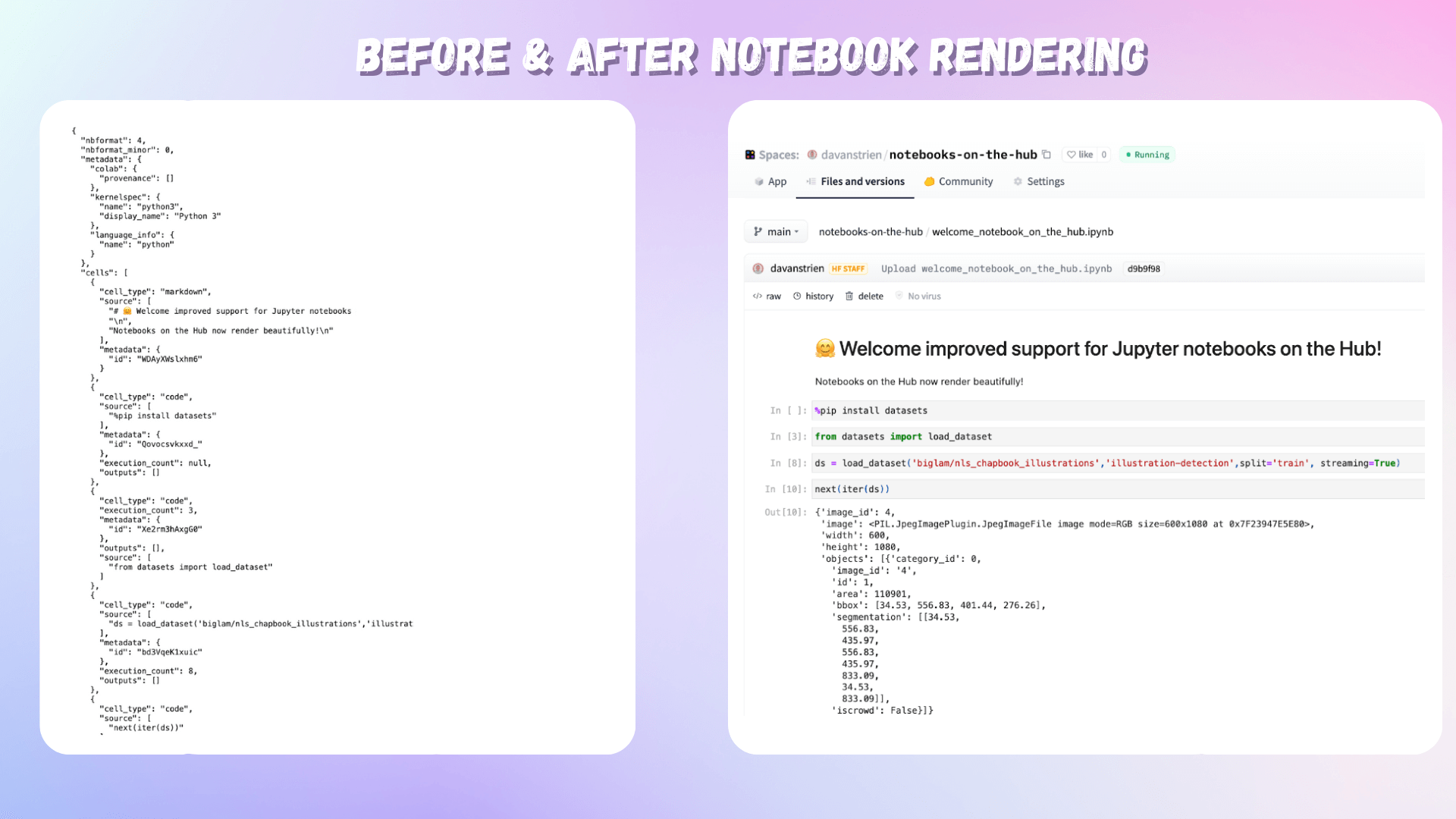
  42. Jupyter X Hugging Face

    Jupyter and Hugging Face have partnered to integrate Hugging Face's extensive model repository directly into the Jupyter Notebook environment. This collaboration aims to streamline the process for data scientists and developers to discover, load, and utilize machine learning models within their notebooks. The integration provides enhanced discoverability and easier access to a vast collection of pre-trained models, simplifying workflows for AI development and experimentation. AI

    Jupyter X Hugging Face
  43. Launch HN: Flower (YC W23) – Train AI models on distributed or sensitive data

    Flower, an open-source framework for federated learning, has launched to enable AI model training on distributed or sensitive data without moving it. This approach, where the model is brought to the data, addresses challenges in areas like healthcare, finance, and generative AI where data privacy and regulatory compliance are paramount. The framework aims to overcome barriers for ML projects by simplifying federated learning, with plans to offer a managed enterprise version. AI

    IMPACT Enables new AI use cases by allowing model training on sensitive or distributed data, bypassing privacy and regulatory hurdles.

  44. Worldwide Repls, part 3: Firing Up The Engines

    Replit has implemented a new geographic distribution strategy to reduce latency for its developers. The company is distributing its infrastructure into isolated clusters, which also serve as failure domains to limit the impact of outages. This move aims to bring servers closer to users globally, improving the responsiveness of development tasks like shell interactions and code analysis. AI

    Worldwide Repls, part 3: Firing Up The Engines

    IMPACT Replit's infrastructure improvements aim to reduce latency for developers using its platform, potentially enhancing the experience for those building AI applications.

  45. Launch HN: CodeComplete (YC W23) – Copilot for Enterprise

    CodeComplete AI has launched a self-hosted AI coding assistant designed for enterprise companies that cannot use tools like GitHub Copilot due to security and privacy concerns. The product fine-tunes open-source models on a company's private codebase, offering in-line code completions directly within the IDE. This approach ensures sensitive intellectual property remains within the company's firewall, addressing a key limitation of cloud-based AI development tools. AI

    Launch HN: CodeComplete (YC W23) – Copilot for Enterprise

    IMPACT Provides enterprises with a secure, self-hosted alternative to cloud-based AI coding assistants, enabling broader adoption of AI tools.

  46. BerriAI—The Y Combinator company that brings LLM products to market quickly with Replit

    BerriAI, a Y Combinator-backed startup, has developed a platform that enables users to create production-ready ChatGPT applications in under two minutes. The service allows for easy data integration to train LLMs for various use cases, including customer support, internal knowledge base querying, and data analysis. BerriAI leverages Replit's development environment for rapid prototyping, collaboration, and instant hosting, significantly accelerating their own development cycles and time-to-market. AI

    BerriAI—The Y Combinator company that brings LLM products to market quickly with Replit

    IMPACT Accelerates the creation and deployment of custom LLM applications for businesses.

  47. Launch HN: Vellum (YC W23) – Dev Platform for LLM Apps

    Two new platforms, Baseplate and Vellum, have launched to support the development of applications powered by large language models. Baseplate offers a backend-as-a-service specifically designed for LLM applications, while Vellum provides a comprehensive development platform for LLM apps. Both companies are part of the Y Combinator W23 batch, indicating a trend towards specialized infrastructure for the rapidly growing LLM ecosystem. AI

    IMPACT These platforms aim to streamline LLM application development, potentially accelerating adoption and innovation in the field.

  48. How Hugging Face Accelerated Development of Witty Works Writing Assistant

    Hugging Face has detailed how its platform facilitated the development of the Witty Works writing assistant. The company leveraged Hugging Face's tools and infrastructure to enhance the assistant's capabilities. This collaboration highlights the practical applications of Hugging Face's ecosystem in building specialized AI tools. AI

    How Hugging Face Accelerated Development of Witty Works Writing Assistant
  49. Deploy a Cloudflare Worker from Replit – anytime, anywhere

    Replit and Cloudflare have partnered to enable developers to deploy Cloudflare Workers directly from the Replit platform. This integration allows users to easily create, manage, and deploy serverless functions to Cloudflare's global network through a streamlined process. The collaboration aims to provide developers with enhanced tools for building and hosting applications efficiently, leveraging both platforms' strengths in developer experience and global infrastructure. AI

    Deploy a Cloudflare Worker from Replit – anytime, anywhere

    IMPACT Streamlines serverless deployment for developers, potentially increasing adoption of edge computing solutions.

  50. Fetch Consolidates AI Tools and Saves 30% Development Time with Hugging Face on AWS

    Fetch, a company specializing in AI-powered customer service, has significantly improved its development efficiency by leveraging Hugging Face's tools on Amazon Web Services (AWS). This integration has led to a reported 30% reduction in development time for their AI applications. The case study highlights how combining Hugging Face's platform with AWS infrastructure enabled Fetch to streamline its AI workflows and accelerate product development. AI

    Fetch Consolidates AI Tools and Saves 30% Development Time with Hugging Face on AWS