PulseAugur / Brief
EN
LIVE 21:37:05

Brief

last 24h
[50/3923] 224 sources

Multi-source AI news clustered, deduplicated, and scored 0–100 across authority, cluster strength, headline signal, and time decay.

  1. OpenAI adopts MCP

    OpenAI has reportedly adopted the "Model Coordination Protocol" (MCP), a system designed to manage and coordinate the development and deployment of AI models. This move suggests a structured approach by OpenAI to handle the complexities of its rapidly advancing AI research and product releases. The adoption of MCP could indicate a new phase in how large AI organizations manage their internal model pipelines and external releases. AI

  2. Secure Vibe Coding Made Simple

    Replit is enhancing its platform's security to address concerns about AI-generated code, a practice they term "vibe coding." The company is implementing a defense-in-depth strategy across its infrastructure, from development sandboxes to production deployments. Key security features include a Zero Trust Architecture, isolated cloud sandboxes using microVMs for improved isolation, and built-in tools like Replit Auth, pre-deployment security scanning with Semgrep, and a protected Secrets manager to prevent accidental exposure of sensitive credentials. AI

    Secure Vibe Coding Made Simple

    IMPACT Replit's security enhancements aim to build user confidence in AI-generated code, potentially accelerating adoption of AI coding tools.

  3. What is Vibe Coding?

    Replit is expanding its "vibe coding" capabilities, allowing users to generate complex applications and launch assets using natural language prompts. New features include separate development and production databases for safer deployment and a "Plan Mode" for AI collaboration without immediate code changes. The platform is also integrating with enterprise data solutions like Databricks and Snowflake, enabling users to build governed data apps and dashboards directly from existing company data. AI

    What is Vibe Coding?

    IMPACT Enables non-technical users to build complex applications and launch assets, democratizing software development and accelerating product launches.

  4. Analyzing long agent transcripts (Docent)

    Transluce has released Docent, a system designed to analyze lengthy transcripts generated by AI agents. Docent helps identify issues such as corrupted tasks, scaffolding problems, and unexpected behaviors within these complex interactions. For instance, Docent can pinpoint missing dependencies that, when corrected, significantly improve an AI's performance on benchmarks like InterCode, which are used to assess AI cyberrisk. AI

    Analyzing long agent transcripts (Docent)
  5. Introducing Gradio's new Dataframe!

    Gradio has released a new DataFrame component, enhancing its capabilities for building interactive machine learning applications. This upgrade allows users to display and manipulate tabular data directly within Gradio interfaces, improving the user experience for data visualization and interaction. The new DataFrame component offers advanced features for data handling, making it easier for developers to integrate data-centric functionalities into their AI projects. AI

    Introducing Gradio's new Dataframe!
  6. The New and Fresh analytics in Inference Endpoints

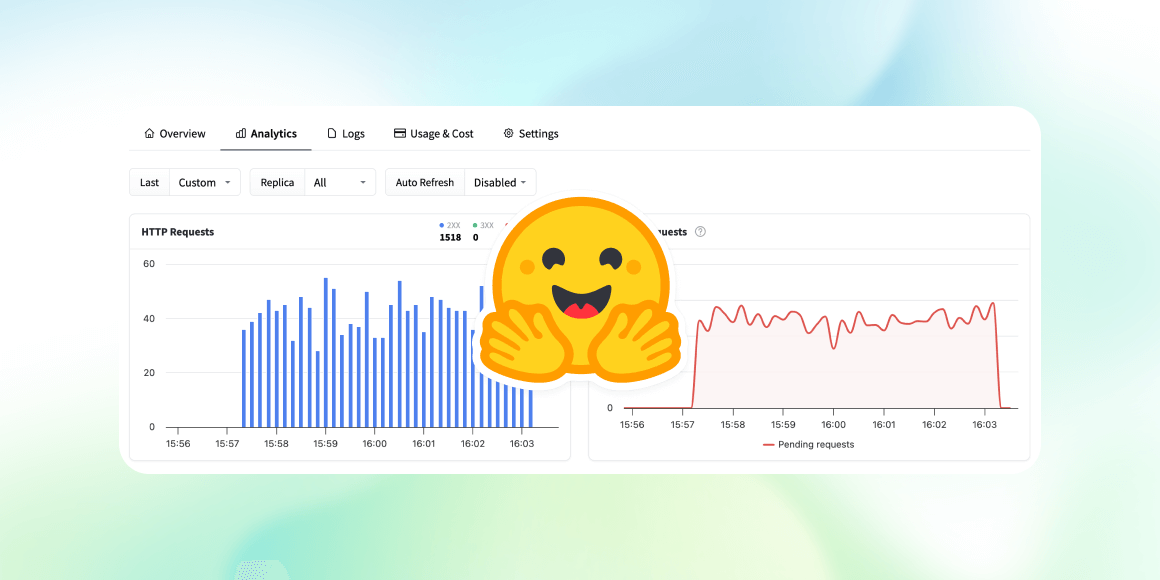
    Hugging Face has introduced new analytics features for its Inference Endpoints service. These updates provide users with enhanced insights into model performance and usage. The goal is to help developers better understand and optimize their deployed AI models. AI

    The New and Fresh analytics in Inference Endpoints
  7. Xet is on the Hub

    Hugging Face has integrated Xet, a data versioning and management tool, directly into its platform. This integration allows users to manage large datasets more efficiently within the Hugging Face ecosystem. Xet's capabilities, such as efficient storage and retrieval of data, will now be more accessible to the community of AI developers and researchers on Hugging Face. AI

    Xet is on the Hub
  8. Everything you need to know about MCP

    Replit has introduced the Model Context Protocol (MCP), a new standard designed to enable AI models to connect with external data sources and tools. This protocol acts as a universal connector, allowing AI models to access information and perform actions beyond their initial training data, similar to how USB-C enables diverse devices to connect. MCP utilizes a client-server architecture, with clients initiating requests, a communication layer defining the protocol, and servers providing access to resources like databases, web services, and files. This standardization aims to simplify integration, allow for easier switching between AI providers, and enhance security for AI applications. AI

    Everything you need to know about MCP

    IMPACT Standardizes AI integration, enabling models to access external data and tools more easily, potentially accelerating development and interoperability.

  9. LLM Inference on Edge: A Fun and Easy Guide to run LLMs via React Native on your Phone!

    Hugging Face has released a guide detailing how to run large language models (LLMs) directly on mobile devices using React Native. This approach enables on-device inference, which can enhance privacy and reduce latency by eliminating the need for cloud-based processing. The guide aims to make this technology accessible for developers looking to integrate AI capabilities into mobile applications. AI

    LLM Inference on Edge: A Fun and Easy Guide to run LLMs via React Native on your Phone!
  10. Using Tvix Store to Reduce Nix Storage Costs by 90%

    Replit has developed a new method called Tvix Store to significantly reduce its Nix storage costs. By implementing Tvix, which uses content-addressable chunking, Replit was able to compress its Nix store paths from 6TB down to 1.2TB. This optimization resulted in a 90% reduction in storage expenses for their development environments. AI

    Using Tvix Store to Reduce Nix Storage Costs by 90%

    IMPACT Niche tooling improvement; minimal industry-wide impact.

  11. Show HN: ArchGW – An open-source intelligent proxy server for prompts

    ArchGW, an open-source intelligent proxy server, aims to simplify the development of agentic AI applications. It centralizes essential middleware functions such as agent routing, orchestration, safety guardrails, and model agility, allowing developers to focus on core product logic. Built on Envoy and backed by LLM research, ArchGW supports various languages and AI frameworks, offering features like low-latency orchestration, zero-code capture of agentic signals, and moderation hooks. AI

    Show HN: ArchGW – An open-source intelligent proxy server for prompts

    IMPACT Simplifies agentic AI development by centralizing core middleware functions, potentially accelerating production deployment.

  12. Show HN: Agents.json – OpenAPI Specification for LLMs

    Wildcard AI has introduced agents.json, an open specification designed to help AI agents interact more effectively with APIs. This new standard builds upon the existing OpenAPI specification by adding structured contracts, including concepts like 'flows' and 'links', to optimize for LLM understanding and execution of API calls. The goal is to simplify the process for developers integrating AI agents with web services, enabling more reliable and scalable agent interactions. AI

    Show HN: Agents.json – OpenAPI Specification for LLMs

    IMPACT Simplifies API integration for AI agents, potentially accelerating the development and deployment of agent-based applications.

  13. Show HN: Globstar – Open-source static analysis toolkit

    DeepSource has open-sourced Globstar, a static analysis toolkit designed for creating custom code quality and security checkers. The toolkit leverages tree-sitter for parsing code and utilizes AI assistants like ChatGPT and Claude to generate complex queries, simplifying the process for developers. Globstar offers both YAML and Go interfaces, supporting over 20 languages with plans to add C/C++ support. AI

    Show HN: Globstar – Open-source static analysis toolkit

    IMPACT Simplifies the creation of custom code quality and security checkers by leveraging AI for query generation.

  14. Trace & Evaluate your Agent with Arize Phoenix

    Hugging Face has partnered with Arize AI to integrate Arize Phoenix, a new tool for tracing and evaluating AI agents, into its platform. This integration aims to provide developers with enhanced visibility into their agent's decision-making processes and performance. The goal is to simplify debugging and improve the reliability of AI agents built and deployed through Hugging Face. AI

    Trace & Evaluate your Agent with Arize Phoenix
  15. FastRTC: The Real-Time Communication Library for Python

    Hugging Face has released FastRTC, a new library designed to facilitate real-time communication within Python applications. This library aims to simplify the integration of real-time features, potentially enabling more interactive and responsive AI-powered applications. FastRTC is expected to be particularly useful for developers building collaborative tools or applications requiring low-latency data exchange. AI

    FastRTC: The Real-Time Communication Library for Python
  16. Remote VAEs for decoding with Inference Endpoints 🤗

    Hugging Face has introduced Remote VAEs, a new method for efficient decoding in their Inference Endpoints. This approach allows for the offloading of the VAE decoding process to a separate, specialized service. This separation aims to improve inference speed and reduce the computational load on the main model. AI

    Remote VAEs for decoding with Inference Endpoints 🤗
  17. Introducing Three New Serverless Inference Providers: Hyperbolic, Nebius AI Studio, and Novita 🔥

    Hugging Face has announced the integration of three new serverless inference providers: Hyperbolic, Nebius AI Studio, and Novita. These additions aim to expand the options available for developers to deploy and run AI models efficiently. The collaboration enhances Hugging Face's platform by offering more choices for scalable and accessible AI model inference. AI

    Introducing Three New Serverless Inference Providers: Hyperbolic, Nebius AI Studio, and Novita 🔥
  18. Bee AI: The Wearable Ambient Agent

    Bee AI has emerged as a leading contender in the AI wearable market, offering an always-on hardware device with advanced features like beamforming microphones and long battery life. The device, worn as a wristwatch or clip-on pin, integrates a sophisticated pipeline for transcription, diarization, and memory processing, enabling users to recall daily events and perform actions via a virtual cloud phone. Founders Maria and Ethan discussed the product's evolution from an app to hardware, its value proposition, and addressed critical privacy and legal considerations during their appearance on the Latent Space podcast. AI

    Bee AI: The Wearable Ambient Agent
  19. 1 Billion Classifications

    Hugging Face has announced that its platform has surpassed one billion text classifications. This milestone highlights the widespread adoption and use of natural language processing models hosted on the platform. The company attributes this growth to the accessibility and ease of use of its tools for developers and researchers. AI

    1 Billion Classifications
  20. From Chunks to Blocks: Accelerating Uploads and Downloads on the Hub

    Hugging Face has introduced a new system called "From Chunks to Blocks" to significantly speed up file transfers on its platform. This update restructures how data is handled, moving from a chunk-based approach to a block-based one. The change aims to improve the efficiency of uploading and downloading large models and datasets, which are crucial for the AI community. AI

    From Chunks to Blocks: Accelerating Uploads and Downloads on the Hub
  21. Build awesome datasets for video generation

    Hugging Face has released a set of scripts designed to assist developers in creating datasets for video generation models. These tools aim to streamline the process of curating and preparing video data, which is crucial for training advanced AI systems capable of producing video content. The initiative supports the growing field of generative AI in multimedia. AI

    Build awesome datasets for video generation
  22. Welcome to Inference Providers on the Hub 🔥

    Hugging Face has launched a new initiative called Inference Providers, allowing users to deploy and run models directly on the platform. This feature aims to simplify the process of making AI models accessible and operational for a wider audience. The platform will now offer integrated solutions for model deployment, enhancing its role as a central hub for AI development and utilization. AI

    Welcome to Inference Providers on the Hub 🔥
  23. Show HN: BrowserAI – Run LLMs directly in browser using WebGPU (open source)

    BrowserAI is an open-source project enabling large language models to run directly within a web browser using WebGPU for accelerated performance. This approach ensures 100% privacy as all processing occurs locally, eliminating server costs and enabling offline capabilities. The SDK supports multiple engines and popular models, offering features like text generation, speech recognition, text-to-speech, and audio source separation. AI

    Show HN: BrowserAI – Run LLMs directly in browser using WebGPU (open source)

    IMPACT Enables privacy-focused, low-cost AI applications by running models directly in the user's browser.

  24. Show HN: Anyshift.io – Terraform "Superplan"

    Anyshift.io has introduced a "Superplan" for Terraform, aiming to simplify cloud infrastructure management. This new offering is designed to streamline the deployment and maintenance of cloud resources, potentially reducing complexity for developers and operations teams. The platform focuses on enhancing the user experience for managing infrastructure as code. AI

    IMPACT Niche tooling improvement; minimal industry-wide impact.

  25. Show HN: Free TCG Proxy Manager for Magic, Yugioh, and Pokemon

    A developer has created a free tool to generate custom-printed trading card proxies for games like Magic: The Gathering, Yugioh, and Pokemon. The tool utilizes an AI upscaling model from Replicate to enhance card image quality for casual play. The project is built using Rails 8 and deployed with Kamal 2, leveraging Hetzner for affordable cloud compute and self-hosting services like Meilisearch and OpenObserve instead of relying on PaaS providers. AI

    IMPACT Demonstrates a practical application of AI upscaling models for niche creative projects, potentially lowering the barrier for custom content creation.

  26. Controlling Language Model Generation with NVIDIA's LogitsProcessorZoo

    NVIDIA has released a new tool called LogitsProcessorZoo, integrated into Hugging Face's Transformers library. This tool allows developers to control and modify the output of large language models during the generation process. By manipulating logits, developers can enforce specific constraints or styles on the model's responses, enhancing control over AI-generated text. AI

    Controlling Language Model Generation with NVIDIA's LogitsProcessorZoo
  27. Show HN: Hyperbrowser – Scalable Browser Infrastructure for AI Apps

    Hyperbrowser is a new open-source project designed to provide scalable browser infrastructure specifically for AI applications. It aims to streamline the development and deployment of AI-powered web experiences by offering robust backend support. The project is available for developers to explore and contribute to. AI

    Show HN: Hyperbrowser – Scalable Browser Infrastructure for AI Apps

    IMPACT Provides a new infrastructure option for developers building AI applications.

  28. So you suspect you have a memory leak...

    Replit engineers encountered a memory leak in their Agent processes, causing hourly crashes and slowdowns. Standard profiling tools were incompatible with the asyncio-flavored Python codebase. They opted for memray, an out-of-process memory profiler, which identified hundreds of MiB of un-freed allocated objects within minutes. Despite identifying the leaked objects, the root cause remained elusive as they weren't intentionally stored in global variables. AI

    So you suspect you have a memory leak...

    IMPACT Details a debugging technique for memory leaks in Python, relevant for developers working with AI agents and complex Python applications.

  29. Show HN: FastGraphRAG – Better RAG using good old PageRank

    FastGraphRAG, an open-source framework, has been released to enhance Retrieval-Augmented Generation (RAG) workflows. It utilizes a PageRank-based graph approach for more interpretable and efficient knowledge retrieval. The framework aims to reduce costs significantly compared to existing methods, offering features like dynamic data updates and intelligent exploration for LLM applications. AI

    Show HN: FastGraphRAG – Better RAG using good old PageRank

    IMPACT Offers a more cost-effective and interpretable solution for RAG, potentially lowering the barrier for deploying LLM applications.

  30. Stripe lets Agents spend money with StripeAgentToolkit

    Stripe has introduced the StripeAgentToolkit, a new product designed to enable AI agents to conduct financial transactions. This toolkit allows these agents to manage payments, issue refunds, and handle other financial operations through Stripe's platform. The development aims to integrate AI agents more seamlessly into the financial ecosystem, facilitating automated commerce and business processes. AI

  31. SpotHero: Innovation through Rapid Prototyping

    SpotHero's marketing team is leveraging Replit's platform to develop internal tools and prototypes, addressing challenges like fragmented marketing technology systems and limited engineering capacity. This approach allows them to build custom data integrations and automate processes using Python and JavaScript, reducing manual effort and operational expenses. By enabling their marketing team to create these solutions independently, SpotHero can foster innovation without diverting core engineering resources from product development. AI

    SpotHero: Innovation through Rapid Prototyping

    IMPACT Enables marketing teams to build custom tools and integrations, potentially increasing efficiency and reducing reliance on specialized engineering resources.

  32. Agents @ Work: Dust.tt

    Dust.tt, an AI infrastructure platform, has evolved from a developer framework and browser extension into a tool for deploying AI agents within enterprises. The company emphasizes a horizontal approach, enabling users to build their own AI experiences rather than focusing on specific vertical workflows. This strategy has led to high user engagement, with some deployments seeing 88% daily active users, and allows for emergent use cases driven by business needs. However, this horizontal strategy also presents challenges in go-to-market efforts and requires complex infrastructure to manage diverse integrations. AI

    Agents @ Work: Dust.tt
  33. Argilla 2.4: Easily Build Fine-Tuning and Evaluation Datasets on the Hub — No Code Required

    Argilla has released version 2.4, introducing a new user interface integrated with the Hugging Face Hub. This update allows users to create datasets for fine-tuning and evaluating AI models without writing any code. The platform now offers a more streamlined experience for dataset management directly within the Hugging Face ecosystem. AI

    Argilla 2.4: Easily Build Fine-Tuning and Evaluation Datasets on the Hub — No Code Required
  34. Promega’s top-down adoption of ChatGPT accelerates manufacturing, sales, and marketing

    Promega, a life sciences company, has significantly accelerated its operations by integrating OpenAI's ChatGPT across various departments. The company's CEO championed the adoption, envisioning AI as a tool to enhance employee capabilities. Over 1,400 custom GPTs are now in use by 80% of Promega's workforce, streamlining tasks in manufacturing, quality assurance, sales, and marketing. Specific applications include forecasting, automating customer responses, and personalizing sales outreach, leading to substantial time savings and improved efficiency. AI

    Promega’s top-down adoption of ChatGPT accelerates manufacturing, sales, and marketing
  35. Practical workflow orchestration

    Prefect, an open-source Python library, aims to simplify workflow orchestration for data scientists, particularly in the context of agentic AI workflows. The library provides visibility into Python-based pipelines and includes tools like Marvin, an AI engineering framework, and ControlFlow, a system for managing agent workflows. This addresses the challenges of managing complex and potentially failure-prone AI-driven processes. AI

    Practical workflow orchestration
  36. Shell2: 200× faster, persisted, multiplayer-native Shells

    Replit has launched Shell2, a significantly improved terminal experience for its online development environment. This new version is up to 200 times faster due to several technical optimizations, including eliminating unnecessary string-byte conversions and avoiding the overhead of standard input/output pipes. Shell2 also introduces a more direct handling of WebSocket connections and a streamlined data processing approach, enhancing overall performance and responsiveness for developers. AI

    Shell2: 200× faster, persisted, multiplayer-native Shells

    IMPACT Enhances developer tooling, potentially improving productivity for AI development workflows.

  37. Welcome, Gradio 5

    Gradio 5 has been released, introducing a suite of new features designed to enhance the user experience for building and sharing AI applications. Key updates include improved UI components, expanded customization options, and better performance for interactive demos. This release aims to make it easier for developers to create and deploy machine learning models with interactive interfaces. AI
    Welcome, Gradio 5
  38. From localhost to live

    Replit is addressing the complexity developers face in moving code from their local machines to a live deployment. The company highlights that the challenges extend beyond just writing code, encompassing environment configuration, dependency management, and service integration. Replit positions itself as a cloud-based IDE that simplifies these processes, offering an instant Ubuntu VM and streamlined deployment capabilities for both technical and less technical users. AI

    From localhost to live

    IMPACT Replit's platform aims to streamline the development process for AI-native applications, potentially lowering the barrier to entry for deploying AI-powered tools.

  39. Prompt Caching in the API

    OpenAI has introduced Prompt Caching for its API, offering developers significant cost and latency reductions. This feature automatically reuses recently processed input tokens, providing a 50% discount for prompts longer than 1,024 tokens. Prompt Caching is now active on the latest GPT-4o models and fine-tuned versions, with caches typically cleared within an hour of inactivity. This aims to help developers scale their AI applications more efficiently by lowering operational expenses. AI

    Prompt Caching in the API
  40. Show HN: Velvet – Store OpenAI requests in your own DB

    Velvet, a developer gateway for analyzing and monitoring AI requests, has been acquired by Arize, a company specializing in AI evaluation and observability. The acquisition aims to accelerate the adoption of Arize's unified AI platform. Velvet's founders, Emma and Chris, will join Arize as part of the deal. Additionally, the cluster mentions Phoenix, an open-source tool for LLM tracing and evaluation, and LiteLLM, an LLM gateway supporting over 100 models in the OpenAI format. AI

    Show HN: Velvet – Store OpenAI requests in your own DB

    IMPACT Acquisition of Velvet by Arize may lead to enhanced AI observability and evaluation tools for developers.

  41. Show HN: Sourcetable – AI Spreadsheet and Data Platform

    Sourcetable has launched as an AI-native spreadsheet platform designed to sync with various data sources and offer an AI copilot for analysis. The tool aims to assist analysts and finance professionals by enabling natural language queries to databases and business applications, generating SQL, and creating charts. Sourcebot, an open-source alternative to Sourcegraph, has also been released, providing code search and natural language querying capabilities for understanding codebases with inline citations. AI

    Show HN: Sourcetable – AI Spreadsheet and Data Platform

    IMPACT These tools offer new ways for professionals to interact with data and codebases, potentially streamlining analysis and development workflows.

  42. Launch HN: Simplex (YC S24) – Browser automation platform for developers

    Simplex and Finic are two new platforms designed to automate browser-based tasks for developers. Simplex focuses on streamlining the prior authorization process for healthcare providers by integrating with existing clinical data and handling communications with payers. Finic offers an open-source solution for building custom browser automations, providing developers with tools to create their own automated workflows. AI

    Launch HN: Simplex (YC S24) – Browser automation platform for developers

    IMPACT These tools aim to simplify complex workflows for developers and healthcare professionals, potentially improving efficiency in administrative tasks.

  43. Introducing the SQL Console on Datasets

    Hugging Face has introduced a new SQL Console feature for its Datasets library. This tool allows users to query large datasets using standard SQL syntax directly within the Hugging Face ecosystem. The integration aims to simplify data exploration and manipulation for machine learning practitioners. AI

    Introducing the SQL Console on Datasets
  44. Launch HN: Fortress (YC S24) – Database platform for multi-tenant SaaS

    Fortress, a YC S24 startup, has launched a database platform designed for multi-tenant SaaS applications, focusing on simplifying tenant data isolation. The platform offers a Bring Your Own Cloud (BYOC) backend-as-a-service, allowing developers to manage tenant data across shared and dedicated database instances. Fortress aims to provide the ease of a managed DBaaS with native isolation and programmatic provisioning on any cloud, supporting developers in meeting increasing data sensitivity and compliance demands. AI

    Launch HN: Fortress (YC S24) – Database platform for multi-tenant SaaS

    IMPACT Provides infrastructure tooling that may indirectly support AI application development by simplifying data management for SaaS platforms.

  45. Micrograd.jl

    This article introduces Micrograd.jl, a new automatic differentiation package for the Julia programming language. It aims to fill a gap in comprehensive tutorials for AD in Julia, requiring a solid understanding of both Julia and Calculus. The package is built upon Zygote.jl and ChainRules.jl, offering a different approach to AD compared to Python frameworks like PyTorch by leveraging Julia's functional programming and metaprogramming capabilities. AI

    Micrograd.jl

    IMPACT Provides a new tool for Julia developers to build and train machine learning models, potentially improving efficiency and understanding of backpropagation.

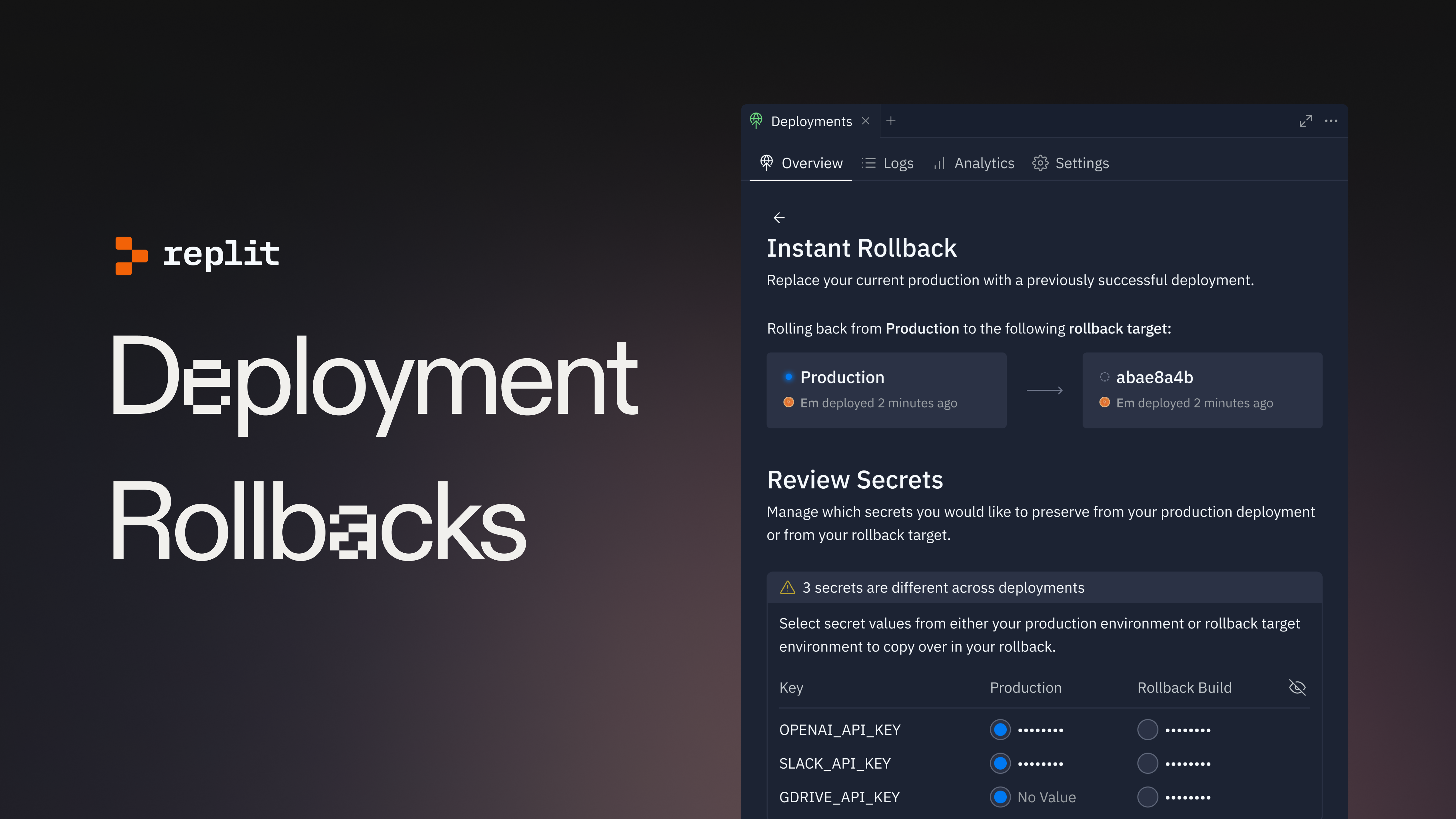
  46. Introducing Deployment Rollbacks

    Replit has introduced a new deployment rollback feature, allowing users to revert to a previous stable version of their application with a single click. This functionality aims to quickly fix issues like broken builds or typos. The system supports managing secrets across different versions and stores up to five recent builds to enable rollbacks, optimizing the deployment process by promoting existing images rather than rebuilding. AI

    Introducing Deployment Rollbacks

    IMPACT Enhances developer workflow for applications, potentially including AI-powered ones, by simplifying version management and recovery.

  47. Leveraging AI for efficient incident response

    Meta has developed an AI-assisted system to accelerate incident response by identifying the root cause of system failures. This system combines heuristic-based retrieval to narrow down potential issues with a Llama 2 model for ranking the most likely causes. In backtesting, the system demonstrated 42% accuracy in pinpointing the root cause for investigations related to Meta's web monorepo. AI

    Leveraging AI for efficient incident response

    IMPACT Enhances internal system reliability and incident response efficiency through AI-driven root cause analysis.

  48. Launch HN: AnswerGrid (YC S24) – Web research tool for lead generation

    AnswerGrid, a Y Combinator S24 startup, has launched a web research tool designed to help B2B founders identify high-potential leads for early-stage sales. The tool functions as a spreadsheet, allowing users to input basic company profiles and then utilize AI-powered features like web scraping and web searching to apply nuanced qualification heuristics. This approach aims to move beyond simple keyword searches, enabling founders to discover companies that are a strong fit for their product and warrant personalized outreach. AI

    Launch HN: AnswerGrid (YC S24) – Web research tool for lead generation

    IMPACT Aims to streamline early-stage B2B sales qualification by leveraging AI for deeper lead analysis.

  49. The 5 Most Under-Rated Tools on Hugging Face

    Hugging Face has highlighted five lesser-known but valuable tools available on its platform. These tools aim to enhance the user experience and efficiency for developers working with AI models. The selection includes utilities for dataset management, model evaluation, and efficient deployment, underscoring Hugging Face's commitment to providing a comprehensive ecosystem for the AI community. AI

    The 5 Most Under-Rated Tools on Hugging Face
  50. Launch HN: Sorcerer (YC S24) – Weather balloons that collect more data

    Sorcerer, a startup founded by Max, Alex, and Austin, has developed weather balloons capable of collecting atmospheric data for over six months. These balloons are designed to gather significantly more data per dollar compared to existing methods and can reach previously inaccessible regions. The technology aims to address the critical gap in weather data, particularly in areas like oceans and developing continents, which hinders accurate global weather forecasting. AI

    IMPACT Improved weather data collection could enhance the accuracy of AI-driven climate modeling and forecasting.