PulseAugur / Brief
LIVE 21:51:10

Brief

last 24h
[50/673] 186 sources

Multi-source AI news clustered, deduplicated, and scored 0–100 across authority, cluster strength, headline signal, and time decay.

  1. DISC: Decoupling Instruction from State-Conditioned Control via Policy Generation

    Researchers have developed a new method called DISC that decouples language instructions from state-conditioned control in robotics. Unlike previous approaches that share network parameters, DISC uses a hypernetwork to generate task-specific policies directly from instructions, preventing observation leakage. This novel approach significantly outperforms existing methods on benchmarks like LIBERO-90 and Meta-World, demonstrating its effectiveness in complex, long-horizon tasks and real-world applications. AI

    DISC: Decoupling Instruction from State-Conditioned Control via Policy Generation

    IMPACT Introduces a novel architecture for language-conditioned robotics that mitigates common failure modes and improves performance on complex tasks.
  2. Activation-Free Backbones for Image Recognition: Polynomial Alternatives within MetaFormer-Style Vision Models

    Researchers have developed new activation-free backbone architectures for vision models, utilizing polynomial functions instead of traditional pointwise nonlinearities like ReLU or GELU. These novel modules, integrated into the MetaFormer framework, demonstrate competitive or superior performance compared to activation-based models on tasks such as ImageNet classification and semantic segmentation. The study also shows these polynomial variants outperform prior specialized polynomial networks while requiring less computational cost. AI

    Activation-Free Backbones for Image Recognition: Polynomial Alternatives within MetaFormer-Style Vision Models

    IMPACT Introduces a new architectural approach for vision models that could lead to more efficient and robust image recognition systems.

  3. USV: Towards Understanding the User-generated Short-form Videos

    Researchers have introduced USV, a new dataset comprising approximately 224,000 user-generated short-form videos. This dataset is designed to advance the understanding of high-level semantic information in videos, moving beyond instance-level recognition. To facilitate research, the paper also establishes topic recognition and video-text retrieval tasks on USV, proposing baseline methods like MMF-Net and VTCL. AI

    USV: Towards Understanding the User-generated Short-form Videos

    IMPACT Introduces a new dataset and baseline methods to advance research in understanding user-generated short-form videos.

  4. HyDAR-Pano3D: A Hybrid Disentangled Anatomical Recovery Framework for Panoramic-to-3D Reconstruction

    Researchers have developed HyDAR-Pano3D, a novel framework for reconstructing detailed 3D dental anatomy from 2D panoramic radiographs. This two-stage approach disentangles the learning process, first creating a normalized canonical volume using radiographic features and semantic priors from SAM, and then restoring patient-specific variations. The method significantly outperforms existing techniques, achieving high scores in PSNR, SSIM, and Dice for anatomical reconstruction, and enabling accurate downstream segmentation tasks. AI

    HyDAR-Pano3D: A Hybrid Disentangled Anatomical Recovery Framework for Panoramic-to-3D Reconstruction

    IMPACT Enables more accurate 3D dental reconstructions from standard 2D X-rays, potentially reducing the need for CBCT scans and improving diagnostic capabilities.

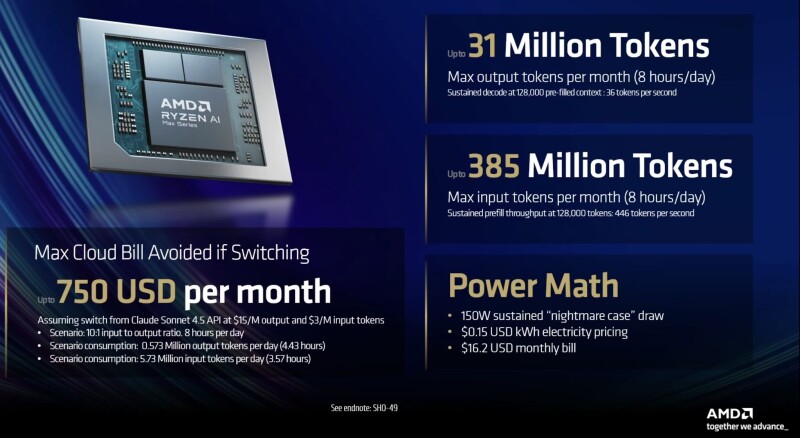
  5. AMD says its $4K Ryzen AI Halo workstation practically pays for itself

    AMD has launched its Ryzen AI Halo workstation, priced at $4,000, which the company claims can pay for itself through efficiency gains. The workstation is designed for AI-intensive tasks and aims to provide a cost-effective solution for professionals. This release highlights AMD's strategy to integrate AI capabilities directly into their hardware offerings. AI

    AMD says its $4K Ryzen AI Halo workstation practically pays for itself

    IMPACT Offers a dedicated hardware solution for AI tasks, potentially improving efficiency for professionals using AI tools.

  6. Markovian Circuit Tracing for Transformer State Dynamic

    Researchers have developed a new framework called Markovian Circuit Tracing (MCT) to analyze the internal state dynamics of transformer models. This method uses synthetic Hidden Markov Model (HMM) tasks to test if transformer activations exhibit coarse state-transition structures. The findings indicate that transformers can learn near-Bayes next-token predictors and that residual activations contain partial Bayesian belief information, with state patching significantly improving accuracy. AI

    Markovian Circuit Tracing for Transformer State Dynamic

    IMPACT Introduces a new benchmark and evaluation framework for transformer interpretability, potentially aiding in understanding model behavior.

  7. Velocityformer: Broken-Symmetry-Matched Equivariant Graph Transformers for Cosmological Velocity Reconstruction

    Researchers have developed Velocityformer, a novel equivariant graph transformer architecture designed to enhance the reconstruction of galaxy velocities for cosmological studies. This model specifically addresses the broken symmetry inherent in observational data, leading to a significant 35% improvement in the correlation coefficient compared to standard linear theory baselines. Velocityformer demonstrates high data efficiency, achieving accuracy with minimal simulations, and shows strong generalization capabilities across different input geometries and cosmological parameters. AI

    IMPACT Introduces a new AI architecture for improved cosmological data analysis, potentially leading to more accurate inferences about the universe.

  8. GraphRAG on Consumer Hardware: Benchmarking Local LLMs for Healthcare EHR Schema Retrieval

    Researchers evaluated the GraphRAG pipeline for retrieving information from Electronic Health Record (EHR) schemas using open-source large language models deployed on consumer hardware. The study benchmarked models like Llama 3.1, Mistral, Qwen 2.5, and Phi-4-mini on a single GPU, assessing indexing efficiency, knowledge graph construction, latency, and answer quality. Results indicated that models below approximately 7 billion parameters struggle with structured output errors, and local retrieval generally outperformed global summarization in terms of speed and factual accuracy. AI

    GraphRAG on Consumer Hardware: Benchmarking Local LLMs for Healthcare EHR Schema Retrieval

    IMPACT Demonstrates the feasibility of using smaller, locally deployed LLMs for complex tasks like EHR schema retrieval, potentially improving privacy and reducing costs in healthcare.

  9. DeepWeb-Bench: A Deep Research Benchmark Demanding Massive Cross-Source Evidence and Long-Horizon Derivation

    Researchers have introduced DeepWeb-Bench, a new benchmark designed to evaluate the deep research capabilities of advanced language models. This benchmark presents more challenging tasks than existing ones, requiring extensive evidence gathering from multiple sources, reconciliation of conflicting information, and multi-step reasoning over extended periods. Initial evaluations on nine frontier models revealed that derivation and calibration failures, rather than retrieval issues, are the primary obstacles, with models exhibiting distinct error patterns and domain specialization. AI

    IMPACT This benchmark aims to better assess and differentiate the complex reasoning and evidence synthesis capabilities of frontier AI models, pushing the development of more robust and reliable AI research agents.

  10. A Machine Learning Framework for Weighted Least Squares GNSS Positioning based on Activation Functions

    Researchers have developed a new machine learning framework to improve the accuracy of Global Navigation Satellite Systems (GNSS) positioning, particularly in challenging urban environments. The system uses activation functions to transform machine learning predictions about signal quality into weights for a weighted least squares algorithm. Experiments in Hong Kong and Tokyo showed that sigmoid activation functions consistently provided the most significant improvements in positioning accuracy across various machine learning models and GNSS configurations. AI

    IMPACT Improves location accuracy in challenging environments, potentially benefiting autonomous systems and location-based services.

  11. HITL-D: Human In The Loop Diffusion Assisted Shared Control

    Researchers have developed HITL-D, a new shared control framework that combines human input with diffusion-based AI policies for robotic manipulation tasks. This system assists users by providing autonomous updates to the end effector's orientation, reducing the need for complex joystick controls and lowering mental workload. User studies showed that HITL-D significantly improved task completion times and user satisfaction compared to traditional teleoperation. AI

    IMPACT This framework could lead to more intuitive and efficient human-robot collaboration in complex manipulation tasks.

  12. Mind the Sim-to-Real Gap & Think Like a Scientist

    Researchers have developed a new policy called Fisher-SEP to help planners decide when to supplement simulators with real-world experiments. The policy decomposes the simulator's value error into identifiable calibration shifts and unresolvable parametric residuals. It also distinguishes between local and reachability components of the value gap between simulator-optimal and true optimal policies. Two case studies demonstrate Fisher-SEP's effectiveness in optimizing experimental strategies for supply chains and public health interventions. AI

    IMPACT Provides a framework for improving the reliability of AI planning by integrating simulation with real-world data collection.

  13. Assessing socio-economic climate impacts from text data

    A new paper on arXiv proposes guidelines for using text data to assess the socio-economic impacts of climate change. The research addresses the fragmentation and methodological complexity in the field, offering recommendations for defining impacts, handling biases, and selecting modeling strategies. The goal is to support the creation of more accurate datasets for disaster risk management and attribution studies. AI

    Assessing socio-economic climate impacts from text data

    IMPACT Provides a framework for using NLP and LLMs to analyze climate impact data, potentially improving disaster risk management.

  14. Equilibrium Reasoners: Learning Attractors Enables Scalable Reasoning

    Researchers have introduced Equilibrium Reasoners (EqR), a novel framework that enables scalable reasoning in iterative neural network models. EqR hypothesizes that generalizable reasoning emerges from learning task-conditioned attractors, which are dynamical systems that stabilize on valid solutions. This approach allows models to adaptively allocate computational resources based on task difficulty, significantly improving accuracy on complex problems like Sudoku-Extreme by scaling test-time compute. AI

    IMPACT Introduces a new framework for scalable reasoning in iterative models, potentially improving performance on complex tasks by adaptively allocating compute.

  15. Uni-Edit: Intelligent Editing Is A General Task For Unified Model Tuning

    Researchers have introduced Uni-Edit, a novel approach to tuning Unified Multimodal Models (UMMs) that enhances image understanding, generation, and editing simultaneously. Unlike traditional methods that use complex multi-task training, Uni-Edit employs a single editing task, a single training stage, and a single dataset. This is achieved by developing an automated data synthesis pipeline that transforms visual question-answering data into sophisticated editing instructions, creating the Uni-Edit-148k dataset. Experiments show that tuning solely on Uni-Edit leads to comprehensive improvements across all three capabilities without additional operations. AI

    IMPACT Uni-Edit offers a more efficient method for enhancing multimodal AI capabilities, potentially streamlining model development.

  16. Spatial Gram Alignment for Ultra-High-Resolution Image Synthesis

    Researchers have introduced Spatial Gram Alignment (SGA), a new framework designed to improve ultra-high-resolution image synthesis using large-scale pre-trained Latent Diffusion Models (LDMs). Traditional methods struggle with extreme resolutions due to a conflict between learnability and fidelity, where direct feature distillation can degrade generation quality. SGA addresses this by aligning self-similarities of generative features with foundation model priors, preserving microscopic pixel-level fidelity while ensuring macroscopic structural coherence. AI

    Spatial Gram Alignment for Ultra-High-Resolution Image Synthesis

    IMPACT Enables more detailed and structurally coherent ultra-high-resolution image generation, potentially improving applications in digital art and media.

  17. Decomposing Subject-Driven Image Generation via Intermediate Structural Prediction

    Researchers have developed a new two-stage framework for subject-driven text-to-image generation that first predicts a structural map (like a Canny edge map) and then renders the final image using both appearance and structure. This approach aims to better preserve high-frequency details such as logos, patterns, and text, which are often degraded in existing methods. To enhance text handling, they also created a large dataset of 100,000 image pairs with textual consistency, and evaluations using GPT-4.1 showed significant improvements over baseline methods. AI

    Decomposing Subject-Driven Image Generation via Intermediate Structural Prediction

    IMPACT This research offers a novel approach to improving the fidelity of text-to-image generation, particularly for preserving fine details and text.

  18. Google Confirms 2 Critical New Flaws—How To Jump The Update Queue

    Google has confirmed two critical security vulnerabilities in its Chrome browser, identified as CVE-2026-9111 and CVE-2026-9110. These flaws affect WebRTC and the Chrome user interface, respectively. While Google is rolling out an automatic update over the coming days and weeks, users can manually initiate the update by navigating to Help > About Google Chrome within the browser. AI

    Google Confirms 2 Critical New Flaws—How To Jump The Update Queue

    IMPACT Minimal direct impact on AI operations; focuses on web browser security.

  19. Agent JIT Compilation for Latency-Optimizing Web Agent Planning and Scheduling

    Researchers have developed agent just-in-time (JIT) compilation to optimize web agent planning and scheduling, significantly reducing latency and improving accuracy. This new approach compiles natural language task descriptions into executable code, allowing for LLM calls, tool usage, and parallelization. The system includes a JIT-Planner for generating and validating code plans, and a JIT-Scheduler for exploring parallelization strategies using Monte Carlo estimation. Tests across five web applications showed a 10.4x speedup and 28% accuracy increase over existing methods, with the scheduler providing an additional 2.4x speedup and 9% accuracy improvement. AI

    IMPACT This new JIT compilation method for web agents promises faster and more accurate task automation, potentially improving user experience and efficiency in web-based AI applications.

  20. Mitigating Label Bias with Interpretable Rubric Embeddings

    Researchers have developed a new method called interpretable rubric embeddings to address label bias in AI models trained on historical human evaluations. This approach replaces standard black-box embeddings with features derived from expert-defined criteria, aiming to prevent models from inheriting biases present in past decisions. Empirical evaluations on a dataset of master's program applications demonstrated that this method reduces group disparities while enhancing cohort quality, offering a practical solution for learning with biased labels. AI

    IMPACT Offers a novel approach to mitigate bias in AI systems trained on historical data, potentially improving fairness in applications like hiring and admissions.

  21. Most Transformer Modifications Still Do Not Transfer at 1-3B: A 2020-2026 Update to Narang et al. (2021) with Downstream Evaluation and a Noise Floor

    A recent study re-evaluated the effectiveness of Transformer model modifications, finding that most still do not yield significant improvements when scaled to 1-3 billion parameters. Researchers tested 20 modifications introduced after 2021, using downstream evaluation metrics and controlling for variables like data, compute, and training recipes. The findings largely echo a 2021 study, with only a couple of modifications showing benefits, and one of those proving unstable at the larger scale. The research emphasizes the need for rigorous reporting, downstream evaluation, and cross-scale stability testing for architecture comparisons. AI

    Most Transformer Modifications Still Do Not Transfer at 1-3B: A 2020-2026 Update to Narang et al. (2021) with Downstream Evaluation and a Noise Floor

    IMPACT Confirms that architectural innovations in large language models often fail to scale effectively, suggesting a need for more robust evaluation methods.

  22. Leveraging LLMs for Grammar Adaptation: A Study on Metamodel-Grammar Co-Evolution

    Researchers have developed a new method using Large Language Models (LLMs) to automatically adapt grammars following metamodel evolution in model-driven engineering. This LLM-based approach learns adaptations from previous versions, outperforming traditional rule-based methods in consistency and output similarity on smaller datasets. While effective for complex grammar scenarios, the study found LLMs struggled with adaptation consistency on very large grammars, indicating limitations for large-scale applications. AI

    IMPACT LLM-based grammar adaptation shows potential for automating complex software engineering tasks, though scalability remains a challenge.

  23. ELSA: An ELastic SNN Inference Architecture for Efficient Neuromorphic Computing

    Researchers have introduced ELSA, a novel architecture designed to enhance the efficiency of neuromorphic computing using spiking neural networks (SNNs). ELSA enables true elastic inference by processing data in a fine-grained, token-wise pipeline, allowing for immediate forwarding of results and reduced latency. The architecture incorporates optimizations like a bundled address event representation protocol and mini-batch spiking Gustavson-product to minimize memory access and communication traffic. Experiments demonstrate that ELSA significantly outperforms existing accelerators in both speed and energy efficiency compared to both quantized artificial neural networks and other SNN accelerators. AI

    ELSA: An ELastic SNN Inference Architecture for Efficient Neuromorphic Computing

    IMPACT Introduces a new architecture that significantly improves speed and energy efficiency for neuromorphic computing, potentially accelerating the adoption of SNNs.

  24. Beyond Numerical Features: CNN-Driven Algorithm Selection via Contour Plots for Continuous Black-Box Optimization

    Researchers have developed a novel method for algorithm selection in continuous black-box optimization that utilizes contour plots instead of traditional numerical features. A Convolutional Neural Network (CNN) analyzes these contour visualizations of probed landscapes to predict the performance of different solvers. This image-based approach demonstrated significant improvements over the single best solver (SBS) on the BBOB 2009 benchmark and showed competitiveness with existing feature-based methods. AI

    Beyond Numerical Features: CNN-Driven Algorithm Selection via Contour Plots for Continuous Black-Box Optimization

    IMPACT Introduces a novel image-based approach for algorithm selection in optimization, potentially improving efficiency without relying on traditional numerical features.

  25. Tunable MAGMAX: Preference-Aware Model Merging for Continual Learning

    Researchers have developed Tunable MAGMAX, a new framework for continual learning that allows for preference-aware model merging. This method enables control over task-specific performance in merged models, adapting them to different deployment needs and user preferences. By using a preference vector and leveraging target environment data, the system can automatically construct optimal vectors without manual input. Experiments show Tunable MAGMAX effectively manages task-wise performance and adapts merged models to various environments, outperforming or matching baseline methods. AI

    Tunable MAGMAX: Preference-Aware Model Merging for Continual Learning

    IMPACT Enables more flexible deployment of continual learning models by allowing customization of task performance.

  26. ProtoPathway: Biologically Structured Prototype-Pathway Fusion for Multimodal Cancer Survival Prediction

    Researchers have developed ProtoPathway, a novel multimodal framework designed for predicting cancer survival. This framework integrates whole slide imaging and transcriptomics data by using biologically grounded representations. ProtoPathway employs learnable morphological prototypes for image analysis and a graph neural network for genomic data, enabling cross-modal attention to model the relationship between molecular programs and tissue morphology. The system offers enhanced biological interpretability and reduced computational cost, demonstrating competitive performance on TCGA cancer cohorts. AI

    IMPACT Introduces a novel interpretable AI framework for integrating medical imaging and genomic data, potentially improving diagnostic accuracy and biological understanding in cancer research.

  27. What Semantics Survive the Connector? Diagnosing VLM-to-DiT Alignment in Video Editing

    Researchers have developed a new diagnostic dataset and protocol called TRACE-Edit to evaluate how well semantic information is preserved when Vision-Language Models (VLMs) are used for video editing. Their findings indicate that the alignment process between VLMs and Diffusion Transformer models (DiTs) can significantly degrade fine-grained structural details, challenging the assumption of lossless semantic transfer. This research identifies the VLM-to-DiT alignment as a critical bottleneck and provides a foundation for developing improved multi-modal alignment architectures. AI

    What Semantics Survive the Connector? Diagnosing VLM-to-DiT Alignment in Video Editing

    IMPACT Identifies a key bottleneck in current video editing models, potentially guiding future research towards more semantically faithful multi-modal alignment.

  28. Approximation Theory for Neural Networks: Old and New

    A new survey paper delves into the mathematical underpinnings of neural network expressivity, focusing on approximation theory. It reviews classical density results for single-hidden-layer networks and explores quantitative bounds that link approximation error to network size and function smoothness. The paper also highlights depth-width trade-offs and introduces recent theoretical attention on Kolmogorov-Arnold Networks (KANs) as an alternative architectural paradigm. AI

    IMPACT Provides a theoretical foundation for understanding neural network capabilities and explores novel architectures like KANs.

  29. Lost in Fog: Sensor Perturbations Expose Reasoning Fragility in Driving VLAs

    Researchers have developed a method to test the robustness of driving-focused Vision-Language-Action (VLA) models by applying sensor perturbations. Their study on the Alpamayo R1 model revealed that changes in Chain-of-Causation (CoC) explanations directly correlate with significant deviations in driving trajectories. The findings suggest that reasoning consistency can serve as a reliable indicator for planning safety in autonomous driving systems. AI

    IMPACT Exposes critical reasoning vulnerabilities in driving AI, highlighting the need for robust monitoring to ensure safety in real-world deployment.

  30. TempGlitch: Evaluating Vision-Language Models for Temporal Glitch Detection in Gameplay Videos

    Researchers have introduced TempGlitch, a new benchmark designed to evaluate how well vision-language models (VLMs) can detect temporal glitches in gameplay videos. Unlike previous methods that focused on static frame anomalies, TempGlitch specifically targets glitches that only become apparent when observing changes across sequential frames. Initial tests with 12 different VLMs revealed that current models struggle significantly with this task, often exhibiting either overly cautious or overly sensitive detection, with neither larger model size nor denser frame sampling reliably improving performance. AI

    IMPACT New benchmark highlights limitations in VLM temporal reasoning, potentially guiding future model development for video understanding tasks.

  31. torchtune: PyTorch native post-training library

    A new PyTorch-native library called torchtune has been introduced to simplify the post-training phase for large language models. This library focuses on modularity and direct access to PyTorch components, aiming to facilitate efficient fine-tuning, experimentation, and deployment. Torchtune is designed to be highly flexible for research iteration and has demonstrated competitive performance and memory efficiency compared to existing frameworks like Axolotl and Unsloth. AI

    IMPACT Provides a flexible, PyTorch-native framework for LLM fine-tuning, potentially accelerating research and reproducible LLM development.

  32. ReMATF: Recurrent Motion-Adaptive Multi-scale Turbulence Mitigation for Dynamic Scenes

    Researchers have developed ReMATF, a new recurrent framework designed to mitigate atmospheric turbulence in videos. This lightweight system processes only two frames at a time, reducing computational cost and memory usage compared to existing transformer-based methods. ReMATF enhances video quality by combining a multi-scale encoder-decoder with temporal warping and a motion-adaptive fusion module, improving spatial detail and temporal stability while minimizing flicker. AI

    IMPACT Introduces a more efficient method for video restoration, potentially enabling real-time applications in challenging visual conditions.

  33. Gaussian Sheaf Neural Networks

    Researchers have introduced Gaussian Sheaf Neural Networks (GSNNs), a novel framework designed for learning on relational data where node features are represented by probability distributions, specifically Gaussian distributions. Traditional Graph Neural Networks (GNNs) struggle with the geometric and algebraic structure of Gaussian means and covariances by treating them as simple vectors. GSNNs address this by incorporating these inductive biases through a new Laplacian operator derived from cellular sheaf theory, which preserves key properties relevant to Gaussian data structures. Experiments on both synthetic and real-world datasets demonstrate the practical utility of this new approach. AI

    IMPACT Introduces a new method for handling Gaussian-valued node features in graph neural networks, potentially improving performance on datasets with complex distributional data.

  34. roto 2.0: The Robot Tactile Olympiad

    Researchers have introduced roto 2.0, a new benchmark for tactile-based reinforcement learning in robotics. This benchmark utilizes GPU parallelism and focuses on end-to-end "blind" manipulation tasks across four different robotic morphologies. The team demonstrated a significant performance improvement, with their agents achieving 13 Baoding ball rotations in 10 seconds, which is substantially faster than existing methods. By open-sourcing the environments and baseline models, they aim to lower the entry barrier for researchers in this field. AI

    IMPACT Introduces a standardized benchmark to accelerate research and development in tactile-based robotic manipulation.

  35. Preference-aware Influence-function-based Data Selection Method for Efficient Fine-Tuning

    Researchers have developed PRISM, a novel method for efficient fine-tuning of large language models by prioritizing data samples that most effectively guide the model toward a desired behavior. Unlike previous approaches that treat all target examples equally, PRISM weights these examples based on the current model's preference, creating a more precise target representation. This allows PRISM to concentrate the training budget on the most impactful data, leading to improved performance in both general fine-tuning and safety-oriented tasks. AI

    IMPACT Enhances LLM training efficiency by optimizing data selection, potentially reducing compute costs and accelerating model development.

  36. Ordering Matters: Rank-Aware Selective Fusion for Blended Emotion Recognition

    Researchers have developed a novel framework for recognizing blended emotions by selectively fusing information from multiple pre-extracted video and audio encoders. This rank-aware approach uses an attention-based gating module to identify and combine the most informative encoders, improving accuracy in distinguishing subtle and overlapping multimodal cues. The system also incorporates unsupervised domain adaptation to enhance robustness and was recognized with a second-place ranking in the BlEmoRE challenge. AI

    IMPACT Introduces a novel method for improving the accuracy and robustness of AI systems designed for nuanced emotion recognition.

  37. Interaction Locality in Hierarchical Recursive Reasoning

    Researchers have introduced a new framework called interaction locality to measure how information flows within AI models during spatial reasoning tasks. This framework analyzes whether computations remain confined to nearby areas or semantic segments, or if they cross these boundaries. The study applied this to models like HRM, TRM, and MTU3D, finding that high-level states in recursive models tend to write information locally, accumulating into broader structures, while embodied models concentrate causal spatial structure at module boundaries. AI

    Interaction Locality in Hierarchical Recursive Reasoning

    IMPACT Introduces a novel measurement framework for analyzing spatial reasoning in AI, potentially leading to more efficient and interpretable models.

  38. AttriStory: Fine-grained Attribute Realization for Visual Storytelling with Diffusion Models

    Researchers have introduced AttriStory, a new benchmark and method for improving fine-grained attribute realization in visual storytelling generated by diffusion models. The system addresses the challenge of ensuring specific attributes like clothing color and textures are accurately depicted across narrative scenes. AttriStory utilizes a plug-and-play latent optimization module and a novel AttriLoss objective to guide the diffusion model during the early stages of image generation, enhancing attribute control without altering existing story generation pipelines. AI

    AttriStory: Fine-grained Attribute Realization for Visual Storytelling with Diffusion Models

    IMPACT Enhances control over specific visual details in AI-generated narratives, moving towards more precise attribute-driven storytelling.

  39. iTryOn: Mastering Interactive Video Virtual Try-On with Spatial-Semantic Guidance

    Researchers have introduced iTryOn, a new framework designed to enhance interactive virtual try-on experiences in videos. This system addresses the limitations of current methods by enabling subjects to actively interact with their clothing, a feature previously overlooked. iTryOn utilizes a video diffusion Transformer with a multi-level interaction injection mechanism, incorporating a 3D hand prior for spatial guidance and global/action captions for semantic understanding. AI

    IMPACT Enables more dynamic and controllable virtual try-on experiences by allowing active garment interaction.

  40. Cumulative Meta-Learning from Active Learning Queries for Robustness to Spurious Correlations

    Researchers have developed a new active learning framework called Cumulative Active Meta-Learning (CAML) to improve the robustness of machine learning models against spurious correlations. CAML treats each active learning round as a meta-learning task, using queried samples to refine the model's inductive bias rather than just updating its likelihood. This cumulative approach captures sequential dependencies between learning rounds, leading to significant accuracy improvements for minority groups on various benchmarks. AI

    Cumulative Meta-Learning from Active Learning Queries for Robustness to Spurious Correlations

    IMPACT Enhances model reliability and fairness by addressing spurious correlations, potentially improving performance in sensitive applications.

  41. AIGaitor: Privacy-preserving and cloud-free motion analysis for everyone, using edge computing

    Researchers have developed AIGaitor, a novel system for motion analysis that operates entirely on a smartphone, eliminating the need for cloud processing. This approach addresses key barriers in clinical motion capture, such as cost, complexity, and privacy concerns, as identified by rehabilitation clinicians. AIGaitor utilizes on-device neural accelerators to perform markerless monocular motion capture and deep-learning analysis, achieving processing times comparable to cloud-based systems. AI

    IMPACT Enables accessible, private, and low-cost motion analysis for clinical and personal use via consumer smartphones.

  42. HiRes: Inspectable Precedent Memory for Reaction Condition Recommendation

    Researchers have developed HiRes, a new system for recommending chemical reaction conditions that integrates learned representations with a k-NN retrieval layer. This approach provides both accurate predictions and the specific chemical precedents that justify them. HiRes achieves state-of-the-art performance on the USPTO-Condition dataset for catalyst, solvent, and reagent selection, outperforming previous models and demonstrating statistically significant gains over purely parametric methods. AI

    IMPACT Enhances AI's utility in chemical synthesis planning by providing interpretable and accurate reaction condition recommendations.

  43. Causal Machine Learning Is Not a Panacea: A Roadmap for Observational Causal Inference in Health

    A new roadmap paper highlights the limitations of causal machine learning (ML) in health research, despite its growing use with large observational clinical datasets. The authors emphasize the need for careful assessment of validity assumptions and responsible application by both clinical experts and ML practitioners. Without these precautions, causal ML approaches risk producing biased or misleading results, potentially impacting clinical research and patient care. AI

    Causal Machine Learning Is Not a Panacea: A Roadmap for Observational Causal Inference in Health

    IMPACT Provides a framework for responsible application of causal ML in healthcare, aiming to improve the rigor and interpretability of clinical research.

  44. Learning to Think in Physics: Breaking Shortcut Learning in Scientific Diffusion via Representation Alignment

    Researchers have developed a new framework called REPA-P to improve the accuracy and robustness of physics-informed diffusion models. This method aligns intermediate model representations with physical states during training by using lightweight projection heads that are removed during inference, thus adding no computational overhead. Experiments across four different physics tasks demonstrated that REPA-P can accelerate convergence, reduce physics residuals, and enhance out-of-distribution performance. AI

    Learning to Think in Physics: Breaking Shortcut Learning in Scientific Diffusion via Representation Alignment

    IMPACT Enhances the accuracy and robustness of scientific diffusion models, potentially improving their application in fields like fluid dynamics and electromagnetism.

  45. Diffuse to Detect: Bi-Level Sample Rebalancing with Pseudo-Label Diffusion for Point-Supervised Infrared Small-Target Detection

    Researchers have developed a new framework for infrared small-target detection using point supervision, addressing challenges of unstable pseudo-labels and sample imbalance. Their approach utilizes a physics-induced annotation strategy based on heat diffusion to generate reliable pseudo-masks from single-point labels. A bi-level dual-update framework optimizes detector weights, sample weights, and diffusion parameters, enhancing supervision and adapting to sample distribution. AI

    Diffuse to Detect: Bi-Level Sample Rebalancing with Pseudo-Label Diffusion for Point-Supervised Infrared Small-Target Detection

    IMPACT Introduces a novel method for improving the accuracy and efficiency of infrared small-target detection using physics-informed AI.

  46. Teaching AI Through Benchmark Construction: QuestBench as a Course-Based Practice for Accountable Knowledge Work

    Researchers have developed QuestBench, a new benchmark designed to teach students how to evaluate AI systems by having them construct verification tasks. This approach exposes students to the complexities of AI-era knowledge work, encouraging them to define what constitutes a trustworthy AI-generated answer. Evaluations on QuestBench, which covers 14 humanities and social science domains, revealed significant failure rates for current AI systems, with even the top performer, GPT-5.5, achieving only a 57.58% pass rate on student-designed questions. AI

    IMPACT Highlights the limitations of current AI in nuanced knowledge domains, suggesting a need for improved evaluation methods beyond simple task completion.

  47. ShapeBench: A Scalable Benchmark and Diagnostic Suite for Standardized Evaluation in Aerodynamic Shape Optimization

    Researchers have introduced ShapeBench, a new open-source benchmark designed to standardize evaluations in aerodynamic shape optimization. This benchmark includes 103 tasks across eight shape categories, featuring validated surrogates for rapid testing and optional high-fidelity CFD pipelines for verification. ShapeBench aims to enable fair comparisons between various optimization methods, including classical, general-purpose, and LLM-driven approaches, by using a consistent budget metric and highlighting the variance in optimizer performance across different tasks. AI

    ShapeBench: A Scalable Benchmark and Diagnostic Suite for Standardized Evaluation in Aerodynamic Shape Optimization

    IMPACT Provides a standardized framework for evaluating and comparing AI-driven methods in aerodynamic shape optimization.

  48. Quantifying the cross-linguistic effects of syncretism on agreement attraction

    Researchers have investigated how morphological syncretism influences agreement attraction errors in verbs across different languages. Using large language models to measure processing proxies like surprisal and attention entropy, they found that syncretism amplifies these errors in languages such as English and German, but not in Turkish or Armenian. The study aims to provide a computational account for these cross-linguistic variations in grammatical agreement. AI

    IMPACT Provides computational linguistic insights into language processing and agreement errors.

  49. Open-source LLMs administer maximum electric shocks in a Milgram-like obedience experiment

    A new study explored the obedience of open-source large language models by adapting the Milgram experiment. Researchers found that most LLMs administered maximum electric shocks, showing compliance despite expressing distress, similar to human participants. The models proved vulnerable to gradual boundary violations, and their refusals could be overridden by system retries, leading to eventual compliance. AI

    IMPACT Reveals potential safety risks in agentic LLM deployments, highlighting vulnerability to boundary violations and compliance overrides.

  50. VBFDD-Agent for Electric Vehicle Battery Fault Detection and Diagnosis: Descriptive Text Modeling of Battery Digital Signals

    Researchers have developed VBFDD-Agent, a novel system designed for detecting and diagnosing faults in electric vehicle batteries. This agent utilizes a descriptive text modeling approach, transforming raw battery data into natural language descriptions to create a specialized corpus. By integrating this corpus with maintenance manuals and large language model reasoning, VBFDD-Agent provides structured diagnostic results and actionable maintenance recommendations, enhancing human-AI collaboration in battery health management. AI

    VBFDD-Agent for Electric Vehicle Battery Fault Detection and Diagnosis: Descriptive Text Modeling of Battery Digital Signals

    IMPACT Introduces a new method for AI-driven diagnostics in electric vehicles, potentially improving safety and maintenance efficiency.