PulseAugur / Brief
EN
LIVE 13:53:30

Brief

last 24h
[50/3887] 224 sources

Multi-source AI news clustered, deduplicated, and scored 0–100 across authority, cluster strength, headline signal, and time decay.

  1. Physics-informed generative AI for semiconductor manufacturing: Enforcing hard physical constraints in generative models by construction

    A new perspective paper proposes that generative AI models used in semiconductor manufacturing must be designed with physics principles integrated from the start, rather than relying on post-hoc filtering. The paper surveys existing architectural tools like physics-informed diffusion and PDE-constrained variational models, highlighting their application in areas such as lithography and process simulation. It argues that for physical systems where validity is paramount, generative models that enforce constraints by construction will outperform those that merely filter for them, with semiconductor fabrication serving as the most critical test case. AI

    IMPACT This research could lead to more reliable AI-driven design and control in complex physical industries like semiconductor manufacturing.

  2. EverydayGPT: Confidence-Gated Routing for Efficient and Safe Hybrid GPT-RAG Conversational QA

    Researchers have developed EverydayGPT, a conversational question-answering system that uses a Confidence-Gated Routing (CGR) mechanism to improve efficiency. This system routes queries based on retrieval distance and extraction adequacy, avoiding the costly GPT pathway for most requests. EverydayGPT achieved a 120x latency reduction for 85% of queries while maintaining answer quality, demonstrating significant efficiency gains with modest improvements in accuracy. AI

    IMPACT Introduces a novel routing mechanism that significantly reduces latency in RAG systems, potentially impacting the efficiency of future conversational AI applications.

  3. Compiler-First State Space Duality and Portable $O(1)$ Autoregressive Caching for Inference

    Researchers have developed a new method for optimizing Mamba-2 inference, focusing on compiler-first state space duality. This approach enables portable autoregressive caching with $O(1)$ complexity, eliminating the need for custom CUDA or Triton kernels. The resulting single-source inference path, implemented in JAX, demonstrates significant speedups on Google Cloud TPUs and NVIDIA GPUs, achieving high hardware utilization and matching reference perplexity scores. AI

    IMPACT Enables faster and more portable inference for large state space models, potentially reducing deployment costs and complexity.

  4. FOCUS: DLLMs Know How to Tame Their Compute Bound

    Researchers have developed a new inference system called FOCUS designed to improve the efficiency of Diffusion Large Language Models (DLLMs). This system addresses the high decoding costs associated with DLLMs by dynamically focusing computation on the most relevant tokens, rather than wasting resources on non-decodable ones. FOCUS can achieve up to a 3.52x throughput improvement in large-batch scenarios while maintaining or enhancing generation quality. AI

    IMPACT Optimizes inference for Diffusion LLMs, potentially lowering deployment costs and increasing accessibility.

  5. MobileFineTuner: A Mobile-Native Framework for On-Device LLM Fine-Tuning in Real-World Embedded AI Applications

    Researchers have developed MobileFineTuner, an open-source framework enabling large language models to be fine-tuned directly on mobile phones. This C++ based system integrates resource-aware runtime features like memory-efficient attention and gradient accumulation to overcome the limitations of commodity mobile devices. Evaluations using models such as GPT-2 and Gemma 3 demonstrate its effectiveness in reducing memory pressure and improving executability, paving the way for personalized on-device AI applications. AI

    IMPACT Enables personalized AI experiences by allowing LLMs to adapt to user-specific data directly on mobile devices without cloud reliance.

  6. MPK: A Compiler and Runtime for Mega-Kernelizing Tensor Programs

    Researchers have developed MPK, a novel compiler and runtime system designed to optimize multi-GPU model inference by transforming operations into a single, high-performance mega-kernel. This system utilizes an SM-level graph representation to enable advanced optimizations like cross-operator software pipelining and fine-grained overlap of computation and communication. Evaluations demonstrate that MPK significantly reduces end-to-end inference latency, achieving up to 1.7x improvement and pushing LLM inference performance closer to hardware limits. AI

    IMPACT Optimizes LLM inference performance, potentially reducing latency and improving hardware utilization for AI operators.

  7. Open sourcing InfiniteKV: a KV cache that files old tokens as 104-byte searchable records in RAM or on disk instead of deleting them. Mistral-7B answered from token 76,747, 2.3x past its trained window. Colab demo

    InfiniteKV is a new KV cache system designed to extend the context window of large language models by storing older tokens in a compressed, searchable format on disk or in RAM. This approach allows models to access information far beyond their original training limits, as demonstrated by Mistral-7B successfully answering a query from token 76,747, significantly past its 32,768 token limit. The system maintains recent tokens in GPU memory for speed while offloading older ones, drastically reducing memory requirements from gigabytes per million tokens to just a few megabytes. AI

    IMPACT Enables LLMs to process and recall information from vastly extended contexts, potentially unlocking new applications in long-form content analysis and generation.

  8. Azure Databricks at Data + AI Summit 2026 featuring Industry Leaders and Partners

    Databricks and Microsoft are collaborating for the Data + AI Summit 2026, highlighting their joint offerings on Azure. The event will feature sessions on unifying data, analytics, and AI, with a focus on enterprise AI, agentic era applications, and ecosystem integrations. Attendees can visit the Microsoft booth for demos and discussions on solving complex data and AI challenges using Azure Databricks. AI

    IMPACT Highlights how Azure Databricks enables enterprise AI and agentic applications, showcasing joint capabilities with Microsoft.

  9. The Death of Note-Taking and the Rise of the Digital Scribe

    The Digital Scribe project introduces a new infrastructure layer for AI, moving beyond general-purpose chatbots to focus on capturing, structuring, and preserving human knowledge. It utilizes a Model Context Protocol (MCP) to enable specialized AI personas, such as a Temporal HTR Server, to process historical documents like 19th-century cursive handwriting. This system emphasizes data governance and provenance, using tools like Pydantic and implementing logic to resolve historical data nuances like "ditto marks" to create verifiable knowledge archives. AI

    The Death of Note-Taking and the Rise of the Digital Scribe

    IMPACT This project aims to create a new paradigm for AI systems, focusing on data structure and provenance to transform unstructured data into institutional memory.

  10. Contorium: Improving MCP Developer Experience with CLI Streaming and Smarter Context Handling

    Contorium has released an update focusing on improving the developer experience for MCP workflows. The update introduces real-time CLI output for faster debugging and better visibility, alongside a hybrid context management system that balances user control with system-assisted injection. Additionally, Contorium now supports npm packaging, simplifying installation and integration into CI/CD pipelines, with future plans to enhance stability, introduce a plugin architecture, and further reduce onboarding costs. AI

    Contorium: Improving MCP Developer Experience with CLI Streaming and Smarter Context Handling

    IMPACT Streamlines developer workflows for MCP tools, potentially increasing adoption and iteration speed.

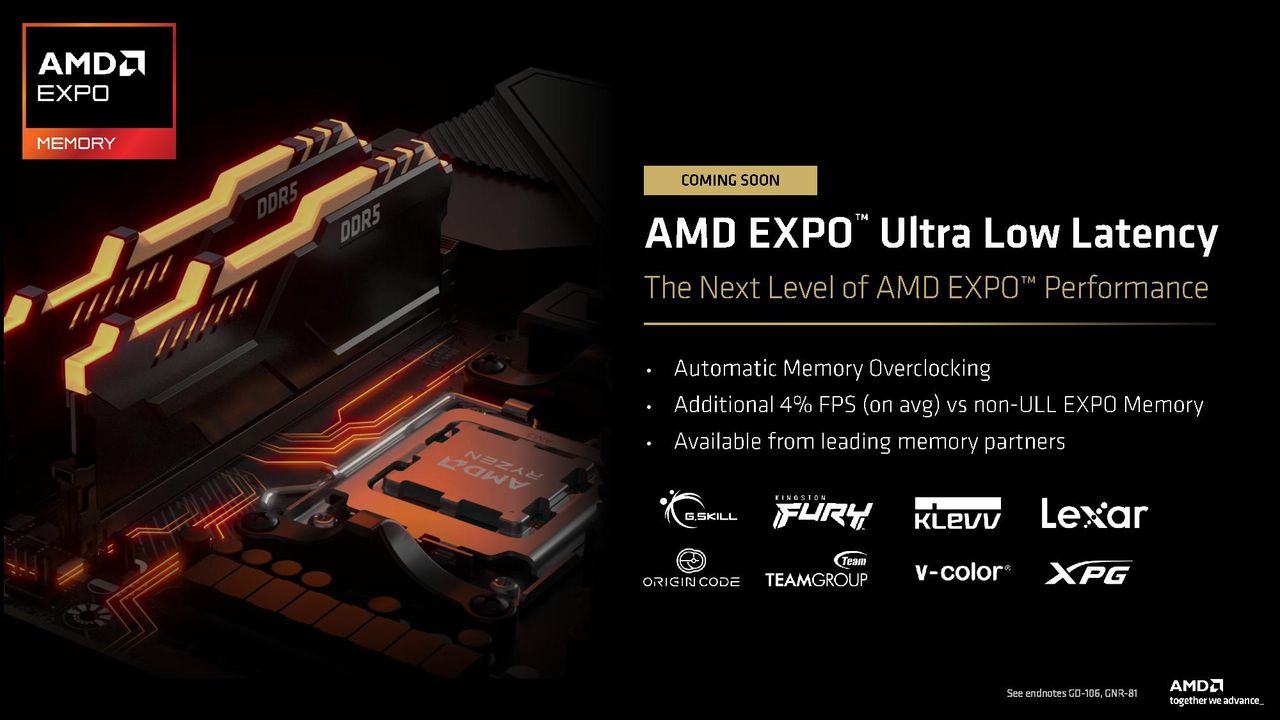
  11. Various vendors add AMD EXPO Ultra-Low Latency to 600-series motherboards in latest BIOS updates — tech tightens memory subtimings on compatible kits, boosting FPS by up to 4%

    Several motherboard manufacturers, including MSI, Asus, Gigabyte, and ASRock, are rolling out BIOS updates to their 600-series motherboards to support AMD's EXPO Ultra-Low Latency (ULL) technology. This update aims to optimize memory subtimings, potentially increasing gaming frame rates by up to 4% on compatible kits. However, users will also need new RAM kits that are specifically compatible with EXPO ULL, as the optimizations are integrated into the memory's physical SPD, not just a software setting. AI

    Various vendors add AMD EXPO Ultra-Low Latency to 600-series motherboards in latest BIOS updates — tech tightens memory subtimings on compatible kits, boosting FPS by up to 4%

    IMPACT This update enhances gaming performance by optimizing memory timings on AMD platforms, but has no direct impact on AI operations or development.

  12. https:// snapcraft.io/neurodesk Neurodesk Neurodesk: A Lightweight Ollama Client App 6.3MB snap package. # AI # ArtificialIntelligence # llm # OpenSource # Linu

    Neurodesk has released a new, lightweight client application for Ollama, designed for Linux and Ubuntu systems. The application is available as a 6.3MB snap package, emphasizing its small footprint and ease of installation. This tool aims to provide a user-friendly interface for interacting with large language models through Ollama. AI

    IMPACT Provides a more accessible interface for users to interact with LLMs via Ollama on Linux systems.

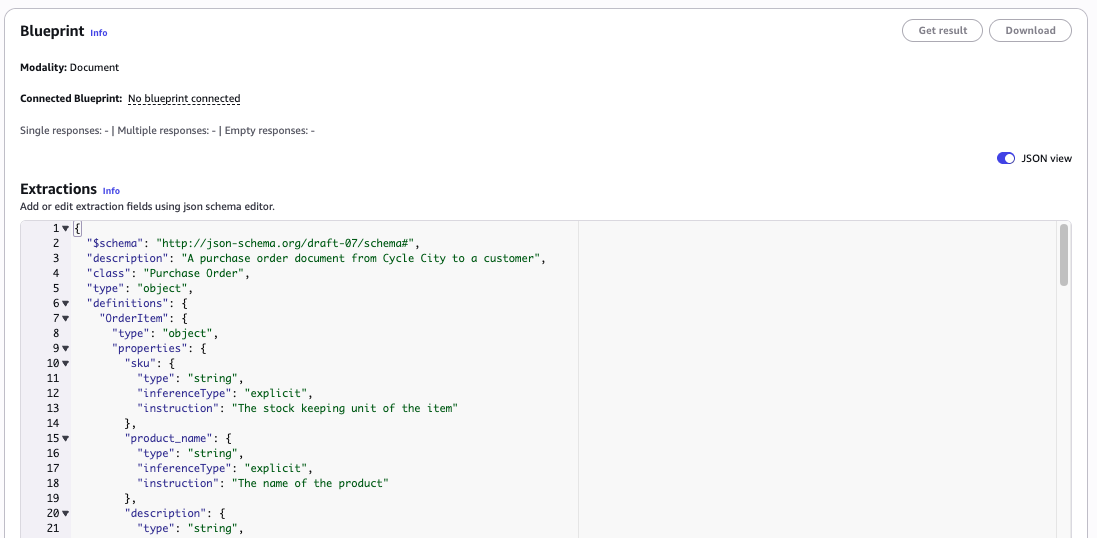
  13. Optimize blueprint extraction accuracy in Amazon Bedrock Data Automation

    Amazon Bedrock Data Automation (BDA) has introduced a new feature called Blueprint Instruction Optimization. This tool automatically refines natural language instructions within custom blueprints to enhance the accuracy of data extraction from unstructured documents. Users provide a few example documents with correct data, and BDA iteratively adjusts the instructions, significantly reducing the time needed for optimization from weeks to minutes without requiring model fine-tuning. AI

    Optimize blueprint extraction accuracy in Amazon Bedrock Data Automation

    IMPACT Streamlines data extraction processes for businesses by automating the refinement of AI model instructions.

  14. Running Claude Code Offline on an M3 Pro with Qwen3.6

    A technical guide details how to run a large language model, Qwen3.6, locally on an Apple M3 Pro laptop for air-gapped environments. The setup involves using Ollama with specific configurations and the MLX runner to enable the 35 billion parameter model, which utilizes a mixture-of-experts architecture to reduce active parameters per token. After applying four crucial fixes, the system successfully processed a Kubernetes incident, generating a pull request without any data leaving the machine, demonstrating that hardware, rather than approach, dictates speed in such local deployments. AI

    IMPACT Enables air-gapped AI operations for sensitive environments, demonstrating local LLM deployment feasibility.

  15. Fake Data Generator API — Integrate into your project in 5 minutes

    The Fake Data Generator API, offered by lazy-mac.com, provides a REST API for generating fake data for various development needs like QA, demos, and load testing. It can be easily integrated into projects with a single line of code and is compatible with AI coding tools such as Claude, Cursor, and Windsurf via MCP server configuration. The service is part of the larger lazymac API Hub, which includes 24 production APIs. AI

    IMPACT Simplifies data generation for AI development workflows and testing.

  16. Grok Build Plugin Marketplace

    xAI has launched the Grok Build Plugin Marketplace, a new feature for its terminal-based coding agent. This marketplace allows developers to discover, install, and update plugins directly from their terminal, integrating tools like MongoDB, Vercel, Sentry, Chrome DevTools, and Cloudflare. Each plugin bundles various functionalities such as skills, slash commands, and agents, with a security model that pins plugins to specific commit SHAs to ensure supply chain integrity. AI

    Grok Build Plugin Marketplace

    IMPACT Enhances developer productivity by integrating specialized tools into an AI coding agent.

  17. Building an Open Source Edge Semantic Cache for LLMs in Rust/WASM – Sanity check on the architecture? [D]

    A developer is proposing an open-source project to build a semantic cache for large language models (LLMs) that runs at the CDN edge using Rust and WebAssembly. This approach aims to reduce latency and API costs by serving responses directly from edge locations, bypassing traditional LLM providers for repetitive queries. The proposed architecture involves generating embeddings at the edge, checking a vector database for similar queries, and either returning a cached response or proxying the request to a full LLM provider while asynchronously updating the cache. AI

    IMPACT This edge caching approach could significantly reduce operational costs and improve response times for applications relying on repetitive LLM queries.

  18. I built Chronicle MCP to stop AI context bloat

    A 14-year-old developer has created Chronicle MCP, a tool designed to manage and compress AI chat history locally. The tool aims to reduce token usage and prevent AI assistants from forgetting context by identifying and removing repetitive or redundant information. Chronicle MCP offers one-click IDE integration for various platforms and provides 25 local tools for AI assistants to query chat history, find related conversations, and compile project briefs. AI

    IMPACT This tool could help AI users manage costs and improve the efficiency of their AI assistants by reducing wasted token usage.

  19. 🪐 # Atlas is the most complete # AI toolkit for # Laravel — a full agent framework, not just a provider wrapper. It owns its provider layer, runs the tool-call

    Atlas is a comprehensive AI toolkit for Laravel developers, functioning as a full agent framework rather than a simple provider wrapper. It manages its own provider layer, handles tool-call loops, streams and persists data, and supports multiple modalities including text and real-time voice. The framework offers core generation capabilities such as unified text, schema-validated structured output, streaming via SSE and Laravel Broadcasting, and multi-step tool execution across its libraries. AI

    🪐 # Atlas is the most complete # AI toolkit for # Laravel — a full agent framework, not just a provider wrapper. It owns its provider layer, runs the tool-call

    IMPACT Provides Laravel developers with an integrated agent framework, simplifying multimodal AI integration and data handling.

  20. Lookspan keeps shipping 🛠️ local-first observability + replay for LLM apps. Now: reasoning tokens billed at their own rate, a full docs site, and a real demo. M

    Lookspan has released new features for its local-first observability and replay tool designed for LLM applications. The updates include a dedicated billing rate for reasoning tokens, a comprehensive documentation site, and a live demonstration. The tool is MCP-native, free, and ensures user data remains on their local machines. AI

    IMPACT Enhances developer tooling for LLM applications, potentially improving efficiency and debugging.

  21. How Ecolab rebuilt retail intelligence on Databricks and Anthropic Claude

    Ecolab has developed a new retail intelligence application on the Databricks platform, integrating Anthropic's Claude models to streamline compliance reporting. This application unifies nine disparate data sources, including FDA food safety manuals and real-time IoT data, into a single engine. The system significantly reduces the time needed to compile compliance reports from two weeks to under two minutes, providing frontline retail staff with immediate, cited answers to critical questions. AI

    IMPACT Demonstrates how LLMs can be integrated into existing data platforms to automate complex compliance tasks and provide real-time operational intelligence.

  22. Claude can now reach tools behind firewalls and here is how

    Anthropic's Claude AI can now access internal systems and tools behind firewalls using a new technique called MCP tunnels. This method allows Claude to connect to private networks without requiring any inbound ports to be opened. The process involves setting up a secure tunnel that enables the AI to interact with internal resources. AI

    Claude can now reach tools behind firewalls and here is how

    IMPACT Enables secure integration of AI assistants with sensitive internal enterprise data and tools.

  23. The Clustering Strikes Back: Building Cost-Effective and High-Performance ANNS at Scale with Helmsman

    Researchers at RedNote (Xiaohongshu) have developed HELMSMAN, a new clustering-based approximate nearest neighbor search (ANNS) system designed to significantly reduce hardware costs for large-scale ANNS deployments. By integrating a userspace storage stack, a learned pruning module, and GPU-accelerated construction pipelines, HELMSMAN achieves substantial savings, reducing hardware costs by over 90%. The system can handle billion-scale index rebuilds within hours and currently supports ANNS workloads on 40 machines that previously required approximately 35,000 cores and 0.35 PB of DRAM. AI

    IMPACT Reduces hardware costs for large-scale ANNS, potentially enabling wider adoption of AI-powered search and recommendation systems.

  24. RT @corelumen: TRANSLASATION: About a month ago @0xSero asked: "FFmpeg, but for LLM inference, who is building this?" With llmff v1.1, I can proudly say: I did

    A new tool called llmff, designed to function like FFmpeg but for Large Language Model (LLM) inference, has been released in version 1.1. This composable pipeline tool allows users to create complex inference workflows by chaining together typed inference stages, such as loading, inferring, retrieving, validating, repairing, and routing. The latest update introduces native support for limited iteration loops, explicit termination conditions, and detailed inspection capabilities, making it suitable for building refinement, repetition, and self-correction loops in AI applications. AI

    IMPACT Enables more complex and iterative LLM inference workflows, potentially accelerating development of AI agents and self-correcting systems.

  25. 7 MCP Servers Worth Connecting for Marketing Teams in 2026

    Marketing teams can significantly reduce data preparation time by using MCP (Marketing Cloud Platform) servers, which grant AI agents direct access to live systems. This eliminates the need for manual data exports and spreadsheet reconciliation, allowing for real-time analysis of campaign performance against revenue. The article details seven such MCP servers, including those for Google Analytics and Ahrefs, highlighting how they streamline workflows for analytics, SEO, and content teams by enabling direct querying of live data. AI

    7 MCP Servers Worth Connecting for Marketing Teams in 2026

    IMPACT Accelerates AI-driven marketing analysis by enabling real-time data access and reducing manual preparation.

  26. Bifrost vs TrueFoundry: What changes when you go from OSS gateway to enterprise platform

    Bifrost and TrueFoundry are both AI gateways offering features like LLM routing and observability, but they differ significantly in their architecture and deployment. Bifrost is a self-hosted, single Go binary that is quick to set up, while TrueFoundry is a Kubernetes-native control plane with a broader platform offering, available as SaaS, VPC, or on-prem. Both support OpenAI-compatible model access and have similar approaches to Model Communication Protocol (MCP) and agent execution, with configurable options for tool execution and auto-execution. AI

    IMPACT Teams can choose between a simple, self-hosted AI gateway or a more comprehensive, Kubernetes-native platform based on their scaling needs.

  27. I Cut My Claude API Bill Without a Cloud Proxy — Here's How

    A new open-source tool called Superlocalmemory has been developed to reduce LLM API costs by running caching and prompt compression locally, rather than through a third-party cloud proxy. This approach enhances data privacy by keeping sensitive information on the user's machine. The tool addresses three main cost drivers: redundant queries, bloated prompts, and missed provider discounts, offering solutions for each through its "Skip, Shrink, Discount" mechanics. AI

    I Cut My Claude API Bill Without a Cloud Proxy — Here's How

    IMPACT Reduces operational costs for AI agents and developers by optimizing LLM API usage and enhancing data privacy.

  28. What I Built the Day Apify Launched MCP Connectors

    Apify has launched MCP Connectors, a new feature allowing its actors to directly write data to external applications like Notion, Slack, and GitHub without needing user credentials. This is achieved through a proxy layer that securely handles authentication, enabling actors to interact with these services at runtime. The author demonstrated this by building a system that automatically updates an African economic stress monitor in Notion, providing real-time insights into country stability and historical data. AI

    What I Built the Day Apify Launched MCP Connectors

    IMPACT Streamlines data output from AI actors to popular productivity tools, enhancing usability and automation.

  29. 🤖 FewRS slashes resampling times for statistical significance FewRS reduces the number of resampled datasets needed for statistical significance assessment by u

    FewRS, a new method, significantly reduces the time required for statistical significance assessment in AI by decreasing the number of resampled datasets needed. This approach can cut down resampling times by up to two orders of magnitude compared to existing methods. The breakthrough was announced on June 12, 2026. AI

    🤖 FewRS slashes resampling times for statistical significance FewRS reduces the number of resampled datasets needed for statistical significance assessment by u

    IMPACT Reduces computational overhead for AI model evaluation and validation.

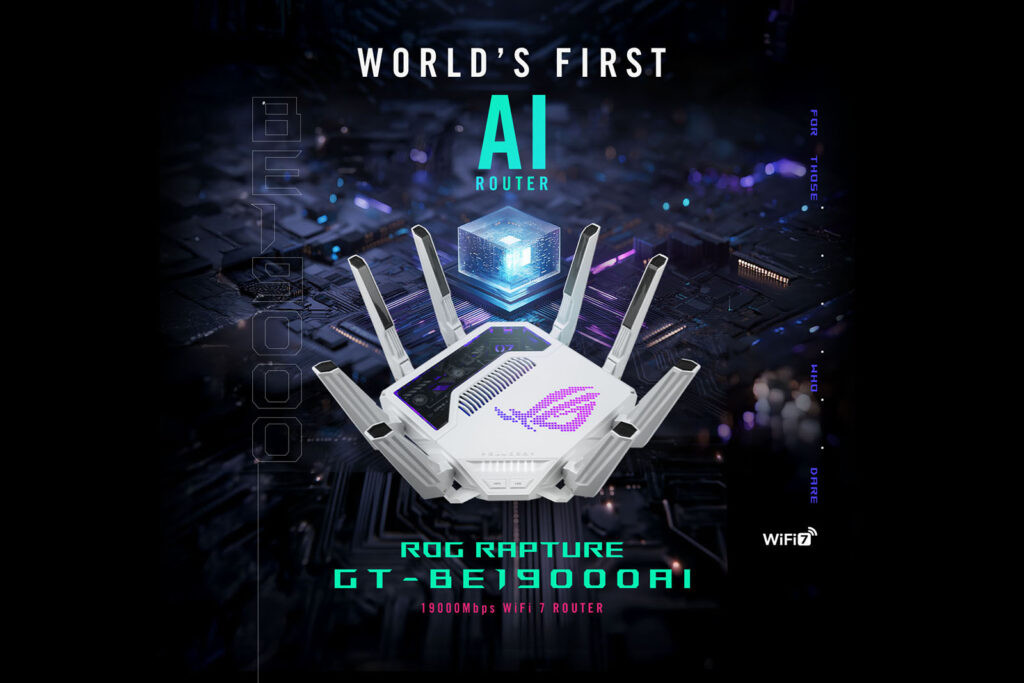
  30. ASUS's AI Core equipped Wi-Fi 7 gaming router "ROG Rapture GT-BE19000AI" released today - INTERNET Watch #GAMING #AI #ASUSNetworkEquipment #Game #GameN

    ASUS has launched its new AI Core-equipped Wi-Fi 7 gaming router, the ROG Rapture GT-BE19000AI. This high-performance router is now available for purchase. It is being sold on Amazon for 136,000 yen. AI

    ASUS's AI Core equipped Wi-Fi 7 gaming router "ROG Rapture GT-BE19000AI" released today - INTERNET Watch #GAMING #AI #ASUSNetworkEquipment #Game #GameN

    IMPACT New Wi-Fi 7 router with AI Core features may improve network performance for AI-intensive gaming and applications.

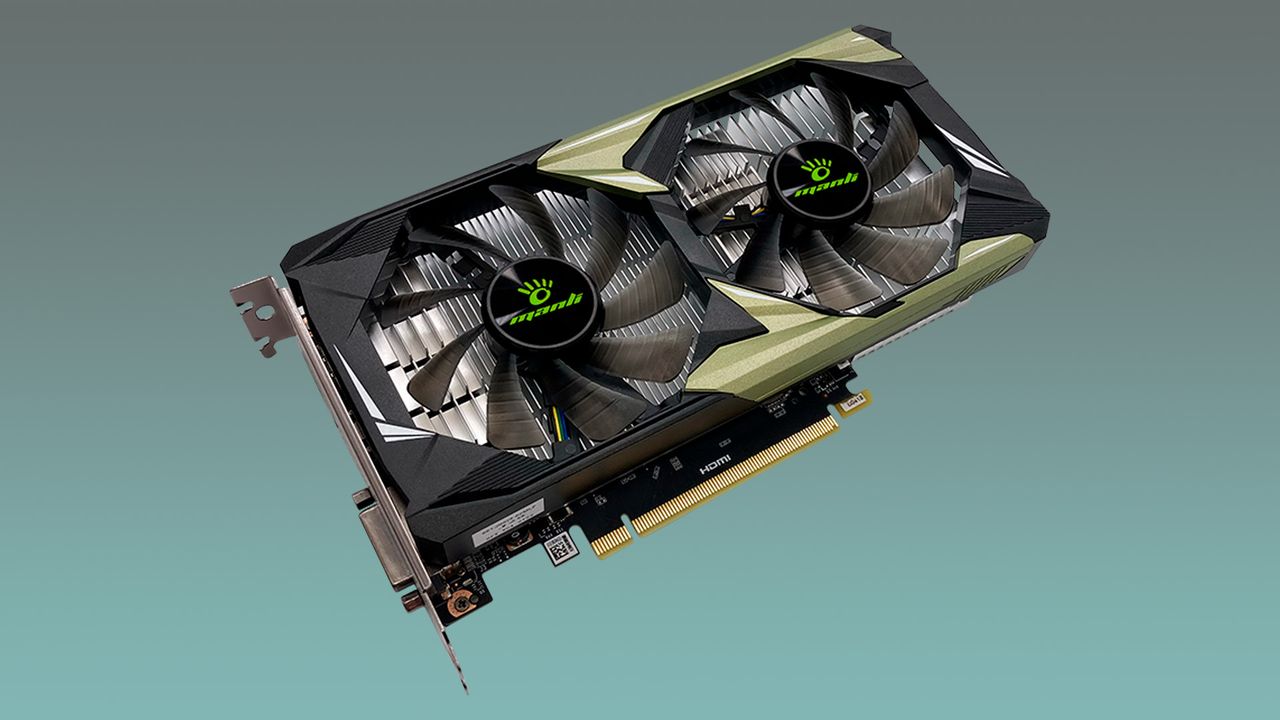
  31. Memory famine compels GPU vendors to re-release 2020 graphics cards — GeForce RTX 3060 and GeForce RTX 3050 return to Asian market

    GPU manufacturers are reintroducing older graphics card models, specifically the GeForce RTX 3060 and GeForce RTX 3050, to the Asian market due to a persistent memory shortage. These cards, based on the mature 8nm Ampere architecture, are more cost-effective to produce than newer generations. The mid-range cards remain popular, with the RTX 3060 still being the most popular on platforms like Steam, and their return offers more affordable options close to their original MSRPs. AI

    Memory famine compels GPU vendors to re-release 2020 graphics cards — GeForce RTX 3060 and GeForce RTX 3050 return to Asian market

    IMPACT Re-release of older GPUs may slightly ease demand for AI hardware components, but is primarily a consumer market response to supply chain issues.

  32. Stop reading logs: Debugging Ray on Anyscale with Agent Skillsan

    Anyscale has introduced new agent skills designed to automate the debugging of Ray workloads on its platform. These skills, accessible via the Anyscale CLI, integrate with popular coding agents to streamline the process of identifying and fixing errors. The platform skills include functionalities for inspecting code and live workloads, running configurations, and automatically debugging and fixing failing jobs, aiming to reduce the manual effort and time typically spent on troubleshooting complex AI pipelines. AI

    Stop reading logs: Debugging Ray on Anyscale with Agent Skillsan

    IMPACT Automates complex debugging for AI/ML workloads, potentially speeding up development cycles and reducing operational overhead.

  33. 📊 How ERGO Hestia reduced time-to-market with Lakebase and Mosaic AI Model Serving Building the Next Generation of Real-Time PricingERGO Hestia, one of Poland's

    ERGO Hestia, a Polish insurance company, has partnered with Databricks to enhance its real-time pricing engine. By integrating Databricks Lakebase and Mosaic AI Model Serving, ERGO Hestia has consolidated its data, features, and decision-making processes onto a single lakehouse platform. This move has significantly reduced the time it takes to bring new pricing models to production and allows the company to respond more rapidly to market changes. AI

    IMPACT Streamlines AI model deployment and management for real-time applications, potentially accelerating innovation in financial services.

  34. Top 5 Questions About AI API Gateways (Answered)

    AIBridge is an API gateway designed to offer developers flexibility and cost savings when interacting with various large language models. It addresses common concerns about latency, uptime, data security, and cost, claiming average savings of 70-90% for its users. The service aims to simplify model integration by providing a single API endpoint, allowing users to switch between models like DeepSeek V4, Qwen3, and GLM-4 without extensive code rewrites. AI

    Top 5 Questions About AI API Gateways (Answered)

    IMPACT Enables developers to easily switch between LLM providers, potentially reducing costs and vendor lock-in.

  35. Shimizu Corporation introduces "Physical AI" for rebar processing and assembly work https://www.watch.impress.co.jp/docs/news/2116876.html #watch_impress #tech #AI

    Shimizu Corporation is integrating "physical AI" into its rebar processing and assembly operations. This advanced AI technology aims to enhance efficiency and precision in construction tasks. The implementation is expected to streamline workflows and potentially improve safety in rebar handling. AI

    IMPACT This integration of physical AI in construction could lead to more efficient and precise building processes, potentially setting new industry standards.

  36. Graph Reinforcement Learning for Calibration-Aware Quantum Circuit Routing

    Researchers have developed a novel routing method for quantum circuits that incorporates calibration data to improve fidelity. This graph reinforcement learning approach uses same-day calibration information from IBM Heron processors to select hardware-edge SWAPs, outperforming standard routing methods like SABRE-best20 and target-aware SABRE in exact simulated fidelity. While the learned routing increases the number of routed two-qubit gates, it demonstrates a significant improvement in fidelity, particularly for smaller circuit families, suggesting a more robust compilation strategy for quantum processors. AI

  37. Building an 18-product MCP portfolio in a few weeks

    An indie hacker has developed a portfolio of 18 products, including 17 customer-facing Model Context Protocol (MCP) servers and an analytics service, all built on Cloudflare Workers. Each worker acts as a lightweight wrapper around free public data sources, exposing them as tools for AI agents. This approach, deliberately diverging from the typical advice of focusing on a single product, aims to hedge against uncertainty about market demand by creating a diverse set of offerings with low marginal development and submission costs. AI

    IMPACT Provides a framework for easily exposing diverse data sources as tools for AI agents, potentially accelerating agent development.

  38. Quantization formats compared: GGUF vs GPTQ vs AWQ vs NF4

    The article compares four major LLM weight quantization formats: GGUF, GPTQ, AWQ, and NF4. Quantization is crucial for reducing model size to fit within limited hardware constraints, such as consumer GPUs or unified memory systems. Each format offers different trade-offs between memory footprint, inference speed, and accuracy, making them suitable for specific deployment scenarios. AI

    IMPACT Enables deployment of larger models on resource-constrained hardware by optimizing memory and speed.

  39. The Math on 61 MCP Servers 0 Employees and 19/mo Subscriptions

    A developer has launched 61 AI-powered products this year, including 26 "MCP servers" and 61 npm packages, all while maintaining zero employees. The developer leverages AI for automation in product development and deployment, with each product taking approximately 90 seconds to create. The revenue model includes a $19/month Pro tier and a $99/month Unlimited tier, with a break-even point of just one Pro subscriber. Free npm packages serve as a discovery mechanism for the paid MCP servers, demonstrating a scalable and cost-effective approach to product development. AI

    IMPACT Demonstrates a highly scalable and cost-effective model for AI product development and deployment.

  40. AI Is Running Out of Road. These Numbers Show Why Quantum Is the Only Detour.

    Traditional AI models are hitting computational and energy limits due to their immense size and training requirements. Quantum computing, with its ability to explore multiple solutions simultaneously using qubits, offers a potential solution. By combining quantum hardware with AI for error management, researchers aim to significantly speed up AI model training and overcome current bottlenecks. AI

    AI Is Running Out of Road. These Numbers Show Why Quantum Is the Only Detour.

    IMPACT Quantum computing may unlock faster AI training and more powerful models, overcoming current hardware and energy limitations.

  41. 🤖 Built from the inside out: How AWS Professional Services became a frontier team first AWS Professional Services (AWS ProServe) compressed engagement timelines

    AWS Professional Services (AWS ProServe) has transformed its engagement timelines from months to days by rebuilding its processes rather than simply integrating AI tools. This approach focused on creating a "frontier team" that fundamentally altered how services are delivered. The initiative highlights a strategic shift in leveraging internal expertise and process redesign to achieve significant efficiency gains. AI

    IMPACT Internal process innovation at AWS ProServe may lead to more efficient client service delivery, potentially influencing how other service organizations adopt technology.

  42. Microsoft enables local AI use on more computers # Windows # Laptops # AI Microsoft enables local AI use on more computers

    Microsoft is expanding the capabilities for running AI models locally on personal computers. This initiative aims to enable more users to leverage AI directly on their devices, potentially enhancing performance and privacy for AI-driven tasks. The move suggests a broader trend towards decentralized AI processing on consumer hardware. AI

    IMPACT Enables more users to run AI applications directly on their personal computers, potentially improving performance and privacy for AI tasks.

  43. YY Group Strategically Deploys Unitree G1 Humanoid Equipped with NVIDIA Jetson Orin for Commercial Facility Management, Building Proprietary Data Assets | Robosta https://www.yayafa.com/2820646/ # 5G # 6G # 6Gcommunication # AgenticAi # AI # ArtificialGener

    YY Group is deploying Unitree G1 humanoid robots equipped with NVIDIA Jetson Orin Nano 8GB processors for commercial facility management. This strategic initiative aims to build proprietary data assets through the robots' operations. The deployment is highlighted by Robostation at VDNH, with the initiative leveraging advanced AI and robotics technologies. AI

    YY Group Strategically Deploys Unitree G1 Humanoid Equipped with NVIDIA Jetson Orin for Commercial Facility Management, Building Proprietary Data Assets | Robosta https://www.yayafa.com/2820646/ # 5G # 6G # 6Gcommunication # AgenticAi # AI # ArtificialGener

    IMPACT This deployment could lead to more efficient facility management and the creation of valuable operational data for AI systems.

  44. Will Co-Packaged Optics Transform Data Centers?

    Co-packaged optics (CPO) integrate optical transceivers directly with processors, promising significant improvements in data center performance and energy efficiency. This technology can reduce power consumption by up to 350% and increase network bandwidth by 1,000% by minimizing data travel distances. However, challenges such as limited hardware availability, thermal management, maintenance difficulties, and proprietary technology hinder widespread adoption. AI

    Will Co-Packaged Optics Transform Data Centers?

    IMPACT Co-packaged optics could accelerate AI model training by enabling faster data ingestion for GPUs.

  45. SHFE: Adjusts price limits and trading margin ratios for gold and silver futures related contracts

    HPC-Ops has released a significant update to its open-source inference system, introducing five key operators. This upgrade addresses critical engineering bottlenecks such as attention latency, memory transfer costs, and cross-card communication on mainstream inference platforms. The new operators reportedly outperform existing open-source baselines in performance metrics, enhancing adaptability to dynamic workloads and supporting complex precision and performance fusion operators. AI

    IMPACT Enhances inference performance by addressing key engineering bottlenecks, potentially improving efficiency for AI applications.

  46. XPR: An Extensible Cross-Platform Point-Based Differentiable Renderer

    Researchers have developed XPR, a new framework designed to simplify the creation and deployment of point-based differentiable renderers. This framework allows developers to implement new rendering methods with minimal code by separating method-specific logic from the core rendering pipeline. XPR's modular design enables it to compile and run on various hardware accelerators, including GPUs, TPUs, and CPUs, facilitating faster experimentation and cross-platform compatibility for graphics and AI applications. AI

  47. SwiftCTS: Fast Cross-Design Prediction and Pareto Optimization of Clock Tree Metrics via Few-Shot Calibration

    Researchers have developed SwiftCTS, a novel framework for optimizing clock tree synthesis in chip design. This system uses physics-informed surrogate models and gradient-boosted ensembles to achieve rapid predictions and Pareto optimization of power, wirelength, and timing skew metrics. SwiftCTS can adapt to new chip architectures with minimal calibration, significantly reducing prediction errors and enabling the evaluation of thousands of configurations in seconds. AI

    IMPACT Accelerates chip design cycles by providing rapid, accurate predictions for clock tree synthesis.

  48. Access OpenAI models and Codex through your Oracle cloud commitment

    OpenAI has partnered with Oracle to offer access to its models, including Codex, through Oracle Cloud Infrastructure. This collaboration allows businesses to leverage OpenAI's AI capabilities while utilizing their existing Oracle cloud commitments. The integration aims to provide enterprise-grade security and governance for AI development and deployment. AI

    IMPACT Expands enterprise access to leading AI models through established cloud infrastructure, potentially accelerating AI adoption.

  49. Alibaba Cloud Meoo CLI Released, Local AI Programming Projects Can Be Deployed Online Directly

    Alibaba Cloud has released Meoo CLI, an open-source command-line tool designed to streamline the deployment of local AI programming projects. This tool allows local AI coding assistants like Claude Code and Cursor to leverage cloud capabilities for tasks such as database integration, user authentication, file storage, and final project release, enabling a smoother transition from local development to live deployment. AI

    IMPACT Simplifies the deployment pipeline for AI-powered development tools, potentially accelerating the release of AI-driven applications.

  50. Ministry of Commerce: Will continue to grasp the implementation and landing of relevant policies, and accelerate the cultivation of new drivers for trade in services

    Alibaba Cloud's Meoo (Miaowu) has released Meoo CLI, an open-source command-line tool. This tool enables local AI programming assistants like Claude Code, Codex, and Cursor to leverage cloud capabilities. These assistants can now perform tasks such as database access, user authentication, file storage, and project deployment, streamlining the process of moving local projects to a live online state. AI

    IMPACT Enables local AI programming tools to access cloud infrastructure for deployment and management.