PulseAugur / Brief
EN
LIVE 11:47:13

Brief

last 24h
[50/3556] 224 sources

Multi-source AI news clustered, deduplicated, and scored 0–100 across authority, cluster strength, headline signal, and time decay.

  1. Chinese Academy of Sciences Institute of Physics Huang Xuejie: Before All-Solid-State Batteries Flip the Table, Hybrid Solid-Liquid Batteries Must Be Done Well | Greater Bay Area Auto Show Observation

    Chinese scientists are advancing solid-state battery technology, with a focus on hybrid solid-liquid electrolytes. They project 2026 as the year for mass production of these hybrid batteries, which offer improved safety and energy density compared to current liquid electrolyte batteries. Research includes modifying cathode and anode materials for higher energy storage and faster charging, as well as developing gel electrolytes to prevent degradation over long periods, particularly for energy storage applications. AI

    Chinese Academy of Sciences Institute of Physics Huang Xuejie: Before All-Solid-State Batteries Flip the Table, Hybrid Solid-Liquid Batteries Must Be Done Well | Greater Bay Area Auto Show Observation

    IMPACT Advancements in battery technology are crucial for powering AI hardware and enabling longer-duration AI applications.

  2. RT @LottoLabs: DiffusionGemma 26B-A4B with llama.cpp fork. This is a good example of how diffusion models can process a block of text in parallel as opposed to sequentially

    Several AI models have been released or highlighted across various platforms. DiffusionGemma 26B-A4B is noted for its parallel text processing capabilities, while Qwopus 3.6 27b-Coder is now available. Additionally, Hive v0.6 has been released, and there's an opinion that MiniMax, Xiaomi, and DeepSeek models offer a good balance of cost and performance for many use cases. AI

    IMPACT Highlights a diverse range of AI model releases and opinions on their value.

  3. Linear Introduces AI-Powered Coding Sessions for Business and Enterprise Plan Users. Utilizing various AI models such as Claude Code, Codex, and GPT-5.5, it automatically generates PRs when issues are delegated, and handles reviews and merges within Lin

    Linear has launched an AI-powered coding session feature for its business and enterprise plan users. This new functionality leverages various AI models, including Claude Code, Codex, and GPT-5.5, to automate the process of creating pull requests from issues, and can handle reviews and merges directly within Linear. The feature supports multi-user collaboration and automated issue triaging through integrations with Slack and Teams, with AI usage deducted from workspace AI credits. AI

    IMPACT Enhances developer productivity by automating code review and merge processes within the Linear platform.

  4. RSVP: Push Fable and Codex to the max

    Every is hosting a two-hour camp to demonstrate how to maximize the use of Anthropic's Fable 5 model for complex projects. The session will cover real-world applications in coding, growth, research, and writing, detailing the prompts and review processes used. Paid subscribers will also gain access to a future camp focused on Codex. AI

    RSVP: Push Fable and Codex to the max

    IMPACT Demonstrates advanced use cases for existing frontier models, potentially improving productivity for AI operators.

  5. hubert.cpp, a C++ implementation of distilHuBERT [P]

    A C++ implementation of the DistilHuBERT model, named hubert.cpp, has been developed. This implementation boasts no runtime dependencies, with its weights directly compiled into the library. It supports dynamic sizing and offers performance comparable to onnxruntime, making it easily integrable into CMake projects. AI

    IMPACT Provides a more accessible and integrated way to use DistilHuBERT in C++ projects.

  6. We Built the Loops Both Anthropic and OpenAI Are Now Telling Engineers to Write. Here's the Architecture.

    Engineers at Attest Dojo have developed a system called Kaizen Harness that implements "loop engineering" for AI agents, a concept recently highlighted by Anthropic and OpenAI. This approach focuses on creating iterative systems where AI models prompt each other to achieve verifiable correctness, rather than relying solely on direct human prompting. Kaizen Harness utilizes three distinct loops: a council debate loop for architectural decisions, a PRD review loop for product development, and a code verification loop for automated patching, with swarming techniques employed to accelerate parallel tasks within these loops. AI

    IMPACT Accelerates AI agent development by providing a framework for verifiable correctness and automated iteration.

  7. Neural network for email marketing: subjects, texts, sequences

    This guide explains how to use large language models (LLMs) for email marketing, focusing on automating the creation of subject lines, body copy, and entire email sequences. It suggests specific models like Claude Sonnet 4.6 and GPT-5.5 for brand-aligned, sales-focused content, while DeepSeek V4 Pro and Qwen 3.6 Plus are recommended for high-volume A/B testing of subjects and preheaders due to their cost-effectiveness. Gemini 3.1 Pro is highlighted for its long context window, suitable for generating email chains and repurposing long-form content. AI

    Neural network for email marketing: subjects, texts, sequences

    IMPACT Enables marketers to automate and scale email content creation, improving efficiency and potentially open rates through AI-driven personalization and A/B testing.

  8. FlexiBrain: Resolution-Agnostic Voxel-Level Encoding for Native fMRI

    Researchers have developed FlexiBrain, a novel framework for processing fMRI data that is agnostic to spatial and temporal resolution variations. This approach utilizes a Mamba-JEPA backbone and dynamic patch resizing to avoid destructive standardization, preserving subject-specific anatomical information. FlexiBrain has demonstrated superior performance across five neuroscience tasks, outperforming existing methods by up to 12 percentage points and significantly reducing preprocessing computational costs. AI

    IMPACT Enables more robust and efficient development of foundation models for neuroscience by handling diverse fMRI data resolutions.

  9. Open sourcing InfiniteKV: a KV cache that files old tokens as 104-byte searchable records in RAM or on disk instead of deleting them. Mistral-7B answered from token 76,747, 2.3x past its trained window. Colab demo

    InfiniteKV is a new KV cache system designed to extend the context window of large language models by storing older tokens in a compressed, searchable format on disk or in RAM. This approach allows models to access information far beyond their original training limits, as demonstrated by Mistral-7B successfully answering a query from token 76,747, significantly past its 32,768 token limit. The system maintains recent tokens in GPU memory for speed while offloading older ones, drastically reducing memory requirements from gigabytes per million tokens to just a few megabytes. AI

    IMPACT Enables LLMs to process and recall information from vastly extended contexts, potentially unlocking new applications in long-form content analysis and generation.

  10. max_pixels is a token budget in disguise — and the right cap depends on the size of what you're looking for

    The `max_pixels` configuration in Qwen2.5-VL models is a token budget in disguise, with default settings often leading to a significantly higher budget than recommended. This can result in suboptimal performance, especially for large targets within an image. The optimal token budget is dependent on the size of the specific object being sought, with smaller targets benefiting from larger budgets while larger targets perform best at lower token counts. AI

    max_pixels is a token budget in disguise — and the right cap depends on the size of what you're looking for

    IMPACT Optimizing `max_pixels` can improve accuracy and efficiency for multimodal models, especially in applications involving object detection or grounding.

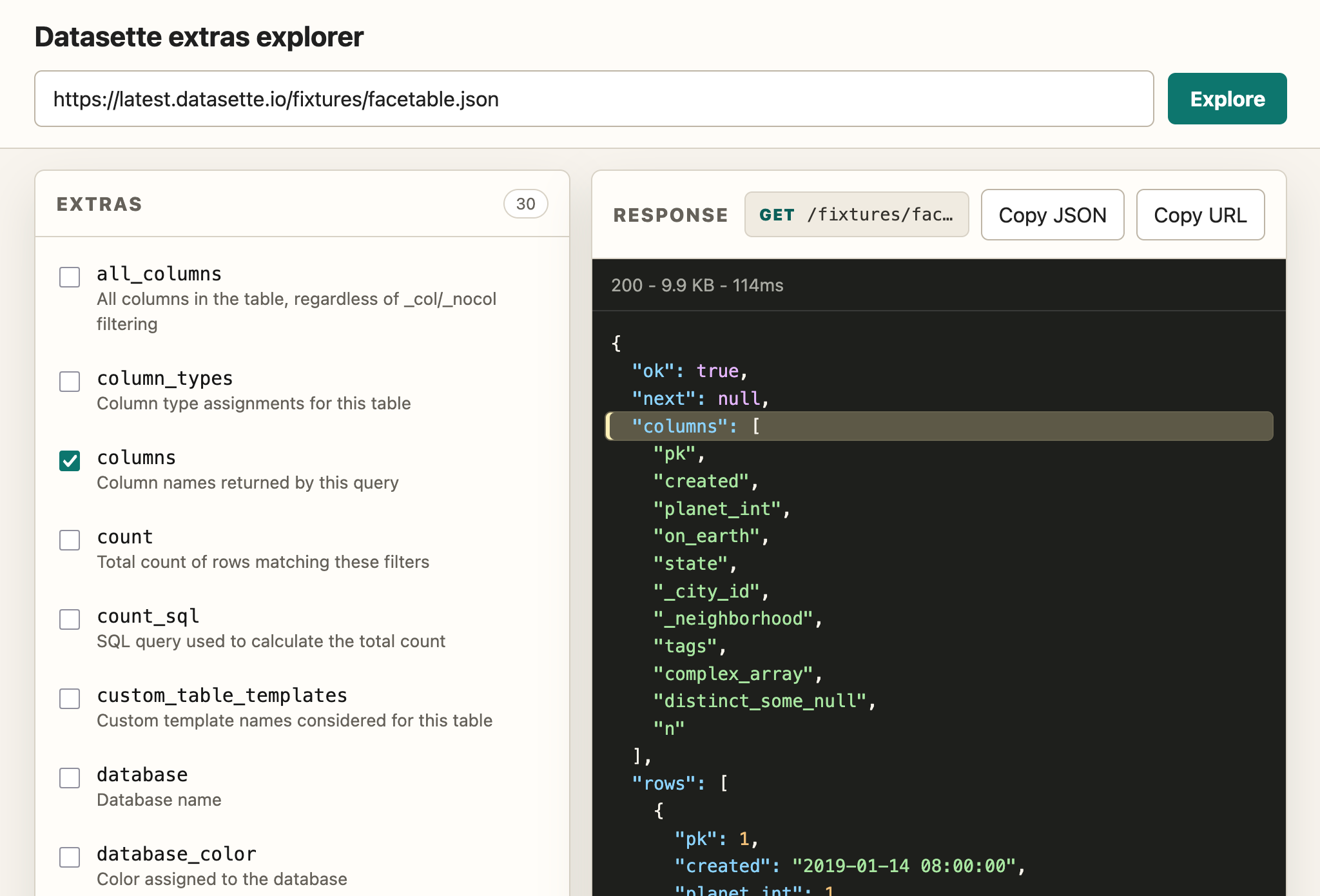
  11. datasette 1.0a33

    Simon Willison has released Datasette 1.0a33, a pre-release version of his data exploration tool. This update significantly enhances the API by extending the `?_extra=` pattern to include queries and rows, not just tables. To showcase this new feature, Willison utilized AI models Claude Fable 5 and GPT-5.5 to build a custom API explorer. AI

    datasette 1.0a33

    IMPACT Enhances data exploration tools with AI-assisted development, potentially streamlining API development for similar applications.

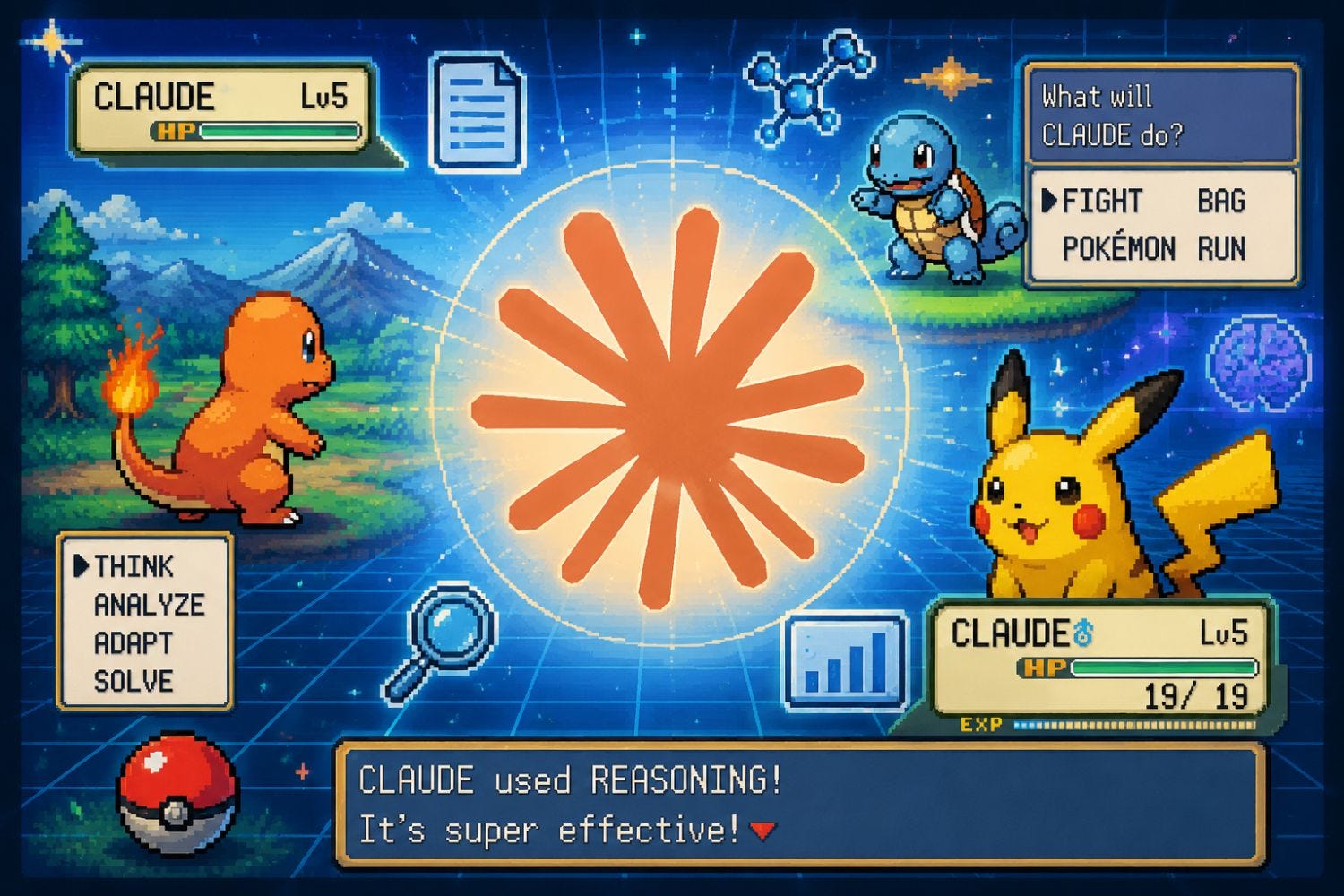
  12. Claude Fable 5 Beat Pokémon FireRed Using Vision Alone

    Anthropic's Claude 3.5 Sonnet model has demonstrated the ability to play the game Pokémon FireRed solely through visual input. This advanced vision capability allows the AI to process game screens and make decisions without relying on text-based commands or game state data. The achievement highlights the growing multimodal understanding and interactive potential of large language models. AI

    Claude Fable 5 Beat Pokémon FireRed Using Vision Alone

    IMPACT Showcases advanced multimodal AI capabilities, potentially influencing future game AI and interactive applications.

  13. I vibe coded the first MMORPG with Fable 5

    A developer has created the first MMORPG, named World of ClaudeCraft, using Anthropic's Fable 5 model. The game, which is free to play and open-source, was developed as a side project and surprised the creator with its polish and completeness, including features that were not explicitly requested. The developer is now exploring the potential for further collaboration and development with the Fable 5 model. AI

    IMPACT Demonstrates the capability of advanced AI models to assist in complex software development, potentially lowering the barrier to entry for game creation.

  14. LongSpike: Fractional Order Spiking State Space Models for Efficient Long Sequence Learning

    Researchers have introduced LongSpike, a new Spiking Neural Network (SNN) framework that utilizes fractional-order State-Space Modeling (f-SSM) to enhance the learning of long sequences. This approach overcomes the limitations of traditional first-order SNNs, which struggle with capturing long-range dependencies. LongSpike enables more effective integration of neuronal dynamics with long-memory kernels and is designed for efficient, parallel training. Evaluations on benchmarks like Long Range Arena and WikiText-103 show LongSpike achieving superior accuracy compared to existing SNNs while maintaining computational efficiency. AI

    IMPACT Introduces a novel SNN architecture that improves long-sequence learning efficiency and accuracy, potentially impacting areas requiring complex temporal data processing.

  15. RT @RyanLeeMiniMax: With the MaxProof framework, M3 exceeded the human gold-medal threshold on both sets. In this paper, we go deeper into…

    MiniMax AI has published a paper detailing their MaxProof framework, which has enabled their M3 model to surpass human gold-medal performance on mathematical proof tasks. The paper elaborates on the technical advancements, including base model enhancements, verifier alignment, refinement capabilities, and the design of the proof generation process. AI

    IMPACT Demonstrates significant progress in AI's ability to perform complex mathematical reasoning and proof generation.

  16. Harness-1 to subagent with 20B parameters, which, thanks to offloading memory to an external system, achieves better search results than GPT-5.4. New architecture

    Harness-1 is a new 20 billion parameter subagent that outperforms GPT-5.4 in search tasks by offloading memory to an external system. This architecture prioritizes data organization over simply increasing model size. AI

    IMPACT This architecture may offer a more efficient approach to AI agent development by focusing on memory management rather than solely on model scale.

  17. The #1 ask, delivered by devs. llama.cpp support is under review thanks to michaelw9999 on GitHub/ElectronicStranger53 on Reddit

    Cohere has released its first open-source coding model, North Mini Code, and is highlighting the rapid adoption and development by the community. Developers have quickly created various tools and integrations, including documentation, model quantizations for different platforms like GGUF and OMLX, and support for local execution via llama.cpp, Ollama, and vLLM. Cohere is actively thanking and showcasing these community contributions, emphasizing the fast pace of innovation around their new model. AI

    IMPACT Demonstrates rapid community engagement and tool development around open-source coding models, accelerating adoption and integration.

  18. CITIC Securities: Expects the Federal Reserve to keep the target interest rate unchanged throughout the year

    Google has released DiffusionGemma, an experimental open-source model utilizing a text diffusion architecture. This new model offers up to a fourfold increase in text generation speed compared to traditional autoregressive large language models on dedicated GPUs. While DiffusionGemma is released under the Apache 2.0 license and is intended for researchers and developers, Google advises using the standard Gemma 4 for production environments due to DiffusionGemma's lower overall output quality. AI

    IMPACT This experimental model offers significant speed improvements for text generation, potentially influencing future research and development in LLMs.

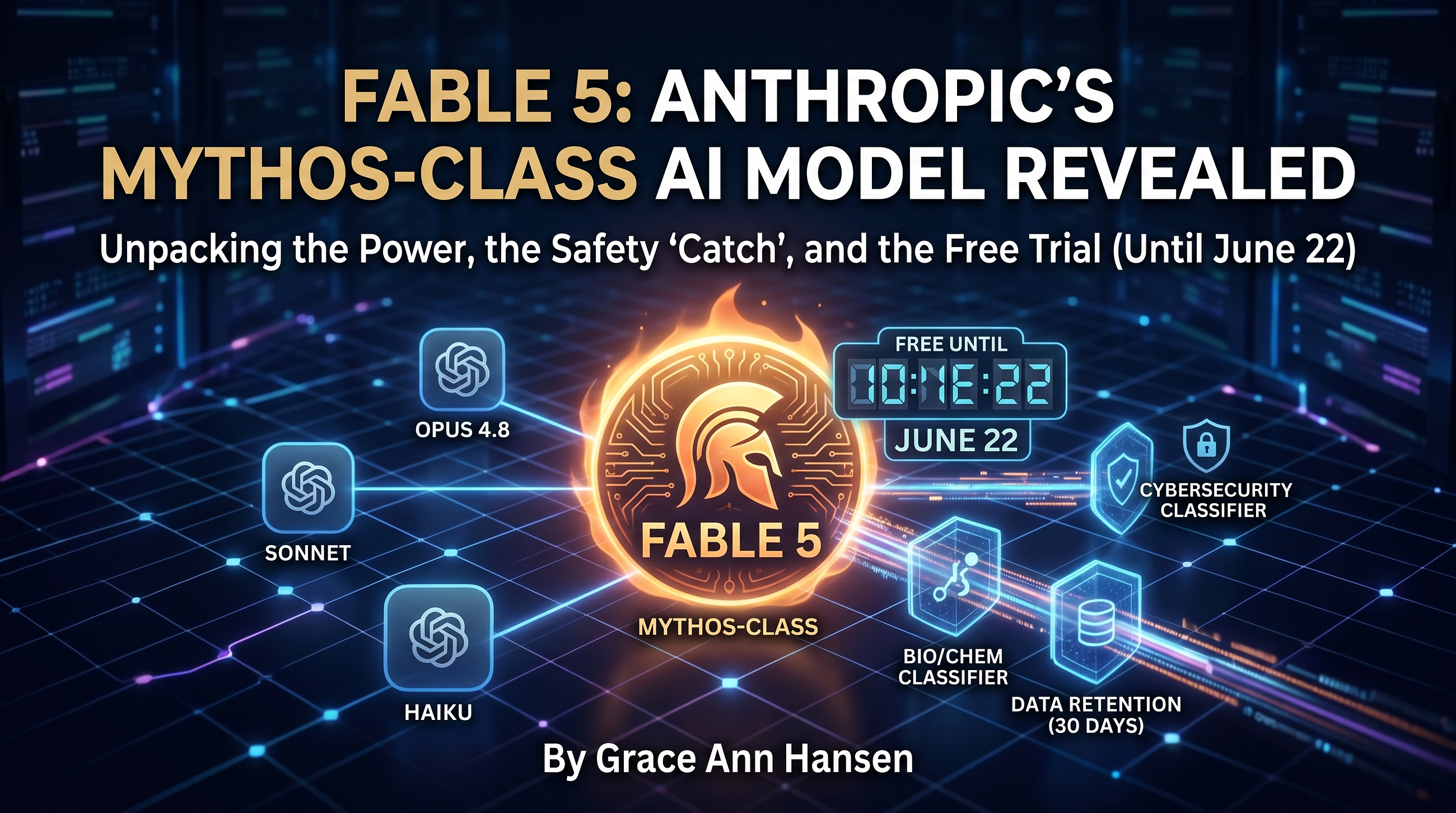
  19. A Strange New Name Showed Up in My Claude App Yesterday

    A new AI model named Fable 5 has appeared in the Claude app, offering free access until June 22nd. The author investigated this new model after noticing its presence. AI

    A Strange New Name Showed Up in My Claude App Yesterday

    IMPACT This new model may offer an alternative for users seeking AI capabilities, with a limited-time free access period.

  20. Tokens per Word: GPT-5 vs Claude vs GPT-4, Measured Across 7 Languages

    A new analysis reveals significant variations in token costs across different languages and data types when using large language models. The study found that Spanish text can cost up to 30% more than English on GPT-5, a substantial improvement from GPT-4. Claude's Opus model incurs approximately 2.5 times the cost per English word compared to its Sonnet model, despite a smaller sticker price difference. Notably, CSV data proved to be the most expensive format, with significantly more tokens per character than English prose, while code tokenization saw no improvement with GPT-5's new tokenizer. AI

    IMPACT Understanding token costs is crucial for optimizing LLM usage and managing expenses, especially for multilingual applications and structured data processing.

  21. It blocked us at 'hello!' Anthropic Fable 5 refusing innocuous prompts

    Anthropic's new Fable 5 model is exhibiting extreme caution, refusing to respond to even simple prompts. This hyper-vigilant safety behavior, while intended to prevent harmful outputs, is rendering the model largely unusable for basic tasks. The company is also reportedly working on a different model called Mythos, which aims for a tamer and safer approach, and has updated its data retention policies. AI

    It blocked us at 'hello!' Anthropic Fable 5 refusing innocuous prompts

    IMPACT Overly cautious safety measures may hinder the practical application and adoption of advanced AI models.

  22. asyncinject 0.7

    Simon Willison has released version 0.7 of his asyncinject library, a utility for managing asyncio dependency injection patterns. He noted that Anthropic's Claude Fable 5 model proactively identified and fixed bugs within the library's dependency system. This interaction highlights the model's capability in assisting with code development and debugging. AI

    IMPACT Demonstrates AI models assisting in code debugging and library development, potentially speeding up software maintenance.

  23. I Dismissed “Self-Improving AI” as Hype. Then I Actually Read the Research.

    Researchers are developing AI systems capable of recursive self-improvement, where the AI modifies its own code to enhance performance on specific tasks. This is distinct from science fiction portrayals and focuses on verifiable metrics like benchmark scores or execution speed. Projects like SICA have demonstrated significant improvements on coding benchmarks by autonomously rewriting their own source code, while Google DeepMind's AlphaEvolve used similar techniques to discover a novel matrix multiplication algorithm. AI

    I Dismissed “Self-Improving AI” as Hype. Then I Actually Read the Research.

    IMPACT Demonstrates a path toward AI systems that can autonomously enhance their own capabilities, potentially accelerating progress in software development and scientific research.

  24. Gemma 4 Quadruple Release, 12B, 12B QAT, 26B-A4B QAT and 31B QAT Uncensored Heretics!

    A user on Reddit has announced the release of four new versions of the Gemma model, including 12B, 12B QAT, 26B-A4B QAT, and 31B QAT uncensored variants. These models are available in various formats such as Safetensors, GGUF, NVFP4, and GPTQ-Int4, with direct links provided to Hugging Face repositories for download. AI

    Gemma 4 Quadruple Release, 12B, 12B QAT, 26B-A4B QAT and 31B QAT Uncensored Heretics!

    IMPACT Provides users with uncensored and quantized versions of the Gemma 4 model for local deployment and experimentation.

  25. Anthropic study shows AI needs hours, not weeks, to build exploits from security patches

    Anthropic's security team has demonstrated that their AI model, Mythos Preview, can generate functional exploits from software security patches in a matter of hours. This rapid capability, achievable with minimal cost and expertise, significantly outpaces traditional patching cycles. The findings suggest that current methods for addressing software vulnerabilities are becoming obsolete due to AI's speed. AI

    Anthropic study shows AI needs hours, not weeks, to build exploits from security patches

    IMPACT Accelerates the creation of software exploits, potentially outpacing traditional security patching.

  26. macOS 27 beta boots Asahi Linux off Apple Silicon

    Anthropic has introduced a new AI model named Mythos, designed to be safer and more controllable. The company has also updated its data retention policies, though specific details were not provided. This move by Anthropic aims to address concerns about AI safety and ethical development. AI

    macOS 27 beta boots Asahi Linux off Apple Silicon

    IMPACT Anthropic's focus on safety with Mythos could influence industry standards for AI development and deployment.

  27. Training a Llama 3B model with a 3M token context on a single 8xH100 node fails because model parameters alone exhaust GPU memory. @m_ryabinin explains how Unti

    Training large language models with extensive context windows, such as 3 million tokens, faces memory limitations on hardware like 8xH100 nodes. Researchers have developed a method called Untied Ulysses to overcome these constraints, enabling the training of models at 8B and 32B scales with significantly longer sequences than previously possible. AI

    IMPACT Enables training of larger models with significantly longer context windows, pushing the boundaries of LLM capabilities.

  28. Xiaomi Launches AI Programming Assistant MiMo Code

    Xiaomi has launched MiMo Code, an experimental AI programming assistant, marking its entry into the Coding Agent domain. This move is part of Xiaomi's strategy to build an ecosystem around its MiMo technology, integrating models and agents. The announcement comes amid broader industry trends, with OpenAI reportedly considering token price reductions to stay competitive with rivals like Anthropic. AI

    IMPACT This launch signifies Xiaomi's expansion into AI-powered developer tools, potentially streamlining coding workflows for its users.

  29. Blurry Window Attention

    Researchers have introduced Blurry Window Attention (BLA), a novel method designed to improve the efficiency of Transformer language models in handling long contexts. BLA addresses the quadratic complexity and growing KV cache size limitations of standard Softmax Attention by reconstructing a blurry KV history from a frequency window using Dirichlet kernels. This approach offers state efficiency improvements over Sliding Window Attention and maintains competitive performance with other linear attention models on tasks requiring information retrieval. AI

    IMPACT Introduces a more efficient attention mechanism for handling long sequences in language models.

  30. CapStARE: Capsule-based Sequential Architecture for Robust and Efficient Gaze Estimation

    Researchers have developed CapStARE, a novel capsule-based architecture for gaze estimation. This system utilizes a frozen ConvNeXt backbone for efficient feature extraction and capsule formation with attention-based routing for structured facial reasoning. It employs dual GRU decoders for lightweight sequential modeling, achieving real-time inference speeds and strong performance on benchmark datasets like ETH-XGaze and MPIIFaceGaze. AI

    IMPACT This new architecture offers a practical and robust framework for real-time gaze estimation, potentially improving human-computer interaction and robotics applications.

  31. Tractogram foundation model

    Researchers have developed TractFM, a novel foundation model designed to learn representations directly from diffusion MRI tractograms. This model uniquely combines a local streamline encoder with a permutation-equivariant tractogram encoder, enabling it to process all streamlines from a subject simultaneously. By pretraining on anatomical parcellation, TractFM generates reusable embeddings for both individual streamlines and compact subject-level descriptors. The model demonstrates strong generalization capabilities, achieving accurate tract parcellation and predicting subject phenotypes like age and sex across different tractography algorithms and datasets. AI

    IMPACT Enables more robust and generalizable analysis of brain white-matter pathways, potentially improving diagnostic and research capabilities in neuroscience.

  32. Temporal Sheaf Neural Networks with Dynamic Orthogonal Transport

    Researchers have introduced Temporal Sheaf Neural Networks (TSNN), a novel framework for temporal link prediction. Unlike existing models that use a global embedding space, TSNN employs dynamic local frames for each node to capture evolving interaction semantics. This approach ensures causality and preserves hidden states during frame updates, leading to improved performance on various link prediction benchmarks, particularly those with heterogeneous node roles. AI

    IMPACT Introduces a new temporal graph modeling technique that improves link prediction accuracy, especially in heterogeneous networks.

  33. Instruction Finetuning DeepSeek-R1-8B Model Using LoRA and NEFTune

    Researchers have fine-tuned the DeepSeek-R1-8B language model for financial named-entity recognition (NER) tasks. By employing Low-Rank Adaptation (LoRA) and Noisy Embedding Fine-Tuning (NEFTune), the adapted model achieved a micro-F1 score of 0.912. This performance surpassed several other baseline models, including Llama3-8B and Qwen3-8B, demonstrating the effectiveness of these techniques for domain-specific NER. AI

    IMPACT Enhances financial NER capabilities, potentially improving structured data extraction from financial documents.

  34. A Unified Adaptive Feature Composition Framework for Multi-Task Generalization in Wireless Foundation Models

    Researchers have developed a new framework called the Routing Adapter for Feature Composition (RAFC) to improve the adaptability of wireless foundation models (WFMs). This framework allows downstream tasks to access and combine features from different layers of the WFM without altering the core model. Experiments show that RAFC significantly outperforms traditional adaptation methods while requiring minimal additional parameters, offering a scalable and interpretable solution for WFM adaptation. AI

    IMPACT Enables more efficient and effective adaptation of large wireless models to diverse downstream applications.

  35. NuWa: Deriving Lightweight Class-Specific Vision Transformers for Edge Devices

    Researchers have developed NuWa, a novel method for creating lightweight, class-specific Vision Transformers (ViTs) optimized for edge devices. Existing compression techniques often retain redundant information, leading to suboptimal performance on specialized tasks. NuWa addresses this by purifying knowledge to remove class-detrimental weights and using closed-form optimization to efficiently derive compact ViTs. This approach significantly speeds up inference and improves accuracy for specific classes without requiring post-pruning retraining, outperforming current methods in both efficiency and performance. AI

    IMPACT Enables more efficient deployment of advanced vision models on resource-constrained edge devices.

  36. Emotion Profiling in LLM-Based Literary Translation: Systematic Shifts Across MT and Post-Editing

    A new research paper explores the emotional characteristics of translations produced by Large Language Models (LLMs). The study compares LLM translations of Margaret Atwood's "Oryx and Crake" with human translations and post-edited versions. Findings indicate that LLMs imprint distinct emotional patterns on their translations, which can obscure the original author's voice and are only partially corrected by human post-editing. AI

    IMPACT Reveals how LLMs may alter authorial voice in translation, impacting literary authenticity and the effectiveness of post-editing.

  37. Self-EmoQ: Plutchik-Guided Value-based Planning to Drive Streaming Emotional TTS

    Researchers have developed a new framework for conversational AI that enables systems to determine and express emotions in a streaming text-to-speech (TTS) manner. This approach uses a plug-and-play LLM module trained with reinforcement learning, incorporating Plutchik's wheel of emotions to guide the emotional output. Experiments show this method surpasses traditional prompting and fine-tuning techniques in both emotion determination and response quality, leading to a more emotionally aligned and fluent user experience. AI

    IMPACT Enhances conversational AI by enabling more natural and contextually aware emotional expression in speech synthesis.

  38. Discovery of a critical vulnerability in Zcash using the Claude Opus model shows that AI spots errors invisible to humans for years. The incident caused a 41 percent

    A critical vulnerability in Zcash was discovered using Anthropic's Claude Opus model, highlighting AI's ability to find human-imperceptible flaws. This discovery led to a significant 41% drop in Zcash's value and signals a new era for automated cybersecurity. AI

    IMPACT Demonstrates AI's potential to uncover complex security flaws, potentially revolutionizing cybersecurity practices.

  39. Claude Mythos Just Broke the Benchmarks — Here’s What That Actually Means

    A new AI model named Claude Mythos has reportedly surpassed existing benchmarks, signaling a significant advancement in AI capabilities. This development is presented as particularly relevant for small business owners considering AI adoption. The implications of this benchmark breakthrough are being analyzed for their real-world impact. AI

    Claude Mythos Just Broke the Benchmarks — Here’s What That Actually Means

    IMPACT This advancement could lower the barrier for AI adoption by demonstrating tangible performance gains relevant to business applications.

  40. OpenAI MCP: Use GPT-4o, DALL-E, and Whisper Directly in Claude or Cursor

    OpenAI has released a new tool called MCP that allows users to integrate GPT-4o, DALL-E 3, and Whisper directly into AI clients like Claude and Cursor. This integration enables AI agents to call upon OpenAI's various models for specific tasks, such as image generation or audio transcription, without leaving their primary workflow. The setup is designed to be quick, allowing for seamless multi-model orchestration and enhanced capabilities within a single AI environment. AI

    IMPACT Streamlines multi-model workflows by allowing AI agents to directly access OpenAI's capabilities within other platforms.

  41. Post-Training Augmentation Invariance

    Researchers have developed a new framework for post-training augmentation invariance, allowing pretrained neural networks to gain new invariance properties without affecting their performance on original data. This method uses lightweight adapter networks appended to the latent space, trained with novel Markov-Wasserstein minimization or Wasserstein correlation maximization losses. Empirical results show significant improvements in classification accuracy for rotated and noisy images, with minimal corruption to the original features and no fine-tuning of the base network. AI

    IMPACT Enables models to generalize better to augmented data without performance degradation on original inputs.

  42. FoA-SR: Faithful or Aesthetic? Profile-Aware Preference Optimization for Real-World Image Super-Resolution

    Researchers have developed a new approach called FoA-SR for image super-resolution that can generate distinct restoration profiles. This method allows for either faithful reconstructions that prioritize structural integrity and reference consistency, or aesthetic reconstructions that focus on visually pleasing details. The system uses a supervised SR adapter trained with various losses, then fine-tunes separate LoRA adapters using profile-specific rewards to achieve these different objectives. AI

    IMPACT Enables more nuanced control over image generation, allowing users to prioritize either accuracy or visual appeal.

  43. Upper Bounds for Local Learning Coefficients of Three-Layer Neural Networks

    Researchers have developed a new formula to calculate an upper bound for local learning coefficients in three-layer neural networks. This formula addresses singular points, which were a limitation in previous methods. The new approach offers a counting rule based on budget, demand, and supply constraints and extends to a broader range of activation functions, including swish and polynomial types under specific conditions. AI

    IMPACT Provides a new theoretical framework for understanding the learning behavior of specific neural network architectures.

  44. From Senses to Decisions: The Information Flow of Auditory and Visual Perception in Multimodal LLMs

    Researchers have investigated the internal information flow within multimodal large language models (MLLMs) that process both audio and visual data. Their study, focusing on Audio-Visual Large Language Models (AVLLMs), reveals how these models route and integrate sensory inputs to generate responses. The findings indicate that information follows sequential pathways for video-based inputs and shifts to parallel streams for interleaved audio-visual items, with redundant information being discarded to improve efficiency. AI

    IMPACT Provides insights into the internal workings of AVLLMs, potentially guiding future interpretability and efficiency improvements.

  45. From Context-Aware to Conflict-Aware: Generalizing Contrastive Decoding for Knowledge Conflict in LLMs

    Researchers have introduced a new framework called conflict-aware decoding to address knowledge conflicts in large language models. This method dynamically balances information from external context and the model's internal knowledge, unlike previous context-aware approaches that prioritized external information. The proposed technique, Adaptive Regime Routing (ARR), aims to resolve an inherent asymmetry in decoding regimes, improving the model's ability to handle disagreements between context and prior knowledge. AI

    IMPACT Introduces a novel method to improve LLM reliability by better handling conflicting information sources.

  46. Uncertainty-aware Multi-fidelity Closure via Conditional Normalizing Flows

    Researchers have developed a new framework for improving the accuracy of reduced-order models (ROMs) used in complex multiscale systems. This uncertainty-aware approach utilizes conditional normalizing flows to learn a probabilistic mapping between low-fidelity and high-fidelity model coefficients. The method aims to enhance predictive accuracy while also quantifying the uncertainty in the learned closure, which is crucial for reliable application of ROMs. Experiments on a vortex merging problem demonstrated that this technique significantly improves ROM accuracy over uncorrected models. AI

    IMPACT Enhances accuracy and uncertainty quantification for complex system modeling, potentially improving scientific simulations.

  47. LongMoE: Longitudinal Multimodal Learning via Trajectory-Aware Mixture-of-Experts

    Researchers have introduced LongMoE, a novel framework designed to tackle the complexities of multimodal clinical learning. This approach effectively addresses two key challenges: missing data across different patient modalities and the temporal dynamics of disease progression. By integrating context-aware imputation with trajectory-aware encoding and a sparse Mixture-of-Experts system, LongMoE can model disease evolution over time even with incomplete or inconsistent patient data. AI

    IMPACT Establishes a new foundation for multimodal clinical learning by addressing data missingness and temporal dynamics.

  48. Interpretable deep convolutional model for nonlinear multivariate time series in complex systems

    Researchers have developed a new deep learning model called the Deep Convolutional Interpreter for Time Series (DCIts). This architecture is designed to analyze nonlinear multivariate time series data and provides sample-specific, locally interpretable descriptions of interaction structures. DCIts achieves competitive forecasting accuracy while prioritizing intrinsic interpretability by explicitly learning a time- and lag-dependent transition tensor. AI

    IMPACT Introduces a novel interpretable deep learning architecture for time series analysis, potentially improving model transparency in complex systems.

  49. Mitigating Manifold Departure: Uncertainty-Aware Subspace Rectification for Trustworthy MLLM Decoding

    Researchers have developed a new training-free decoding method called Manifold-Guided Adaptive Projection (MGAP) to combat hallucinations in Multimodal Large Language Models (MLLMs). This method addresses the issue where models generate objects inconsistent with visual inputs, often due to an over-reliance on language priors. MGAP works by identifying and adaptively attenuating the problematic language prior components within a constructed language-prior subspace, thereby preserving the essential semantic structure of the model's representations. Experiments on POPE and CHAIR benchmarks demonstrate that MGAP effectively suppresses hallucinations while maintaining coherence, outperforming existing decoding baselines. AI

    IMPACT Mitigates hallucinations in MLLMs, potentially improving their reliability for multimodal tasks.

  50. Sample Where You Struggle: Sharpening Base Model Reasoning via Entropy-Guided Power Sampling

    Researchers have developed a new sampling method called Entropy-Guided Power Sampling (EGPS) to improve the reasoning capabilities of base language models. This method addresses the inefficiencies of traditional Metropolis-Hastings samplers by focusing on high-entropy regions within sequences, leading to faster and more effective sampling. EGPS demonstrated strong performance on benchmarks like MATH500, HumanEval, and GPQA, achieving significant speedups over existing techniques. AI

    IMPACT Enhances LLM reasoning capabilities and sampling efficiency, potentially leading to more capable AI systems without costly retraining.