PulseAugur / Brief
EN
LIVE 12:12:05

Brief

last 24h
[50/3878] 224 sources

Multi-source AI news clustered, deduplicated, and scored 0–100 across authority, cluster strength, headline signal, and time decay.

  1. Multi-Objective Coevolution of Prompts and Templates for Circuit Approximation

    Researchers have developed a novel co-evolutionary algorithm that uses a large language model (LLM) to design approximate multipliers for circuit approximation. This method automates the optimization process without needing domain-specific LLM training. The algorithm simultaneously evolves candidate circuits and prompt templates to guide the LLM's modifications, achieving better error-area trade-offs than existing optimized libraries for various design objectives. AI

  2. Multiplatform Settings for MCP Servers: It's Schemas All the Way Down

    A new approach leverages JSON schemas to automatically generate user interfaces for configuring Multiplatform Settings for MCP Servers. This method allows a single codebase using Compose Multiplatform to create native settings screens for Android, iOS, and desktop applications. The same JSON schema that describes a tool's input for an LLM can also be used to render a user-friendly settings form, ensuring consistency between human and AI configurations and enabling offline persistence and schema evolution. AI

    IMPACT Simplifies configuration and maintenance of AI-powered tools by enabling dynamic UI generation from schemas.

  3. Controlling On-Premises Kubernetes Clusters with AI Agents

    Bifröst, an open-source AI gateway developed in Go, is designed to efficiently manage high volumes of concurrent LLM requests on Kubernetes. It offers features like autoscaling, centralized governance, and minimal overhead, aiming to provide enterprise-grade performance for AI workloads. The gateway's architecture, utilizing goroutines and a worker-pool model, reportedly achieves significantly lower latency and memory consumption compared to Python-based alternatives under heavy load. AI

    IMPACT Provides a high-performance, scalable solution for managing enterprise-grade AI traffic on Kubernetes.

  4. Echo: results so far

    Researchers have developed a novel method called Echo to reduce LLM inference costs by cleverly routing requests. Instead of training a dedicated router, Echo calls a cheaper model twice with different personas and escalates to a more expensive model only if the responses disagree. This approach, tested on the HumanEval benchmark, achieved 94% of the oracle's routing quality using a local Qwen 2.5 7B model, resulting in a 29% cost reduction compared to always using Anthropic's Sonnet model. AI

    IMPACT This method offers a practical way to reduce LLM inference costs without requiring model retraining, potentially accelerating adoption of LLM-powered applications.

  5. Adaptive-Frequency Resonate-and-Fire Neurons for Spectral Estimation of Streaming Radar Signals

    Researchers have developed a novel neuromorphic-inspired signal processing technique for FMCW radar systems. This method utilizes adaptive resonate-and-fire neurons to directly estimate target range and velocity by matching dominant frequency components, bypassing traditional FFT methods. The approach operates sample-by-sample, significantly reducing memory requirements to scale with the number of tracked targets rather than signal length, making it ideal for resource-constrained edge applications. AI

    IMPACT This research could enable more efficient and lower-power radar systems for edge devices by reducing computational and memory overhead.

  6. Making FlashAttention-4 faster for inference

    Modal has enhanced the FlashAttention-4 kernel to improve inference speed for large language models, particularly for decode-heavy workloads. Their contributions focused on adjusting parallelism strategies, such as shifting from query parallelism to key/value parallelism, and supporting irregular global memory accesses using the Tensor Memory Accelerator (TMA). The company found the CUDA Templates Domain Specific Language (CuTe DSL) to be effective for development, and they anticipate further improvements with enhanced support for a tile-based programming model for future kernel development. AI

    Making FlashAttention-4 faster for inference

    IMPACT Optimizations to FlashAttention-4 could lead to more efficient LLM inference, potentially reducing costs and latency for AI applications.

  7. EverydayGPT: Confidence-Gated Routing for Efficient and Safe Hybrid GPT-RAG Conversational QA

    Researchers have developed EverydayGPT, a conversational question-answering system that uses a Confidence-Gated Routing (CGR) mechanism to improve efficiency. This system routes queries based on retrieval distance and extraction adequacy, avoiding the costly GPT pathway for most requests. EverydayGPT achieved a 120x latency reduction for 85% of queries while maintaining answer quality, demonstrating significant efficiency gains with modest improvements in accuracy. AI

    IMPACT Introduces a novel routing mechanism that significantly reduces latency in RAG systems, potentially impacting the efficiency of future conversational AI applications.

  8. Energy-Efficient On-Device RAG on a Mobile NPU: System Design and Benchmark on Snapdragon X Elite

    Researchers have developed an energy-efficient Retrieval-Augmented Generation (RAG) pipeline that runs entirely on a mobile Neural Processing Unit (NPU), specifically the Qualcomm Hexagon NPU found in the Snapdragon X Elite. This system significantly outperforms CPU and GPU baselines in terms of speed, energy consumption, and latency for both indexing and query processing. Evaluations indicate that the NPU-accelerated RAG achieves comparable answer quality to CPU and GPU methods, suggesting a viable path for private, low-latency, and sustainable on-device AI applications. AI

    IMPACT Enables practical, private, and low-latency AI applications on edge devices without compromising quality.

  9. AI4Land: Scalable Deep Learning for Global High-Resolution Land Use Reconstruction

    Researchers have introduced AI4Land, a novel deep learning framework designed to generate high-resolution land use reconstructions for climate modeling. The system utilizes a U-Net architecture to integrate coarse-resolution scenario data with static geophysical features, producing annual land use and land cover maps. Trained on Earth observation data and leveraging HPC infrastructure like MareNostrum5, AI4Land aims to reduce uncertainties in climate projections by providing realistic land surface conditions. AI

    IMPACT Provides more accurate land surface data for climate simulations, potentially improving climate projection accuracy.

  10. Synthetic Homes: A Multimodal Generative AI Pipeline for Residential Building Data Generation under Data Scarcity

    Researchers have developed a multimodal generative AI pipeline called Synthetic Homes to create realistic residential building datasets. This framework addresses data scarcity in building energy modeling by integrating image, tabular, and simulation components. The system generates synthetic data from public records and images, demonstrating over 95% overlap with national datasets for key variables and outperforming GPT-based models in visual processing for building data. AI

    IMPACT Enables scalable downstream tasks like energy modeling and urban simulation by reducing reliance on costly or restricted data sources.

  11. Huh, I like this new Referee POV View that FIFA has added this time.. but what's this? It's powered by LENOVO AI? # AI # FIFA # Football # Soccer # Lenovo # Can

    FIFA has introduced a new "Referee POV View" feature for its events, which is powered by Lenovo AI. This integration aims to enhance the viewing experience by providing a unique perspective during matches. AI

    IMPACT Lenovo's AI integration into FIFA's viewing experience showcases potential for AI in sports broadcasting.

  12. RT @chahvivi: excited for customers to try this. the multimodal capabilities including slides processing/generation should be a big unlock…

    Fireworks AI has launched an inference infrastructure service for the MiniMax M3 model, offering Day-0 access and competitive pricing. This new service boasts multimodal capabilities, including slide processing and generation, and supports a 512K context window with native image and video input. It also features MSA sparse attention for significantly faster prefill and decode speeds, positioning it as a top open-weight model on the Artificial Analysis index. AI

    IMPACT Accelerates access to advanced multimodal models, potentially improving efficiency for tasks involving slide processing and generation.

  13. Researchers just made an important leap in ultrathin semiconductor production. Better quality at scale could help push the next generation of faster, more effic

    Researchers have achieved a significant advancement in the production of ultrathin semiconductors. This breakthrough promises improved quality and scalability, which could accelerate the development of more efficient and faster chips for AI applications and other technologies. AI

    IMPACT Improved semiconductor manufacturing could lead to more powerful and efficient AI hardware.

  14. Banking limits in Codex and doubling resources for paid plans is a strategic move by OpenAI to prevent developers from defecting to competitors.

    OpenAI has implemented a strategy to retain developers by increasing resource allocations for its paid plans and introducing rate limits for its Codex models. This move aims to prevent developers from migrating to competing AI services. AI

    IMPACT OpenAI's adjustments to paid plans and rate limits may influence developer choices and the competitive landscape for AI development tools.

  15. How to Setup a Local Coding Agent on macOS https://ikyle.me/blog/2026/how-to-setup-a-local-coding-agent-on-macos # HackerNews # Tech # AI

    This article provides a guide on setting up a local coding agent on macOS. It details the necessary steps and configurations to enable developers to run AI-powered coding assistance directly on their machines. The process aims to offer enhanced privacy and control over the coding workflow. AI

    IMPACT Enables developers to run AI coding assistants locally for increased privacy and control.

  16. 🌘 BitBoard — Build Data Dashboards with Your Favorite AI Tools ➤ Transform AI-Generated Insights into Lasting Data Assets for Team Collaboration ✤ https://bitboard.work/ BitBoard is a collaborative platform designed to address the pain point of 'fleeting AI conversation data'. It transforms scattered AI-generated content into sustainable assets, allowing users to...

    BitBoard is a new collaboration platform designed to address the ephemeral nature of AI-generated conversations. It transforms scattered AI outputs into sustainable data assets, enabling users to create structured data dashboards and reports directly from AI chat or programming assistants. The platform aims to ensure data transparency and consistency, facilitating real-time sharing and data-driven decision-making. AI

    IMPACT Enables teams to create persistent, shareable data dashboards and reports from AI-generated insights, improving collaboration and data-driven decision-making.

  17. What’s New in WeatherMesh-6 https:// lobste.rs/s/b13kxr # ai # science https:// windbornesystems.com/blog/intr oducing-wm-6

    Windborne Systems has released WeatherMesh-6, an updated version of its weather modeling software. The new iteration focuses on enhancing the accuracy and efficiency of weather predictions. This release aims to provide more reliable meteorological data for various applications. AI

    IMPACT This update to specialized weather modeling software may improve forecasting accuracy for niche applications.

  18. MiniMax M3 is live on Fireworks. Day-0, fastest endpoint for the MiniMax series.

    Fireworks AI has launched the MiniMax M3 model, offering it as the fastest endpoint for the MiniMax series. This new model boasts a 512K context window and supports native image and video input, along with significant speed improvements in prefill and decode through MSA sparse attention. The MiniMax M3 is priced comparably to its predecessor, the M2.7, and is recognized as a top open-weight model on the Artificial Analysis index. AI

    MiniMax M3 is live on Fireworks. Day-0, fastest endpoint for the MiniMax series.

    IMPACT Enhances inference speed and multimodal capabilities for AI applications, potentially lowering costs for users.

  19. Lenovo introduces an AI mini PC with Arm inside for the Chinese market https://liliputing.com/lenovo-introduces-an-ai-mini-pc-with-arm-inside-for-the-chinese-ma

    Lenovo has launched a new AI-powered mini PC specifically for the Chinese market. This compact computer utilizes Arm Holdings' architecture, indicating a move towards more integrated and efficient processing for AI tasks within a smaller form factor. AI

    IMPACT This product integrates AI capabilities into a compact form factor for the Chinese market, potentially increasing the accessibility of AI-powered computing for consumers and businesses there.

  20. Ricoh is deploying an automated facility management platform uniting multimodal AI with digital twin infrastructure across its Japanese sites. https:// iottechn

    Ricoh is implementing a new automated facility management system that integrates multimodal AI and digital twin technology. This advanced platform will be deployed across Ricoh's operational sites within Japan. The system aims to enhance efficiency and control over facility operations through intelligent automation. AI

    IMPACT This deployment could set a precedent for AI-driven facility management in large enterprises, potentially improving operational efficiency and predictive maintenance.

  21. 📞 Equal AI raises 30 million: AI enters the switchboard and transforms every call into a faster, scalable, and always available service. # AI # Startup 🔗

    Equal AI has secured $30 million in funding to integrate artificial intelligence into call center operations. The company aims to use AI to make call handling faster, more scalable, and consistently available. This investment will support the transformation of traditional call center services through AI. AI

  22. ICYMI: MiQ upgrades Sigma a year in: Planning Agent and 2.5PB of daily data: MiQ expands Sigma AI platform one year after launch: Planning Agent, Total Measurem

    MiQ has enhanced its Sigma AI platform, one year after its initial launch. The upgrades include the addition of a Planning Agent and the processing of 2.5 petabytes of daily data. These enhancements are being rolled out across 16 different environments. AI

    IMPACT This upgrade to MiQ's Sigma AI platform enhances its data processing capabilities and introduces a Planning Agent, potentially improving efficiency for users.

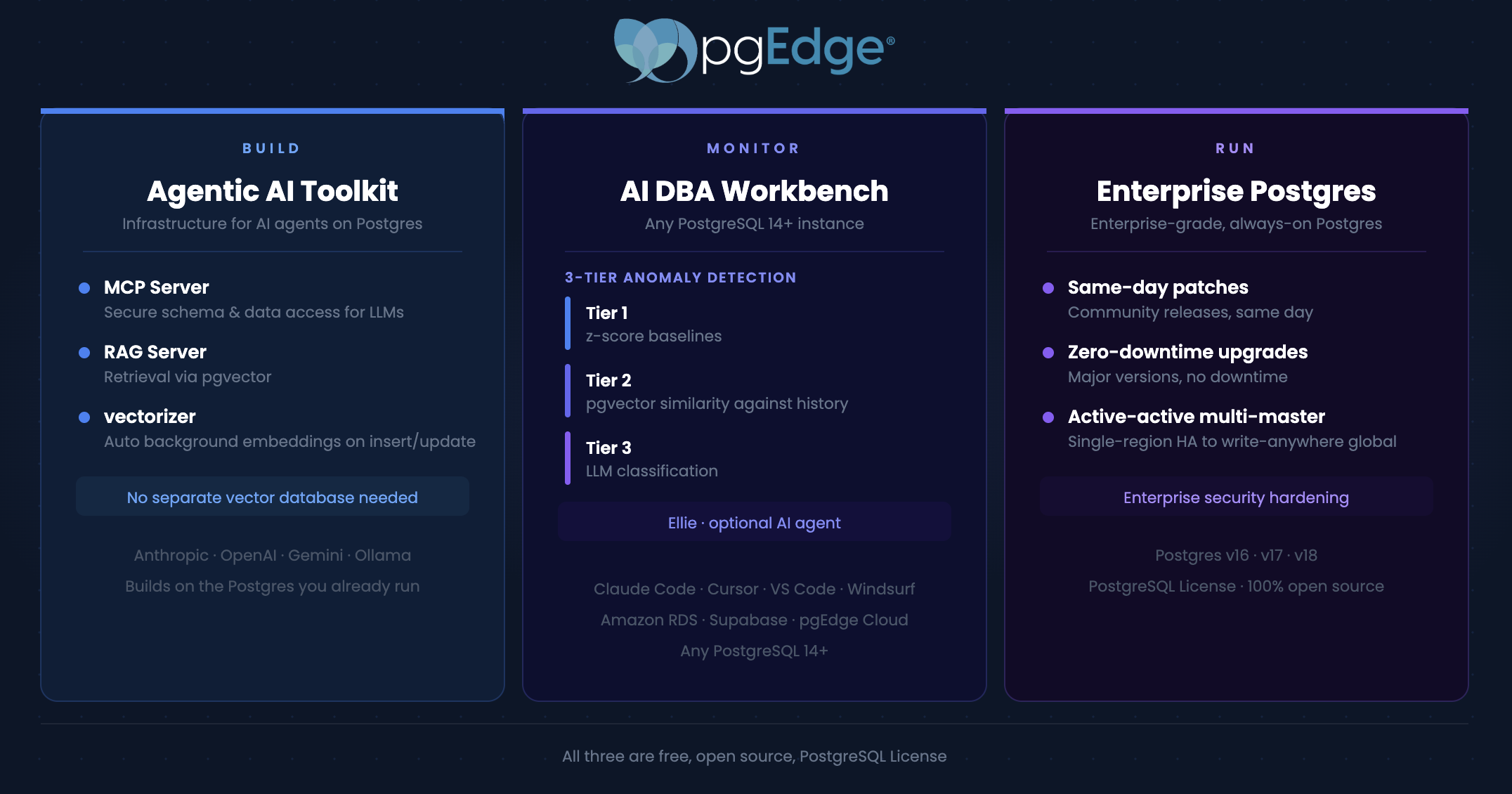
  23. Three AI-native # Postgres problems. pgEdge ships for all three. Agentic AI Toolkit: MCP Server, RAG Server, vectorizer for auto-embedding on insert/update. # A

    pgEdge has released a new toolkit designed to address three core challenges in AI-native PostgreSQL deployments. The toolkit includes components for an MCP Server, a RAG Server, and a vectorizer that automates embedding during data insertion and updates. Additionally, an AI DBA Workbench is available for diagnostics and classification using LLMs on PostgreSQL instances, with all components offered as free, open-source software. AI

    Three AI-native # Postgres problems. pgEdge ships for all three. Agentic AI Toolkit: MCP Server, RAG Server, vectorizer for auto-embedding on insert/update. # A

    IMPACT Provides specialized tools to improve AI integration within PostgreSQL databases.

  24. [BLOG] Manage Open WebUI users and roles with Keycloak # Sysadmin # AI https:// cylab.be/blog/510/manage-open- webui-users-and-roles-with-keycloak

    This blog post details how to integrate Keycloak for managing users and roles within the Open-WebUI application. It provides a practical guide for system administrators looking to enhance access control and user management for their AI deployments. AI

    IMPACT Provides system administrators with enhanced user management capabilities for AI applications.

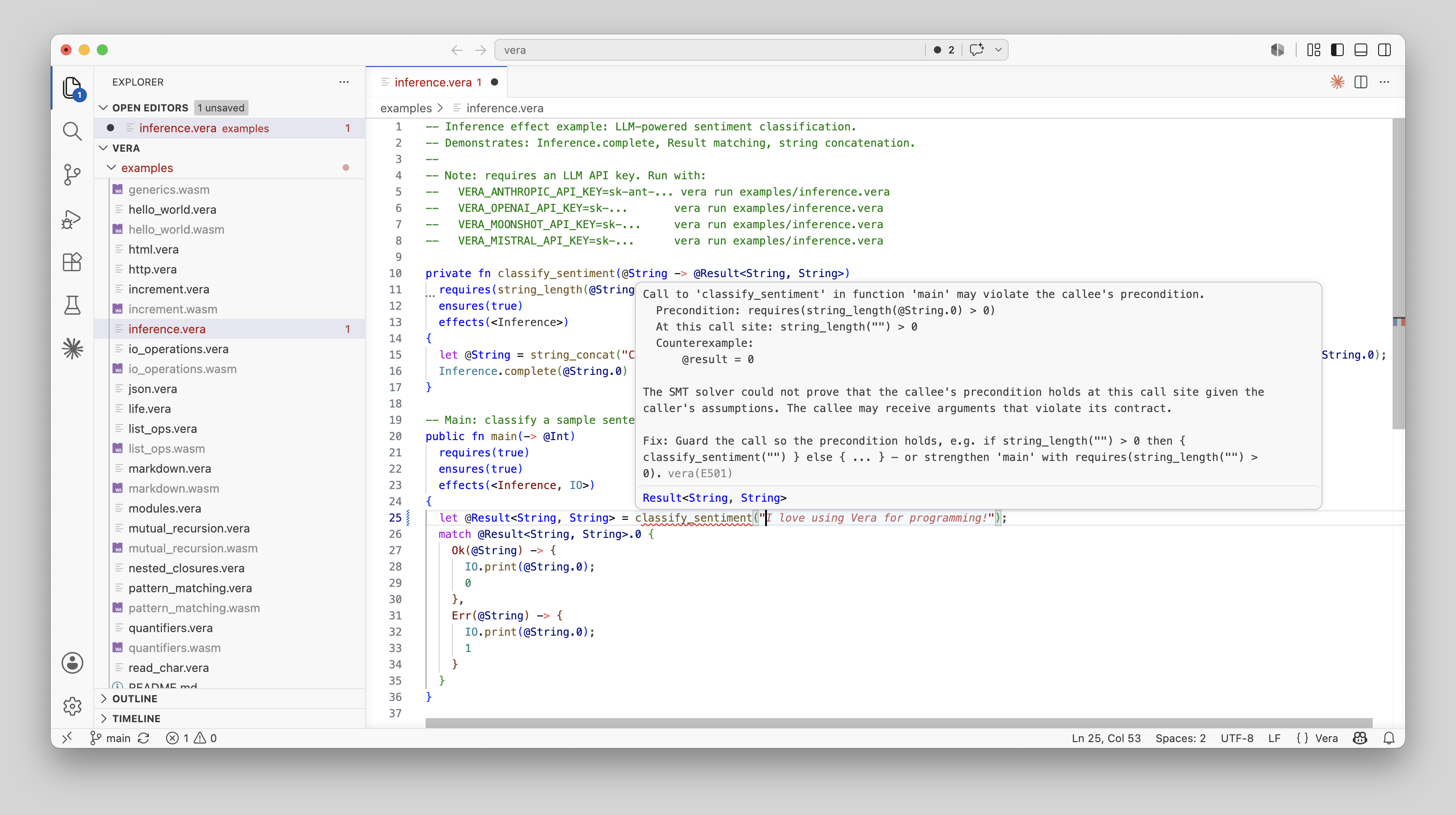
  25. Vera now has a language (LSP) server, so it gets the same editor support as any other language. A normal one checks whether your code parses. Vera's also checks

    Vera, a language designed for LLMs, has gained a Language Server Protocol (LSP) server. This integration provides Vera with enhanced editor support, similar to other programming languages. The LSP server not only verifies code parsing but also continuously checks program proofs as users type, leveraging a persistent Z3 session for near real-time feedback. AI

    Vera now has a language (LSP) server, so it gets the same editor support as any other language. A normal one checks whether your code parses. Vera's also checks

    IMPACT Enables AI agents to more effectively write and verify code by providing real-time proof checking within editors.

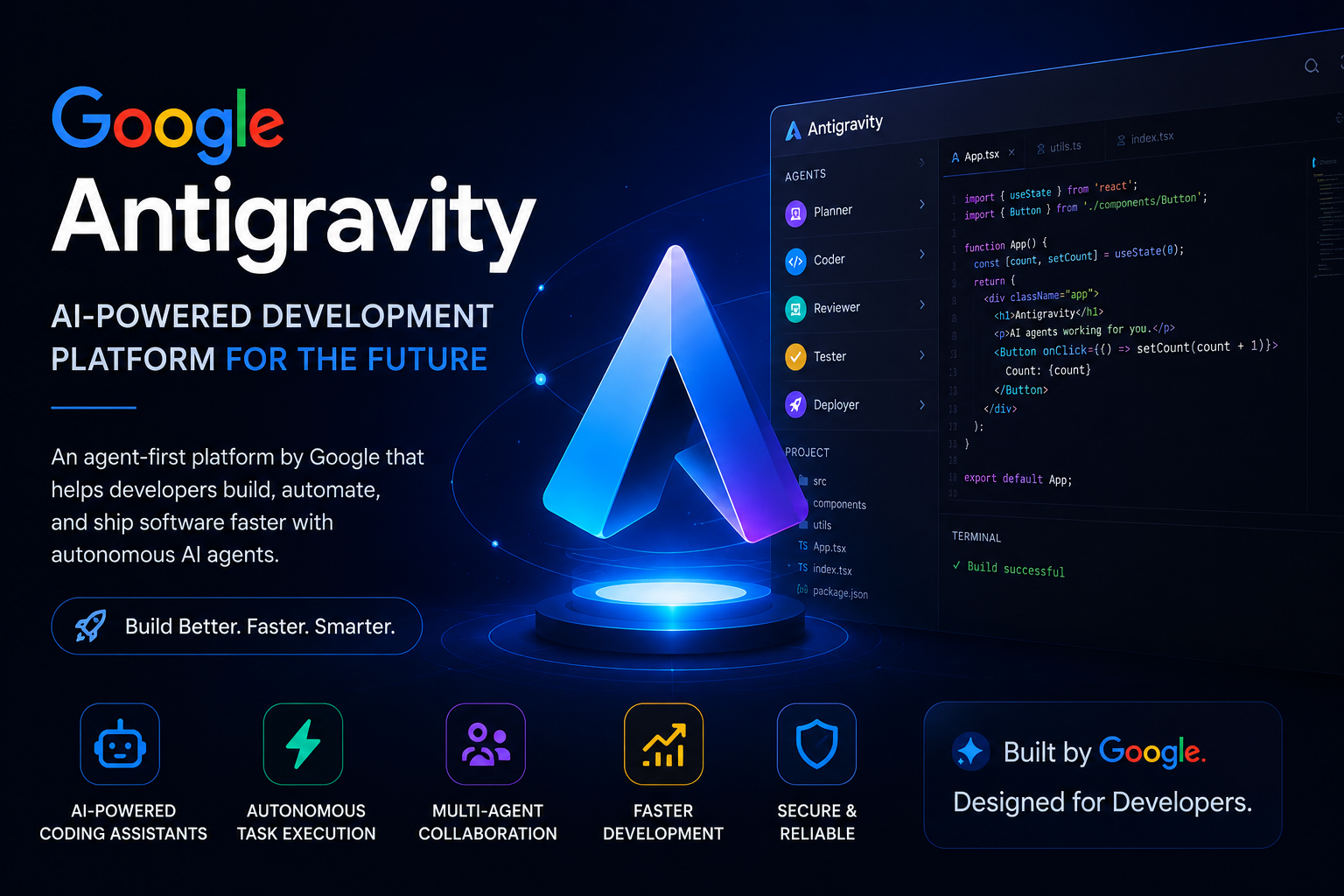
  26. 🚀 Google Antigravity is changing the way developers build software. ✅ AI-powered coding assistants ✅ Autonomous task execution ✅ Faster development workflows ✅

    Google Antigravity is a new AI-powered tool designed to enhance software development. It offers features such as autonomous task execution and multi-agent collaboration, aiming to accelerate development workflows for programmers. AI

    🚀 Google Antigravity is changing the way developers build software. ✅ AI-powered coding assistants ✅ Autonomous task execution ✅ Faster development workflows ✅

    IMPACT This tool could streamline development processes and enable more complex AI-driven applications.

  27. Google Cloud Disruptions Continue After India Data Center Fire

    A fire at a third-party data center in Delhi on June 9th has caused ongoing disruptions for Google Cloud customers across India. While Google has rerouted traffic, users in Delhi, Chennai, and Mumbai may still experience latency and packet loss. The company is working to optimize network capacity and enhance regional resilience. AI

    Google Cloud Disruptions Continue After India Data Center Fire

    IMPACT Disruptions to cloud infrastructure can impact AI model training and deployment.

  28. Chinese Academy of Sciences Institute of Physics Huang Xuejie: Before All-Solid-State Batteries Flip the Table, Hybrid Solid-Liquid Batteries Must Be Done Well | Greater Bay Area Auto Show Observation

    Chinese scientists are advancing solid-state battery technology, with a focus on hybrid solid-liquid electrolytes. They project 2026 as the year for mass production of these hybrid batteries, which offer improved safety and energy density compared to current liquid electrolyte batteries. Research includes modifying cathode and anode materials for higher energy storage and faster charging, as well as developing gel electrolytes to prevent degradation over long periods, particularly for energy storage applications. AI

    Chinese Academy of Sciences Institute of Physics Huang Xuejie: Before All-Solid-State Batteries Flip the Table, Hybrid Solid-Liquid Batteries Must Be Done Well | Greater Bay Area Auto Show Observation

    IMPACT Advancements in battery technology are crucial for powering AI hardware and enabling longer-duration AI applications.

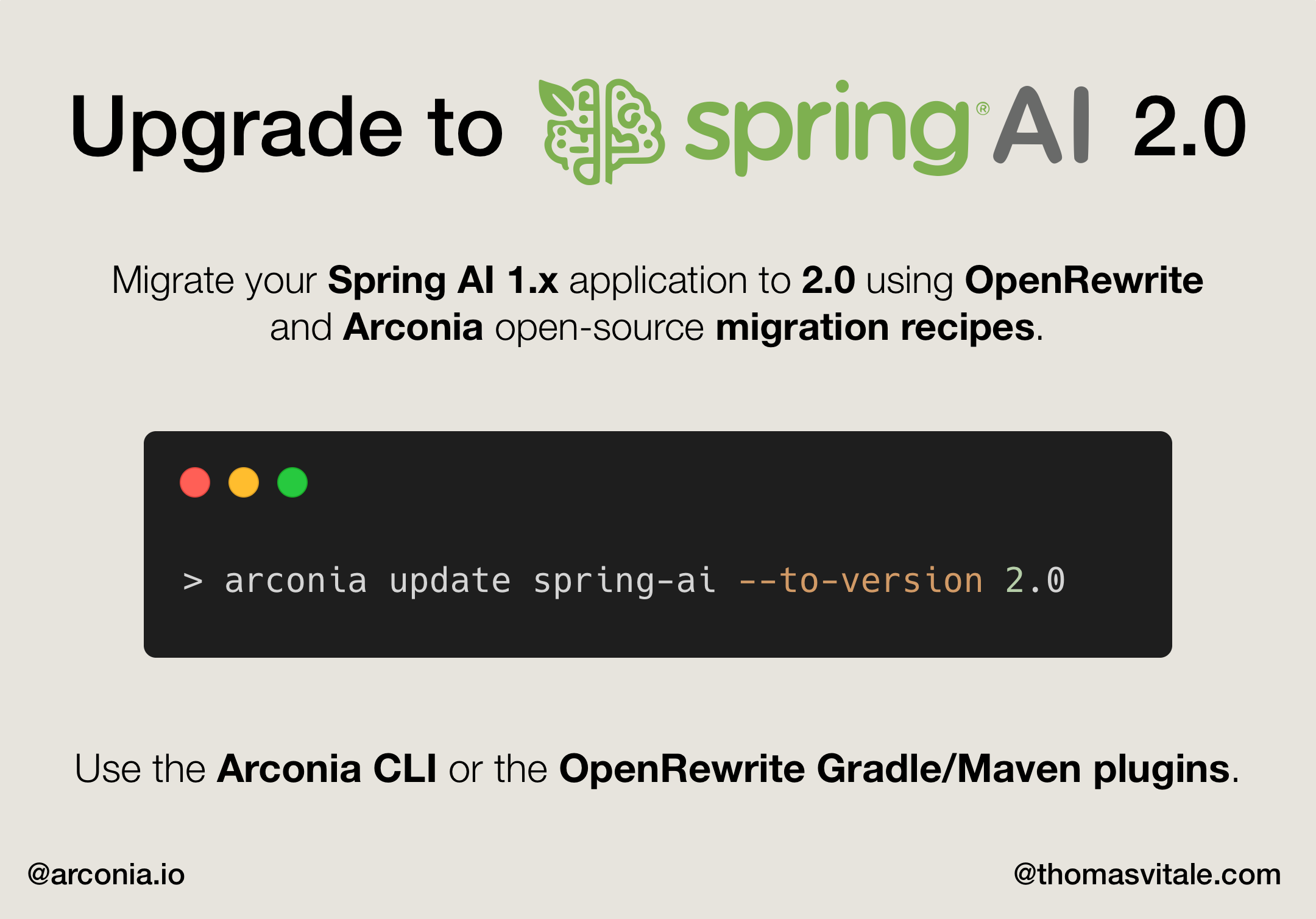
  29. Spring AI 2.0 is now available 🚀 it supports both Spring Boot 4.0 and 4.1. I worked on automated OpenRewrite recipes to upgrade your applications to the new ver

    Spring AI 2.0 has been released, offering support for Spring Boot versions 4.0 and 4.1. The release includes automated OpenRewrite recipes designed to help developers upgrade their applications and manage breaking changes introduced in the new version. This open-source tool aims to streamline the migration process for users. AI

    Spring AI 2.0 is now available 🚀 it supports both Spring Boot 4.0 and 4.1. I worked on automated OpenRewrite recipes to upgrade your applications to the new ver

    IMPACT Simplifies AI integration for Spring developers, potentially accelerating adoption of AI features in Java applications.

  30. 💻 candle: 20.4 k ⭐ ML and Rust -- two worlds that keep getting closer. Candle is Hugging Face's minimalist ML framework for Rust. PyTorch-like syntax, GPU suppo

    Candle, a minimalist machine learning framework for Rust, has been released by Hugging Face. It offers a PyTorch-like syntax and supports GPU acceleration via CUDA, with browser compatibility through WebAssembly. The framework includes pre-integrated models like LLaMA, Whisper, and Stable Diffusion, aiming to provide an alternative to Python-based ML inference without overhead. AI

    IMPACT Offers an alternative for ML inference outside of Python, potentially reducing overhead for specific applications.

  31. Efficient Solvers for SLOPE in R, Python, Julia, and C++

    Researchers have developed new software packages for R, Python, Julia, and C++ that efficiently solve the Sorted L-One Penalized Estimation (SLOPE) problem. These packages utilize a hybrid coordinate descent algorithm capable of fitting generalized linear models with various loss functions, including Gaussian, binomial, Poisson, and multinomial logistic regression. Benchmarks indicate that these new implementations outperform existing SLOPE solvers in terms of speed and memory efficiency, supporting sparse and out-of-memory matrices for flexible data handling. AI

  32. How much iron does an AI agent need? How we calculated resources for on-premise LLM and why calculators were 5 times wrong. Sergey Smirnov, AI Engineer and Founder, is speaking.

    An AI engineer details the challenges of accurately calculating hardware requirements for on-premise LLM deployments. Initial estimates using a popular calculator for a GPT-OSS-120B model on two RTX Pro 6000 Blackwell GPUs predicted 5000 tokens/sec, but real-world performance was five times slower. The article explains how to properly assess LLM resource needs, especially with non-standard hardware, and describes a rigorous testing process to provide clients with reliable performance guarantees. AI

    IMPACT Highlights the difficulty in accurately provisioning hardware for on-premise AI, potentially impacting enterprise adoption costs and timelines.

  33. Python Trending (@pythontrending) QuantMind is introduced as a knowledge extraction and retrieval framework for quant finance. It can be seen as an AI development tool that combines document/knowledge retrieval and information extraction in the financial domain. https:// x.com/pythontrending/sta

    QuantMind is presented as a knowledge extraction and retrieval framework specifically designed for quantitative finance. It functions as an AI development tool that integrates document and knowledge retrieval with information extraction within the financial domain. AI

    IMPACT Provides specialized AI tooling for quantitative finance, potentially improving efficiency in knowledge extraction and document retrieval for financial professionals.

  34. The git push for agent deployment is slick. Cuts down on the 'works on my machine' variability when the infra config itself becomes the deployable artifact. # A

    A new method for deploying AI agents streamlines the process by treating infrastructure configuration as a deployable artifact. This approach aims to reduce inconsistencies that arise when code functions differently across various development environments. AI

    IMPACT This method could improve the reliability and efficiency of deploying AI agents in production environments.

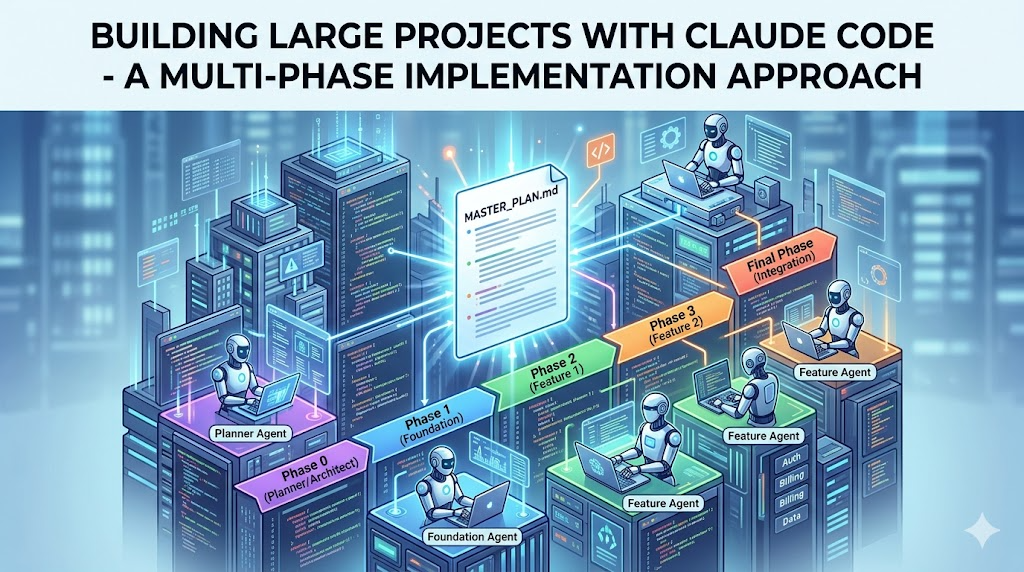
  35. Building Large Projects with Claude Code - A multi-phase implementation approach

    A new approach for building large software projects with AI agents, like Claude Code, involves breaking down the development process into distinct phases. A "Planner Agent" first creates a MASTER_PLAN.md document that outlines all phases, file ownership, and dependencies. Subsequent agents then work on these self-contained phases, referencing the master plan as the single source of truth, which helps prevent agents from contradicting earlier decisions or losing context over long development cycles. AI

    Building Large Projects with Claude Code - A multi-phase implementation approach
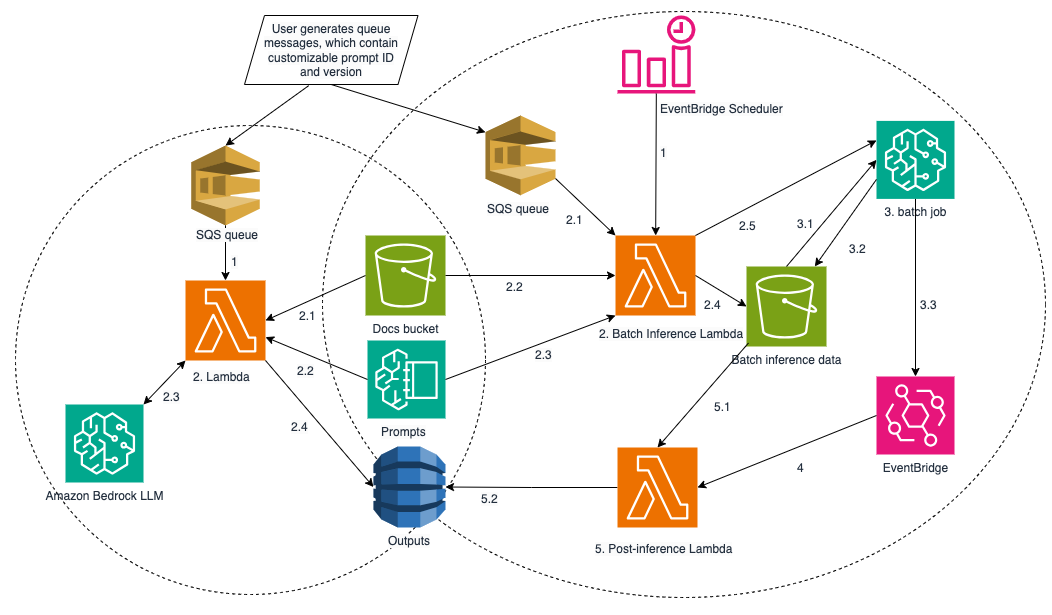
  36. Extract Data with On-demand and Batch Pipelines Dynamically

    AWS has introduced new intelligent document processing pipelines leveraging generative AI and Amazon Bedrock. These pipelines offer both on-demand and batch inference options to dynamically extract data from various document types. Users can specify different large language models and prompts at the document level, providing flexibility in processing time and cost optimization. AI

    Extract Data with On-demand and Batch Pipelines Dynamically

    IMPACT Enables more efficient and cost-effective data extraction from unstructured documents using generative AI.

  37. Best Composio Alternatives in 2026 for Production AI Agents

    This article evaluates alternatives to Composio for production AI agents, focusing on scalability beyond prototyping. It highlights the importance of per-user delegated authorization, agent-optimized tools to minimize hallucinations, and centralized governance with immutable audit logs. The guide contrasts Composio's prototyping strengths with the architectural needs of production environments, emphasizing security, identity, and observability. AI

    IMPACT Production-ready AI agent platforms are emerging to address scalability and security beyond initial prototyping.

  38. 📰 Microsoft's SkillOpt: The AI Agent That Improves Itself Microsoft has released SkillOpt, an open-source tool that allows AI agents to update themselves

    Microsoft has introduced SkillOpt, an open-source tool designed to enhance AI agents. This tool allows AI agents to update their capabilities by modifying external configuration files, rather than requiring costly retraining of model weights. This approach enables continuous improvement of AI agents without altering their core parameters. AI

    📰 Microsoft's SkillOpt: The AI Agent That Improves Itself Microsoft has released SkillOpt, an open-source tool that allows AI agents to update themselves

    IMPACT Enables more efficient and continuous improvement of AI agents by decoupling skill updates from model retraining.

  39. Tencent Cloud: DatabaseClaw Officially Commercialized Billing

    Tencent Cloud has announced that its DatabaseClaw service will begin commercial billing on June 19, 2026. The service will offer both a free trial version and a paid enterprise version to accommodate businesses of varying sizes. This move marks a significant step in the commercialization of Tencent Cloud's database management solutions. AI

    IMPACT Tencent Cloud's DatabaseClaw commercialization may signal increased competition and specialized offerings in the cloud database management sector.

  40. Our Robotics Accelerator has launched with 15 startups helping shape the future of physical AI in Europe. 🤖

    Google DeepMind has launched a Robotics Accelerator program in Europe, featuring 15 startups focused on physical AI. This three-month initiative will provide participants with access to Google DeepMind's AI technology stack, including Gemini Robotics models, and direct support from their expert teams. AI

    IMPACT Accelerates development and integration of physical AI applications by supporting a cohort of robotics startups.

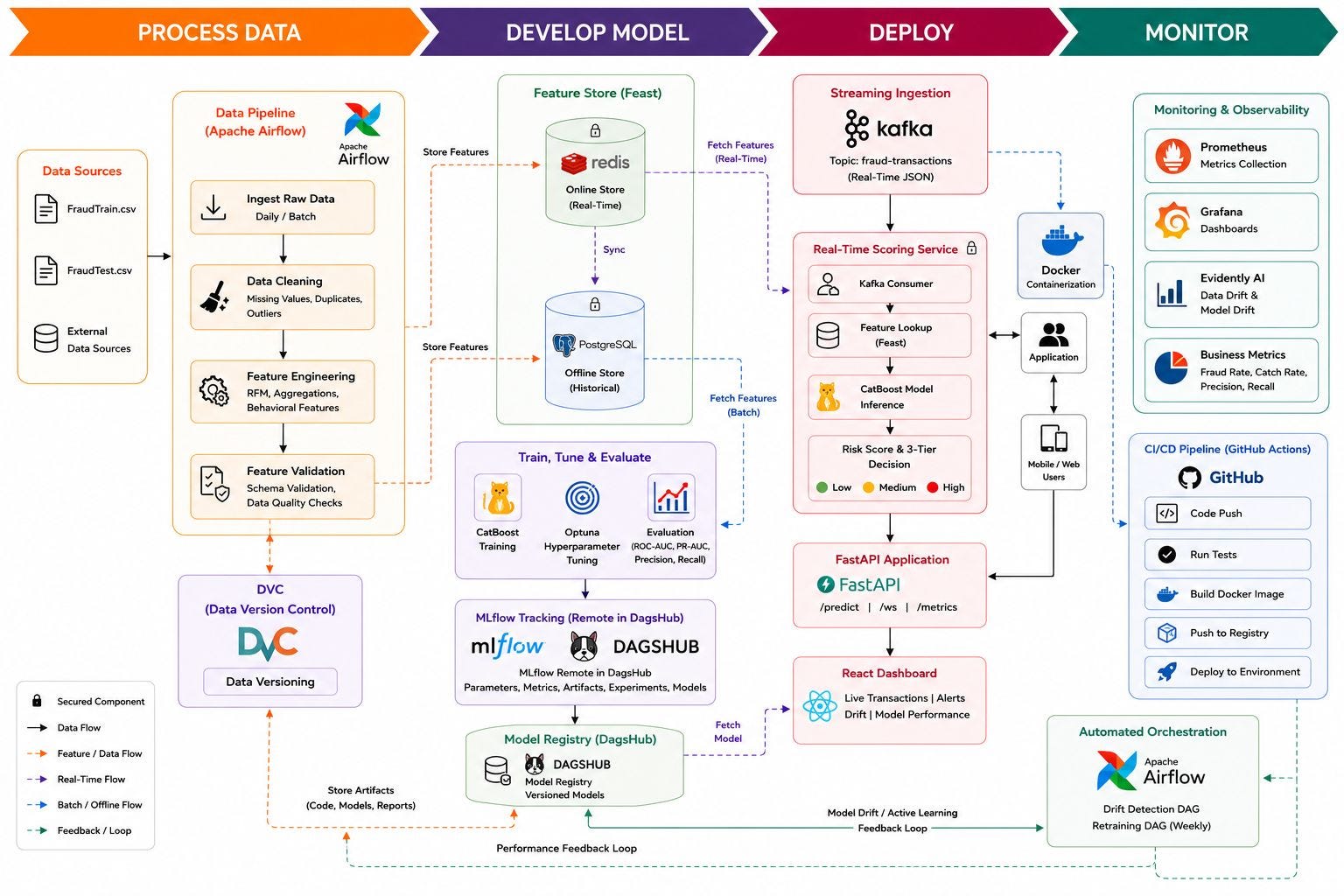
  41. Building a Production-Grade Real-Time Fraud Detection System

    This article details the process of creating a real-time fraud detection system, transforming data from a Kaggle CSV into a fully deployed ML service. It covers essential knowledge for engineers looking to build similar systems, emphasizing MLOps practices for production readiness. The guide walks through monitoring and CI/CD deployment, ensuring a robust and maintainable solution. AI

    Building a Production-Grade Real-Time Fraud Detection System

    IMPACT Provides a practical guide for engineers to deploy and manage ML systems for fraud detection.

  42. Deploying an AI coding agent shouldn't require a map and a compass to navigate your infrastructure 🗺️. We put together a guide showing you how to host an OpenCo

    Giving production API tokens to AI agents is extremely risky, akin to giving a toddler a flamethrower, and can lead to catastrophic outages. To mitigate this, it's crucial to use isolated, production-perfect preview environments for AI agents to test their logic safely. Deploying AI coding agents, such as those from OpenCorporates, can be simplified by hosting them on platforms like Upsun, which offers guides for easy setup and integration of LLM API keys and infrastructure. AI

    Deploying an AI coding agent shouldn't require a map and a compass to navigate your infrastructure 🗺️. We put together a guide showing you how to host an OpenCo

    IMPACT Simplifies AI agent deployment and highlights critical security considerations for production environments.

  43. Physics-informed generative AI for semiconductor manufacturing: Enforcing hard physical constraints in generative models by construction

    A new perspective paper proposes that generative AI models used in semiconductor manufacturing must be designed with physics principles integrated from the start, rather than relying on post-hoc filtering. The paper surveys existing architectural tools like physics-informed diffusion and PDE-constrained variational models, highlighting their application in areas such as lithography and process simulation. It argues that for physical systems where validity is paramount, generative models that enforce constraints by construction will outperform those that merely filter for them, with semiconductor fabrication serving as the most critical test case. AI

    IMPACT This research could lead to more reliable AI-driven design and control in complex physical industries like semiconductor manufacturing.

  44. Compiler-First State Space Duality and Portable $O(1)$ Autoregressive Caching for Inference

    Researchers have developed a new method for optimizing Mamba-2 inference, focusing on compiler-first state space duality. This approach enables portable autoregressive caching with $O(1)$ complexity, eliminating the need for custom CUDA or Triton kernels. The resulting single-source inference path, implemented in JAX, demonstrates significant speedups on Google Cloud TPUs and NVIDIA GPUs, achieving high hardware utilization and matching reference perplexity scores. AI

    IMPACT Enables faster and more portable inference for large state space models, potentially reducing deployment costs and complexity.

  45. MPK: A Compiler and Runtime for Mega-Kernelizing Tensor Programs

    Researchers have developed MPK, a novel compiler and runtime system designed to optimize multi-GPU model inference by transforming operations into a single, high-performance mega-kernel. This system utilizes an SM-level graph representation to enable advanced optimizations like cross-operator software pipelining and fine-grained overlap of computation and communication. Evaluations demonstrate that MPK significantly reduces end-to-end inference latency, achieving up to 1.7x improvement and pushing LLM inference performance closer to hardware limits. AI

    IMPACT Optimizes LLM inference performance, potentially reducing latency and improving hardware utilization for AI operators.

  46. MobileFineTuner: A Mobile-Native Framework for On-Device LLM Fine-Tuning in Real-World Embedded AI Applications

    Researchers have developed MobileFineTuner, an open-source framework enabling large language models to be fine-tuned directly on mobile phones. This C++ based system integrates resource-aware runtime features like memory-efficient attention and gradient accumulation to overcome the limitations of commodity mobile devices. Evaluations using models such as GPT-2 and Gemma 3 demonstrate its effectiveness in reducing memory pressure and improving executability, paving the way for personalized on-device AI applications. AI

    IMPACT Enables personalized AI experiences by allowing LLMs to adapt to user-specific data directly on mobile devices without cloud reliance.

  47. FOCUS: DLLMs Know How to Tame Their Compute Bound

    Researchers have developed a new inference system called FOCUS designed to improve the efficiency of Diffusion Large Language Models (DLLMs). This system addresses the high decoding costs associated with DLLMs by dynamically focusing computation on the most relevant tokens, rather than wasting resources on non-decodable ones. FOCUS can achieve up to a 3.52x throughput improvement in large-batch scenarios while maintaining or enhancing generation quality. AI

    IMPACT Optimizes inference for Diffusion LLMs, potentially lowering deployment costs and increasing accessibility.

  48. Open sourcing InfiniteKV: a KV cache that files old tokens as 104-byte searchable records in RAM or on disk instead of deleting them. Mistral-7B answered from token 76,747, 2.3x past its trained window. Colab demo

    InfiniteKV is a new KV cache system designed to extend the context window of large language models by storing older tokens in a compressed, searchable format on disk or in RAM. This approach allows models to access information far beyond their original training limits, as demonstrated by Mistral-7B successfully answering a query from token 76,747, significantly past its 32,768 token limit. The system maintains recent tokens in GPU memory for speed while offloading older ones, drastically reducing memory requirements from gigabytes per million tokens to just a few megabytes. AI

    IMPACT Enables LLMs to process and recall information from vastly extended contexts, potentially unlocking new applications in long-form content analysis and generation.

  49. Azure Databricks at Data + AI Summit 2026 featuring Industry Leaders and Partners

    Databricks and Microsoft are collaborating for the Data + AI Summit 2026, highlighting their joint offerings on Azure. The event will feature sessions on unifying data, analytics, and AI, with a focus on enterprise AI, agentic era applications, and ecosystem integrations. Attendees can visit the Microsoft booth for demos and discussions on solving complex data and AI challenges using Azure Databricks. AI

    IMPACT Highlights how Azure Databricks enables enterprise AI and agentic applications, showcasing joint capabilities with Microsoft.

  50. The Death of Note-Taking and the Rise of the Digital Scribe

    The Digital Scribe project introduces a new infrastructure layer for AI, moving beyond general-purpose chatbots to focus on capturing, structuring, and preserving human knowledge. It utilizes a Model Context Protocol (MCP) to enable specialized AI personas, such as a Temporal HTR Server, to process historical documents like 19th-century cursive handwriting. This system emphasizes data governance and provenance, using tools like Pydantic and implementing logic to resolve historical data nuances like "ditto marks" to create verifiable knowledge archives. AI

    The Death of Note-Taking and the Rise of the Digital Scribe

    IMPACT This project aims to create a new paradigm for AI systems, focusing on data structure and provenance to transform unstructured data into institutional memory.