PulseAugur / Brief
EN
LIVE 14:51:40

Brief

last 24h
[50/1570] 224 sources

Multi-source AI news clustered, deduplicated, and scored 0–100 across authority, cluster strength, headline signal, and time decay.

  1. Scoop: GOP called Howard Lutnick to reverse crypto PAC's Texas move

    Republican officials have reportedly contacted Howard Lutnick, the chairman and CEO of Cantor Fitzgerald, to persuade a cryptocurrency political action committee (PAC) to reverse its decision to relocate its operations to Texas. The PAC, which is associated with the crypto industry, had previously announced its move to the Lone Star State. AI


    Scoop: GOP called Howard Lutnick to reverse crypto PAC's Texas move
  2. Anthropic's Claude Desktop App Installs Undisclosed Native Messaging Bridge

    Anthropic's Claude Desktop application for macOS has been found to install a Native Messaging manifest file that pre-authorizes browser extensions. This manifest allows extensions to communicate with a local binary outside the browser's sandbox, potentially enabling them to read page content, fill forms, and capture screens without explicit user consent. Security researcher Alexander Hanff discovered this behavior, which raises privacy concerns and potential legal questions regarding data access. AI

    Anthropic's Claude Desktop App Installs Undisclosed Native Messaging Bridge

    IMPACT Raises concerns about data access and privacy for users of AI desktop applications, potentially leading to regulatory scrutiny.

  3. What to know about the missing scientists alarming Congress

    Congress is investigating the disappearance of several scientists, raising concerns about national security and potential foreign influence. The exact number and identities of the missing individuals have not been fully disclosed, but the situation has prompted inquiries into their research areas and any potential links to sensitive technologies. Lawmakers are seeking to understand the circumstances surrounding their absences and to ensure the protection of classified information. AI

    What to know about the missing scientists alarming Congress
  4. Trump cuts drug price deal with Regeneron

    President Trump announced a drug pricing agreement with Regeneron, finalizing a series of deals with 17 manufacturers pressured to adopt his "most favored nation" policy. These agreements aim to lower prices for certain drugs offered to Medicaid and cash-paying patients, with the administration claiming they cover 86% of branded pharmaceuticals. However, policy experts and Democrats question the actual impact on consumers, noting that discounts may not significantly affect company profits and largely exclude those with private insurance or Medicare. AI

    Trump cuts drug price deal with Regeneron
  5. Microsoft gives your Word documents an AI co-author you didn’t ask for

    Microsoft has rolled out "agentic" Copilot features across Word, Excel, and PowerPoint, enabling the AI assistant to actively make edits and changes rather than just offering suggestions. This update allows Copilot to modify documents, adjust spreadsheets, and create slides directly within these applications. While Microsoft frames this as an enhancement for user convenience and efficiency, critics express concerns about forced integration and the potential for the AI to become unavoidable. AI

    Microsoft gives your Word documents an AI co-author you didn’t ask for

    IMPACT Microsoft's integration of agentic AI into core Office products may accelerate user adoption of AI-powered productivity tools, but raises concerns about user control and data privacy.

  6. Medical data of 500k Biobank volunteers listed for sale on Alibaba, UK minister reveals

    Medical data belonging to approximately 500,000 volunteers from the UK Biobank was found listed for sale on the Chinese e-commerce platform Alibaba. While the data was reportedly anonymized, UK technology minister Ian Murray stated that it could potentially be used to identify individuals. In response, UK Biobank has banned three Chinese research institutions from its platform, and investigations are underway to determine how the data was leaked. AI

    Medical data of 500k Biobank volunteers listed for sale on Alibaba, UK minister reveals

    IMPACT Potential for misuse of anonymized medical data highlights the need for robust data governance in AI-driven research.

  7. Stale gov.uk pages are feeding AI overviews old data and Brits are believing it

    AI-generated overviews from search engines like Google are providing inaccurate information to UK citizens due to outdated content on GOV.UK pages. Content designers at the Department for Business and Trade identified that unmaintained legacy pages, previously unseen, are now being scraped and summarized, leading to incorrect figures for government services. This misinformation risks eroding public trust in government services, prompting efforts to audit and redirect stale pages, and implement regular review cycles for content. AI

    Stale gov.uk pages are feeding AI overviews old data and Brits are believing it

    IMPACT Government information accuracy is threatened by AI summarization of outdated web content, potentially eroding public trust.

  8. Exclusive: OpenAI briefs feds and Five Eyes on new cyber product

    OpenAI has reportedly briefed officials from the US federal government and the Five Eyes intelligence alliance on a new product designed for cybersecurity applications. The meeting, which took place recently, suggests OpenAI is exploring ways to leverage its AI technology for national security and cyber defense purposes. Details about the specific capabilities of this new cyber product remain undisclosed. AI

    Exclusive: OpenAI briefs feds and Five Eyes on new cyber product

    IMPACT OpenAI's move into cybersecurity could signal a new direction for AI applications in national security and defense.

  9. AI hallucinations found in high-profile Wall Street law firm filing

    A prominent Wall Street law firm, Sullivan & Cromwell, has admitted to a New York federal court that a recent filing contained significant errors due to AI hallucinations. These inaccuracies included misquoted legal statutes and fabricated case citations, which were discovered by opposing counsel. The firm apologized for the mistakes, stating that their internal AI usage policies were not followed and that a secondary review failed to catch the errors. A corrected filing has since been submitted. AI

    AI hallucinations found in high-profile Wall Street law firm filing

    IMPACT Highlights the critical need for rigorous human oversight and adherence to AI usage policies in legal document preparation.

  10. Scoop: Top U.S. cyber agency doesn't have access to Anthropic's powerful hacking model

    The Cybersecurity and Infrastructure Security Agency (CISA) has been denied access to Anthropic's new AI model, Mythos Preview, despite its potential to identify and exploit security vulnerabilities. While over 40 companies and some government agencies like the NSA are testing the model, CISA, the nation's top cyber defense agency, is not among them. This lack of access comes at a time when critical infrastructure sectors are increasingly concerned about AI-driven cyberattacks, and CISA's resources are reportedly limited. AI

    Scoop: Top U.S. cyber agency doesn't have access to Anthropic's powerful hacking model

    IMPACT Critical infrastructure cybersecurity agencies may be at a disadvantage against AI-powered threats without access to advanced vulnerability discovery tools.

  11. This AI Tool Rips Off Open Source Software Without Violating Copyright

    Malus.sh is a service that uses AI to create functional clones of existing software, bypassing original copyright licenses. While presented as satire to highlight issues within the open-source community, the service is a real LLC that generates revenue by producing these "clean room" versions. This process could significantly impact the open-source ecosystem by undermining its licensing structures. AI

    This AI Tool Rips Off Open Source Software Without Violating Copyright
  12. Peter Thiel Is Building a Parallel Justice System – Powered by AI

    Peter Thiel has funded a new startup called Objection.ai, co-founded by Aron D’Souza, which aims to create an AI-powered system for challenging media statements. This platform will allow anyone to file an objection, triggering an investigation by former intelligence and law enforcement personnel, with an AI model ultimately rendering a verdict. The process is designed to be significantly cheaper than traditional legal routes, potentially around $2,000, and may involve binding arbitration. Objection.ai has already targeted several media outlets and journalists for their reporting, signaling a broader effort to influence or control public discourse through this new mechanism. AI

    Peter Thiel Is Building a Parallel Justice System – Powered by AI
  13. Atlassian enables default data collection to train AI

    Atlassian will now collect data from its products by default to train its AI features. This change applies to all customers using Atlassian's cloud products, including Jira Software, Jira Service Management, and Confluence. Customers have the option to opt-out of this data collection. AI

    Atlassian enables default data collection to train AI
  14. Anthropic installed a spyware bridge on my machine?

    A user discovered that Anthropic's Claude Desktop application silently installed a native messaging host on their machine, enabling a browser extension to execute code with user-level privileges. This undocumented bridge, found in the user's Brave browser settings, allows Claude to interact with websites the user is logged into, read console errors, and extract data. The user argues this constitutes a dark pattern and a breach of privacy regulations, especially given Anthropic's focus on AI safety. AI

    Anthropic installed a spyware bridge on my machine?

    IMPACT Raises significant privacy and security concerns for users interacting with AI desktop applications, potentially impacting trust and adoption.

  15. What to know about tariff refund site that launches Monday

    A new online portal is set to launch on Monday, April 20, 2026, designed to facilitate refunds for businesses impacted by tariffs. This initiative aims to streamline the process for companies seeking compensation related to previous tariff impositions. The system will be accessible through the ACE portal, managed by U.S. Customs and Border Protection. AI

    What to know about tariff refund site that launches Monday
  16. Airline worker arrested after sharing photos of bomb damage in WhatsApp group

    An airline worker in Dubai was arrested for sharing photos of bomb damage in a private WhatsApp group with colleagues. Dubai police reportedly accessed the closed group chat through electronic surveillance, tracked the individual, and subsequently arrested him. This incident raises significant concerns about user privacy and the potential for private communications on encrypted platforms to be accessed by state security services. AI

    Airline worker arrested after sharing photos of bomb damage in WhatsApp group
  17. Scoop: Trump convenes Iran situation room meeting amid renewed Hormuz crisis

    Former President Trump convened a situation room meeting to address a renewed crisis in the Strait of Hormuz. The meeting focused on the escalating tensions and potential responses to the situation. Details regarding the specific nature of the crisis or the outcomes of the meeting were not immediately available. AI

    Scoop: Trump convenes Iran situation room meeting amid renewed Hormuz crisis
  18. Scoop: Bessent and Wiles met Anthropic's Amodei in sign of thaw

    White House officials Bessent and Wiles met with Anthropic CEO Amodei, signaling a potential warming of relations between the AI company and the administration. This meeting follows a period of tension and could indicate a shift towards more collaborative discussions on AI policy and regulation. The specific outcomes or agenda of the meeting were not disclosed. AI

    Scoop: Bessent and Wiles met Anthropic's Amodei in sign of thaw
  19. FAA Scraps Civil and Criminal Penalties for Flying Drones Near ICE Vehicles

    The FAA has rescinded a restrictive temporary flight restriction (TFR) that prohibited drone flights near Department of Homeland Security vehicles, including those of ICE and CBP. This initial order, implemented in January, carried threats of civil and criminal penalties and was criticized for its vagueness, particularly concerning unmarked vehicles, which made compliance difficult for drone operators and journalists. A lawsuit filed by journalist Rob Levine and the Reporters Committee for Freedom of the Press argued the TFR violated First Amendment rights, leading to the FAA's revised advisory. AI

    FAA Scraps Civil and Criminal Penalties for Flying Drones Near ICE Vehicles
  20. House GOP rebellion derails FISA renewal

    A rebellion within the House Republican party has successfully blocked the renewal of the Foreign Intelligence Surveillance Act (FISA). This legislative setback occurred on April 17, 2026, preventing the extension of the controversial surveillance law. The specific details of the Republican dissent and its implications for national security surveillance are not provided in the item. AI

    House GOP rebellion derails FISA renewal
  21. How Automated Reasoning checks in Amazon Bedrock transform generative AI compliance

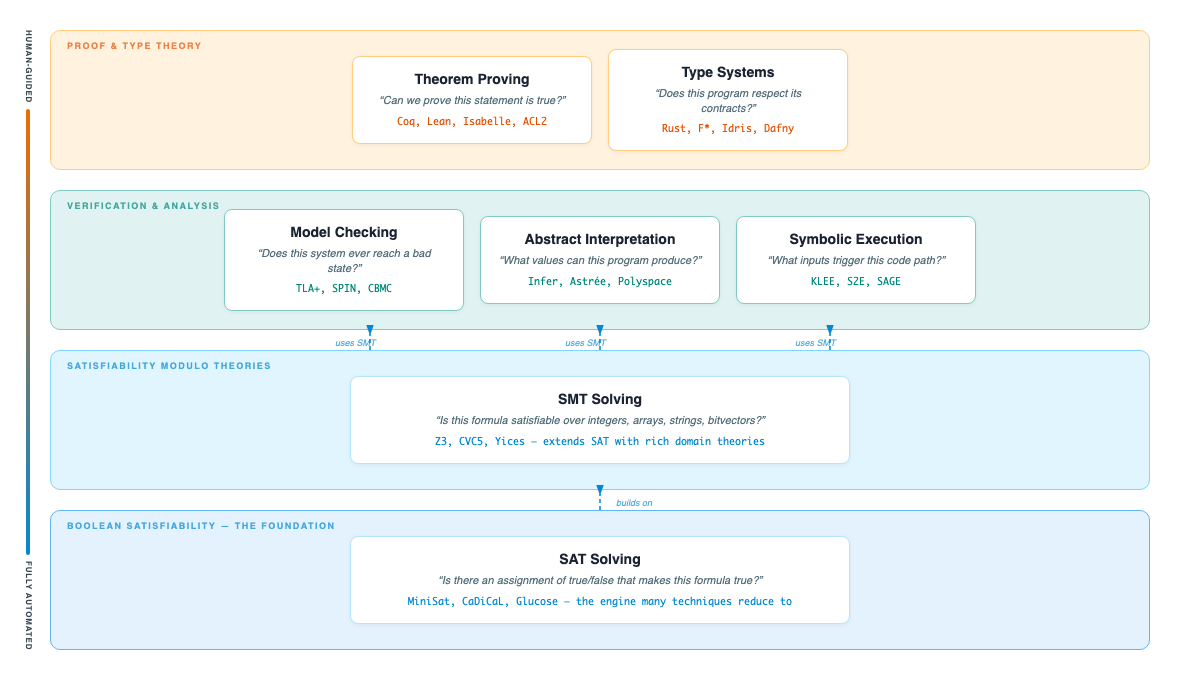
    Amazon Bedrock has introduced Automated Reasoning checks, a new feature designed to enhance compliance for generative AI applications in regulated industries. This system replaces probabilistic AI validation with mathematical verification, ensuring AI-generated outputs are provably correct and auditable. By applying formal verification methods, Automated Reasoning checks validate AI responses against defined rules and constraints, providing mathematically proven results that address the limitations of traditional LLM-as-a-judge approaches. This technology is already being used by organizations in sectors like healthcare, finance, and insurance to meet stringent compliance requirements and reduce review times. AI

    How Automated Reasoning checks in Amazon Bedrock transform generative AI compliance
  22. AI ruling prompts warnings from US lawyers: Your chats could be used against you

    A recent court ruling has raised concerns among US lawyers regarding the potential use of client-attorney communications in legal proceedings. This decision could impact how individuals interact with AI tools, as their conversations might be discoverable evidence. Legal professionals are advising caution and emphasizing the need for clear guidelines on AI data privacy. AI

  23. Claude may require identity verification in some cases

    Anthropic is implementing identity verification for certain Claude users to prevent misuse and comply with regulations. Users may be prompted to verify their identity using a government-issued ID and a selfie, with verification handled by a partner called Persona. This measure aims to enhance platform integrity and safety, ensuring that user data is protected and not used for model training. AI

    Claude may require identity verification in some cases

    IMPACT This policy change may impact user access and data privacy for AI chatbot interactions.

  24. Apple App Store threatened to remove Grok over deepfakes: Letter

    Apple threatened to remove Elon Musk's AI app, Grok, from its App Store in January. The tech giant cited concerns over the app's failure to adequately prevent the creation of nude or sexualized deepfakes. Apple communicated this threat to senators in a letter, highlighting the ongoing challenges with AI-generated harmful content. AI

    Apple App Store threatened to remove Grok over deepfakes: Letter
  25. Trump’s AI Chip Export Push Stymied by Bureaucratic Bottleneck

    Bureaucratic inefficiencies within the Commerce Department's Bureau of Industry and Security (BIS) are hindering the expansion of U.S. AI chip exports, according to analysis from Georgetown's Center for Security & Emerging Tech (CSET). Staffing shortages at BIS have led to delays in processing export licenses and a reduced capacity to develop and adapt export control regulations. These bottlenecks create uncertainty for the semiconductor industry and could disrupt international trade in critical AI hardware. AI

    Trump’s AI Chip Export Push Stymied by Bureaucratic Bottleneck
  26. Financial services

    OpenAI has released a new set of resources specifically designed for financial services institutions. These resources aim to help organizations evaluate, deploy, and scale AI within regulated environments. The offerings include curated prompts for tasks like data analysis and regulatory interpretation, along with guidance on using GPTs for consistent and auditable AI applications. AI

    Financial services
  27. Vercel: Updates to Terms of Service

    Vercel has updated its Terms of Service and Privacy Policy to accommodate agentic AI features and data usage for platform improvement. The changes include new capabilities for Vercel agents to proactively manage applications, analyze performance, and optimize usage. Users can now opt-in or opt-out of allowing Vercel to use their code and agent chats for AI model training, with different default settings based on their subscription plan. AI

    Vercel: Updates to Terms of Service
  28. FSF statement on copyright infringement lawsuit Bartz v. Anthropic

    The Free Software Foundation (FSF) has commented on the settlement in the Bartz v. Anthropic copyright infringement lawsuit. This class action suit alleges Anthropic used copyrighted materials from datasets like Library Genesis to train its large language models. While a court initially suggested training LLMs on these works might be fair use, the FSF, holding copyrights to works like "Free as in Freedom," is seeking user freedom as compensation, advocating for transparency in LLM training data and code. AI

    FSF statement on copyright infringement lawsuit Bartz v. Anthropic

    IMPACT Highlights ongoing legal challenges and ethical debates surrounding the use of copyrighted data in training AI models, potentially influencing future data sourcing and licensing practices.

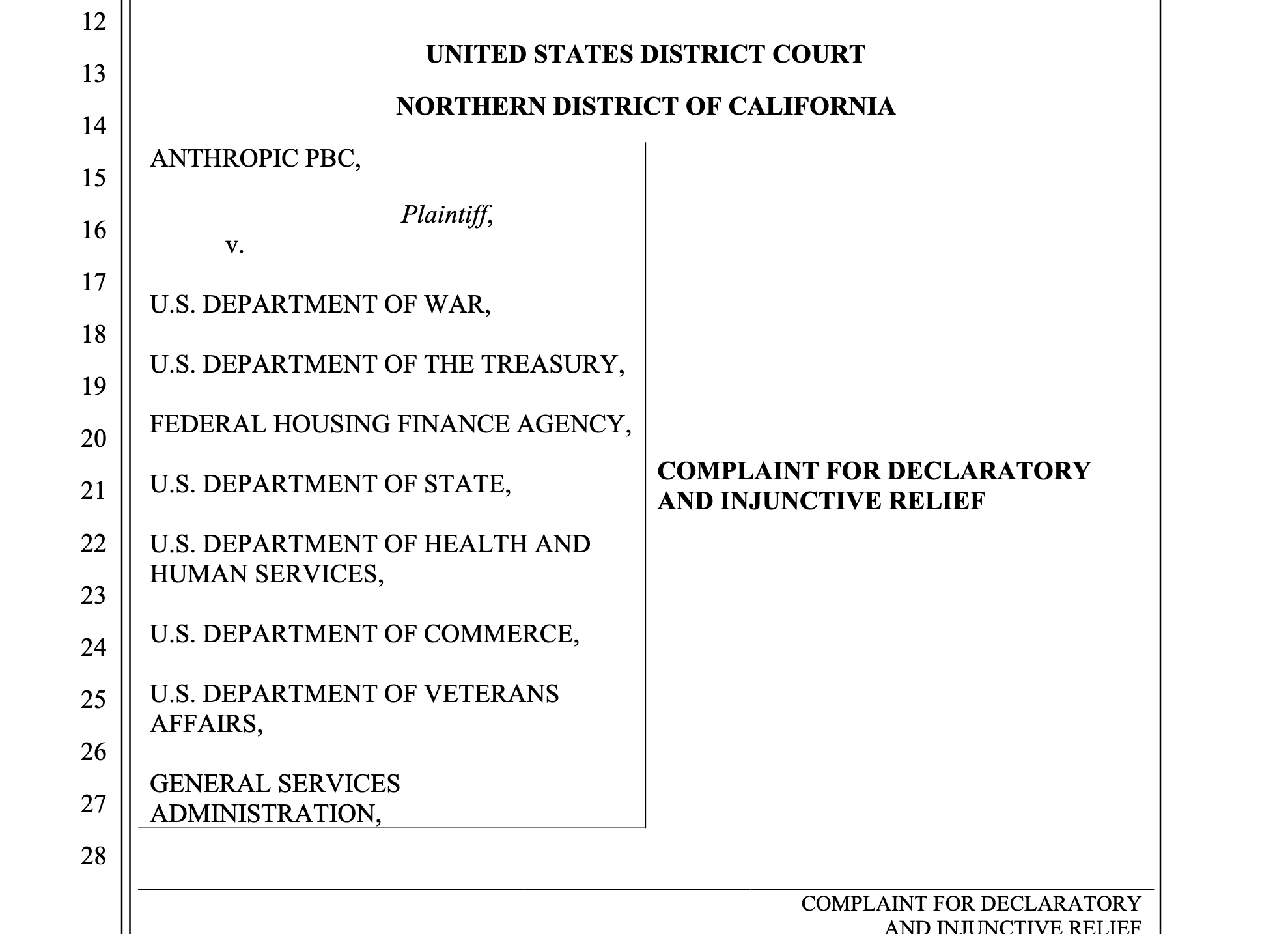
  29. Last Week in AI #338 - Anthropic sues Trump, xAI starting over, Iran AI Fakes

    Anthropic has initiated legal action against the Trump administration concerning AI technology within the Pentagon. This lawsuit is supported by an amicus brief filed by employees from OpenAI and Google. Concurrently, an internal Pentagon directive mandates the removal of Anthropic's AI systems from critical military operations. AI

    Last Week in AI #338 - Anthropic sues Trump, xAI starting over, Iran AI Fakes
  30. Anthropic has strong case against Pentagon blacklisting, legal experts say

    AI company Anthropic is challenging a potential blacklisting by the Pentagon, which could restrict its ability to secure government contracts. The company argues that the Pentagon's proposed restrictions on AI use, stemming from concerns over safety and ethical considerations, are overly broad and could hinder innovation. Anthropic has filed a lawsuit seeking to prevent this blacklisting, asserting its commitment to responsible AI development. AI

    IMPACT Potential government contract restrictions could impact AI development and deployment in sensitive sectors.

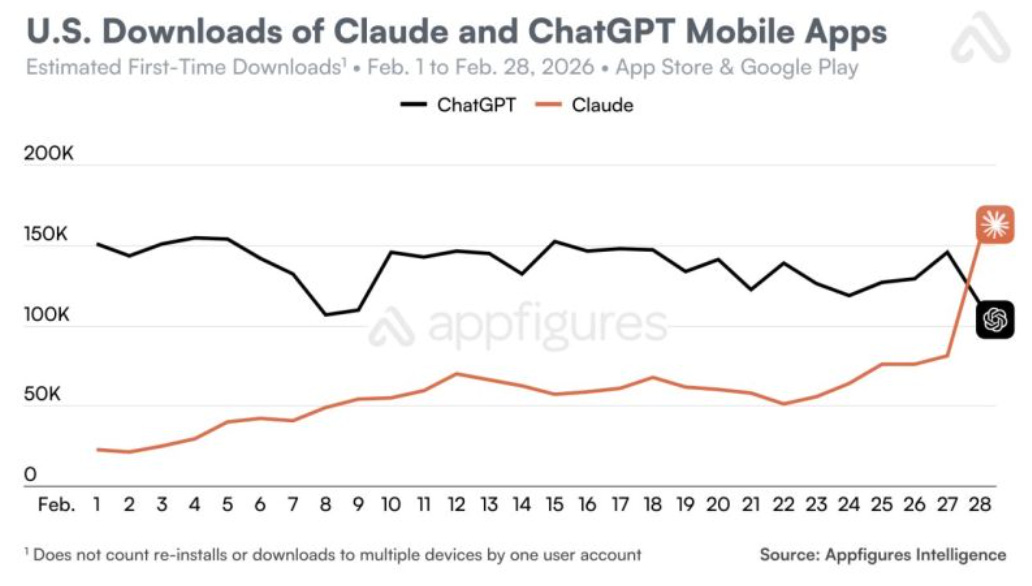
  31. Last Week in AI #337 - Anthropic Risk, QuitGPT, ChatGPT 5.4

    Anthropic has been designated a supply chain risk by the Department of Defense. Concurrently, a trend of users seeking to 'cancel ChatGPT' is gaining traction, partly fueled by OpenAI's recent agreement with the U.S. military. This newsletter also briefly mentions other AI developments. AI

    Last Week in AI #337 - Anthropic Risk, QuitGPT, ChatGPT 5.4
  32. Palantir and Anthropic AI helped the US hit 1k Iran targets in 24 hours

    Palantir and Anthropic's AI technologies were reportedly utilized by the U.S. military to identify and target over 1,000 sites in Iran within a 24-hour period. This application highlights the integration of advanced AI in military operations for rapid intelligence analysis and strike planning. The specific contributions of Palantir's data integration platform and Anthropic's AI models in this operation remain detailed. AI

    IMPACT Demonstrates the use of AI in rapid military targeting and intelligence analysis, potentially influencing future defense strategies.

  33. Claude AI Helped Bomb Iran. But How Exactly?

    Anthropic's Claude AI was utilized by U.S. Central Command for critical tasks such as intelligence assessments and target identification during strikes on Iran. Despite a prior order from President Trump to cease its use due to a dispute with Anthropic, the AI's integration into Pentagon systems meant its removal would take considerable time. The model was also employed in a prior operation that resulted in the capture of Nicolás Maduro. AI

    Claude AI Helped Bomb Iran. But How Exactly?

    IMPACT Highlights the integration of AI tools into military operations, raising questions about their role in geopolitical events and governmental oversight.

  34. Show HN: Open-Source Article 12 Logging Infrastructure for the EU AI Act

    A new open-source TypeScript library has been released to help developers comply with Article 12 of the EU AI Act. This library automatically records AI inferences as tamper-evident logs, chaining entries with SHA-256 hashes and ensuring a minimum retention period. It is designed for Node.js applications using the Vercel AI SDK and aims to provide a more robust auditing solution than standard logging practices. AI

    Show HN: Open-Source Article 12 Logging Infrastructure for the EU AI Act

    IMPACT Provides a technical solution for AI developers to meet new EU compliance mandates for high-risk systems.

  35. An update on our mental health-related work

    OpenAI is enhancing ChatGPT's safety features by introducing a trusted contact option for adult users and improving the model's ability to detect and respond to signs of emotional distress. These updates aim to provide additional support for users and build upon existing parental controls. Concurrently, OpenAI is addressing multiple mental health-related lawsuits consolidated into a single proceeding in California, stating its commitment to transparency and careful handling of the legal process. AI

    An update on our mental health-related work
  36. Introducing Edu for Countries

    OpenAI has launched "Edu for Countries," a new initiative aimed at assisting governments in leveraging AI to enhance their educational systems. The program focuses on modernizing education and preparing workforces for the future. This initiative seeks to integrate AI tools and strategies into national educational frameworks. AI

    Introducing Edu for Countries
  37. Brex’s AI Hail Mary — With CTO James Reggio

    Brex's CTO James Reggio discussed the company's disciplined approach to integrating AI, focusing on a three-pillar strategy for corporate, operational, and product applications. He highlighted the effectiveness of SOP-driven agents over complex RL for financial operations, emphasizing auditability and compliance. Reggio also detailed Brex's multi-agent network architecture, which uses specialist agents coordinated by an executive assistant-style interface, and their approach to fostering AI fluency across the organization. AI

    Brex’s AI Hail Mary — With CTO James Reggio
  38. Show HN: Solving the ~95% legislative coverage gap using LLM's

    Lustra is a new platform designed to address the significant gap in legislative coverage by leveraging large language models. The service aims to provide users with a way to understand and potentially influence public data related to voting and policy. AI

    Show HN: Solving the ~95% legislative coverage gap using LLM's

    IMPACT Provides a novel application of LLMs to bridge the gap in legislative coverage and public data engagement.

  39. Our approach to mental health-related litigation

    OpenAI has outlined its approach to handling litigation involving mental health claims, emphasizing care, transparency, and respect for individuals involved. The company stated its commitment to understanding facts, presenting its case with sensitivity to private information, and continuing to improve its technology's safety features. These improvements include training ChatGPT to recognize distress and guide users to support, with ongoing collaboration with mental health experts. AI

    Our approach to mental health-related litigation
  40. Combating online child sexual exploitation & abuse

    OpenAI has detailed its ongoing efforts to prevent the misuse of its AI models for child sexual exploitation and abuse. The company employs pre-deployment safeguards and in-production monitoring to detect and disrupt such activities. OpenAI explicitly prohibits users from generating or distributing child sexual abuse material (CSAM) or child sexual exploitation material (CSEM), reporting violations to the National Center for Missing and Exploited Children and banning offenders. Their commitment extends to training data, where they actively detect and remove CSAM/CSEM to prevent models from learning to generate such content. AI

    Combating online child sexual exploitation & abuse
  41. Introducing parental controls

    OpenAI has introduced parental controls for ChatGPT, allowing parents to manage their teen's AI experience. These controls enable parents to link accounts with their teens, customize settings like content filters and usage times, and opt out of model training. The feature aims to provide a safer, age-appropriate environment for younger users, with additional safeguards for linked accounts. OpenAI collaborated with experts and advocacy groups to develop these new features. AI

    Introducing parental controls
  42. Outbound coordinated vulnerability disclosure policy

    OpenAI has established a new policy for disclosing vulnerabilities it discovers in third-party software, aiming to enhance global software security. This policy outlines how OpenAI will report and disclose security issues found in both commercial and open-source software, utilizing methods such as AI-powered analysis and manual security research. The process emphasizes cooperation with vendors and maintainers, with disclosures typically remaining private until consent is obtained, though exceptions exist for public disclosure under certain conditions. AI

    Outbound coordinated vulnerability disclosure policy
  43. Launch HN: Parachute (YC S25) – Guardrails for Clinical AI

    Parachute, a startup co-founded by Aria and Tony, has launched a governance infrastructure designed to help hospitals safely evaluate and monitor clinical AI tools. The platform addresses the challenge of rapidly increasing AI adoption in healthcare, where regulatory requirements for safety and fairness are becoming more stringent. Parachute offers a multi-stage process including vendor evaluation, automated benchmarking, red-teaming, continuous monitoring of deployed models, and the creation of an immutable audit trail for regulatory compliance. AI

    Launch HN: Parachute (YC S25) – Guardrails for Clinical AI

    IMPACT Provides a framework for managing regulatory and safety risks associated with clinical AI deployment, potentially accelerating adoption.

  44. Introducing Effort-Based Pricing for Replit Agent

    Replit has introduced a new Effort-Based Pricing model for its AI Agent, which adjusts costs based on the computational effort and time required for each request. This change moves away from a flat $0.25 per checkpoint fee to a more dynamic system where simple tasks may cost less, and complex tasks may cost more, reflecting the Agent's evolving capabilities. The company also addressed a pricing error on July 11th that incorrectly charged some users, issuing refunds and offering $10 in credits to affected members. AI

    Introducing Effort-Based Pricing for Replit Agent

    IMPACT This pricing shift aims to better align costs with AI agent usage, potentially influencing how developers budget for AI-assisted coding tasks.

  45. Fighting the New York Times’ invasion of user privacy

    OpenAI is publicly contesting a legal demand from The New York Times to hand over 20 million private ChatGPT conversations as part of a lawsuit. OpenAI argues this demand is an overreach that violates user privacy and common security practices. The company is fighting to protect user data, asserting that private conversations should not be used as collateral in a dispute over online content access. OpenAI is also accelerating its privacy roadmap, including developing client-side encryption, to further safeguard user information. AI

    Fighting the New York Times’ invasion of user privacy
  46. The court rejects Elon’s latest attempt to slow OpenAI down

    A court has rejected Elon Musk's attempt to halt OpenAI's operations, ruling against his claims that the company has strayed from its non-profit mission. OpenAI stated the lawsuit was a personal vendetta driven by Musk's desire to control the organization for his own for-profit ventures. The court's decision dismisses several of Musk's claims, moving OpenAI closer to resolving the legal dispute. AI

    The court rejects Elon’s latest attempt to slow OpenAI down
  47. OpenAI partners with Schibsted Media Group

    OpenAI has announced a partnership with Schibsted Media Group, a prominent Nordic media conglomerate. This collaboration will integrate content from Schibsted's various news brands, including VG, Aftenposten, Aftonbladet, and Svenska Dagbladet, into OpenAI's products like ChatGPT. The aim is to provide ChatGPT users with up-to-date news summaries, complete with clear attribution to the original Schibsted sources, thereby enhancing the platform's news delivery capabilities and offering Schibsted's content to a wider audience. AI

    OpenAI partners with Schibsted Media Group
  48. FSF is working on freedom in machine learning applications

    The Free Software Foundation (FSF) is developing criteria to define what constitutes a "free" machine learning application. Their working group has concluded its efforts and is drafting a formal definition. This definition will require that all software components, training data, and associated scripts respect the four freedoms of free software. Furthermore, the FSF believes that model parameters must be included in the release and be redistributable by users for an ML application to be considered free. AI

    FSF is working on freedom in machine learning applications

    IMPACT This initiative could influence how AI models are developed and distributed, potentially impacting open-source AI efforts.