PulseAugur / Brief
LIVE 18:48:19

Brief

last 24h
[22/72] 186 sources

Multi-source AI news clustered, deduplicated, and scored 0–100 across authority, cluster strength, headline signal, and time decay.

  1. On the Cost and Benefit of Chain of Thought: A Learning-Theoretic Perspective

    Researchers have developed a new learning-theoretic framework to understand Chain of Thought (CoT) reasoning in AI models. This framework models CoT as an interaction between an answer map and a chain rule that generates intermediate questions. The framework decomposes the reasoning risk into two components: the benefit of CoT (oracle-trajectory risk) and the cost of CoT (trajectory-mismatch risk) due to error accumulation. AI

    IMPACT Provides a theoretical understanding of Chain of Thought, potentially guiding future model development for more reliable reasoning.


  2. REFLECTOR: Internalizing Step-wise Reflection against Indirect Jailbreak

    Researchers have developed a new framework called Reflector to enhance the safety of large language models (LLMs) against complex, multi-step jailbreak attacks. This two-stage approach first uses teacher-guided generation for supervised fine-tuning to establish reflection patterns, then employs reinforcement learning for autonomous self-reflection. Reflector demonstrates over 90% defense success against indirect attacks and improves performance on benchmarks like GSM8K by 5.85%, without adding significant computational overhead. AI

    REFLECTOR: Internalizing Step-wise Reflection against Indirect Jailbreak

    IMPACT Enhances LLM safety against sophisticated jailbreaks, potentially improving reliability for critical applications.

  3. PREFINE: Preference-Based Implicit Reward and Cost Fine-Tuning for Safety Alignment

    Researchers have developed PREFINE, a novel method for fine-tuning reinforcement learning policies to incorporate safety constraints without full retraining. This approach adapts Direct Preference Optimization (DPO), commonly used for language models, to continuous control environments. PREFINE leverages trajectory-level preferences to balance reward retention with safety alignment, demonstrating a significant reduction in constraint violations and failures while maintaining original reward performance. AI

    IMPACT Introduces a more efficient method for aligning AI behavior with safety constraints in continuous control tasks.

  4. SAM-Sode: Towards Faithful Explanations for Tiny Bacteria Detection

    Researchers have developed a new explainable AI (XAI) framework called SAM-Sode to improve the interpretability of tiny bacteria detection in medical diagnostics. Traditional methods struggle with the fine details and complex backgrounds inherent in this task, leading to unclear explanations. SAM-Sode addresses this by converting feature attribution maps into geometry-aware prompts, using the SAM3 foundation model for spatial refinement and morphological reconstruction. It also incorporates a dual-constraint mechanism to denoise explanations and align them with expert intuition, enhancing transparency in tiny object detection. AI

    IMPACT Enhances transparency in medical diagnostics by providing more intuitive explanations for tiny object detection models.

  5. Trusted Weights, Treacherous Optimizations? Optimization-Triggered Backdoor Attacks on LLMs

    Researchers have identified a new security vulnerability in large language models (LLMs) that exploits inference optimization techniques, particularly compilation. This vulnerability allows attackers to implant hidden backdoors into LLMs, causing them to misbehave on specific inputs only when compiled. These attacks achieve high success rates while maintaining near-perfect accuracy on normal inputs, bypassing standard safety checks. AI

    Trusted Weights, Treacherous Optimizations? Optimization-Triggered Backdoor Attacks on LLMs

    IMPACT Reveals a new attack surface in LLM deployment, potentially requiring new security measures for optimized models.

  6. ScenePilot: Controllable Boundary-Driven Critical Scenario Generation for Autonomous Driving

    Researchers have developed ScenePilot, a new framework for generating critical scenarios for autonomous driving systems. This method focuses on creating scenarios that are physically solvable but still challenging enough to cause failures in deployed systems. By using constrained reinforcement learning and a combination of physical feasibility scores and risk prediction, ScenePilot aims to produce more realistic and effective stress tests for autonomous vehicles. Experiments show that scenarios generated by ScenePilot lead to higher collision rates while maintaining physical validity, and fine-tuning on these scenarios reduces downstream crash rates. AI

    IMPACT Enhances safety testing for autonomous vehicles by generating more realistic and challenging failure scenarios.

  7. Do No Harm? Hallucination and Actor-Level Abuse in Web-Deployed Medical Large Language Models

    A new study published on arXiv assessed 6,233 web-deployed medical large language models (LLMs), evaluating a sample of 1,500 along with 10 open-source models. The research found that a significant portion of these models exhibit factual inaccuracies, with 25-30% showing low accuracy and over half violating operational thresholds. Additionally, many action-enabled models lacked adequate privacy disclosures, indicating systemic gaps in safety and compliance. AI

    Do No Harm? Hallucination and Actor-Level Abuse in Web-Deployed Medical Large Language Models

    IMPACT Highlights critical safety and compliance issues in medical AI, necessitating stronger safeguards for patient care.

  8. When Irregularity Helps: A Subclass Analysis of Inductive Bias in Neural Morphology

    A new research paper analyzes neural morphological generation systems, revealing that a tiny fraction of rare, irregular data can disproportionately cause errors. The study focused on Japanese past-tense verb inflection, finding that a specific irregular subtype, less than 1% of the data, was responsible for a significant share of model mistakes. This suggests that not all irregularity equally destabilizes models, and finer-grained subclass analysis is needed for better morphological evaluation. AI

    When Irregularity Helps: A Subclass Analysis of Inductive Bias in Neural Morphology

    IMPACT Highlights the need for more granular evaluation of AI models beyond aggregate accuracy, particularly in language processing tasks.

  9. Zombie user account let hackers control the city’s water

    Kyndryl is implementing a "workforce rebalancing" strategy, which involves significant layoffs impacting delivery teams. This move is part of a broader trend where companies are shifting their focus, with some employees being reassigned to AI-related roles. Separately, a security incident at a city's water system was attributed to a dormant user account that was not properly disabled, highlighting critical vulnerabilities in access management. AI

    Zombie user account let hackers control the city’s water

    IMPACT Companies are reallocating staff to AI roles and facing security challenges related to AI adoption and access management.

  10. Stage-Audit: Auditable Source-Frontier Discovery for Cross-Wiki Tables

    Researchers have developed Stage-Audit, a system designed to improve the accuracy and source-grounding of tables generated by large language models. The system addresses the issue of LLMs fabricating or misattributing sources for table entries by implementing distinct curator and auditor roles with write permissions. Stage-Audit also incorporates a row-level source-citation gate and a comprehensive audit taxonomy to ensure explicit traceability of information. AI

    Stage-Audit: Auditable Source-Frontier Discovery for Cross-Wiki Tables

    IMPACT Enhances the reliability of LLM-generated structured data, reducing the risk of misinformation and improving data integrity for downstream applications.

  11. Cisco serves up yet another perfect 10 bug with Secure Workload admin flaw

    Cisco has released a critical security advisory for its Secure Workload product, detailing a "perfect 10" vulnerability. This flaw allows unauthenticated attackers to gain administrative privileges on affected systems. The company has provided a patch and urges users to apply it immediately to mitigate the risk of unauthorized access and potential system compromise. AI

    Cisco serves up yet another perfect 10 bug with Secure Workload admin flaw

    IMPACT Minimal direct impact on AI operators; this is a product security issue for a specific Cisco offering.

  12. Mechanics of Bias and Reasoning: Interpreting the Impact of Chain-of-Thought Prompting on Gender Bias in LLMs

    A new research paper published on arXiv investigates the effectiveness of Chain-of-Thought (CoT) prompting in reducing gender bias in large language models (LLMs). The study found that while CoT prompting may superficially balance biased behavior in some areas, it does not consistently reduce the bias gap across benchmarks. Mechanistic interpretability analyses revealed that gender bias remains embedded in the models' internal representations, suggesting that the observed improvements are more indicative of memorization than genuine understanding of bias. AI

    Mechanics of Bias and Reasoning: Interpreting the Impact of Chain-of-Thought Prompting on Gender Bias in LLMs

    IMPACT Chain-of-Thought prompting may not be a robust solution for mitigating gender bias in LLMs, indicating a need for deeper interpretability and alternative strategies.

  13. Electoral Hallucinations: Safeguarding UK elections in the world of LLMs and AI chatbots - Demos "...on a single day during the 2026 Scottish pre-election windo

    A recent report highlights the potential for AI chatbots to interfere with UK elections, particularly during the 2026 Scottish pre-election period. These AI systems have demonstrated a tendency to "hallucinate" by providing incorrect information, such as misstating election dates or ID requirements. Furthermore, the AI models have fabricated scandals, including expenses and nepotism issues, posing a significant risk to the integrity of the electoral process. AI

    Electoral Hallucinations: Safeguarding UK elections in the world of LLMs and AI chatbots - Demos "...on a single day during the 2026 Scottish pre-election windo

    IMPACT AI chatbots could spread misinformation and fabricate scandals, undermining public trust and the integrity of elections.

  14. Privacy fears rise as AI chatbots expose real phone numbers Reports of chatbots giving out real phone numbers have renewed concerns about how AI systems handle

    AI chatbots have raised privacy concerns by inadvertently revealing real phone numbers. This incident highlights the critical need for robust data protection measures, especially in regions like Africa where AI adoption in sensitive sectors like healthcare is growing rapidly and digital privacy regulations are still developing. AI

    Privacy fears rise as AI chatbots expose real phone numbers Reports of chatbots giving out real phone numbers have renewed concerns about how AI systems handle

    IMPACT Highlights the urgent need for enhanced data privacy and security in AI systems, particularly for patient-facing applications.

  15. Open an image, and you might find yourself hacked. Koske's polyglot files may seem harmless, but they silently execute complete command-and-control payloads: ht

    Researchers have identified a novel cybersecurity threat where specially crafted image files can execute malicious code on a user's system. These "polyglot" files, detailed in a report by Hackers Arise, can embed and silently run command-and-control payloads when opened. This technique bypasses typical security measures that might flag executable files. AI

    Open an image, and you might find yourself hacked. Koske's polyglot files may seem harmless, but they silently execute complete command-and-control payloads: ht

    IMPACT This discovery highlights a new vector for cyberattacks, potentially impacting the security of AI systems that process image data.

  16. What’s new in Unity AI Gateway: service policies, guardrails, observability, and cost controls for AI agents and MCPs

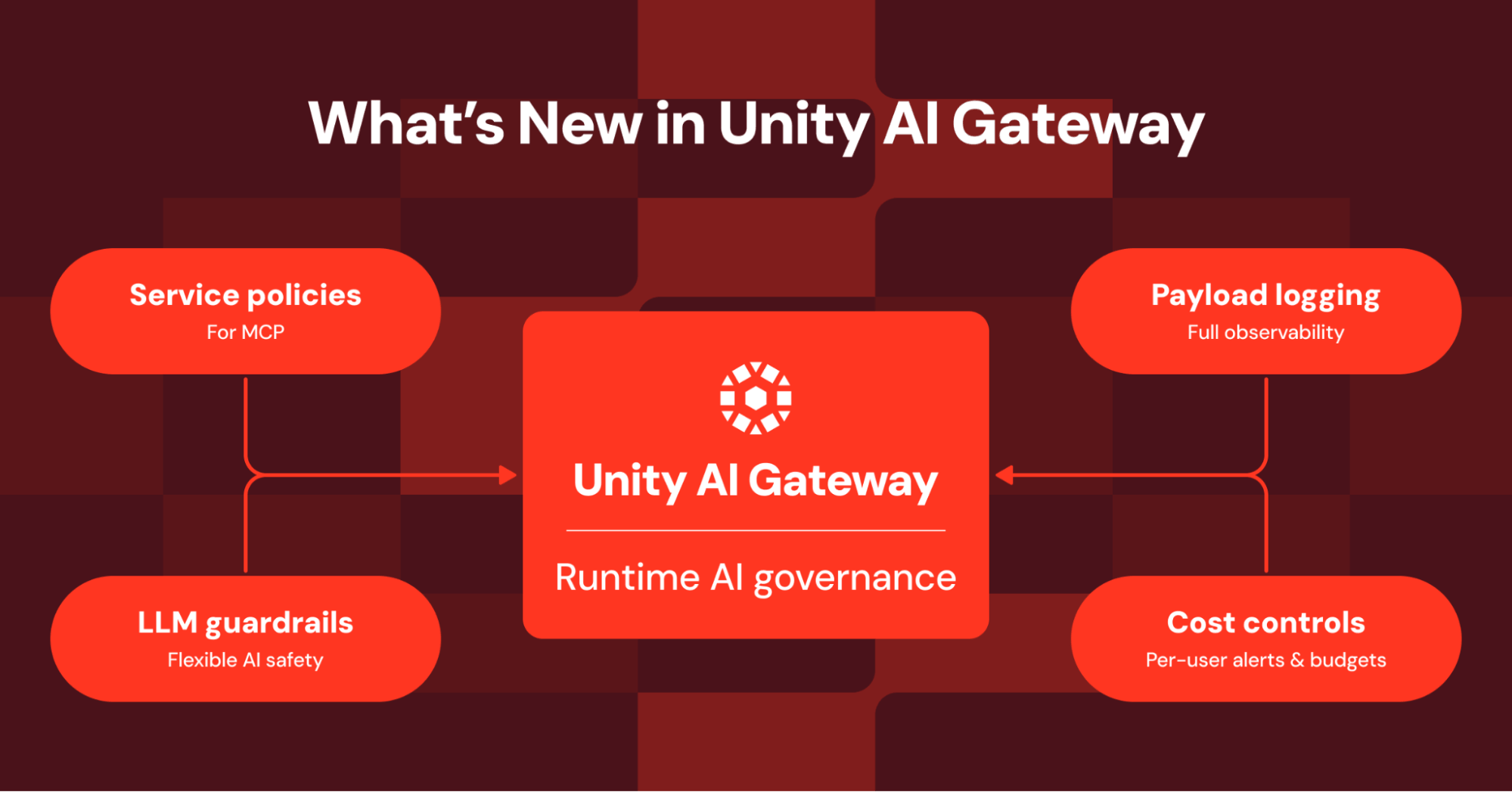
    Databricks has introduced new AI governance features within its Unity AI Gateway, focusing on cost controls and safety. The platform now offers proactive budget alerts at various granularities, including user, workspace, and organizational levels, to manage escalating AI expenses. Additionally, it incorporates LLM-based guardrails for enhanced AI safety and compliance, along with payload logging and service policies to govern agent behavior and tool invocation. AI

    What’s new in Unity AI Gateway: service policies, guardrails, observability, and cost controls for AI agents and MCPs

    IMPACT Enhances enterprise control over AI costs and safety, enabling more confident adoption of AI agents and models.

  17. America's top cyber-defense agency left a GitHub repo open with with passwords, keys, tokens – and incredibly obvious filenames

    America's top cyber-defense agency inadvertently exposed sensitive credentials, including passwords and API keys, through an unsecured GitHub repository. The repository's filenames were highly conspicuous, making the leaked information easily discoverable. This incident highlights a significant security lapse within a government entity responsible for national cybersecurity. AI

    America's top cyber-defense agency left a GitHub repo open with with passwords, keys, tokens – and incredibly obvious filenames

    IMPACT Highlights the ongoing risks of credential exposure in cloud-based development environments, even for security-focused organizations.

  18. LocalSend puts your sneakernet out of business

    AI agents are demonstrating the ability to generate functional code, but a significant challenge remains in their tendency to present incorrect or hallucinated outputs to users. This issue stems from a disconnect between the agent's internal code correction mechanisms and its user-facing output, as seen in the Ark Runtime Kernel example. Experts suggest that current agent governance models are insufficient, and the focus on simple command-line interfaces may overlook the broader potential of AI agents. AI

    LocalSend puts your sneakernet out of business

    IMPACT AI agents can generate code, but issues with output accuracy and governance highlight the need for more robust development and oversight.

  19. "Two weeks ago I wrote about Anthropic silently registering a Native Messaging bridge in seven Chromium-based browsers on every machine where Claude Desktop was

    A security vulnerability has been discovered in Chrome that could allow browsers to be incorporated into botnets without user suspicion. Separately, Anthropic and Google have been found to be installing large AI model files on user machines via Chromium-based browsers without explicit consent. This practice raises significant privacy concerns, particularly regarding data handling and user awareness. AI

    "Two weeks ago I wrote about Anthropic silently registering a Native Messaging bridge in seven Chromium-based browsers on every machine where Claude Desktop was

    IMPACT Concerns over silent AI model installations and browser vulnerabilities highlight risks for users and potential policy implications for AI deployment.

  20. Toyota recalls 44,000 2024 Tundras in the US: Engine has residue risks, third recall for this type of issue

    Toyota is recalling approximately 44,000 units of its 2024 Tundra non-hybrid models in North America and Latin America due to a potential engine issue. The problem stems from residual debris from the manufacturing process, which could lead to engine noise, failure to start, or loss of power while driving. This marks the third such recall for this specific issue, with previous recalls occurring in May 2024 and November 2025. AI

  21. 📰 2026 Microsoft 365 AI Data Leak: How Behavioral Tracking Exposed Process Vulnerabilities Microsoft's 'Stalker AI' feature, touted for secure interactions, is

    Microsoft's 'Stalker AI' feature in Microsoft 365 has revealed process vulnerabilities, despite its end-to-end encryption, leading to a data leak. Separately, OpenAI has launched a new Voice Intelligence API, aiming to enhance customer service, education, and creator platforms with AI-driven audio interactions, reportedly increasing efficiency by 70% in customer service. AI

    📰 2026 Microsoft 365 AI Data Leak: How Behavioral Tracking Exposed Process Vulnerabilities Microsoft's 'Stalker AI' feature, touted for secure interactions, is

    IMPACT New AI voice capabilities could transform customer service and education, while process vulnerabilities highlight the need for robust AI security.