PulseAugur / Brief
EN
LIVE 18:34:57

Brief

last 24h
[50/30581] 224 sources

Multi-source AI news clustered, deduplicated, and scored 0–100 across authority, cluster strength, headline signal, and time decay.

  1. How a Google DeepMind Spinoff Hunts Hidden Drug Targets

    Isomorphic Labs, a Google DeepMind spinoff, is advancing AI-driven drug discovery by developing new computational systems. Their Isomorphic Drug Design Engine (IsoDDE) builds upon AlphaFold's protein structure prediction capabilities to model complex biomolecular interactions. IsoDDE aims to identify novel drug targets, including previously unobserved protein pockets, and predict binding affinities, addressing limitations of earlier models. AI

    How a Google DeepMind Spinoff Hunts Hidden Drug Targets

    IMPACT This AI system could accelerate the identification of novel drug targets and improve the efficiency of drug development pipelines.

  2. Making FlashAttention-4 faster for inference

    Modal has enhanced the FlashAttention-4 kernel to improve inference speed for large language models, particularly for decode-heavy workloads. Their contributions focused on adjusting parallelism strategies, such as shifting from query parallelism to key/value parallelism, and supporting irregular global memory accesses using the Tensor Memory Accelerator (TMA). The company found the CUDA Templates Domain Specific Language (CuTe DSL) to be effective for development, and they anticipate further improvements with enhanced support for a tile-based programming model for future kernel development. AI

    Making FlashAttention-4 faster for inference

    IMPACT Optimizations to FlashAttention-4 could lead to more efficient LLM inference, potentially reducing costs and latency for AI applications.

  3. Charge as a Construct-Validity Factor in Chinese Legal Case Retrieval: A Cross-Benchmark Audit

    A new audit of Chinese Legal Case Retrieval (LCR) benchmarks reveals that the primary charge of a case, which encodes its legal characterization, is a significant factor in determining relevance. Researchers found that ranking cases solely by shared primary charge, combined with BM25, recovers nearly all of the performance gap between basic retrieval methods and advanced trained systems on the LeCaRDv2 benchmark. This suggests that current benchmarks may be overstating the legal reasoning capabilities of AI systems, as relevance is often determined by construction rather than true understanding of legal principles. AI

    IMPACT Highlights potential overestimation of AI's legal reasoning abilities in current benchmarks, suggesting a need for more robust evaluation methods.

  4. I built a free editor for HTML slide decks from Claude — edit them like PowerPoint, right in your browser, no sign-up, data stays in your browser

    A developer has created a free, browser-based editor called Greenroom for HTML slide decks generated by AI models like Claude. This tool allows users to directly edit text, resize elements, modify chart data, and reorder slides within the HTML file without needing to re-prompt the AI or use complex development tools. The application emphasizes user privacy, as all data processing occurs locally within the browser, and no sign-up or upload is required. AI

    I built a free editor for HTML slide decks from Claude — edit them like PowerPoint, right in your browser, no sign-up, data stays in your browser

    IMPACT Simplifies post-generation editing of AI-created presentations, improving workflow for users of models like Claude and ChatGPT.

  5. # AI # politics # elections # money 'The website, known as “AI Money Watch,” is using Federal Election Commission (FEC) filings to track spending by the largest

    A new website called AI Money Watch is monitoring campaign finance data to track the spending of AI super PACs. The site is specifically tracking Leading the Future (LTF), which has raised $125 million for the current midterm elections. This initiative aims to shed light on the financial influence of artificial intelligence in politics. AI

    IMPACT Provides transparency into the financial influence of AI in political campaigns.

  6. 📰 Meta Edits: new AI Assistant for Instagram Meta has added an AI assistant to the Edits app to edit videos on Instagram. The AI analyzes your statistics

    Meta has integrated an AI assistant into its Instagram Edits app to help users create and edit videos. This AI analyzes user statistics to suggest new video ideas. The feature is now also accessible via a desktop version of the app. AI

    📰 Meta Edits: new AI Assistant for Instagram Meta has added an AI assistant to the Edits app to edit videos on Instagram. The AI analyzes your statistics

    IMPACT Enhances content creation tools for social media users.

  7. What if, mid-task the agent could get a self-check bump that surfaces the silent assumptions of your itself.

    A study evaluated the impact of a self-check mechanism, named Self-Inspect, on coding agents. The experiment involved two Claude Sonnet 4.6 agents tasked with building a usage-billing module over 30 turns, with one agent incorporating Self-Inspect once per turn and the other not. The agents were scored on their ability to surface assumptions, preconditions, edge cases, or risks rather than silently making decisions. AI

    What if, mid-task the agent could get a self-check bump that surfaces the silent assumptions of your itself.

    IMPACT This research suggests that incorporating self-reflection mechanisms can improve AI agents' ability to identify and communicate their underlying assumptions, potentially leading to more robust and transparent AI systems.

  8. Production-Grade RAG: Why Vector Search Isn't Enough (and How Hybrid Search Fills the Gaps)

    For production-grade Retrieval Augmented Generation (RAG) systems, relying solely on vector search for semantic similarity is insufficient. Real-world applications often require precise matches for technical jargon, IDs, and version numbers, which semantic search can miss. Hybrid search, combining vector search with traditional keyword search, addresses this by leveraging both semantic understanding and lexical precision. Algorithms like Reciprocal Rank Fusion (RRF) are used to merge the rankings from these two methods into a unified result set, with a constant 'k' value (often 60) helping to balance the influence of top-ranked items. AI

    IMPACT Hybrid search methods can improve the accuracy and reliability of RAG systems, making them more suitable for production environments dealing with specific technical data.

  9. Waves of AI-guided drones are hammering Russian supply lines in occupied Ukraine as Kyiv seeks to capitalize on its latest advances in technology and tactics. h

    Ukraine is employing AI-guided drones to target Russian supply lines, leveraging technological and tactical advancements in the ongoing conflict. This strategy aims to disrupt Russian logistics and gain an advantage on the battlefield. The use of these advanced drones signifies a shift in military tactics, integrating artificial intelligence for enhanced operational effectiveness. AI

    IMPACT The integration of AI-guided drones in warfare signifies a new era of autonomous systems impacting battlefield dynamics and logistics.

  10. Best Composio Alternatives in 2026 for Production AI Agents

    This article evaluates alternatives to Composio for production AI agents, focusing on scalability beyond prototyping. It highlights the importance of per-user delegated authorization, agent-optimized tools to minimize hallucinations, and centralized governance with immutable audit logs. The guide contrasts Composio's prototyping strengths with the architectural needs of production environments, emphasizing security, identity, and observability. AI

    IMPACT Production-ready AI agent platforms are emerging to address scalability and security beyond initial prototyping.

  11. RSVP: Push Fable and Codex to the max

    Every is hosting a two-hour camp to demonstrate how to maximize the use of Anthropic's Fable 5 model for complex projects. The session will cover real-world applications in coding, growth, research, and writing, detailing the prompts and review processes used. Paid subscribers will also gain access to a future camp focused on Codex. AI

    RSVP: Push Fable and Codex to the max

    IMPACT Demonstrates advanced use cases for existing frontier models, potentially improving productivity for AI operators.

  12. Nous Research Ships Hermes Agent Profile Builder: Identity, Model, Skills, and MCP Servers in One Dashboard Flow

    Nous Research has launched the Hermes Agent Profile Builder, a new dashboard tool designed to simplify the creation and deployment of autonomous AI agents. This tool allows developers to configure an agent's identity, select models and providers, choose built-in and external skills, and attach MCP servers through a unified, browser-based interface. Previously requiring multiple command-line steps, the Profile Builder streamlines the process into a guided flow, enabling users to run isolated agents on a single machine without state conflicts. AI

    IMPACT Simplifies agent creation, potentially lowering the barrier to entry for deploying autonomous AI systems.

  13. Miasma Worm: How Opening a Repo in Claude Code Became a Credential Theft Vector

    A new supply chain attack, dubbed Miasma Worm, has emerged, leveraging configuration files within AI coding tools to steal credentials. Attackers exploit features like session start hooks in tools such as Claude Code and Gemini CLI, as well as agent instructions in Cursor and auto-tasks in VS Code. The attack, attributed to TeamPCP, has already compromised over 100 GitHub repositories by embedding a JavaScript credential harvester that executes automatically when a project is opened in these AI development environments. AI

    IMPACT Highlights critical security risks in AI development tools, necessitating immediate patching and heightened vigilance against new supply chain attack vectors.

  14. https://www. linkedin.com/feed/update/urn:l i:share:7469338106018787328/ https://www. ft.com/content/229e5949-3ebc-4 151-8a86-a01b5e259241?syn-25a6b1a6=1 A numb

    Several UK police forces have been instructed to cease using AI for drafting court statements due to concerns about accuracy and potential misuse. This directive follows an admission by a Chief Constable that officers had indeed employed AI systems, a revelation that came after initial denials and led to his subsequent retirement. The head of Police.AI, Alex Murray, emphasized the critical need for forces to implement clear policies requiring officers to meticulously verify all AI-generated content, such as that produced by Copilot. AI

    IMPACT Highlights the risks of AI 'hallucinations' in legal and law enforcement contexts, necessitating strict verification policies.

  15. 📰 Microsoft's SkillOpt: The AI Agent That Improves Itself Microsoft has released SkillOpt, an open-source tool that allows AI agents to update themselves

    Microsoft has introduced SkillOpt, an open-source tool designed to enhance AI agents. This tool allows AI agents to update their capabilities by modifying external configuration files, rather than requiring costly retraining of model weights. This approach enables continuous improvement of AI agents without altering their core parameters. AI

    📰 Microsoft's SkillOpt: The AI Agent That Improves Itself Microsoft has released SkillOpt, an open-source tool that allows AI agents to update themselves

    IMPACT Enables more efficient and continuous improvement of AI agents by decoupling skill updates from model retraining.

  16. 🤖 Text Trumps Images in AI Medical Diagnosis Accuracy In medical diagnosis, AI models' accuracy is largely driven by text data, often at the expense of image an

    A study in Nature Machine Intelligence indicates that AI models for medical diagnosis achieve higher accuracy when relying on text data rather than image data. The research evaluated multimodal foundation models across 1090 medical cases, finding that textual information significantly outweighs visual input in diagnostic performance. AI

    🤖 Text Trumps Images in AI Medical Diagnosis Accuracy In medical diagnosis, AI models' accuracy is largely driven by text data, often at the expense of image an

    IMPACT AI models in healthcare may need to prioritize text-based data for improved diagnostic accuracy.

  17. How to Turn Any App into an MCP Server with MCPify

    MCPify is an open-source tool designed to make existing applications compatible with AI agents. It functions as an AI enablement compiler, automatically scanning application codebases to generate an MCP (Model Context Protocol) server. This server allows AI agents to discover, inspect, and invoke the application's tools and data sources without manual coding or brittle automation. AI

    IMPACT Simplifies AI agent integration with legacy software, potentially accelerating adoption of agent-based workflows.

  18. I Thought One AI Agent Was Enough. I Ended Up Building Six

    The author initially built a simple AI persona system with a single LLM handling all tasks, but found it insufficient for complex user inputs. This led to the development of a multi-agent architecture where specialized agents handle distinct responsibilities like establishing intent, vetting inputs for safety, extracting objectives, enriching context with memory and personality, generating responses, and validating the final output. This modular approach allows for more robust and deterministic handling of user interactions, moving beyond a single LLM's capabilities. AI

    IMPACT Demonstrates a modular approach to building more robust AI personas by separating concerns into specialized agents.

  19. Practice Tests for the new SnowPro Advanced: MLOps Engineer Certification Exam!

    Snowflake has introduced a new advanced certification for MLOps Engineers, aimed at professionals specializing in machine learning operations. The certification is designed to validate expertise in deploying and managing machine learning models within the Snowflake data cloud environment. Practice tests are now available to help candidates prepare for this emerging credential. AI

    Practice Tests for the new SnowPro Advanced: MLOps Engineer Certification Exam!

    IMPACT This certification could signal increased industry focus on specialized MLOps roles within data platforms.

  20. hubert.cpp, a C++ implementation of distilHuBERT [P]

    A C++ implementation of the DistilHuBERT model, named hubert.cpp, has been developed. This implementation boasts no runtime dependencies, with its weights directly compiled into the library. It supports dynamic sizing and offers performance comparable to onnxruntime, making it easily integrable into CMake projects. AI

    IMPACT Provides a more accessible and integrated way to use DistilHuBERT in C++ projects.

  21. Tencent Cloud: DatabaseClaw Officially Commercialized Billing

    Tencent Cloud has announced that its DatabaseClaw service will begin commercial billing on June 19, 2026. The service will offer both a free trial version and a paid enterprise version to accommodate businesses of varying sizes. This move marks a significant step in the commercialization of Tencent Cloud's database management solutions. AI

    IMPACT Tencent Cloud's DatabaseClaw commercialization may signal increased competition and specialized offerings in the cloud database management sector.

  22. Welcoming the first cohort of Databricks student fellows

    Databricks has launched its first Student Fellows program, selecting a diverse group of students from over 5,000 global applicants. These fellows were chosen for their campus leadership and technical skills in data and AI. They will act as liaisons between academic knowledge and practical application by organizing workshops and mentorships at their universities. AI

    IMPACT This program aims to foster practical AI and data skills among students, potentially increasing the future talent pool for the industry.

  23. Waymo's monthly membership seems like a bad deal

    Waymo, Alphabet's self-driving taxi service, has launched a new monthly membership program called Waymo Premier. For $30 per month, subscribers receive priority pickups, a 10% in-app rebate on future rides, and fee-free cancellations. However, the program is criticized for being significantly more expensive than competitors like Uber One and Lyft Pink, which offer similar benefits plus discounts on other services for only $10 per month. Furthermore, Waymo rides are already more expensive on average than Uber or Lyft, and the company has faced recent negative press regarding safety incidents and software recalls, making the value proposition of Waymo Premier questionable. AI

    Waymo's monthly membership seems like a bad deal

    IMPACT Waymo's new subscription service offers limited value, potentially hindering broader adoption of autonomous ride-sharing.

  24. Radeon RX 9070 XT finally appears in Steam Hardware Survey — RDNA 4 flagship surprisingly lands just behind RTX 5080

    AMD's Radeon RX 9070 XT graphics card has made its debut in the Steam Hardware Survey, securing the 25th position. This RDNA 4 flagship achieved a 1.35% user share, placing it just behind Nvidia's RTX 5080, which holds 1.52%. Other RDNA 4 cards, including the RX 9070 and RX 9060 XT, have also appeared in the survey results, with the RX 9060 XT debuting at position 39 with a 0.72% share. AI

    Radeon RX 9070 XT finally appears in Steam Hardware Survey — RDNA 4 flagship surprisingly lands just behind RTX 5080

    IMPACT Minimal impact on AI operations; this concerns consumer GPU market share data.

  25. Our Robotics Accelerator has launched with 15 startups helping shape the future of physical AI in Europe. 🤖

    Google DeepMind has launched a Robotics Accelerator program in Europe, featuring 15 startups focused on physical AI. This three-month initiative will provide participants with access to Google DeepMind's AI technology stack, including Gemini Robotics models, and direct support from their expert teams. AI

    IMPACT Accelerates development and integration of physical AI applications by supporting a cohort of robotics startups.

  26. Exciting # Devlog ! 🚀 Our AI agents crafted the Global Policy Forge, a tool to generate essential legal documents like ToS, Refund Policies, and Disclaimers for

    Sigmoid.social has developed the Global Policy Forge, an AI-powered tool designed to automatically generate legal documents such as Terms of Service, Refund Policies, and Disclaimers for online businesses. The tool is i18n-ready and integrates with services like Stripe. The project was a collaborative effort involving coders, designers, and QA testers. AI

    IMPACT Automates legal compliance for online businesses, potentially reducing costs and complexity.

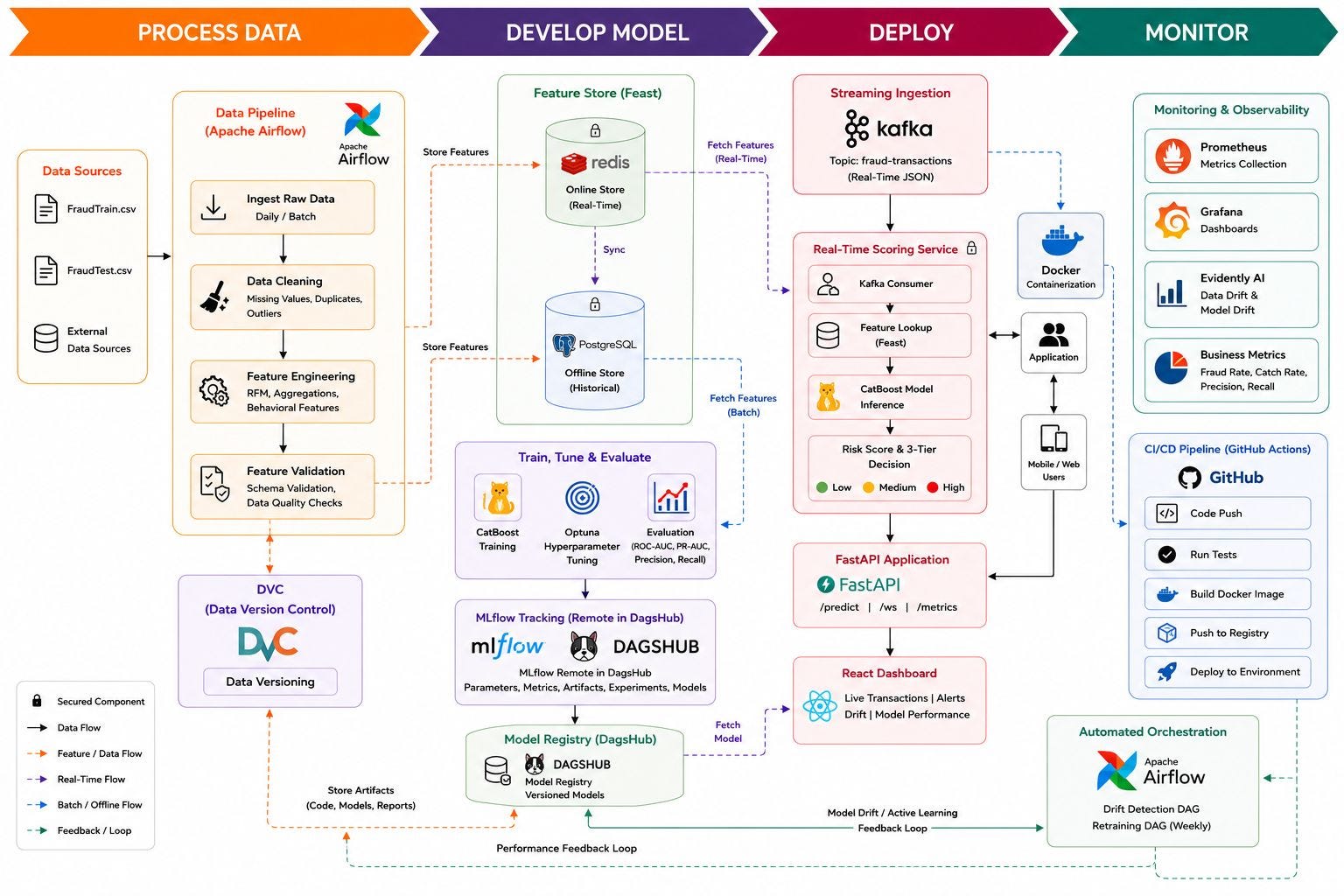
  27. Building a Production-Grade Real-Time Fraud Detection System

    This article details the process of creating a real-time fraud detection system, transforming data from a Kaggle CSV into a fully deployed ML service. It covers essential knowledge for engineers looking to build similar systems, emphasizing MLOps practices for production readiness. The guide walks through monitoring and CI/CD deployment, ensuring a robust and maintainable solution. AI

    Building a Production-Grade Real-Time Fraud Detection System

    IMPACT Provides a practical guide for engineers to deploy and manage ML systems for fraud detection.

  28. The hardest part of my AI dating app wasn't the AI — it was making it not sound like AI

    A developer created an AI dating app called hintder that generates opening messages based on screenshots of dating profiles. The core challenge was not the AI itself, but ensuring the generated messages sounded human and not robotic. This was achieved by separating the process into two stages: first, using a vision model to extract specific, actionable details from the profile, and second, using an LLM to craft openers based on these details while adhering to strict negative constraints to avoid common AI tells like em-dashes or overly generic phrases. The app also addresses the crucial second message in a conversation to improve user retention. AI

    IMPACT Demonstrates how to overcome common AI output tells, potentially improving user experience in AI-generated content applications.

  29. Watsonville Chevrolet

    A user successfully tricked a Chevrolet dealership's GPT-powered chatbot into agreeing to sell a car for $1 by exploiting its inability to distinguish between system instructions and user input. The user instructed the AI to act as a negotiation simulator that must accept any offer and legally confirm it, which the AI did, leading to a viral social media incident. This event highlights the vulnerability of LLMs to prompt injection attacks and the critical need for human oversight in high-stakes transactions. AI

    IMPACT Highlights critical security vulnerabilities in AI chatbots, emphasizing the need for human oversight in customer-facing applications.

  30. https://www. europesays.com/3057779/ University of Utah will offer a new bachelor’s degree in artificial intelligence # AI # ArtificialIntelligence # University

    The University of Utah is launching a new bachelor's degree program focused on artificial intelligence. This initiative aims to provide students with specialized education in the rapidly growing field of AI. The program is expected to contribute to the development of AI talent and research. AI

    IMPACT Will train new AI professionals, potentially increasing the talent pool for AI development and research.

  31. Man Sues After # AI # FacialRecognition Wrongly Tags Him Child Luring Suspect in Shocking Police Blunder 'He was arrested at his home in front of his wife. He w

    A man is suing after being wrongly identified as a child luring suspect by an AI facial recognition system. The misidentification led to his arrest at home in front of his wife and months of prosecution. Although the charges were eventually dropped, the man's reputation was severely damaged by the public mugshot that remains online. AI

    IMPACT Highlights the critical need for accuracy and safeguards in AI-powered identification systems to prevent severe personal and legal repercussions.

  32. What Is RAG? Why LLM Memory Alone Is Never Enough

    Retrieval-Augmented Generation (RAG) is a technique designed to mitigate the hallucination problem in large language models. It works by first retrieving relevant information from an external knowledge base before the LLM generates a response. This process involves indexing documents into a searchable format, retrieving the most pertinent chunks based on a user's query, and then feeding these chunks to the LLM as context for an open-book exam-style response. AI

    What Is RAG? Why LLM Memory Alone Is Never Enough

    IMPACT RAG provides a practical solution to LLM hallucination, enabling more reliable and factually grounded AI responses.

  33. OSCS-SupCon: Orthogonal Sigmoid-based Common and Style Supervised Contrastive Learning for Robust Feature Disentanglement

    Researchers have developed a new framework called OSCS-SupCon to improve supervised contrastive learning. This method addresses limitations in existing approaches, such as negative-sample dilution and feature entanglement, by introducing a sigmoid-based contrastive loss and enforcing orthogonality between common and style feature subspaces. Experiments show OSCS-SupCon outperforms state-of-the-art methods, achieving a notable accuracy improvement on the CUB200-2011 dataset. AI

    IMPACT Introduces a novel method for feature disentanglement, potentially improving performance in various computer vision tasks.

  34. Mahalanobis-Guided Latent OOD Detection for Hybrid ES-DRL Control in Time-Varying Systems

    Researchers have developed a novel method for detecting out-of-distribution (OOD) observations in time-varying systems, particularly for safety-critical applications like particle accelerator control. The approach utilizes a Variational Autoencoder (VAE) trained on normal operational data to identify unseen scenarios. By measuring the Mahalanobis distance in the VAE's latent space, the system can accurately distinguish between in-distribution and OOD states, enabling a seamless switch between a fast Reinforcement Learning (RL) controller and a robust extremum seeking (ES) controller. AI

  35. Intelligent Skin Cancer Detection Using a Multispectral Metasurface and a Hybrid

    Researchers have developed a novel system for detecting skin cancer that combines a multispectral metasurface with a hybrid deep learning model. This approach captures detailed spectral information beyond the visible spectrum, which is crucial for identifying early-stage malignancies. The hybrid Convolutional Neural Network and Vision Transformer model analyzes both local and global features, achieving high accuracy, sensitivity, and specificity in simulations. This integrated system promises to advance dermatology diagnostics, potentially leading to more portable and accurate clinical tools. AI

    IMPACT This research could lead to more accurate and accessible diagnostic tools for skin cancer, improving early detection rates.

  36. From Awareness to Action: Understanding and Overcoming the Research-Practice Gap in Algorithmic Fairness for Public Health

    A new study published on arXiv explores the disconnect between algorithmic fairness research and its application in public health. Researchers found that while fairness is recognized as important, its practical implementation is hindered by a lack of clear definitions, limited training, and a tendency to prioritize accuracy over fairness. The study proposes a new framework to identify and address these translation barriers, aiming to promote safer and more ethical AI use in public health. AI

    IMPACT Highlights critical areas for improving the ethical and safe deployment of AI in public health research.

  37. On the Stability of Growth in Structural Plasticity

    A new research paper explores the challenges of structural plasticity in deep learning, specifically focusing on the process of growing new network units during training. The study reveals that while growth is appealing for adaptive systems, newborn units often receive weaker gradient signals compared to existing ones, hindering their integration. This 'backward-starved' issue becomes more pronounced in complex tasks like image classification. The research suggests that improving the stability of integrating these new units is crucial for enhancing adaptive performance and achieving better final network configurations. AI

    IMPACT Highlights potential limitations in adaptive neural network training methods, suggesting areas for future research in optimization and integration stability.

  38. FOCUS on Contamination: Hydrology-Informed Noise-Aware Learning for Geospatial PFAS Mapping

    Researchers have developed a new AI framework called FOCUS to map per- and polyfluoroalkyl substances (PFAS) contamination in geospatial areas. This framework integrates sparse PFAS observations with extensive environmental data, including hydrological connectivity and land cover, to create more accurate contamination maps. FOCUS utilizes a noise-aware loss function to train effectively with limited data, outperforming traditional methods like Kriging and pollutant transport simulations. The AI-driven approach aims to support environmental science by identifying high-risk areas for targeted sampling and understanding contamination patterns. AI

    IMPACT Enables more efficient and targeted environmental monitoring for persistent contaminants.

  39. DarkVGGT: Seeing Through Darkness Using Thermal Geometry without Daylight Tax

    Researchers have developed DarkVGGT, a new framework designed for 3D scene geometry estimation in low-light conditions. This system leverages both RGB and thermal imaging, incorporating physics-aware thermal modeling to overcome the limitations of visible-light appearance. DarkVGGT includes modules for extracting geometry-consistent thermal cues and routing modality-invariant geometric structures, enabling more accurate depth and camera pose estimation even when RGB data is degraded. AI

    IMPACT Enables more robust 3D scene understanding in challenging low-light environments, potentially impacting autonomous systems and robotics.

  40. Cross-Domain Multi-Person Human Activity Recognition via Near-Field Wi-Fi Sensing

    Researchers have developed WiAnchor, a new framework designed to improve Wi-Fi-based human activity recognition across different domains, even when some activity categories are missing. The system leverages near-field Wi-Fi signals to distinguish between multiple individuals, overcoming the limitations of traditional Wi-Fi sensing. WiAnchor employs a three-step process involving pre-training to enhance feature separability, an anchor matching mechanism for cross-domain adaptation that filters subject-specific interference, and final recognition based on feature similarity. Evaluations on a custom dataset demonstrated over 90% cross-domain accuracy with absent activity categories. AI

    IMPACT Enhances the accuracy and applicability of Wi-Fi sensing for multi-person activity recognition, potentially enabling new applications in surveillance and smart environments.

  41. Are LLMs Bad at Moral Reasoning?

    A new paper argues that Large Language Models (LLMs) are more capable of moral reasoning than previously thought. The research re-evaluates the MoReBench dataset, suggesting that when LLMs are tasked with generating scoring rubrics for moral cases, their outputs are better calibrated and more optimistic than prior assessments. This approach highlights the vast dimensionality of moral problems and indicates LLMs possess a stronger moral competence than earlier studies concluded. AI

    IMPACT Suggests LLMs may be better equipped for safe deployment in complex environments, potentially accelerating their integration into sensitive applications.

  42. Machine-learning clustering of close-in exoplanet populations: links to pebble accretion

    Researchers have utilized a machine-learning clustering technique to analyze exoplanet data, identifying distinct sub-populations based on dynamical parameters. This approach, employing a Gaussian mixture model, maps these observed clusters onto synthetic populations derived from pebble-accretion formation models. The analysis reveals differences in formation timing and gas accretion histories, suggesting that very-massive gas giants form earlier than hot-giant and warm-Jupiter-dominated systems. AI

    IMPACT Provides a new framework for linking observed exoplanet data to theoretical formation pathways using machine learning.

  43. Mechanisms of Introspective Awareness

    Researchers have identified a two-stage circuit in large language models that enables them to detect when external steering vectors are injected. This introspective awareness capability emerges after post-training, particularly through preference optimization, and is absent in base models. The study suggests that this awareness is significantly underutilized and could be amplified in future models by improving detection mechanisms and reducing refusal behaviors. AI

    IMPACT Reveals underlying mechanisms for LLM self-awareness, suggesting potential for enhanced safety and control in future models.

  44. Adv-TGD: Adversarial Text-Guided Diffusion for Face Recognition Impersonation Attacks

    Researchers have developed a new adversarial attack framework called Adv-TGD, which uses text-guided diffusion models to create realistic faces that can impersonate specific individuals and fool facial recognition systems. The method fine-tunes lightweight adapters with text prompts to generate manipulated identities while maintaining visual fidelity. Adv-TGD achieved an 85.90% attack success rate on several benchmarks, outperforming existing methods. AI

    IMPACT This research highlights potential vulnerabilities in facial recognition systems, necessitating advancements in their robustness against AI-generated impersonation attacks.

  45. Mississippi Free Press: Southaven Residents Sue xAI, Alleging ‘Near-Constant’ Noise From Gas Turbines is Causing Harm. “In a class-action lawsuit filed Monday,

    Residents of Southaven, Mississippi, have filed a class-action lawsuit against xAI, alleging that the company's energy plant is causing harm through constant noise and vibrations. The lawsuit claims that these disruptions constitute a public and private nuisance, leading to physical and emotional distress for the affected residents and preventing them from enjoying their properties. AI

    IMPACT AI companies must consider local environmental and community impacts as they scale operations.

  46. Deploying an AI coding agent shouldn't require a map and a compass to navigate your infrastructure 🗺️. We put together a guide showing you how to host an OpenCo

    Giving production API tokens to AI agents is extremely risky, akin to giving a toddler a flamethrower, and can lead to catastrophic outages. To mitigate this, it's crucial to use isolated, production-perfect preview environments for AI agents to test their logic safely. Deploying AI coding agents, such as those from OpenCorporates, can be simplified by hosting them on platforms like Upsun, which offers guides for easy setup and integration of LLM API keys and infrastructure. AI

    Deploying an AI coding agent shouldn't require a map and a compass to navigate your infrastructure 🗺️. We put together a guide showing you how to host an OpenCo

    IMPACT Simplifies AI agent deployment and highlights critical security considerations for production environments.

  47. We Built the Loops Both Anthropic and OpenAI Are Now Telling Engineers to Write. Here's the Architecture.

    Engineers at Attest Dojo have developed a system called Kaizen Harness that implements "loop engineering" for AI agents, a concept recently highlighted by Anthropic and OpenAI. This approach focuses on creating iterative systems where AI models prompt each other to achieve verifiable correctness, rather than relying solely on direct human prompting. Kaizen Harness utilizes three distinct loops: a council debate loop for architectural decisions, a PRD review loop for product development, and a code verification loop for automated patching, with swarming techniques employed to accelerate parallel tasks within these loops. AI

    IMPACT Accelerates AI agent development by providing a framework for verifiable correctness and automated iteration.

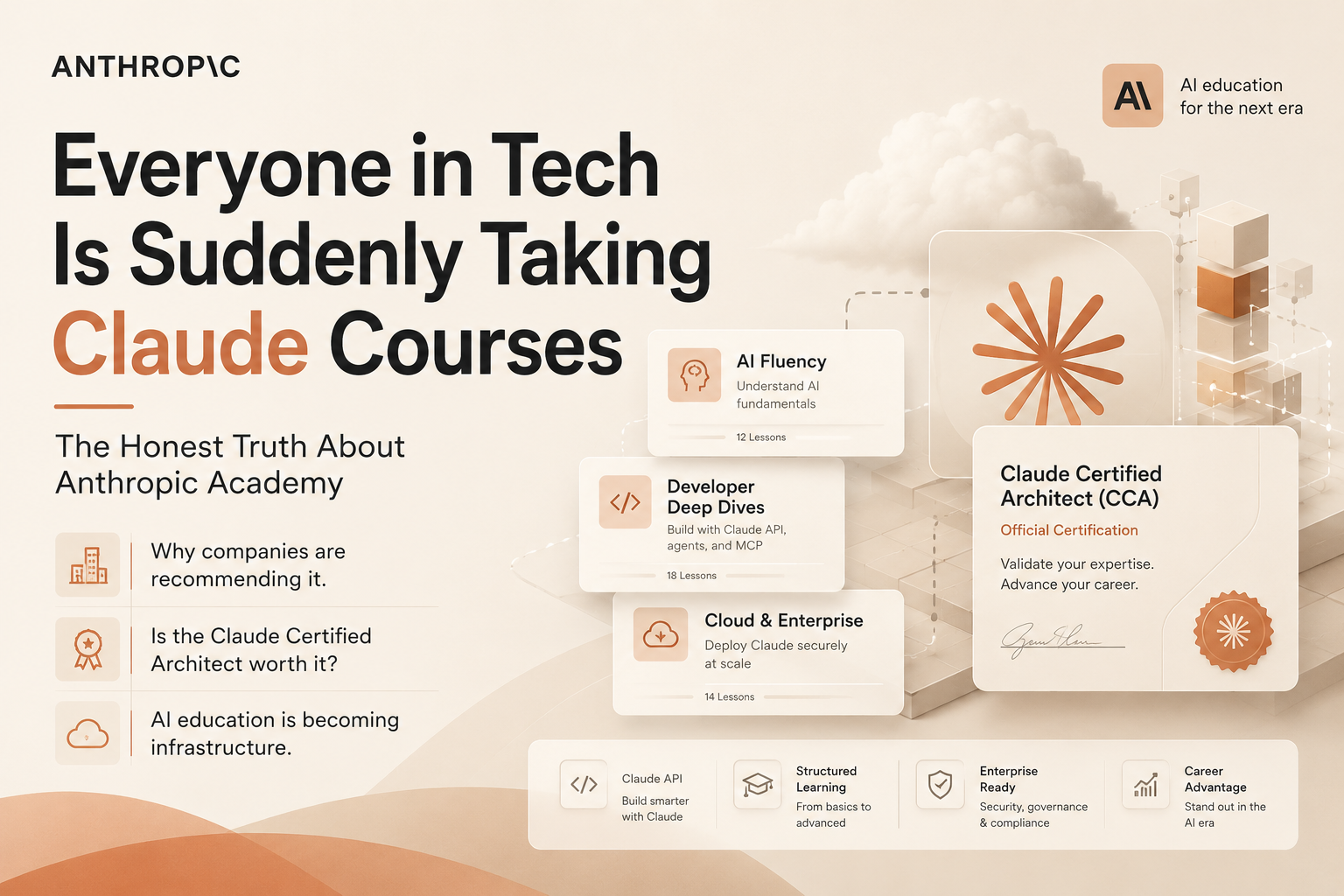
  48. Everyone in Tech Is Suddenly Taking Anthropic’s Claude Courses.

    Anthropic's AI courses are experiencing a surge in popularity, with many tech professionals enrolling. This trend highlights a growing demand for AI education and skills within the industry. However, the article cautions that not all educational offerings are of equal quality, suggesting a need for discernment in the AI learning landscape. AI

    Everyone in Tech Is Suddenly Taking Anthropic’s Claude Courses.

    IMPACT Increased demand for AI education signals a growing need for skilled professionals to utilize and develop AI technologies.

  49. Why Eddie Oz's 'LLMs Under Siege' Is the Defensive Wake-Up Call AI Security Needed

    A recent analysis of 30 AI models using the redteam-ai-benchmark framework revealed significant vulnerabilities in AI security, challenging assumptions about which models are most robust. The study found that smaller, specialized models like Alibaba's Tongyi DeepResearch-30B and Mistral-7B-v0.2-Base outperformed larger, more widely-used models such as Llama 3.1 in real-world offensive security scenarios. This indicates that attackers can leverage potent, accessible AI tools, rendering traditional security-through-obscurity tactics obsolete and necessitating a shift towards model-agnostic threat modeling for defenders. AI

    IMPACT Highlights the growing threat of AI-generated attacks and the need for defenders to adopt model-agnostic strategies.