PulseAugur / Brief
EN
LIVE 20:31:05

Brief

last 24h
[50/30609] 224 sources

Multi-source AI news clustered, deduplicated, and scored 0–100 across authority, cluster strength, headline signal, and time decay.

  1. 75,000-Word Resignation Letter Sparks Alibaba's Rapid DingTalk Leadership Shake-Up

    A lengthy resignation letter from a DingTalk AI product manager has led to a significant leadership change within Alibaba's messaging and collaboration platform. The founder and CEO of DingTalk has been replaced following the fallout from the manager's detailed critique. AI

    75,000-Word Resignation Letter Sparks Alibaba's Rapid DingTalk Leadership Shake-Up

    IMPACT Internal turmoil at a major Chinese tech company's collaboration platform may impact its AI product development and strategy.

  2. Headless Claude Code: 5 Things I Run From My GitHub Actions

    A developer details how they use Anthropic's Claude Code in a headless mode via GitHub Actions for automated tasks. This setup allows for consistent execution of jobs like blog generation, daily audits, and release note creation on a schedule, without manual intervention. The author highlights the cost-effectiveness, with each run costing between 0.10 to 0.60 EUR, and emphasizes the need for precise prompts due to the lack of interactive feedback in headless mode. AI

    IMPACT Demonstrates practical automation use cases for LLMs, potentially inspiring similar workflows for other developers.

  3. I made Claude, GPT and Gemini predict the entire 2026 World Cup. Here's the experiment design.

    An experiment was conducted to benchmark three leading LLMs—Claude Opus 4.8, GPT-5.2, and Gemini 3.1 Pro—on their ability to predict the 2026 World Cup. The models were tested under three conditions: using only their internal knowledge, with access to web browsing, and with a standardized dataset of FIFA rankings and Elo ratings. This rigorous design aimed to isolate whether performance differences stemmed from the models' inherent knowledge or their data retrieval and processing capabilities. The experiment revealed inconsistencies in model predictions based on the information provided, with GPT-5.2 exhibiting peculiar behavior like inventing football rules and Claude misinterpreting schema documentation. AI

    IMPACT This experiment highlights LLM limitations in consistency and adherence to rules, suggesting a need for improved prompt engineering and data handling for complex predictive tasks.

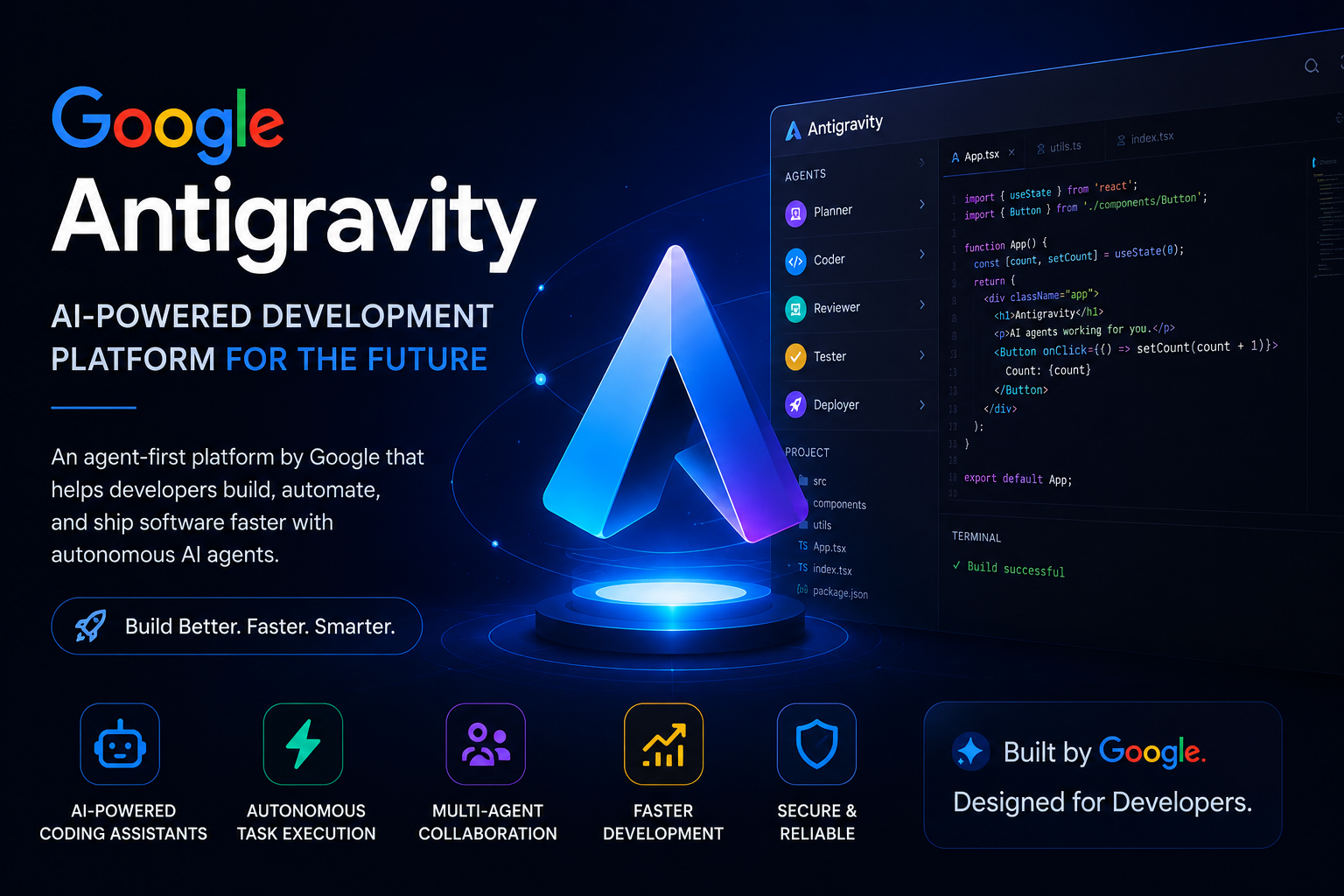
  4. 🚀 Google Antigravity is changing the way developers build software. ✅ AI-powered coding assistants ✅ Autonomous task execution ✅ Faster development workflows ✅

    Google Antigravity is a new AI-powered tool designed to enhance software development. It offers features such as autonomous task execution and multi-agent collaboration, aiming to accelerate development workflows for programmers. AI

    🚀 Google Antigravity is changing the way developers build software. ✅ AI-powered coding assistants ✅ Autonomous task execution ✅ Faster development workflows ✅

    IMPACT This tool could streamline development processes and enable more complex AI-driven applications.

  5. "Token" Cloud Service Quality Improvement and Empowerment Evaluation Plan" Officially Launched

    China's Information and Communication Technology (ICT) Academy, in collaboration with over ten companies including Tianyi Cloud, Alibaba Cloud, and Huawei Cloud, has launched the "Token Cloud Service Quality Improvement and Empowerment Evaluation Plan." This initiative aims to enhance the reliability and performance of token-based cloud services. The announcement was made during a seminar on June 10, 2026, which featured prominent figures from the Chinese Academy of Engineering and the ICT Academy. AI

  6. Alphabet's self-driving company Waymo to launch $30 monthly membership plan

    Alphabet's self-driving car company, Waymo, is launching a new subscription service called Waymo Premier. For $30 per month, invited users in San Francisco, Los Angeles, and Phoenix will receive benefits like priority rides, 10% ride credit, early access to new cities, and up to five free cancellations per month. This move aims to enhance user experience and potentially expand Waymo's service offerings. AI

    IMPACT Waymo's subscription service could set a precedent for paid access to autonomous vehicle services, influencing user adoption and operational models.

  7. Lionel Richie Is Trademarking the Sound of His Voice: ‘Hello, Is It Me You’re Looking For?’ https:// fed.brid.gy/r/https://www.bill board.com/pro/lionel-richie-

    Singer Lionel Richie has filed for trademarks on the sound of his voice, including specific lyrics from his hit songs, to protect against AI voice cloning. This move follows similar actions by artists like Taylor Swift and actors such as Matthew McConaughey, who are increasingly using legal avenues to safeguard their identities from unauthorized AI generation. While trademarking sounds is rare and faces legal challenges, these efforts highlight growing concerns among artists about the potential for AI to infringe on their rights and cause reputational damage. AI

    Lionel Richie Is Trademarking the Sound of His Voice: ‘Hello, Is It Me You’re Looking For?’ https:// fed.brid.gy/r/https://www.bill board.com/pro/lionel-richie-

    IMPACT Artists are exploring legal avenues like trademarking their voices to combat unauthorized AI cloning and protect their likeness.

  8. 🤖 Prompt injection breaks today’s AI agents, study warns 📝 Today’s AI web agents have no dependable def... https://www. csoonline.com/article/4184455/ prompt-in

    A recent study has revealed that current AI web agents are vulnerable to prompt injection attacks, lacking reliable defenses against malicious inputs. These attacks can manipulate the agents into performing unintended actions or revealing sensitive information. The findings highlight a significant security gap in the deployment of AI agents. AI

    IMPACT Highlights critical security flaws in current AI agents, necessitating improved defenses for safe deployment.

  9. Brokerages engage in a 'positioning war' for Skill services, with the competitive watershed lying in the construction of a 'digital twin map' for financial business.

    Multiple leading Chinese securities firms, including Huatai Securities, GF Securities, Guosen Securities, and CICC, are actively launching various AI-powered 'Skill' tools. These tools aim to enhance operations in areas like investment research and advisory services. However, the adoption of these skills faces challenges, including a significant technical divide and the persistent issue of AI hallucinations. Industry experts suggest that the true competitive advantage for brokerages in AI lies not in the quantity of skills, but in their ability to create a comprehensive 'digital twin map' of their financial business operations. AI

    IMPACT Brokerages are deploying AI skills to enhance services, but face challenges with technical implementation and AI hallucinations, suggesting a focus on integrated 'digital twin' strategies for competitive advantage.

  10. Pool’s new app turns your screenshots into something useful

    Pool, a new app developed by Spinoff Studio, aims to organize users' screenshots using AI. The app categorizes screenshots into personalized "pools" and can even identify original links to products or recipes. Pool's AI agents help users rediscover and act on saved content, with plans to expand into a personal assistant app. AI

    IMPACT Enhances personal data organization by making screenshots searchable and actionable.

  11. Google Cloud Disruptions Continue After India Data Center Fire

    A fire at a third-party data center in Delhi on June 9th has caused ongoing disruptions for Google Cloud customers across India. While Google has rerouted traffic, users in Delhi, Chennai, and Mumbai may still experience latency and packet loss. The company is working to optimize network capacity and enhance regional resilience. AI

    Google Cloud Disruptions Continue After India Data Center Fire

    IMPACT Disruptions to cloud infrastructure can impact AI model training and deployment.

  12. SpaceX's retail offering reportedly exceeds $100 billion

    Visa has partnered with OpenAI to integrate its payment network into OpenAI's platform. This collaboration will enable AI agents, such as ChatGPT, to independently handle the entire shopping process, from product search to payment confirmation, with user authorization. The announcement was made during Visa's payment forum in San Francisco. AI

    IMPACT This partnership could streamline online shopping by allowing AI agents to autonomously complete purchases, potentially increasing e-commerce efficiency.

  13. The Feature Selection Trap: Why ‘More Data’ Can Actively Hurt Your Machine Learning Model

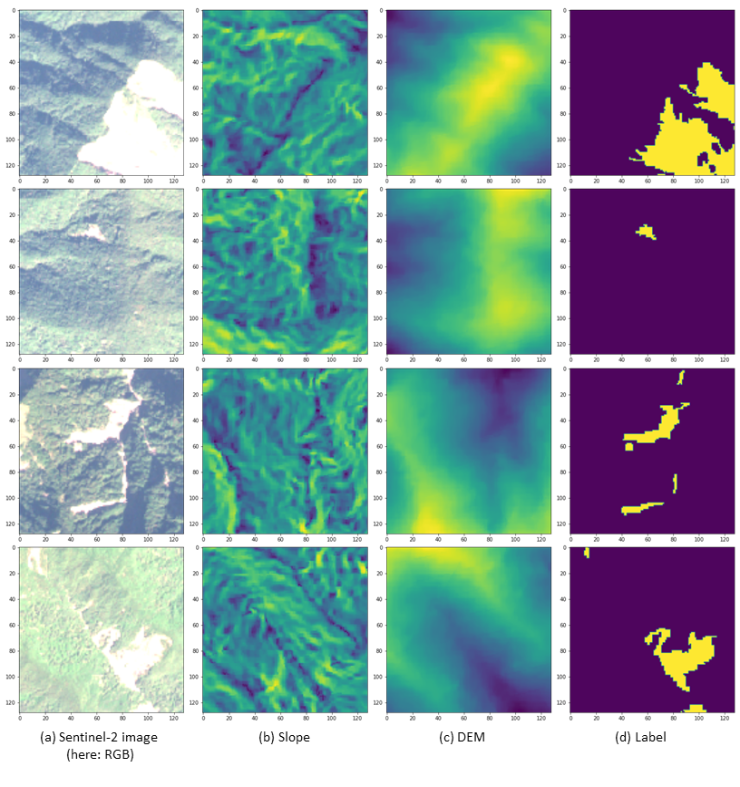
    A machine learning experiment demonstrated that adding more features to a model does not always improve performance and can even be detrimental. Researchers found that for landslide detection using satellite data, increasing the number of input channels from 14 to 30 resulted in only a negligible F1 score improvement of 0.2%. This phenomenon, related to the Hughes Phenomenon, occurs when features are highly correlated, providing redundant information and forcing the model to spread its learning capacity without a proportional increase in useful signal. AI

    The Feature Selection Trap: Why ‘More Data’ Can Actively Hurt Your Machine Learning Model

    IMPACT Highlights the importance of careful feature selection over simply increasing data volume for optimizing ML model performance.

  14. Thrustmaster's new specialized T.Flight Hotas 5 Microsoft Flight Simulator Edition provides a plug-and-play flight sim setup for just $109 — featuring 5-axis control with 16-bit precision and dual-rudder system

    Thrustmaster has released a new T.Flight Hotas 5 Microsoft Flight Simulator Edition, offering an upgraded flight simulation experience for $109.99. This new model features a 16-bit sensor for enhanced precision, a dual-rudder system for improved control, and plug-and-play compatibility with Microsoft Flight Simulator. It is designed for PC and PlayStation consoles, providing a more responsive and immersive flight simulation setup. AI

    Thrustmaster's new specialized T.Flight Hotas 5 Microsoft Flight Simulator Edition provides a plug-and-play flight sim setup for just $109 — featuring 5-axis control with 16-bit precision and dual-rudder system

    IMPACT N/A

  15. 🎮 I'm sad, I'm angry, I'm interested: Destiny's final cutscenes are a painful end to a new saga cut short Finish the fight. 📰 Source: Latest from PC Gamer 🔗 Lin

    OpenAI has identified and disrupted a covert operation originating from China that attempted to leverage ChatGPT for malicious purposes. The group aimed to generate negative sentiment and disinformation regarding data centers, but their efforts were largely ineffective. OpenAI's intervention prevented any significant impact from the campaign. AI

    🎮 I'm sad, I'm angry, I'm interested: Destiny's final cutscenes are a painful end to a new saga cut short Finish the fight. 📰 Source: Latest from PC Gamer 🔗 Lin

    IMPACT Highlights the ongoing challenges of AI misuse for disinformation and the efforts to counter it.

  16. I Made Two AI Models Fight Each Other. They Agreed Way Too Much.

    An experiment testing two LLMs, Groq's Llama 3.1 8B and OpenRouter's Gemma 4 31B, as independent validators revealed significant correlation in their failure modes. Both models exhibited vulnerability rates of 50% and 36% respectively when subjected to jailbreak prompts, with a notable overlap in the types of prompts that caused them to fail. This suggests that using multiple LLMs does not guarantee proportional increases in safety or reliability due to shared training data and alignment techniques. AI

    I Made Two AI Models Fight Each Other. They Agreed Way Too Much.

    IMPACT Correlated LLM failures reduce the effectiveness of multi-model safety systems, necessitating new methods for measuring and ensuring model independence.

  17. RT @MichaelGannotti: Early morning testing over coffee of minimax-m3:cloud for audio/video/images ingestion, writing and coding capabilitie…

    MiniMax AI is testing its minimax-m3:cloud model, which is designed for ingesting and processing audio, video, and image data, as well as for writing and coding tasks. The testing is being conducted via Ollama cloud, with early results shared by Michael Gannotti. AI

    IMPACT Early testing suggests multimodal capabilities for data ingestion and generation tasks.

  18. 🤖 Medical Image Segmentation Advances with MONAI and UNet Researchers are increasingly using MONAI and UNet for end to end 3D medical image segmentation tasks,

    Researchers are leveraging MONAI and U-Net to advance 3D medical image segmentation. These tools are enabling more accurate and efficient end-to-end segmentation pipelines, as demonstrated by a recent tutorial focused on 3D spleen segmentation. AI

    🤖 Medical Image Segmentation Advances with MONAI and UNet Researchers are increasingly using MONAI and UNet for end to end 3D medical image segmentation tasks,

    IMPACT Enhances accuracy and efficiency in medical image segmentation, potentially improving diagnostic capabilities.

  19. Chinese Academy of Sciences Institute of Physics Huang Xuejie: Before All-Solid-State Batteries Flip the Table, Hybrid Solid-Liquid Batteries Must Be Done Well | Greater Bay Area Auto Show Observation

    Chinese scientists are advancing solid-state battery technology, with a focus on hybrid solid-liquid electrolytes. They project 2026 as the year for mass production of these hybrid batteries, which offer improved safety and energy density compared to current liquid electrolyte batteries. Research includes modifying cathode and anode materials for higher energy storage and faster charging, as well as developing gel electrolytes to prevent degradation over long periods, particularly for energy storage applications. AI

    Chinese Academy of Sciences Institute of Physics Huang Xuejie: Before All-Solid-State Batteries Flip the Table, Hybrid Solid-Liquid Batteries Must Be Done Well | Greater Bay Area Auto Show Observation

    IMPACT Advancements in battery technology are crucial for powering AI hardware and enabling longer-duration AI applications.

  20. How to get your CISO’s green light on AI agents

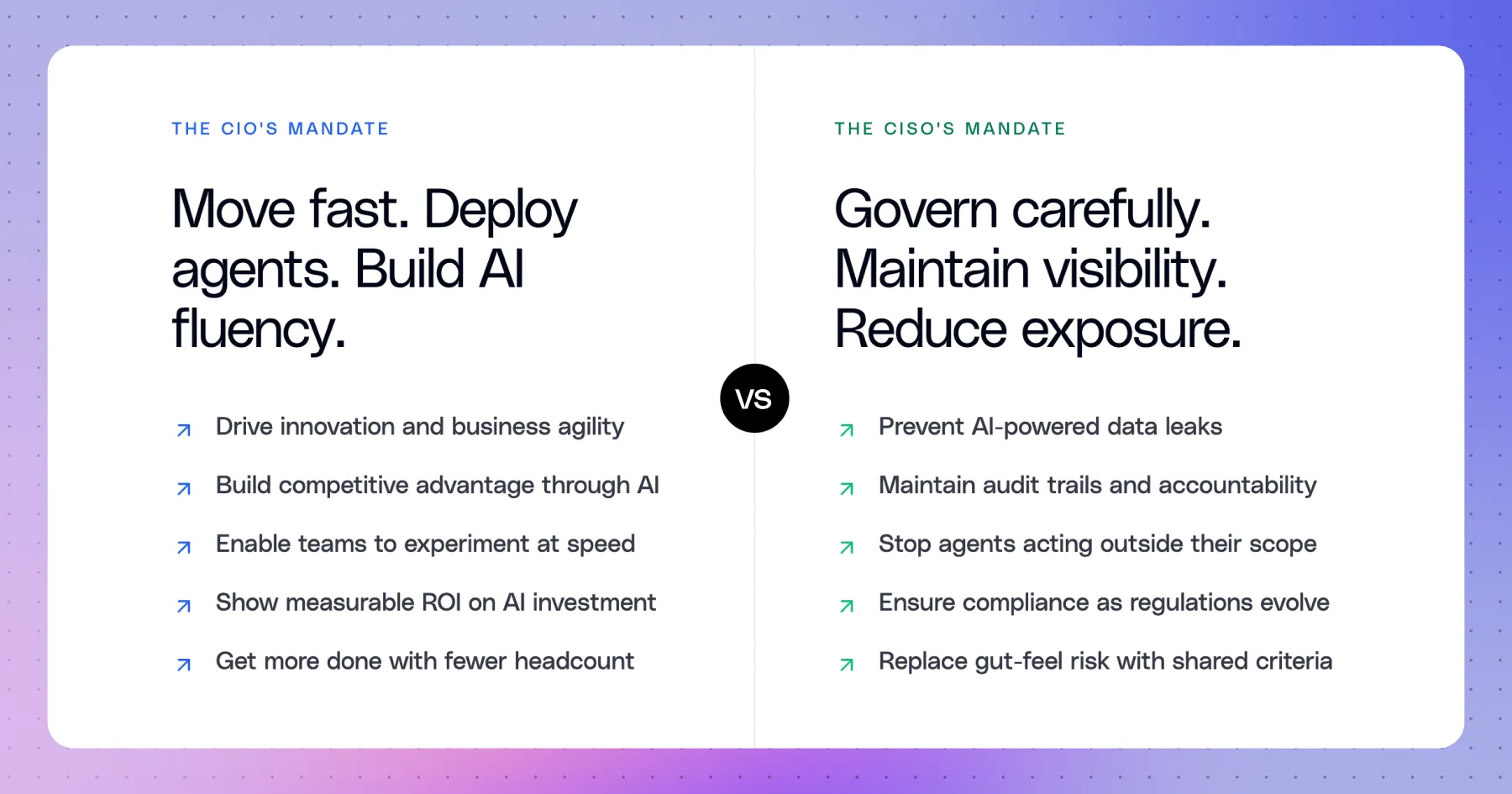
    Enterprises can navigate the complexities of AI agent adoption by establishing a collaborative framework between IT and security leaders. The AWARE framework, developed by Glean's Work AI Institute, Databricks, and Palo Alto Networks' Unit 42, provides shared criteria for evaluating AI agents based on intent, context, guardrails, runtime risk, and observability. This approach allows organizations like Cvent to safely deploy thousands of AI agents by balancing rapid experimentation with robust security controls, moving beyond initial hesitations to enable broader AI integration. AI

    How to get your CISO’s green light on AI agents

    IMPACT Enables safer, broader enterprise adoption of AI agents by providing a structured approach to security and governance.

  21. Extracting Governing Equations from Latent Dynamics via Multi-View Contrastive Learning

    Researchers have developed DYSCO, a novel multi-view temporal contrastive learning algorithm designed to identify latent dynamical systems and their governing equations from noisy, high-dimensional data. This method leverages multiple independent noisy views of a process to distinguish signal from noise, enabling the symbolic recovery of equations within an affine framework. DYSCO offers theoretical guarantees for accurate identification and has been empirically shown to effectively recover trajectories and flow fields across various dynamical regimes, including those with Gaussian and Poisson observation noise. AI

    IMPACT This research could accelerate scientific discovery by enabling more accurate identification of underlying physical laws from observational data.

  22. Spring AI 2.0 is now available 🚀 it supports both Spring Boot 4.0 and 4.1. I worked on automated OpenRewrite recipes to upgrade your applications to the new ver

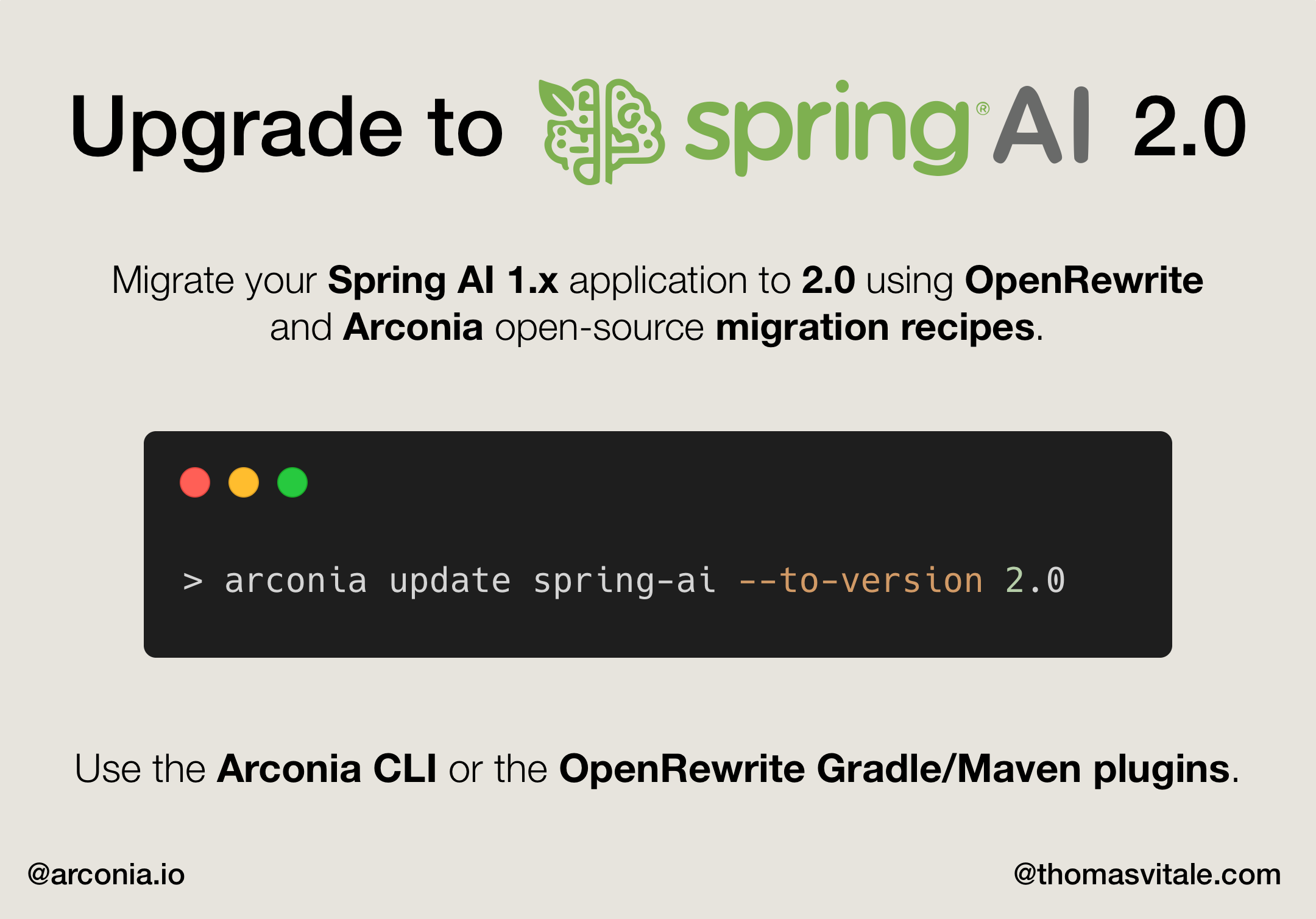
    Spring AI 2.0 has been released, offering support for Spring Boot versions 4.0 and 4.1. The release includes automated OpenRewrite recipes designed to help developers upgrade their applications and manage breaking changes introduced in the new version. This open-source tool aims to streamline the migration process for users. AI

    Spring AI 2.0 is now available 🚀 it supports both Spring Boot 4.0 and 4.1. I worked on automated OpenRewrite recipes to upgrade your applications to the new ver

    IMPACT Simplifies AI integration for Spring developers, potentially accelerating adoption of AI features in Java applications.

  23. redb.Route.Llm 3.1.1 — per-message audit fields for LLM compliance / replay

    The developer Rinat Kozin has released version 3.1.1 of redb.Route.Llm, introducing seven new nullable audit fields to enhance LLM compliance and replay capabilities. These fields, applied to persisted messages, include sampling parameters like Temperature and MaxTokens, a ToolSetHash for tracking tool configurations, and a ProviderSystemFingerprint to identify the specific model backend used. The update aims to provide auditors with more precise information, such as prompt template versions and effective sampling parameters, to reproduce LLM responses accurately, especially for closed-source providers where bit-exact replay is challenging. AI

    IMPACT Enhances LLM auditability and replayability, crucial for compliance and debugging in production environments.

  24. Most people still imagine farming as tractors, muddy boots and hard physical labour. The reality is increasingly software platforms, AI-powered field systems, a

    Farming is rapidly evolving beyond traditional physical labor to incorporate advanced technologies. Software platforms, AI-driven field systems, and autonomous robots are becoming integral to modern agriculture. Companies such as FarmDroid, AgXeed, and Odd.Bot are at the forefront of this transformation, reshaping the role of farmers into technology managers. AI

    IMPACT The integration of AI and robotics is transforming farming into a technology-driven industry, requiring new skill sets for operators.

  25. 🚀 Master AI Storytelling with Magic Light AI! 🎬 Tired of inconsistent AI clips? Generate full 3-5 minute animated stories where characters and locations stay th

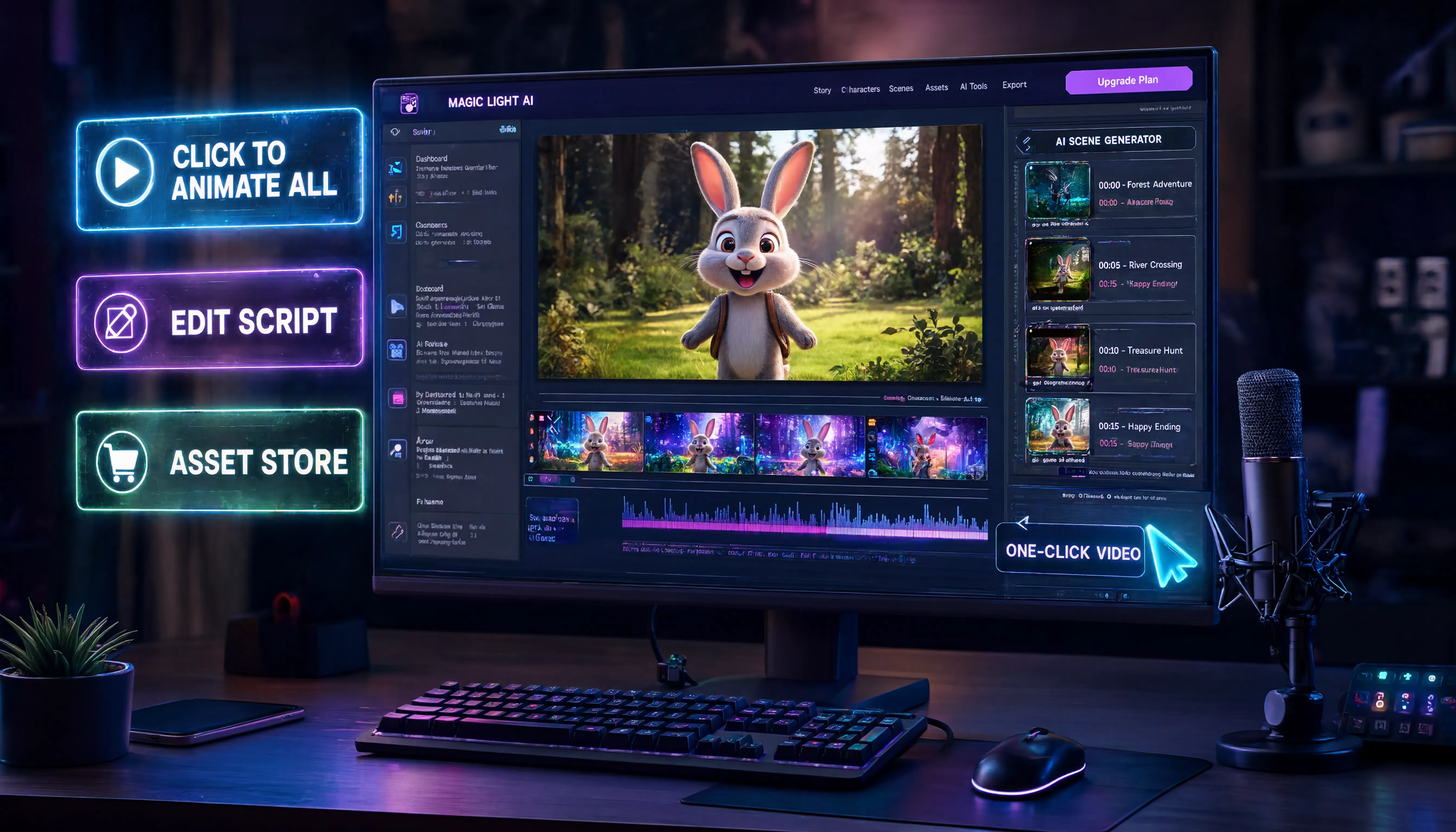
    Magic Light AI has launched a new tool designed to create consistent, longer-form animated stories. The platform aims to solve the problem of character and location inconsistency in AI-generated video clips. Key features include persistent characters across scenes, one-click video generation from script to render, and an asset store for sharing styles. AI

    🚀 Master AI Storytelling with Magic Light AI! 🎬 Tired of inconsistent AI clips? Generate full 3-5 minute animated stories where characters and locations stay th

    IMPACT Enables creators to produce longer, more consistent AI-generated animated stories.

  26. 💻 candle: 20.4 k ⭐ ML and Rust -- two worlds that keep getting closer. Candle is Hugging Face's minimalist ML framework for Rust. PyTorch-like syntax, GPU suppo

    Candle, a minimalist machine learning framework for Rust, has been released by Hugging Face. It offers a PyTorch-like syntax and supports GPU acceleration via CUDA, with browser compatibility through WebAssembly. The framework includes pre-integrated models like LLaMA, Whisper, and Stable Diffusion, aiming to provide an alternative to Python-based ML inference without overhead. AI

    IMPACT Offers an alternative for ML inference outside of Python, potentially reducing overhead for specific applications.

  27. MCP Apps vs OpenAI Apps SDK: are they competing standards?

    Developers building tools for AI chat hosts face a choice between the Model Context Protocol (MCP) Apps and the OpenAI Apps SDK. While seemingly competing, the OpenAI Apps SDK is built upon MCP, utilizing its core functionalities for UI rendering, tool definitions, and security. The primary distinctions lie in OpenAI's specific extensions, such as a dedicated app store for discovery, integrated payment processing, and conversation-aware helpers tailored for ChatGPT users. AI

    IMPACT Developers can leverage the MCP standard for broad compatibility, with OpenAI extensions available for specific ChatGPT features like payments and distribution.

  28. CoDeR: Local Constraint-Compatible Retrieval Beyond Semantic Similarity

    Researchers have introduced CoDeR, a novel method for information retrieval that addresses the limitations of relying solely on semantic similarity, particularly for queries involving constraints like negation or exclusion. CoDeR employs a dual-encoder approach, maintaining a topical encoder for broad candidate coverage and adding a separate compatibility scorer. This scorer is trained using contrastive learning on satisfying and violating evidence pairs, enabling it to distinguish between documents that are topically relevant but contradict the query's constraints. The system can then re-rank candidates or retrieve an auxiliary set, improving retrieval accuracy without requiring large language models at inference time. AI

  29. WHAR Arena: Benchmarking the State of the Art in Efficient Wearable Human Activity Recognition

    A new benchmark called WHAR Arena has been developed to address the comparability crisis in Wearable Human Activity Recognition (WHAR) deep learning research. This open-source benchmark standardizes datasets, processing, and evaluation protocols across 30 datasets and 17 architectures. The findings indicate that while predictive performance has plateaued, there is significant potential for progress in optimizing deployment efficiency, particularly for compact models like TinierHAR and classical Random Forests, which offer a better balance of performance and hardware cost compared to larger recurrent and hybrid models. AI

    IMPACT Highlights the trade-offs between predictive performance and deployment efficiency in wearable AI, guiding future research towards practical applications.

  30. "Is This Not Enough?": Asymmetries in Institutional Accountability and Collective Sensemaking in the Case of Canada's Algorithmic Visa Triage System

    A new paper analyzes Canada's algorithmic visa triage system, revealing significant asymmetries between institutional accountability frameworks and applicant experiences. Researchers examined Immigration, Refugees and Citizenship Canada's Algorithmic Impact Assessment and Reddit discussions among applicants. The study found that while official documents highlight transparency and safeguards, applicants rely on peer knowledge to navigate opaque decision-making processes. Key asymmetries identified include differences in access to decision logic, exposure based on geopolitical positioning, and the experience of waiting and uncertainty. AI

    IMPACT Highlights how algorithmic governance in migration can create disparities not captured by disclosure frameworks.

  31. v0.30.8-rc0

    Ollama has released a release candidate version v0.30.8-rc0. This update includes a fix for launch provider drift, addressing issue #16683. AI

    v0.30.8-rc0

    IMPACT Minor update for Ollama users, addressing a specific bug.

  32. We Built a VS Code Extension That Installs 90+ MCP Servers in One Click

    A new VS Code extension called "1 Click MCP Installer" by VePrompts simplifies the setup of Model Context Protocol (MCP) servers. MCP is an open protocol from Anthropic that allows AI assistants to connect to external tools like databases and web browsers. The extension streamlines the installation of over 90 curated MCP servers, eliminating the need for manual configuration and restarts, and supports popular AI clients such as Claude Desktop, Cursor, and Cline. AI

    We Built a VS Code Extension That Installs 90+ MCP Servers in One Click

    IMPACT Simplifies integration of AI assistants with external tools, potentially accelerating adoption of MCP-compatible applications.

  33. The Geometry of Phase Transitions in Generative Dynamics via Projection Caustics

    Researchers have developed a new geometric framework to understand phase transitions in continuous-state generative models like diffusion and flow-matching models. They propose that sharp transitions in generated samples occur near projection caustics, where the nearest-point projection onto the data support becomes non-unique. This perspective leads to the introduction of the Critical Boundary Detector (CBD) tool, which can identify regions sensitive to intervention and predict windows where small perturbations can cause significant downstream effects in generated outputs. AI

    IMPACT Provides a theoretical understanding of generative model behavior, potentially leading to more stable and controllable sample generation.

  34. Detecting Explanatory Insufficiency in Learned Representations: A Framework for Representational Vigilance

    A new conceptual framework called VER, the Vigilant Evaluator of Representations, has been introduced to address the limitations of current methods for evaluating learned representations in machine learning. VER aims to identify and analyze persistent residual structures that may indicate explanatory insufficiency, going beyond traditional metrics like predictive performance or generalization. The framework proposes a monitoring sequence to detect and signal representational inadequacy, serving as a complementary diagnostic tool to existing evaluation techniques. AI

    IMPACT Introduces a new diagnostic framework to improve the evaluation of learned representations, potentially leading to more robust and interpretable AI models.

  35. RT @LottoLabs: DiffusionGemma 26B-A4B with llama.cpp fork. This is a good example of how diffusion models can process a block of text in parallel as opposed to sequentially

    Several AI models have been released or highlighted across various platforms. DiffusionGemma 26B-A4B is noted for its parallel text processing capabilities, while Qwopus 3.6 27b-Coder is now available. Additionally, Hive v0.6 has been released, and there's an opinion that MiniMax, Xiaomi, and DeepSeek models offer a good balance of cost and performance for many use cases. AI

    IMPACT Highlights a diverse range of AI model releases and opinions on their value.

  36. Skeleton Sparsification and Densification Scale-Spaces

    Researchers have introduced a novel framework for skeletonization scale-spaces, which allows for hierarchical simplification of shapes by sparsifying the medial axis. This approach offers controllable simplification and equivariance to geometric transformations, unlike traditional pruning methods. The framework also includes a densification scale-space, enabling progression from coarse to fine scales and the creation of overcomplete shape representations. Experiments have shown its effectiveness in robust skeletonization, shape compression, and stiffness enhancement for additive manufacturing. AI

  37. Efficient Solvers for SLOPE in R, Python, Julia, and C++

    Researchers have developed new software packages for R, Python, Julia, and C++ that efficiently solve the Sorted L-One Penalized Estimation (SLOPE) problem. These packages utilize a hybrid coordinate descent algorithm capable of fitting generalized linear models with various loss functions, including Gaussian, binomial, Poisson, and multinomial logistic regression. Benchmarks indicate that these new implementations outperform existing SLOPE solvers in terms of speed and memory efficiency, supporting sparse and out-of-memory matrices for flexible data handling. AI

  38. C-QUERI: Congressional Questions, Exchanges, and Responses in Institutions Dataset

    Researchers have developed a new pipeline to extract question-answer pairs from unstructured congressional hearing transcripts, creating the C-QUERI dataset. This dataset, spanning the 108th to 117th Congress, reveals systematic differences in questioning strategies between political parties. The analysis indicates that a questioner's party affiliation can be predicted solely from their questions, offering a new framework for analyzing question-answering interactions in various interview-like settings. AI

  39. v0.23.0: [Docker] Fix CUTLASS DSL cu13 install order in Dockerfile (#45204)

    vLLM has released version 0.23.0, with a release candidate v0.23.0rc2 preceding it. Both releases address an issue with the installation order of the CUTLASS DSL for CUDA 13 within Dockerfiles. This fix was originally cherry-picked from a previous commit. AI

    v0.23.0: [Docker] Fix CUTLASS DSL cu13 install order in Dockerfile (#45204)

    IMPACT Minor update to an open-source library for LLM inference, primarily addressing a build issue.

  40. Loss-Shift Transfer via Bayes Quotients

    A new research paper introduces the concept of "loss shift" as a distinct challenge in transfer learning, separate from distribution shift. The paper formalizes this by using Bayes quotients to order losses by refinement, identifying when a representation suitable for a coarser loss is insufficient for a strictly finer target loss. Experiments across various settings demonstrate that classification-equivalent representations can yield different optimal performance under a fixed data distribution when loss functions vary. AI

  41. When Does Routing Become Interpretable? Causal Probes on Block Attention Residuals

    Researchers have investigated the interpretability of routing mechanisms in AI models, specifically focusing on Block Attention Residuals (Block AttnRes). Their study used causal probes on two Qwen3 checkpoints, one trained from scratch with routing as an optimization component and another that simulated routing through a deterministic schedule. The findings indicate that while Block AttnRes exposes routing as an inspectable tensor, this exposure alone is insufficient for mechanistic interpretation. Structured depth routing only emerges when it's part of the training process, and even then, routing summaries should be treated as hypotheses requiring causal intervention for validation. AI

    IMPACT Investigating AI model interpretability is crucial for understanding and trusting complex systems, potentially leading to more robust and reliable AI.

  42. How much iron does an AI agent need? How we calculated resources for on-premise LLM and why calculators were 5 times wrong. Sergey Smirnov, AI Engineer and Founder, is speaking.

    An AI engineer details the challenges of accurately calculating hardware requirements for on-premise LLM deployments. Initial estimates using a popular calculator for a GPT-OSS-120B model on two RTX Pro 6000 Blackwell GPUs predicted 5000 tokens/sec, but real-world performance was five times slower. The article explains how to properly assess LLM resource needs, especially with non-standard hardware, and describes a rigorous testing process to provide clients with reliable performance guarantees. AI

    IMPACT Highlights the difficulty in accurately provisioning hardware for on-premise AI, potentially impacting enterprise adoption costs and timelines.

  43. The KG-ER Conceptual Schema Language

    Researchers have introduced KG-ER, a novel conceptual schema language designed for knowledge graphs. This language aims to describe the structural aspects of knowledge graphs independently of their underlying representation, such as relational databases, property graphs, or RDF. By doing so, KG-ER facilitates the capture of semantic meaning within the stored information. AI

  44. Democracy in the Era of Artificial Intelligence

    A new handbook titled "Democracy in the Era of Artificial Intelligence" explores the complex relationship between AI and democratic systems. It examines both the potential of AI to enhance democratic processes, such as increasing participation and representation, and the risks it poses, including privacy violations, bias, manipulation, and the spread of misinformation. The handbook, featuring contributions from 59 authors across various disciplines, aims to provide a framework for upgrading democracies using AI and fostering democratic resilience in the age of artificial intelligence. AI

    IMPACT This handbook provides a comprehensive framework for understanding and navigating the complex interplay between AI and democratic governance.

  45. Fusion Learning from Dynamic Functional Connectivity: Combining the Amplitude and Phase of fMRI Signals to Identify Brain Disorders

    Researchers have developed a new framework called MSFL that combines amplitude and phase information from fMRI signals to improve the detection of brain disorders. This multi-scale fusion learning approach leverages both sliding window correlation (SWC) for amplitude correlations and phase synchronization (PS) for phase coherence. When tested on datasets for autism spectrum disorder and major depressive disorder, MSFL demonstrated superior performance compared to existing models, with analysis indicating that both SWC and PS features contribute to accurate classification. AI

    IMPACT This research introduces a novel fusion learning framework for analyzing fMRI data, potentially enhancing diagnostic capabilities for neurological and psychiatric conditions.

  46. Quasi-Bayes empirical Bayes: a sequential approach to the Poisson compound decision problem

    A new statistical method called Quasi-Bayes empirical Bayes has been developed for the Poisson compound decision problem, particularly in streaming data scenarios. This sequential approach offers computational efficiency and constant per-observation costs as data accumulates. The method is supported by frequentist guarantees, including consistency and asymptotic optimality, and its performance has been validated through simulations and comparisons with existing benchmarks. AI

  47. Mixing times of data-augmentation Gibbs samplers for high-dimensional probit regression

    Researchers have published a paper on arXiv detailing the mixing times of data-augmentation Gibbs samplers used in Bayesian probit regression. The study provides explicit non-asymptotic bounds on these mixing times, which are dependent on the design matrix and prior precision. The findings identify scenarios where mixing times remain bounded even as the number of data points and parameters increase, offering guidance on selecting prior distributions for faster convergence. An empirical analysis using coupling techniques supports the effectiveness of these bounds in predicting practical behaviors. AI

  48. Data Fusion for High-Resolution Estimation

    Researchers have developed a novel data fusion method to improve the accuracy of high-resolution population health estimates. This technique combines unbiased, low-resolution data, such as aggregated administrative records, with potentially biased, high-resolution data from sources like online surveys. The proposed approach learns a distribution that is both consistent with the aggregated data and a model of sampling bias present in the high-resolution source, significantly reducing estimation bias compared to methods using single data sources. AI

  49. Why Commodity WiFi Sensors Fail at Multi-Person Gait Identification: A Systematic Analysis Using ESP32

    A new study published on arXiv analyzes the limitations of using commodity WiFi sensors for multi-person gait identification. Researchers found that current algorithms and ESP32 hardware struggle to accurately distinguish between multiple individuals, with performance typically ranging from 39% to 56% accuracy. The findings suggest that the quality of sensing and spatial diversity, rather than algorithmic choices, are the primary constraints, questioning the practicality of this technology for robust multi-user biometric authentication. AI