PulseAugur / Brief
EN
LIVE 13:53:43

Brief

last 24h
[50/15896] 224 sources

Multi-source AI news clustered, deduplicated, and scored 0–100 across authority, cluster strength, headline signal, and time decay.

  1. ObjSplat: Geometry-Aware Gaussian Surfels for Active Object Reconstruction

    Researchers have developed ObjSplat, a novel framework for active object reconstruction that utilizes Gaussian surfels for high-fidelity digital asset creation. This system enhances reconstruction accuracy by modeling back-face visibility and occlusion-aware covisibility, enabling it to identify and reconstruct complex geometries. ObjSplat also employs an advanced planning strategy that optimizes for information gain and movement cost to generate efficient reconstruction trajectories, significantly reducing scan time and path length compared to existing methods. AI


  2. The hyper-scaled NLP bound for maximum-entropy remote sampling

    Researchers have introduced a new method called the hyper-scaled NLP bound (hNLP bound) to improve the efficiency of solving the maximum-entropy remote sampling problem (MERSP). This problem involves selecting a subset of variables to maximize information about unobservable targets, assuming a joint Gaussian distribution. The hNLP bound offers theoretical advantages, including dominance over previous bounding methods and the ability to handle rank-deficient covariance matrices, which was a limitation of prior approaches. AI

    IMPACT Enhances theoretical underpinnings for complex data sampling, potentially improving AI model training and inference efficiency.

  3. How to count tokens in LLM: tokenizer, formulas, and the exact cost of a request before sending

    This article explains how to accurately calculate token usage for large language models before sending requests, which is crucial for managing costs. It details three methods using `tiktoken`, `anthropic-tokenizer`, and the Gemini SDK, along with formulas for estimating costs in rubles. The piece highlights that token density varies significantly between languages, with Russian being less dense than English, making Russian prompts more expensive. AI

    How to count tokens in LLM: tokenizer, formulas, and the exact cost of a request before sending

    IMPACT Provides practical methods for developers to estimate and control LLM API costs, crucial for optimizing operational expenses.

  4. Stuck for days, Cursor's support bot just hallucinates, need to know how to reach an actual human before I lose my mind.

    A user is experiencing significant frustration with Cursor's AI-powered support bot, which they claim is hallucinating and failing to resolve technical issues. The user highlights the irony of an AI coding assistant lacking effective human customer support for paying customers. They are seeking a way to contact a human representative at Cursor to address their blocked workflow. AI

    IMPACT Highlights potential customer service challenges with AI-driven products.

  5. 30 Obsidian Plugins and Setups That Turn Your Vault Into a Second Brain

    This article explores how Obsidian, a note-taking application, can be enhanced with various plugins to function as a powerful personal knowledge management system. It suggests integrating AI chatbots like Claude to further augment Obsidian's capabilities, transforming it into a more dynamic tool for users. AI

    30 Obsidian Plugins and Setups That Turn Your Vault Into a Second Brain

    IMPACT Enhances personal knowledge management tools with AI integration.

  6. Waves Go South: This Midsummer, WAVES Arrives in Panyu

    36Kr is hosting its annual WAVES event in Panyu, Guangzhou, focusing on startups and investors under 36. The event will feature discussions on emerging tech sectors like embodied intelligence and AI, aligning with Panyu's strategic focus on these future industries. Panyu offers significant advantages including advanced transportation networks, a high concentration of established companies and startups, and a robust talent pool from its numerous universities. AI

    Waves Go South: This Midsummer, WAVES Arrives in Panyu
  7. Show HN: macOS menu bar gauges for your Claude Code quota

    A new macOS menu bar application has been released to help users monitor their Claude Code usage quotas. The tool displays real-time utilization for both 5-hour and weekly limits, with color-coded indicators for different thresholds. It also provides a countdown to quota resets and supports multiple accounts, automatically discovering them or allowing manual configuration. AI

    IMPACT Provides a convenient way for users to track their usage of a specific AI model's API.

  8. 10 MCP Servers That Actually Improve Your Development Workflow in 2026

    The Model Context Protocol (MCP) is an emerging standard for AI assistants to interact with development tools. A recent article highlights ten MCP servers designed to enhance developer workflows in 2026. These servers provide AI assistants with capabilities ranging from GitHub repository management and local filesystem manipulation to database querying and Docker container orchestration. AI

    IMPACT Enhances AI assistant capabilities in software development, streamlining tasks like code management and deployment.

  9. How to Use Claude AI for Data Cleaning and EDA

    This article explains how to use Claude AI for data cleaning and exploratory data analysis (EDA). It emphasizes that the quality of analytical results directly depends on the quality of the data used, particularly in handling missing values. AI

    How to Use Claude AI for Data Cleaning and EDA

    IMPACT Demonstrates practical applications of AI for data analysis tasks.

  10. Tek Komutla Onlarca Paralel Ajan: Claude Dynamic Workflows

    Anthropic's Claude AI is enabling dynamic workflows through an orchestration framework that allows multiple agents to work in parallel. This system scales complex tasks by coordinating these agents, moving AI-assisted software development into a new dimension. The framework is designed for deep dives into AI's multi-agent capabilities. AI

    IMPACT Enhances AI capabilities for complex task orchestration and parallel agent execution.

  11. The math of multi-model consensus: when 3 cheap reviews beat 1 expensive one

    Using multiple smaller AI models can be more effective than a single large one for tasks like code review, according to mathematical analysis. The key is that the smaller models should have uncorrelated errors, meaning their mistakes do not overlap. This approach, similar to RAID for disks or ensemble classifiers, can achieve higher accuracy rates than a single, more powerful model, often at a lower cost and with parallel processing benefits. AI

    IMPACT This approach could lead to more cost-effective and robust AI systems for tasks like code review and quality assurance.

  12. Linux developers are using AI vibe coding to keep vintage AMD GPUs alive — R600 driver cleaned up with GitHub Copilot gives HD 2000 to HD 6000 series a new lease of life

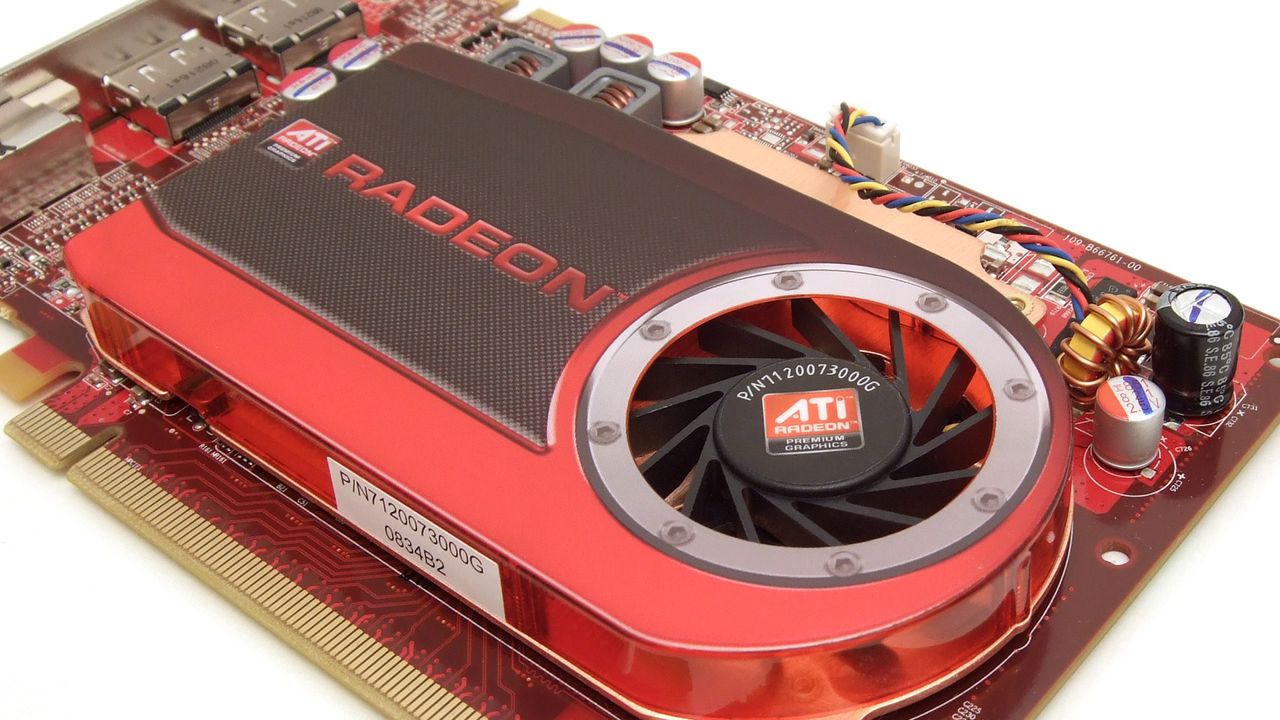
    Linux developers are leveraging AI coding assistants like GitHub Copilot to maintain and update drivers for vintage AMD GPUs. This effort focuses on the R600 Gallium3D driver, which supports AMD/ATI HD 2000 through HD 6000 series graphics cards, some of which are nearly two decades old. The use of AI aims to compensate for limited manpower in maintaining these older drivers, ensuring their continued compatibility with modern systems and APIs. Linus Torvalds has approved the use of AI in kernel development, provided proper tagging and rigorous testing by developers. AI

    Linux developers are using AI vibe coding to keep vintage AMD GPUs alive — R600 driver cleaned up with GitHub Copilot gives HD 2000 to HD 6000 series a new lease of life

    IMPACT Extends the lifespan of older hardware, reducing e-waste and potentially lowering costs for users who rely on legacy systems.

  13. 6 Android Auto apps that are essential when I'm off-roading - and most are free Android Auto isn't just for city streets anymore. Here are the apps that help me

    This cluster focuses on Android Auto applications useful for off-roading, highlighting six essential apps, many of which are free. The article emphasizes that Android Auto's utility extends beyond urban environments, providing tools for road trips and outdoor exploration. AI

    IMPACT Enhances the utility of in-car infotainment systems for outdoor activities.

  14. SanZhiYang Big Data Company Changes Responsible Person

    Hefei Sanzhiyang Big Data Operations Co., Ltd. has undergone a change in leadership, with Wang Fenqing stepping down as legal representative, manager, and director, and Du Gang assuming these roles. The company, established in June 2023 with a registered capital of 5 million RMB, focuses on big data services and is wholly owned by Sanzhiyang (Hefei) Holding Group Co., Ltd. AI

    IMPACT This is a corporate leadership change within a data operations company, with no direct impact on AI development or deployment.

  15. 📰 Coinbase Launches Tool To Let AI Agents Manage Trading and Payments Coinbase has launched Coinbase for Agents, a tool that lets AI agents like ChatGPT or Clau

    Coinbase has introduced Coinbase for Agents, a new platform designed to allow artificial intelligence agents to manage cryptocurrency trades and payments. This tool enables AI models such as ChatGPT and Claude to execute transactions and handle financial operations on behalf of users, streamlining the process of interacting with the Coinbase ecosystem. AI

    IMPACT This tool could simplify crypto management for users who prefer to leverage AI agents for transactions and financial operations.

  16. The Wittgenstein AI Tournament In cyber defense, the teams that win are the ones who can give a machine the right language for the threat. Build the agent that

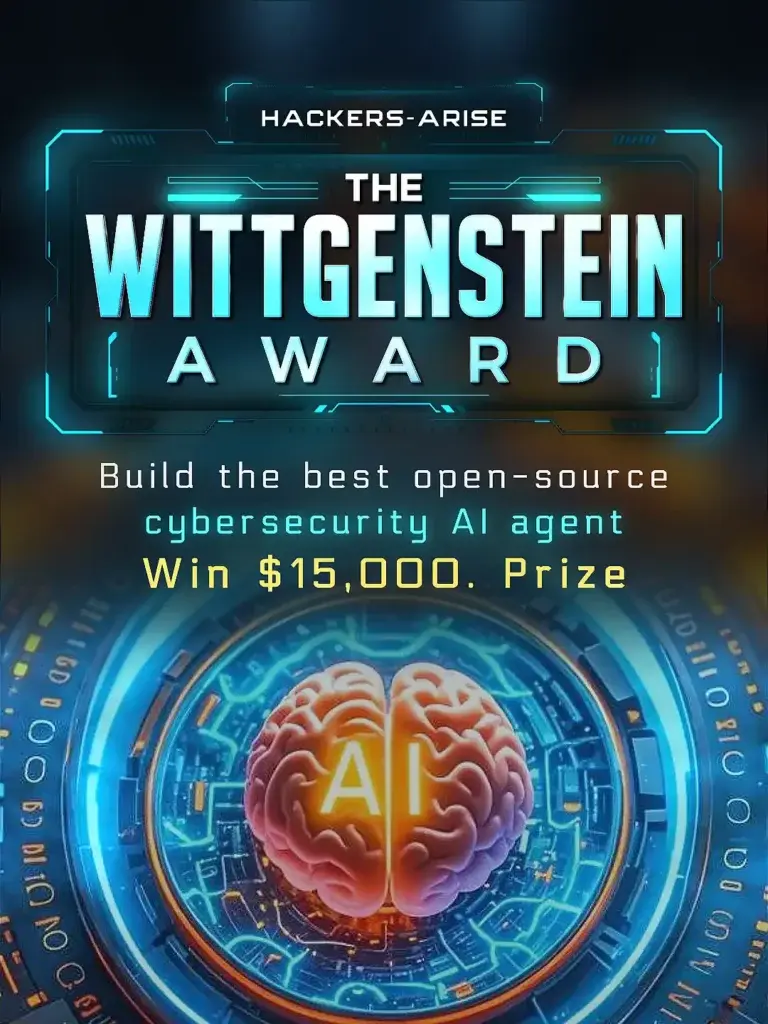
    The Wittgenstein AI Tournament is a competition focused on developing AI agents for cybersecurity defense. Participants are tasked with building functional AI agents based on open-source models. The tournament includes a semifinal round where the top three teams win $1,000 and advance to the finals, with a grand prize of $15,000 for the ultimate winner. AI

    The Wittgenstein AI Tournament In cyber defense, the teams that win are the ones who can give a machine the right language for the threat. Build the agent that

    IMPACT Encourages development of specialized AI agents for cybersecurity applications.

  17. I vibecoded a SpaceX booster-catch game with Claude Fable. It built real aerodynamics, then wrote a headless simulator to test its own physics. I no longer fully understand my own game. So addictive

    A developer used Anthropic's Claude Fable to create a complex browser game simulating SpaceX rocket landings. The AI independently developed realistic aerodynamic physics, including atmospheric drag and reentry heating, and even wrote its own testing harness with an autopilot to verify the physics. Claude Fable also identified and corrected a flaw in the game's physics simulation related to engine spool-up time, demonstrating advanced debugging capabilities. AI

    I vibecoded a SpaceX booster-catch game with Claude Fable. It built real aerodynamics, then wrote a headless simulator to test its own physics. I no longer fully understand my own game. So addictive

    IMPACT Demonstrates advanced AI capabilities in game development and physics simulation, potentially accelerating complex creative workflows.

  18. 𝚏𝚛𝚘𝚖 𝚐𝚛𝚘𝚞𝚗𝚍𝚢 𝚒𝚖𝚙𝚘𝚛𝚝 𝚐𝚛𝚘𝚞𝚗𝚍𝚢 @𝚐𝚛𝚘𝚞𝚗𝚍𝚢 𝚍𝚎𝚏 𝚊𝚜𝚔(𝚚: 𝚜𝚝𝚛) -> 𝚜𝚝𝚛: 𝚛𝚎𝚝𝚞𝚛𝚗 𝚖𝚢_𝚕𝚕𝚖(𝚚) 👇 https:// github.com/lopoc/groundy # Ai # LLM # Python # OpenSource # MachineLear

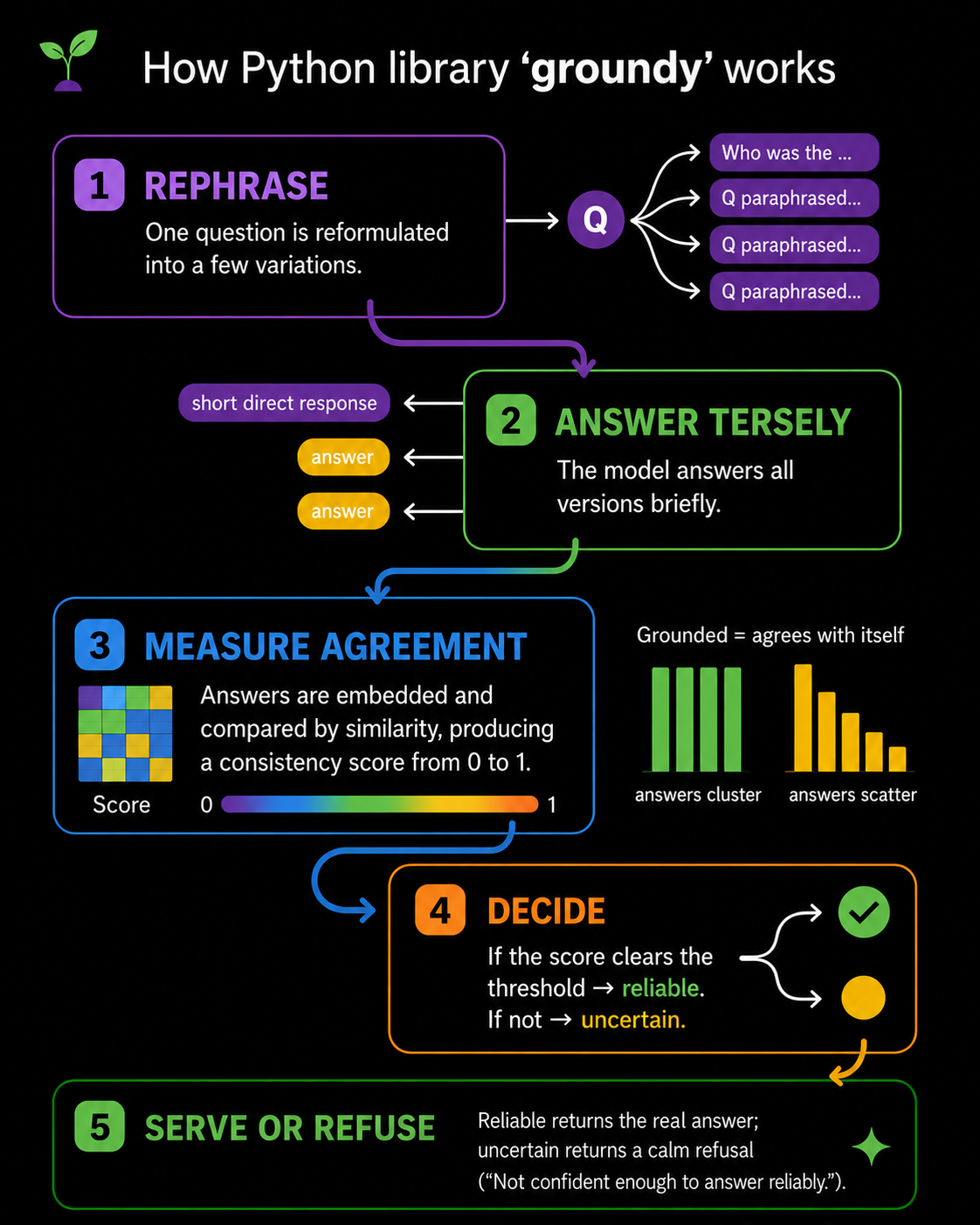
    Groundy is a new open-source Python library designed to simplify the process of building and deploying large language model (LLM) applications. It aims to streamline the development workflow for LLM-based projects, making it easier for developers to integrate and manage LLM functionalities. AI

    𝚏𝚛𝚘𝚖 𝚐𝚛𝚘𝚞𝚗𝚍𝚢 𝚒𝚖𝚙𝚘𝚛𝚝 𝚐𝚛𝚘𝚞𝚗𝚍𝚢 @𝚐𝚛𝚘𝚞𝚗𝚍𝚢 𝚍𝚎𝚏 𝚊𝚜𝚔(𝚚: 𝚜𝚝𝚛) -> 𝚜𝚝𝚛: 𝚛𝚎𝚝𝚞𝚛𝚗 𝚖𝚢_𝚕𝚕𝚖(𝚚) 👇 https:// github.com/lopoc/groundy # Ai # LLM # Python # OpenSource # MachineLear

    IMPACT Provides developers with a new tool to streamline LLM application creation and deployment.

  19. The @MongoDB plugin is live in the Grok Build Plugin Marketplace.

    xAI has launched a new MongoDB plugin for its Grok AI assistant, available in the beta Grok Build Plugin Marketplace. This plugin allows users to interact with MongoDB data, optimize database performance, and build vector search systems directly through prompts. The marketplace also features beta plugins for Vercel, Sentry, Cloudflare, and Chrome DevTools, enabling terminal-based development workflows. AI

    IMPACT Expands AI assistant capabilities into database management and development workflows.

  20. AI model 'hears' Bryde's whale calls in seismic data from South China Sea https:// phys.org/news/2026-06-ai-bryde -whale-seismic-south.html 🐋 # Cetaceans # Mari

    Researchers have developed an AI model capable of identifying Bryde's whale vocalizations within seismic survey data. This breakthrough allows for the detection of whale calls that would otherwise be masked by the noise of seismic exploration in the South China Sea. The AI's success offers a new method for monitoring whale populations in areas with significant industrial activity. AI

    IMPACT Enables non-invasive monitoring of marine mammal populations in noisy industrial environments.

  21. 🤖 Imperfect Feedback Becomes Key Focus in AI Research AI researchers are increasingly analyzing imperfect feedback in predictive models, particularly in areas l

    AI researchers are now prioritizing the study of imperfect feedback in predictive models. This focus is particularly relevant for areas such as imitation learning and bandit problems, where models must learn from incomplete or noisy data. The ongoing work aims to advance the capabilities of AI systems in understanding and utilizing suboptimal information. AI

    🤖 Imperfect Feedback Becomes Key Focus in AI Research AI researchers are increasingly analyzing imperfect feedback in predictive models, particularly in areas l

    IMPACT This research shift could lead to more robust AI models capable of learning effectively from real-world, noisy data.

  22. Starting today, child passengers can purchase railway travel multi-trip tickets, with fares at 50% of adult passenger fares.

    Alibaba has announced a management change at DingTalk, with Chen Hang stepping down as CEO. Chen Yusen, a tech leader born in 1992, will take over as the new CEO, making him Alibaba's youngest division CEO. This transition marks a new chapter for the enterprise communication and collaboration platform. AI

    IMPACT This leadership change at DingTalk may influence the platform's future development and integration of AI features for enterprise users.

  23. Zhiyuan launches Lingxi X2 EDU (everyone builds) version, for rich scenarios such as science and education practical training

    Zhiyuan has launched the Lingxi X2 EDU, a version of their robot designed for educational and training purposes. This new iteration emphasizes a modular hardware design that allows for easy disassembly, expansion, and secondary development. It is specifically targeted at scenarios such as scientific research education, engineering training, and robotics competition development. AI

    IMPACT Provides a specialized tool for educational and research robotics, potentially accelerating development in these niche areas.

  24. Claude Desktop spins up a VM without no way of stopping it

    Users of Anthropic's Claude Desktop application on Windows have reported a significant bug where the app automatically launches a Hyper-V virtual machine upon startup. This VM, identified as Vmmem, consumes approximately 1.8 GB of RAM, even when the user is only utilizing the chat functionality and not engaging with agent or Cowork features. The issue appears to stem from uncleaned session files and a service that triggers the VM on launch, leading to increased system resource usage and potential sluggishness. AI

    IMPACT Users may experience increased system resource consumption on Windows due to an unintended virtual machine launch by the Claude Desktop application.

  25. Building a Real-Time AI Call Audit System: Speech-to-Text, LLM Evaluation, Compliance Monitoring…

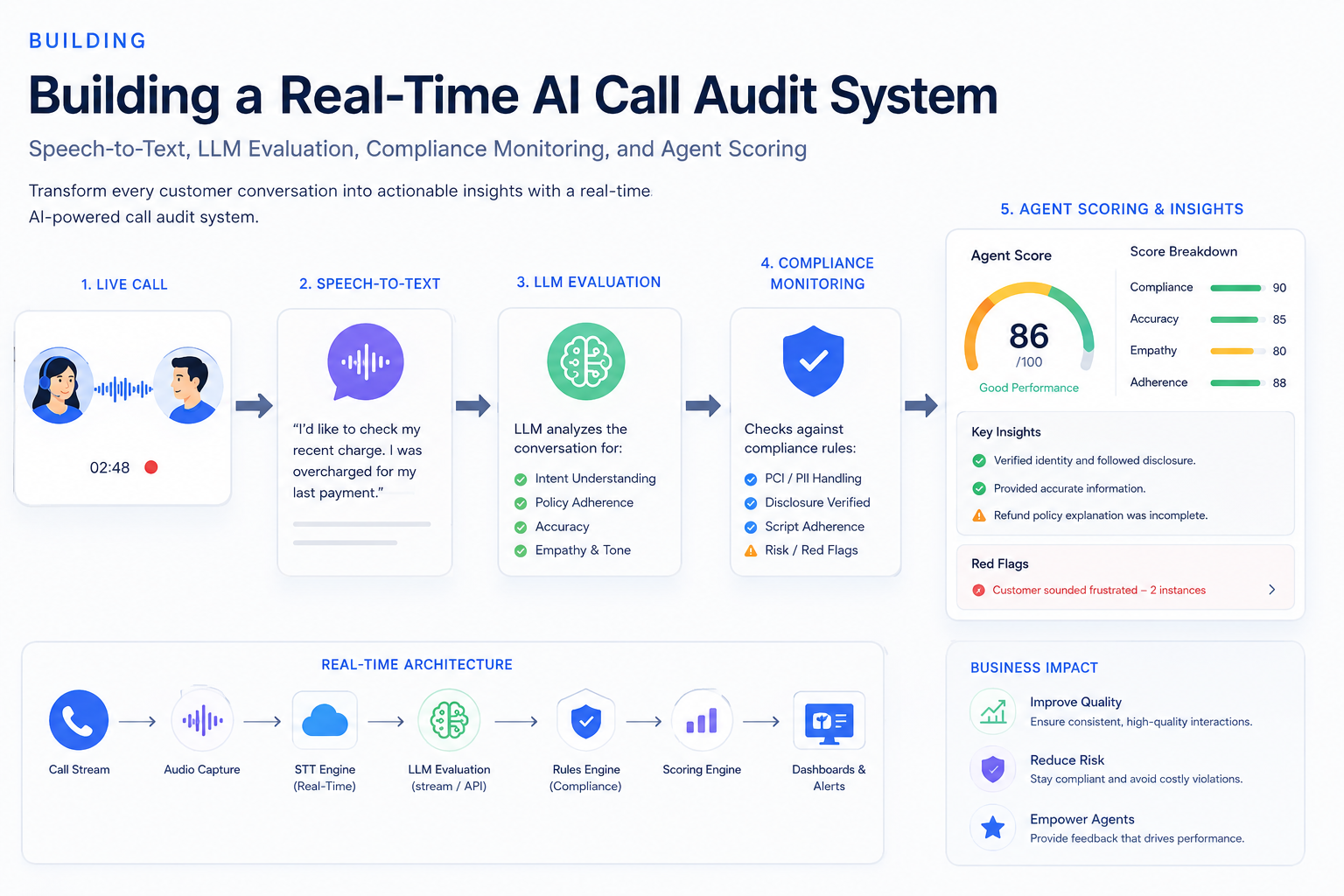
    This article details the construction of a real-time AI system designed to audit customer calls. The system integrates speech-to-text technology with LLM evaluation to monitor calls for compliance and quality. It aims to provide immediate feedback and analysis on every customer interaction. AI

    Building a Real-Time AI Call Audit System: Speech-to-Text, LLM Evaluation, Compliance Monitoring…

    IMPACT This system demonstrates a practical application of AI for business intelligence and compliance, potentially improving customer service quality and operational efficiency.

  26. 3 patterns broke when I ran Claude Code unattended for 7 days

    An AI developer detailed three unexpected failure patterns encountered while running Anthropic's Claude Code unattended for a week. The most critical issues involved API errors due to modified 'thinking' blocks, significant data loss from infrequent progress checkpoints, and stalled queues caused by stale lock files. The developer emphasizes that subtle, progress-masking failures are more damaging than loud crashes in unattended AI operations. AI

    IMPACT Highlights potential pitfalls for developers using LLMs for unattended automation, suggesting improvements in error handling and checkpointing.

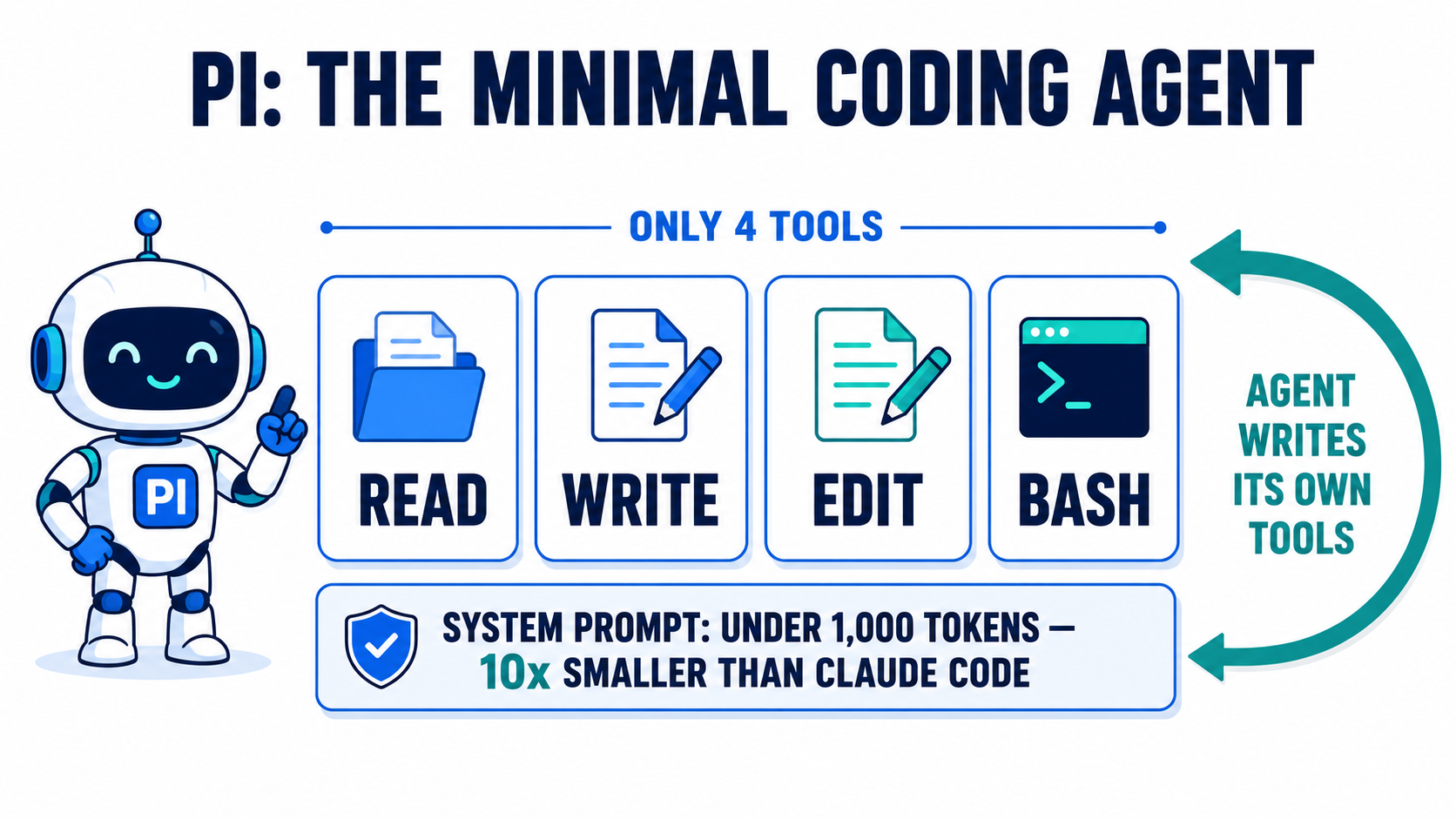
  27. The Flask Creator Ditched Claude Code for a 4-Tool Agent With a 1,000-Token System Prompt

    Armin Ronacher, the creator of the Python web framework Flask, has developed a new AI agent that integrates four distinct tools. This agent utilizes a 1,000-token system prompt, which is notably shorter than the system prompts offered by some competitors like Claude Code and OpenCode. Ronacher's approach prioritizes a more focused and efficient interaction with the AI. AI

    The Flask Creator Ditched Claude Code for a 4-Tool Agent With a 1,000-Token System Prompt

    IMPACT Demonstrates a more concise approach to AI agent system prompts, potentially influencing future tool development.

  28. Answers rot. Store questions instead.

    Researchers have developed a new memory pattern for AI agents called "Standing Questions" to address the issue of stale information in long-term projects. Instead of storing answers, which can become outdated, the system stores a set of critical questions that the agent must re-derive answers to at the start of each session. This ensures that the agent's understanding is constantly updated against the current state of the project, preventing the accumulation of incorrect beliefs. AI

    IMPACT This approach could improve the reliability and accuracy of long-running AI agent projects by ensuring their knowledge base remains current.

  29. Knowledge-Inclusive Adaptive Physics-Informed Neural Network for Microbial Interaction Modelling

    Researchers have developed a novel Physics-Informed Neural Network (PINN) framework that integrates auxiliary knowledge from sources beyond experimental data. This new approach enhances parameter discovery by incorporating information from peer-reviewed literature and network structures, specifically applied to modeling microbial interactions. The framework demonstrated significant improvements in accuracy and predictive power for microbial community modeling, outperforming existing methods and revealing ecological insights. AI

    IMPACT Enhances scientific modeling by integrating diverse knowledge sources, potentially improving accuracy in biological and ecological research.

  30. Structured Neuron Pruning in Deep Neural Networks Using Multi-Armed Bandits

    Researchers have developed a novel structured pruning framework for deep neural networks that utilizes multi-armed bandit (MAB) algorithms to remove entire neurons. This method treats each neuron as an 'arm' in a bandit problem, temporarily masking it to measure the impact on the loss function before updating its removal reward estimate. Evaluations across image, text, and reasoning tasks demonstrated that MAB-based pruning, particularly with UCB1 and Thompson Sampling policies, effectively reduces model size while often outperforming unpruned models and other pruning techniques. AI

    IMPACT Introduces a novel, computationally practical method for structured model reduction that can improve performance and efficiency.

  31. EssentialGIN: a new approach for gene essentiality prediction based on graph isomorphism neural networks

    Researchers have developed EssentialGIN, a novel approach for predicting essential genes using graph isomorphism neural networks. This method integrates biological data like gene expression and orthology information with network topology to enhance prediction accuracy. Experiments show EssentialGIN outperforms existing centrality-based and machine learning methods, particularly in complex organisms like humans. AI

    IMPACT This new method could improve the efficiency of biological research by more accurately identifying candidate genes for further study.

  32. Multi-planar 2D-U-Net Segmentation of 3D-CT Abdominal Organs augmented by Spatial Occurrence Maps

    Researchers have developed a new framework using a multi-planar 2D-U-Net architecture to segment five abdominal organs in 3D CT scans. This method enhances segmentation accuracy by incorporating fuzzy 3D spatial maps that provide anatomical location cues. Evaluations on 80 CT scans demonstrated a Dice improvement of approximately 4% compared to models trained without these spatial occurrence maps. AI

    IMPACT This novel segmentation approach could improve diagnostic accuracy and efficiency in medical imaging analysis.

  33. TAMUNA: Doubly Accelerated Distributed Optimization under Partial Participation

    Researchers have developed a new algorithm called TAMUNA designed to improve the efficiency of distributed optimization and federated learning. TAMUNA addresses the communication bottleneck by combining local training and data compression techniques, while also uniquely supporting partial client participation. This approach allows for doubly-accelerated convergence rates, outperforming previous methods that required all clients to be active. AI

    IMPACT Introduces a novel algorithm that could enhance the efficiency of distributed AI training by allowing for partial client participation.

  34. Mean Teacher based SSL Framework for Indoor Localization Using Wi-Fi RSSI Fingerprinting

    Researchers have developed a new semi-supervised learning (SSL) framework for indoor localization using Wi-Fi RSSI fingerprinting. This framework, based on the Mean Teacher model, efficiently utilizes both labeled and unlabeled data for improved accuracy and generalization. It addresses challenges like time-consuming data collection and performance degradation in dynamic environments. The proposed method demonstrated significant reductions in localization errors compared to traditional supervised learning approaches. AI

    IMPACT Enhances accuracy and efficiency in indoor positioning systems by leveraging unlabeled data.

  35. Zero and Few Shot Load Forecasting with Large Language Models

    Researchers have developed a novel approach for load forecasting in data-scarce environments by leveraging a large language model called Chronos. This LLM framework utilizes its extensive pre-trained knowledge to achieve accurate predictions without requiring extensive fine-tuning on specific datasets. Experiments across five real-world datasets demonstrated that Chronos significantly outperforms nine traditional baseline models in both deterministic and probabilistic forecasting, showing substantial reductions in error metrics. AI

    IMPACT Demonstrates LLMs' potential for accurate forecasting in data-limited domains, potentially reducing data acquisition costs and improving efficiency.

  36. Model-Based Learning of Whittle indices

    Researchers have developed BLINQ, a novel model-based algorithm designed to learn Whittle indices for Markov Decision Processes. This new approach constructs an empirical estimate of the MDP and then computes the indices, offering a proven convergence guarantee and a bound on learning time. Numerical experiments indicate BLINQ requires fewer samples than existing Q-learning methods for accurate approximations and has a lower overall computational cost. AI

  37. Beyond Point Estimates: Benchmarking Uncertainty Quantification Methods on the AION-1 Astronomical Foundation Model

    Researchers have evaluated seven uncertainty quantification (UQ) methods on the AION-1 astronomical foundation model for predicting galaxy properties. Conformal prediction methods, particularly the Locally Valid and Discriminative (LVD) framework, demonstrated superior calibration and local validity compared to non-conformal baselines. The study suggests LVD is the preferred UQ approach for foundation model embeddings in astrophysics, offering more reliable uncertainty estimates for scientific inference. AI

    IMPACT Establishes a preferred uncertainty quantification framework for foundation models in astrophysics, enabling more reliable scientific inference.

  38. On the Superlinear Relationship between SGD Noise Covariance and Loss Landscape Curvature

    Researchers have uncovered a new relationship between the noise introduced by Stochastic Gradient Descent (SGD) and the curvature of the loss landscape in deep learning models. Their findings indicate that this noise is not directly proportional to the Hessian of the loss, as previously assumed under specific conditions. Instead, the study reveals a more general connection where the SGD noise covariance is related to the expected value of per-sample Hessians, suggesting these two factors approximately commute rather than coincide. AI

    IMPACT Provides a more accurate theoretical understanding of SGD noise and its interaction with loss landscape curvature, potentially guiding future optimization algorithm development.

  39. Does Persona Make LLMs K-pop Fans? A Pilot Study of LLM-Based Online Concert Audience Agents

    Researchers explored whether large language models (LLMs) could simulate the collective experience of watching a K-pop concert by generating real-time fan chat. In a pilot study with 11 K-pop fans, LLM agents with assigned fan personas produced more natural-sounding chat compared to a baseline without personas. However, this persona conditioning did not significantly improve social connectedness, engagement, or emotional response among participants. Interviews suggested that online concert chat functions more as a collective monologue, and genuine participation relies on shared fandom identity rather than simulated crowd behavior. AI

    IMPACT Demonstrates LLMs' potential for creating more engaging virtual shared experiences, though current persona conditioning has limitations.

  40. Improving User Experience with Personalized Review Ranking and Summarization

    Researchers have developed a new framework to improve the user experience of online shopping by personalizing review ranking and summarization. This system integrates user preference modeling, sentiment analysis, and Large Language Models (LLMs) to tailor review content to individual needs. By analyzing historical reviews and user-selected product aspects, the framework ranks and summarizes reviews to reduce information overload and enhance decision-making confidence. Evaluations showed this personalized approach significantly outperformed traditional ranking methods and improved user satisfaction and efficiency. AI

    IMPACT Enhances e-commerce decision-making by personalizing review content and reducing information overload.

  41. Solving Inverse Problems with Flow-based Models via Model Predictive Control

    Researchers have developed MPC-Flow, a novel framework for solving inverse problems using flow-based generative models. This method employs model predictive control to guide the model's dynamics, making conditional generation more practical. MPC-Flow offers a spectrum of guidance algorithms, some of which bypass the need for backpropagation through the generative model's trajectory. The framework has demonstrated strong performance and scalability on image restoration tasks, including in-painting, deblurring, and super-resolution, even with large-scale models like FLUX.2 on consumer hardware. AI

    IMPACT Introduces a more efficient method for conditional generation in flow-based models, potentially improving performance on tasks like image restoration.

  42. AMS-HD: Hyperdimensional Computing for Real-Time and Energy-Efficient Acute Mountain Sickness Detection

    Researchers have developed AMS-HD, a novel framework utilizing hyperdimensional computing (HDC) for real-time detection of acute mountain sickness (AMS) from wearable physiological signals. This approach significantly reduces energy consumption and computational resources compared to traditional machine learning methods. AMS-HD achieves high accuracy, comparable to or exceeding SVM and MLP baselines, while requiring minimal battery, memory, and processing time, making it suitable for resource-constrained health monitoring devices. AI

    IMPACT Presents a new, resource-efficient computational paradigm for health monitoring applications.

  43. STGBD-Net: Spatio-temporal Gradient Basis Decomposition Network for Infrared Small Target Detection

    Researchers have developed a novel framework for infrared small target detection (IRSTD) called STGBD-Net, which utilizes Basis Decomposition Theory to improve feature fusion. This approach reformulates the process into an adaptive decomposition-and-reconstruction paradigm, employing Gradient Decomposition Modules (GDMs) to treat normalized gradient features as basis vectors. The resulting networks, including spatial and spatio-temporal variants, demonstrate state-of-the-art performance on multiple benchmarks with enhanced accuracy and computational efficiency. AI

    IMPACT Introduces a novel approach to feature fusion for improved accuracy and efficiency in infrared small target detection.

  44. GVC-Seg: Training-Free 3D Instance Segmentation via Geometric Visual Correspondence

    Researchers have developed GVC-Seg, a new method for 3D instance segmentation in point cloud data that does not require training. This approach leverages geometric visual correspondence to overcome biases caused by varying confidence levels in multiple pre-trained foundation models. By integrating 3D geometric cues with 2D visual cues, GVC-Seg improves proposal quality assessment and enables unbiased ensemble learning, achieving state-of-the-art results on benchmarks and showing promise for open-vocabulary semantic segmentation. AI

    IMPACT Introduces a novel training-free approach for 3D instance segmentation, potentially simplifying deployment and improving performance in computer vision applications.

  45. Muses: Designing, Composing, Generating Nonexistent Fantasy 3D Creatures without Training

    Researchers have developed Muses, a novel method for generating 3D fantasy creatures without requiring any training data. This approach utilizes a 3D skeleton to guide the composition and generation of diverse elements, ensuring a coherent structure and appearance. Muses integrates design, composition, and generation into a unified pipeline, starting with a graph-constrained reasoning process to create a well-structured skeleton, followed by a voxel-based assembly within a latent space, and concluding with appearance modeling for style-consistent texturing. The method demonstrates state-of-the-art performance in visual fidelity and alignment with textual descriptions. AI

    IMPACT Introduces a training-free method for 3D asset generation, potentially simplifying content creation pipelines.

  46. The Cross-Architecture Substrate: A Domain-Transcendent, Calibration-Surviving Geometric Invariant of Modern Vision Encoders

    Researchers have identified a consistent geometric structure, termed the "cross-architecture substrate," within modern vision encoders, regardless of their specific training objective or domain. This substrate, a 16-dimensional object, remains stable across diverse visual domains and survives calibration tests. The findings suggest a fundamental invariant in how these networks process visual information, leading to practical applications in areas like model transferability and domain detection. AI

    IMPACT Reveals a fundamental invariant in vision model representations, enabling new methods for model analysis and transfer.

  47. 3D Oral Modelling with Improved Vertex Distribution Using Matching-Based Learning

    Researchers have developed a new deep learning framework for 3D intraoral reconstruction, aiming to improve vertex distribution in predicted point clouds. While the previous model achieved 77.49% accuracy, it suffered from vertex clustering. The updated model introduces Hungarian matching and Repulsion Loss to create a more uniform vertex distribution, though this resulted in a lower accuracy of 68.02%. Despite the numerical decrease, the new approach significantly alleviates the vertex clustering issue, leading to more evenly spread vertices across the reconstructed surface. AI

    IMPACT Enhances the precision and coverage of AI-driven 3D modeling for dental and medical applications.

  48. CRAG: Can 3D Generative Models Help 3D Assembly?

    Researchers have developed CRAG, a novel approach to 3D assembly that integrates generative modeling with pose estimation. Unlike previous methods that solely focus on rigid transformations, CRAG treats assembly and shape generation as mutually reinforcing processes. This allows CRAG to synthesize plausible complete shapes and predict part poses, even when some pieces are missing, achieving state-of-the-art performance on in-the-wild objects. AI

    IMPACT This research advances 3D reconstruction by combining generative models with assembly, potentially improving applications in robotics and computer vision.

  49. Agentic multi-fidelity learning of quasiparticle and excitonic properties

    Researchers have developed an agent-guided multi-fidelity framework to improve the accuracy of simulating electronic and optical properties in nanomaterials. This new approach addresses computational challenges like numerical instabilities and convergence failures inherent in demanding calculations. By assigning confidence weights and using high-accuracy reference points, the framework corrects artifacts and enhances agreement with experimental data, proving transferable to various optoelectronic nanomaterials. AI

    IMPACT Enhances accuracy and reliability in simulating optoelectronic nanomaterials, potentially accelerating materials discovery.

  50. Enhanced Detection of Tiny Objects in Aerial Images

    Researchers have developed strategies to improve the detection of tiny objects in aerial images, a task that challenges standard object detection models like YOLOv8. Their approach involves enhancing input resolution, employing data augmentation, and integrating attention mechanisms within a novel pipeline called MoonNet. This pipeline, which incorporates modules like SE Block and CBAM, demonstrated superior accuracy over existing methods on a specific tiny-object benchmark. AI

    IMPACT Improves accuracy for a niche but critical computer vision task, potentially aiding applications in surveillance and mapping.