PulseAugur / Brief
EN
LIVE 21:38:38

Brief

last 24h
[50/770] 223 sources

Multi-source AI news clustered, deduplicated, and scored 0–100 across authority, cluster strength, headline signal, and time decay.

  1. Entity-Centric World Models: Interaction-Aware Masking for Causal Video Prediction

    Researchers have developed an Interaction-Aware JEPA (IA-JEPA) model designed to improve causal video prediction by focusing on physical interactions rather than just visual textures. This new approach uses a motion-centric masking strategy to prioritize events like collisions and momentum transfers, forcing the model to learn latent trajectories. IA-JEPA achieved a 14.26% accuracy on causal reasoning tasks in the CLEVRER benchmark, significantly outperforming standard baselines and demonstrating a path towards self-supervised world models that understand physical causality. AI

    IMPACT This research could lead to AI systems that better understand and predict physical dynamics, crucial for robotics and real-world interaction.


  2. Causal Transfer in Medical Image Analysis

    A new survey paper introduces Causal Transfer Learning (CTL) as a method to improve the reliability of medical imaging AI. CTL integrates causal reasoning with representation learning to address domain shift issues that often cause models to fail when deployed in new clinical settings. The paper proposes a taxonomy for CTL, reviews existing datasets and benchmarks, and discusses its potential for enhancing fairness, robustness, and trustworthiness in multi-institutional and federated learning scenarios. AI

    IMPACT Introduces a novel framework for improving AI robustness in critical medical applications.

  3. Fully Spiking Neural Networks with Target Awareness for Energy-Efficient UAV Tracking

    Researchers have developed STATrack, a novel framework for energy-efficient visual tracking on unmanned aerial vehicles (UAVs) using standard RGB cameras. This system employs fully spiking neural networks, which are known for their low power consumption, and introduces an Adaptive Mutual Information Maximization mechanism to preserve target semantics and reduce background interference. Experiments on multiple UAV tracking benchmarks show that STATrack achieves state-of-the-art performance with significantly reduced energy consumption. AI

    IMPACT Enables more power-efficient AI-driven visual tracking on resource-constrained UAV platforms.

  4. SDTrack: A Baseline for Event-based Tracking via Spiking Neural Networks

    Researchers have developed SDTrack, a novel pipeline for event-based object tracking using Spiking Neural Networks (SNNs). This approach integrates a Transformer-based tracker with a unique event frame aggregation method called Global Trajectory Prompt (GTP). The system operates end-to-end, achieving state-of-the-art accuracy on multiple datasets with significantly fewer parameters and lower energy consumption compared to existing methods. AI

    IMPACT Establishes a new baseline for event-based tracking, potentially improving efficiency and performance in neuromorphic vision systems.

  5. Enhanced Detection of Tiny Objects in Aerial Images

    Researchers have developed strategies to improve the detection of tiny objects in aerial images, a task that challenges standard object detection models like YOLOv8. Their approach involves enhancing input resolution, employing data augmentation, and integrating attention mechanisms within a novel pipeline called MoonNet. This pipeline, which incorporates modules like SE Block and CBAM, demonstrated superior accuracy over existing methods on a specific tiny-object benchmark. AI

    IMPACT Improves accuracy for a niche but critical computer vision task, potentially aiding applications in surveillance and mapping.

  6. SleepWalk: A Three-Tier Benchmark for Stress-Testing Instruction-Guided Vision-Language Navigation

    Researchers have introduced SleepWalk, a new benchmark designed to rigorously test instruction-guided vision-language navigation capabilities of AI models. This benchmark features a three-tier difficulty system, focusing on localized, interaction-centric embodied reasoning within 3D environments. Initial evaluations on frontier vision-language models revealed significant challenges, particularly with complex instructions, spatial reasoning under occlusion, and interaction constraints, indicating a need for further advancements in grounded multimodal reasoning and embodied agents. AI

    IMPACT Provides a new evaluation framework to drive progress in embodied AI and grounded multimodal reasoning.

  7. MedVeriSeg: Teaching LISA-Like Medical Segmentation Models to Verify Query Validity Without Extra Training

    Researchers have developed MedVeriSeg, a novel framework designed to prevent inaccurate segmentation in medical imaging by large language models. This training-free system verifies the validity of text-based segmentation queries before generating masks, thereby reducing hallucinations. MedVeriSeg employs a scoring module to assess response quality and a multi-agent verification module for robust query validation, ensuring that segmentation is only performed when the requested object is actually present in the image. AI

    IMPACT Enhances reliability of AI in medical imaging by reducing segmentation errors and hallucinations.

  8. Visual Template Inference for Data Extraction from Documents

    Researchers have developed TWIX, a novel system for extracting data from templated documents like invoices and financial reports. Instead of directly processing documents, TWIX infers the underlying visual template used to generate them. This approach significantly improves accuracy and efficiency, outperforming existing tools and even GPT-4-Vision by over 25% in precision and recall on a diverse benchmark. TWIX also demonstrates remarkable scalability, being orders of magnitude faster and cheaper than competitors for large document collections. AI

    IMPACT This template-inference approach could significantly reduce costs and improve accuracy for large-scale document processing tasks.

  9. CAD-Prompted SAM3: Geometry-Conditioned Instance Segmentation for Industrial Objects

    Researchers have developed a new instance segmentation method called CAD-Prompted SAM3, which utilizes Computer-Aided Design (CAD) models to guide the segmentation process. This approach overcomes the limitations of text or appearance-based prompting, which are often unreliable for industrial objects with varying materials or finishes. By using multi-view renderings of CAD models, the system can accurately identify objects based on their geometry, independent of surface appearance, and has been trained on synthetic data for robust performance. AI

    IMPACT Enables more robust object identification in industrial settings by leveraging geometric data over appearance.

  10. Relational Epipolar Graphs for Robust Relative Camera Pose Estimation

    Researchers have developed a novel method for estimating relative camera poses in Visual Simultaneous Localization and Mapping (VSLAM) by treating it as a relational inference problem on epipolar correspondence graphs. This approach models matched keypoints as nodes in a graph, with connections representing relationships between nearby points. By employing graph operations like pruning and message passing, the system estimates rotation, translation, and the Essential Matrix, demonstrating improved robustness against noise and large baseline variations compared to existing methods. AI

    IMPACT Introduces a novel graph-based approach for VSLAM, potentially improving robustness in applications like robotics and augmented reality.

  11. SPIRONet: Spatial-Frequency Learning and Graph-based Channel Interaction Network for Vessel Segmentation

    Researchers have developed SPIRONet, a novel network designed for enhanced automatic vessel segmentation in medical imaging. This network utilizes dual spatial-frequency encoders to capture both global continuity and fine details, while a graph-based module models channel correlations to suppress interference. SPIRONet demonstrates competitive performance across five datasets, achieving notable IoU improvements and real-time inference speeds suitable for surgical robotics. AI

    IMPACT Enhances accuracy and speed for medical imaging analysis, potentially improving surgical navigation systems.

  12. Bokeh Diffusion: Defocus Blur Control in Text-to-Image Diffusion Models

    Researchers have developed Bokeh Diffusion, a new framework for controlling defocus blur in text-to-image diffusion models. This method allows for precise adjustments to depth-of-field effects, mimicking traditional photography settings. The system uses a hybrid training pipeline and a grounded self-attention mechanism to ensure scene consistency while altering blur levels. Bokeh Diffusion has demonstrated effectiveness across different model architectures and can be applied to real image editing. AI

    IMPACT Enables more nuanced artistic control in AI image generation, potentially leading to more photorealistic and creatively directed outputs.

  13. 🚀 A riveting 26-page saga asking the age-old question: can a glorified # autocomplete outsmart good ol’ hyperparameters? 🤔 Spoiler: someone had way too much gra

    A new 26-page paper explores whether advanced autocomplete features can outperform traditional hyperparameter tuning methods. The research, hosted on arXiv, humorously suggests that significant funding and time were invested in this investigation. The paper's hosting on arXiv highlights the platform's role in disseminating AI research. AI

    IMPACT This research probes the effectiveness of AI-driven autocomplete against established tuning methods, potentially influencing future model development strategies.

  14. Can LLMs Beat Classical Hyperparameter Optimization Algorithms? https://arxiv.org/abs/2603.24647 # HackerNews # Tech # AI

    Researchers are investigating whether Large Language Models (LLMs) can outperform traditional algorithms in hyperparameter optimization. The study, available on arXiv, explores the potential of LLMs to discover optimal model configurations more efficiently than established methods. This research could lead to more effective and automated machine learning workflows. AI

    IMPACT Investigates LLMs' potential to automate and improve model training efficiency.

  15. The Code As Witness: A Book About Science, Politics & Pandemic Inquiry

    Steven C. Quay's new book, "The Code as Witness," presents a detailed investigation into the origins of the Covid-19 pandemic. The volume argues that SARS-CoV-2 likely originated from laboratory activity, citing five specific genetic and evolutionary "traits" as evidence. Quay criticizes institutional opacity and the suppression of scientific debate surrounding the virus's origins, framing his work as a defense of scientific integrity. AI

    The Code As Witness: A Book About Science, Politics & Pandemic Inquiry

    IMPACT Presents arguments and evidence regarding virus origins, potentially influencing future biosafety research and policy.

  16. Mechanistic Interpretability Is Having Its Moment: What Engineers Actually Need to Know

    Mechanistic interpretability, a field focused on reverse-engineering neural networks to understand their internal computations, is gaining significant traction. Recent breakthroughs include identifying features and circuits within models, with applications like activation steering and circuit-based debugging becoming more relevant for engineers. Companies like Anthropic, DeepMind, and OpenAI are actively employing these techniques, with Anthropic even open-sourcing tools for analyzing production models. AI

    Mechanistic Interpretability Is Having Its Moment: What Engineers Actually Need to Know

    IMPACT Mechanistic interpretability is becoming actionable for AI engineers, enabling better debugging, behavior control, and monitoring of LLMs.

  17. The Bottleneck in Agentic Software Isn’t Capability. ..It’s Trust || Claude-LFE

    A new framework called Claude-LFE aims to address the trust deficit in AI coding agents by shifting their operational focus from conversational interaction to filesystem-based actions. The system argues that the primary bottleneck for agentic software is not the AI's capability but its trustworthiness, proposing a layered approach to risk control. This method emphasizes structured assembly lines, cooperative pathfinding, and a replayable transaction log to build confidence in AI-generated code. AI

    The Bottleneck in Agentic Software Isn’t Capability. ..It’s Trust || Claude-LFE

    IMPACT This framework could significantly improve the reliability and adoption of AI coding assistants by addressing trust issues inherent in their operation.

  18. Let’s Build a Text-to-SQL Project Using LLM

    This article provides a tutorial on building a text-to-SQL project using a large language model (LLM). It guides readers through the process of creating a functional application that can translate natural language queries into SQL statements. The project aims to demonstrate the practical application of LLMs in data management and retrieval tasks. AI

    Let’s Build a Text-to-SQL Project Using LLM

    IMPACT Demonstrates practical application of LLMs for data querying, potentially simplifying database interactions.

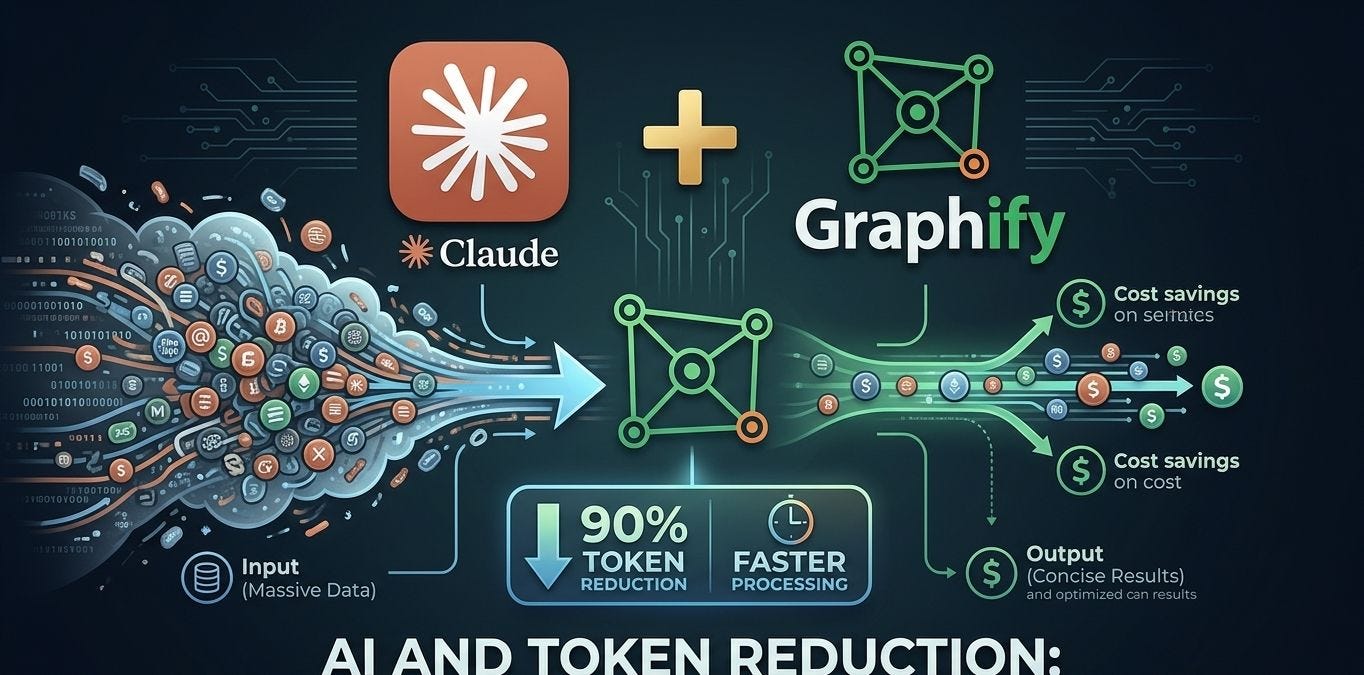
  19. Graphify: Giving Claude an Architecture Map Instead of a Flashlight

    A new method called Graphify aims to improve AI coding assistants like Claude by providing them with an architectural map of a project. This approach helps the AI understand the overall structure and relationships within the codebase, rather than just focusing on individual files or functions. By offering this broader context, Graphify seeks to enhance the AI's ability to generate more accurate and contextually relevant code suggestions. AI

    Graphify: Giving Claude an Architecture Map Instead of a Flashlight

    IMPACT Enhances AI coding assistants by providing architectural context, potentially leading to more accurate and efficient code generation.

  20. Optimal and Provable Calibration in High-Dimensional Binary Classification: Angular Calibration and Platt Scaling

    Researchers have developed a new method for calibrating linear binary classifiers in high-dimensional settings. The technique, called angular calibration, uses the angle between the estimated and true weight vectors to create a well-calibrated predictor. This approach is provably optimal and can be consistently estimated, with classical Platt scaling shown to converge to this optimal solution under certain conditions. AI

  21. Semi-Parametric Inference for Doubly Stochastic Spatial Point Processes: An Approximate Penalized Poisson Likelihood Approach

    Researchers have developed a new semi-parametric inference method for doubly-stochastic spatial point processes, which are used to model event occurrences in spatial domains. This approach offers computational efficiency and avoids restrictive assumptions about the intensity function, unlike previous methods. The technique achieves consistent and asymptotically normal estimates for covariate effects, even with model misspecification, and provides a valid inference procedure. Simulations and an application to Seattle crime data indicate improved prediction accuracy over existing alternatives. AI

    IMPACT Introduces a more efficient and flexible statistical method for spatial data analysis, potentially improving predictive accuracy in applications like crime mapping.

  22. Partial Identification under Missing Data Using Weak Shadow Variables from Pretrained Models

    Researchers have developed a new statistical framework for estimating population quantities when data is missing, particularly when users with stronger opinions are more likely to respond. This method uses predictions from pretrained models, including large language models (LLMs), as 'weak shadow variables' to tighten identification bounds. The approach effectively shrinks identification intervals by up to 83% in experiments, offering a more robust way to handle non-randomly missing data. AI

    IMPACT Provides a more robust statistical method for analyzing datasets with non-randomly missing user feedback, potentially improving platform evaluation and social science research.

  23. Multi-Fidelity Quantile Regression

    Researchers have developed a novel two-stage method for multi-fidelity quantile regression, designed to improve the accuracy of quantile estimation when high-fidelity data is scarce. The approach utilizes a local quantile link, representing high-fidelity quantiles based on low-fidelity quantiles evaluated at a covariate-dependent level. This reformulation aims to simplify the estimation process by focusing on a smoother level function, with a correction step included for enhanced robustness. Theoretical analysis and experimental results on synthetic and real-world data demonstrate that this method can achieve faster convergence and more precise quantile estimates compared to using only high-fidelity data. AI

    IMPACT Introduces a new statistical technique that could improve the accuracy of predictive models in data-scarce scenarios.

  24. MST-Direct at Scale: Multivariate and Conditional Geostatistical Simulation via Sinkhorn Optimal Transport

    Researchers have developed MST-Direct at Scale, an advancement in multivariate geostatistical simulation using optimal transport. This new method extends previous work to handle larger grids and multiple variables, while also incorporating conditional data. The approach uses a sparse Sinkhorn matcher for scalability and a Gaussian backbone to reproduce specified variograms, exactly preserving the multivariate joint distribution and honouring hard data. AI

    IMPACT Enhances simulation capabilities for complex spatial data, potentially impacting fields like resource exploration and environmental modeling.

  25. Wedge Sampling: Efficient Tensor Completion with Nearly-Linear Sample Complexity

    Researchers have introduced Wedge Sampling, a novel non-adaptive sampling scheme designed for efficient low-rank tensor completion. This new method utilizes structured length-two patterns, known as wedges, within a bipartite sampling graph to strengthen spectral signals. The approach promises polynomial-time algorithms capable of achieving recovery with nearly linear sample complexity, significantly improving upon traditional uniform sampling methods. AI

  26. Consensus-based adaptive sampling and approximation for high-dimensional energy landscapes

    Researchers have developed a new consensus-based framework for exploring high-dimensional energy landscapes, particularly useful in molecular dynamics simulations. This method unifies phase space exploration with adaptive sampling for surrogate construction, addressing challenges posed by physical constraints and energy barriers. The approach formulates the problem as a minimax optimization, adapting both the surrogate approximation and residual-enhanced sampling, and has demonstrated effectiveness for complex biomolecular systems with up to 30 collective variables. AI

    IMPACT Introduces a novel computational framework for complex simulations, potentially improving efficiency in scientific research.

  27. Softmax: Why neural networks need non-linearity? life isn't straight-line simple https:// blog.sparsh.dev/softmax-activa tion-function/ # HackerNews # softmax #

    The article explores the necessity of non-linearity in neural networks, arguing that it is crucial for handling the complex, non-straightforward nature of real-world data. It posits that activation functions like Softmax are essential for introducing this non-linearity, enabling models to learn intricate patterns and make sophisticated decisions. AI

    IMPACT Explains fundamental concepts in neural network architecture, crucial for understanding model capabilities.

  28. "Unraveling the Ai2 Asta Scholarly Research Assistant Citation System" 10 domain-specific queries were submitted to Asta's Summarise Literature feature, & 2 ind

    A study examined the citation system of the AI2 Asta scholarly research assistant. Researchers found that Asta exhibits high citation intensity, moderate diversity in its bibliographic references, and significant instability when queries are repeated. These findings were based on 10 domain-specific queries and two rounds of data collection. AI

    IMPACT This analysis of AI2 Asta's citation system highlights potential issues with stability and diversity in scholarly research tools.

  29. The mathematical problem-solving abilities of Artificial Intelligences have recently seen significant improvements. According to a statement released by Ruhr Un

    Artificial intelligences have demonstrated notable advancements in solving complex mathematical problems. Research from Ruhr University indicates that AI models are now capable of tackling previously intractable mathematical challenges. AI

    IMPACT Demonstrates progress in AI's reasoning capabilities, potentially enabling new applications in scientific discovery and complex analysis.

  30. AI is driving critical decisions, but complex models are often black boxes. In sectors like healthcare & finance, trust is the ultimate metric. How do we explai

    Researchers have developed an interactive application to demystify complex AI models, particularly in sensitive fields like healthcare and finance where trust is paramount. The tool utilizes techniques such as XGBoost, ELI5, and SHAP to explain AI-driven decisions, focusing on methods like Permutation Importance and PDP to ensure transparency and auditability. AI

    IMPACT Enhances trust and auditability in AI applications, crucial for adoption in regulated industries like healthcare and finance.

  31. I saw that some # erdos # math problems have been solved by a handful of LLM, with verification by Terence Tao. It's not even openai propaganda, some hobbies di

    Large language models have reportedly solved several difficult Erdős mathematical problems, with mathematician Terence Tao verifying the solutions. This development challenges the notion that LLMs are limited to non-original tasks and suggests a potential future where AI can be relied upon for complex intellectual endeavors. The success raises questions about the difficulty of these problems and the evolving capabilities of AI in creative and analytical domains. AI

    IMPACT Demonstrates LLMs' emerging capability in solving complex, novel problems, potentially shifting reliance on AI for advanced intellectual tasks.

  32. Hansoh Pharmaceutical: Clinical Trial Application for Innovative Drug HSK51155 Tablets Accepted

    Haisco Pharmaceutical Group has received acceptance for its clinical trial application for HSK51155 tablets from China's National Medical Products Administration. This drug is an orally administered small molecule non-opioid innovative analgesic, developed independently by the company. It aims to provide pain relief while minimizing adverse effects and avoiding addiction risks. AI

    IMPACT Potential for new pain management options with reduced side effects and addiction risk.

  33. Demystifying the Black Box: A Hands-On Guide to Explainable AI (XAI) TL;DR Introduction The Core Engine: XGBoost on Heart Disease Data Pillar 1: Permutation Imp

    This guide explores Explainable AI (XAI) techniques to demystify complex machine learning models. It focuses on practical applications using XGBoost for a heart disease classifier, demonstrating how to build trust in AI decisions. The guide covers methods like Permutation Importance, Partial Dependence Plots, and SHAP values to reveal how features influence predictions and provide both local and global explanations. AI

    Demystifying the Black Box: A Hands-On Guide to Explainable AI (XAI) TL;DR Introduction The Core Engine: XGBoost on Heart Disease Data Pillar 1: Permutation Imp

    IMPACT Provides practical methods for understanding and trusting AI models, crucial for adoption in sensitive domains like healthcare.

  34. Hybrid E-Assessment in Higher Education: Semi-Automated Grading of Paper-Based Written Examinations

    A new research paper proposes a hybrid e-assessment system for higher education that combines paper-based exams with semi-automated grading. This approach aims to overcome the limitations of fully digital assessments by retaining problem-oriented tasks while encoding student answers in a structured format for machine processing. The paper highlights the challenge of accurately recognizing handwritten characters and suggests that recent vision-capable large language models, along with a two-pass validation and solution key comparison, can improve the validity and scalability of summative assessments. AI

    IMPACT This hybrid approach could enhance the efficiency and fairness of grading in educational institutions by leveraging LLMs for handwritten text recognition.

  35. MIRAGE: Metadata-Integrated Repository Analysis and Guided Enhancement for MSR Datasets

    Researchers have developed MIRAGE, a new method for analyzing Mining Software Repositories (MSR) datasets by enhancing their metadata and assessing FAIRness. This approach uses the Semantic Scholar API to gather data from 2013 to 2024, applying Latent Dirichlet Allocation (LDA) topic modeling for analysis. The study found that repository hosting sites and data formats impact citation patterns and usability, suggesting that improved annotation enhances dataset discoverability and reuse. AI

    IMPACT Enhances discoverability and reuse of research artifacts, potentially accelerating AI development by improving access to software engineering data.

  36. The Montparnasse Algorithm for RNA Design

    Researchers have developed the Montparnasse Algorithm, a novel Monte Carlo search framework for RNA design. This algorithm incorporates a problem-specific prior and advanced adaptation techniques to optimize nucleotide sequences for various criteria. Montparnasse has demonstrated superior performance on the Eterna100 V1 benchmark, solving puzzles significantly faster than previous state-of-the-art methods and achieving full coverage more efficiently. AI

    IMPACT Introduces a novel algorithmic approach for molecular design, potentially accelerating discovery in synthetic biology and medicine.

  37. Cosmo3DFlow: Wavelet Flow Matching for Spatial-to-Spectral Compression in Reconstructing the Early Universe

    Researchers have developed Cosmo3DFlow, a new generative framework that uses wavelet transform and flow matching to compress and reconstruct early universe data. This method addresses challenges in dimensionality and sparsity, translating spatial emptiness into spectral sparsity. The framework achieves significantly faster sampling times, enabling initial conditions to be generated in seconds compared to minutes with previous techniques. AI

    IMPACT Introduces a novel AI-driven method for accelerating complex astrophysical simulations, potentially speeding up cosmological research.

  38. A Resilience-as-a-Service assessment framework for coordinated disruption response in interdependent urban transit systems

    Researchers have developed a new framework to assess the resilience of urban transit systems during disruptions. This KPI-driven, time-indexed system uses an optimization model combined with agent-based simulation to evaluate various response strategies. It considers factors like service continuity, cost, emissions, and equity, and was applied to the RER B line in Paris, showing that coordinated multimodal responses offer the most balanced resilience. AI

    IMPACT Provides a structured approach for improving urban transit reliability during disruptions, potentially influencing future AI-driven operational planning.

  39. Exploring the Effect of Basis Rotation on NQS Performance

    A new arXiv paper explores how basis rotations affect Neural Quantum States (NQS) performance. Researchers used an Ising model to demonstrate that these rotations can alter the optimization landscape, potentially leading to saddle points and high-curvature regions. This geometric displacement can cause low energy errors to coexist with inaccurate wavefunction structures, indicating that optimization failures can persist even when the target state is representable. AI

    IMPACT Provides theoretical insights into the optimization challenges of quantum machine learning models.

  40. Addressing Market Regime Changes and Heavy-Tailed Returns in Portfolio Optimization via Bayesian VAR and Elliptical Black-Litterman

    Researchers have developed a new algorithm, BAVAR-BLED, to improve portfolio optimization in financial markets. This algorithm addresses limitations in current deep reinforcement learning models by accounting for heavy-tailed returns and regime changes in market data. BAVAR-BLED integrates Bayesian-Averaging Vector Autoregressive (BAVAR) with the Black-Litterman model using Elliptical Distributions (BLED), employing transformer networks and CNNs for enhanced adaptive allocation decisions. Evaluations over a decade showed BAVAR-BLED significantly outperformed existing methods, yielding high Sharpe and Sortino ratios and substantial total returns. AI

    IMPACT Introduces a novel AI-driven approach to financial modeling that accounts for market volatility and regime shifts, potentially improving investment strategies.

  41. Airport Terminal Passenger Queue Forecasting for Departure Gates and Security Checkpoints

    Researchers have developed a new framework for forecasting passenger queues at airport departure gates and security checkpoints. The model utilizes a Transformer-based architecture to analyze historical passenger flow data, capturing temporal dependencies and correlations between different airport facilities. This approach aims to provide accurate forecasts up to two hours in advance, enabling proactive management of congestion and staff allocation. AI

    IMPACT Provides a novel method for improving operational efficiency in transportation hubs through AI-driven predictions.

  42. Trustworthy Smart Fabs via Professional Proxies: Scaling Safe and Sustainable by Design (SSbD) through Industrial Data Spaces

    A new research paper proposes a framework to help semiconductor manufacturing facilities comply with European Union regulations on safety and sustainability. The proposed system uses 'Professional Proxies,' which are role-based agents operating in secure data spaces, to automate compliance reporting. This approach aims to balance corporate data privacy with the need for multi-stakeholder transparency by enabling factories to export verifiable compliance tokens without revealing proprietary manufacturing details. AI

    IMPACT This framework could streamline regulatory compliance for advanced manufacturing, potentially accelerating the adoption of sustainable practices in the semiconductor industry.

  43. Quantum-Enhanced Similarity Measures for Polarimetric Materials Classification

    Researchers have developed a hybrid quantum-classical approach for classifying polarimetric materials. This method treats material classification as a point-matching problem, using a quantum SWAP-test circuit to estimate the similarity between material embeddings. The approach demonstrated competitive accuracy and potential for open-set discrimination on a dataset of 23 materials, suggesting a viable path for quantum computing in material recognition. AI

  44. STARIXNet: Multivariate and Multi-attribute Deep Learning Approach to Real-Time Resource Allocation in Cloud Platforms

    Researchers have developed STARIXNet, a novel deep learning approach for real-time resource allocation in cloud platforms. Unlike existing methods that focus on single metrics like CPU usage, STARIXNet analyzes multiple system attributes simultaneously to optimize scaling decisions. This approach prioritizes service stability and cost-efficiency over pure prediction accuracy, and has been successfully deployed at Walmart, achieving significant cost savings and improved service performance. AI

    IMPACT STARIXNet's deployment at Walmart demonstrates tangible cost savings and improved service stability, potentially influencing future cloud resource management strategies.

  45. WhiteTesseract: Reframing the Interpretation of Cultural Heritage through XR and Conversational AI

    A new research paper introduces WhiteTesseract, a system that uses Extended Reality (XR) and conversational AI to enhance cultural heritage exhibitions. The system allows visitors to reduce environmental distractions and engage in context-aware dialogue with large language models, aiming to deepen personal engagement with exhibits. A user study with 26 participants at a Claude Monet exhibition showed a significant increase in viewing duration and a high percentage of analytical and emotional inquiries beyond simple factual questions. AI

    IMPACT Enhances visitor engagement in cultural heritage settings through personalized, context-aware AI interactions.

  46. Kunlun: Establishing Scaling Laws for Massive-Scale Recommendation Systems through Unified Architecture Design

    Researchers have developed Kunlun, a new architecture designed to improve the efficiency and scaling of recommendation systems. By incorporating optimizations like Generalized Dot-Product Attention and Computation Skip, Kunlun doubles the scaling efficiency of recommendation models compared to existing methods. This architecture has been deployed in Meta Ads models, demonstrating significant production impact. AI

    IMPACT Enhances efficiency in large-scale recommendation systems, potentially improving user experience and ad targeting effectiveness.

  47. Optimality of Sequential Filtering Under Independent Cost and Selectivity Models

    Researchers have developed a formal framework for optimizing sequential filtering pipelines, commonly used in systems like ranking and fraud detection. Their work proves that ordering filters by the ratio of cost to rejection probability minimizes expected total cost under an independence model. Simulations demonstrated that this optimal ordering significantly outperforms typical heuristic approaches. AI

    IMPACT Provides a theoretical framework for optimizing ML inference pipelines, potentially improving efficiency in large-scale systems.

  48. Beware of Geeks Bearing Gifts: Building True EU Frontier AI Sovereignty

    A new paper proposes a framework to help the EU achieve true sovereignty in frontier artificial intelligence development. The paper highlights the EU's current dependence on US and Chinese AI models and supercomputing capacity. It outlines a five-pillar framework to address economic competitiveness, resilience, security, European values, and foreign relations across the AI stack, aiming to guide policy and identify critical gaps. AI

    IMPACT Provides a structured approach for policymakers to enhance European AI autonomy and competitiveness.

  49. Jas: AI-Paired Engineering as a Revival of N-Version Programming

    A computer science paper proposes "AI-Paired Engineering" as a modern take on N-Version Programming, using AI assistance and parallel implementations to build software efficiently. The author details a case study where a single developer created five ports of an application across different platforms in about 120 hours. This methodology, supported by a precise specification and differential testing, aims to drastically reduce development time and cost. AI

    IMPACT This methodology could significantly accelerate software development cycles by leveraging AI and parallel implementations.

  50. Feasibility to detect rapid change and disappearance of seagrass: Lessons from nearly 80 years of vegetation change in the Ako, Seto Inland Sea, Japan

    Researchers have developed a deep learning model, utilizing YOLO-based segmentation, to accurately track seagrass distribution over nearly 80 years using various aerial and satellite imagery. The study focused on the Ako tidal flat in Japan, where a significant disappearance of seagrass occurred in 2025, reducing the area from a historical mean of 6.8 ha to just 0.2 ha. This rapid ecosystem shift, likely caused by elevated water temperatures, highlights the need for finer temporal resolution in monitoring seagrass, especially for nature-related disclosures. AI

    IMPACT Demonstrates deep learning's utility in ecological monitoring, potentially improving environmental reporting and conservation efforts.