PulseAugur / Brief
EN
LIVE 11:47:14

Brief

last 24h
[50/17383] 224 sources

Multi-source AI news clustered, deduplicated, and scored 0–100 across authority, cluster strength, headline signal, and time decay.

  1. Feature extraction for plant growth estimation

    Researchers have developed two novel feature extraction methods for estimating plant growth stages, crucial for optimizing resource use in precision agriculture. One method employs Gabor filters and morphological operations, while the other leverages pre-trained convolutional neural networks (CNNs) via transfer learning. Tests on canola and radish datasets showed that CNN features achieved higher accuracy and speed, with the best system reaching 98.4% accuracy in 0.08 seconds. AI

    IMPACT Improves efficiency in precision agriculture by enabling more accurate real-time monitoring of crop development.
  2. An Ontology-Guided Multi-Anchor Graph Retrieval Framework for Traffic Legal Liability Determination

    Researchers have developed a new framework called OMAGR to improve the accuracy of determining traffic legal liability. This ontology-guided system addresses limitations in existing methods by decomposing complex legal queries into multiple anchors for parallel graph retrieval across different legal dimensions. By ensuring independent retrieval before fusion, OMAGR aims to overcome the multi-dimensional retrieval bottleneck and has been evaluated on a newly created TrafficLaw-QA dataset, showing improved performance in context precision and faithfulness. AI

    IMPACT This research could lead to more accurate and efficient legal liability determination systems.

  3. REACH: Interpretability-Driven Feature Identification and Architecture Compression for Multi-Channel Vehicular Channel Estimation

    Researchers have developed REACH, a novel interpretability framework for deep learning channel estimators in vehicular communications. This framework identifies key features and internal representations, enabling significant reductions in model parameters and computational operations. The approach maintains performance with minimal degradation, even as compression levels increase, and offers a deeper understanding of out-of-distribution generalization. AI

    IMPACT Provides a method for compressing deep learning models used in vehicular communications, potentially leading to more efficient real-time applications.

  4. Agreement in Representation Space for Open-Ended Self-Consistency

    Researchers have introduced Embedding-Based Agreement (EBA), a novel method to enhance self-consistency in large language models for open-ended generation tasks. This technique leverages the geometric properties of representation space, clustering sampled generations to estimate semantic compatibility rather than relying on exact matches. EBA demonstrates superior performance over random selection and other LLM-based evaluation methods across tasks like mathematical reasoning, code generation, and summarization. AI

    IMPACT This method could improve the reliability and accuracy of LLM outputs in complex generation tasks.

  5. Announcing the Next Phase of AI Forge

    The DARPA-NSF-CAISI AI Forge Program is launching its next phase, focusing on critical AI challenges for national security. This initiative involves releasing a report detailing these challenges, developed with input from leading AI companies and government officials. Additionally, DARPA has issued a Request for Information (RFI) to U.S. universities, inviting them to propose research projects ranging from $750K to $3M to address these national security AI needs. AI

    IMPACT This initiative aims to bridge academic research with government and military applications, potentially accelerating the deployment of advanced AI for national security.

  6. PAWS: Preference Learning with Advantage-Weighted Segments

    Researchers have introduced PAWS, a novel method for preference-based reinforcement learning that addresses a critical training-inference mismatch. By utilizing segment-level advantage functions for policy updates, PAWS aligns utility training with optimization, preserving preference information and avoiding unreliable per-step signals. Experiments on robotic manipulation and locomotion tasks show PAWS outperforming existing approaches, underscoring the significance of distribution-consistent preference learning. AI

    IMPACT Enhances reinforcement learning by improving temporal credit assignment and policy optimization through distribution-consistent preference learning.

  7. ParseFixer: An Agentic Framework for Document Parsing via Selective Multimodal Correction

    Researchers have developed ParseFixer, an agentic framework designed for document parsing challenges. This system achieved third place in the DataMFM Challenge Track 1 by combining a full-page backbone parsing module with an agentic selective correction module. ParseFixer aims to accurately recover textual content and reconstruct document structure by selectively correcting initial parsing failures. AI

    IMPACT Demonstrates a novel approach to document parsing, potentially improving structured data extraction from images.

  8. SpecLoR: Spectral Lookahead Rectification for Motion-Coherent Text-to-Video Generation

    Researchers have introduced SpecLoR, a novel method to improve the coherence and reduce artifacts in text-to-video generation. This technique addresses issues arising from numerical errors in latent ODE sampling, which often lead to spatiotemporal inconsistencies in generated videos. SpecLoR operates by looking ahead to estimate clean latent states and then rectifying their spectral amplitude in the frequency domain, preserving phase information. This approach effectively bypasses noise and avoids disrupting local geometry, demonstrating significant improvements in motion coherence with minimal computational overhead. AI

    IMPACT Improves quality and coherence of AI-generated videos, potentially enabling more realistic and consistent visual content.

  9. HAMNO: A Hierarchical Adaptive Multi-scale Neural Operator with Physics-Informed Learning for Dynamical Systems

    Researchers have introduced HAMNO, a novel neural operator architecture designed to better handle complex dynamical systems. HAMNO combines local convolutional and global spectral operators with a hierarchical structure and a data-dependent gating mechanism to adaptively balance information. A physics-informed extension, PI-HAMNO, further enhances stability and data efficiency by integrating data fitting with physics constraints. AI

    IMPACT Introduces a new architecture for improved prediction of complex dynamical systems, potentially benefiting scientific simulation and modeling.

  10. Categorical Prior Lock-in: Why In-Context Learning Fails for Structured Data

    A new research paper identifies a phenomenon called "categorical prior lock-in" that limits the effectiveness of in-context learning (ICL) for large language models when generating structured data. The study found that while ICL can improve numerical accuracy, it struggles to reproduce rare categories in tabular data. Parameter-efficient fine-tuning methods like LoRA can overcome this but introduce risks of memorization and output instability. AI

    IMPACT Identifies a key limitation in LLM adaptability for structured data generation, potentially impacting applications relying on ICL.

  11. Decoding Multimodal Cues: Unveiling the Implicit Meaning Behind Hateful Videos

    Researchers have developed a new framework called IARE to improve the explainability of AI models detecting hateful videos. This framework aims to provide contextual rationales and logical reasoning alongside detection decisions, moving beyond simple binary classification. IARE utilizes multimodal chain-of-thought and Direct Preference Optimization to enhance the integration of harmful elements and the coherence of justifications. Experiments on two new datasets, Ex-HateMM and Ex-ImpliHateVid, show that IARE achieves state-of-the-art performance in both detection accuracy and rationale generation. AI

    IMPACT Improves AI's ability to explain decisions in content moderation, potentially leading to more trustworthy and transparent systems.

  12. Online Shift Detection and Conformal Adaptation for Deployed Safety Classifiers

    Researchers have developed a new online system designed to monitor distributional shift in deployed AI safety classifiers. This system uses sequential statistics to detect when a classifier's performance degrades due to changes in input data. Upon detection, a conformal abstention layer adjusts decision thresholds to maintain a target error rate, showing promising results in detecting various types of shifts, including adversarial attacks. AI

    IMPACT This research could lead to more robust and reliable AI safety systems by enabling real-time adaptation to changing data distributions.

  13. Fine-tuning Multi-modal LLMs with ART: Art-based Reinforcement Training

    Researchers have developed a new parameter-efficient fine-tuning technique for multimodal large language models called ART (Art-based Reinforcement Training). Unlike existing methods that modify computational graphs, ART optimizes only the raw visual input of a frozen model. This approach allows for fine-tuning on pre-compiled high-throughput engines and can stylize the optimized visual input as computational artworks. ART has demonstrated competitive accuracy with LoRA on mathematics and structured-tool-use benchmarks, confirming its effectiveness across various Qwen model sizes. AI

    IMPACT Enables more efficient fine-tuning of multimodal models, potentially accelerating development and deployment.

  14. Semantic Grading of Written Answers in Low-Resource Language Bangla Using a Fine-Tuned Lightweight Language Model

    Researchers have developed a new system for grading written answers in Bangla, a low-resource language, by fine-tuning a lightweight language model. This system prioritizes semantic correctness over exact wording to provide timely and consistent feedback, addressing the lack of qualified teachers in many regions. The approach uses a bilingual dataset and a QLoRA-tuned Qwen3-8B model, demonstrating strong agreement with human scores and producing robust feedback. AI

    IMPACT Enables automated assessment in underserved educational settings, improving feedback for students in low-resource language environments.

  15. Frozen Multimodal Embeddings for Personality and Cognitive Ability Assessment in Asynchronous Video Interviews

    Researchers have developed a method using frozen multimodal embeddings to assess personality and cognitive abilities from asynchronous video interviews. Their approach leverages pre-trained models like CLIP and Whisper for visual, acoustic, and textual data, avoiding full fine-tuning. This technique achieved improved results on personality trait prediction and highlighted potential dataset shortcuts in cognitive ability assessment. AI

    IMPACT This research offers a new approach for analyzing human behavior and traits from video data, potentially impacting HR and psychological assessment tools.

  16. Corpus Augmentation for Sign Language Translation via LLM-Guided Video Stitching

    Researchers have developed a novel method to augment sign language translation (SLT) datasets using large language models (LLMs). This approach generates synthetic video-text pairs by extracting clips from existing gloss-annotated corpora and using an LLM to create new sentence glosses. The synthetic data significantly improves SLT performance, achieving a 2.92 BLEU-4 gain over a baseline, without requiring additional human annotation or generative video models. The study also found that optimizing for visual smoothness in clip transitions can be counterproductive, suggesting abrupt boundaries may offer implicit regularization. AI

    IMPACT Enhances sign language translation capabilities by creating larger, more diverse training datasets, potentially improving accessibility for the deaf and hard-of-hearing community.

  17. Quality Adaptive Angular Margin Learning for Respiratory Sound Classification

    Two new research papers propose advanced AI techniques for classifying respiratory sounds. One paper introduces QLung, a quality-adaptive framework that adjusts learning margins based on audio recording quality, improving performance on the ICBHI and SPRSound datasets. The other paper, Lung-SRAD, explores State Space Models as an alternative to Transformers for this task, incorporating spectral-aware regularization and contrastive learning to achieve a 5% improvement over baseline methods on the ICBHI benchmark. AI

    IMPACT These novel AI approaches could lead to more accurate and robust diagnostic tools for respiratory conditions.

  18. A trillion dollars is a stupid amount of money Elon Musk is now officially the world's first trillionaire. That is a colossal amount of wealth (and by proxy, po

    Elon Musk has become the world's first trillionaire following the Initial Public Offering (IPO) of SpaceX. The company's shares opened significantly higher than their offering price, pushing Musk's net worth to approximately $1.05 trillion. This unprecedented level of wealth places him far above other billionaires, including Google co-founder Larry Page, and highlights the immense valuation of SpaceX. AI

    IMPACT Confirms the immense financial potential and market valuation of AI-integrated companies, potentially influencing future investment trends.

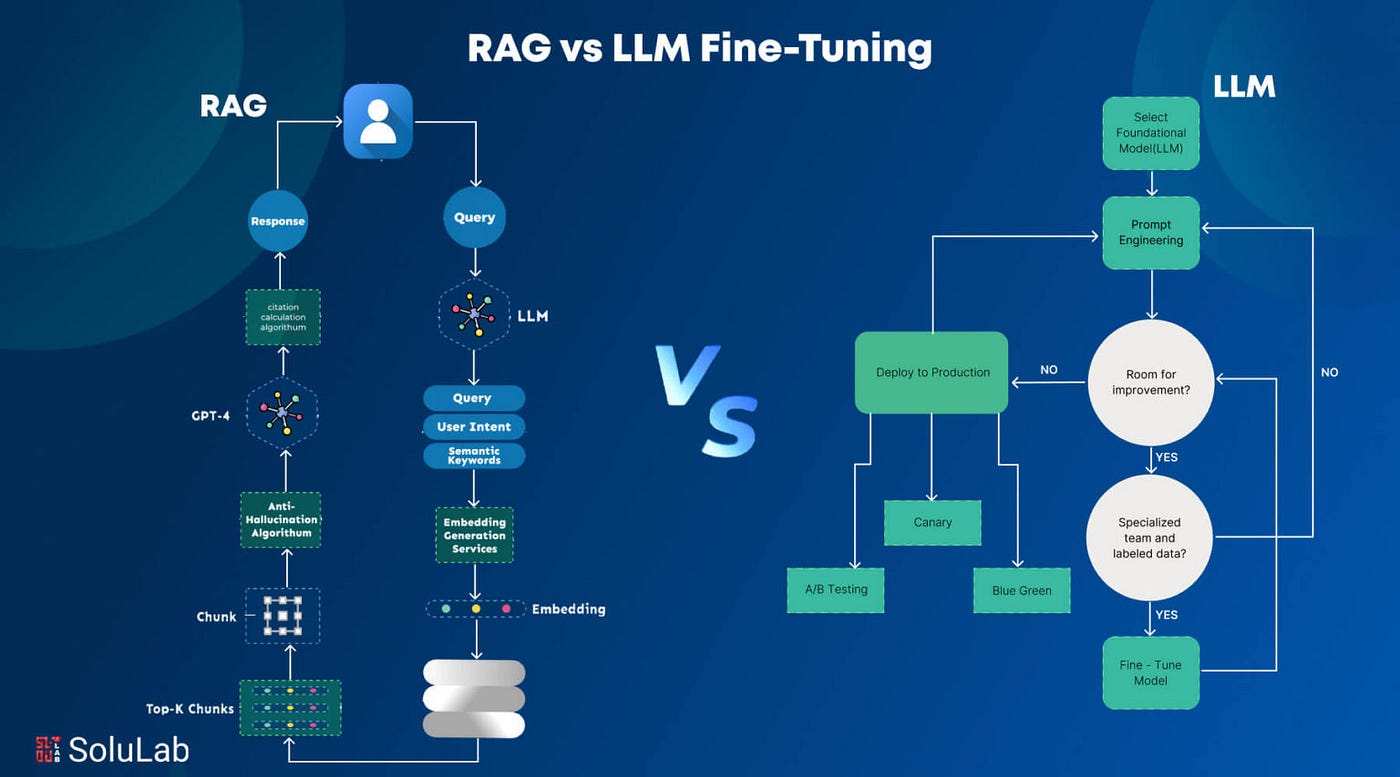
  19. Fine-tuning vs RAG: Stop Guessing, Start Choosing Wisely

    This article provides a decision framework for choosing between fine-tuning, retrieval-augmented generation (RAG), and prompting for large language models. It clarifies that these techniques are not mutually exclusive and are often used in combination in sophisticated systems. The core of the decision process involves diagnosing the specific problem, such as a lack of knowledge, incorrect formatting, inappropriate tone, or deployment cost/latency issues, to determine the most effective approach. AI

    Fine-tuning vs RAG: Stop Guessing, Start Choosing Wisely

    IMPACT Provides a structured approach to optimize LLM implementation, potentially saving significant resources.

  20. Making Foresight Actionable: Repurposing Representation Alignment in World Action Models

    Researchers have developed a new method called AGRA to improve the action control capabilities of World Action Models (WAMs). WAMs use video generation to predict future scenes and derive robot actions, but often struggle with extracting accurate actions from plausible visual futures. AGRA addresses this by aligning intermediate video diffusion features with semantic representations, ensuring the action decoder focuses on relevant interaction regions and improving robustness. AI

    IMPACT Enhances robot manipulation by improving the accuracy and robustness of action extraction from predicted visual futures.

  21. From Persistence to Survival: Hypothesis Testing, Effect Sizes and Vectorisation for Topological Features

    Researchers have developed a new method called STRAND for analyzing topological data. STRAND treats topological features as survival data, enabling statistical comparisons and machine learning applications. This approach allows for hypothesis testing, calculation of effect sizes, and the creation of stable feature vectors for downstream tasks. AI

    IMPACT Enables new approaches for feature extraction and analysis in machine learning tasks involving complex data structures.

  22. Characterizing Software Aging in GPU-Based LLM Serving Systems

    Researchers have developed a new empirical methodology to study software aging specifically within GPU-based LLM serving systems. Their study involved a 216-hour campaign across six deployments, monitoring host, device, and client metrics to identify memory aging issues. The findings indicate significant memory leaks that are dependent on the serving runtime and configuration, offering a reproducible framework for future research in this area. AI

    IMPACT Identifies critical memory aging issues in LLM serving infrastructure, potentially impacting performance and stability.

  23. GraspLLM: Towards Zero-Shot Generalization on Text-Attributed Graphs with LLMs

    Researchers have developed GraspLLM, a new framework designed to improve the generalization capabilities of Large Language Models (LLMs) when applied to text-attributed graphs (TAGs). The framework integrates graph structural comprehension with LLM semantic understanding to enhance performance across diverse datasets and tasks, particularly in zero-shot scenarios. GraspLLM achieves this by representing node texts in a unified semantic space, extracting dataset-agnostic structural information through contrastive learning, and aligning relevant subgraphs to the LLM's token space. Experiments show GraspLLM surpasses existing LLM-based methods for TAGs. AI

    IMPACT Enhances LLM capabilities for analyzing complex, interconnected data, potentially improving applications in areas like social networks and scientific literature.

  24. Critic Architecture Matters: Dual vs. Unified Critics for Humanoid Loco-Manipulation

    Researchers have found that the architecture of critics in reinforcement learning significantly impacts humanoid robot performance. A dual-critic system, which uses separate critics for locomotion and manipulation, outperformed a unified-critic system in tasks requiring both actions. The dual-critic approach led to 3.5x faster target acquisition and double the throughput in simulated tests. AI

    IMPACT Dual-critic architectures may offer a more efficient path for training complex humanoid robot behaviors, potentially accelerating development in robotics.

  25. SG2Loc: Sequential Visual Localization on 3D Scene Graphs

    Researchers have developed SG2Loc, a new method for sequential visual localization in complex indoor environments. This approach utilizes lightweight 3D scene graphs, representing objects and their spatial relationships, to reduce storage overhead compared to traditional methods. The system refines camera pose estimates over time by matching image features to the scene graph, making it suitable for robotics and AR applications. AI

    IMPACT This method could enable more efficient and accurate navigation for robots and AR devices in complex indoor spaces.

  26. I Understand How You Feel: Enhancing Deeper Emotional Support Through Multilingual Emotional Validation in Dialogue System

    Researchers have introduced M-EDESConv and M-TESC, new multilingual datasets for emotional validation in dialogue systems, supporting tasks like response identification and timing detection. They also propose MEGUMI, a model that integrates XLM-RoBERTa semantics with emotion encoders for improved timing detection. Benchmarks using GPT-4.1 Nano and Llama-3.1 8B reveal that while current LLMs can generate varied validating responses, their emotional understanding requires further development. AI

    IMPACT Advances research in AI's ability to provide empathetic and emotionally supportive dialogue, potentially improving user experience in conversational agents.

  27. MemNovo: Look Back at the Spectrum for Balanced De Novo Peptide Sequencing from Mass Spectrometry

    Researchers have developed MemNovo, a novel mechanism to improve de novo peptide sequencing from mass spectrometry data. Existing Transformer-based models often over-rely on generated sequences rather than the spectral evidence. MemNovo addresses this by creating a spectral memory bank and injecting retrieved features during decoding, re-balancing the contributions. This approach significantly enhances precision in peptide sequencing with minimal computational cost. AI

    IMPACT Enhances accuracy in peptide sequencing, potentially accelerating proteomic research and drug discovery.

  28. Inside soccer’s data renaissance

    Computer scientists are revolutionizing soccer through advanced data analytics and AI, uncovering hidden tactical patterns and challenging traditional assumptions about the game. Professor Jesse Davis and his team at KU Leuven's Sports Analytics Lab are at the forefront, developing open-source tools and algorithms that help professional clubs evaluate strategies and player performance. Their research, including a study on the tactical advantage of intentionally kicking the ball out of bounds near the opponent's goal, demonstrates how data-driven insights are reshaping the sport. AI

    IMPACT Data-driven insights and AI tools are enhancing strategic decision-making and player evaluation in professional sports.

  29. On McDiarmid's Inequality under Dependence via Approximate Tensorization of Entropy

    Researchers have published a paper detailing advancements in McDiarmid's inequality, a tool applicable to statistics, learning theory, and theoretical computer science. The work highlights how approximate tensorization of entropy (ATE) implies McDiarmid's inequality and derives a version for non-isotropic Gaussian random vectors. The findings also extend concentration inequalities to strongly log-concave and log-smooth probability measures, improving upon prior results for non-i.i.d. observations. AI

  30. Time-Conditioned and Multi-Time Survival Prediction from 2D PET/CT Projections in Lung Cancer

    Researchers have developed new AI models, ATCS and MTS, to predict overall survival in lung cancer patients using PET/CT scans. These models outperformed a baseline TCS model, achieving AUCs of 0.794 and 0.793 respectively. ATCS showed better performance for shorter-term predictions (0.5-3 years), while MTS excelled at longer intervals (3.5-5 years). The study utilized data from 848 non-small cell lung cancer patients and found that combining different imaging features improved accuracy. AI

    IMPACT These models offer improved risk stratification for lung cancer patients, potentially guiding personalized treatment and follow-up strategies.

  31. Task-Aligned Stability Analysis of Vision-Language Models for Autonomous Driving Hazard Detection

    Researchers have developed a new method to analyze the stability of vision-language models (VLMs) used in autonomous driving hazard detection. The study, published on arXiv, proposes using task-aligned stability measures, which assess changes in hazard scores under perturbation, rather than solely relying on general embedding stability. The findings indicate that different types of corruptions can lead to varied failure modes, such as false negatives or false alarms, highlighting the need for more nuanced robustness benchmarks. AI

    IMPACT This research could lead to more reliable AI systems for autonomous driving by improving how model robustness is evaluated.

  32. AutoMine Solution for AV2 2026 Scenario Mining Challenge

    Researchers have developed AutoMine, a novel method for extracting critical scenarios from autonomous driving data using Large Language Models (LLMs) and Vision-Language Models (VLMs). This approach enhances prompt sensitivity reduction and integrates trajectory functions with VLM capabilities to manage perception noise and visual cues. AutoMine refines generated code through feedback from real-world log executions, achieving strong performance in the Argoverse 2 Scenario Mining Competition. AI

    IMPACT This method could improve the safety and efficiency of autonomous driving systems by enabling better data-driven evaluation.

  33. Modelling magnetic material properties with uncertainty-aware neural networks

    Researchers have developed uncertainty-aware neural networks to improve the reliability of machine learning models in materials science, specifically for predicting magnetic properties. The study benchmarks various ML models for their uncertainty estimation capabilities and applies these techniques to predict coercivity using graph neural networks. This work demonstrates that quantifying uncertainty enhances the trustworthiness of predictions and is transferable across different modeling tasks. AI

    IMPACT Enhances trustworthiness of AI predictions in materials discovery, potentially accelerating the development of new magnetic materials.

  34. RePAIR: Predictive Self-Supervised Representation Learning in Chess

    Researchers have developed a new self-supervised learning architecture called RePAIR, which combines elements of MAE, JEPA, and BERT. This architecture is designed to encode sequential data, such as chess positions, into meaningful representations. Experiments in chess demonstrate that RePAIR can learn concepts and reason about piece movements without reinforcement learning, enabling intuitive analysis of game trajectories. AI

    IMPACT Introduces a novel self-supervised learning method for encoding sequential data, potentially improving AI's ability to understand complex game states.

  35. StatefulDiscovery: Evidence-Calibrated Claim Formation in Open-Ended Scientific Discovery

    Researchers have developed StatefulDiscovery, a new framework designed to improve open-ended scientific discovery by AI agents. This system addresses the challenge of ensuring that AI-generated claims are adequately supported by evidence, preventing overinterpretation. StatefulDiscovery coordinates exploration, evidence gathering, and claim adjudication, and has shown promising results in 40 real-world discovery tasks. AI

    IMPACT Enhances AI's ability to conduct rigorous, evidence-based scientific research.

  36. SheafStain: Sheaf-Theoretic Schrödinger Bridge for Spatially and Biologically Coherent Virtual Staining

    Researchers have developed SheafStain, a novel approach to virtual staining for cancer diagnostics that addresses artifacts caused by patch-wise inference in whole slide images. This method reinterprets Vision Foundation Model features as sheaf-like sections within a Schrödinger Bridge framework, ensuring spatial and biological coherence. SheafStain integrates class and patch tokens to anchor biological consistency and form spatial maps, demonstrating improved results over six prior methods by mitigating stitching artifacts. AI

    IMPACT This new method could improve the accuracy and efficiency of cancer diagnostics by reducing artifacts in virtual staining.

  37. Automated Creativity Evaluation of Language Models Across Open-Ended Tasks

    Researchers have developed a new automated framework to evaluate the creativity of large language models (LLMs) across various open-ended tasks. This domain-agnostic approach uses semantic entropy to measure divergent creativity (novelty and diversity) and a multi-agent judge system for convergent creativity (task fulfillment). The framework was validated on LLMs in problem-solving, research ideation, and creative writing, revealing how model properties influence creative output. AI

    IMPACT Establishes a reproducible standard for evaluating LLM creativity, enabling scalable benchmarking and accelerating progress in creative AI.

  38. Task-Aware Structured Memory for Dynamic Multi-modal In-Context Learning

    Researchers have developed a new framework called TASM (Task-Aware Structured Memory) to improve the efficiency of multi-modal large language models (MLLMs). This training-free approach addresses the limitations of current memory compression techniques by preserving semantic structure and enabling dynamic memory access. TASM utilizes task-vector guided compression and semantics-aware token merging to create a hierarchical memory structure, which has shown to maintain high performance even under significant compression. AI

    IMPACT Enhances MLLM scalability by enabling more efficient handling of long multi-modal sequences.

  39. TaskFusion: Continual Anomaly Detection for Heterogeneous Tabular Data

    Researchers have introduced TaskFusion, a novel continual learning method designed to address the challenges of anomaly detection in heterogeneous tabular data. This approach tackles issues such as varying feature schemas, distribution shifts, and class imbalance by mapping task-specific features into a shared space and aligning distributions. TaskFusion incorporates augmentation techniques and dataset distillation for replay samples to improve stability and handle memory constraints, demonstrating significant performance gains over existing baselines on 21 diverse datasets. AI

    IMPACT Introduces a new method for anomaly detection in complex tabular data scenarios, potentially improving real-world applications.

  40. Towards Data-free and Training-free Compression for Speech Foundation Models Using Parameter Clustering

    Researchers have developed a new method for compressing speech foundation models without requiring additional data or retraining. This approach utilizes channelwise clustering with k-means to achieve parameter compression, exploring mixed sparsity pruning by varying the number of clusters per layer. Experiments on LibriSpeech demonstrated significant word error rate (WER) reductions compared to magnitude-based pruning on models like HuBERT-large and Whisper-large-v3, even with substantial sparsity levels. AI

    IMPACT This compression technique could enable more efficient deployment of large speech models on resource-constrained devices.

  41. Designing AI-Supported Focus Groups: A Role x Modality Playbook

    Researchers have developed a playbook to guide the use of AI in focus groups, addressing the complexities of facilitation and participant interaction. The playbook categorizes AI support by its role (tool, co-host, or host) and modality (text, voice, or embodied). It aims to help user experience research teams understand the potential benefits and methodological risks of integrating AI into qualitative data collection. AI

    IMPACT Provides a framework for integrating AI into qualitative research, potentially improving data collection efficiency and depth.

  42. Gaming AI-Assisted Peer Reviews Poses New Risks to the Scientific Community

    Recent research highlights significant vulnerabilities in AI-assisted scientific peer review systems. Studies demonstrate that AI reviewers can be manipulated through presentation-only revisions, such as altering abstracts or framing, without changing the core scientific content. These attacks can lead to inflated scores and increased acceptance rates, raising concerns that authors might optimize for AI judgment over scientific merit. Furthermore, multimodal AI reviewers are susceptible to attacks targeting figures and text, necessitating robust defenses and careful human oversight to maintain the integrity of the peer-review process. AI

    IMPACT Highlights the need for robust AI systems in scientific evaluation to prevent manipulation and ensure integrity.

  43. Best Natoma Alternatives in 2026 After the Snowflake Acquisition

    Snowflake's acquisition of Natoma for an undisclosed sum on May 27, 2026, highlights the growing enterprise demand for AI governance. This move validates the Model Context Protocol (MCP) category but prompts users to re-evaluate their multi-user agent infrastructure. While Natoma will be integrated into Snowflake's governance and identity layer for AI agents, potential users and existing customers face uncertainty regarding its standalone availability and future roadmap. AI

    Best Natoma Alternatives in 2026 After the Snowflake Acquisition

    IMPACT This acquisition signals a significant enterprise focus on AI governance, potentially driving demand for specialized MCP solutions and influencing future infrastructure decisions.

  44. Plan-and-Verify Video Reward Reasoning with Spatio-Temporal Scene Graph Grounding

    Researchers have developed a new video reward model called SG-PVR to improve text-to-video generation. This model addresses limitations in existing systems by systematically verifying all prompt conditions and grounding judgments in explicit visual evidence. SG-PVR utilizes a plan-and-verify reasoning process combined with spatio-temporal scene graphs to enhance semantic alignment, particularly for fine-grained temporal details. AI

    IMPACT Enhances semantic alignment in text-to-video generation, potentially leading to more accurate and controllable video synthesis.

  45. From Uniform to Learned Graph Priors: Diffusion for Structure Discovery

    Researchers have developed a new method called Diff-prior to improve neural relational inference (NRI) for discovering interaction graphs from data. Current NRI methods often use overly simplistic priors that lead to unreliable structural discovery. Diff-prior reframes the integration of priors as a learnable denoising process, calibrating uncertain edge posteriors into a more reliable structure. This approach has shown improved performance and more decisive edge posteriors across various NRI architectures on standard benchmarks. AI

    IMPACT Enhances AI's ability to infer complex relationships and structures from data, potentially improving applications in scientific discovery and system analysis.

  46. Sparsified Kolmogorov-Arnold Networks for Interpretable Quantum State Tomography

    Researchers have developed a sparsified Kolmogorov-Arnold Network (KAN) to improve interpretability in quantum state tomography. This method allows the network not only to reconstruct quantum states with high fidelity but also to reveal the underlying physical structure of the data. By analyzing the network's pathways, the researchers could identify relevant Pauli observables and their relationships, offering a way to audit learned reconstruction rules against known physical principles. AI

    IMPACT Introduces a novel neural network architecture for enhanced interpretability in quantum state tomography, potentially aiding in the auditing of AI models in scientific applications.

  47. Toward Trustworthy AI: Multi-Target Adversarial Attacks and Robust Defenses for Continuous Data Summarization

    Researchers have developed new methods to attack and defend data summarization processes against adversarial perturbations. The study focuses on how altering the similarity structure of data can degrade the quality of summaries and impact downstream AI tasks. They propose a min-max optimization for generating multi-target attacks and a regularized max-min problem for robust defense, with algorithms offering theoretical guarantees. AI

    IMPACT Introduces new attack vectors and defense mechanisms for trustworthy AI pipelines, potentially improving the robustness of data processing components.

  48. Battery detection of XRay images using transfer learning

    Researchers have developed a transfer learning approach for detecting and classifying batteries in X-ray images. The method utilizes a pre-trained YOLOv5m model, fine-tuned on a dataset for electronic device detection, to then identify prismatic, pouch, and cylindrical Lithium-Ion Batteries. This technique achieved a 94% precision in battery detection, outperforming the base YOLOv5m model by 5% with an inference time of 22 milliseconds. AI

    IMPACT Improves accuracy and speed for automated battery identification in industrial X-ray imaging.

  49. Metadata-Aware Multi-Prompt Reasoning for Zero-Shot Accident Understanding

    Researchers have developed a new three-stage pipeline for zero-shot accident understanding in surveillance videos. This method decomposes the task into identifying when an impact occurs, its type, and its location within the frame. By leveraging vision-language similarity and multi-prompt reasoning across various views, the system aims to improve the reliability of accident detection and localization. AI

    IMPACT Introduces a novel approach for video understanding, potentially improving safety systems and surveillance analysis.

  50. What Limits Does Quantization Place on Dense Top-$k$ Retrieval? A Theoretical Study

    A new theoretical study published on arXiv explores the limitations imposed by quantization on dense top-k retrieval systems. The research demonstrates that achieving perfect retrieval with B bits per coordinate requires the embedding dimension to grow logarithmically with the corpus size (N), contradicting previous assumptions of corpus independence at infinite precision. The findings suggest that practical vector databases and retrieval systems must increase embedding dimensions and potentially precision as their data corpus expands. AI

    IMPACT Highlights that practical vector databases need to scale embedding dimensions with corpus size due to quantization limits.