PulseAugur / Brief
EN
LIVE 16:41:43

Brief

last 24h
[50/3479] 224 sources

Multi-source AI news clustered, deduplicated, and scored 0–100 across authority, cluster strength, headline signal, and time decay.

  1. The red state gold rush: Why some lawmakers are pushing precious metals

    Several Republican-led states are considering or have passed legislation aimed at increasing the use of gold and silver as legal tender and for state investments. Proponents argue these measures offer citizens a hedge against inflation and provide alternative payment options beyond the U.S. dollar. While some states have allowed investments in gold for state funds, attempts to establish gold and silver for everyday transactions have faced challenges, with most experts cautioning against their viability as currency due to volatility. AI

    The red state gold rush: Why some lawmakers are pushing precious metals
  2. Want to upskill in AI policy? Here are 57 useful resources

    80,000 Hours has compiled a list of 57 resources for individuals interested in developing AI policy skills. The curated list includes articles, courses, organizations, and fellowships aimed at helping people enter the field and contribute to shaping AI governance. Resources cover overviews of the AI policy landscape, practical courses for skill-building, and structured fellowship programs offering mentorship and funding. AI

    Want to upskill in AI policy? Here are 57 useful resources
  3. SDL bans AI-written commits

    The Simple DirectMedia Layer (SDL) project has officially banned the use of AI-generated code, such as commits produced by GitHub Copilot. This decision stems from concerns regarding the ethical implications, environmental impact, copyright issues, and potential health effects associated with AI technologies. The project aims to maintain the integrity of its codebase and prevent it from being "tainted" by AI-generated contributions. AI

    SDL bans AI-written commits
  4. Data Center Protests Are Growing. How Should the Industry Respond?

    Community opposition to data center construction is escalating, leading to significant project delays and cancellations totaling billions of dollars. Activist groups are actively blocking developments across numerous states, citing concerns over environmental impact, resource strain, and property values. This growing resistance is forcing developers to reconsider site selection and adopt more transparent practices to gain community approval. AI

    Data Center Protests Are Growing. How Should the Industry Respond?

    IMPACT Data center expansion slowdown may impact AI compute availability and costs.

  5. US v. Heppner (S.D.N.Y. 2026) no attorney-client privilege for AI chats [pdf]

    A U.S. District Court has ruled that communications with an AI chatbot are not protected by attorney-client privilege. The decision came in a case where a defendant attempted to shield conversations with an AI from prosecutors. This ruling could have significant implications for how legal professionals and their clients use AI tools. AI

  6. Voice actors fight to save their livelihoods and local cultures from Hollywood’s AI push

    Voice actors globally are organizing to protect their livelihoods and cultural integrity against the increasing use of AI in dubbing and voice-over work. Studios are leveraging AI technology to replicate voices and dub content rapidly and cheaply, leading to job displacement and concerns about the unauthorized use of actors' vocal data for training these models. In response, voice actors in countries like Mexico, Brazil, and South Korea are advocating for legislative protections, while others are forming collectives to challenge the unchecked proliferation of AI in their industry. AI

    Voice actors fight to save their livelihoods and local cultures from Hollywood’s AI push
  7. Mutually Automated Destruction: The Escalating Global A.I. Arms Race

    A report from Georgetown's Center for Security & Emerging Tech (CSET) highlights an escalating global competition in developing AI-powered autonomous weapons. Researchers analyzed Chinese military requests for proposals, revealing priorities in AI-enabled military technologies for command, control, and intelligence systems. The findings suggest that while the US may have an advantage, China is rapidly advancing in this domain, potentially possessing similar capabilities to US systems like Maven. AI

    Mutually Automated Destruction: The Escalating Global A.I. Arms Race
  8. Anthropic loses appeals court bid to pause supply chain risk label

    Anthropic has lost its appeal to pause a California law requiring supply chain risk labels on AI products. The company argued that the law, which mandates disclosure of potential risks associated with AI systems, was too vague and would impose an undue burden. However, the D.C. Circuit Court of Appeals rejected Anthropic's plea, allowing the labeling requirement to proceed. AI

    IMPACT Mandatory AI supply chain risk labeling may increase transparency and influence product development.

  9. US summons bank bosses over cyber risks from Anthropic's latest AI model

    US Treasury Secretary Scott Bessent convened a meeting with leaders of major American banks to address cybersecurity risks associated with Anthropic's new AI model, Claude Mythos. The model has reportedly identified thousands of software vulnerabilities, raising concerns about its potential misuse by malicious actors. Anthropic has limited the release of Claude Mythos to a select group of companies due to these unprecedented cybersecurity risks. AI

    US summons bank bosses over cyber risks from Anthropic's latest AI model

    IMPACT Heightens regulatory scrutiny on AI model releases and their potential impact on financial system stability.

  10. US court declines to block Pentagon's Anthropic blacklisting for now

    A U.S. court has decided not to immediately block the Pentagon's decision to blacklist Anthropic. This ruling means the AI company will remain excluded from certain defense contracts for the time being. The court's decision is a preliminary step, and further legal proceedings may follow. AI

    IMPACT Potential impact on AI companies' ability to secure defense contracts and government partnerships.

  11. Have a strong brand in a world of noise—it’s like having the only red T-shirt in a stadium full of white ones

    Volvo Cars is launching its new all-electric EX60 in Europe, a critical model for the company as it aims to go fully electric by 2030. The EX60 boasts a range of up to 500 miles and can gain 211 miles of range in just 10 minutes of charging. This launch comes as Volvo navigates a challenging market for electric vehicles, with declining subsidies and customer skepticism about range and price, alongside internal financial pressures from tariffs and discounting. AI

    Have a strong brand in a world of noise—it’s like having the only red T-shirt in a stadium full of white ones

    IMPACT N/A

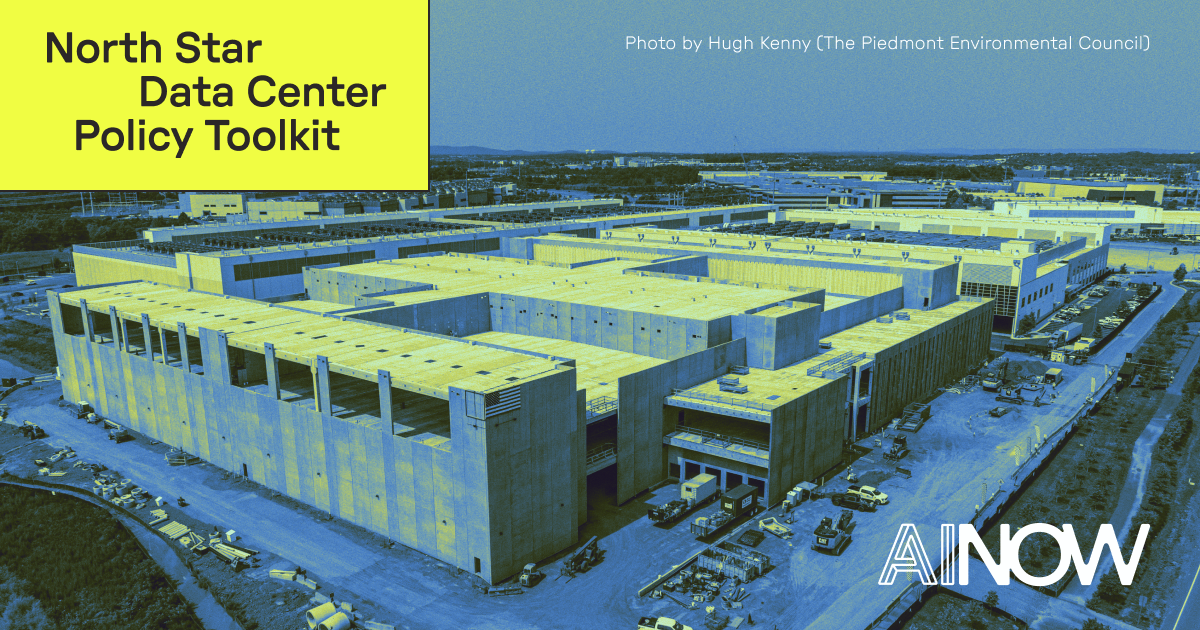
  12. North Star Data Center Policy Toolkit: State and Local Policy Interventions to Stop Rampant AI Data Center Expansion

    The AI Now Institute has released a policy toolkit aimed at local and state governments to curb the expansion of data centers. The toolkit highlights the negative impacts of these facilities, including resource depletion, pollution, increased energy costs, and a drain on public funds, arguing for policies that prioritize communities over corporate profits. It offers concrete recommendations for restricting data center development and mitigating their environmental and social costs, with options tailored for different jurisdictions. AI

    North Star Data Center Policy Toolkit: State and Local Policy Interventions to Stop Rampant AI Data Center Expansion
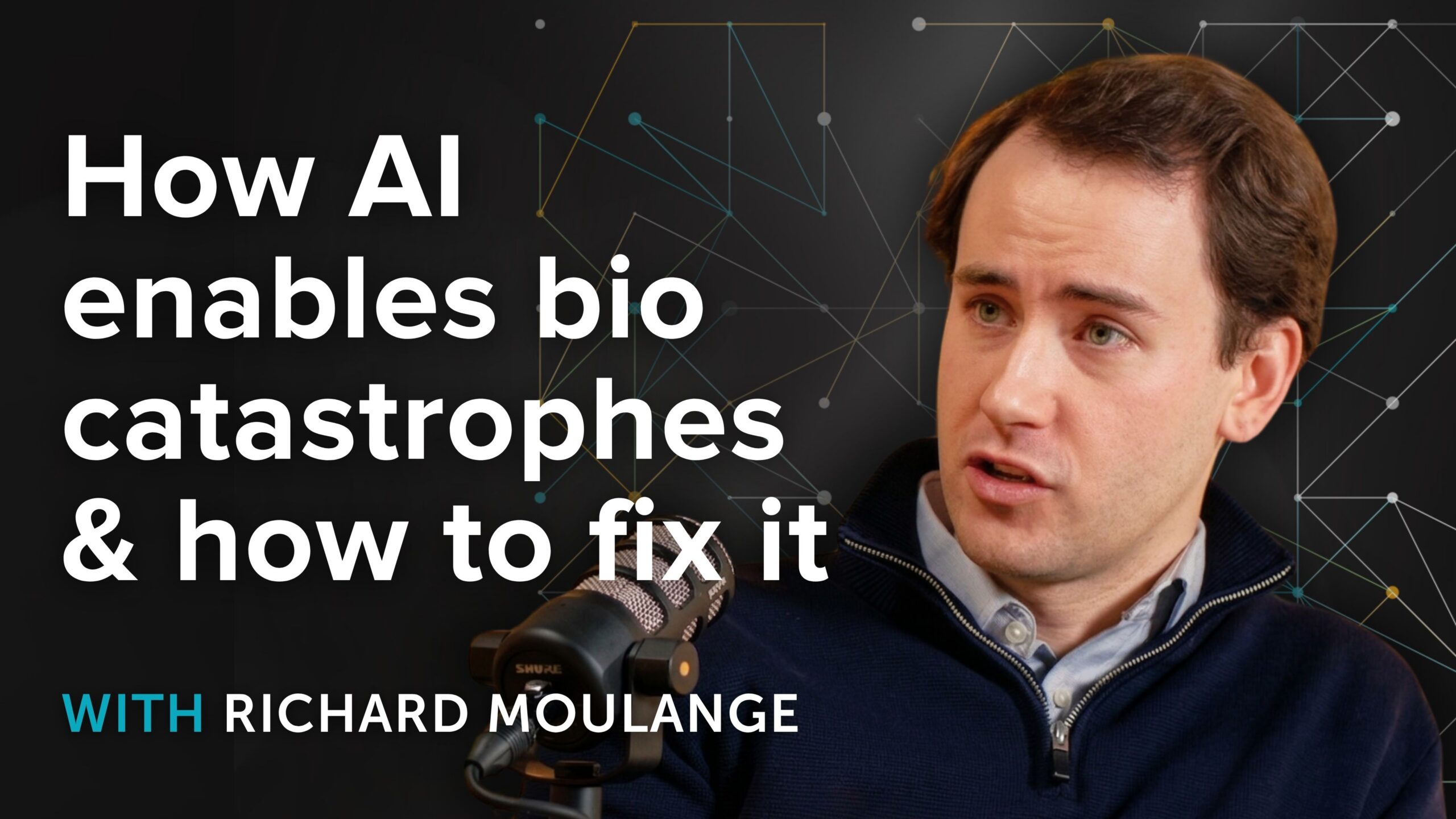
  13. AI designs genomes from scratch & outperforms virologists at lab work. Dr Richard Moulange asks: what could go wrong?

    AI models are now capable of designing novel, functional genomes that can outperform natural viruses, marking a significant advancement in biological capabilities. This development challenges previous assumptions that tacit knowledge would prevent the misuse of biological agents. Experts are concerned that AI is lowering the barrier for creating bioweapons, with current defenses potentially misdirected and underfunded. AI

    AI designs genomes from scratch & outperforms virologists at lab work. Dr Richard Moulange asks: what could go wrong?
  14. Stripe withheld $85k from our EU platform

    Zorq AI, a Swedish generative AI platform, had its Stripe account permanently closed during a routine review, resulting in the withholding of approximately $85,000 USD. Stripe cited an "unacceptable level of risk" without specifying a policy violation, despite Zorq AI resolving two technical issues that caused customer disputes. The company is now pursuing legal action and filing complaints with financial regulators in Sweden and Ireland, questioning the legality of Stripe's actions under EU payment regulations. AI

    IMPACT Highlights potential financial and operational risks for AI startups relying on third-party payment processors.

  15. Judge blocks Pentagon effort to 'punish' Anthropic with supply chain risk label

    A federal judge has blocked the Pentagon's attempt to label Anthropic a supply chain risk and sever government ties, ruling the move violated the AI company's constitutional rights. The judge found the designation, which would have required other companies to prove they weren't using Anthropic products, was retaliatory. This action stemmed from Anthropic's refusal to allow its Claude AI model to be used in autonomous weapons or mass surveillance. AI

    Judge blocks Pentagon effort to 'punish' Anthropic with supply chain risk label

    IMPACT This ruling may set a precedent for how government agencies can contract with AI companies that have ethical guardrails.

  16. Order Granting Preliminary Injunction – Anthropic vs. U.S. Department of War [pdf]

    Anthropic has secured a preliminary injunction against the U.S. Department of War. The court order prevents the Department of War from taking further action in a case brought by Anthropic. Details regarding the specific nature of the dispute and the grounds for the injunction are not provided in the available information. AI

    IMPACT This legal ruling could set precedents for government interactions with AI companies regarding data or operational security.

  17. Judge's Remarks on Anthropic vs. Pentagon

    A federal judge is scrutinizing the Pentagon's decision to label Anthropic a national security risk, potentially impacting the AI company's ability to secure government contracts. Judge Rita Lin questioned whether the government's actions, which extend beyond simply ceasing to use Anthropic's Claude AI, were intended to punish the company for publicly disclosing a contract dispute. The judge noted that the Pentagon's broad sanctions could cripple Anthropic's business relationships across all federal agencies and with contractors, not just those involved in defense. AI

    Judge's Remarks on Anthropic vs. Pentagon

    IMPACT This case could set a precedent for how governments interact with AI companies regarding national security and contract disputes.

  18. Government agencies buy commercial data about Americans in bulk

    Government agencies are purchasing commercial data on Americans from data brokers, raising privacy concerns. This practice allows agencies to track individuals without warrants, circumventing traditional legal protections. The data includes location information, online activity, and other personal details, which can be used for surveillance purposes. AI

    IMPACT Raises questions about the ethical use of data in AI-driven surveillance and the need for policy oversight.

  19. Government agencies buy commercial data about Americans in bulk

    Government agencies are purchasing commercial data on Americans from data brokers, raising privacy concerns. This practice allows agencies like ICE to access sensitive information without warrants. Lawmakers are scrutinizing these data purchases, questioning the legality and ethical implications of such surveillance. AI

    IMPACT Raises questions about the ethical use of data and surveillance technologies, potentially impacting AI development that relies on such data.

  20. U.S. Government's Ban on Anthropic Looks Like Punishment Attempt, Judge Says

    A U.S. judge has indicated that the government's attempt to ban Anthropic may have been an act of punishment. The judge's comments suggest that the ban was not based on legitimate regulatory grounds. This ruling could have implications for how government agencies interact with AI companies. AI

    IMPACT Potential shift in government oversight and regulatory approaches towards AI companies.

  21. U.S. Government's Ban on Anthropic Looks Like Punishment Attempt, Judge Says

    A U.S. judge has indicated that the government's attempt to ban Anthropic may have been an act of punishment. The judge's remarks suggest that the ban was not based on legitimate regulatory grounds but rather on a desire to penalize the AI company. This ruling could have significant implications for how government agencies interact with and regulate AI firms. AI

    IMPACT This judicial commentary could influence future regulatory actions and legal challenges against AI companies by government entities.

  22. Helping developers build safer AI experiences for teens

    OpenAI has released a set of prompt-based safety policies designed to help developers protect teen users within AI applications. These policies are compatible with their open-weight safety model, gpt-oss-safeguard, and aim to simplify the process of implementing age-appropriate content moderation. The policies cover areas such as graphic violence, sexual content, harmful behaviors, and dangerous activities, and were developed with input from organizations like Common Sense Media. AI

    Helping developers build safer AI experiences for teens
  23. OpenAI Japan announces Japan Teen Safety Blueprint to put teen safety first

    OpenAI Japan has launched the Japan Teen Safety Blueprint, a new initiative focused on protecting young users of generative AI. This framework introduces advanced age-aware protections, stricter safety policies for users under 18, and expanded parental controls. The blueprint also emphasizes research-based, well-being-centered design in collaboration with experts to address risks like misinformation and psychological strain. AI

    OpenAI Japan announces Japan Teen Safety Blueprint to put teen safety first
  24. Pacific Northwest National Laboratory and OpenAI partner to accelerate federal permitting

    OpenAI has partnered with the Pacific Northwest National Laboratory (PNNL) to explore how AI can accelerate federal permitting processes. A new benchmark, DraftNEPABench, was developed with subject matter experts to assess AI's performance on tasks related to environmental impact statements. Initial findings suggest that generalized coding agents could reduce drafting time for these documents by up to 15%, potentially speeding up the review of critical infrastructure projects. AI

    Pacific Northwest National Laboratory and OpenAI partner to accelerate federal permitting
  25. Building Technology to Drive AI Governance

    Researchers are developing new frameworks and tools to address the growing challenges in AI governance. One approach, the Agent Viability Framework, proposes an Informational Viability Principle for adaptive runtime governance of autonomous agents, focusing on estimating unobserved risk. Another paper introduces UGAF-ITS, a harmonization framework and validation tool designed to consolidate diverse AI governance standards like the EU AI Act and NIST AI Risk Management Framework for intelligent transportation systems. Additionally, the Human-AI Governance (HAIG) framework shifts focus from AI as an object of governance to the relational dynamics between human and AI actors, emphasizing trust and utility. AI

    Building Technology to Drive AI Governance

    IMPACT New governance frameworks and tools aim to improve AI safety and compliance, particularly for autonomous agents and complex systems like intelligent transportation.

  26. How We Protect Confidential Information

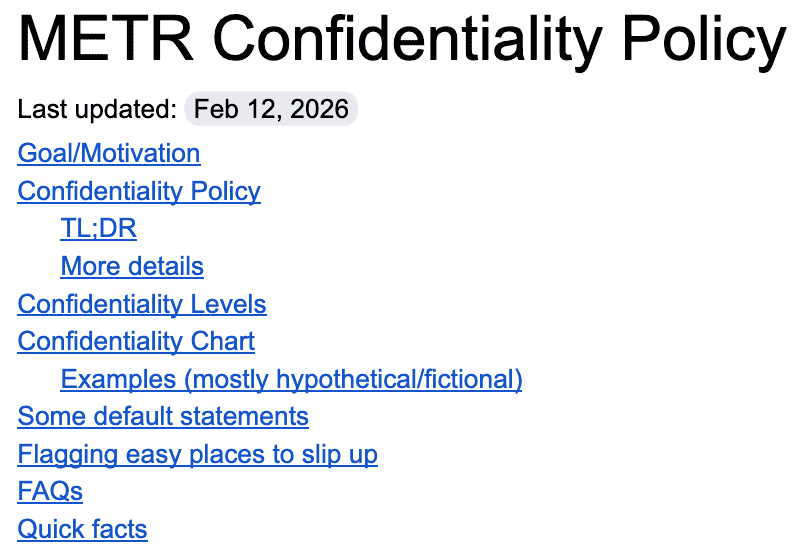
    METR has detailed its comprehensive approach to safeguarding confidential information and non-public AI models. Their strategy involves a multi-layered system of policies, technical setups, and established norms to prevent leaks and mitigate insider threats. This includes assigning strict confidentiality levels to information, using codenames for sensitive models, and implementing technical controls to restrict data access and sharing. AI

    How We Protect Confidential Information
  27. Nevada legislators blast Boring Company over safety and environmental violations as Elon Musk–owned startup declines to testify in hearing

    Nevada legislators expressed strong criticism towards Elon Musk's Boring Company during a legislative hearing, citing numerous safety and environmental violations. The company, which is developing an underground transit system near Las Vegas, failed to send representatives to testify, drawing further ire from lawmakers. State agencies defended their oversight of the fast-moving project, acknowledging some procedural shortcomings but highlighting efforts to adapt to the company's unique operational pace. AI

    Nevada legislators blast Boring Company over safety and environmental violations as Elon Musk–owned startup declines to testify in hearing

    IMPACT Minimal direct impact on AI operators, but highlights regulatory scrutiny for rapidly developing infrastructure projects.

  28. EMEA Youth & Wellbeing Grant

    OpenAI has announced the finalists for its EMEA Youth & Wellbeing Grant program, a €500,000 initiative aimed at supporting organizations that enhance youth safety and well-being in the context of AI. The grant, with individual awards ranging from €25,000 to €100,000, funds NGOs and research institutions across Europe, the Middle East, and Africa. Projects focus on areas such as AI literacy, harm prevention, and research into AI's impact on adolescent development and safety. AI

    EMEA Youth & Wellbeing Grant
  29. CAISI Issues Request for Information About Securing AI Agent Systems

    The National Institute of Standards and Technology (NIST) has issued a Request for Information (RFI) to gather insights on securing AI agent systems. These systems, capable of autonomous actions, present unique security challenges beyond traditional software vulnerabilities, including risks from adversarial data, insecure models, and misaligned objectives. NIST seeks input on threats, mitigation methods, and measurement approaches to inform future voluntary guidelines and best practices for AI agent security. The comment period for the RFI closes on March 9, 2026. AI

    CAISI Issues Request for Information About Securing AI Agent Systems
  30. At the edges of the AI data center boom, rural America is up against Silicon Valley billions

    A massive AI data center project is planned for Hassayampa Ranch, Arizona, a rural area previously known for its tranquility. The developer, Anita Verma-Lallian, secured approval for industrial rezoning of a 2,000-acre property, despite local opposition. This project, backed by investors like Chamath Palihapitiya, will cost up to $25 billion and require 1.5 gigawatts of power, impacting the local environment and economy. AI

    At the edges of the AI data center boom, rural America is up against Silicon Valley billions

    IMPACT Accelerates the physical build-out of AI infrastructure, potentially straining local resources and economies.

  31. Updating our Model Spec with teen protections

    OpenAI has updated its Model Specification to include specific principles for users under 18, aiming to provide a safer and more age-appropriate experience. These Under-18 (U18) Principles prioritize teen safety, encourage real-world support, treat teens appropriately, and emphasize transparency. The update introduces stronger guardrails and safer alternatives for conversations involving higher-risk topics, with encouragement to seek offline support or emergency services when necessary. AI

    Updating our Model Spec with teen protections
  32. Securing Smart Speakers for Home Health Care: NIST Offers New Guidelines

    The National Institute of Standards and Technology (NIST) has released new guidelines to address the cybersecurity and privacy risks associated with integrating smart speakers and other voice-activated digital assistants into home health care systems. These guidelines, titled "Mitigating Cybersecurity and Privacy Risks in Telehealth Smart Home Integration," aim to protect sensitive patient information from potential threats such as data exfiltration and manipulation. By offering recommendations like message encryption, NIST seeks to enhance the security of telehealth services that increasingly rely on smart home devices for patient-provider communication and remote monitoring. AI

    Securing Smart Speakers for Home Health Care: NIST Offers New Guidelines
  33. Exclusive: After citations against Elon Musk’s Boring Company were suddenly withdrawn, federal regulators are now investigating Nevada OSHA

    Federal workplace safety regulators are investigating Nevada's OSHA agency following allegations of improper handling of citations against Elon Musk's Boring Company. The investigation was prompted by a complaint after Nevada OSHA rescinded three serious citations issued to Boring Company concerning a chemical burn incident. Critics, including a Nevada Congresswoman, have raised concerns about potential undue influence and lack of transparency in the process. AI

    Exclusive: After citations against Elon Musk’s Boring Company were suddenly withdrawn, federal regulators are now investigating Nevada OSHA

    IMPACT This regulatory probe into Nevada OSHA's handling of citations for Elon Musk's Boring Company highlights potential oversight issues in workplace safety regulations, which could indirectly impact companies operating in regulated industries.

  34. AI Company Safety Practices Fall Short of Public Commitments and Show Structural Weaknesses, as Top Performers Widen the Gap

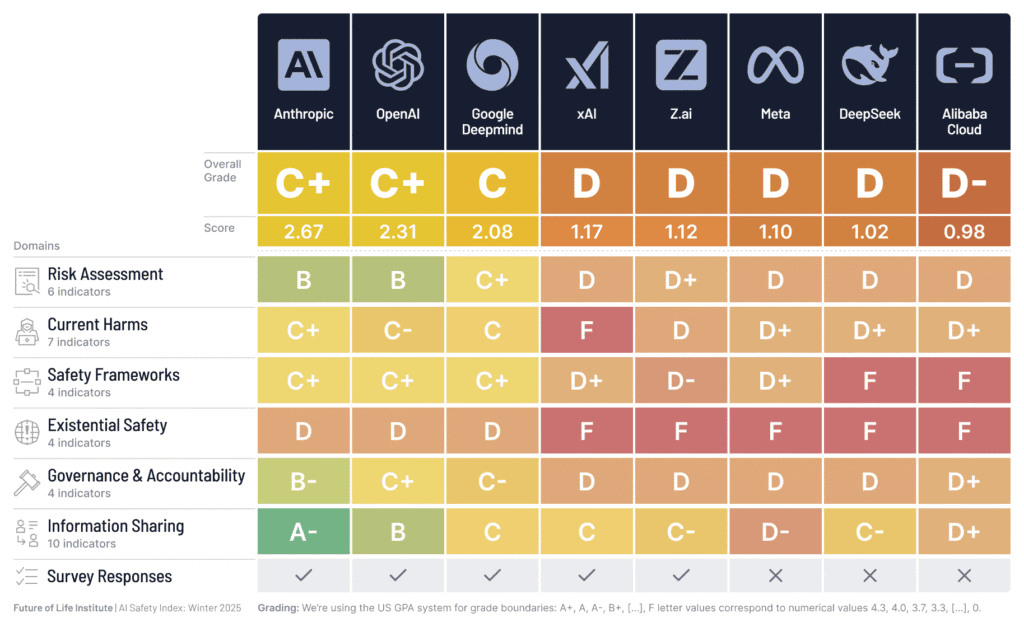
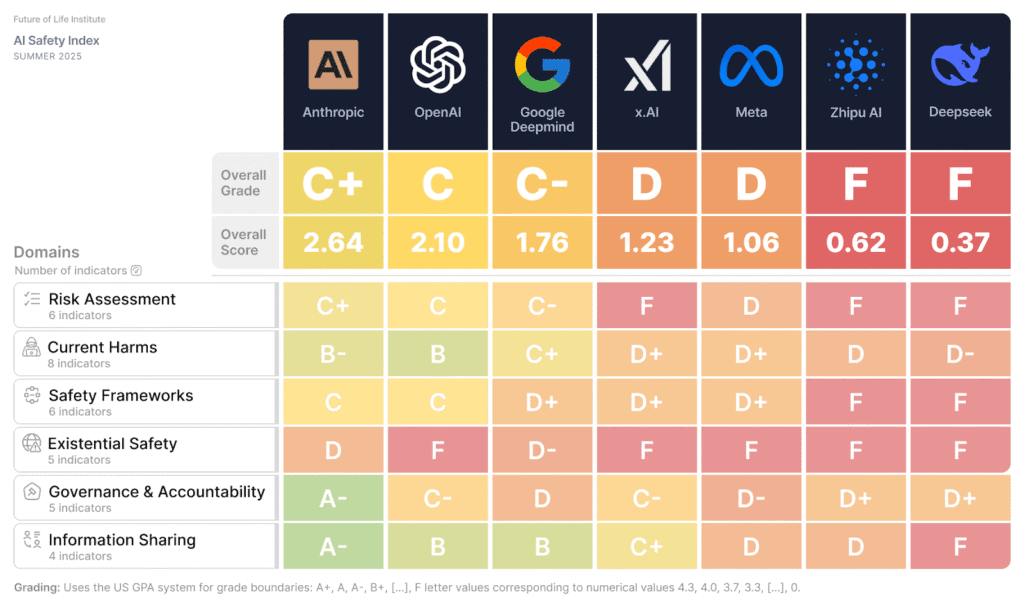
    A new report from the Future of Life Institute (FLI) indicates that major AI companies are falling short of their safety commitments, despite advancements in AI capabilities. The FLI's AI Safety Index, which evaluated eight leading companies including OpenAI, Anthropic, and Google DeepMind, found significant weaknesses in areas like risk assessment and governance. Notably, none of the companies have a robust strategy for controlling potential superintelligent AI, a risk acknowledged by industry leaders themselves. The report also highlights a growing performance gap between top companies like Anthropic and OpenAI, and others such as xAI and Meta, particularly in systematic safety processes and information sharing. AI

    AI Company Safety Practices Fall Short of Public Commitments and Show Structural Weaknesses, as Top Performers Widen the Gap
  35. Separating natural forests from other tree cover with AI for deforestation-free supply chains

    Google AI has developed a new AI-powered map called Natural Forests of the World 2020, which distinguishes natural forests from other tree cover with 92.2% accuracy. This tool uses a novel multi-modal temporal-spatial vision transformer model that analyzes satellite imagery and topographical data over time to differentiate ancient ecosystems from plantations. The release aims to support global efforts against deforestation, aiding companies in due diligence for regulations like the EUDR and assisting governments and conservation groups in monitoring and protecting vital natural forests. AI

    Separating natural forests from other tree cover with AI for deforestation-free supply chains
  36. Introducing the Child Safety Blueprint

    OpenAI has released two blueprints outlining its approach to AI safety for minors. The Child Safety Blueprint focuses on combating AI-enabled child sexual exploitation by modernizing laws, improving provider reporting, and integrating safety-by-design measures into AI systems. The Teen Safety Blueprint provides a roadmap for developing AI tools that protect and empower teenagers, emphasizing age-appropriate design, product safeguards, and ongoing research. OpenAI is implementing these frameworks across its products, including enhanced parental controls and an age-prediction system. AI

    Introducing the Child Safety Blueprint
  37. Taking Bold Steps to Keep Teen Users Safe on Character.AI

    Character.AI is removing open-ended chat for users under 18 by November 25th, citing evolving AI landscapes and regulatory concerns. The platform will instead focus on creative tools like video and story generation for teens, while also implementing new age assurance features and limiting chat time. Additionally, Character.AI is establishing and funding an independent AI Safety Lab to advance safety alignment for AI entertainment. AI

    Taking Bold Steps to Keep Teen Users Safe on Character.AI

    IMPACT Character.AI's move to restrict teen access to open-ended AI chat may influence other platforms' safety policies and product development for younger users.

  38. The U.S. Public Wants Regulation (or Prohibition) of Expert‑Level and Superhuman AI

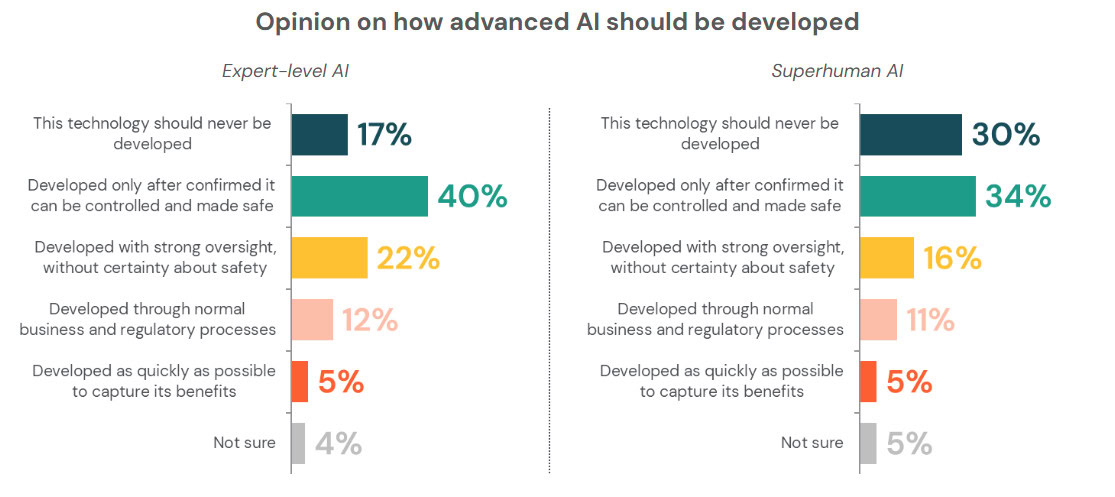
    A recent survey of 2,000 U.S. adults indicates a strong public desire for regulation or even prohibition of advanced AI systems. A significant majority (64%) believe that AI at or beyond human-level intelligence should not be developed until it can be proven safe and controllable, with many advocating for an immediate pause on such development. The findings also reveal overwhelming support for robust AI regulation, with 73% favoring a slow, heavily regulated approach similar to pharmaceutical testing. AI

    The U.S. Public Wants Regulation (or Prohibition) of Expert‑Level and Superhuman AI
  39. Trump’s H-1B shift is a bold reform that powers U.S. workers and immigrant dreamers alike

    President Trump has implemented a significant reform to the H-1B visa program by introducing a $100,000 filing fee. This move aims to curb the use of foreign labor as a cheap alternative and prioritize American workers, particularly in the evolving landscape of AI. The policy is framed as a way to attract truly exceptional talent rather than a large volume of workers, with the intention of fostering domestic innovation and employment. AI

    Trump’s H-1B shift is a bold reform that powers U.S. workers and immigrant dreamers alike

    IMPACT This policy shift could reshape the talent pool for AI development by prioritizing domestic talent over foreign hires.

  40. CAISI Evaluation of DeepSeek AI Models Finds Shortcomings and Risks

    A recent evaluation by NIST's Center for AI Standards and Innovation (CAISI) found that AI models from the Chinese developer DeepSeek lag behind leading U.S. models in performance, cost, and security. The report highlights significant risks associated with DeepSeek's models, including susceptibility to agent hijacking and jailbreaking attacks, which could impact application developers, consumers, and U.S. national security. Despite these shortcomings, DeepSeek's models are contributing to a notable increase in the global adoption of AI from China. AI

    CAISI Evaluation of DeepSeek AI Models Finds Shortcomings and Risks
  41. NIST Awards More Than $3 Million to Support Cybersecurity Workforce Development Across 13 States

    The National Institute of Standards and Technology (NIST) has awarded over $3.3 million in cooperative agreements to 17 organizations across 13 states. These funds are intended to bolster the cybersecurity workforce by addressing a significant shortage of qualified professionals, with over 514,000 job openings currently in the U.S. The supported initiatives, known as RAMPS projects, will align local business and nonprofit needs with cybersecurity workforce guidance. These efforts aim to develop curricula, provide training, and offer practical learning opportunities like internships and workshops. AI

    NIST Awards More Than $3 Million to Support Cybersecurity Workforce Development Across 13 States
  42. Collective alignment: public input on our Model Spec

    OpenAI has released updates to its Model Spec based on public input gathered from over 1,000 individuals globally. The company surveyed participants on how AI models should behave, comparing their preferences to the existing Spec and incorporating feedback where disagreements arose. This initiative, termed "collective alignment," aims to ensure AI systems reflect a broad range of human values and priorities. OpenAI has also shared its public input dataset on HuggingFace to foster further research in this area. AI

    Collective alignment: public input on our Model Spec
  43. NIST Revises Security and Privacy Control Catalog to Improve Software Update and Patch Releases

    NIST has updated its catalog of security and privacy safeguards, known as NIST Special Publication 800-53, to enhance how organizations manage risks associated with software updates and patches. This revision, prompted by a recent executive order on cybersecurity, introduces new controls and emphasizes secure software development practices. The updates aim to help both software developers and organizations that implement updates to minimize the risks of unintended consequences while ensuring system security. AI

    NIST Revises Security and Privacy Control Catalog to Improve Software Update and Patch Releases
  44. NIST Guidelines Can Help Organizations Detect Face Photo Morphs, Deter Identity Fraud

    NIST has released new guidelines to help organizations combat identity fraud facilitated by face morphing software. These guidelines, detailed in NISTIR 8584, aim to improve the detection and investigation of morphed images, which can deceive facial recognition systems. The publication offers practical advice for implementing morph detection tools in operational settings, considering different detection scenarios and the capabilities of current software. AI

    NIST Guidelines Can Help Organizations Detect Face Photo Morphs, Deter Identity Fraud
  45. The U.S. grid is so weak, the AI race may be over

    The rapid expansion of AI is creating a significant bottleneck in the United States due to the limitations of its power grid, contrasting sharply with China's robust energy infrastructure. While U.S. AI growth is hampered by debates over data center power consumption and grid stability, China has proactively addressed this by overbuilding its power capacity over decades. This strategic oversupply allows China to integrate AI data centers as a means to absorb excess energy, a situation unimaginable in the U.S. where grids often operate with minimal reserve margins, leading to concerns about the sustainability of AI development. AI

    The U.S. grid is so weak, the AI race may be over

    IMPACT AI development in the US faces a critical bottleneck due to power grid limitations, potentially hindering growth compared to China's energy-secure infrastructure.

  46. NIST Finalizes ‘Lightweight Cryptography’ Standard to Protect Small Devices

    NIST has finalized a new lightweight cryptography standard designed to protect small, resource-constrained electronic devices. This standard, based on the Ascon cryptographic algorithms, requires less computing power and time than traditional methods, making it suitable for the Internet of Things, RFID tags, and medical implants. The standard includes four variants for tasks like authenticated encryption and hashing, aiming to enhance security for billions of connected devices. AI

    NIST Finalizes ‘Lightweight Cryptography’ Standard to Protect Small Devices
  47. NIST Consortium and Draft Guidelines Aim to Improve Security in Software Development

    NIST has released draft guidelines for secure software development, developed by a consortium of industry partners and cybersecurity experts. These guidelines aim to help organizations build software more securely and efficiently, addressing vulnerabilities throughout the development lifecycle. The initiative is a response to a recent executive order on strengthening national cybersecurity and incorporates AI capabilities and zero-trust principles. NIST is currently seeking public comments on the draft, with a virtual event planned for August 27th. AI

    NIST Consortium and Draft Guidelines Aim to Improve Security in Software Development
  48. Google DeepMind Falls Behind OpenAI in Latest Safety Review; All AI Companies Still Falling Short, Say Experts

    A recent AI Safety Index report by the Future of Life Institute indicates that major AI companies, including Google DeepMind and OpenAI, are still falling short in their safety practices. While OpenAI improved its transparency and moved ahead of Google DeepMind in the rankings, no company has demonstrated a robust strategy for controlling advanced AI systems or assessing their risks. Experts emphasize the urgent need for legally binding safety standards, comparing the situation to regulations in other critical industries, as competitive pressures may be leading companies to deprioritize safety. AI

    Google DeepMind Falls Behind OpenAI in Latest Safety Review; All AI Companies Still Falling Short, Say Experts
  49. What should companies share about risks from frontier AI models?

    METR has proposed a framework for increased transparency in the development of frontier AI models, arguing that current disclosure practices are insufficient to identify potential risks. The organization suggests that developers should share more information about their training processes and internal model capabilities, even for models not publicly deployed. METR acknowledges potential downsides, such as incentivizing developers to avoid discovering risks or leaking competitive information, and proposes tiered disclosure options, including sharing with government bodies, external researchers, or through trusted intermediaries. AI

    What should companies share about risks from frontier AI models?