PulseAugur / Brief
EN
LIVE 21:38:11

Brief

last 24h
[16/166] 223 sources

Multi-source AI news clustered, deduplicated, and scored 0–100 across authority, cluster strength, headline signal, and time decay.

  1. Thanks to @lmsysorg ! Try it on SGLang now!🚀🚀

    Alibaba has released its Qwen3.6-27B model, an open-source, dense model that demonstrates strong coding performance, outperforming a significantly larger predecessor on key benchmarks. This new model is natively multimodal, capable of processing both vision and language inputs. The release has been accompanied by rapid integration with popular AI tools like vLLM and SGLang, enabling local execution and broader accessibility. AI

    Thanks to @lmsysorg  ! Try it on SGLang now!🚀🚀
  2. What Claude Code's Source Revealed About AI Engineering Culture

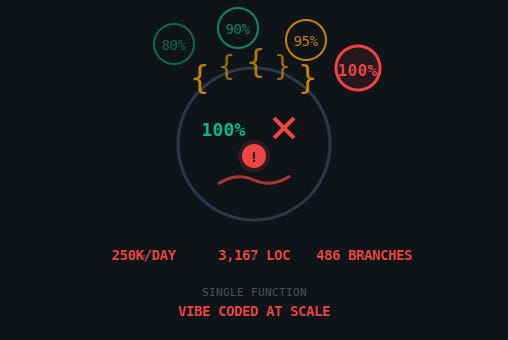
    A recent leak of Anthropic's Claude Code source revealed significant issues with the codebase, including extremely long functions and the use of basic regex for sentiment analysis, which critics likened to a trucking company using horses. The leak occurred due to a packaging error, not a malicious attack, and exposed over 512,000 lines of code. This incident highlighted concerns about Anthropic's engineering culture, particularly after CEO Dario Amodei had repeatedly claimed that AI was writing an increasingly high percentage of their code, reaching 100% in some instances. AI

    What Claude Code's Source Revealed About AI Engineering Culture
  3. Yann LeCun's AI startup raises $1B in Europe's largest ever seed round

    AI startup Mistral AI has secured a significant $1 billion in seed funding, marking the largest seed round ever raised in Europe. The funding round was led by Andreessen Horowitz and Lightspeed Venture Partners, with participation from other major investors including General Catalyst, Nvidia, and Salesforce. This substantial investment underscores the growing interest and capital flowing into the competitive AI landscape. AI

    IMPACT This massive funding round for Mistral AI signals strong investor confidence in European AI companies and intensifies competition in the frontier model space.

  4. EpiCache: Episodic KV Cache Management for Long-Term Conversation on Resource-Constrained Environments

    Multiple research papers released in May and June 2026 propose novel methods for compressing the Key-Value (KV) cache in large language models (LLMs). These techniques aim to reduce the significant memory overhead associated with long context lengths, enabling more efficient inference on resource-constrained environments. Approaches include episodic management, global regression for merging, drift-robust retrieval, and low-rank approximations, all seeking to maintain model accuracy while drastically cutting memory usage and latency. AI

    IMPACT These methods aim to significantly reduce memory and latency for LLMs, potentially enabling wider deployment and more complex applications on less powerful hardware.

  5. Fei-Fei Li's World Labs raised $1B from A16Z, Nvidia to advance its world models

    Fei-Fei Li's AI startup, World Labs, has secured $1 billion in a new funding round. The investment was backed by major players including Autodesk, Andreessen Horowitz, Nvidia, and Advanced Micro Devices. This funding aims to advance the company's unique approach to developing AI. AI

    Fei-Fei Li's World Labs raised $1B from A16Z, Nvidia to advance its world models

    IMPACT This substantial investment could accelerate novel AI development approaches and potentially shift the landscape of AI research and application.

  6. LambdaPO: A Lambda Style Policy Optimization for Reasoning Language Models

    Several recent research papers explore methods to enhance the reasoning capabilities of large language models (LLMs). One study suggests that increasing a model's long-context capacity improves reasoning performance across various tasks. Another paper introduces OckBench, a benchmark focused on measuring the token efficiency of LLM reasoning, highlighting significant room for optimization. Additional research proposes frameworks for evaluating inductive reasoning, improving robustness through invariant gradient alignment, and enabling belief-aware reasoning in multimodal models. AI

    IMPACT New benchmarks and training techniques aim to improve LLM reasoning accuracy, efficiency, and robustness, potentially leading to more reliable AI agents.

  7. Unlocking dependable responses with Gemini Enterprise Agent Platform’s Agentic RAG

    Researchers are developing advanced agent frameworks to improve AI reliability and efficiency across various domains. Google introduced an agentic RAG system that enhances enterprise query handling by iteratively searching for complete context, boosting accuracy by up to 34%. Hugging Face demonstrated a multi-agent economy simulation using a small 3B model, highlighting the trade-offs between model size and real-time performance. Other research explores methods for reliable tool use, regulatory compliance through agent-to-agent protocols, dynamic benchmarking for agent behavior, and robust self-evolution mechanisms for AI agents. AI

    Unlocking dependable responses with Gemini Enterprise Agent Platform’s Agentic RAG

    IMPACT New agentic frameworks and evaluation methods promise more reliable, efficient, and compliant AI systems across enterprise, simulation, and regulatory domains.

  8. Qwen3.6-35B-A3B: Agentic Coding Power, Now Open to All

    Multiple research papers released on arXiv explore advancements in AI agents, focusing on improving their reasoning, memory, and training efficiency. Qwen3.6-35B-A3B, an open-source sparse MoE model, demonstrates strong agentic coding capabilities. Other studies introduce methods for better skill presentation, long-context reasoning through RL, skill reuse as compression, and adaptive context management for agents tackling complex, long-horizon tasks. Additionally, research presents AutoSci, a system for automating the scientific research lifecycle, and PithTrain, a compact training framework for MoE models designed for agent-native development. AI

    Qwen3.6-35B-A3B: Agentic Coding Power, Now Open to All

    IMPACT Advances in agent capabilities, memory management, and training efficiency could accelerate the development of more sophisticated AI systems.

  9. Normalizing Flows Are Capable Generative Models

    Researchers have developed a new generative modeling framework utilizing cumulative flow maps for long-range transport in probability space. This approach aims to connect local updates with finite-time transport, allowing generative models to reason about global state transitions. The framework supports few-step and even one-step generation with minimal changes to existing models and no increase in capacity, demonstrating effectiveness across various tasks like image and SDF generation with reduced inference costs. AI

    Normalizing Flows Are Capable Generative Models

    IMPACT Introduces novel generative modeling techniques that could lead to more efficient and capable AI systems for various synthesis tasks.

  10. Rule2DRC: Benchmarking LLM Agents for DRC Script Synthesis with Execution-Guided Test Generation

    Researchers are developing new methods to improve the evaluation and training of large language models (LLMs). One approach, SCOPE, calibrates LLM judges to ensure reliable pairwise evaluations with controlled error rates. Another technique, D3, uses dynamic influence graphs to optimize data scheduling during LLM training by considering sample interactions. Additionally, OBCache offers a principled framework for pruning key-value caches to reduce memory overhead during long-context inference, improving accuracy. AI

    IMPACT New research introduces methods for more reliable LLM evaluation, efficient training data scheduling, and optimized inference, potentially improving LLM performance and resource utilization.

  11. FlexDraft: Flexible Speculative Decoding via Attention Tuning and Bonus-Guided Calibration

    Researchers have developed several new methods to accelerate large language model (LLM) inference through speculative decoding. AdaPLD improves retrieval and draft construction by using semantic similarity and branched hypotheses, achieving up to 3.10x speedup. SSSD combines n-gram matching with hardware-aware speculation for up to 2.9x latency reduction without training. D^2SD uses a dual diffusion model and confidence-guided prefix trees to enhance acceptance rates, while TAPS optimizes prefix tree selection for diffusion-drafted decoding, yielding up to 7.9x speedup. KnapSpec treats draft model selection as a knapsack problem to maximize throughput, achieving up to 1.47x speedup, and Vegas uses verification-guided sparse attention for improved decoding throughput. Additionally, LK Losses directly optimize the acceptance rate during training, leading to gains of 8-10% in average acceptance length. AI

    FlexDraft: Flexible Speculative Decoding via Attention Tuning and Bonus-Guided Calibration

    IMPACT These advancements in speculative decoding promise significant speedups and efficiency gains for LLM inference, potentially lowering costs and increasing accessibility.

  12. Anthropic raising funding valuing it at $60B

    Anthropic is reportedly in talks to raise a significant funding round that would value the AI company at approximately $60 billion. This potential investment comes as the company continues to develop its large language models and compete in the rapidly evolving AI landscape. The substantial valuation underscores the high investor interest in cutting-edge AI development. AI

    IMPACT Confirms continued high investor confidence and capital flow into frontier AI development.

  13. Apple's On-Device and Server Foundation Models

    Apple has detailed its new foundation language models powering Apple Intelligence, including a ~3 billion parameter on-device model and a larger server-based model. These models are designed for multilingual and multimodal tasks, supporting image understanding and tool execution. The company emphasizes its Responsible AI approach, focusing on user privacy through innovations like Private Cloud Compute and on-device processing, ensuring user data is not used for training. AI

    Apple's On-Device and Server Foundation Models

    IMPACT Apple's detailed technical report on its foundation models may influence the development of efficient on-device and specialized server-based AI systems.

  14. Building Secure AI Gateways with MLflow AI Gateway

    Google Research has introduced ReasoningBank, a novel framework designed to enhance AI agents' ability to learn from their experiences, both successes and failures, after deployment. This system distills generalizable reasoning strategies from past interactions, allowing agents to continuously improve and avoid repeating mistakes. Separately, new research explores optimizing multi-agent communication through latent representations and introduces Agent Evolving Learning (AEL) for agents operating in open-ended environments, focusing on how to effectively use remembered information. Additionally, DeepSeek has released preview models of its V4 series, offering large context windows and advanced capabilities at a significantly lower cost than comparable frontier models. AI

    IMPACT New frameworks for agent learning and memory, alongside cost-effective frontier models, could accelerate AI adoption in complex tasks and personalized applications.

  15. The Annotated Diffusion Model

    Apple's research paper explores the mechanisms behind compositional generalization in conditional diffusion models, particularly focusing on how these models handle generating images with more objects than trained on. The study identifies 'local conditional scores' as a key factor enabling this ability, demonstrating that models succeeding at length generalization exhibit these scores, while those that fail do not. The research also proposes a method to enforce these local scores, which successfully enabled length generalization in a previously underperforming model. AI

    The Annotated Diffusion Model

    IMPACT Research into diffusion model generalization could lead to more robust and controllable image generation systems.

  16. RL²: Fast reinforcement learning via slow reinforcement learning

    OpenAI has published a series of research papers detailing advancements in reinforcement learning. These include achieving superhuman performance in Dota 2 with OpenAI Five, developing benchmarks for safe exploration in RL, and quantifying generalization capabilities with the CoinRun environment. The company also explored novel methods like prediction-based rewards for curiosity-driven exploration, learning policy representations in multiagent systems, and an experimental metalearning approach called Evolved Policy Gradients for faster training on new tasks. Further research addresses variance reduction in policy gradients and the equivalence between policy gradients and soft Q-learning, alongside challenging robotics environments for multi-goal RL. AI

    RL²: Fast reinforcement learning via slow reinforcement learning

    IMPACT Demonstrates significant progress in RL capabilities, including superhuman performance, safety, generalization, and exploration, pushing the boundaries of AI.