PulseAugur / Brief
EN
LIVE 15:12:58

Brief

last 24h
[50/9093] 224 sources

Multi-source AI news clustered, deduplicated, and scored 0–100 across authority, cluster strength, headline signal, and time decay.

  1. Model inspection and interpretation at Seldon

    Seldon, a company focused on practical AI, has released a new open-source project named Alibi. This project aims to address the challenge of interpreting complex AI models, enabling users to understand and manage them more effectively. The release is discussed in a podcast featuring Seldon data scientist Janis Klaise, who also shares insights on production ML/AI. AI

    Model inspection and interpretation at Seldon
  2. TensorFlow Dev Summit 2019

    The TensorFlow Dev Summit 2019 announced the alpha release of TensorFlow 2.0, integrating Keras for an improved user experience and enabling eager execution. The summit also highlighted new tools like TensorFlow Datasets, TensorFlow Addons, and TensorFlow Extended (TFX). Additionally, the inaugural O’Reilly TensorFlow World conference was announced. AI

    TensorFlow Dev Summit 2019
  3. Domain Randomization for Sim2Real Transfer

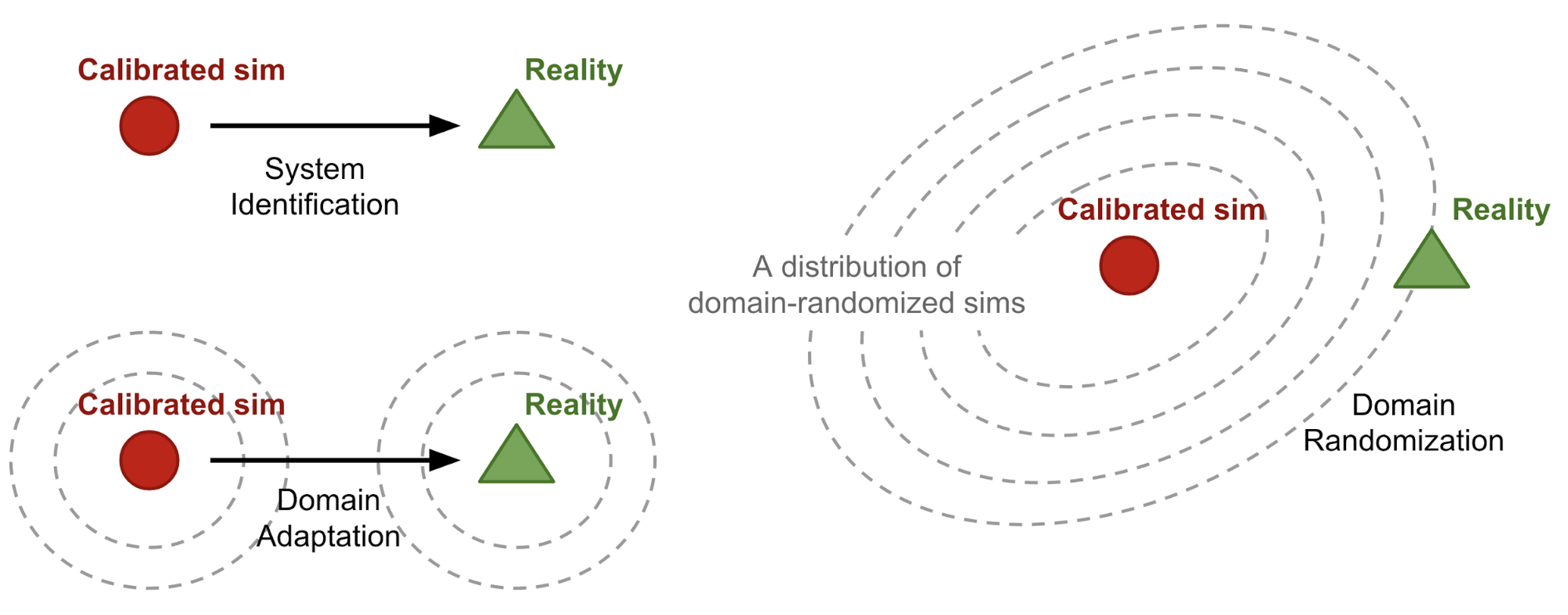
    Domain Randomization (DR) is a technique used in robotics to bridge the gap between simulated training environments and the real world. This method involves training models across a wide variety of simulated scenarios with randomized physical parameters and visual appearances. The goal is for the trained model to generalize effectively to the real-world environment, which is assumed to be one of the many variations encountered during training. DR is particularly useful because it can require minimal or no real-world data, unlike domain adaptation methods. AI

    Domain Randomization for Sim2Real Transfer
  4. MuseNet

    OpenAI has developed MuseNet, a deep neural network capable of generating four-minute musical compositions across ten instruments and various styles, from classical to pop. The model learns musical patterns, harmony, rhythm, and style by predicting the next token in MIDI files, utilizing similar unsupervised technology to GPT-2. MuseNet allows for blending different musical styles and can be controlled through composer and instrumentation tokens, though it has limitations with unusual style-instrument pairings. AI

    MuseNet
  5. Generative modeling with sparse transformers

    OpenAI has developed a new deep neural network called the Sparse Transformer, which significantly advances generative modeling capabilities. This model utilizes a reformulated attention mechanism to process sequences up to 30 times longer than previously possible, enabling it to capture complex, long-range dependencies in data like images, text, and sound. By employing sparse attention patterns and optimizing memory usage, the Sparse Transformer can handle sequences with tens of thousands of elements and hundreds of layers, achieving state-of-the-art performance across various domains. AI

    Generative modeling with sparse transformers
  6. Implicit generation and generalization methods for energy-based models

    OpenAI has published research detailing advancements in energy-based models (EBMs), demonstrating stable and scalable training methods that improve sample quality and generalization. Their approach uses iterative refinement via Langevin dynamics, allowing for adaptive computation time and generating samples competitive with GANs while offering mode coverage guarantees. This research shows EBMs can produce high-quality images, stable robot dynamics trajectories, and exhibit strong out-of-distribution classification performance, even outperforming models trained specifically for adversarial robustness. AI

    Implicit generation and generalization methods for energy-based models
  7. Are Deep Neural Networks Dramatically Overfitted?

    This post delves into the question of why deep neural networks, despite their numerous parameters, can generalize well to new data. It explores classic principles like Occam's Razor and the Minimum Description Length (MDL) principle, which suggest that simpler models are more likely to be correct and that learning can be viewed as data compression. The MDL principle, in particular, formalizes the idea that a good model should not only explain the data but also be concise, thereby aiding generalization. AI

    Are Deep Neural Networks Dramatically Overfitted?
  8. DataScience SG x ODSC Meetup - Applying ML to Healthcare

    Eugene Yan presented a case study on how uCare.ai developed a machine learning system for Parkway Pantai Group, Southeast Asia's largest healthcare provider. This system estimates patient pre-admission costs, enhancing transparency and patient experience. The implementation significantly reduced prediction errors, with mean absolute error decreasing by 55% and root mean squared error by 60%. Yan emphasized that building such data products is a team effort, with machine learning comprising only about 20% of the overall work, highlighting the importance of engineering and methodology. AI

    DataScience SG x ODSC Meetup - Applying ML to Healthcare

    IMPACT Demonstrates practical application of ML in healthcare for cost prediction, improving patient experience and operational efficiency.

  9. Neural MMO: A Massively Multiagent Game Environment

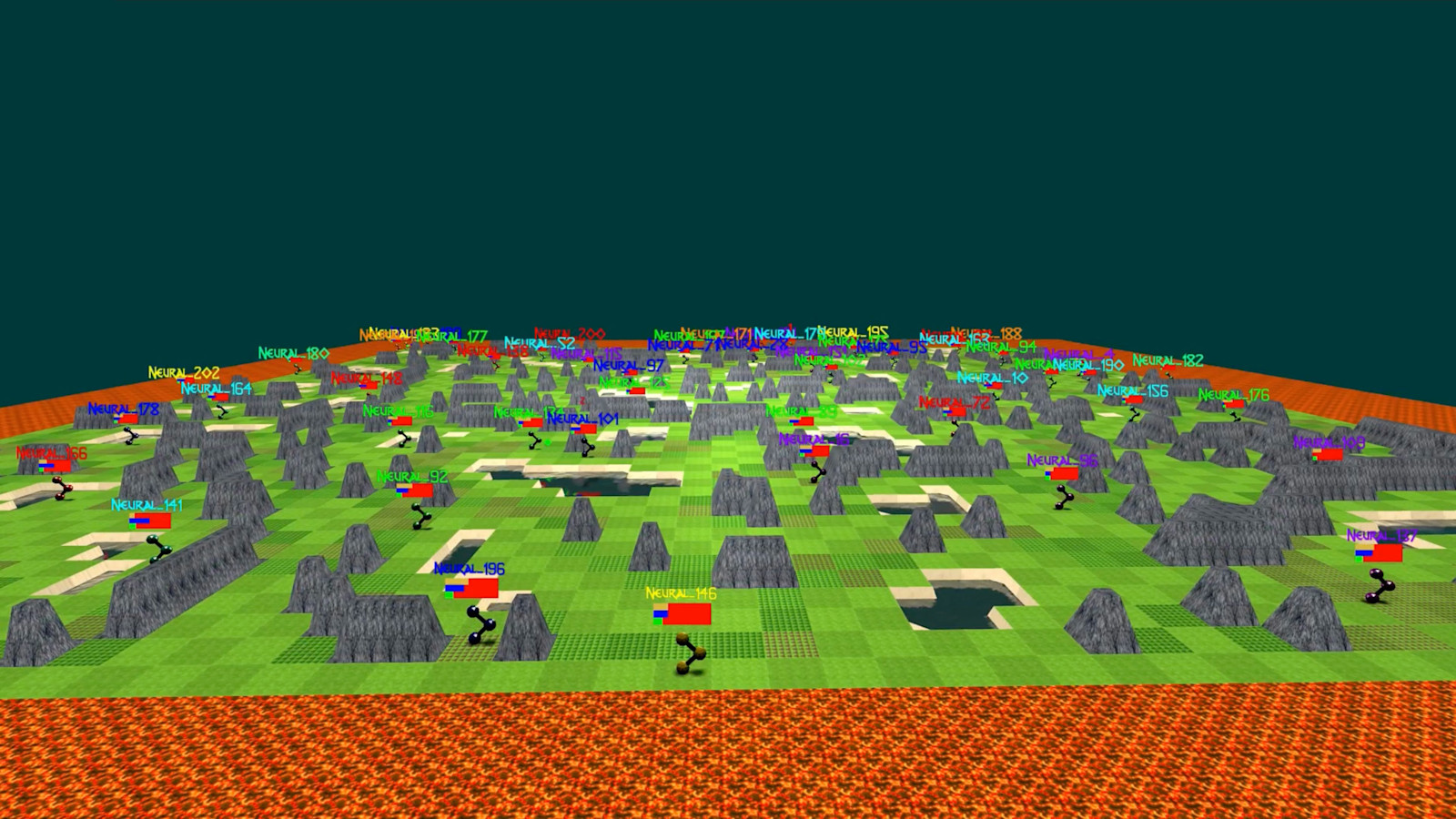
    OpenAI has released Neural MMO, a new environment designed for training reinforcement learning agents in massively multi-agent settings. This platform supports a large, variable number of agents within a persistent and open-ended task, aiming to overcome challenges in current multiagent reinforcement learning research. Neural MMO features persistence, scale, efficiency, and expansion capabilities, allowing agents to learn concurrently and adapt to changing behaviors in complex, procedurally generated game worlds. AI

    Neural MMO: A Massively Multiagent Game Environment
  10. Computational limitations in robust classification and win-win results

    OpenAI has published research on computational limitations in robust classification, exploring how to achieve better results with fewer resources. The paper details a method that allows models to achieve improved classification accuracy while simultaneously reducing computational costs. This work could lead to more efficient AI systems that are both more accurate and less resource-intensive. AI

    Computational limitations in robust classification and win-win results
  11. Generalized Visual Language Models

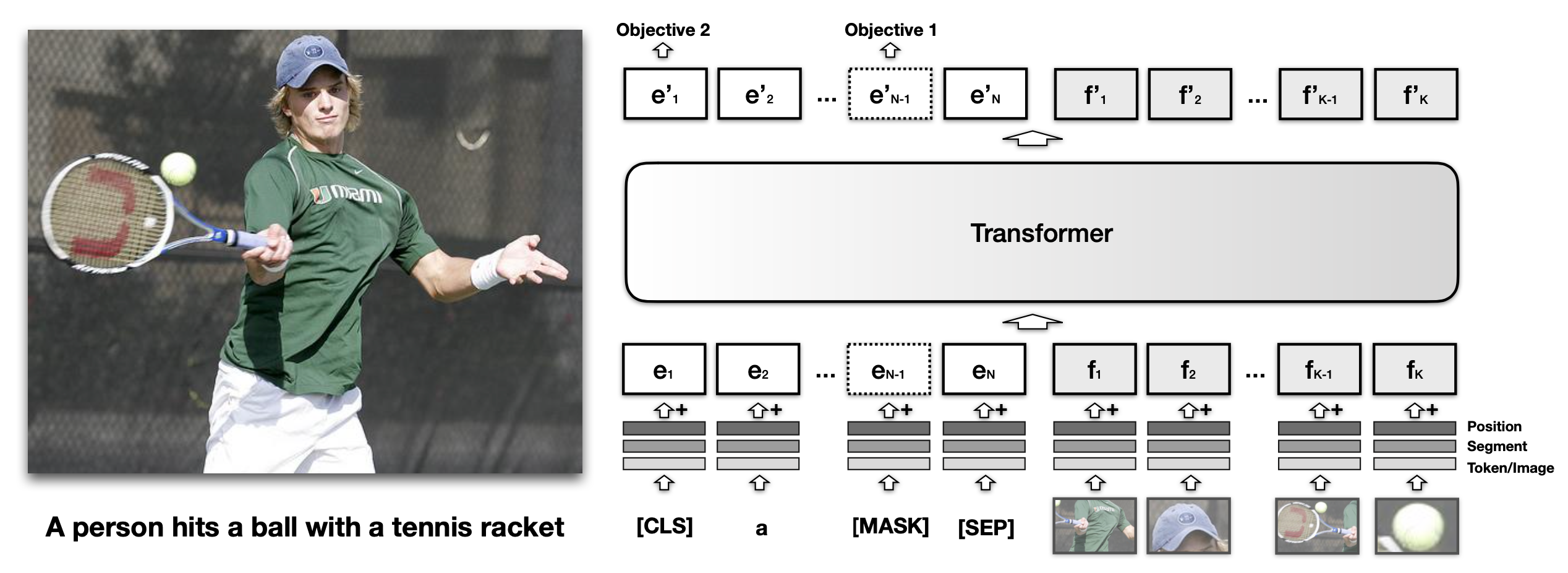
    Lilian Weng's blog post details the evolution of generalized language models, focusing on how they are extended to process visual information. Early approaches like VisualBERT fused image patches with text tokens, using self-attention to align visual and textual data for tasks such as image captioning. More recent models like SimVLM treat encoded images as prefixes for language models, leveraging large datasets for pre-training. These methods aim to create unified models capable of understanding and generating content across both visual and textual modalities. AI

    Generalized Visual Language Models
  12. IBM's AI for detecting neurological state

    IBM researchers are developing AI models that can analyze speech patterns to assess mental and neurological health. This approach, termed computational psychiatry, aims to provide insights into conditions like cognitive impairment and schizophrenia. The technology also considers potential biases in healthcare data and explores how AI can assist medical professionals. AI

    IBM's AI for detecting neurological state
  13. How AI training scales

    OpenAI researchers have identified a metric called gradient noise scale that can predict the maximum useful batch size for training neural networks. This metric quantifies the signal-to-noise ratio in network gradients, indicating how much new information can be gained from larger datasets. The findings suggest that as tasks become more complex and gradients noisier, larger batch sizes will remain effective, potentially removing a limit on the future growth of AI systems. This research aims to systematize AI training, moving it away from an art towards a more rigorous science. AI

    How AI training scales
  14. Better language models and their implications

    Google DeepMind has introduced the FACTS Benchmark Suite, a new set of evaluations designed to systematically measure the factuality of large language models across various use cases. This suite includes benchmarks for parametric knowledge, search-based information retrieval, and multimodal understanding, alongside an updated grounding benchmark. The initiative aims to provide a more comprehensive understanding of LLM factuality and drive industry-wide improvements in accuracy and trustworthiness. AI

    Better language models and their implications

    IMPACT Provides new evaluation tools to drive progress in LLM factuality and reduce hallucinations.

  15. The mathematics of machine learning

    Eugene Yan's series of articles explores practical aspects of applying machine learning in real-world systems. He emphasizes starting projects with heuristics before implementing ML, the importance of design patterns for efficient data processing and system maintenance, and the need for careful problem selection based on cost-benefit analysis. Yan also details common challenges encountered after deploying ML models, such as data contamination and feedback loops, and suggests strategies for effective project management and system upkeep. AI

    The mathematics of machine learning
  16. Spinning Up in Deep RL: Workshop review

    OpenAI has launched "Spinning Up in Deep RL," an educational initiative aimed at making deep reinforcement learning more accessible. The program includes a comprehensive online resource package with code examples, tutorials, and curated papers, designed to help individuals develop practical skills in RL. This initiative is integrated into OpenAI's Scholars and Fellows programs and aims to foster a broader community skilled in RL for advancing AI safety and beneficial AGI. AI

    Spinning Up in Deep RL: Workshop review
  17. Learning concepts with energy functions

    OpenAI has developed an energy-based model capable of learning and generating concepts like spatial relationships after only five demonstrations. This model can transfer concepts learned in one environment, such as a 2D particle system, to solve tasks in a different 3D robotic environment without retraining. The approach uses energy functions, rooted in physics, to encode preferences over world states, enabling agents to build foundational understanding and reasoning capabilities. AI
    Learning concepts with energy functions
  18. Plan online, learn offline: Efficient learning and exploration via model-based control

    OpenAI has introduced a new framework called POLO (Plan Online, Learn Offline) designed for agents that need to continuously interact with and learn from their environment. This approach integrates model-based control with value function learning and exploration strategies. POLO aims to improve learning efficiency by using local trajectory optimization to stabilize and accelerate value function learning, while also leveraging approximate value functions to enhance policy decisions. The framework has demonstrated success in complex simulated tasks such as humanoid locomotion and dexterous manipulation, achieving rapid learning with minimal experience. AI
    Plan online, learn offline: Efficient learning and exploration via model-based control
  19. Learning complex goals with iterated amplification

    OpenAI has introduced a novel AI safety technique called iterated amplification, designed to train AI systems on complex goals that are beyond human scale. This method decomposes large tasks into smaller, manageable sub-tasks, bypassing the need for extensive labeled data or direct reward functions. While still in its early experimental stages, the technique holds promise for creating scalable AI safety solutions by iteratively building training signals from human input on simpler components. AI


    Learning complex goals with iterated amplification
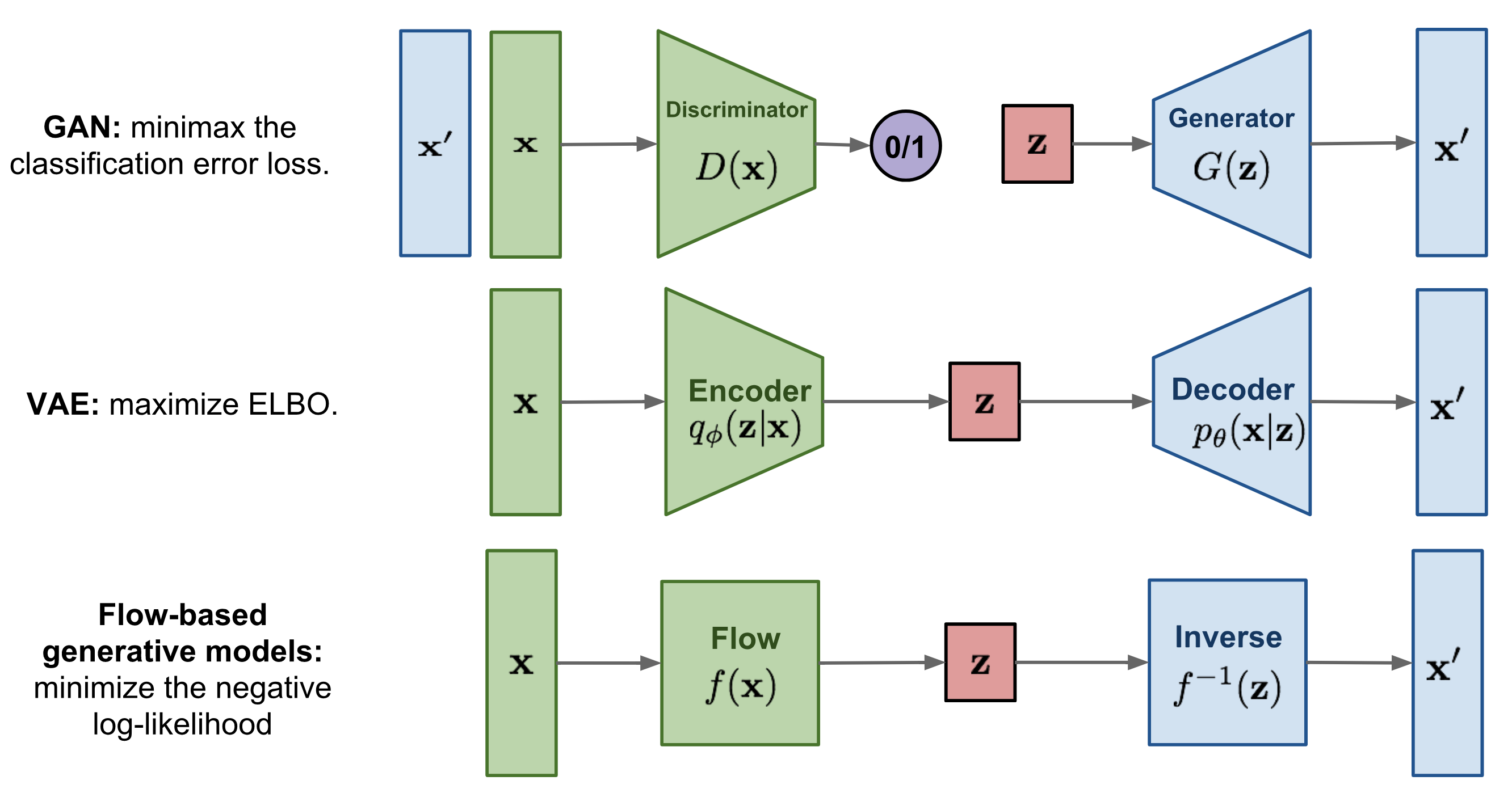
  20. Flow-based Deep Generative Models

    GFlowState is a new visual analytics system designed to improve the interpretability of Generative Flow Networks (GFlowNets), a probabilistic framework used for generating samples proportional to a reward function. The system offers multiple visualization tools, such as trajectory analysis and state projections, to help developers understand how these models explore the sample space and evolve their sampling probabilities during training. By making the structural dynamics of GFlowNets observable, GFlowState aims to accelerate their development and debugging across various application domains. AI

    Flow-based Deep Generative Models
  21. AI in healthcare, synthesizing dance moves, hardware acceleration

    This podcast episode covers several AI advancements, including a new sequence-to-sequence model architecture that omits an explicit encoder-decoder. It also touches on AI's role in synthesizing dance moves and its application in healthcare, such as aiding pancreatic cancer research and designing drugs. The discussion extends to how AI is fostering opportunities for new chip startups by altering the semiconductor industry landscape. AI

    AI in healthcare, synthesizing dance moves, hardware acceleration
  22. Robot Perception and Mask R-CNN

    Chris DeBellis, lead AI data scientist at Honeywell, discussed Mask R-CNN and its applications in robot perception on the Practical AI podcast. The conversation explored how Mask R-CNN compares to other convolutional neural network methods and provided guidance for those interested in using it. The episode also touched upon related tools and datasets like Matterport R-CNN, the COCO dataset, and Facebook's Detectron. AI

    Robot Perception and Mask R-CNN
  23. Large-scale study of curiosity-driven learning

    OpenAI has published a large-scale study on curiosity-driven learning in reinforcement learning agents. The research demonstrates that agents can achieve surprisingly good performance using only intrinsic curiosity as a reward signal, often aligning well with extrinsic rewards in benchmark environments like Atari games. The study also explored the impact of different feature spaces for calculating prediction errors, finding that while random features suffice for many benchmarks, learned features offer better generalization. However, the research identified limitations of prediction-based rewards in stochastic environments. AI

    Large-scale study of curiosity-driven learning
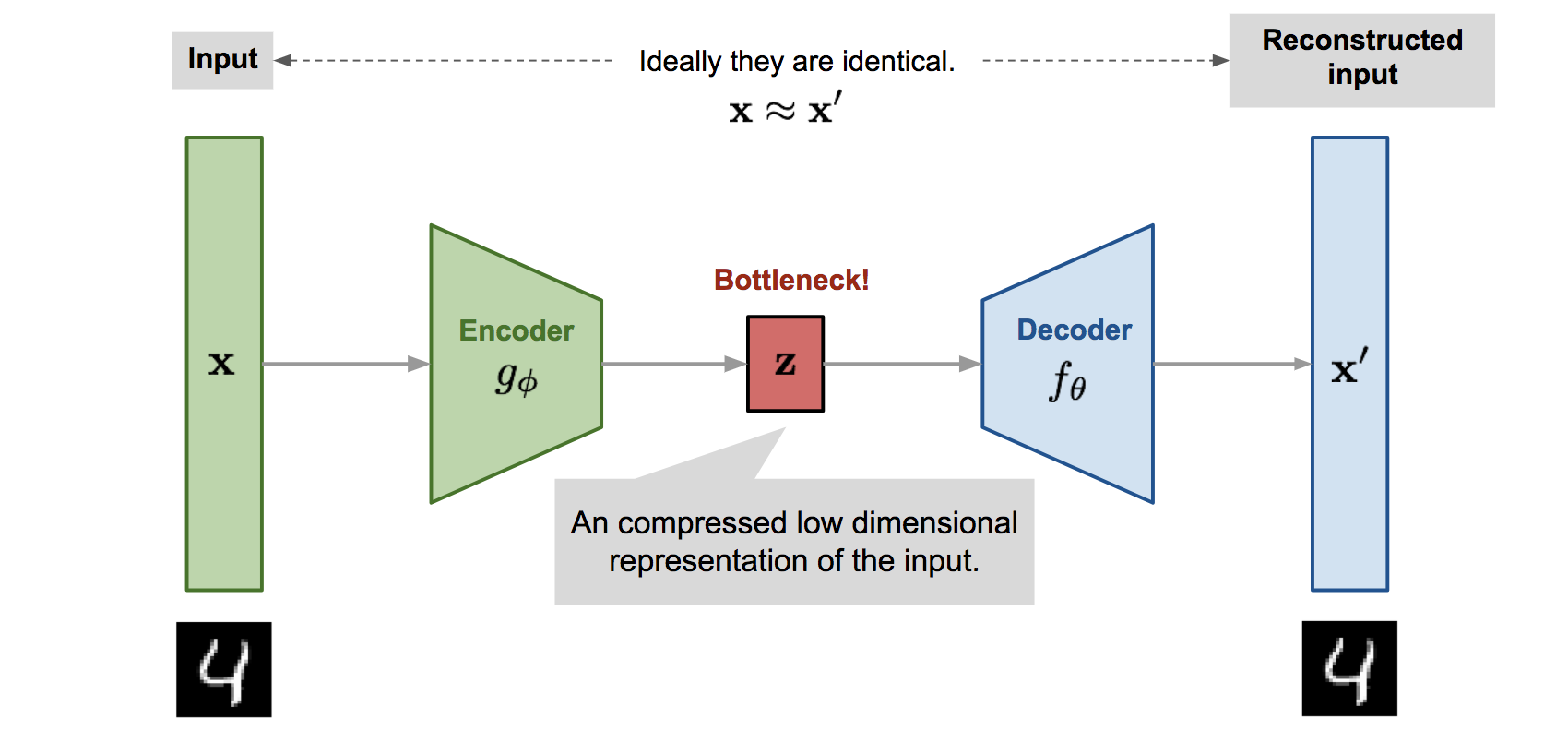
  24. From Autoencoder to Beta-VAE

    This article provides a detailed explanation of autoencoders, a type of neural network used for unsupervised learning to reconstruct high-dimensional data. Autoencoders consist of an encoder that compresses input into a low-dimensional latent code and a decoder that reconstructs the original data from this code. A key variant, the Denoising Autoencoder, improves robustness by training the model to recover the original input from a corrupted version, forcing it to learn underlying data relationships. AI

    From Autoencoder to Beta-VAE
  25. Eye tracking, Henry Kissinger on AI, Vim

    This week's AI news roundup covers a range of topics including an RFP for National Geographic's AI Earth Innovation and Intel's AI Interplanetary challenge. A notable development is an application that can predict personality traits by analyzing eye movements. The discussion also touches upon the mythos of model interpretability and features learning resources for Pandas, the Vim editor, and AI algorithms. AI

    Eye tracking, Henry Kissinger on AI, Vim
  26. Learning dexterity

    OpenAI has developed a robot hand system named Dactyl, capable of manipulating objects with human-like dexterity. The system is trained entirely in simulation using a technique called domain randomization, which allows it to adapt to real-world physics without needing physically accurate models. Dactyl successfully transfers its learned skills to a physical Shadow Dexterous Hand, demonstrating the potential for simulation-based training to solve complex real-world robotic manipulation tasks. AI

    Learning dexterity
  27. Variational option discovery algorithms

    OpenAI researchers have introduced VALOR, a new method for option discovery in reinforcement learning that leverages variational autoencoders. This approach connects variational inference techniques with autoencoders, allowing policies to encode contexts into trajectories and decoders to recover them. Additionally, they propose a curriculum learning strategy that increases the number of contexts an agent encounters as its performance improves, which stabilizes training and enables learning a wider range of behaviors. AI

    Variational option discovery algorithms
  28. Detecting planets with deep learning

    Researchers from UT Austin and Google Brain have utilized deep learning techniques to identify exoplanets within vast amounts of space imagery. This collaboration involved training a neural network to analyze telescope data, leading to the discovery of new planets. The project's methodology and findings have been shared, including the open-sourcing of their exoplanet hunting tools. AI

    Detecting planets with deep learning
  29. Learning Montezuma’s Revenge from a single demonstration

    OpenAI has developed a reinforcement learning agent capable of achieving a high score in the game Montezuma's Revenge after observing just a single human demonstration. The agent utilizes a novel approach by starting each learning episode from states within the demonstration, significantly reducing the exploration problem inherent in traditional reinforcement learning. This method allows the agent to focus on learning the optimal action sequences rather than randomly discovering them, leading to a performance that surpasses previous benchmarks. AI

    Learning Montezuma’s Revenge from a single demonstration
  30. Helping African farmers with TensorFlow

    Researchers at Penn State University are developing a mobile application that utilizes TensorFlow to assist African farmers in improving crop yields. This initiative aims to provide farmers with tools to identify and manage plant diseases, thereby enhancing agricultural productivity. The project has received recognition from Google for its innovative approach to applying AI in agriculture. AI

    Helping African farmers with TensorFlow
  31. Attention? Attention!

    This 2018 blog post by Lilian Weng explains the concept of attention mechanisms in deep learning, drawing parallels to human visual and linguistic attention. It details how attention allows models to weigh the importance of different input elements when generating an output, addressing limitations of traditional sequence-to-sequence models that struggled with long inputs. The post highlights that attention was initially developed to improve neural machine translation by creating direct connections between the output and the entire input sequence. AI

    Attention? Attention!
  32. Improving language understanding with unsupervised learning

    OpenAI has detailed a new language understanding system that achieves state-of-the-art results across various tasks by combining unsupervised pre-training with supervised fine-tuning. The system first trains a transformer model on a massive dataset without labels, then adapts it to specific tasks using smaller, labeled datasets. This approach, which builds on prior work like ULMFiT and ELMo, demonstrates strong performance, particularly in commonsense reasoning and reading comprehension, suggesting unsupervised methods can effectively develop complex language skills. AI

    Improving language understanding with unsupervised learning
  33. Generative language modeling for automated theorem proving

    OpenAI has developed GPT-f, a generative language model applied to automated theorem proving within the Metamath formalization language. This system successfully generated novel, short proofs that were integrated into the main Metamath library, marking a significant advancement for AI in formal mathematics. Additionally, OpenAI introduced GamePad, a learning environment for exploring machine learning in the Coq proof assistant, focusing on tasks like proof synthesis and step prediction. AI

    Generative language modeling for automated theorem proving
  34. Gym Retro

    OpenAI has released the full version of Gym Retro, a platform for reinforcement learning research that now supports over 1,000 games across multiple classic consoles. This expansion aims to facilitate research into how agents can generalize their abilities between different games, moving beyond single-task optimization. The release also includes the tool OpenAI uses to integrate new games, enabling researchers to add more titles and study agent behavior, including potential reward-farming issues. AI

    Gym Retro
  35. Gotta Learn Fast: A new benchmark for generalization in RL

    OpenAI has introduced a new benchmark called "Gotta Learn Fast" to evaluate reinforcement learning algorithms. This benchmark utilizes the Sonic the Hedgehog video game franchise to test the capabilities of transfer learning and few-shot learning in RL agents. The organization has also presented and assessed initial baseline algorithms on this novel evaluation platform. AI

    Gotta Learn Fast: A new benchmark for generalization in RL
  36. Retro Contest: Results

    OpenAI has concluded its Retro Contest, which challenged participants to develop reinforcement learning algorithms capable of generalizing from prior experience to new, unseen video game levels. The contest utilized a benchmark based on Sonic the Hedgehog levels, with top-performing solutions primarily involving fine-tuning existing algorithms like PPO and Rainbow DQN. While the winning algorithms showed significant improvement through transfer learning, they still fell short of human performance levels, indicating a substantial gap in generalization capabilities. AI

    Retro Contest: Results
  37. Ingredients for robotics research

    OpenAI has released eight simulated robotics environments and an implementation of Hindsight Experience Replay (HER) to advance robotics research. These new environments, built for the MuJoCo physics simulator, feature more complex manipulation tasks than previous benchmarks and utilize sparse rewards to mimic real-world robotics applications. The HER algorithm, also released, enables reinforcement learning agents to learn from failures by treating achieved states as goals, even if they weren't the original target. AI

    Ingredients for robotics research
  38. Interpretable machine learning through teaching

    OpenAI has developed a novel machine learning technique where an AI 'teacher' agent selects the most informative examples to help a 'student' AI learn a concept. This method encourages the teacher to choose examples that are not only effective for the student but also understandable to humans, facilitating better human-AI collaboration. The approach was tested and found to be effective in teaching AI agents, and human subjects also performed better when guided by the AI-generated examples. AI

    Interpretable machine learning through teaching
  39. Discovering types for entity disambiguation

    OpenAI has developed a novel system for entity disambiguation, which automatically identifies the correct meaning of a word within a given context. The system leverages a neural network to predict category memberships for words, effectively playing a probabilistic game of "20 questions" to resolve ambiguity. This approach has demonstrated state-of-the-art performance on benchmark datasets like CoNLL and TAC KBP, significantly improving accuracy over previous methods. AI

    Discovering types for entity disambiguation
  40. Requests for Research 2.0

    OpenAI has released a new set of seven unsolved research problems, building on their previous "Requests for Research" initiative. These challenges are designed to engage both newcomers and experienced practitioners in the AI field, with the potential for contributors to join OpenAI. The problems range in difficulty, from training an LSTM for parity detection and implementing a single-player Snake game with reinforcement learning, to developing multiplayer Snake agents using self-play and exploring parameter averaging in distributed RL. Advanced challenges also include investigating transfer learning between different games using generative models. AI

    Requests for Research 2.0
  41. The Multi-Armed Bandit Problem and Its Solutions

    Several recent arXiv papers explore advancements in multi-armed bandit problems, a framework for sequential decision-making under uncertainty. Research includes handling changing action availability with "Flickering Multi-Armed Bandits" and improving regret bounds in logistic bandits without strict context diversity assumptions. Other work focuses on geometry-aware offline-to-online learning, spectral bandits for smooth functions on graphs, and privacy-preserving algorithms for generalized linear contextual bandits. AI

    The Multi-Armed Bandit Problem and Its Solutions

    IMPACT Advances in bandit algorithms could lead to more efficient online learning systems and improved decision-making in recommendation, advertising, and resource allocation.

  42. Understanding neural networks through sparse circuits

    OpenAI has published research on training more interpretable neural networks by encouraging sparsity, meaning most internal connections (weights) are zero. This approach aims to simplify the complex web of connections within AI models, making their decision-making processes easier to understand. By forcing a majority of weights to be zero, the models are constrained to use fewer connections, potentially leading to disentangled "circuits" that perform specific behaviors. This research complements existing safety efforts by providing a path towards understanding the internal mechanisms of AI systems. AI

    Understanding neural networks through sparse circuits
  43. Interpretable and pedagogical examples

    OpenAI has published research on creating more interpretable teaching strategies for AI models. By training student and teacher networks iteratively, they found that the teacher network can learn to select or generate examples that are not only effective for teaching but also understandable to humans. This approach was evaluated by comparing the AI's strategies to intuitive human strategies and through human experiments, demonstrating its potential for teaching various complex concepts. AI

    Interpretable and pedagogical examples
  44. Object Detection Part 4: Fast Detection Models

    Two new research papers propose novel approaches to object detection. VFM4SDG aims to improve single-domain generalized object detection by using a frozen vision foundation model to maintain cross-domain stability, addressing issues with weather and illumination changes. UHR-DETR tackles the challenge of detecting small objects in ultra-high-resolution remote sensing imagery by efficiently allocating computational resources and integrating global and local scene information. AI

    Object Detection Part 4: Fast Detection Models
  45. Learning with not Enough Data Part 3: Data Generation

    Google Research has introduced "Nested Learning," a novel machine learning paradigm designed to address the challenge of catastrophic forgetting in continual learning. This approach views models as interconnected optimization problems, allowing them to acquire new knowledge without losing proficiency on previous tasks. A proof-of-concept architecture named "Hope" has demonstrated superior performance in language modeling and long-context memory management using this paradigm. OpenAI has also published research on meta-learning algorithms, including Reptile, which focuses on learning how to learn efficiently for new tasks, and a hierarchical reinforcement learning algorithm that enables faster task completion by breaking down complex problems into high-level actions. AI

    Learning with not Enough Data Part 3: Data Generation
  46. Generalizing from simulation

    OpenAI has developed new robotics techniques that enable controllers trained entirely in simulation to perform tasks on physical robots, even with unexpected environmental changes. By randomizing aspects of the simulation like friction and sensor noise, the trained models can generalize to real-world dynamics without needing a perfect replica. This approach, which includes using LSTMs and a modified reinforcement learning algorithm called Hindsight Experience Replay, allows robots to adapt and learn from binary rewards, making them more capable of handling complex tasks. AI

    Generalizing from simulation
  47. Asymmetric actor critic for image-based robot learning

    OpenAI has developed a new reinforcement learning technique for robot control that leverages simulation data more effectively. The method uses an asymmetric actor-critic algorithm where the critic observes the full state of the simulated environment, while the actor receives only partial, image-based observations. This approach allows for training more robust policies that can be transferred to real-world robots without requiring any real-world training data, demonstrating success in tasks like picking and pushing. AI

    Asymmetric actor critic for image-based robot learning
  48. Sim-to-real transfer of robotic control with dynamics randomization

    OpenAI researchers have developed a method to improve the transfer of robotic control policies from simulation to the real world. By randomizing the simulator's dynamics during training, the AI agents learn to adapt to variations, effectively bridging the "reality gap." This approach was demonstrated on an object-pushing task with a robotic arm, where policies trained solely in simulation achieved comparable performance on a physical robot without any real-world training. AI

    Sim-to-real transfer of robotic control with dynamics randomization
  49. Domain randomization and generative models for robotic grasping

    OpenAI has developed a new method for training robots to grasp objects using generative models and domain randomization. Their approach synthesizes millions of unique, procedurally generated objects to train a deep neural network, bypassing the need for extensive real-world object data. This technique allows the model to achieve over 90% success in simulation and 80% in real-world tests on unseen objects, demonstrating strong generalization capabilities. AI

    Domain randomization and generative models for robotic grasping
  50. Learning Word Embedding

    Hugging Face has released a suite of tools and guides for training and fine-tuning various types of sentence embedding and reranker models. These resources leverage the Sentence Transformers library, offering methods for static embeddings, multimodal embeddings, and sparse embeddings. The guides cover training with up to 1 billion training pairs and achieving significant speedups, aiming to make advanced embedding model development more accessible. AI

    Learning Word Embedding