PulseAugur / Brief
EN
LIVE 20:49:35

Brief

last 24h
[50/9096] 224 sources

Multi-source AI news clustered, deduplicated, and scored 0–100 across authority, cluster strength, headline signal, and time decay.

  1. How to Write Data Labeling/Annotation Guidelines

    Writing effective data labeling guidelines requires careful consideration of several key questions to ensure accuracy and consistency. These guidelines should clearly articulate the task's importance, define its scope and terminology, and provide step-by-step instructions for annotators. Including examples, explanations of user intent, and definitions of terms like 'query' and 'locale' helps calibrate annotators and improve inter-rater reliability. The process also involves explaining how to use annotation tools and platforms, and addressing logistical aspects of the task. AI


    How to Write Data Labeling/Annotation Guidelines
  2. End-to-end cloud compute for AI/ML

    Google DeepMind researchers have developed LAVA, a new AI-driven scheduling algorithm designed to optimize resource allocation in cloud data centers. LAVA continuously re-predicts virtual machine (VM) lifetimes, adapting to actual usage patterns rather than relying on initial estimates. This approach aims to reduce wasted capacity and improve efficiency by more accurately packing VMs onto physical servers. The system uses a probability distribution model inspired by survival analysis to handle the inherent uncertainty in VM lifespans. AI
    End-to-end cloud compute for AI/ML
  3. New ViT and ALIGN Models From Kakao Brain

    Kakao Brain has released two new models, ViT and ALIGN, available on Hugging Face. The Vision Transformer (ViT) model is designed for image recognition tasks, while the ALIGN model focuses on image-text matching. These releases aim to advance research and development in computer vision and multimodal AI. AI
    New ViT and ALIGN Models From Kakao Brain
  4. Train your ControlNet with diffusers

    Hugging Face has released updated documentation and guides for training ControlNet models using their diffusers library. These resources aim to simplify the process for developers and researchers looking to fine-tune or create their own ControlNet models for image generation tasks. The guides provide practical steps and code examples to leverage the diffusers library effectively. AI
    Train your ControlNet with diffusers
  5. Ethical Guidelines for developing the Diffusers library

    Hugging Face has released ethical guidelines for the development and use of its Diffusers library, a popular open-source tool for creating diffusion models. These guidelines aim to promote responsible AI development by addressing potential harms associated with generative image models. The company encourages developers to consider the societal impact of their creations and to implement safeguards against misuse. AI

    Ethical Guidelines for developing the Diffusers library
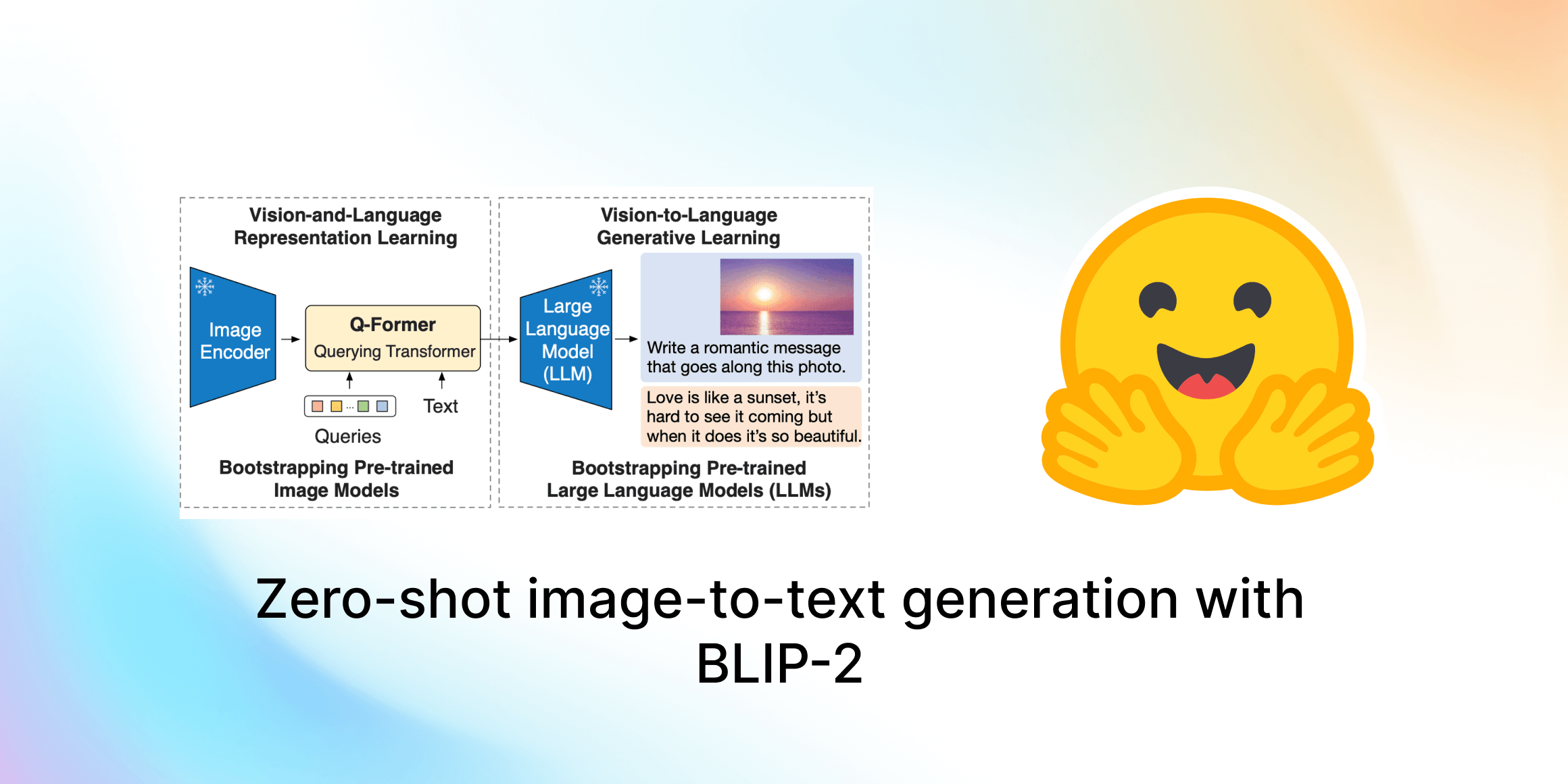
  6. Zero-shot image-to-text generation with BLIP-2

    Hugging Face has released BLIP-2, a novel approach to zero-shot image-to-text generation. This model leverages pre-trained language models and vision transformers to achieve impressive performance without task-specific fine-tuning. BLIP-2 demonstrates strong capabilities in image captioning and visual question answering, setting a new standard for efficient and effective visual understanding. AI

    Zero-shot image-to-text generation with BLIP-2
  7. Parameter-Efficient Fine-Tuning using 🤗 PEFT

    Hugging Face has released a new library called PEFT (Parameter-Efficient Fine-Tuning) to simplify the process of adapting large language models. This library offers several efficient fine-tuning techniques, such as LoRA, Prefix Tuning, and P-Tuning, which allow users to modify models with significantly fewer trainable parameters. By reducing computational costs and memory requirements, PEFT aims to make advanced LLM customization more accessible to a wider range of researchers and developers. AI

    Parameter-Efficient Fine-Tuning using 🤗 PEFT
  8. Speech Synthesis, Recognition, and More With SpeechT5

    Hugging Face has released SpeechT5, a versatile model for various speech tasks. It can perform speech recognition, synthesis, and speaker identification. The model is built on a T5 architecture and offers strong performance across these different applications. AI

    Speech Synthesis, Recognition, and More With SpeechT5
  9. What Makes a Dialog Agent Useful?

    This blog post from Hugging Face explores the key characteristics that define a useful dialog agent. It delves into aspects like conversational flow, contextual understanding, and the ability to perform tasks effectively. The article aims to provide a framework for evaluating and developing more capable conversational AI systems. AI

    What Makes a Dialog Agent Useful?
  10. Universal Image Segmentation with Mask2Former and OneFormer

    Hugging Face has released Mask2Former and OneFormer, advanced models for universal image segmentation. These models offer a unified approach to various segmentation tasks, including semantic, instance, and panoptic segmentation. Their architecture allows for improved performance and efficiency across a range of computer vision applications. AI

    Universal Image Segmentation with Mask2Former and OneFormer
  11. Forecasting potential misuses of language models for disinformation campaigns and how to reduce risk

    OpenAI researchers, in collaboration with Georgetown University and the Stanford Internet Observatory, have published a report detailing the potential misuse of large language models for disinformation campaigns. The research, which involved a workshop with experts from various fields, outlines how these models could lower the cost and increase the scale of influence operations. The report also proposes a framework for analyzing and mitigating these emerging threats to the information environment. AI

    Forecasting potential misuses of language models for disinformation campaigns and how to reduce risk
  12. NLP research by & for local communities

    Researchers are developing Natural Language Processing (NLP) technologies tailored for local language communities, addressing data scarcity and linguistic diversity. This includes work on machine translation for Sranan Tongo, a creole language, and efforts to bolster NLP research for African languages through initiatives like Masakhane. The goal is to create more inclusive NLP systems that cater to a wider range of languages and scripts, moving beyond dominant, data-rich languages. AI

    NLP research by & for local communities
  13. Zero-shot image segmentation with CLIPSeg

    Researchers have introduced CLIPSeg, a novel zero-shot image segmentation model that leverages the power of CLIP. This approach allows for flexible and intuitive image segmentation by enabling users to specify desired objects using natural language prompts. CLIPSeg demonstrates strong performance across various segmentation tasks without requiring task-specific training data. AI

    Zero-shot image segmentation with CLIPSeg
  14. Model Cards

    Hugging Face has introduced Model Cards, a standardized format for documenting AI models. This initiative aims to improve transparency and reproducibility in the AI community by providing a structured way to share crucial information about model development, performance, and limitations. The goal is to foster trust and facilitate responsible AI practices. AI

    Model Cards
  15. Point-E: A system for generating 3D point clouds from complex prompts

    OpenAI has introduced Point-E, a new system capable of generating 3D point clouds from text prompts significantly faster than previous methods. Unlike other approaches that take hours, Point-E can produce a 3D model in just one to two minutes using a single GPU. The system first creates a synthetic image from the text prompt using a diffusion model, then generates the 3D point cloud based on that image with a second diffusion model. While the quality may not yet match the absolute state-of-the-art, its speed offers a practical advantage for certain applications, and OpenAI has released the pre-trained models. AI

    Point-E: A system for generating 3D point clouds from complex prompts
  16. SOTA machine translation at Unbabel

    Unbabel researchers discussed state-of-the-art machine translation at EMNLP 2022. They highlighted innovations in quality estimation, including their COMET framework. COMET is designed for training multilingual machine translation evaluation models. AI

    SOTA machine translation at Unbabel
  17. #344 – Noam Brown: AI vs Humans in Poker and Games of Strategic Negotiation

    Noam Brown, a research scientist at Meta AI, discussed his work on developing AI systems capable of superhuman performance in complex strategic games like No-Limit Texas Hold'em poker and Diplomacy. The podcast episode explored how these AIs achieve their strategic prowess, comparing game-playing AI to human capabilities, and touching upon the broader implications of AI in negotiation and geopolitics. Brown's research has led to AI agents that can outperform top human players in these challenging domains. AI

    #344 – Noam Brown: AI vs Humans in Poker and Games of Strategic Negotiation
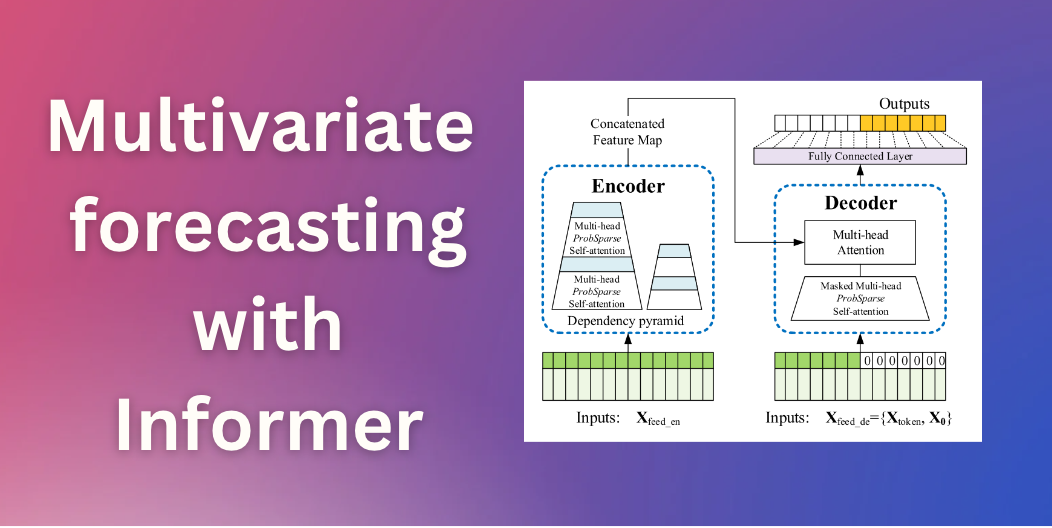
  18. Multivariate Probabilistic Time Series Forecasting with Informer

    Hugging Face has released new resources for time series forecasting using their Transformers library. The first resource details the Informer model, which is designed for multivariate probabilistic time series forecasting. The second resource provides a broader guide on leveraging Transformers for probabilistic time series forecasting tasks. AI

    Multivariate Probabilistic Time Series Forecasting with Informer
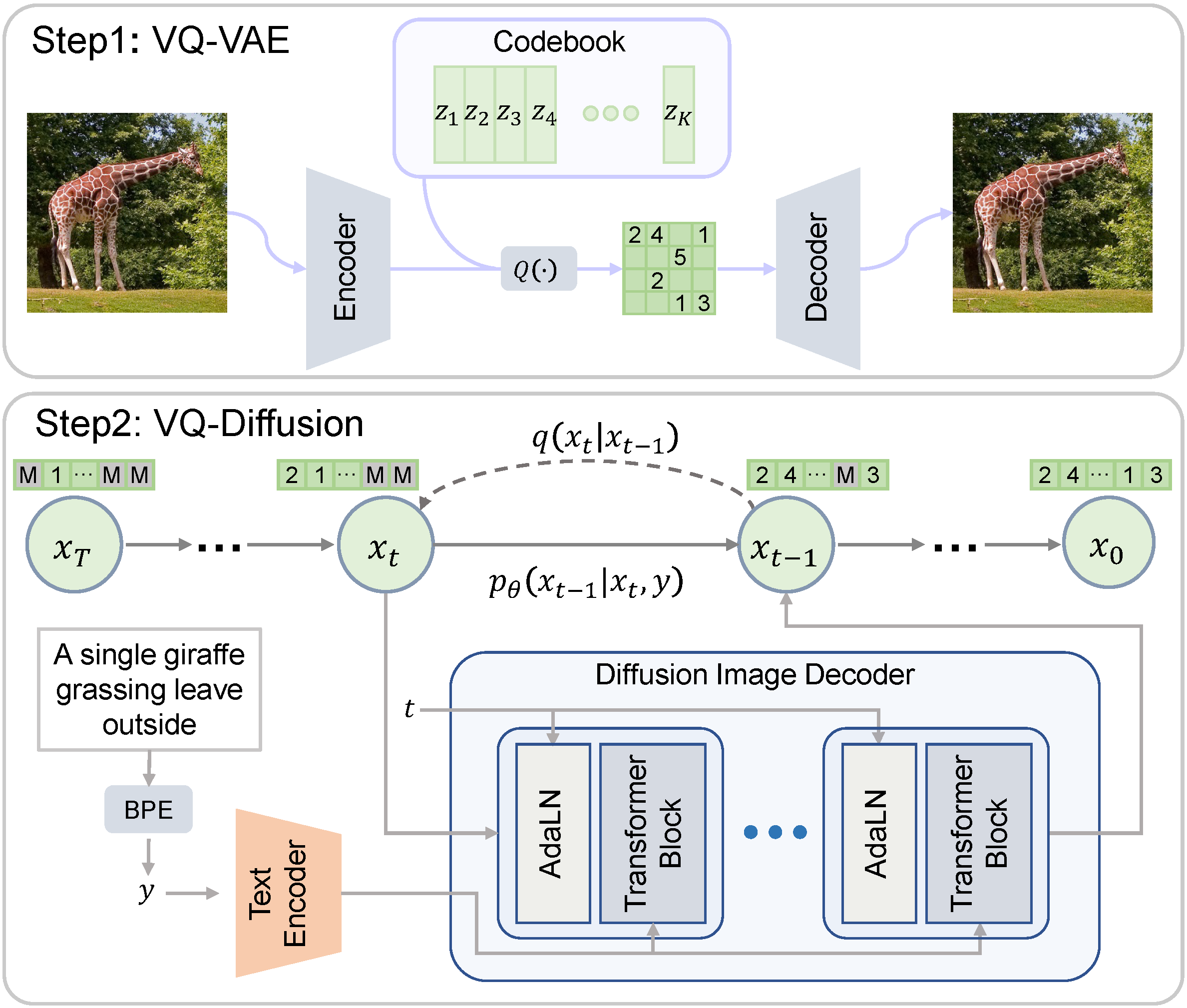
  19. VQ-Diffusion

    Hugging Face has released VQ-Diffusion, a novel text-to-image generation model that utilizes a Vector Quantized (VQ) Variational Autoencoder (VAE) for improved efficiency and quality. This approach allows for faster training and inference compared to traditional diffusion models. The model is available on Hugging Face, enabling researchers and developers to experiment with and build upon its capabilities. AI

    VQ-Diffusion
  20. Listwise Policy Optimization: Group-based RLVR as Target-Projection on the LLM Response Simplex

    Researchers are developing new methods to evaluate and enhance Large Language Models (LLMs). Apple's research proposes a benchmark to test LLMs' understanding of context, finding that quantized models and pre-trained dense models struggle with nuanced contextual features. Meanwhile, a new technique called Retrieval-Augmented Linguistic Calibration (RALC) improves how LLMs express confidence in their answers, enhancing faithfulness and calibration. Other research explores LLMs for clinical action extraction, demonstrating comparable performance to supervised models but highlighting limitations in clinical reasoning, and introduces Listwise Policy Optimization for more stable and diverse LLM training. AI

    Listwise Policy Optimization: Group-based RLVR as Target-Projection on the LLM Response Simplex

    IMPACT New benchmarks and calibration techniques aim to improve LLM reliability and reasoning, potentially impacting their application in critical domains like healthcare and scientific discovery.

  21. Diffusion Models Live Event

    Hugging Face is hosting a live event focused on diffusion models, a type of generative AI used for creating images and other data. The event will feature discussions and demonstrations related to the latest advancements and applications of these models. Attendees can expect insights from experts in the field. AI

    Diffusion Models Live Event
  22. Sentiment Analysis on Encrypted Data with Homomorphic Encryption

    Researchers have demonstrated a novel approach to performing sentiment analysis on encrypted data using homomorphic encryption. This method allows sensitive text data to be analyzed without decryption, preserving user privacy. The technique was successfully applied to a sentiment analysis model, showing its potential for secure data processing in various applications. AI

    Sentiment Analysis on Encrypted Data with Homomorphic Encryption
  23. Evaluating Language Model Bias with 🤗 Evaluate

    Hugging Face has released a new tool called 🤗 Evaluate designed to help developers assess bias in language models. This tool provides a standardized framework for measuring various types of bias, enabling more equitable AI development. By offering clear metrics and methodologies, 🤗 Evaluate aims to promote greater fairness and accountability in the AI community. AI

    Evaluating Language Model Bias with 🤗 Evaluate
  24. From PyTorch DDP to Accelerate to Trainer, mastery of distributed training with ease

    Hugging Face has released a blog post detailing how to leverage PyTorch's Distributed Data Parallel (DDP) for efficient model training. The post explains how their Accelerate library simplifies the implementation of DDP, abstracting away much of the complexity. It also highlights the integration with Hugging Face's Trainer API, providing a streamlined workflow for distributed training. AI

    From PyTorch DDP to Accelerate to Trainer, mastery of distributed training with ease
  25. Scaling laws for reward model overoptimization

    OpenAI researchers have published a paper detailing the phenomenon of reward model overoptimization in reinforcement learning from human feedback. Their study, conducted using a synthetic environment where a fixed 'gold-standard' reward model simulates human preferences, reveals how optimizing too heavily against an imperfect proxy reward model can degrade overall performance. The findings indicate that the relationship between optimizing the proxy and the gold reward model score follows distinct patterns depending on the optimization method used, and these patterns scale predictably with the size of the reward model. AI

    Scaling laws for reward model overoptimization
  26. MTEB: Massive Text Embedding Benchmark

    Researchers have introduced the Polish Massive Text Embedding Benchmark (PL-MTEB), a new evaluation suite designed to assess text embedding models specifically for the Polish language. This benchmark includes 30 diverse NLP tasks across five categories such as classification, clustering, and information retrieval. The study evaluated 30 publicly available text embedding models, analyzing their performance across different task types and sizes, with all datasets and code made publicly accessible. AI

    MTEB: Massive Text Embedding Benchmark
  27. Introducing DOI: the Digital Object Identifier to Datasets and Models

    Hugging Face has introduced Digital Object Identifiers (DOIs) for datasets and models hosted on its platform. This integration aims to provide persistent and citable identifiers, similar to those used in academic publishing. By adopting DOIs, Hugging Face seeks to enhance the reproducibility and discoverability of AI research artifacts. AI

    Introducing DOI: the Digital Object Identifier to Datasets and Models
  28. Introducing Whisper

    OpenAI has released Whisper, an automatic speech recognition system trained on a massive 680,000 hours of diverse, multilingual data. This extensive training enables Whisper to perform robustly across various accents, background noises, and technical language, while also supporting transcription and translation into English. The system utilizes a Transformer-based encoder-decoder architecture and is being open-sourced to foster application development and further research in speech processing. AI

    Introducing Whisper
  29. Evaluating models without test data

    Charles Martin has developed an open-source tool called WeightWatcher that analyzes neural networks without requiring training or test data. This diagnostic tool utilizes statistical methods, drawing inspiration from physics, to evaluate models. The discussion also touches upon practical modifications for training runs and fills gaps in existing model evaluation processes. AI

    Evaluating models without test data
  30. What's new in Diffusers? 🎨

    Hugging Face has released version 0.29.0 of its Diffusers library, introducing significant enhancements for diffusion models. Key updates include improved support for latent consistency models (LCMs) and LoRA, alongside performance optimizations for faster inference. This release also brings new features for handling model conditioning and expands the library's capabilities for advanced image generation tasks. AI

    What's new in Diffusers? 🎨
  31. Some Math behind Neural Tangent Kernel

    Lilian Weng's blog post delves into the mathematical underpinnings of the Neural Tangent Kernel (NTK), a concept used to explain the training dynamics of neural networks. The post focuses on NTK's definition and proofs, particularly how infinitely wide neural networks converge to a global minimum during gradient descent. It reviews foundational mathematical concepts like vector-to-vector derivatives, ordinary differential equations, the Central Limit Theorem, and Taylor expansions, which are essential for understanding NTK. AI

  32. Train your first Decision Transformer

    Hugging Face has released a guide on how to train Decision Transformers, a type of model that frames reinforcement learning as a sequence modeling problem. The blog post details the process of training these transformers, which can be used for various decision-making tasks. It aims to make this advanced technique more accessible to developers. AI

    Train your first Decision Transformer
  33. How to train a Language Model with Megatron-LM

    Hugging Face has published a guide detailing how to train language models using Megatron-LM, a framework developed by NVIDIA. The guide covers essential steps such as data preparation, model parallelism, and distributed training configurations. It aims to assist researchers and developers in efficiently training large-scale models on distributed hardware. AI

    How to train a Language Model with Megatron-LM
  34. Writing Robust Tests for Data & Machine Learning Pipelines

    Eugene Yan's article explores methods for creating more resilient tests for data and machine learning pipelines. The author discusses why existing tests often fail even when new code is correct, attributing this to the brittle nature of tests themselves. Yan proposes strategies to improve pipeline testing by examining different testing scopes like unit and integration tests, and analyzing the impact of new data and logic on test validity. AI

    Writing Robust Tests for Data & Machine Learning Pipelines
  35. Pre-Train BERT with Hugging Face Transformers and Habana Gaudi

    Hugging Face has released a guide detailing how to pre-train BERT models using their Transformers library in conjunction with Habana Gaudi accelerators. This approach aims to optimize the pre-training process for BERT, a foundational model in natural language processing. The guide provides practical steps and code examples for developers looking to leverage this specific hardware and software combination for efficient model training. AI

    Pre-Train BERT with Hugging Face Transformers and Habana Gaudi
  36. Ethical hacking on Replit

    Replit has published research indicating that AI-only security scans are insufficient for detecting vulnerabilities in code, especially for platforms like Replit where code generation is prevalent. The study found that AI scans are often nondeterministic and sensitive to prompt phrasing, leading to inconsistent detection of issues like hardcoded secrets. Furthermore, AI alone struggles to identify dependency-level vulnerabilities and supply-chain risks, necessitating a hybrid approach that combines AI reasoning with traditional static analysis and dependency scanning for comprehensive code security. AI

    Ethical hacking on Replit

    IMPACT AI-only code security scans are unreliable; a hybrid approach combining AI with deterministic tools is essential for robust security.

  37. AlphaFold is revolutionizing biology

    Google DeepMind's AlphaFold system has significantly accelerated biological research over the past five years, being cited in over 35,000 papers and incorporated into the methodology of more than 200,000 others. Researchers using AlphaFold 2 have reported a more than 40% increase in submitting novel experimental protein structures, with their work being more likely to be cited in clinical articles and patents. The latest iteration, AlphaFold 3, expands its predictive capabilities to DNA, RNA, and ligands, aiming to transform drug discovery and usher in an era of 'digital biology' through its ability to predict the structure and interactions of all life's molecules. AI

    AlphaFold is revolutionizing biology
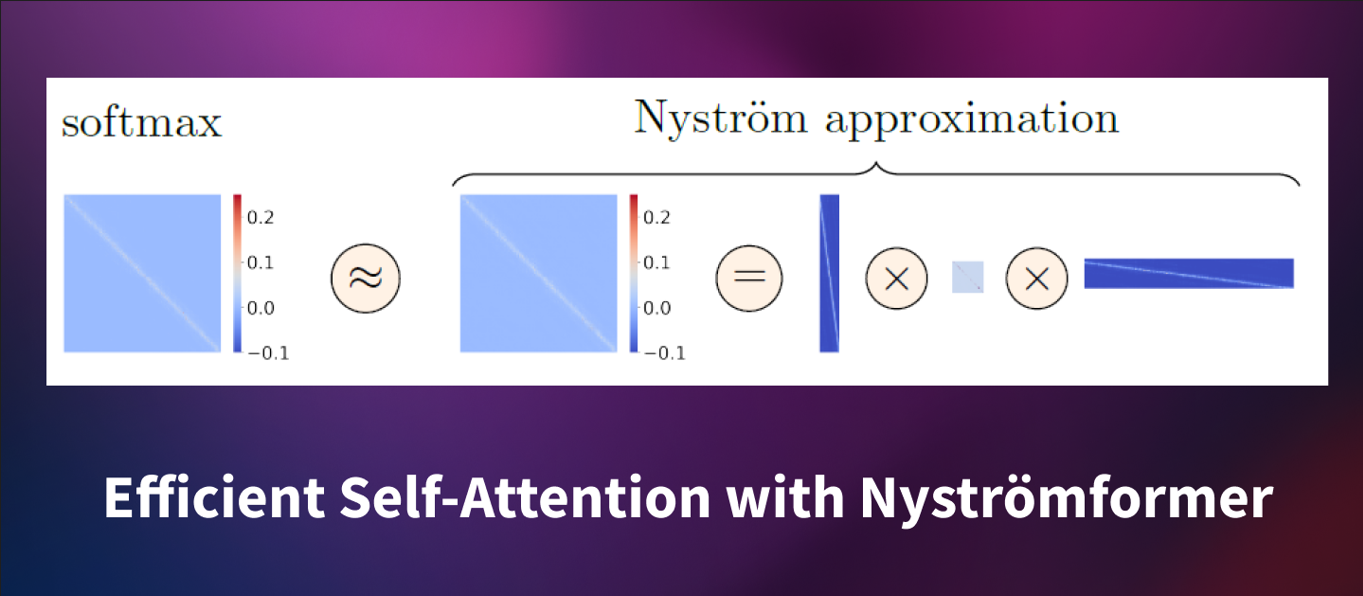
  38. Nyströmformer: Approximating self-attention in linear time and memory via the Nyström method

    Researchers have developed Nyströmformer, a novel approach to approximating self-attention mechanisms in transformer models. This method utilizes the Nyström method to achieve linear time and memory complexity, a significant improvement over the quadratic complexity of standard self-attention. The innovation holds promise for enabling transformers to handle much longer sequences more efficiently. AI

    Nyströmformer: Approximating self-attention in linear time and memory via the Nyström method
  39. Uncommon Uses of Python in Commonly Used Libraries

    This article explores an advanced Python programming technique involving the "super()" function, particularly its use within base classes. While typically used in child class initializers to call parent methods, calling "super()" in a base class enables cooperative multiple inheritance. Without this, initialization calls in subsequent parent classes can be skipped, leading to errors or missing attributes. The author demonstrates this with examples using "requests" and "scikit-learn" patterns, highlighting how "super()" ensures proper initialization across complex inheritance hierarchies. AI

    Uncommon Uses of Python in Commonly Used Libraries
  40. A hazard analysis framework for code synthesis large language models

    OpenAI has developed a hazard analysis framework to identify potential risks associated with large language models that generate code, such as their model Codex. This framework aims to uncover technical, social, political, and economic safety concerns that may arise from the deployment of these powerful code-synthesis tools. The analysis is supported by a new evaluation system that assesses the models' ability to understand and execute complex prompts compared to human capabilities. AI

    A hazard analysis framework for code synthesis large language models
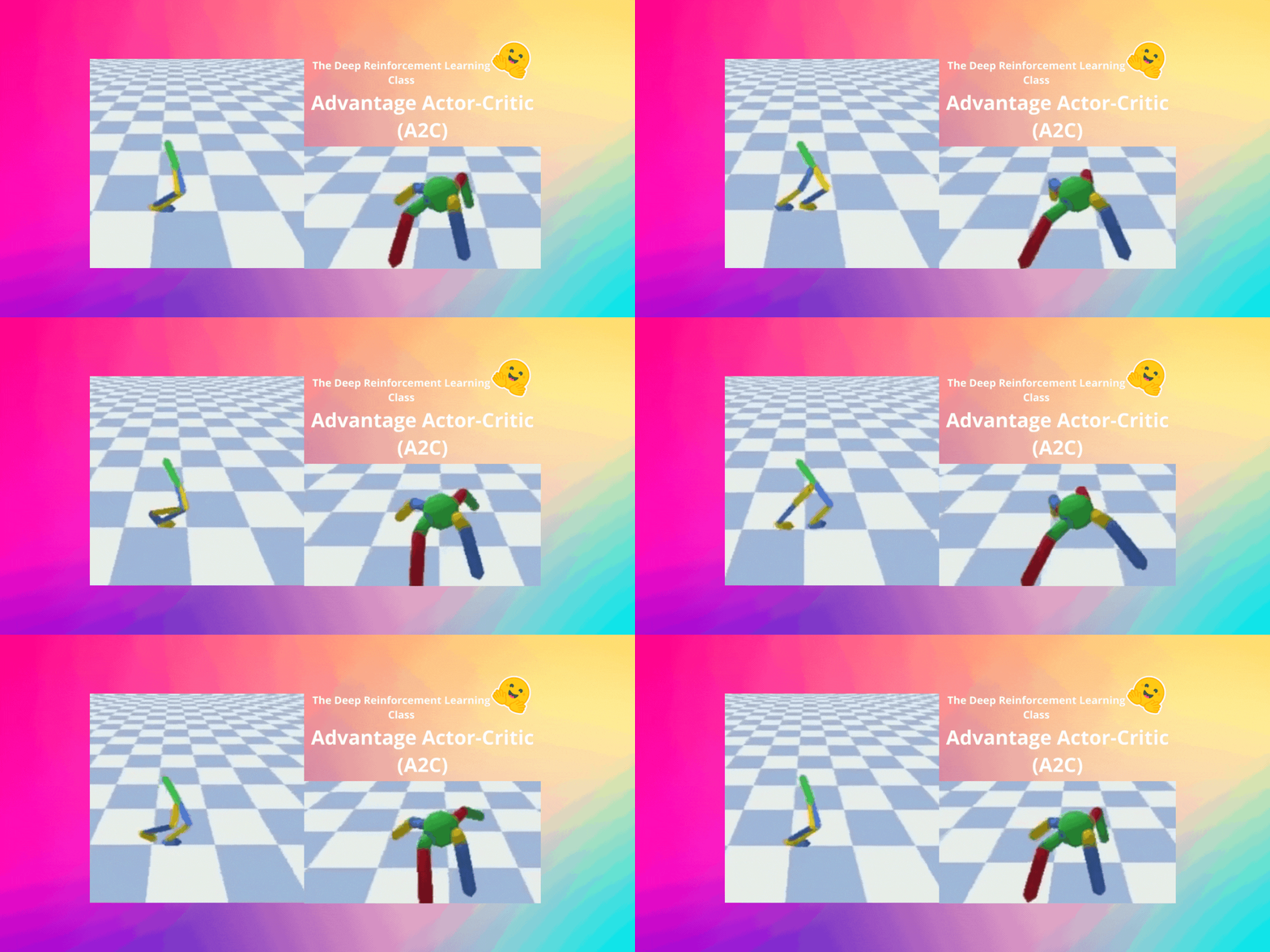
  41. Advantage Actor Critic (A2C)

    Advantage Actor-Critic (A2C) is a reinforcement learning algorithm that improves upon the basic Actor-Critic method by using multiple parallel actors to gather experiences. This approach helps to decorrelate the data, leading to more stable and efficient training. A2C is particularly effective in environments where exploration is challenging and rewards are sparse. AI

    Advantage Actor Critic (A2C)
  42. How to train your model dynamically using adversarial data

    Hugging Face has released a guide on dynamically training models using adversarial data. This method involves generating adversarial examples during the training process to improve model robustness. The guide uses the MNIST dataset as a practical example to demonstrate the techniques involved. AI

    How to train your model dynamically using adversarial data
  43. Building a Playlist Generator with Sentence Transformers

    Hugging Face has released a tutorial demonstrating how to build a playlist generator using Sentence Transformers. This guide focuses on leveraging sentence embeddings to understand the semantic meaning of song titles and artist names. The process involves fine-tuning a model to create embeddings that can then be used to find similar songs, enabling the creation of personalized playlists. AI

    Building a Playlist Generator with Sentence Transformers
  44. Policy Gradient with PyTorch

    This blog post from Hugging Face introduces policy gradient methods in deep reinforcement learning using PyTorch. It explains the fundamental concepts behind policy gradients and provides practical code examples for implementation. The article aims to demystify deep RL for practitioners and researchers. AI

    Policy Gradient with PyTorch
  45. AI's role in reprogramming immunity

    Immunai, a company focused on AI in immunology, has developed the AMICA database, which contains tens of millions of cells. This database leverages advanced machine learning techniques, including transfer learning, to analyze complex biological data. The company aims to advance the fight against diseases like cancer, autoimmune disorders, and infections by applying these AI-driven insights to immunotherapy. AI

    AI's role in reprogramming immunity
  46. DALL·E 2 pre-training mitigations

    OpenAI has detailed its pre-training mitigations for the DALL·E 2 image generation model, focusing on how the training data was modified to reduce risks. The company filtered out violent and sexual imagery from the dataset to prevent the model from generating such content. Additionally, OpenAI addressed potential biases introduced by data filtering and implemented techniques to mitigate image memorization by removing visually similar images. AI

    DALL·E 2 pre-training mitigations
  47. Announcing Evaluation on the Hub

    Hugging Face has launched a new evaluation feature directly on its platform, allowing users to benchmark models against various datasets. This initiative aims to standardize model assessment and provide more transparency in performance metrics. The integration offers a streamlined process for developers to test and compare their models within the Hugging Face ecosystem. AI

    Announcing Evaluation on the Hub
  48. Learning to play Minecraft with Video PreTraining

    OpenAI has developed a new method called Video PreTraining (VPT) to train AI agents using vast amounts of unlabeled online video data. This technique involves first training an inverse dynamics model on a small set of labeled videos to predict actions, which then labels a larger dataset. The trained model, demonstrated in Minecraft, can perform complex tasks like crafting diamond tools, showcasing a step towards general AI agents capable of interacting with computer interfaces. AI

    Learning to play Minecraft with Video PreTraining
  49. Evolution through large models

    OpenAI researchers have introduced Evolution through Large Models (ELM), a novel approach that leverages large language models (LLMs) trained on code to enhance genetic programming. This method uses LLMs to generate effective mutation operators for programs, enabling the creation of numerous functional examples in previously unseen domains. The research demonstrates ELM's potential to bootstrap new conditional language models capable of generating context-appropriate outputs, with implications for open-endedness, deep learning, and reinforcement learning. AI

    Evolution through large models
  50. AI-written critiques help humans notice flaws

    OpenAI has developed AI models capable of writing critiques to help human evaluators identify flaws in summaries. These AI assistants significantly improve human detection of errors, increasing the rate of flaw identification by 50% in general cases and from 27% to 45% for deliberately misleading summaries. The research indicates that larger models are more adept at self-critiquing and can use these critiques to improve their own outputs, although a gap remains between their ability to detect flaws and articulate them. AI

    AI-written critiques help humans notice flaws