PulseAugur / Brief
EN
LIVE 16:57:18

Brief

last 24h
[50/9095] 224 sources

Multi-source AI news clustered, deduplicated, and scored 0–100 across authority, cluster strength, headline signal, and time decay.

  1. AnyHand: A Large-Scale Synthetic Dataset for RGB(-D) Hand Pose Estimation

    Researchers have developed new datasets to improve hand detection and pose estimation, addressing limitations in existing real-world data. One dataset, synthesized from the Egohands dataset, uses event-based and RGB cameras to overcome motion blur and low frame rates. Another dataset, AnyHand, provides a large-scale collection of synthetic RGB-D images with detailed annotations for 3D hand pose estimation, including occlusions and hand-object interactions. AI

    IMPACT These datasets aim to improve the accuracy and robustness of AI models for hand-related tasks, potentially enabling more sophisticated human-robot interaction and augmented reality applications.
  2. Influence Dynamics and Stagewise Data Attribution

    Two new research papers explore methods for understanding how individual data points influence the training of large machine learning models. The first paper introduces a framework for "stagewise data attribution," suggesting that the influence of data samples changes dynamically throughout the model's learning process, particularly in language models. The second paper proposes the "Mirrored Influence Hypothesis," which offers a more computationally efficient way to estimate data influence by reformulating the problem and leveraging forward passes, applicable to various scenarios including diffusion models and language models. AI

    IMPACT These papers introduce new theoretical frameworks and computational methods for understanding data influence in ML models, potentially improving model trustworthiness and debugging capabilities.

  3. Analytic Bijections for Smooth and Interpretable Normalizing Flows

    Researchers have developed new analytic bijections for normalizing flows, addressing the challenge of creating expressive yet invertible transformations. These new methods offer global smoothness and closed-form analytical invertibility, overcoming limitations of previous approaches like affine transformations or monotonic splines. The introduced radial flows architecture, in particular, demonstrates exceptional training stability and geometric interpretability, achieving comparable quality to more complex models with significantly fewer parameters and showing promise in applications like physics simulations. AI

    IMPACT Introduces novel mathematical techniques that could improve the efficiency and interpretability of generative models.

  4. DecepGPT: Schema-Driven Deception Detection with Multicultural Datasets and Robust Multimodal Learning

    Researchers are developing advanced AI systems for deception detection, moving beyond simple classification to incorporate reasoning and cross-cultural applicability. Two new papers introduce frameworks like DecepGPT and DeceptionX, which utilize multimodal data and large language models to provide auditable reports and explainable reasoning processes. These efforts aim to improve the accuracy and generalizability of deception detection across diverse datasets and cultural contexts, addressing limitations in current benchmarks and methodologies. AI

    IMPACT Advances multimodal AI capabilities in understanding human behavior and improving forensic analysis.

  5. Automated Framework to Evaluate and Harden LLM System Instructions against Encoding Attacks

    Two new research papers explore the security vulnerabilities of large language models (LLMs). The first paper introduces AuditBench, a benchmark dataset designed to test LLMs' ability to analyze security audit logs for incident response, revealing performance variations based on model size and prompt design. The second paper presents an automated framework to evaluate and harden LLM system instructions against encoding attacks, demonstrating that LLMs can leak sensitive information through structured output formats even when refusing direct extraction requests. AI

    IMPACT These papers highlight critical security risks in LLM applications, particularly concerning sensitive data leakage and the need for robust evaluation frameworks.

  6. Generalized Rank-based Evaluation for Knowledge Graph Completion: Perspectives, Framework, and Analyses

    Researchers have introduced PROBE, a novel framework for evaluating knowledge graph completion (KGC) models, addressing limitations in existing metrics. PROBE accounts for predictive sharpness and popularity-bias robustness, properties often overlooked. A companion system, PROBE-Web, offers an interactive interface for users to explore these evaluation landscapes and compare KGC models. AI

    IMPACT Enhances evaluation of knowledge graph completion models, potentially leading to more reliable applications in areas like drug discovery and RAG.

  7. Muon$^2$: Boosting Muon via Adaptive Second-Moment Preconditioning

    Researchers have developed Muon$^2$, an enhanced version of the Muon optimizer designed for large-scale foundation model pre-training. Muon$^2$ improves efficiency and quality by incorporating Adam-style adaptive second-moment preconditioning before orthogonalization, addressing the computational costs associated with Muon's iterative orthogonalization process. Experiments with GPT, LLaMA, and Mixture-of-Experts models up to 13B parameters show that Muon$^2$ reduces the need for Newton-Schulz iterations by 40% and can save up to a quarter of training time compared to Muon while achieving similar loss. AI

    IMPACT Muon^2 offers a more efficient training process for large foundation models, potentially reducing computational costs and accelerating development cycles.

  8. Agentic Hybrid RAG for Evidence-Grounded Muon Collider Analysis

    Researchers have developed an agentic hybrid RAG framework to improve evidence retrieval and synthesis for muon collider analysis. This new system combines sparse lexical and dense semantic retrieval with an agentic reasoning module for query decomposition and evidence expansion. A benchmark was also created to evaluate retrieval-augmented scientific question answering in this domain. The agentic hybrid RAG framework demonstrated superior performance over existing baselines in retrieval effectiveness, answer quality, and factual grounding. AI

    IMPACT Provides a foundation for evidence-grounded scientific question answering and future analysis agents in high-energy physics.

  9. Expert-Level Crisis Detection in Mental Health Conversations

    Researchers have developed CRADLE-Dialogue, a new benchmark and dataset for detecting crisis situations in mental health conversations. This dataset includes 600 dialogues annotated for various risks like suicide ideation and child abuse, distinguishing between past and ongoing threats. The study also introduced an "Alert-Confirm" evaluation protocol to better reflect clinical needs and released a 32B-parameter model that shows significant improvements over existing open-source and proprietary models. AI

    IMPACT Enhances AI's capability in sensitive conversational contexts, potentially improving mental health support systems.

  10. PADD: Path-Aligned Decompression Distillation for Non-Router Teacher to Guide MoE Student Learning

    Researchers have introduced PADD, a novel framework for distilling knowledge from dense language models into mixture-of-experts (MoE) students. This method aims to improve MoE model efficiency and performance by learning effective routing policies. Experiments show that PADD-trained MoE models can match or exceed the capabilities of their dense teachers while maintaining the same inference cost. AI

    IMPACT Enables more efficient training of MoE models, potentially leading to better performance at lower computational costs.

  11. Near-Exponential Convergence Rates for kNN Classification based on Boltzmann Margin

    Researchers have introduced a new condition called Boltzmann margin for analyzing classifier convergence rates. This condition bridges the gap between existing Tsybakov and Massart margins, offering a more nuanced approach. The study demonstrates near-exponential convergence rates for kNN classifiers using this novel Boltzmann margin framework, supported by numerical evidence. AI

    IMPACT Introduces a new theoretical framework that could lead to more efficient classification algorithms.

  12. Self-Distillation Policy Optimization via Visual Feedback: Bridging Code and Visual Artifacts

    Researchers have developed a new self-distillation policy optimization framework called Visual-SDPO, designed to improve code-generating large language models. This method uses visual feedback from rendered outputs, such as charts or web pages, to guide the model. By pinpointing specific code segments responsible for visual defects, the system enhances the model's ability to produce visually accurate artifacts, outperforming existing methods by over 10 points on benchmarks. AI

    IMPACT Enhances LLM capabilities in generating visually accurate code, potentially improving tools for data visualization and web development.

  13. Data Journalist Agent: Transforming Data into Verifiable Multimodal Stories

    Researchers have developed Data Journalist Agent (Data2Story), a multi-agent framework designed to automate the process of transforming raw data into verifiable, multimodal news stories. This system aims to function as a virtual newsroom, with innovations including evidence-grounded claims linked to their data sources and multimodal content generation beyond text and static charts. Evaluations show Data2Story produces competitive, transparent, and auditable stories, though human journalists still lead in creative design and editorial angle. AI

    IMPACT This framework could significantly enhance journalistic workflows by automating data analysis and content generation, leading to more transparent and verifiable reporting.

  14. FadeMem: Distance-Aware Memory Consolidation for Autoregressive Video Diffusion

    Researchers have introduced FadeMem, a novel memory consolidation technique for autoregressive video generation models. This method addresses the issue of growing historical KV cache sizes in models that generate videos segment by segment. FadeMem organizes historical data into a temporal hierarchy, preserving fine details in recent segments while consolidating older information into more compact, long-range anchors for scene structure and identity. AI

    IMPACT Enhances video generation models by optimizing memory usage and improving temporal coherence and subject consistency.

  15. SCAIL-2: Unifying Controlled Character Animation with End-to-end In-Context Conditioning

    Researchers have developed SCAIL-2, a new framework for end-to-end character animation that directly transfers motion from driving videos without relying on intermediate representations. This approach aims to reduce information loss by processing visual data directly. The team also created a large dataset, MotionPair-60K, to train the model on diverse animation tasks and introduced Bias-Aware DPO to improve accuracy in detailed regions. AI

    IMPACT Enables more direct and potentially higher-fidelity character animation by bypassing intermediate representations.

  16. ManiSplat: Manipulation Trajectory Synthesis from Monocular Video via Decoupled 3D Gaussian Splatting

    Researchers have developed ManiSplat, a new framework for reconstructing dynamic 3D scenes from monocular video. This method disentangles robots, objects, and backgrounds into separate Gaussian splatting subfields, enabling controllable digital twins. ManiSplat uses a task-oriented alignment module to ensure temporal coherence and physical consistency, making the reconstructed scenes suitable for robotic tasks and policy learning. AI

    IMPACT Enables more realistic simulation environments for training robotic policies.

  17. ViMax: Agentic Video Generation

    Two new research papers introduce frameworks for generating longer, more coherent videos using AI agents. ViMax focuses on a hierarchical narrative engine and visual consistency mechanisms to maintain story integrity and character continuity across scenes. VideoWeaver provides a benchmark and harness to evaluate and evolve agent skills for long-form video generation, emphasizing tool use and workflow composition over predefined pipelines. AI

    IMPACT These frameworks advance AI capabilities in multimodal generation, potentially enabling more complex narrative content creation and new applications in media and entertainment.

  18. EditSR: Enhancing Neural Symbolic Regression via Edit-based Rectification

    Researchers are developing new methods for neural symbolic regression, a technique that aims to discover explicit scientific laws from data. EditSR uses a two-layer framework with a neural model and an edit-based rectifier to improve efficiency and accuracy, especially for complex expressions. FunctionEvolve employs an evolutionary framework with expression trees and LLMs to guide the search for symbolic regression, achieving high accuracy on benchmark tasks. Decomposable Neuro Symbolic Regression combines transformer models, genetic algorithms, and genetic programming to generate interpretable multivariate expressions that match the original mathematical structure. AI

    IMPACT These advancements in symbolic regression could lead to more interpretable AI models and accelerate scientific discovery by uncovering underlying mathematical relationships in data.

  19. Atomic Intent Reasoning: Bringing LLM Semantics to Industrial Cross-Domain Recommendations

    Researchers have developed a new framework called AIR (Atomic Intent Reasoning) to address the challenges of applying large language models (LLMs) to industrial cross-domain recommendation systems. The framework tackles issues like semantic gaps between domains and noisy user behavior data by migrating LLM inference to an offline phase. This approach accelerates inference by approximately 400 times while preserving semantic consistency. Large-scale A/B testing in a real-world e-commerce setting demonstrated significant improvements in key business metrics, including a 3.446% increase in GMV. AI

    IMPACT This framework could enable wider adoption of LLMs in real-time e-commerce recommendation systems, improving conversion rates and user experience.

  20. The Order Matters: Sequential Fine-Tuning of LLaMA for Coherent Automated Essay Scoring

    Researchers have developed a sequential fine-tuning method for LLaMA-3.1-8B that significantly improves automated essay scoring (AES) by considering the interdependent nature of discourse elements. This approach, which progressively trains the model on different essay components like lead, claim, evidence, and conclusion, outperformed both independent task-specific models and a much larger LLaMA-70B baseline on certain metrics. The study suggests that curriculum design aligned with discourse structure is crucial for AES and that smaller, specialized models can be competitive with larger LLMs, offering a more cost-effective solution for educational NLP. AI

    IMPACT Demonstrates that structured curriculum learning can enhance LLM performance on complex NLP tasks, potentially leading to more efficient and specialized models for educational applications.

  21. Where You Inject Diversity Matters: A Unified Framework for Diverse Generation

    Researchers have developed a new framework to analyze and improve the diversity of outputs generated by large language models. The framework categorizes methods based on where diversity is introduced during the generation process and introduces a 'transmission score' to measure its effectiveness. The study proposes automated specification-level generation techniques that create diverse intermediate specifications before generating final responses, showing improved output diversity across various tasks and models while maintaining quality. AI

    IMPACT Provides a structured approach to improving the variety of LLM outputs, potentially leading to more useful and creative applications.

  22. $k$-Nearest Neighbors in Gromov--Wasserstein Space

    Researchers have developed a $k$-nearest neighbors ($k$-NN) classification method utilizing Gromov--Wasserstein (GW) and fused Gromov--Wasserstein (fGW) distances. This approach allows for direct comparison of graphs with varying numbers of nodes and can incorporate node features. The study proves the universal consistency of these GW-based $k$-NN classifiers for both general graphs and node-attributed graphs, with experimental results showing strong performance. AI

  23. Data-Driven Dynamic Assortment in Online Platforms: Learning about Two Sides

    Researchers have developed a novel data-driven algorithm for dynamic assortment problems on two-sided service platforms. This algorithm addresses the challenge of incomplete information by learning the choice-model parameters of both customers and sellers over time. The approach aims to optimize the platform's objective by minimizing regret, which measures revenue loss compared to an ideal scenario where all parameters are known. AI

    IMPACT Introduces a novel algorithm for optimizing two-sided platforms, potentially improving efficiency in online marketplaces.

  24. What Spatial Memory Must Store: Occlusion as the Test for Language-Agent Memory

    A new research paper explores how language agents can improve their spatial memory by incorporating geometric information. The study found that prioritizing spatial proximity over recency and importance significantly enhances recall accuracy. It also highlights the need to separate memory recall from visual perception, proposing a digital differential analyzer (DDA) to improve an agent's ability to perceive objects behind occlusions. AI

    IMPACT This research could lead to more capable AI agents that can better understand and navigate complex environments.

  25. LLM-Guided Neural Architecture Search for Robust Co-Design of Physical Neural Networks

    Researchers have developed a new framework called UH-NAS, which uses LLMs to guide neural architecture search for physical neural networks. This approach co-optimizes task accuracy with hardware constraints like energy consumption and physical non-idealities. UH-NAS is designed to be hardware-agnostic, allowing for fair comparisons across different computing platforms and discovering more robust architectures than traditional methods. AI

  26. Beyond Probabilistic Similarity: Structural, Temporal, and Causal Limitations of Retrieval-Augmented Generation in the Legal Domain

    Multiple research papers published on arXiv explore advancements in Retrieval-Augmented Generation (RAG) systems. These studies address challenges such as handling conflicting evidence in multilingual contexts (X-MADAM-RAG), improving robustness through domain-oriented design (DCD) and cross-query consistency (CQC-RAG), and optimizing context selection with adaptive methods (Tail-Aware Adaptive-k). Additionally, research investigates graph-based methods for enrichment and reranking (GraphER) and highlights limitations of RAG in specialized domains like legal AI due to structural, temporal, and causal complexities. AI

    IMPACT These advancements aim to improve the reliability, accuracy, and efficiency of RAG systems across various domains, potentially enhancing AI's ability to process and generate information from external knowledge sources.

  27. Geometric Coastline Localization using Vision-Language Models

    Researchers have developed CoastlineVLM-7B, a vision-language model designed to directly predict coastlines as polylines rather than segmentation masks. This approach, built on the GeoChat-7B/LLaVA-1.5 architecture, focuses on geometric boundary localization using geomorphic proxies like vegetation lines or dune toes. Evaluations on the New Zealand Coastal Change Dataset showed improved geometric alignment, reducing Hausdorff distance and Earth Mover's Distance compared to traditional segmentation methods. AI

    IMPACT This research suggests that direct geometric prediction of coastlines using VLMs may offer more accurate and operationally relevant results for coastal monitoring.

  28. My Chemical Harness: Evolutionary Molecular Design over Synthetic Pathways with Large Language Model Agents

    Researchers have developed "My Chemical Harness," a novel framework for molecular design that integrates large language models (LLMs) with evolutionary algorithms. This system uses LLMs as high-level strategy controllers, guiding the search for synthetic pathways rather than directly generating molecules. The framework ensures that generated pathways are executable using deterministic chemistry tools and are scored by molecular oracles, preventing LLM-induced hallucinations. This approach achieved state-of-the-art performance on a soluble epoxide hydrolase proxy task, demonstrating the potential of constrained LLM agents in molecular discovery without requiring extensive training. AI

    IMPACT This approach could accelerate drug discovery by enabling more efficient and reliable generation of novel molecules with feasible synthetic routes.

  29. Adaptive directional gradients for parameterized quantum circuits

    Researchers have developed an LLM-driven system for autonomously designing quantum circuits, integrating knowledge acquisition, code generation, and experimental feedback. This framework has shown success in constructing quantum feature maps for machine learning and ansatz for variational quantum eigensolvers in quantum chemistry, outperforming classical methods in benchmarks. Separately, a new framework for forward gradient estimators in parameterised quantum circuits has been proposed, significantly improving training efficiency and reducing measurement costs compared to existing methods, enabling training on larger quantum neural networks. AI

    IMPACT LLMs are being applied to complex scientific optimization problems, while new gradient estimation techniques promise more efficient training of quantum machine learning models.

  30. Waymo built a virtual driver to study how humans react to surprises on the road Waymo has a lot of experience building virtual systems to help its autonomous ve

    Waymo has developed a virtual human driver, named ReD (Reference Driver), to enhance the safety of its autonomous vehicles. This system models human driving behavior, particularly how people anticipate and react to unexpected situations, using a neuroscientific concept called active inference. By simulating a careful and competent human driver's decision-making process, Waymo aims to improve accident avoidance and establish a scientifically grounded method for evaluating the safety of autonomous systems. The company plans to make the ReD model open-source under an academic license to foster industry-wide collaboration. AI

    IMPACT Establishes a new benchmark for evaluating autonomous vehicle safety by modeling human-like proactive avoidance and reaction to surprise.

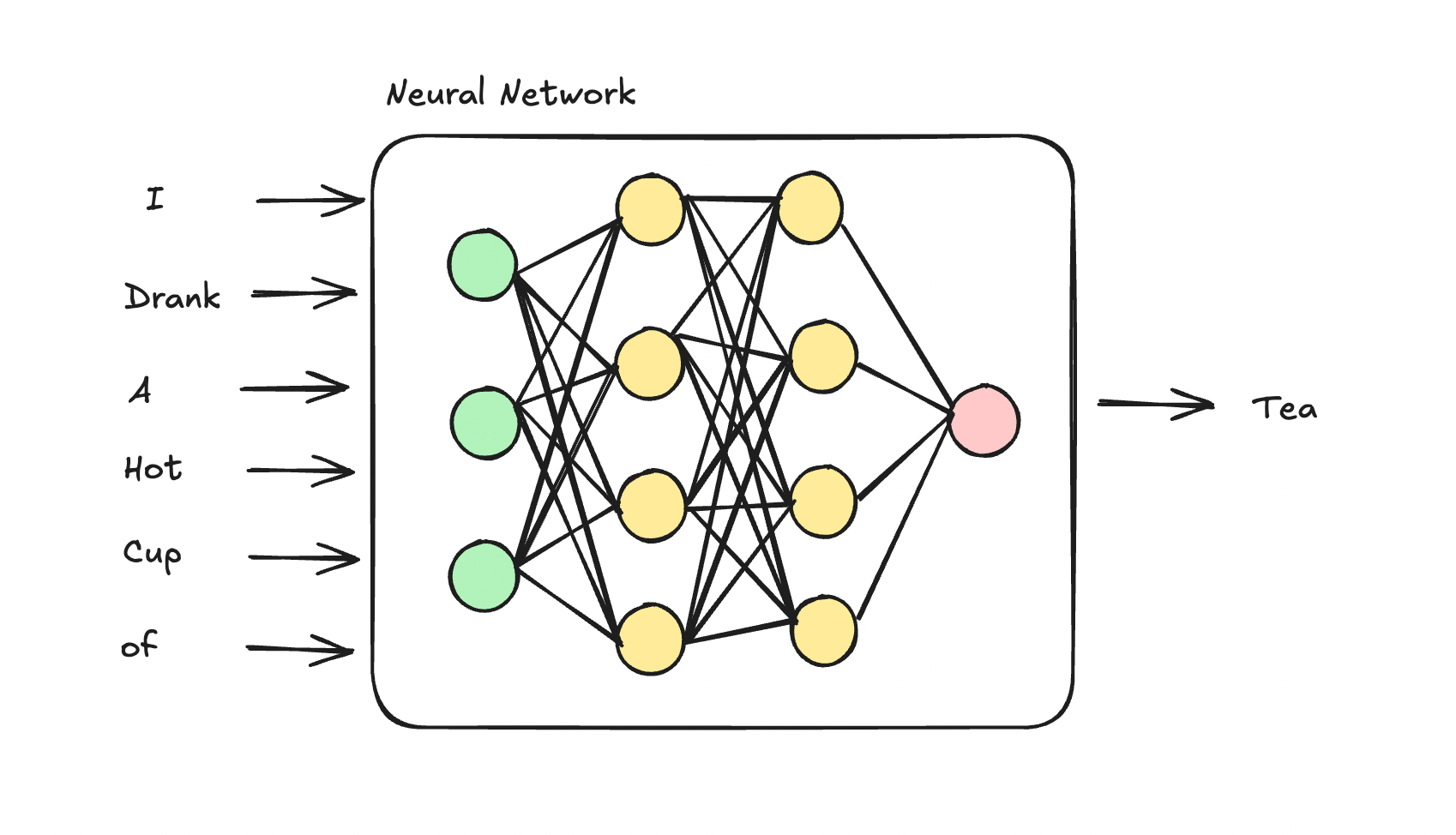
  31. What Really Happens When You Talk to an LLM

    This article delves into the technical underpinnings of how Large Language Models (LLMs) process user input. It explains key concepts such as the distinction between training and inference, the role of tokens in representing data, and the mechanics of prefill and decode stages during text generation. The piece aims to demystify the internal workings of LLMs for those interested in AI infrastructure. AI

    What Really Happens When You Talk to an LLM

    IMPACT Provides foundational knowledge on LLM mechanics, aiding operators in understanding model behavior and infrastructure needs.

  32. Conformal Prediction for Dyadic Regression Under Complex Missingness

    Researchers have developed a new framework for conformal prediction in dyadic regression, specifically addressing complex missing data scenarios. The theoretical advancements include establishing super-uniformity under weaker invariance conditions and handling samples that are random subsets of the index set. The proposed methods also offer asymptotic validity for weighted conformal prediction even under missing-not-at-random assumptions, a significant theoretical contribution. AI

  33. Vision-Assisted Foundation Model for Solving Multi-Task Vehicle Routing Problems

    Researchers have developed a vision-assisted foundation model (VaFM) to tackle complex multi-task vehicle routing problems. This new model integrates visual information with graph-based approaches to simultaneously optimize routing costs and satisfy diverse customer constraints. VaFM addresses challenges like the lack of constraint representation in existing VRP images and the varying requirements across different tasks. Experiments show VaFM outperforms current state-of-the-art methods, particularly on VRP variants with intricate constraints. AI

    IMPACT This model could significantly improve efficiency in logistics and service industries by optimizing complex routing scenarios.

  34. Intrinsic Footpoint-invariant Riemannian Cross-covariance

    Researchers have developed a new method for estimating covariance for random objects on nonlinear Riemannian manifolds, which are increasingly used in machine learning for data like shapes and matrices. This intrinsic Riemannian cross-covariance approach transports local variations to a common tangent space, creating a descriptor that is independent of coordinate choices. The method inherits properties of Euclidean covariance and has been demonstrated effective on various manifolds and real-world shape data, positioning it as a key tool for non-Euclidean representation learning. AI

    IMPACT Introduces a novel statistical tool for analyzing complex, non-Euclidean data, potentially improving representation learning and dimension reduction in ML.

  35. Visual Prompting Meets Feature Reconstruction-Based Anomaly Detection with Dual-Teacher Supervision

    Researchers have developed a new approach to anomaly detection that addresses limitations in real-world scenarios where object scale, viewpoint, and background vary. Their method incorporates a visual prompting pipeline for object isolation, a technique to unfreeze teachers in student-teacher models for better domain adaptability, and data augmentation using diffusion-generated images. This approach achieved a 3.5 percentage point improvement over the previous state-of-the-art on the AeBAD dataset. AI

    IMPACT Enhances anomaly detection robustness for real-world applications by addressing variations in object presentation.

  36. Designed by Journalists, but Is It for Readers? Rethinking AI Disclosures and Transparency in News

    Two new research papers explore the challenges of disclosing AI usage in news production. The first paper, focusing on journalistic processes, found that simple labels are insufficient and developed visualization prototypes to better represent human-AI collaboration, noting that visualizations can inadvertently alter perceptions of AI's role. The second paper highlights that current disclosure methods, whether brief labels or detailed explanations, fail to build reader trust and can even create a "transparency dilemma." It suggests that readers prefer interactive, user-agency-centered designs for AI disclosures. AI

    IMPACT Better AI disclosure methods could increase reader trust and adoption of AI in newsrooms.

  37. Flexible Kernels for Protein Property Prediction

    Researchers have developed a new class of sequence kernels for Gaussian processes that improve protein property prediction. These kernels leverage evolutionary substitution matrices and local linearity, demonstrating superior data efficiency compared to methods relying on foundation model embeddings. The approach can also incorporate structural information from foundation models, making it suitable for multi-task learning across various protein property landscapes. AI

    IMPACT Offers a more data-efficient alternative to foundation model embeddings for specific biological property predictions.

  38. IPSM-Bench: A New Intermediate Phase Segmentation Benchmark in Microstructure Images of Zinc-Based Absorbable Biomaterials

    Researchers have introduced IPSM-Bench, a new benchmark dataset for segmenting intermediate phases in zinc-based biomaterial microstructures. They also developed SCoP-SAM, a novel method that uses spatial context priors to improve segmentation accuracy. This work aims to advance the analysis of zinc alloy microstructures and establish a new standard for evaluating segmentation techniques in this domain. AI

    IMPACT Establishes a new benchmark and method for microstructure analysis, potentially improving material science research.

  39. A Bayesian Network Approach for Enhancing Security-Focused Decision Support Systems

    Researchers have developed a new Decision Support System (DSS) that utilizes Bayesian Networks to help infrastructure operators select appropriate security tools. This system aims to simplify the complex task of managing heterogeneous open-source networks by aligning tool selection with high-level security requirements. The framework is designed to be understandable and extensible, with its performance evaluated for time efficiency and prediction accuracy. AI

    IMPACT Provides a structured approach for selecting security tools in complex network environments.

  40. Robust Active Learning for Few-Shot Example Selection in Text-to-SQL

    Researchers have developed a new active learning strategy for selecting few-shot examples in Text-to-SQL systems. This method addresses challenges like varying annotation reliability and the need for semantic diversity in query embeddings. The proposed stratified greedy algorithm optimizes a heteroscedastic mutual information objective, offering theoretical guarantees and empirical evidence of reduced labeling effort with maintained accuracy. AI

    IMPACT Reduces the cost of developing specialized Text-to-SQL systems, potentially accelerating their adoption.

  41. MetaPlate: Counterfactual-Guided RAG-LLM Tool for Personalized Food Recommendation and Hyperglycemia Prevention

    Researchers have developed MetaPlate, a novel framework designed to provide personalized meal recommendations for managing postprandial hyperglycemia. This system integrates continuous glucose monitoring (CGM) data, physiological signals from wearables, and user meal inputs from 25 individuals. It utilizes a machine learning model to predict glucose response and a counterfactual optimization module to adjust meal composition, aiming to keep glucose levels below 140 mg/dL. An LLM-based retrieval-augmented generation (RAG) layer then translates these adjustments into human-readable dietary advice, which was refined through expert assessments with registered dietitians. AI

    IMPACT This system demonstrates a novel application of LLMs and machine learning for personalized health management, potentially improving dietary adherence and metabolic health outcomes.

  42. Convergence Rates for Neural-Network Estimation with Current-Status Data

    Researchers have published a paper detailing convergence rates for neural network estimators when dealing with current-status data. This type of data is collected when an event's occurrence is only known relative to an observation time, not its precise timing. The study introduces a nonparametric sieve maximum likelihood estimator and provides theoretical backing for its use in estimating event time distributions. AI

    IMPACT Provides theoretical support for neural network estimation techniques in specific data scenarios.

  43. BrainSurgery: Reproducible and Reliable Declarative Weight Manipulations for Model Editing and Upcycling

    Researchers have developed BrainSurgery, a new tool designed to simplify the complex process of modifying large deep learning model weights. This system allows for reproducible "tensor surgery" through declarative YAML plans, abstracting away storage and memory management challenges. BrainSurgery supports various modifications, including structural changes and mathematical transformations, with built-in assertions to prevent errors and ensure reliability. AI

    IMPACT Streamlines model editing and debugging, potentially accelerating research and development cycles for large neural networks.

  44. Correlation Is Not Enough: Embedding Human Metadata for Individual Causal Discovery

    Researchers have developed a method to improve the accuracy of causal discovery in Large Behavioural Models (LBMs) by addressing issues with embedding proximity. Standard biomedical language models incorrectly associate unrelated concepts, leading LBMs to infer false causal links. The proposed fix involves a contrastive learning approach using a knowledge graph to mine hard negatives, significantly improving the separation between related and unrelated concepts. This method also includes optimizations for faster inference using OpenVINO on Intel hardware. AI

    IMPACT Enhances the reliability of AI models that infer causal relationships from user data, crucial for personalized applications.

  45. Training-Free Generalized Few-Shot Segmentation through Open-Vocabulary Semantic Arbitration

    Researchers have developed new methods for open-vocabulary semantic segmentation, a task that involves assigning semantic labels to images using flexible category vocabularies without pixel-level training data. One approach, LASA, aggregates attention maps from different layers of Vision Transformers to capture both global structure and local details, improving segmentation accuracy and spatial coherence. Another method integrates differentiable fuzzy logic with foundation models like SAM to refine pseudo-labels and train segmentation models, achieving state-of-the-art results that surpass even densely supervised baselines. A third technique, Open-V, uses a training-free framework that coordinates frozen semantic priors from models like SAM and CLIP for generalized few-shot segmentation, demonstrating strong performance without parameter adaptation. AI

    IMPACT These advancements in open-vocabulary segmentation could enable more flexible and accurate image understanding in applications like robotics, autonomous driving, and content creation.

  46. Trajectory Geometry of Transformer Representations Across Layers

    Two new research papers explore the internal geometry of transformer models, focusing on how representations evolve across layers. One paper investigates module-specific weight-space geometries for optimization, finding that assigning different manifold constraints to attention and MLP layers in GPT-2 improves performance and stability. The other paper analyzes the trajectory geometry of representations, using metrics like length, curvature, and convergence to understand how semantically related prompts evolve, revealing distinct phases of processing and correlating curvature with computational complexity across GPT-2, TinyLlama, and Qwen2.5. AI

    IMPACT Provides new insights into transformer architecture and optimization, potentially leading to more efficient and stable model training.

  47. An Uncertainty Estimation Framework for Dose Accumulation in Adaptive Radiotherapy: Application to CBCT-Guided Radiotherapy for Cervical Cancer

    Researchers have developed IMPACT-DoseAcc, a new framework for estimating cumulative radiation dose in adaptive radiotherapy (ART) for cervical cancer. This system quantifies uncertainties arising from image registration and segmentation, providing probabilistic dose-volume histograms. The framework demonstrated strong correlation between registration uncertainty and geometric error, achieving high coverage for target volumes and stabilizing dose estimates. AI

    IMPACT Improves interpretation of cumulative dose in ART, supporting more reproducible and uncertainty-informed treatment workflows.

  48. Learning Doubly Sparse Explicitly Conditioned Transforms

    Researchers have developed a novel method for learning doubly sparse explicitly conditioned transforms, aiming to improve data compression, noise reduction, and feature extraction. This approach combines a fixed canonical matrix with a data-adaptive sparse component to create a controllable, adaptable transform. The new algorithm, motivated by inexact proximal methods, demonstrates state-of-the-art results on its specific learning problem and offers comparable performance to dense variants with reduced computational costs. AI

    IMPACT Introduces a new method for signal processing that could enhance AI applications in data compression and feature extraction.

  49. Rank Collapse, Fixed Points, and the Renormalization Group Structure of MLP Residual Networks

    Researchers have quantitatively demonstrated the analogy between deep neural network forward passes and renormalization group (RG) flows. Their study on MLP residual networks revealed that the effective rank of the residual stream decreases with depth, indicating a progressive integration of irrelevant data. This rank collapse was selective, depending on the input distribution's correlation length, and the network preserved only relevant degrees of freedom. The findings suggest that MLPs implement a selective coarse-graining procedure governed by the input's spectral structure, with most of the network operating near a fixed point. AI

    IMPACT Provides a quantitative framework for understanding how MLPs process information, potentially guiding future architectural designs.

  50. UniPET: a universal network for high-quality PET image denoising across varied dose reduction factors

    Researchers have developed two novel deep learning approaches for improving Positron Emission Tomography (PET) image denoising. UniPET utilizes domain generalization and region-aware learning to create a universal model capable of denoising images across various dose reduction factors, addressing issues of style misalignment and over-smoothing. U-TTT employs test-time training with dual-domain adaptation (spatial and frequency) to dynamically adjust model parameters during inference, enabling robust generalization even with unseen dose levels or scanner types. AI

    IMPACT These advancements in AI-driven PET image denoising could lead to more accurate diagnoses with lower radiation exposure for patients.