PulseAugur / Brief
EN
LIVE 16:42:20

Brief

last 24h
[50/5158] 224 sources

Multi-source AI news clustered, deduplicated, and scored 0–100 across authority, cluster strength, headline signal, and time decay.

  1. AI's role in reprogramming immunity

    Immunai, a company focused on AI in immunology, has developed the AMICA database, which contains tens of millions of cells. This database leverages advanced machine learning techniques, including transfer learning, to analyze complex biological data. The company aims to advance the fight against diseases like cancer, autoimmune disorders, and infections by applying these AI-driven insights to immunotherapy. AI

    AI's role in reprogramming immunity
  2. Announcing Evaluation on the Hub

    Hugging Face has launched a new evaluation feature directly on its platform, allowing users to benchmark models against various datasets. This initiative aims to standardize model assessment and provide more transparency in performance metrics. The integration offers a streamlined process for developers to test and compare their models within the Hugging Face ecosystem. AI

    Announcing Evaluation on the Hub
  3. DALL·E 2 research preview update

    OpenAI is expanding access to its DALL-E 2 research preview, inviting up to 1,000 new users weekly from its waitlist. The company has focused on enhancing safety systems, with less than 0.05% of shared images flagged for policy violations. OpenAI is also actively working to address biases in the model inherited from its training data, requesting early users to avoid sharing photorealistic images with faces. AI

    DALL·E 2 research preview update
  4. Opinion Classification with Kili and HuggingFace AutoTrain

    This blog post details how to perform opinion classification using Hugging Face's AutoTrain and Kili's data labeling platform. It outlines a workflow that begins with data annotation in Kili and then leverages AutoTrain to efficiently build and train a custom model for this task. The process aims to streamline the development of specialized NLP models for sentiment analysis and related applications. AI

    Opinion Classification with Kili and HuggingFace AutoTrain
  5. New GPT-3 capabilities: Edit & insert

    OpenAI has introduced new GPT-3 and Codex capabilities that allow for editing and inserting content within existing text, moving beyond simple text completion. The 'insert' feature enables contextually relevant additions in the middle of text or code, improving applications like long-form writing and code generation. Additionally, a new 'edits' endpoint allows for modifications to existing text based on specific instructions, useful for tasks such as refactoring code, changing tone, or fixing errors. These features are now available in beta via the OpenAI API and are being piloted in tools like GitHub Copilot. AI

    New GPT-3 capabilities: Edit & insert
  6. Generating Human-level Text with Contrastive Search in Transformers 🤗

    Hugging Face has introduced two new text generation techniques for its Transformers library: contrastive search and constrained beam search. Contrastive search aims to produce more human-like text by balancing likelihood and distinctiveness, while constrained beam search allows users to guide the generation process with specific rules or patterns. These methods offer developers more control and improved quality for text generation tasks within the Hugging Face ecosystem. AI

    Generating Human-level Text with Contrastive Search in Transformers 🤗
  7. A research agenda for assessing the economic impacts of code generation models

    OpenAI has released a research agenda focused on understanding the economic consequences of AI models that generate code. The initiative aims to explore impacts on productivity, employment, skill development, competition, consumer prices, and inequality. OpenAI is inviting external researchers to collaborate on this project, utilizing their Codex model as a tool for study and methodology development. AI

    A research agenda for assessing the economic impacts of code generation models
  8. One algorithm to rule them all?

    Researchers have developed an AI system capable of quickly predicting protein attachments, a significant advancement in biological research. Additionally, a new self-supervised algorithm from Meta AI demonstrates high performance across speech, vision, and text modalities. DeepMind has also announced an AI coding engine that matches the proficiency of an average human programmer. AI

    One algorithm to rule them all?
  9. Making automatic speech recognition work on large files with Wav2Vec2 in 🤗 Transformers

    Hugging Face has released updates to its Transformers library, enhancing the Wav2Vec2 model for automatic speech recognition (ASR). The library now supports processing large audio files by implementing chunking, which breaks down large files into smaller, manageable segments. Additionally, performance is boosted through the integration of n-grams, further improving the accuracy and efficiency of speech recognition tasks. AI

    Making automatic speech recognition work on large files with Wav2Vec2 in 🤗 Transformers
  10. $80m to bring the next billion software creators online

    Replit has secured $80 million in Series B funding to expand its online coding platform and support its mission of enabling one billion new software creators. The company plans to invest in making its programming environment more ubiquitous and scalable, while also exploring AI-assisted coding and code comprehension tools. Additionally, Replit is increasing its support for open-source projects crucial to its infrastructure, including significant donations to FreeCodeCamp and the Nix Foundation. AI

    $80m to bring the next billion software creators online

    IMPACT Accelerates development of AI-assisted coding tools and scalable infrastructure for a growing creator base.

  11. Introducing Snowball Fight ☃️, our first ML-Agents environment

    Hugging Face has released Snowball Fight, a new machine learning environment designed for training agents. This environment is built using the ML-Agents toolkit and aims to provide a platform for developing and testing AI agents in a simulated setting. The release is intended to foster innovation in reinforcement learning and agent-based AI development within the community. AI

    Introducing Snowball Fight ☃️, our first ML-Agents environment
  12. Photonic computing for AI acceleration

    Lightmatter is developing photonic computers designed to accelerate AI inference tasks. Unlike traditional transistor-based hardware, their approach utilizes light for computation, offering potential gains in power efficiency and speed. This innovation targets the growing demand for specialized AI hardware solutions. AI

    Photonic computing for AI acceleration
  13. 🌍 AI in Africa - Agriculture

    The "AI in Africa" podcast series features discussions on applying AI to address critical challenges across the continent. Episodes highlight work from Makerere University's AI Lab on computer vision and NLP, Radiant Earth's use of machine learning for earth observation and crop identification, and experts discussing AI's role in agriculture to combat poverty and hunger. These initiatives emphasize open data, ethical considerations, and developing practical solutions for local communities. AI

    🌍 AI in Africa - Agriculture
  14. Our First Replit Ventures

    Replit has successfully concluded its inaugural Replit Ventures program, an initiative designed to support startups building on its platform. The program attracted over 400 global applications, from which six diverse teams were selected to receive mentorship and resources. Several participating startups achieved significant milestones, including substantial growth in user engagement, media features in publications like Forbes, and positive reception from the machine learning community, with some teams securing funding offers. AI

    Our First Replit Ventures

    IMPACT Demonstrates a successful model for nurturing AI and tech startups, potentially influencing other platforms to launch similar initiatives.

  15. Elixir meets machine learning

    José Valim, the creator of Elixir, has launched Numerical Elixir (Nx), a project aimed at integrating Elixir into the machine learning landscape. This initiative includes a collaborative notebook built on Phoenix LiveView, designed to facilitate ML development. The project draws inspiration from various influences and collaborators, with the goal of bringing Elixir's capabilities to the ML domain. AI

    Elixir meets machine learning
  16. Apache TVM and OctoML

    Apache TVM, an open-source machine learning compiler, was developed at the University of Washington to address the challenge of deploying AI models efficiently across various hardware and software platforms. To commercialize this technology, Luis Ceze and his team founded OctoML. Their work aims to overcome the significant hurdle of getting AI applications from development to market, as a large percentage currently fail due to the complexity and cost of optimizing models for diverse environments. AI

    Apache TVM and OctoML
  17. Next-gen voice assistants

    PolyAI CEO Nikola Mrkšić discussed advancements in conversational AI and the development of next-generation voice assistants capable of human-level conversations. The company's ConveRT model has demonstrated superior performance compared to BERT and GPT-based models in evaluations, particularly in understanding various languages and accents. PolyAI's technology aims to enhance customer service interactions through more sophisticated voice assistant capabilities. AI

    Next-gen voice assistants
  18. Deep learning technology for drug discovery

    Abraham Heifets from Atomwise discussed how deep learning models are being applied to drug discovery, focusing on their ability to predict molecule binding. These AI methods are showing promise in developing treatments for diseases previously considered untreatable. The conversation highlighted specific examples and the potential of AI to accelerate the creation of new therapies. AI

    Deep learning technology for drug discovery
  19. Series A to Revolutionize Computing

    Replit has secured $20 million in Series A funding, led by A.Capital, with participation from existing investors including Andreessen Horowitz and Y Combinator. The company aims to democratize access to computing power and empower individuals to build software. Replit provides a multiplayer computing environment that simplifies coding, app development, and hosting for millions of users. AI

    Series A to Revolutionize Computing

    IMPACT Empowers a new generation of developers and entrepreneurs with accessible computing tools, potentially accelerating software creation.

  20. Going Global

    Replit is expanding its global infrastructure by launching new compute regions in Mumbai, India, and London, England. This move aims to reduce latency for its international users, allowing code execution and development to occur in data centers closer to them. The company is also embracing a globally distributed workforce, hiring employees worldwide while maintaining a four-hour daily overlap with Pacific Standard Time working hours. AI

    Going Global

    IMPACT Reduces latency for global users of a coding platform, enhancing developer experience.

  21. Quick, beautiful web UIs for ML apps

    The Machine Learning Compilation (MLC) group, led by Tianqi Chen at CMU, is developing frameworks like MLC Chat and Web LLM to enable running large language models on consumer hardware, including iPhones and web browsers. This initiative aims to mitigate the current GPU shortage by allowing models to run locally on devices with AMD cards or even just CPUs. Projects like Hugging Face's text-to-webapp generator and Gradio are also contributing to easier deployment and accessibility of ML models for developers and end-users. AI

    Quick, beautiful web UIs for ML apps
  22. The world's largest open library dataset

    Unsplash has released a massive open dataset containing over 2 million high-quality photos, 5 million keywords, and 250 million searches. The company aims to facilitate machine learning and AI development with this extensive collection. This release has already sparked interest and led to various applications within the AI community. AI

    The world's largest open library dataset
  23. Speech tech and Common Voice at Mozilla

    Mozilla is developing an open-source voice database called Common Voice to address the lack of accessible and diverse speech data. This initiative aims to enable broader innovation in speech technology, particularly for underrepresented languages and accents. The project also supports fellows working on speech technology for African languages and researching demographic biases in automatic speech recognition systems. AI

    Speech tech and Common Voice at Mozilla
  24. How Reading Papers Helps You Be a More Effective Data Scientist

    A new arXiv paper details a study comparing BERT and T5 models for Named Entity Recognition (NER), analyzing their performance with different tag schemes and hyperparameters. The research aims to provide insights into common errors and compare the architectures for practical applications. Separately, an article discusses the benefits of reading research papers for data scientists, highlighting how it can improve effectiveness by learning from existing work and staying updated on advancements. AI

    How Reading Papers Helps You Be a More Effective Data Scientist

    IMPACT Research papers offer valuable insights and practical applications for AI professionals, helping them stay updated and avoid reinventing the wheel.

  25. Secured 70 billion yuan in funding! DeepSeek Code is really coming, ACM gold medalist Cui Tianyi is in charge

    New research explores the challenges and advancements in AI-native code generation, focusing on improving efficiency, reliability, and safety. Papers introduce novel architectures like MicroSkill for better context management and modular knowledge encapsulation, reducing token consumption and increasing compilation success rates. Other studies benchmark coding agents' performance on complex tasks, including their ability to handle underspecified user intent and detect potential sabotage, highlighting the need for human-centric safety mechanisms and robust evaluation frameworks. AI

    IMPACT New benchmarks and architectures are pushing the boundaries of AI coding agents, addressing efficiency, safety, and complex task handling.

  26. Building the Same App Using Various Web Frameworks

    Eugene Yan details his experience building a web application using various modern frameworks, including FastHTML, Next.js, and SvelteKit. He compares their developer experiences by implementing the same data manipulation app in each. Yan also explores extending a FastAPI application with interactive elements like checkboxes and download buttons, demonstrating how to handle form submissions and file responses. AI

    Building the Same App Using Various Web Frameworks

    IMPACT Provides practical examples of web app development using Python frameworks and interactive HTML elements.

  27. 🤗 All things transformers with Hugging Face

    Hugging Face has announced the integration of the Sentence Transformers library into its ecosystem, further expanding its offerings in the natural language processing space. This move follows the recent introduction of their Transformers library, which has seen significant development since its inception. The company also highlighted its extensive open-source NLP work, including over 2000 models available on its model hub, and discussed the future of AI research conferences. AI

    🤗 All things transformers with Hugging Face
  28. How to Set Up a HTML App with FastAPI, Jinja, Forms & Templates

    Eugene Yan has published a guide detailing how to create HTML applications using FastAPI, Jinja, and HTML forms. The article addresses a gap in existing documentation by explaining how to serve HTML content with FastAPI, a framework Yan recently adopted from Flask. The tutorial includes code examples for setting up the necessary dependencies, creating a basic REST API, and integrating Jinja templating for dynamic web pages, along with a GitHub repository for reference. AI

    How to Set Up a HTML App with FastAPI, Jinja, Forms & Templates
  29. Jukebox

    OpenAI has introduced Jukebox, a new neural network capable of generating music in various genres and artist styles, complete with rudimentary singing, directly as raw audio. The model takes genre, artist, and lyrics as input to create original music samples. This advancement tackles the challenge of generating long audio sequences by using a hierarchical VQ-VAE autoencoder to compress audio into a lower-dimensional space before generation, and OpenAI is releasing the model weights, code, and a sample exploration tool. AI

    Jukebox
  30. Automated cartography using AI

    Google AI has developed a new system called MapTrace to train multimodal large language models (MLLMs) to visually follow routes on maps, addressing a gap in their spatial reasoning abilities. This system uses a scalable pipeline for synthetic data generation, leveraging models like Gemini 2.5 Pro and Imagen-4 to create over 2 million question-answer pairs. Separately, Google DeepMind is applying AI to environmental conservation, including a model for predicting deforestation risk at high resolution and an AI-powered approach for mapping species distributions using Graph Neural Networks and satellite data. Additionally, AI is being integrated into Geographic Information Systems (GIS) for automated cartography, identifying various features from aerial imagery, and supporting disaster relief efforts. AI

    Automated cartography using AI

    IMPACT Advances in AI for spatial reasoning and geospatial analysis could enhance navigation, environmental monitoring, and disaster response applications.

  31. Simpler Experimentation with Jupyter, Papermill, and MLflow

    Eugene Yan's article details a streamlined workflow for machine learning experimentation using Jupyter, Papermill, and MLflow. This approach avoids notebook duplication and manual tracking by parameterizing notebooks with Papermill for running multiple experiments and logging results. MLflow then centralizes the metrics and artifacts, providing a unified interface for managing and referencing experiment outputs, which is particularly useful for tasks like fraud detection across different regions or stock index prediction. AI

    Simpler Experimentation with Jupyter, Papermill, and MLflow
  32. AI-driven automation in manufacturing

    Researchers have developed a hybrid system called Learning-Augmented Robotic Automation that integrates learned task controllers and a neural 3D safety monitor into industrial robots. This system was successfully deployed on an electric-motor production line to automate cable insertion and soldering, tasks previously done by humans. The system operated for over five hours, producing 108 motors with a 99.4% quality pass rate, demonstrating a practical method for enhancing manufacturing automation with AI. AI

    AI-driven automation in manufacturing
  33. Model inspection and interpretation at Seldon

    Seldon, a company focused on practical AI, has released a new open-source project named Alibi. This project aims to address the challenge of interpreting complex AI models, enabling users to understand and manage them more effectively. The release is discussed in a podcast featuring Seldon data scientist Janis Klaise, who also shares insights on production ML/AI. AI

    Model inspection and interpretation at Seldon
  34. TensorFlow Dev Summit 2019

    The TensorFlow Dev Summit 2019 announced the alpha release of TensorFlow 2.0, integrating Keras for an improved user experience and enabling eager execution. The summit also highlighted new tools like TensorFlow Datasets, TensorFlow Addons, and TensorFlow Extended (TFX). Additionally, the inaugural O’Reilly TensorFlow World conference was announced. AI

    TensorFlow Dev Summit 2019
  35. MuseNet

    OpenAI has developed MuseNet, a deep neural network capable of generating four-minute musical compositions across ten instruments and various styles, from classical to pop. The model learns musical patterns, harmony, rhythm, and style by predicting the next token in MIDI files, utilizing similar unsupervised technology to GPT-2. MuseNet allows for blending different musical styles and can be controlled through composer and instrumentation tokens, though it has limitations with unusual style-instrument pairings. AI

    MuseNet
  36. DataScience SG x ODSC Meetup - Applying ML to Healthcare

    Eugene Yan presented a case study on how uCare.ai developed a machine learning system for Parkway Pantai Group, Southeast Asia's largest healthcare provider. This system estimates patient pre-admission costs, enhancing transparency and patient experience. The implementation significantly reduced prediction errors, with mean absolute error decreasing by 55% and root mean squared error by 60%. Yan emphasized that building such data products is a team effort, with machine learning comprising only about 20% of the overall work, highlighting the importance of engineering and methodology. AI

    DataScience SG x ODSC Meetup - Applying ML to Healthcare

    IMPACT Demonstrates practical application of ML in healthcare for cost prediction, improving patient experience and operational efficiency.

  37. IBM's AI for detecting neurological state

    IBM researchers are developing AI models that can analyze speech patterns to assess mental and neurological health. This approach, termed computational psychiatry, aims to provide insights into conditions like cognitive impairment and schizophrenia. The technology also considers potential biases in healthcare data and explores how AI can assist medical professionals. AI

    IBM's AI for detecting neurological state
  38. So you have an AI model, now what?

    This week's Fully Connected podcast episode dives into the practicalities of AI inference, focusing on how to utilize trained models. Key discussions include Amazon's new machine learning chip designed for inference and NVIDIA's decision to open-source TensorRT for GPU-optimized inference. The conversation also touches on performing inference at the edge and within web browsers, highlighting projects like ONNX JS and the Snapdragon Neural Processing Engine SDK. AI

    So you have an AI model, now what?
  39. Better language models and their implications

    Google DeepMind has introduced the FACTS Benchmark Suite, a new set of evaluations designed to systematically measure the factuality of large language models across various use cases. This suite includes benchmarks for parametric knowledge, search-based information retrieval, and multimodal understanding, alongside an updated grounding benchmark. The initiative aims to provide a more comprehensive understanding of LLM factuality and drive industry-wide improvements in accuracy and trustworthiness. AI

    Better language models and their implications

    IMPACT Provides new evaluation tools to drive progress in LLM factuality and reduce hallucinations.

  40. The mathematics of machine learning

    Eugene Yan's series of articles explores practical aspects of applying machine learning in real-world systems. He emphasizes starting projects with heuristics before implementing ML, the importance of design patterns for efficient data processing and system maintenance, and the need for careful problem selection based on cost-benefit analysis. Yan also details common challenges encountered after deploying ML models, such as data contamination and feedback loops, and suggests strategies for effective project management and system upkeep. AI

    The mathematics of machine learning
  41. Analyzing AI's impact on society through art and film

    Mozilla recently announced the winners of its creative media awards, which highlight AI's societal impact through art and film. One notable winner is an interactive film that uses AI to recognize audience emotions and respond accordingly. Another featured project is a chatbot named Wanda, showcasing innovative applications of AI in creative expression. AI

    Analyzing AI's impact on society through art and film
  42. Repl.it raises $4.5M, announces a million users

    Replit has secured $4.5 million in seed funding, led by Andreessen Horowitz, with participation from existing investors like Bloomberg Beta and Y Combinator. The platform also announced it has surpassed one million users and that its developers have launched 250,000 websites and applications since March. Replit aims to become a comprehensive software development platform, simplifying the process of creating, deploying, and acquiring users for applications. AI

    IMPACT Accelerates development and deployment for a broader range of users, potentially lowering the barrier to entry for software creation.

  43. PyTorch 1.0 vs TensorFlow 2.0

    This episode of Practical AI discusses the release of PyTorch 1.0 and TensorFlow 2.0, highlighting their respective roadmaps and integration with platforms like Google Cloud. The hosts also touch upon concerning applications of AI in social credit tracking and share resources for learning machine learning, including transfer learning and decision tree visualization. AI

    PyTorch 1.0 vs TensorFlow 2.0
  44. AI in healthcare, synthesizing dance moves, hardware acceleration

    This podcast episode covers several AI advancements, including a new sequence-to-sequence model architecture that omits an explicit encoder-decoder. It also touches on AI's role in synthesizing dance moves and its application in healthcare, such as aiding pancreatic cancer research and designing drugs. The discussion extends to how AI is fostering opportunities for new chip startups by altering the semiconductor industry landscape. AI

    AI in healthcare, synthesizing dance moves, hardware acceleration
  45. Eye tracking, Henry Kissinger on AI, Vim

    This week's AI news roundup covers a range of topics including an RFP for National Geographic's AI Earth Innovation and Intel's AI Interplanetary challenge. A notable development is an application that can predict personality traits by analyzing eye movements. The discussion also touches upon the mythos of model interpretability and features learning resources for Pandas, the Vim editor, and AI algorithms. AI

    Eye tracking, Henry Kissinger on AI, Vim
  46. Learning dexterity

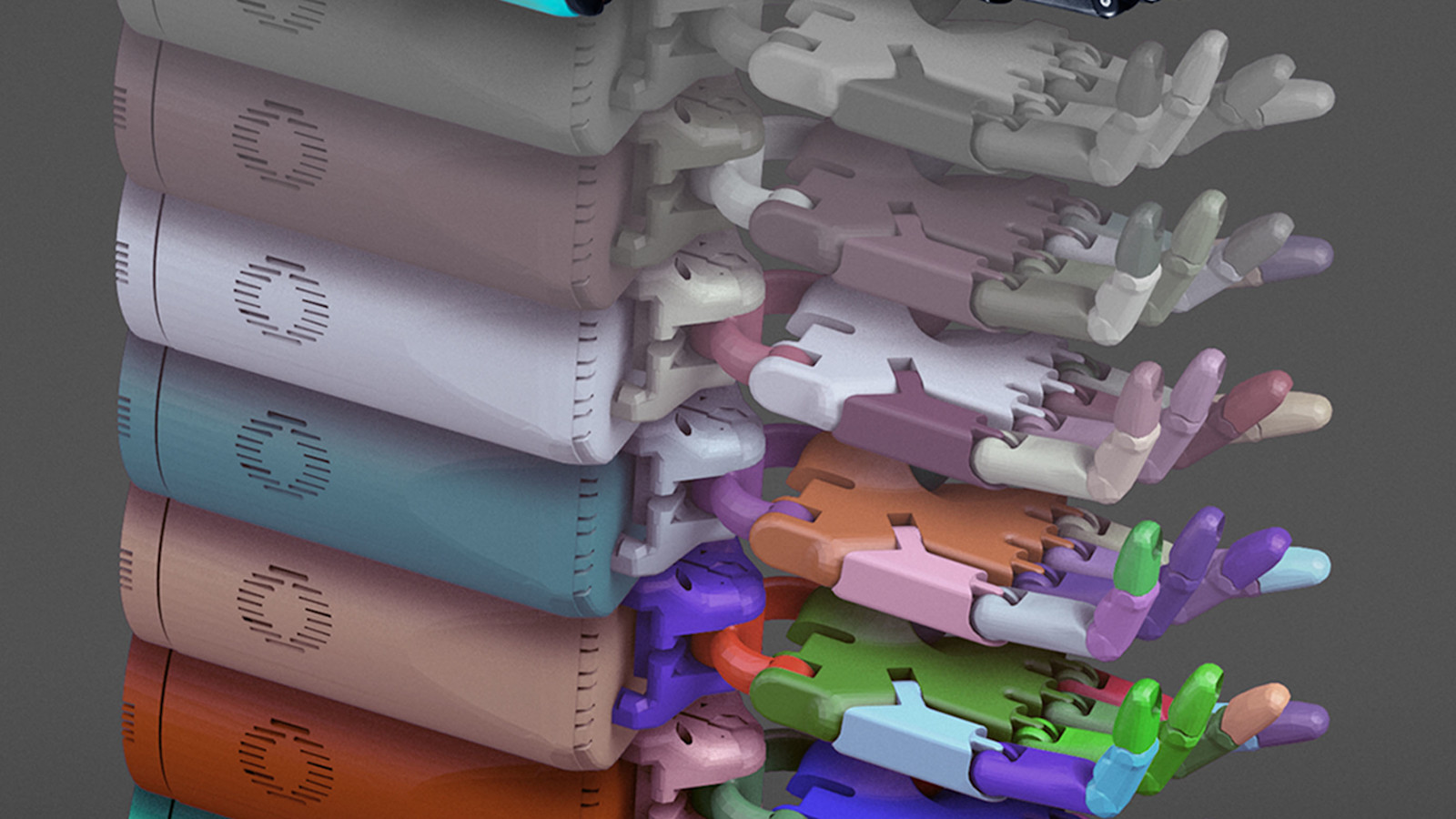
    OpenAI has developed a robot hand system named Dactyl, capable of manipulating objects with human-like dexterity. The system is trained entirely in simulation using a technique called domain randomization, which allows it to adapt to real-world physics without needing physically accurate models. Dactyl successfully transfers its learned skills to a physical Shadow Dexterous Hand, demonstrating the potential for simulation-based training to solve complex real-world robotic manipulation tasks. AI

    Learning dexterity
  47. Government use of facial recognition and AI at Google

    This episode of Practical AI discusses government use of facial recognition and Google's AI principles. It highlights resources for improving AI skills and mentions an article advocating for a moratorium on government facial recognition technology. The discussion also touches upon national AI strategies and the first AI robot in space. AI

    Government use of facial recognition and AI at Google
  48. Detecting planets with deep learning

    Researchers from UT Austin and Google Brain have utilized deep learning techniques to identify exoplanets within vast amounts of space imagery. This collaboration involved training a neural network to analyze telescope data, leading to the discovery of new planets. The project's methodology and findings have been shared, including the open-sourcing of their exoplanet hunting tools. AI

    Detecting planets with deep learning
  49. Helping African farmers with TensorFlow

    Researchers at Penn State University are developing a mobile application that utilizes TensorFlow to assist African farmers in improving crop yields. This initiative aims to provide farmers with tools to identify and manage plant diseases, thereby enhancing agricultural productivity. The project has received recognition from Google for its innovative approach to applying AI in agriculture. AI

    Helping African farmers with TensorFlow
  50. Gym Retro

    OpenAI has released the full version of Gym Retro, a platform for reinforcement learning research that now supports over 1,000 games across multiple classic consoles. This expansion aims to facilitate research into how agents can generalize their abilities between different games, moving beyond single-task optimization. The release also includes the tool OpenAI uses to integrate new games, enabling researchers to add more titles and study agent behavior, including potential reward-farming issues. AI

    Gym Retro