PulseAugur / Brief
EN
LIVE 18:36:20

Brief

last 24h
[50/5161] 224 sources

Multi-source AI news clustered, deduplicated, and scored 0–100 across authority, cluster strength, headline signal, and time decay.

  1. Introducing the Enterprise Scenarios Leaderboard: a Leaderboard for Real World Use Cases

    Hugging Face has launched a new leaderboard to evaluate AI models based on their performance in real-world enterprise scenarios. This initiative aims to provide a more practical assessment of model capabilities beyond traditional academic benchmarks. The leaderboard will focus on specific industry use cases, helping businesses identify the most suitable models for their operational needs. AI


    Introducing the Enterprise Scenarios Leaderboard: a Leaderboard for Real World Use Cases
  2. Google Solves Text to Video

    Google has reportedly developed a new text-to-video model, though details remain scarce. The announcement suggests a significant advancement in generative AI capabilities, potentially enabling the creation of video content from textual descriptions. Further information regarding the model's architecture, performance, and availability is anticipated. AI

  3. Advent of GenAI Hackathon recap

    Intel's Liftoff program and Prediction Guard recently organized the "Advent of GenAI" hackathon, attracting 2,000 global participants. Over seven days, participants tackled generative AI challenges, showcasing creative solutions. The event aimed to foster innovation in the GenAI space. AI

    Advent of GenAI Hackathon recap
  4. Accelerating SD Turbo and SDXL Turbo Inference with ONNX Runtime and Olive

    Hugging Face has partnered with Microsoft to optimize Stable Diffusion XL Turbo and SDXL Turbo models for faster inference using ONNX Runtime and Olive. This collaboration focuses on improving the efficiency of these image generation models, making them more accessible for real-time applications. The optimizations aim to reduce latency and computational overhead, enabling quicker image generation. AI

    Accelerating SD Turbo and SDXL Turbo Inference with ONNX Runtime and Olive
  5. MachinaCheck: Building a Multi-Agent CNC Manufacturability System on AMD MI300X

    A new system called MachinaCheck has been developed to automate the manufacturability assessment of CNC parts, reducing the process from an hour to 30 seconds. This multi-agent AI system leverages the Qwen 2.5 7B Instruct model running on AMD MI300X hardware to ensure that sensitive customer design data remains on-premise, addressing critical privacy concerns in manufacturing. The system parses STEP files to extract geometric features and then uses the LLM to determine necessary CNC operations and tools, providing a comprehensive report. AI

    MachinaCheck: Building a Multi-Agent CNC Manufacturability System on AMD MI300X

    IMPACT Enables on-premise AI for sensitive manufacturing data, potentially accelerating adoption of AI in industries with strict IP requirements.

  6. Blazingly fast whisper transcriptions with Inference Endpoints

    Hugging Face has released updates to accelerate Whisper, their open-source speech-to-text model. By leveraging speculative decoding, they have achieved up to a 2x speed increase in inference times. These performance gains are being made available through Hugging Face's Inference Endpoints service, allowing developers to deploy faster transcription capabilities. AI

    Blazingly fast whisper transcriptions with Inference Endpoints
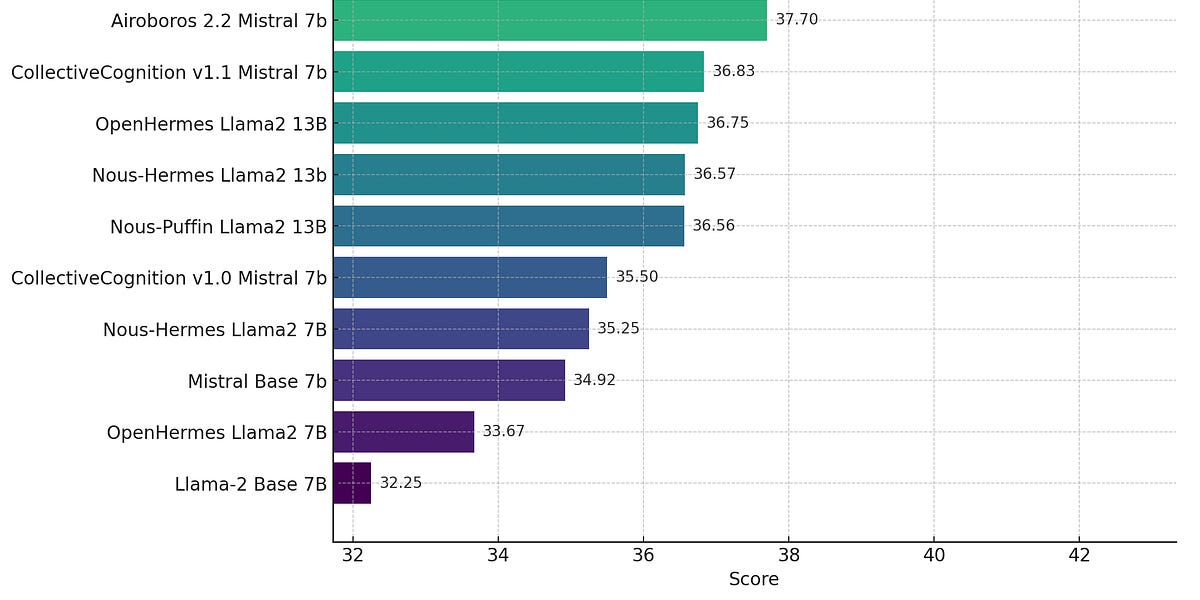
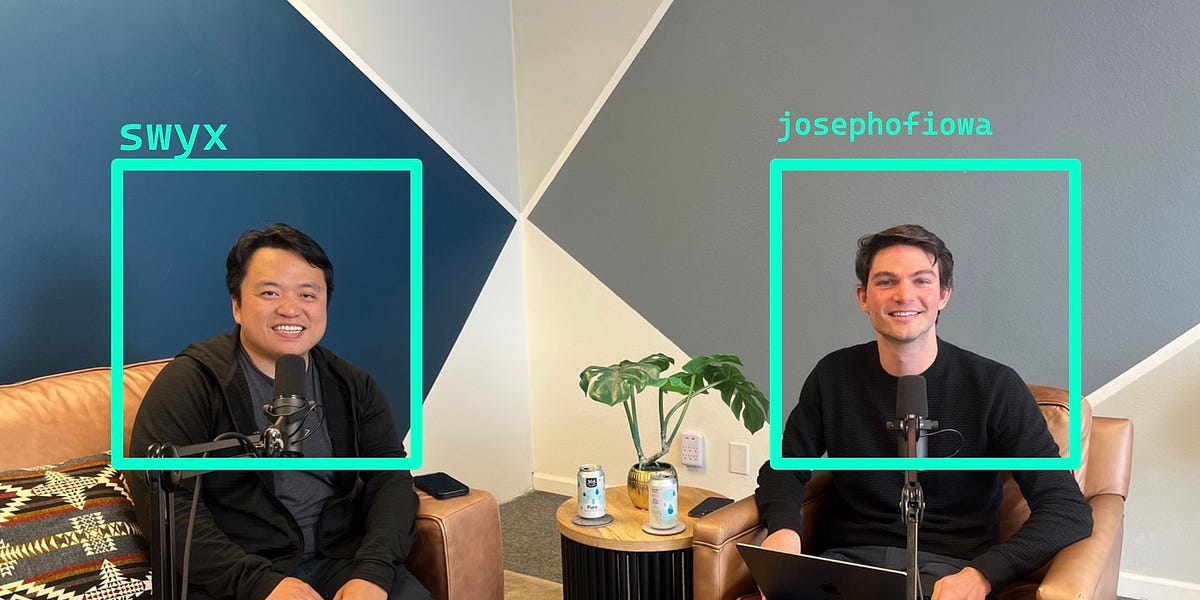
  7. The Busy Person's Intro to Finetuning & Open Source AI - Wing Lian, Axolotl

    Wing Lian, the maintainer of the Axolotl library, discussed the growing ecosystem of fine-tuned open-source AI models. Axolotl has become a popular tool for customizing models like Llama 2 and Mistral 7B, enabling benefits such as enhanced privacy, specific performance improvements, and reduced inference costs. The library supports various fine-tuning techniques and prompt formats, catering to a wide range of model architectures and communities. AI

    The Busy Person's Intro to Finetuning & Open Source AI - Wing Lian, Axolotl
  8. Suspicion machines ⚙️

    This episode of Practical AI discusses "suspicion machines," which are AI systems used in Europe to assess welfare program participants for potential fraud. The hosts gained access to one such model and analyzed its behavior to understand its real-world implications. The discussion moves beyond general AI fears to focus on concrete issues arising from the deployment of these machine learning algorithms. AI

    Suspicion machines ⚙️
  9. Builder Profile: Priyaa Kalyanaraman and Purvanshi Mehta

    Lica, a content creation platform, has secured pre-seed funding to develop its AI-powered video generation tool. Co-founders Priyaa Kalyanaraman and Purvanshi Mehta, leveraging Replit for rapid prototyping and hosting, aim to allow users to create videos with a single click. Their platform will enable content creators to focus on their narratives while Lica handles format conversion across video, audio, and text, catering to diverse consumption preferences. AI

    Builder Profile: Priyaa Kalyanaraman and Purvanshi Mehta

    IMPACT Accelerates AI-driven content creation, enabling personalized video generation and diverse format conversions.

  10. SDXL in 4 steps with Latent Consistency LoRAs

    Hugging Face has released a new technique called Latent Consistency LoRAs (LC-LoRAs) that significantly speeds up the image generation process for Stable Diffusion XL. This method allows users to generate high-quality images in as few as four steps, a dramatic reduction from the typical 20-50 steps. The LC-LoRAs are designed to be compatible with existing Stable Diffusion XL models and can be easily integrated into workflows, offering a substantial performance boost for creators. AI

    SDXL in 4 steps with Latent Consistency LoRAs
  11. Prioritizing Employee Liquidity at Replit

    Replit has completed its first employee tender offer, allowing current and former employees to sell vested shares, which has helped them achieve financial goals like paying off debt or buying homes. This initiative contrasts with the traditional startup advice of accumulating stock in multiple companies, instead focusing on empowering employees to live in the present while still building long-term value. The company also announced Craft Ventures as a new investor, chosen for their operational expertise and alignment with Replit's vision to support software creators. AI

    Prioritizing Employee Liquidity at Replit

    IMPACT Focuses on employee well-being and long-term company building, indirectly supporting AI development by attracting talent.

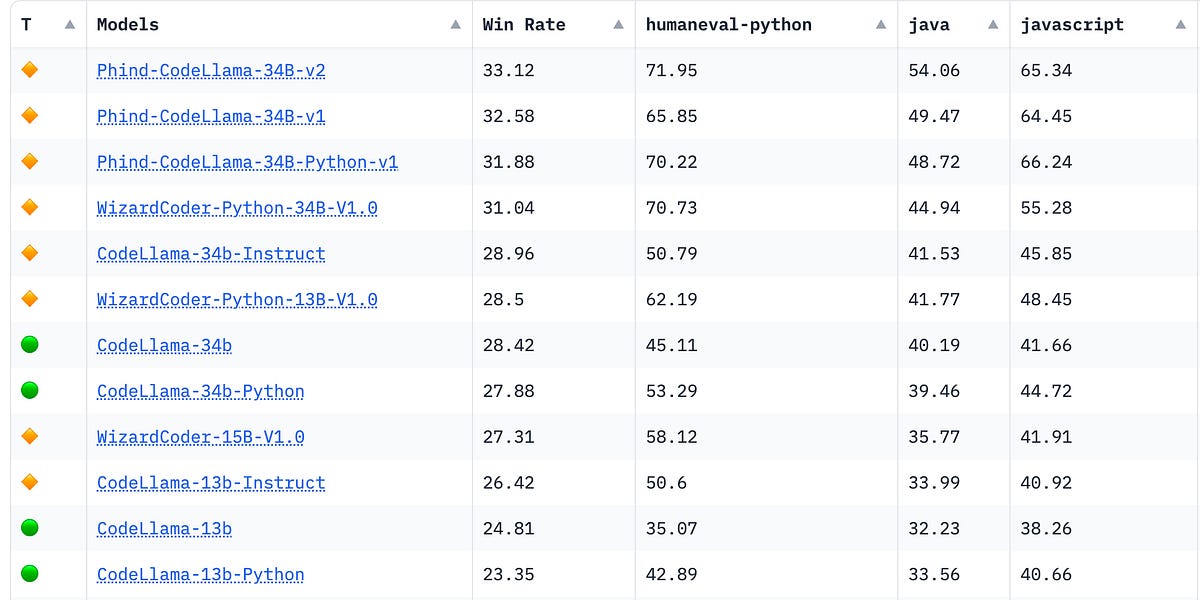
  12. Beating GPT-4 with Open Source LLMs — with Michael Royzen of Phind

    Phind has released a new open-source model that now ranks as the top model on the BigCode Leaderboard, surpassing GPT-4 in performance on certain benchmarks. This model, based on CodeLlama-34B and further fine-tuned on extensive code and reasoning data, boasts a significantly expanded context window and is notably faster than GPT-4. Phind's approach emphasizes both the quality of retrieved context and the accuracy of the generated code, aiming to provide developers with a comprehensive tool for technical questions and implementation. AI

    Beating GPT-4 with Open Source LLMs — with Michael Royzen of Phind
  13. MM1: Apple's first Large Multimodal Model

    Researchers have developed Cornserve, an open-source distributed serving system designed to efficiently handle any-to-any multimodal models, which can process and generate combinations of various data types like text, images, and audio. The system improves throughput by up to 3.81x and reduces tail latency by 5.79x by disaggregating model components and scaling them independently. Separately, a new evaluation framework called XTC-Bench has been introduced to assess the cross-task consistency of unified multimodal models, revealing that high performance in individual tasks does not guarantee semantic alignment across them. AI

    IMPACT New systems and evaluation frameworks for multimodal AI aim to improve efficiency and consistency in handling diverse data types.

  14. RAG Is A Hack - with Jerry Liu from LlamaIndex

    LlamaIndex, a tool for integrating large datasets with language models, has seen significant growth since its inception in October 2022. Initially developed as "GPT Tree Index" to address limitations with GPT-3's context window, it has become a leading platform for Retrieval Augmented Generation (RAG). The project's open-source community expanded rapidly after the release of LlamaHub, which provides over 200 data connectors for various sources. AI

    RAG Is A Hack - with Jerry Liu from LlamaIndex
  15. DALL·E 3 system card

    OpenAI has released a system card for DALL·E 3, detailing its capabilities and the steps taken to prepare it for deployment. The new image generation model improves upon DALL·E 2 by offering enhanced caption fidelity and overall image quality. OpenAI's system card outlines their efforts in red teaming, risk evaluation, and the implementation of mitigations to reduce unwanted behaviors and potential risks associated with the model. AI

    DALL·E 3 system card
  16. 3D Skew-Normal Splatting

    Researchers are advancing 3D Gaussian Splatting (3DGS) with new methods for improved scene representation, editing, and compression. Innovations include Skew-Normal Splatting for better modeling of asymmetric structures, and PanoWorld for generating consistent multi-room VR tours. Other developments focus on physics-driven scene editing for autonomous driving, aesthetic assessment of 3DGS content, and efficient compression techniques like GETA-3DGS. AI

    3D Skew-Normal Splatting

    IMPACT Advances in 3DGS offer improved realism and efficiency for applications in VR, autonomous driving, and content creation.

  17. AudioLDM 2, but faster ⚡️

    Hugging Face has released an optimized version of AudioLDM 2, a text-to-audio generation model. This updated version significantly improves inference speed, making it more practical for real-time applications. The enhancements allow for faster generation of high-quality audio samples directly from text prompts. AI

    AudioLDM 2, but faster ⚡️
  18. SafeCoder vs. Closed-source Code Assistants

    Hugging Face has released SafeCoder, an open-source code generation model designed to address security vulnerabilities. Unlike closed-source alternatives, SafeCoder prioritizes safety by avoiding the generation of insecure code patterns. The model is trained on a curated dataset to minimize risks and is available for researchers and developers to use. AI

    SafeCoder vs. Closed-source Code Assistants
  19. Blueprint for an AI Bill of Rights

    Stability AI has released its SDXL 1.0 LLM, prompting discussions about its capabilities. Concurrently, global entities like the United States and the European Union are actively developing AI governance frameworks, including the White House's Blueprint for an AI Bill of Rights. This regulatory push is also seeing calls from platforms like GitHub and Hugging Face to ease restrictions on open-source AI development. AI

    Blueprint for an AI Bill of Rights
  20. Optimizing Bark using 🤗 Transformers

    Hugging Face has released an optimized version of the Bark text-to-speech model, integrating it into their Transformers library. This update aims to improve the model's efficiency and accessibility for developers. The integration allows for easier use and fine-tuning of Bark for various speech generation applications. AI

    Optimizing Bark using 🤗 Transformers
  21. Building Secure AI Gateways with MLflow AI Gateway

    Google Research has introduced ReasoningBank, a novel framework designed to enhance AI agents' ability to learn from their experiences, both successes and failures, after deployment. This system distills generalizable reasoning strategies from past interactions, allowing agents to continuously improve and avoid repeating mistakes. Separately, new research explores optimizing multi-agent communication through latent representations and introduces Agent Evolving Learning (AEL) for agents operating in open-ended environments, focusing on how to effectively use remembered information. Additionally, DeepSeek has released preview models of its V4 series, offering large context windows and advanced capabilities at a significantly lower cost than comparable frontier models. AI

    IMPACT New frameworks for agent learning and memory, alongside cost-effective frontier models, could accelerate AI adoption in complex tasks and personalized applications.

  22. Happy 1st anniversary 🤗 Diffusers!

    The Hugging Face Diffusers library celebrated its first anniversary, marking a significant milestone in the open-source AI community. Since its launch, Diffusers has become a pivotal tool for researchers and developers working with diffusion models, enabling easier experimentation and deployment of generative AI applications. The library's success highlights the growing importance of accessible and collaborative platforms for advancing AI research and development. AI

    Happy 1st anniversary 🤗 Diffusers!
  23. Open-Source Text Generation & LLM Ecosystem at Hugging Face

    Hugging Face has released an open-source model called "os-llms" designed for text generation. This model aims to foster a more collaborative and accessible ecosystem for large language models. The release emphasizes community involvement and aims to democratize access to powerful AI tools. AI

    Open-Source Text Generation & LLM Ecosystem at Hugging Face
  24. From RLHF to RLHB: The Case for Learning from Human Behavior - with Jeffrey Wang and Joe Reeve of Amplitude

    Amplitude, a company known for its product analytics, is focusing heavily on integrating AI into its offerings. They are exploring methods beyond traditional Reinforcement Learning from Human Feedback (RLHF), which relies on explicit, often costly, and potentially biased user input. Instead, Amplitude advocates for learning from real user behavior within products, citing examples like GitHub Copilot and Midjourney, where implicit feedback is gathered naturally through user interaction. This approach aims to provide more authentic and cost-effective data for training AI models, potentially making AI analytics more crucial than AI itself. AI

    From RLHF to RLHB: The Case for Learning from Human Behavior - with Jeffrey Wang and Joe Reeve of Amplitude
  25. OpenAI Cybersecurity Grant Program

    OpenAI has launched a $1 million Cybersecurity Grant Program aimed at fostering AI-powered defense capabilities. The initiative will provide grants, including API credits, to support projects focused on enhancing cybersecurity for defenders. This program seeks to shift the power dynamic in cybersecurity by empowering defenders with advanced AI tools and promoting research into quantifying AI's effectiveness in cyber defense. AI

    OpenAI Cybersecurity Grant Program
  26. Super Colliding Nix Stores: Nix Flakes for Millions of Developers

    Replit is collaborating with Obsidian Systems and Tweag to enhance its development environment by integrating Nix Flakes. This partnership aims to bring the portability and reproducibility of Nix Flakes to millions of Replit users, simplifying setup and deployment across different platforms. The integration will allow for instant installation of nearly a million software artifacts without impacting storage limits, making onboarding new developers as easy as forking a project. AI

    Super Colliding Nix Stores: Nix Flakes for Millions of Developers

    IMPACT Enhances developer productivity and environment portability, potentially accelerating AI development workflows.

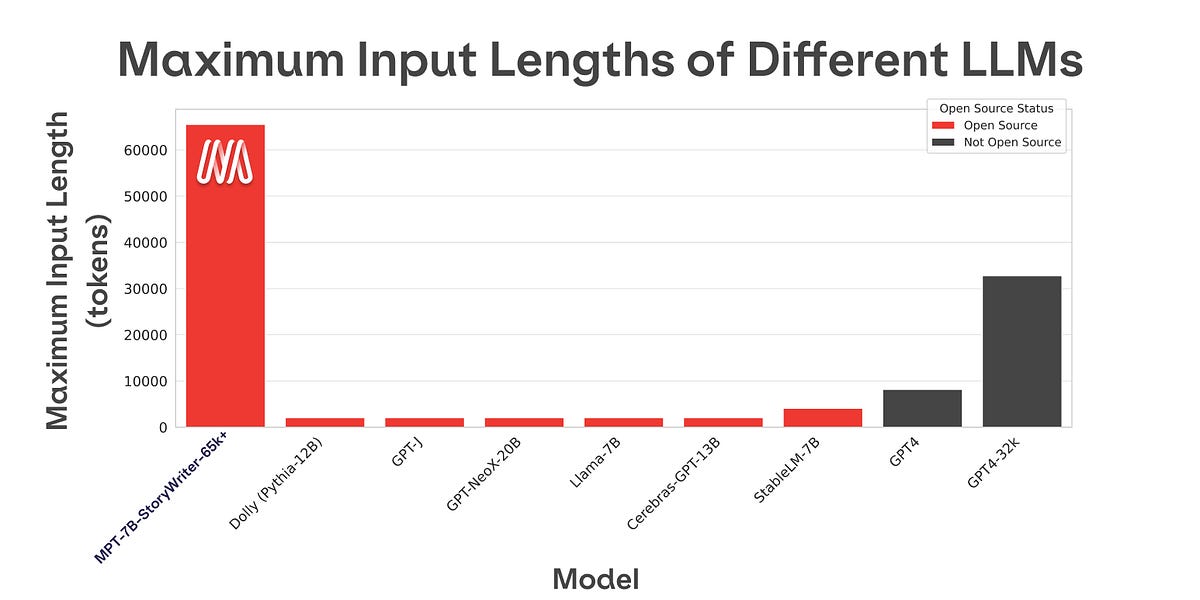
  27. MPT-7B and The Beginning of Context=Infinity — with Jonathan Frankle and Abhinav Venigalla of MosaicML

    MosaicML has released MPT-7B, an open-source transformer model trained on one trillion tokens that matches LLaMA-7B's quality and is commercially licensed. This model boasts an impressive context length of up to 84,000 tokens, significantly exceeding limitations found in models like GPT-3. MosaicML also open-sourced its LLM Foundry codebase used for training and evaluation, alongside three fine-tuned versions of MPT-7B, including one specialized for long-form storytelling. AI

    MPT-7B and The Beginning of Context=Infinity — with Jonathan Frankle and Abhinav Venigalla of MosaicML
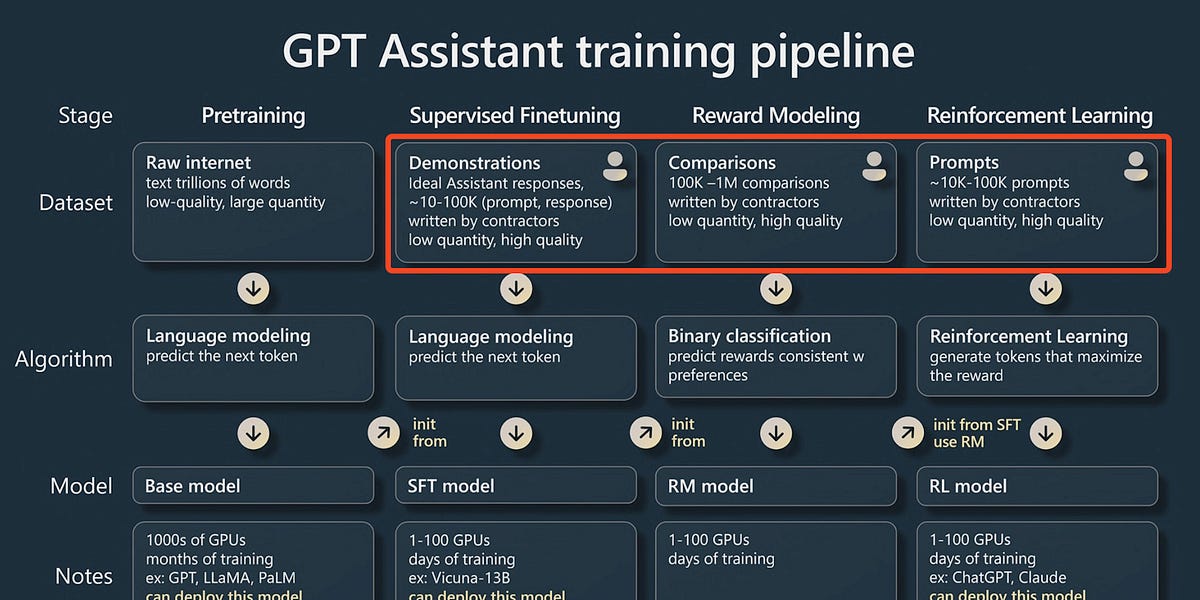
  28. Creating instruction tuned models

    Erin Mikail Staples discussed the creation of instruction-tuned Large Language Models at ODSC East. The conversation focused on the critical role of human feedback in this process. Staples also highlighted the significance of open data and practical tools for data annotation and fine-tuning custom generative AI models. AI

    Creating instruction tuned models
  29. Automating code optimization with LLMs

    Researchers are exploring various methods to enhance Large Language Models (LLMs) for code-related tasks. One study evaluates locally deployed LLMs like LLaMA 3.2 and Mistral for Python bug detection, finding they can identify bugs but struggle with precise localization. Another paper introduces TreeCoder, a framework to optimize LLM code generation by treating decoding strategies and constraints as optimizable components, improving accuracy on benchmarks like MBPP and SQL-Spider. Additionally, a case study at BMW demonstrates how fine-tuning LLMs like Qwen2.5-Coder and DeepSeek-Coder can generate and modify enterprise domain-specific languages across multiple files. Finally, a new approach called CAT uses call-chain awareness to improve LLM-based unit test generation for Java projects, significantly boosting code coverage. AI

    Automating code optimization with LLMs

    IMPACT Advances in LLM code generation and analysis techniques could lead to more robust and efficient software development tools.

  30. Training a SOTA Code LLM in 1 week and Quantifying the Vibes — with Reza Shabani of Replit

    Replit has open-sourced its new code-focused large language model, replit-code-v1-3b. This model, which is significantly smaller than OpenAI's Codex, reportedly outperforms it on the HumanEval benchmark when fine-tuned on Replit's data. The release was discussed in an interview with Replit's Head of AI, Reza Shabani, who detailed the journey of training the model and its potential applications for developers. AI

    Training a SOTA Code LLM in 1 week and Quantifying the Vibes — with Reza Shabani of Replit
  31. Mapping the future of *truly* Open Models and Training Dolly for $30 — with Mike Conover of Databricks

    Databricks has released Dolly 2.0, an instruction-following large language model that is fully open source and commercially viable. Unlike LLaMA, Dolly 2.0's license permits business use, addressing a key limitation of previous open models. The model was fine-tuned on a human-generated instruction dataset and can be customized for specific data and styles, with Databricks offering a notebook to facilitate this process for approximately $30 in 30 minutes. AI

    Mapping the future of *truly* Open Models and Training Dolly for $30 — with Mike Conover of Databricks
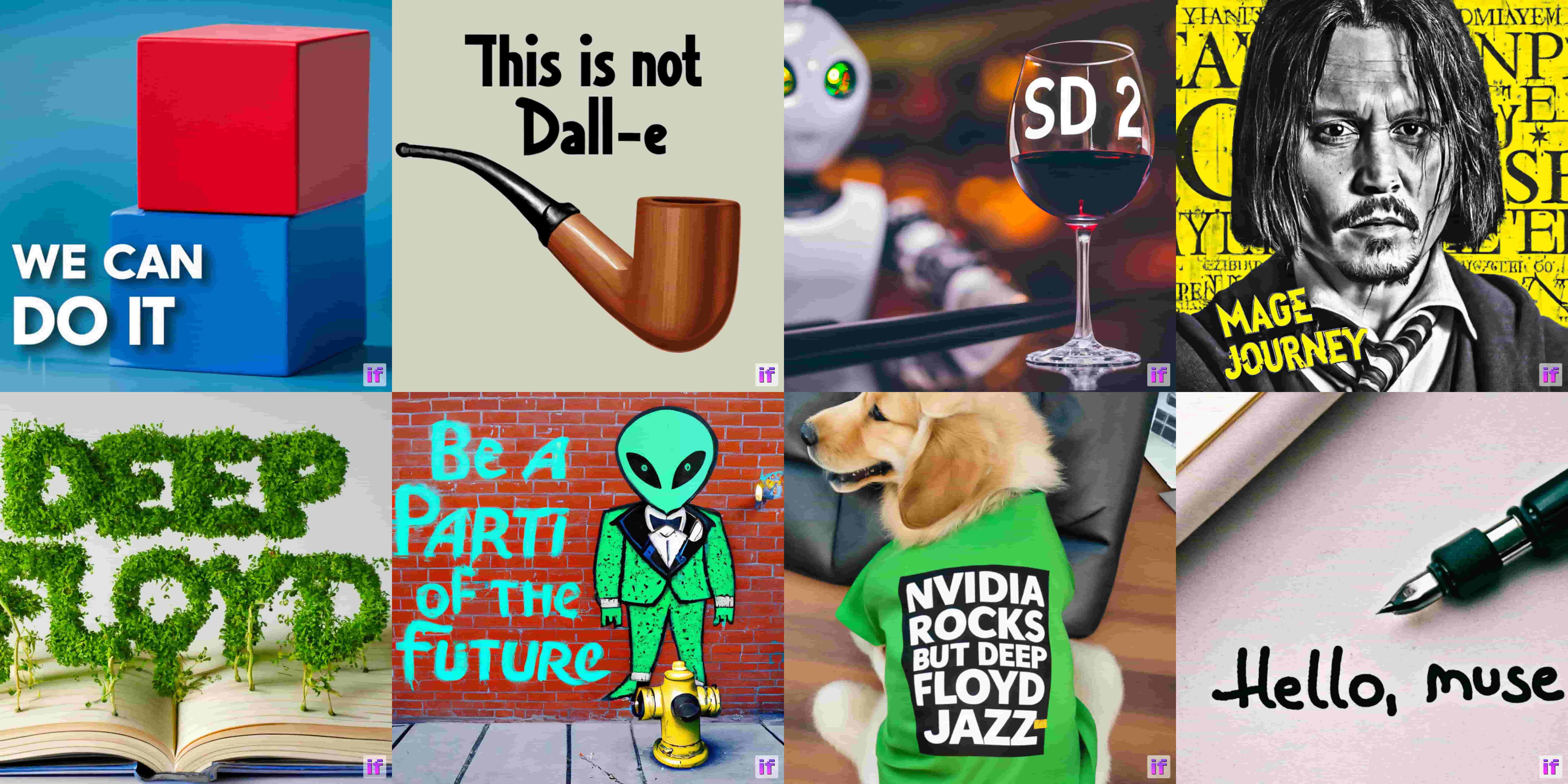
  32. Running IF with 🧨 diffusers on a Free Tier Google Colab

    Hugging Face has released a guide on how to run the new open-source IF (Image-to-Image) model using their diffusers library on a free tier Google Colab instance. This allows users to experiment with the model's capabilities without requiring powerful local hardware. The guide provides practical steps for setting up the environment and running inference, making advanced image generation accessible to a wider audience. AI

    Running IF with 🧨 diffusers on a Free Tier Google Colab
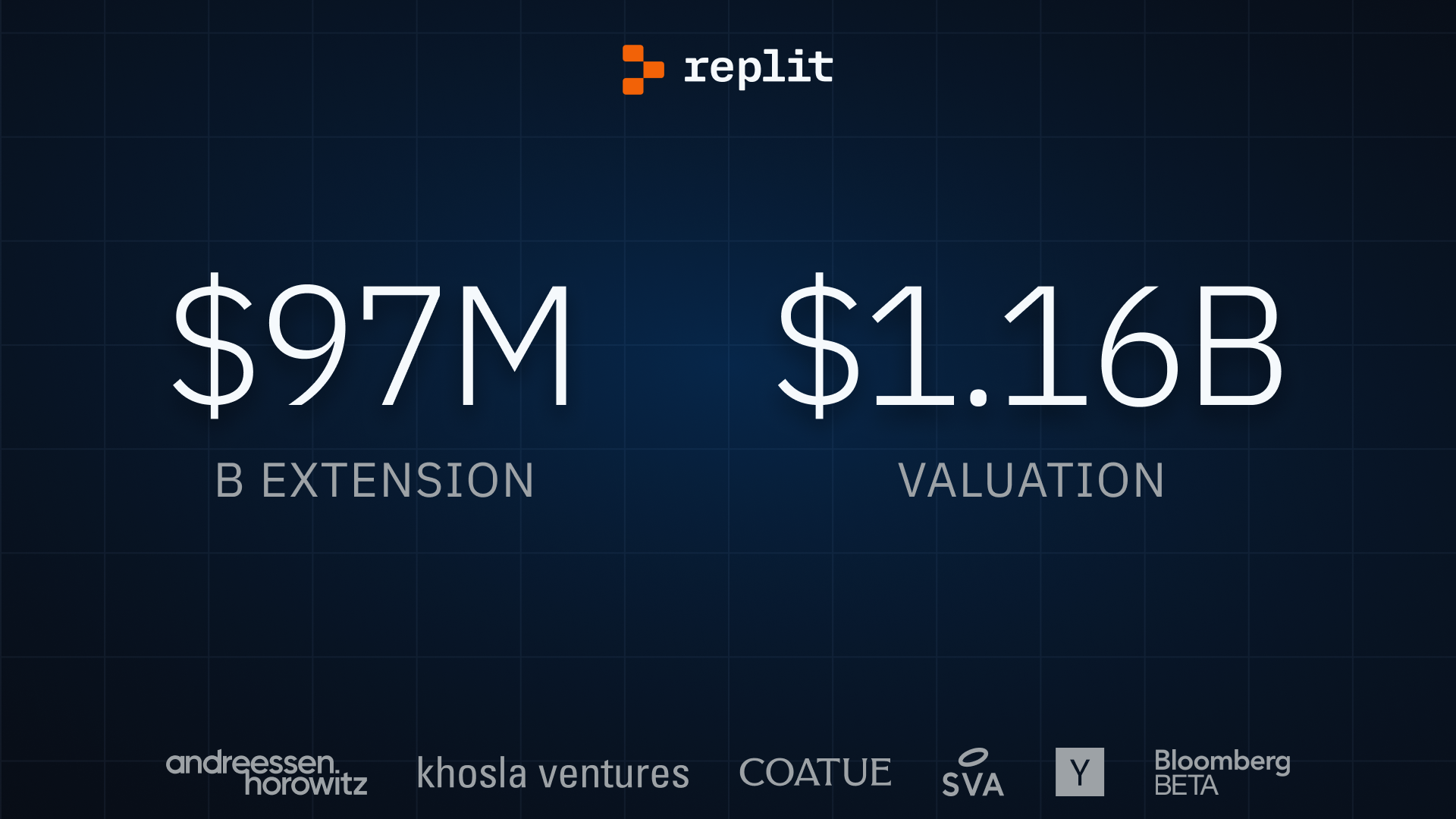
  33. Raising $97.4M at $1.16B Valuation to Expand our Cloud Services and Lead in AI Development

    Replit has secured $97.4 million in a funding round that values the company at $1.16 billion. The funds will be used to enhance its cloud development environment, expand cloud services for developers, and further develop its AI coding assistant, Ghostwriter. The company has seen significant growth, reaching 22.5 million developers and facilitating the creation of 235 million projects. AI

    Raising $97.4M at $1.16B Valuation to Expand our Cloud Services and Lead in AI Development

    IMPACT Accelerates development of AI coding assistants and cloud infrastructure for developers.

  34. Segment Anything Model and the Hard Problems of Computer Vision — with Joseph Nelson of Roboflow

    Meta AI has released its Segment Anything Model (SAM), a significant advancement in computer vision, which includes the model, weights, data, and a demo website. This open-source release is notable for its extensive dataset, containing significantly more images and masks than previous datasets. The podcast features Joseph Nelson of Roboflow discussing SAM's capabilities, including its zero-shot transfer and promptability, and demonstrating its integration into Roboflow's platform. The discussion also touches upon the broader landscape of multimodal AI and the remaining challenges in computer vision. AI

    Segment Anything Model and the Hard Problems of Computer Vision — with Joseph Nelson of Roboflow
  35. Making LLMs more accurate by using all of their layers

    Google Research has developed a new framework to evaluate the behavioral alignment of large language models with human social inclinations. This approach adapts established psychological questionnaires into large-scale situational judgment tests, allowing for the quantification of model tendencies in realistic scenarios. The research identifies gaps where model behaviors deviate from human consensus or fail to capture the range of human opinions, aiming to improve LLM navigation of social dynamics. Separately, Google Research also introduced SLED, a novel decoding strategy that enhances LLM factuality by utilizing all model layers instead of just the final one, without requiring external data or fine-tuning. AI

    Making LLMs more accurate by using all of their layers

    IMPACT New methods for evaluating LLM alignment and improving factuality could lead to more trustworthy and socially adept AI systems.

  36. Preserving languages for the future

    Iceland has partnered with OpenAI to leverage GPT-4 for the preservation of the Icelandic language, which is at risk of decline due to digitalization. A team of 40 volunteers is using Reinforcement Learning from Human Feedback (RLHF) to train GPT-4 on proper Icelandic grammar and cultural nuances. This initiative aims not only to safeguard Icelandic but also to create a model for preserving other low-resource languages globally, preventing an "AI divide." AI

    Preserving languages for the future
  37. End-to-end cloud compute for AI/ML

    Google DeepMind researchers have developed LAVA, a new AI-driven scheduling algorithm designed to optimize resource allocation in cloud data centers. LAVA continuously re-predicts virtual machine (VM) lifetimes, adapting to actual usage patterns rather than relying on initial estimates. This approach aims to reduce wasted capacity and improve efficiency by more accurately packing VMs onto physical servers. The system uses a probability distribution model inspired by survival analysis to handle the inherent uncertainty in VM lifespans. AI

    End-to-end cloud compute for AI/ML
  38. This husband-and-wife startup has shipped 20 million soup dumplings since the start of the pandemic

    Xiao Chi Jie, a startup founded by Caleb Wang and Jen Liao, has achieved significant success by selling 20 million soup dumplings since the pandemic began. The company, which also offers other Chinese street foods, secured $31 million in venture funding to expand its reach. The founders were motivated by a personal desire to bring authentic Chinese cuisine, particularly sheng jian bao, to a wider American audience. AI

    This husband-and-wife startup has shipped 20 million soup dumplings since the start of the pandemic

    IMPACT Minimal direct impact on AI operators; focuses on food production and distribution.

  39. 2D Asset Generation: AI for Game Development #4

    Hugging Face has published a series of blog posts detailing the use of AI in game development, focusing on both 2D and 3D asset generation. These posts explore how AI models can assist developers in creating visual assets more efficiently. The content highlights advancements and techniques within this specialized application of artificial intelligence. AI

    2D Asset Generation: AI for Game Development #4
  40. I asked ChatGPT to do my job. Here’s how it went

    Microsoft is reportedly in the final stages of a significant investment in OpenAI, potentially worth $10 billion, adding to its existing $3 billion stake. This substantial funding underscores investor confidence in OpenAI's generative AI technology, exemplified by tools like ChatGPT. While ChatGPT demonstrates impressive capabilities in content generation and coding, it still exhibits limitations in understanding context and nuanced data analysis, and faces public trust issues regarding AI-generated news. AI

    I asked ChatGPT to do my job. Here’s how it went

    IMPACT This substantial investment signals strong market confidence in generative AI, potentially accelerating the development and deployment of advanced AI tools.

  41. Point-E: A system for generating 3D point clouds from complex prompts

    OpenAI has introduced Point-E, a new system capable of generating 3D point clouds from text prompts significantly faster than previous methods. Unlike other approaches that take hours, Point-E can produce a 3D model in just one to two minutes using a single GPU. The system first creates a synthetic image from the text prompt using a diffusion model, then generates the 3D point cloud based on that image with a second diffusion model. While the quality may not yet match the absolute state-of-the-art, its speed offers a practical advantage for certain applications, and OpenAI has released the pre-trained models. AI

    Point-E: A system for generating 3D point clouds from complex prompts
  42. AI competitions & cloud resources

    Purdue University, Microsoft, and SIL International recently co-hosted an AI case competition where over 170 student teams from the US and Canada participated. The challenge involved developing AI systems capable of generating image captions in Thai, Kyrgyz, and Hausa. This event aimed to foster practical AI skills and explore AI applications in multilingual contexts. AI

    AI competitions & cloud resources
  43. What's up, DocQuery?

    Impira has released an open-source ML model called DocQuery, designed to help users query semi-structured and unstructured documents using LLMs. The model can process various document types, including invoices and contracts, enabling users to ask questions and extract information more efficiently. This tool aims to provide practical AI solutions for managing and understanding document-based data. AI

    What's up, DocQuery?
  44. Introducing Whisper

    OpenAI has released Whisper, an automatic speech recognition system trained on a massive 680,000 hours of diverse, multilingual data. This extensive training enables Whisper to perform robustly across various accents, background noises, and technical language, while also supporting transcription and translation into English. The system utilizes a Transformer-based encoder-decoder architecture and is being open-sourced to foster application development and further research in speech processing. AI

    Introducing Whisper
  45. Introducing Modular Diffusers - Composable Building Blocks for Diffusion Pipelines

    Hugging Face has released Stable Diffusion 3.5 Large, an updated version of its text-to-image generation model. This release is part of a broader effort to introduce modularity and efficiency to diffusion models through the Diffusers library. The library now supports composable building blocks for diffusion pipelines, memory-efficient training with technologies like Quanto, and streamlined workflows for techniques such as Dreambooth. AI

    Introducing Modular Diffusers - Composable Building Blocks for Diffusion Pipelines
  46. CMU's AI pilot lands in the news 🗞

    Carnegie Mellon University has developed an AI pilot capable of navigating complex and crowded airspace. This advancement was highlighted in a recent discussion covering various AI topics, including infrastructure tools like Baseten's Truss and advancements in transformer models. The AI's ability to manage aerial traffic was a notable point of interest. AI

    CMU's AI pilot lands in the news 🗞
  47. Ethical hacking on Replit

    Replit has published research indicating that AI-only security scans are insufficient for detecting vulnerabilities in code, especially for platforms like Replit where code generation is prevalent. The study found that AI scans are often nondeterministic and sensitive to prompt phrasing, leading to inconsistent detection of issues like hardcoded secrets. Furthermore, AI alone struggles to identify dependency-level vulnerabilities and supply-chain risks, necessitating a hybrid approach that combines AI reasoning with traditional static analysis and dependency scanning for comprehensive code security. AI

    Ethical hacking on Replit

    IMPACT AI-only code security scans are unreliable; a hybrid approach combining AI with deterministic tools is essential for robust security.

  48. Upgrading the Moderation API with our new multimodal moderation model

    OpenAI has released an upgraded Moderation API, powered by a new multimodal model based on GPT-4o. This enhanced model offers improved accuracy in detecting harmful text and images, particularly in non-English languages, and supports new categories like illicit activities. The update aims to provide developers with more robust tools for content safety, enabling them to build more secure AI applications and products. AI

    Upgrading the Moderation API with our new multimodal moderation model
  49. AlphaFold is revolutionizing biology

    Google DeepMind's AlphaFold system has significantly accelerated biological research over the past five years, being cited in over 35,000 papers and incorporated into the methodology of more than 200,000 others. Researchers using AlphaFold 2 have reported a more than 40% increase in submitting novel experimental protein structures, with their work being more likely to be cited in clinical articles and patents. The latest iteration, AlphaFold 3, expands its predictive capabilities to DNA, RNA, and ligands, aiming to transform drug discovery and usher in an era of 'digital biology' through its ability to predict the structure and interactions of all life's molecules. AI

    AlphaFold is revolutionizing biology
  50. DALL-E is one giant leap for raccoons! 🔭

    OpenAI has released DALL-E 2, a new model capable of generating detailed images from text descriptions. While some in the AI community speculate about models approaching sentience, the hosts of this podcast dismiss such notions. They highlight DALL-E 2's impressive capabilities, particularly its ability to create imaginative visuals like raccoons in space. AI

    DALL-E is one giant leap for raccoons! 🔭