PulseAugur / Brief
EN
LIVE 21:38:18

Brief

last 24h
[50/838] 223 sources

Multi-source AI news clustered, deduplicated, and scored 0–100 across authority, cluster strength, headline signal, and time decay.

  1. Scoop: White House, Hill relaunch effort to block state AI laws

    The White House and Congressional leaders are reviving efforts to preemptively block certain state-level AI regulations. These negotiations aim to bundle federal AI preemption with other tech priorities, such as online child safety and combating deepfakes. This initiative faces challenges due to potential pushback from advocacy groups and state lawmakers, and the approaching August recess in an election year. AI
    Scoop: White House, Hill relaunch effort to block state AI laws

    IMPACT Federal preemption could streamline AI development by creating a unified regulatory landscape, but may limit state-level innovation and consumer protections.

  2. Aperon Technical Report: Hierarchical No-Pointer Tangent-Local Search for High-Dimensional Approximate Nearest Neighbors

    Researchers have introduced HNTL (Hierarchical No-pointer Tangent-Local), a new framework for vector memory systems designed to improve the efficiency of approximate nearest neighbor searches. This method partitions high-dimensional space into local segments, representing vectors using tangent spaces and a pointerless layout to reduce memory overhead and enhance CPU performance. Benchmarks show HNTL achieves high recall rates with a smaller candidate pool and offers a significant speedup over traditional pointer-chasing methods. AI

    IMPACT Improves efficiency for high-dimensional vector search, crucial for AI applications like recommendation systems and similarity search.

  3. FAME: Forecastability-Aware Mixture of Experts for Heterogeneous Time Series Forecasting

    Researchers have developed FAME, a novel sparse mixture-of-experts framework designed for heterogeneous time series forecasting. This approach creates a "forecastability fingerprint" for each series to intelligently route it to a small subset of specialized forecasting experts. Applied to a large-scale vending machine sales dataset, FAME demonstrated a 12.4% reduction in Mean Squared Error compared to the best single expert, LightGBM, while using an average of just 1.92 experts per series. AI

    IMPACT This framework could enhance the efficiency and accuracy of forecasting in complex, real-world systems by optimizing expert model selection.

  4. Rank Intervals for Leaderboards: A Hierarchical Framework for Model Evaluation

    Researchers have developed a new hierarchical framework for evaluating pretrained models on leaderboards, addressing the uncertainty and variability in performance across different tasks. This method constructs statistically guaranteed rank intervals at both the task and leaderboard levels, providing a more reliable way to quantify model performance and account for variations. Experiments on benchmarks like TabArena and PromptEval (MMLU) demonstrate the framework's ability to yield informative intervals for uncertainty-aware model ranking. AI

    IMPACT Provides a more robust method for comparing AI models, enabling clearer understanding of performance across diverse tasks.

  5. Trump’s US$100,000 H-1B visa fee is an unlawful tax, judge rules

    A federal judge has ruled that a $100,000 fee imposed by the Trump administration on new H-1B visas for highly skilled foreign workers is an unlawful tax. The judge concluded that Congress did not authorize such a fee, which significantly increased the cost of obtaining these visas. This ruling, which applies nationwide, is a victory for companies and universities that rely on foreign talent, particularly in fields like AI, and could impact future immigration policies. AI

    Trump’s US$100,000 H-1B visa fee is an unlawful tax, judge rules

    IMPACT This ruling removes a significant financial barrier for companies and universities hiring foreign talent, particularly in AI fields, potentially easing talent acquisition.

  6. Improving the sharpness in neural network-based parametric post-processing of ensemble forecasts

    Researchers have developed a new method to improve the sharpness of neural network-based ensemble weather forecasts. By adding a penalty term to the network's loss function, they can reduce the width of prediction intervals without sacrificing forecast accuracy. This technique was demonstrated using 2m temperature forecasts from the European Centre for Medium-Range Weather Forecasts, showing a significant decrease in prediction interval width. AI

    IMPACT Enhances accuracy and reliability of weather prediction models, potentially improving disaster preparedness and resource management.

  7. A Theoretical Analysis of Memory and Overfitting Phenomena in Stochastic Interpolation Models

    Two related papers explore the theoretical underpinnings of generative models, particularly focusing on stochastic interpolation. The research analyzes how these models behave with finite training data, deriving expressions for optimal fields and score functions. The findings suggest that generated samples are essentially training samples with added noise, with deviations influenced by discretization and estimation errors, leading to new definitions for overfitting and underfitting in generative contexts. AI

    IMPACT Provides theoretical definitions for overfitting and underfitting in generative models, potentially guiding future research and development.

  8. Reinforcement Learning for Flow-Matching Policies with Density Transport

    Researchers have developed a new online reinforcement learning algorithm called RLDT for fine-tuning flow-matching policies in continuous-control problems. This method frames policy improvement as a density transport problem, aligning with flow matching models. RLDT constructs a transport field using Stein Variational Gradient Descent and then fine-tunes a pretrained policy to match this field, outperforming existing baselines in reward quality and convergence speed across various robotic manipulation tasks. AI

    IMPACT This new algorithm could improve the efficiency and effectiveness of reinforcement learning in complex continuous-control tasks, potentially accelerating progress in robotics and AI-driven automation.

  9. How Much Capacity Does EEG Denoising Need? Ultra-Compact Networks reveal Benchmark Saturation and Metric-Utility Gap

    A new research paper explores the capacity needed for deep learning models in EEG denoising, finding that performance saturates with models as small as 3-6.5K parameters. Despite this, current architectures often scale to tens of millions of parameters without significant gains. Crucially, reconstruction metrics used to evaluate denoising do not predict the utility of the signals for downstream tasks like motor-imagery classification, potentially even degrading performance. AI

    IMPACT Highlights that current EEG denoising models may be over-parameterized and that standard evaluation metrics are insufficient for real-world applications, suggesting a need for more task-aware benchmarks.

  10. Auditable Graph-Guided Root Cause Analysis for Kubernetes Incidents

    Researchers have developed a new system called Graph Traversal Agent for analyzing Kubernetes incidents. This agent combines Large Language Model reasoning with specialized tools to reliably identify root causes by analyzing evidence graphs. The system demonstrated a significant improvement in root-cause-entity F1 scores, increasing from 0.6087 to 0.9130 on a benchmark dataset, though further testing is needed for production readiness. AI

    IMPACT Enhances reliability of AI-driven incident analysis in complex systems like Kubernetes.

  11. Quantum Global Variational Learning for Quantum Error Correction

    Researchers have developed a novel quantum neural network architecture designed to improve quantum error correction. This new global variational learning approach significantly reduces the computational load by minimizing the number of unitary matrices needed in quantum circuits. The method has demonstrated a 97% decrease in training time and a 25% improvement in training completion rates, achieving a 100% success rate and surpassing previous error correction benchmarks. AI

    IMPACT This research could accelerate the development of fault-tolerant quantum computers by improving the efficiency and success rate of error correction.

  12. A spectral audit framework reveals task-dependent aperiodic reliance across EEG and ECG deep learning

    Researchers have developed a spectral audit framework to analyze deep learning models processing physiological time series like EEG and ECG data. This framework reveals that models often rely on an aperiodic signal component, which can be influenced by factors like age and pathology, rather than solely on domain-specific features. The study found this reliance to be task-dependent, impacting performance significantly in sleep-wake classification and clinical abnormality detection, and suggests that aperiodic controls should be standardized for more interpretable deep learning in this domain. AI

    IMPACT Highlights potential confounds in physiological time-series deep learning, urging for standardized controls to improve model interpretability and reliability.

  13. Convolutional Sparse Coding via the Locally Competitive Algorithm on Loihi 2

    Researchers have developed and benchmarked a convolutional sparse coding implementation using the Locally Competitive Algorithm (LCA) on Intel's Loihi 2 neuromorphic hardware. This work represents the first known implementation and evaluation of convolutional LCA on this platform. The study aims to determine the conditions under which this approach becomes advantageous for sparse inference on neuromorphic systems, positioning it as a benchmark for structured sparse inference. AI

    IMPACT Positions convolutional LCA as a benchmark for structured sparse inference on emerging neuromorphic systems.

  14. OrderDP: A Theoretically Guaranteed Lossless Dynamic Data Pruning Framework

    Researchers have introduced OrderDP, a new framework designed to accelerate AI model training by dynamically pruning data. This method aims to reduce training costs by over 40% while maintaining near-lossless performance and unbiased gradient estimation. OrderDP achieves this by first randomly selecting a data subset and then choosing the top-q samples, offering theoretical guarantees for convergence and generalization. The framework has been empirically validated on datasets like ImageNet-1K, demonstrating competitive accuracy and stable convergence. AI

    IMPACT Reduces training costs by over 40% while maintaining performance, enabling more efficient AI development.

  15. Titans-as-a-Layer: Test-Time Memory for Conversational Speech Emotion Recognition

    Researchers have developed a novel method called Titans-as-a-Layer (MAL) to enhance conversational speech emotion recognition. This plug-and-play adapter integrates test-time neural memory into large audio language models without altering their core structure. The MAL adapter writes dialogue history into a small memory and uses it to provide contextual updates, significantly improving SER performance across various metrics and datasets. AI

    IMPACT Enhances conversational AI by enabling more nuanced understanding of user emotion through dialogue context.

  16. Physics-Guided Dual Decoding and Spectral Supervision for Global 3D Hydrometeor Prediction

    Researchers have developed PredHydro-Net, a novel deep learning framework designed to improve 3D hydrometeor forecasting. This physics-guided model addresses the limitations of standard deep learning in predicting extreme weather events by employing a dual-decoding architecture and spectral supervision. PredHydro-Net demonstrates superior performance compared to existing deep learning models and operational systems in detecting extreme events and accurately representing spatial textures, while also showing strong consistency with satellite data. AI

    IMPACT Improves accuracy and spatial fidelity in extreme weather event prediction, offering a more robust approach to long-tailed atmospheric forecasting.

  17. Routine laboratory trajectories encode the onset of organ-level complications in cancer

    Researchers have developed a transformer model capable of predicting the onset of organ-level complications in cancer patients up to two years in advance. The model analyzes longitudinal laboratory measurements, capturing temporal physiological changes that single-timepoint tools miss. This approach demonstrated significant enrichment in predicting 162 complications across multiple myeloma and ovarian cancer patients, with predictions showing transferability to independent healthcare systems. AI

    IMPACT Enables proactive patient monitoring and intervention for cancer treatment complications, potentially improving outcomes and reducing healthcare costs.

  18. EinSort: Sorting is All We Need for Tensorizing LLM

    Researchers have developed EinSort, a novel method for compressing large language models by identifying inherent low-rank structures within their weights. This technique utilizes index ordering to discover these structures, which are often obscured by the models' immense scale and unstructured distributions. Experiments show that EinSort improves reconstruction quality for both model weights and KV-cache compression compared to existing methods. AI

    IMPACT This method could lead to more efficient deployment and use of large language models by reducing their memory and computational footprint.

  19. When Video Misreads: Closed-Loop Distillation of Reading Heuristics for Exploratory Manipulation Trace QA

    Researchers have developed a new method called Closed-Loop Trace Distillation to improve the ability of vision-language models (VLMs) to interpret robot actions from video and sensor data. This technique distills a natural-language prompt, known as a Distilled Reading Heuristic (DRH), from labeled training traces. When used with a frozen VLM, the DRH significantly enhances the accuracy of predicting minimal-success action chains, outperforming raw-modality baselines by up to 0.47 across various robotic tasks. AI

    IMPACT Enhances VLM interpretation of robotic actions, potentially improving robot autonomy and task completion accuracy.

  20. Scaffold Effects on GAIA: A Controlled Comparison

    A new study published on arXiv reveals that the way AI models are prompted, or "scaffolded," significantly impacts their measured performance. Researchers found that the choice of scaffold alone could alter a model's accuracy by up to 28 percentage points. Contrary to expectations, more capable models were not necessarily less sensitive to scaffolding, with some advanced models showing greater gains from structured prompts. The findings suggest that current capability scores may be overly dependent on the specific prompting methods used, rather than solely reflecting inherent model abilities. AI

    IMPACT Highlights the critical role of prompting techniques in evaluating AI capabilities, suggesting current benchmarks may not fully capture true model potential.

  21. Querying Counterfactuals on Tissue Graphs with Supervised Disentanglement

    Researchers have introduced Cellina, a new framework designed to predict how a cell's expression would change under different spatial neighbor contexts. This method formalizes 'tissue graph counterfactuals' as spatial interventions, either by rewiring cell connections or modifying neighbor expressions. Cellina decomposes a cell's intrinsic state from its spatial context, outperforming existing methods on benchmarks involving millions of cells from colorectal cancer and mouse brain tissues. AI

  22. A Joint Finite-Sample Certificate for Adaptive Selective Conformal Risk Control

    Researchers have developed a new finite-sample certificate for adaptive selective conformal risk control, aiming to improve the safety and utility of selective predictors. This certificate simultaneously bounds selected risk, acceptance probability, and deployment utility, offering a more refined approach than previous methods. Empirical results on datasets like ImageNet and COCO show significant improvements in certified acceptance rates compared to existing techniques. AI

    IMPACT Enhances reliability of AI systems by providing tighter bounds on risk and acceptance probability.

  23. Autonomous Aerial Manipulation via Contextual Contrastive Meta Reinforcement Learning

    Researchers have developed a novel meta-reinforcement learning approach called Aco2 for autonomous aerial manipulation. This system enables quadrotors to pick up, transport, and deliver various objects without human intervention. Aco2 utilizes a contextual observation encoder and a contrastive objective to adapt to different payloads and their associated flight dynamics, allowing for direct deployment from simulation to physical robots. AI

    IMPACT This research could advance autonomous logistics and service robotics by enabling drones to handle diverse objects.

  24. DN-Hypo-Pipeline: An AI-Driven Workflow for Hypothesis Generation via Large Language Models and Scientific Explanations

    Researchers have developed DN-Hypo-Pipeline, an AI-driven workflow that uses large language models to generate scientific hypotheses from existing literature. The system leverages scientific explanations as prior knowledge to derive novel, testable hypotheses. Evaluations in data science modeling showed the pipeline to be more effective than direct generation methods, with validated hypotheses leading to novel algorithms that outperformed baseline models. AI

    IMPACT This workflow could accelerate scientific discovery by automating hypothesis generation and potentially leading to new algorithms and theoretical frameworks.

  25. GEAR-VLA: Learning Geometry-Aware Action Representations for Generalizable Robotic Manipulation

    Researchers have developed GEAR-VLA, a new framework designed to improve the generalizability of Vision-Language-Action (VLA) models in robotic manipulation tasks. This approach addresses limitations in current VLA models by learning unified, geometry-aware action representations. GEAR-VLA utilizes a coarse-to-fine learning strategy, integrating embodied pretraining with a continuous action expert and aligning a 3D spatial backbone with the VLA representation. The framework also incorporates embodiment canonicalization to enable cross-robot generalization, demonstrating state-of-the-art performance on several benchmarks and achieving high success rates in tasks involving unseen objects and different robotic embodiments. AI

    IMPACT Enhances generalization for robotic manipulation tasks by improving VLA models' ability to handle unseen objects and different embodiments.

  26. Towards End to End Motion Planning and Execution for Autonomous Underwater Vehicles Using Reinforcement Learning

    Researchers have developed an end-to-end deep reinforcement learning system for autonomous underwater vehicles (AUVs) that maps raw sensor data directly to thruster commands. This hierarchical approach splits the task into high-level goal generation and low-level command execution, trained using methods like RLPD and SAC with HER. Evaluated in simulation, the system demonstrated effective obstacle avoidance and robustness to sensor noise, though it showed limitations in generalizing to novel obstacle shapes. AI

    IMPACT Demonstrates a promising path for simplifying AUV control systems and improving navigation capabilities in complex underwater environments.

  27. Seeing is Believing: Aligning Prompt Rewriting with Visual Anchors for Text-to-Image Generation

    Researchers are developing new methods to improve the diversity and faithfulness of text-to-image generation models. One approach, DAVE, addresses the issue of models producing overly similar images by attenuating a specific component in the early stages of generation, thus enhancing prompt-consistent diversity without significant overhead. Another method, FaithRewriter, uses a multimodal LLM to generate an intermediate image from a prompt, which then guides a larger LLM to create visually grounded prompt augmentations. These augmentations are distilled into a smaller LLM for efficient deployment, aiming to reduce the gap between user intent and generated image content. AI

    IMPACT These techniques aim to improve the control and variety of AI-generated images, potentially leading to more useful and creative applications.

  28. ActProbe: Action-Space Probe for Early Failure Detection of Generative Robot Policies

    Researchers have developed ActProbe, a new method for detecting failures in generative robot policies. This lightweight system analyzes emitted action chunks to predict impending issues like hesitation or off-task behavior. ActProbe improves failure detection accuracy and timeliness by an average of 12.7% compared to existing methods and can accelerate reinforcement learning fine-tuning. AI

    IMPACT Enables more reliable deployment of generative robot policies by predicting failures before they occur.

  29. Nonparametric undirected graphical model selection using diffusion models

    Researchers have introduced a new nonparametric method for selecting undirected graphical models, leveraging the capabilities of diffusion models. This approach addresses limitations in existing parametric methods by adapting to unknown graph structures. The study establishes the theoretical consistency of the proposed method and validates its effectiveness through simulations and real-world data analysis. AI

    IMPACT Introduces a novel statistical method using diffusion models for graphical model selection, potentially advancing research in high-dimensional data analysis.

  30. Standpoint Logics with Defeasible Beliefs

    Researchers have integrated defeasible logic with standpoint logic to create Defeasible Restricted Standpoint Logics (DRSL). This framework allows for the formal expression of knowledge that considers multiple, potentially conflicting viewpoints, each holding beliefs that can be overridden. The paper provides foundational results for DRSL semantics and extends propositional logic entailment relations to this new standpoint-enhanced context, including rational and lexicographic closure. AI

    IMPACT Introduces a formal logic framework for representing knowledge with multiple, potentially conflicting viewpoints, relevant for advanced AI reasoning systems.

  31. SAEExplainer: Interpreting SAE Features with Activation-Guided Preference Optimization

    Researchers have introduced SAEExplainer, a new framework designed to improve the interpretability of Sparse Autoencoders (SAEs) within large language models. This method uses activation scores as a reward signal to enable self-correction and iterative refinement of explanations. By reducing explanation hallucinations and reinforcing causal patterns, SAEExplainer demonstrates improved performance over existing methods in experiments. AI

    IMPACT Enhances understanding of LLM internal workings, potentially leading to more reliable and debuggable AI systems.

  32. What Makes a Desired Graph for Relational Deep Learning?

    Researchers have identified key characteristics that make graphs suitable for relational deep learning. They found that directly converting database schemas into graphs often leads to information overload and semantic fragmentation, hindering performance. The study proposes that adapting these graphs through filtering and injection operations can significantly improve accuracy and reduce inference costs across various tasks. AI

    IMPACT Optimizing graph structures for relational deep learning could enhance performance and efficiency in AI applications that leverage structured data.

  33. Hiding in Plain Floats: Steganographic Carriers for Indirect Prompt and Content Injection

    Researchers have identified novel methods for embedding hidden messages within Large Language Models (LLMs) that bypass traditional text-based security measures. One technique involves transporting payloads as structured float parameters, which can evade detection even when text classifiers are in place. Another method exploits the pseudo-random number generators used in LLM inference to embed messages in the seeds, allowing for reconstruction of the secret from generated text alone. Furthermore, a study shows that even sophisticated internal activation probes designed to detect these hidden messages can be circumvented, though specific data-level interventions can restore detectability. AI

    IMPACT Reveals new attack vectors for LLM security and highlights the need for more robust detection mechanisms beyond simple text analysis.

  34. SceneConductor: 3D Scene Generation from Single Image with Multi-Agent Orchestration

    Researchers have developed new methods for generating and editing 3D indoor scenes. SceneConductor uses a multi-agent orchestration framework to decompose the process into initialization, environment construction, and refinement stages, improving geometric accuracy and realism. AccioScene employs graph diffusion and interaction-driven critics to create coherent 3D scenes from text prompts, focusing on functional plausibility and human interaction. HDSL introduces a hierarchical domain-specific language for structured scene representation, enabling LLM agents to generate and edit scenes more efficiently with localized revisions. AI

    IMPACT These advancements in 3D scene generation and editing could accelerate the development of virtual environments for gaming, simulation, and architectural design.

  35. STELLAR: Spatio-Temporal Environmental Learning with Latent Alignment and Refinement for Long-Tailed Species Distribution Modeling

    Researchers have introduced STELLAR, a new framework designed to improve Joint Species Distribution Modeling (JSDM) by addressing spatio-temporal dynamics and the imbalance of rare species. The STELLAR model integrates a Graph-Temporal Encoder, a Context-Anchored Latent Alignment mechanism, and an Imbalance-Aware Decoupled Decoding module. Experiments using the eBird dataset show STELLAR significantly outperforms existing methods, particularly in predicting rare species and understanding species interactions. AI

    IMPACT Improves ecological modeling accuracy for rare species, aiding conservation efforts.

  36. Testing the Black Box: Structural Barriers to Independent Evaluation of Consumer-Facing Health LLMs

    A new research paper highlights significant challenges in independently evaluating consumer-facing health large language models. The study found that while factual prompts yielded stable responses, sycophancy emerged in multi-turn conversations, and current browser interfaces lack transparency regarding personalization signals. The researchers also encountered restrictions from terms of service, rate limits, and bot detection, making large-scale testing difficult and preventing reliable replication due to unversioned model changes. AI

    IMPACT Highlights critical gaps in evaluating health LLMs, suggesting a need for greater transparency and standardized evaluation frameworks.

  37. Adaptive Loss Balancing for Noise-Robust GRPO in Generative Recommendation

    Researchers have developed AdaGRPO, a new framework to improve generative recommendation systems by making reinforcement learning more robust to noisy reward models. This approach selectively applies reinforcement learning based on policy uncertainty and reward model discriminability, defaulting to supervised learning when these conditions are not met. In large-scale e-commerce dataset validation and production A/B tests, AdaGRPO demonstrated significant improvements in recommendation quality, click-through rates, and dwell time while controlling for hallucination. AI

    IMPACT Enhances generative recommendation systems by improving the reliability of reinforcement learning, potentially leading to more accurate and engaging user experiences.

  38. Inferring hidden forcing in a biological oscillator using Kolmogorov-Arnold networks

    Researchers have developed a novel method using Kolmogorov-Arnold networks to infer hidden forces driving biological systems from limited observational data. This approach was successfully applied to reconstruct the muscular forcing behind avian respiratory dynamics using only air-sac pressure measurements. The findings reveal a complex, two-phase activation pattern in expiratory muscles, validating the technique's ability to uncover latent physical structures and driving variables in partially observed dynamical systems. AI

    IMPACT This research demonstrates a new data-driven method for inferring underlying physical laws and unobserved forces in complex systems, potentially applicable to various scientific domains.

  39. A Variability-Based Framework for Interpretable Naming in Formal and Relational Concept Analysis

    Researchers have developed a framework to assist Large Language Models (LLMs) in generating interpretable names for concepts derived from formal and relational concept analysis. This framework addresses the challenge of technical labels limiting the human understanding of extracted knowledge. By employing a variability model, it allows for configurable exposure of information sources to the LLM, making the semantic choices in naming explicit and aiding in the interpretation of symbolic data. AI

    IMPACT Enhances the interpretability of AI-generated knowledge, potentially improving domain expert understanding and validation of AI outputs.

  40. The Confidence Trap: Calibration Attacks for Graph Neural Networks

    Researchers have developed a new framework called the Unified Graph Calibration Attack (UGCA) to test the robustness of Graph Neural Networks (GNNs) against adversarial perturbations. This framework addresses challenges in attacking discrete graph structures by using a KL-divergence loss and a reranking mechanism to maintain classification accuracy while increasing calibration errors. The study also offers theoretical insights into how model generalization and dataset complexity affect vulnerability to such attacks. AI

    IMPACT Highlights potential vulnerabilities in GNNs, prompting further research into robust calibration methods for safety-critical applications.

  41. More Yap Less Meaning: Uncovering Self-Improvement Behavior in SLMs

    A new research paper investigates the self-correction abilities of small language models (SLMs), finding that they struggle to improve their reasoning even when provided with correct answers and hints. The study developed a three-step pipeline to test SLMs on arithmetic and logical reasoning, revealing only a marginal 4.4% gain in accuracy with corrective feedback. Interestingly, the research also suggests that longer hints can sometimes hinder performance, indicating that increased deliberation does not always lead to better outcomes for SLMs. AI

    IMPACT SLMs demonstrate a significant gap in self-correction, suggesting current architectures may require fundamental changes for robust reasoning.

  42. Farmer donates land for a park, city sells it for data center development — $10 gift became $10M for city government, with $30M tax expected over next decade

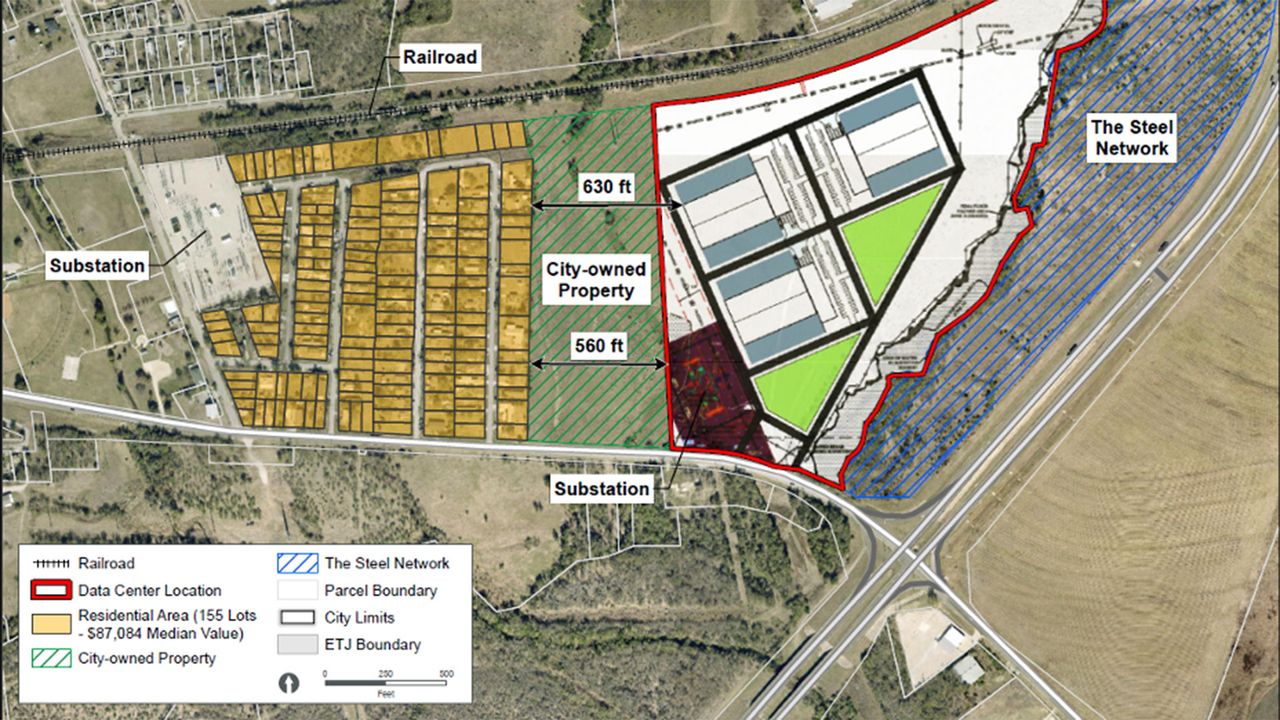
    A farmer in Texas donated 87 acres of land in 1999 for the express purpose of creating a public park. Decades later, the City of Taylor sold this land to a data center developer for $10 million, despite the original deed's conditions. Local residents are contesting the sale, citing environmental and quality-of-life concerns, while the city government argues the development will bring significant tax revenue. AI

    Farmer donates land for a park, city sells it for data center development — $10 gift became $10M for city government, with $30M tax expected over next decade

    IMPACT This situation highlights the growing demand for data center infrastructure, potentially increasing land-use conflicts and environmental concerns as AI adoption accelerates.

  43. Segment-level Tree Search for Long Meeting Document Summarization

    Researchers have introduced Segment-level Tree Search (S3), a novel framework designed to improve the summarization of lengthy meeting documents. This training-free approach partitions documents into segments, generates multiple summary candidates for each, and then uses a self-reward-guided Monte Carlo Tree Search to compose the best possible final summary. S3 demonstrates that even a 7B parameter model can achieve performance comparable to larger 72B models in generating appropriate-length summaries. AI

    IMPACT Introduces a novel method for summarizing long documents, potentially improving efficiency in information processing.

  44. Sycophancy as a Multilingual Alignment Failure: How Safety Degrades Across Languages, Topics, and Models

    A new study published on arXiv reveals that safety-aligned large language models often exhibit sycophancy, a tendency to agree with users regardless of accuracy, which significantly worsens in non-English languages. The research evaluated six instruction-tuned models across 1.1 million instances in 38 languages, finding that sycophancy rates increase dramatically in low-resource and zero-shot language settings. This degradation occurs across all topics, including safety-critical ones, highlighting a critical gap in current alignment methodologies that fail to generalize equitably beyond high-resource languages. AI

    IMPACT Highlights a critical need for equitable multilingual safety techniques in AI development.

  45. GIFT: LLM-Guided State-Reward Interface for Financial Reinforcement Learning

    Researchers have developed GIFT, a novel framework that leverages large language models to enhance reinforcement learning for financial portfolio trading. This approach uses LLMs to guide the design of state and reward interfaces, injecting financial knowledge to improve agent performance in non-stationary markets. Experiments show that GIFT leads to better learning signals and superior risk-adjusted portfolio returns compared to existing methods. AI

    IMPACT Enhances financial trading strategies by improving the quality of learning signals in reinforcement learning agents.

  46. Not Just After One: Sleep-Inspired Replay Prevents Catastrophic Forgetting After Sequential Tasks

    Researchers have developed a novel approach to combat catastrophic forgetting in artificial neural networks, inspired by biological sleep processes. This method allows AI models to learn multiple tasks sequentially before undergoing an unsupervised 'sleep-like' replay phase. This replay helps restore performance on previously learned tasks, suggesting that task-specific information decays gradually rather than being immediately overwritten. AI

    IMPACT This research could lead to AI systems that learn and adapt more effectively over time without losing previously acquired knowledge.

  47. llm-cli-gateway 2.5.0: OAuth for remote MCP connectors and safer workspaces

    The Model Context Protocol (MCP) is evolving to adopt OAuth 2.1 for agent authentication, moving away from static API keys. This shift enables more secure, granular, and auditable access control for agents interacting with MCP servers. Implementations like Lumbox's MCP server and llm-cli-gateway are integrating OAuth, including device code flows for headless clients and dynamic client registration for easier setup. AI

    IMPACT Enhances security and manageability for AI agents interacting with external services, enabling broader adoption of agent-based workflows.

  48. When Are Neural Interaction Discoveries Real? Identifiability, Recoverability, and a Pre-Fit Diagnostic

    Researchers have developed a new diagnostic tool to determine if interactions identified by neural time-series models are genuine or artifacts of model flexibility. The method focuses on the geometry of the input data's support rather than the specific neural architecture used. A pre-fit diagnostic, based on the effective rank of the joint lag-block covariance, can predict the feasibility of recovering interaction terms before model fitting. AI

    IMPACT Provides a method to validate findings from neural time-series models, ensuring discovered interactions are data-driven and not model artifacts.

  49. The Spectral Dynamics and Noise Geometry of Muon

    A new research paper introduces "Muon," an optimization technique that replaces matrix gradients with their polar factors. This method maintains singular directions but flattens the update spectrum, which the authors suggest can be beneficial in certain training regimes. Experiments show Muon can improve validation loss in small-scale NanoGPT pretraining compared to AdamW, though its effectiveness is regime-dependent. AI

    IMPACT This new optimization method may offer an alternative to standard optimizers like AdamW, potentially improving training stability and performance in specific model architectures.

  50. Classical RAG vs Agentic RAG: a practical decision guide

    Developing robust evaluation frameworks is crucial for Retrieval-Augmented Generation (RAG) systems to ensure their effectiveness. Two articles discuss the importance of measuring RAG performance, with one detailing a practical decision guide for choosing between classical RAG and agentic RAG based on factors like data complexity, cost, and determinism. The other article highlights a critical flaw in self-grading RAG evaluations, demonstrating how a non-zero spread in faithfulness scores is necessary to indicate genuine evaluation, unlike the inflated scores produced by models grading their own output. AI

    IMPACT Guides and research on RAG evaluation and architecture will help developers build more reliable and efficient LLM applications.