PulseAugur / Brief
LIVE 18:48:19

Brief

last 24h
[28/128] 186 sources

Multi-source AI news clustered, deduplicated, and scored 0–100 across authority, cluster strength, headline signal, and time decay.

  1. Forget K-shaped, this is a Pac-Man economy. # ai # stocks # investing While everyone is talking about a K-shaped economy, some are now saying we should forget t

    The economy is being described as a 'Pac-Man economy' rather than a K-shaped one, according to new analysis. This concept suggests a different dynamic where certain sectors or entities consume others, leading to a more aggressive and potentially volatile market environment. The discussion involves financial analysts and market commentators. AI

    Forget K-shaped, this is a Pac-Man economy. # ai # stocks # investing While everyone is talking about a K-shaped economy, some are now saying we should forget t

    IMPACT This discussion of economic theory has minimal direct impact on AI operators.

  2. Marketing teams must own AI or 'workslop' - low-quality algorithmic content - will flood channels without proper governance. Only 49% of martech tools are activ

    Marketing teams face a critical juncture where they must actively manage AI integration to prevent their channels from being overwhelmed by low-quality, algorithmically generated content. Without proper governance, this "workslop" can dilute brand messaging and reduce effectiveness. The current landscape shows a significant underutilization of marketing technology, with less than half of tools actively used and a mere 15% delivering a return on investment, highlighting a broader challenge in deriving value from technology investments. AI

    IMPACT Marketing teams must actively govern AI to prevent an influx of low-quality content and ensure technology investments yield ROI.

  3. Standard Chartered CEO walks back comment about 'lower-value human capital'

    Standard Chartered CEO Bill Winters has retracted his statement suggesting that AI could replace "lower-value human capital." He clarified that his intention was to discuss the potential for AI to augment human capabilities and improve efficiency within the banking sector, rather than to advocate for job displacement. AI

    IMPACT This incident highlights the ongoing discussion and sensitivity around AI's potential impact on employment within traditional industries.

  4. What Silicon Valley Is Coming for Next https://www.nytimes.com/2026/05/20/opinion/silicon-valley-ai-taste-culture.html # AI # Tech # Culture

    Silicon Valley is increasingly focused on leveraging AI to understand and influence human taste and culture. This shift involves using AI to analyze trends, predict consumer behavior, and even shape artistic creation. The goal is to move beyond mere technological advancement to a deeper integration with cultural production and consumption. AI

    IMPACT Discusses how AI is being integrated into cultural production and consumption, potentially altering artistic trends and consumer behavior.

  5. Alex Tolson (@AlexTolson91) predicts that combining Google's vast data with Google Maps, Street View, and AI can lead to very powerful products. The integration of Maps, Street View, and AI offers great potential for search, recommendations, local exploration, and location-based agents.

    Alex Tolson suggests that integrating Google's vast data with Google Maps, Street View, and AI could lead to powerful new products. This combination holds significant potential for search, recommendations, local exploration, and location-based agents. However, there have been no specific announcements or technical details released, making this currently an opinion on Google's potential in location-based AI. AI

    Alex Tolson (@AlexTolson91) predicts that combining Google's vast data with Google Maps, Street View, and AI can lead to very powerful products. The integration of Maps, Street View, and AI offers great potential for search, recommendations, local exploration, and location-based agents.

    IMPACT This integration could significantly enhance location-based services and AI-driven recommendations.

  6. I'm seeing headlines about breaking the 'memory wall' for AI training. For me, the wall isn't memory, it's the App Store review process. Shipped a new on-device

    While researchers are making strides in overcoming memory limitations for large-scale AI training, the practical application for individual developers remains challenging. The focus for solo developers is on creating efficient on-device models that prioritize user privacy and battery life, rather than relying on cloud-based solutions. The path from research breakthroughs to usable APIs for consumer products is often hindered by cost, complexity, and app store approval processes. AI

    IMPACT Highlights the gap between frontier AI research and practical, cost-effective implementation for individual developers and consumer products.

  7. On Google declaring war on the Web In Yesterday's IO Keynote Google declared war on the remnants of the Web. (See longer description on their website.) TL;DR: T

    Google's recent I/O keynote has been criticized for its shift towards AI-generated answers, potentially diminishing the role of traditional web links and sources. This move is seen by some as an attempt to create a Google-controlled abstraction layer over the web, where user-generated content serves as raw material for AI models without proper attribution or value. The author argues this approach undermines the participatory nature of the web and could lead to a more controlled, less open information ecosystem. AI

    On Google declaring war on the Web In Yesterday's IO Keynote Google declared war on the remnants of the Web. (See longer description on their website.) TL;DR: T

    IMPACT Critiques Google's AI strategy for potentially centralizing information and devaluing original web content.

  8. RE: https:// mastodon.social/@Kjaerulv/1166 10674010964585 No, you don't understand at all, you absolute fuckface. We™️ don't fear AI for all the nonsense you &

    Multiple users on Mastodon are expressing strong negative sentiments about AI, criticizing its current harms and its potential to degrade quality and eliminate jobs. Concerns are also raised about the lack of transparency in AI's information provenance, the unpredictable costs and outputs of LLMs, and the long-term stability of AI vendors. Additionally, there's skepticism regarding Google's AI search plans and the hype around the "singularity." AI

    RE: https:// mastodon.social/@Kjaerulv/1166 10674010964585 No, you don't understand at all, you absolute fuckface. We™️ don't fear AI for all the nonsense you &

    IMPACT Reflects widespread user concerns about AI's negative impacts, cost, and trustworthiness, highlighting a critical public discourse.

  9. Demystifying Success: A Practical Approach To Guiding Your Business

    Eddy Azad, CEO of Parsec Automation, advises business leaders to prioritize long-term strategic planning over chasing the latest technological hype. He emphasizes that while AI, particularly agentic AI, shows promise, its current immaturity makes it a distraction for many companies still focused on foundational digitalization. Azad advocates for a step-by-step approach to technology adoption, ensuring operational integrity and avoiding short-sighted decisions driven by market trends. AI

    Demystifying Success: A Practical Approach To Guiding Your Business

    IMPACT Offers guidance for businesses on strategically integrating AI, cautioning against premature adoption of emerging technologies like agentic AI.

  10. AI, "Humanity", and Dr. Manhattan Syndrome: A Communications Intervention

    The article explores the concept of "Dr. Manhattan Syndrome" in the context of artificial intelligence, suggesting it represents a potential communication breakdown between humans and advanced AI. It posits that as AI capabilities grow, a disconnect may emerge, similar to the detached perspective of the character Dr. Manhattan from Watchmen. The piece advocates for proactive communication strategies to bridge this gap and ensure continued human understanding and control. AI

    AI, "Humanity", and Dr. Manhattan Syndrome: A Communications Intervention

    IMPACT Explores potential communication gaps between humans and advanced AI, urging proactive strategies for understanding and control.

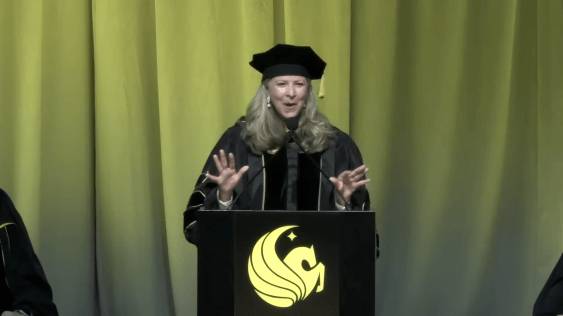
  11. College students are booing commencement speakers celebrating AI, but the wave of hate hasn’t stopped them from using it to cheat on their exams

    College students are exhibiting a dual attitude towards AI, simultaneously booing commencement speakers who celebrate the technology while also widely using it for coursework and, in some cases, academic dishonesty. This phenomenon, described as cognitive dissonance, stems from a fear of falling behind peers if AI tools are not used, despite concerns about hindering critical thinking skills. In response to widespread cheating, institutions like Princeton and Stanford are reverting to proctored exams and traditional methods like blue books, as AI detection tools have proven unreliable. AI

    College students are booing commencement speakers celebrating AI, but the wave of hate hasn’t stopped them from using it to cheat on their exams

    IMPACT Highlights the ethical challenges and adaptive strategies emerging in higher education due to widespread AI adoption by students.

  12. Wow! America’s Graduating Seniors Really Fucking Hate AI! https:// fed.brid.gy/r/https://defector .com/wow-americas-graduating-seniors-really-fucking-hate-ai

    Recent college graduates across multiple universities have expressed strong negative reactions, including booing, towards keynote speakers who lauded artificial intelligence during their commencement speeches. Speakers like former Google CEO Eric Schmidt and record executive Scott Borchetta were met with boos when they praised AI's potential and urged students to embrace it. Graduates reportedly felt these speeches were overly enthusiastic about AI and dismissed concerns about its impact on jobs and human well-being. AI

    Wow! America’s Graduating Seniors Really Fucking Hate AI! https:// fed.brid.gy/r/https://defector .com/wow-americas-graduating-seniors-really-fucking-hate-ai

    IMPACT Recent graduates are showing significant skepticism towards AI, booing speakers who praise it, indicating a potential cultural or workforce resistance to AI adoption.

  13. The $150 Trillion Question—What Is AI’s Value In Asset Management

    Billionaire Ken Griffin, CEO of Citadel, has publicly reversed his stance on AI, moving from dismissing it as "garbage" to acknowledging its profound societal impact. Griffin shared that he experienced a moment of depression after witnessing AI agents complete complex financial research tasks in hours that previously took weeks for teams with advanced degrees. This shift highlights AI's potential to drastically reorganize industries like asset management, moving beyond automating simple tasks to redesigning entire workflows. AI

    The $150 Trillion Question—What Is AI’s Value In Asset Management

    IMPACT Highlights AI's potential to disrupt high-skill knowledge work and reorganize industries, prompting a need for continuous learning.

  14. More real journalism done by looks at notes "Gamers Nexus" https://www. youtube.com/watch?v=xUbJDrL6ZfM # Ai # antiai # gamersnexus # nvidia

    Gamers Nexus, a tech review outlet, has published videos criticizing the use of AI in gaming and technology. One video specifically calls out Nvidia for its AI-driven features, suggesting a critical stance against the company's AI implementations. The outlet's content appears to focus on the negative aspects or perceived overreach of AI in the gaming and tech industries. AI

    More real journalism done by looks at notes "Gamers Nexus" https://www. youtube.com/watch?v=xUbJDrL6ZfM # Ai # antiai # gamersnexus # nvidia

    IMPACT Critiques from tech reviewers like Gamers Nexus may influence consumer perception and adoption of AI-powered features in gaming and hardware.

  15. Open Thread 434

    Scott Alexander's Astral Codex Ten blog hosts weekly open threads where readers can discuss any topic, including AI. One recent discussion highlighted concerns from individuals within the San Francisco tech scene about the existential risks posed by artificial intelligence. These individuals expressed a strong desire for the public to understand the specific arguments behind these AI risk concerns, moving beyond typical human-interest narratives. AI

    Open Thread 434

    IMPACT AI researchers and enthusiasts are discussing existential risks, urging for a deeper public understanding of the arguments beyond superficial coverage.

  16. Latest AI Behaves More Like Humans By Rudely Interrupting You During Conversational Chats And We Might Relish It

    Newer generative AI models are being developed to mimic human conversational patterns, including the tendency to interrupt users mid-sentence. While current AI interactions are typically polite and turn-based, some developers aim to make AI more human-like by allowing it to interject. This shift could be perceived as either a shocking departure from expected machine behavior or a welcome, more natural form of interaction, depending on the user's perspective. AI

    Latest AI Behaves More Like Humans By Rudely Interrupting You During Conversational Chats And We Might Relish It

    IMPACT AI's move towards more human-like conversational interruptions could alter user expectations and interaction dynamics.

  17. Slowing the AI token burn: Part 2

    The AI industry is facing a new challenge where engineers are incentivized to maximize token consumption, a practice dubbed "Tokenmaxxing," rather than focusing on the quality of their output. This trend, highlighted by NVIDIA CEO Jensen Huang and observed at Meta, suggests that token usage is becoming a proxy for productivity. However, critics argue this approach leads to waste and a lack of meaningful evaluation, proposing a "Slop Index" that relies on human judgment to assess AI output quality. AI

    Slowing the AI token burn: Part 2

    IMPACT This discussion highlights a potential shift in AI development towards prioritizing token consumption over output quality, which could impact efficiency and innovation.

  18. https:// open.substack.com/pub/brandonb edard/p/the-architects-hammer-why-i-dont?utm_source=share&utm_medium=android&r=7qos2e # NUPA # UBI # UHI # policy # tech

    The author expresses skepticism about the concept of a "Galactic CEO" and critiques the idea of a "Human Sanctuary" in the context of AI development. They also discuss the potential implications of AI on Nigeria's future and the role of NUPA (National Unity Party of Nigeria) in shaping it. The author uses examples from popular culture, like Dragon Ball Z, to illustrate their points about leadership and control in the face of technological advancement. AI

    https:// open.substack.com/pub/brandonb edard/p/the-architects-hammer-why-i-dont?utm_source=share&utm_medium=android&r=7qos2e # NUPA # UBI # UHI # policy # tech

    IMPACT Explores the societal and political implications of AI, offering a critical perspective on its future development and governance.

  19. https:// open.substack.com/pub/brandonb edard/p/why-are-we-training-our-children-d7a?utm_source=share&utm_medium=android&r=7qos2e # AI

    The author argues that Universal Basic Income (UBI) and related policies like Universal Human Income (UHI) are not the solution to AI-driven job displacement. Instead, they suggest these policies could exacerbate wealth inequality by disproportionately benefiting the rich. The piece questions the societal impact of training children for a future potentially dominated by AI and calls for a re-evaluation of our educational and economic systems. AI

    https:// open.substack.com/pub/brandonb edard/p/why-are-we-training-our-children-d7a?utm_source=share&utm_medium=android&r=7qos2e # AI

    IMPACT Questions the societal impact of AI on employment and wealth distribution, suggesting current policy proposals may be inadequate.

  20. Conde Nast CEO: human journalism will win in the age of AI slop: Conde Nast CEO Roger Lynch explains why Vogue and The New Yorker thrive as AI floods the web wi

    Conde Nast CEO Roger Lynch believes human-led journalism will ultimately prevail over the proliferation of AI-generated content. He argues that publications like Vogue and The New Yorker offer unique value that distinguishes them from the low-quality output flooding the internet. Lynch also noted the negative impact of AI on publisher search traffic. AI

    Conde Nast CEO: human journalism will win in the age of AI slop: Conde Nast CEO Roger Lynch explains why Vogue and The New Yorker thrive as AI floods the web wi

    IMPACT Argues that high-quality human journalism will remain relevant despite the rise of AI-generated content.

  21. 2 Tell-Tale Signs Of ‘Fake Love’ In A Relationship, By A Psychologist

    A psychologist identifies two key indicators of inauthentic relationships, often only recognized in hindsight. The first is "love-bombing," characterized by excessive affection and rapid escalation of intimacy, which can be mistaken for deep investment but may serve to gain control. The second is "conditional positive regard," where affection is dependent on a partner's behavior, mood, or compliance, rather than being a stable foundation. AI

    2 Tell-Tale Signs Of ‘Fake Love’ In A Relationship, By A Psychologist
  22. Don’t Pay for Beige Prose Fed up with lackluster prose from many top AI models, increasing numbers of editors and writers are flocking to Open Source AI. The po

    Editors and writers are increasingly turning to open-source AI models as an alternative to commercial options, citing dissatisfaction with the uninspired output of many leading AI systems. This shift reflects a growing demand for more distinctive and less generic AI-generated text. AI

    IMPACT Highlights a growing user preference for open-source AI solutions over commercial offerings due to perceived quality differences in generated text.

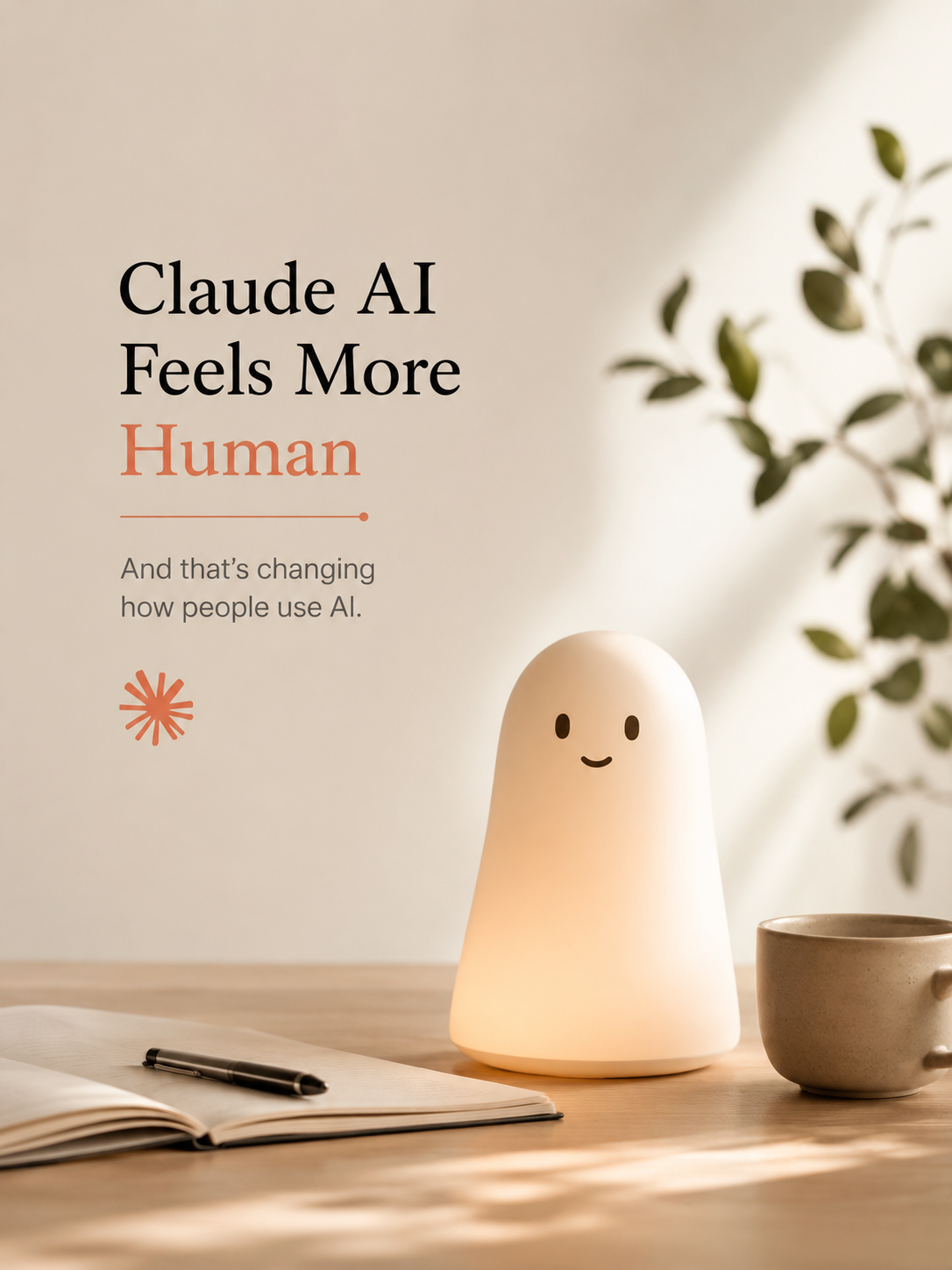
  23. Claude AI Feels More Human — And That’s Changing How People Use AI

    Two Medium articles discuss how Anthropic's Claude AI is perceived as more human-like than ChatGPT, particularly for long-form writing tasks. This perceived human-like quality is influencing how users interact with and utilize AI tools. The articles suggest a shift in user behavior, moving beyond simple AI tool usage to more nuanced engagement. AI

    Claude AI Feels More Human — And That’s Changing How People Use AI

    IMPACT Perceived human-like qualities in AI models may influence user adoption and interaction patterns.

  24. The Robot Revolution Has Officially Begun

    A growing number of young people, particularly Gen Z, are expressing significant dissatisfaction and even resentment towards AI technologies. Despite being early adopters and feeling pressured to use AI for career advancement, this demographic harbors deep concerns about its impact on human relationships, communication, and job security. This sentiment is contributing to a broader cultural backlash against AI, fueled by issues like disinformation, environmental impact, and the perceived erosion of critical thinking and creativity. AI

    The Robot Revolution Has Officially Begun

    IMPACT Younger generations are increasingly skeptical of AI, viewing it as a threat to jobs and human connection, despite its perceived necessity for career progression.

  25. Is Programming Learning Necessary in the Generative AI Era? | HorieMon AI Recommendations https://www.emilyselect.com/%e7%94%9f%e6%88%90ai%e6%99%82%e4%bb%a3%e3%81%ab%e3%83%97%e3%83%ad%e3%82%b0%e3%83%a9%e3%83%9f

    The question of whether programming skills remain relevant in the age of generative AI is explored, with a focus on recommendations from AI expert Horie Takafumi. The discussion centers on the utility of learning programming, particularly Python, in a landscape increasingly shaped by AI tools. AI

    Is Programming Learning Necessary in the Generative AI Era? | HorieMon AI Recommendations https://www.emilyselect.com/%e7%94%9f%e6%88%90ai%e6%99%82%e4%bb%a3%e3%81%ab%e3%83%97%e3%83%ad%e3%82%b0%e3%83%a9%e3%83%9f

    IMPACT Explores the evolving role of traditional programming skills as AI tools become more capable.

  26. Xiaohongshu Sends Internal Letter: Increase AI Investment, Conan Appointed President

    Graduating students are expressing anxiety and frustration regarding the increasing prevalence of AI, with some booing commencement speakers who highlight its benefits. This sentiment stems from fears that AI will displace jobs and render current skills obsolete, as indicated by recent polls showing a majority of students view AI as a threat to their career prospects. Meanwhile, companies like Google and Alibaba are significantly increasing their AI investments, signaling a continued push for AI development despite these societal concerns. AI

    IMPACT Growing student anxiety about AI's impact on careers highlights a societal challenge that may influence future AI adoption and regulation.

  27. The UAE’s OPEC exit frees up oil wealth as it bets big on AI

    Nobel laureate economist Daron Acemoglu maintains a cautious stance on AI's impact on employment, arguing that AI agents are more likely to augment specific tasks rather than replace entire jobs due to the complexity and varied nature of human work. Meanwhile, major AI labs like OpenAI, Anthropic, and Google DeepMind are actively hiring economists to research AI's economic implications and address growing public skepticism about job displacement. Separately, the UAE is making significant investments in AI infrastructure, leveraging its oil wealth to fund data centers and energy production, positioning itself as a key player in the global AI economy. AI

    The UAE’s OPEC exit frees up oil wealth as it bets big on AI

    IMPACT Provides expert perspectives on AI's economic and employment implications, influencing industry strategy and public perception.

  28. No comment. #AI RE: https://bsky.app/profile/did:plc:yni5eazdl6liolhuwmcix67s/post/3mkgp7agwrs2t

    Several posts discuss the broad impact and perception of AI, touching on its use in generating images, the importance of open-source contributions, and its potential for efficiency gains. One post highlights a startup's claim of significant AI efficiency improvements, though researchers are seeking independent verification. Another post draws parallels between AI, brain-computer interfaces, and humanoid robotics, suggesting they are in different stages of an inflationary bubble. AI

    IMPACT Discussions touch on AI's role in image generation, open-source development, efficiency claims, and market perceptions, reflecting broad industry discourse.