PulseAugur / Brief
EN
LIVE 14:51:42

Brief

last 24h
[26/5976] 224 sources

Multi-source AI news clustered, deduplicated, and scored 0–100 across authority, cluster strength, headline signal, and time decay.

  1. Accelerated data science with a Kaggle grandmaster

    This podcast episode features a discussion with Christof Henkel, a Kaggle Grandmaster and Senior Deep Learning Data Scientist at NVIDIA. Henkel shares his perspective on how engaging in Kaggle competitions can enhance a data scientist's abilities and career prospects. He also discusses his methods for boosting AI productivity, highlighting the use of GPU-accelerated tools such as NVIDIA RAPIDS and DALI. AI

    Accelerated data science with a Kaggle grandmaster
  2. Applications of Generative AI Webinar

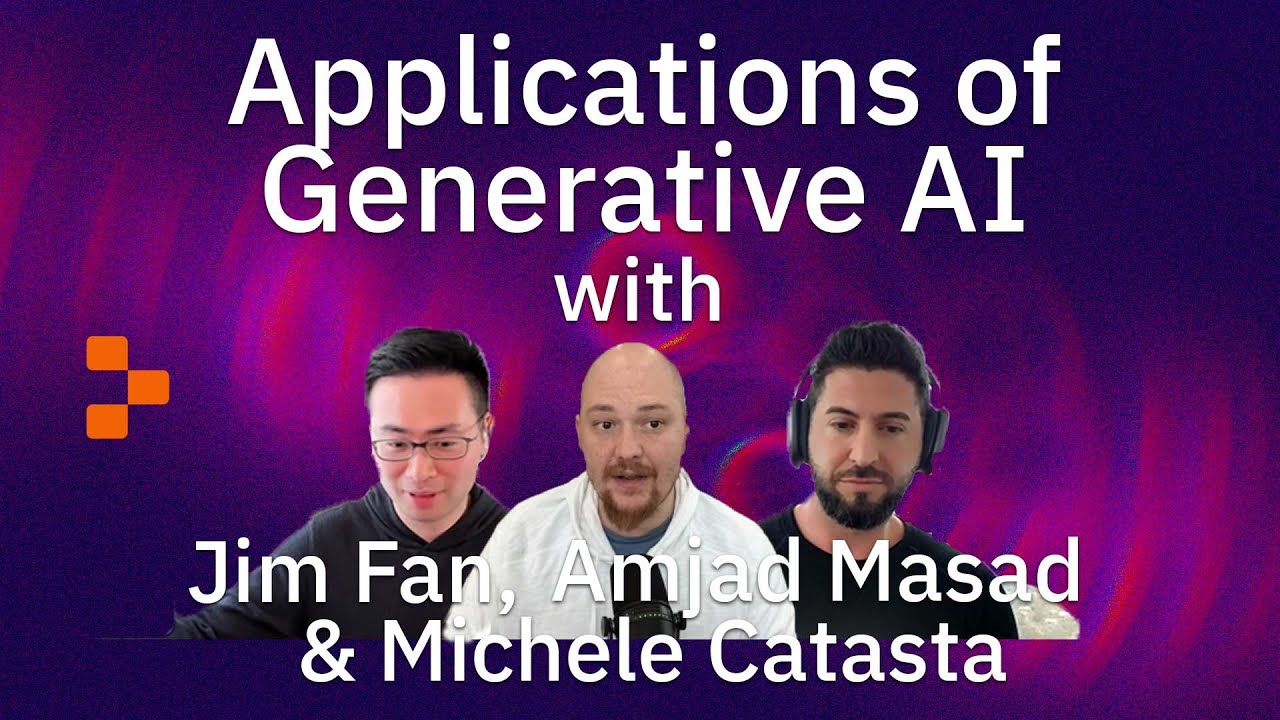
    Replit hosted a webinar featuring NVIDIA AI researcher Jim Fan and Replit CEO Amjad Masad to discuss generative AI advancements. The conversation highlighted the growing importance of multi-modality in AI, enabling richer interactions with systems by incorporating images, video, and 3D data. They also touched upon the evolution of large language models, user experience improvements like ChatGPT's interface, and the increasing power of models beyond just parameter count. The discussion concluded with predictions about AI's future impact on coding and various industries, emphasizing Replit's own AI coding assistant, Ghostwriter. AI

    Applications of Generative AI Webinar

    IMPACT Discusses future trends in multi-modal AI and its impact on coding and various industries.

  3. Success (and failure) in prompting

    This podcast episode discusses the practical challenges and successes encountered when prompting generative AI models. Hosts Chris and Daniel explore the varied behaviors, both positive and negative, exhibited by recent AI models from companies like OpenAI, Cohere, and Anthropic. They also share insights and tips for effective prompting and integrating these models into applications, referencing guides and examples of AI outputs that have gone awry. AI

    Success (and failure) in prompting
  4. MLOps is alive and well

    This podcast episode brings together hosts from Practical AI and the MLOps.Community to discuss the impact of foundation and generative models on machine learning operations. The conversation covers how these advanced models are influencing MLOps tooling, workflows, and general perceptions within the field. It highlights the ongoing relevance and evolution of MLOps practices in the current AI landscape. AI

    MLOps is alive and well
  5. My Experience as a Replit Design Intern

    Three individuals shared their internship experiences at Replit, highlighting diverse roles and significant contributions. Nathan, a technical intern, focused on code search and frontend engine improvements, learning new libraries and collaboration tools like Graphite. Lily, a community intern, managed moderation, organized events, and engaged with influencers, contributing to over 1,000 toxic account takedowns. Clément, a design intern, revamped interfaces, designed new features like the following feed, and shipped over 200 PRs, gaining experience in Figma, React, and the company's design system. AI

    My Experience as a Replit Design Intern

    IMPACT Provides insight into the practical application of skills and team collaboration within an AI-adjacent tech company.

  6. Leaky UIs

    Replit's blog post details the challenges of creating a flexible and intuitive tiled layout system for user interfaces. The company found that using a binary tree data structure, while seemingly simple, led to problematic interactions where resizing one pane could unintentionally affect others. This is because the binary tree's constraint of at most two children per node does not naturally map to the desired layout where panes can be arranged side-by-side in arbitrary numbers. AI

    Leaky UIs

    IMPACT This article discusses UI/UX development challenges, which are relevant to building AI-powered applications but does not directly concern AI models or research.

  7. Creating a culture of innovation

    This podcast episode features Lukas Egger from SAP Business Process Intelligence discussing how to foster a culture of innovation within an organization. Egger shares insights on integrating this innovative mindset into product development processes. The conversation also addresses strategies for overcoming common obstacles and challenges encountered during innovation initiatives. AI

    Creating a culture of innovation
  8. Towards stability and robustness

    Many AI projects fail to deliver value in production due to unstable models and data drift. Roey Mechrez from BeyondMinds discussed strategies for improving AI robustness, including filtering input data and detecting risky outputs. The conversation focused on practical approaches to make AI systems more reliable in real-world applications. AI

    Towards stability and robustness
  9. Mailbag: How to Bootstrap Labels for Relevant Docs in Search

    Eugene Yan's blog post addresses a reader's question about bootstrapping labels for semantic search systems without relying on expensive human annotators. Yan suggests starting with traditional lexical search methods like BM25 and then using user click data as implicit labels to train a semantic search model. This approach aims to make the process more economically feasible for building search engines with custom data. AI

    Mailbag: How to Bootstrap Labels for Relevant Docs in Search
  10. Vector databases (beyond the hype)

    The emergence and subsequent hype around vector databases, spurred by the rise of embedding-based AI applications like those using Retrieval-Augmented Generation (RAG) after ChatGPT's launch, is being re-evaluated. While companies like Pinecone initially led this specialized infrastructure category, a growing perspective suggests that traditional information retrieval methods remain equally valuable. Practitioners are now exploring the nuances and trade-offs of various vector database options, moving beyond the initial excitement to focus on practical implementation and the convergence of search technologies. AI

    Vector databases (beyond the hype)
  11. Lessons on CS Equity from the RESPECT Conference

    Replit attended the RESPECT conference, which focused on equity in computer science education. The company highlighted its platform's features, such as multiplayer and Teams for Education, as tools to foster a more inclusive and supportive learning environment. Discussions at the conference emphasized culturally responsive pedagogy and modeling productive persistence to better engage diverse student populations. AI

    Lessons on CS Equity from the RESPECT Conference

    IMPACT Highlights how platforms can support diversity and inclusion in technical education.

  12. Data science for intuitive user experiences

    Nhung Ho, Director of Data Science at Intuit, discussed how data science enhances user experiences in financial applications. The conversation covered predictive forecasting to support small businesses and analyzed economic impacts, such as those from the COVID-19 pandemic. The episode highlighted Intuit's use of AI to foster business resilience. AI

    Data science for intuitive user experiences
  13. Low code, no code, accelerated code, & failing code

    This episode of Fully-Connected discusses the evolving landscape of AI development, covering low-code and no-code platforms, alongside traditional coding approaches. The hosts also delve into technical aspects like GPU terminology and ongoing concerns about data leakage in AI systems. Additionally, they highlight new resources and learning opportunities for individuals looking to advance their skills in AI and machine learning. AI

    Low code, no code, accelerated code, & failing code
  14. The Internet of Fun

    Replit's blog detailed how its platform evolved to support community-driven applications, starting with a 12-year-old user who created a chatroom in 2018. This early success highlighted a strong community of young tinkerers and led to the development of more robust community features. More recently, the Replit blog's HTTP logs were ingeniously repurposed as a chat interface by users who discovered they could send messages through GET requests, which were then displayed in the logs. AI

    The Internet of Fun

    IMPACT Showcases how user ingenuity can repurpose existing platforms for novel communication methods.

  15. Building the world's most popular data science platform

    Peter Wang, CEO of Anaconda, discussed the company's journey and current initiatives on a recent podcast. Anaconda is a widely recognized platform in the data science and AI community, known for its package management system 'conda'. Wang shared insights into the Python AI ecosystem and offered practical advice for scaling data science operations. AI

    Building the world's most popular data science platform
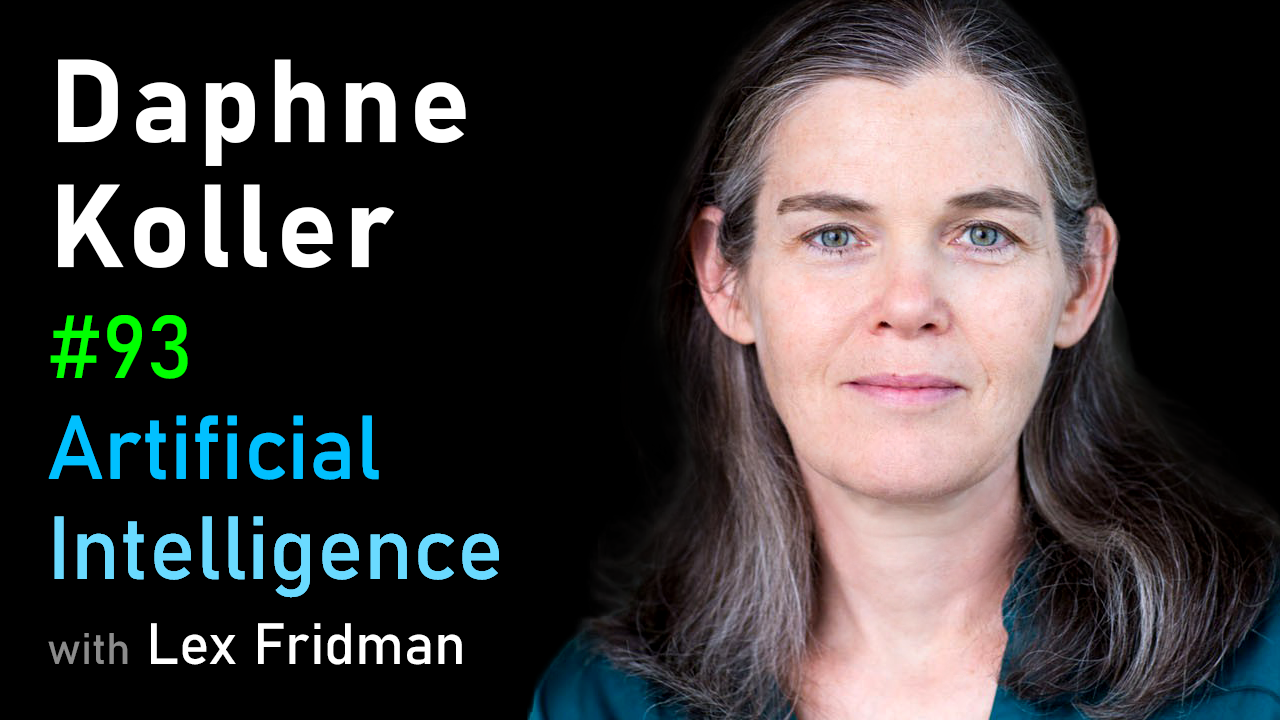
  16. #93 – Daphne Koller: Biomedicine and Machine Learning

    Daphne Koller, a prominent figure in both computer science and AI, discussed the intersection of machine learning and biomedicine on the Lex Fridman Podcast. She highlighted the potential of AI to revolutionize disease treatment and longevity research. Koller also shared insights from her work at Insitro, a company focused on applying ML to drug discovery and development, and touched upon her earlier contributions to online education through Coursera. AI

    #93 – Daphne Koller: Biomedicine and Machine Learning
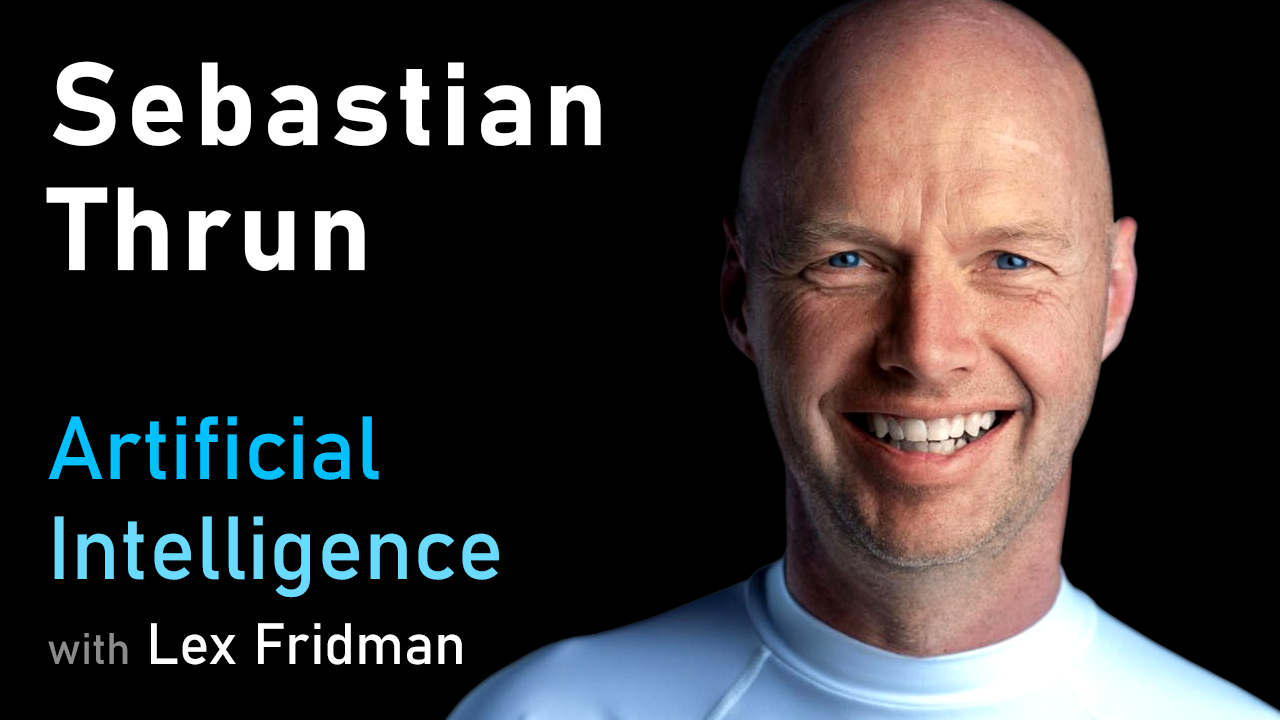
  17. Sebastian Thrun: Flying Cars, Autonomous Vehicles, and Education

    Sebastian Thrun, a prominent figure in robotics and AI, discussed his work on autonomous vehicles and flying cars in a recent podcast. Thrun, known for leading Stanford's DARPA Grand Challenge team and Google's self-driving car program, also co-founded Udacity based on his experience teaching AI. The conversation touched upon machine learning, AI's impact on jobs and education, and his current role as CEO of Kitty Hawk, a company developing eVTOL aircraft. AI

    Sebastian Thrun: Flying Cars, Autonomous Vehicles, and Education
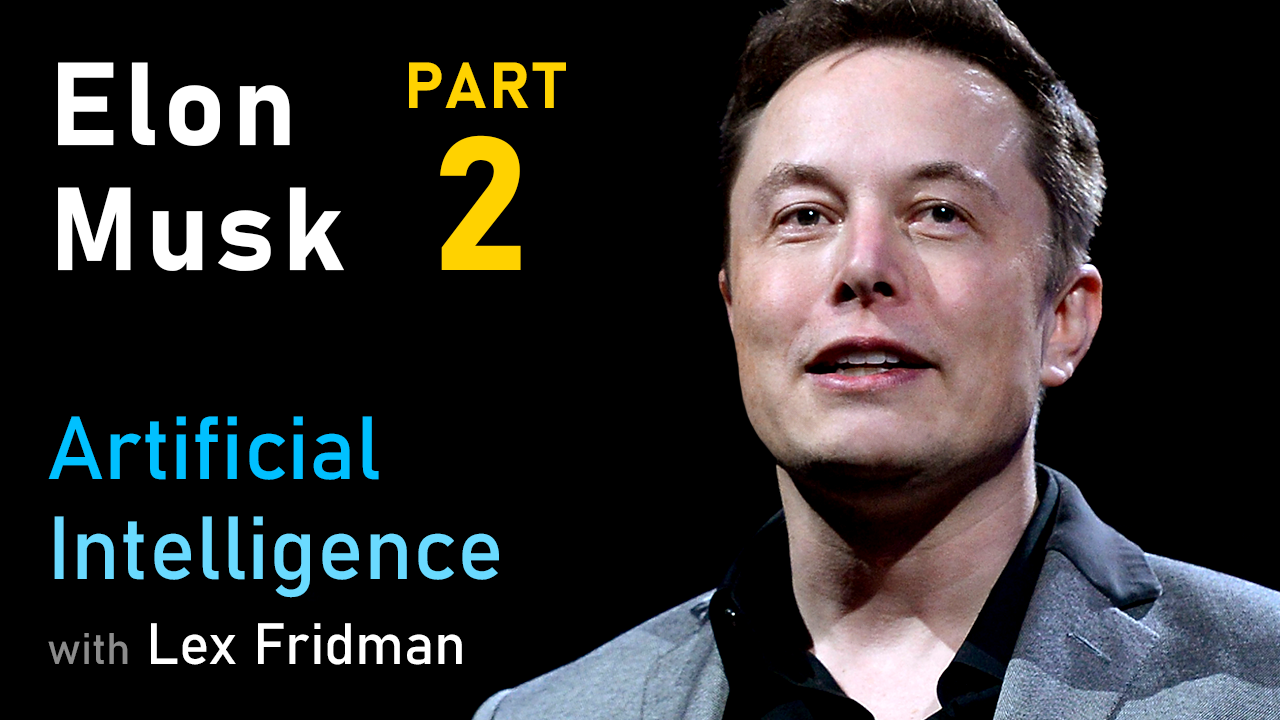
  18. Elon Musk: Neuralink, AI, Autopilot, and the Pale Blue Dot

    Elon Musk recently appeared on the Lex Fridman Podcast for the second time, discussing a range of topics including AI safety regulation, his company Neuralink, and Tesla's Autopilot technology. The conversation delved into the potential of Neuralink to enhance human cognitive abilities and address future challenges. Musk also shared his thoughts on consciousness and the broader implications of artificial intelligence. AI

    Elon Musk: Neuralink, AI, Autopilot, and the Pale Blue Dot
  19. Gavin Miller: Adobe Research

    Gavin Miller, Head of Adobe Research, discussed the future of creative software during a Lex Fridman podcast. Adobe aims to leverage deep learning to automate tedious tasks for artists and designers, allowing them more time for creative ideation. Miller highlighted how AI can enhance tools like Photoshop and Premiere, blending technology with creativity. AI

    Gavin Miller: Adobe Research
  20. Rejected Then Recruited: Our Journey into Y Combinator

    Replit's journey to Y Combinator acceptance was marked by initial rejections and a pivot towards a sustainable business model. Despite early feedback that their online REPL was a "toy," the founders persisted, bootstrapping the company and exploring various revenue streams. Their focus on making computing more accessible, coupled with a successful product for computer science teachers, eventually led to a meeting with Sam Altman and a path toward joining Y Combinator. AI

    IMPACT Details the entrepreneurial journey of a developer tools company, offering insights into bootstrapping and fundraising.

  21. Behavioral economics and AI-driven decision making

    This podcast episode features Mike Bugembe discussing how companies can foster data-driven decision-making cultures. The conversation explores leveraging behavioral economics principles and identifying impactful AI use cases. It also touches on practical applications and upcoming events related to these topics. AI

    Behavioral economics and AI-driven decision making
  22. Putting AI in a box at MachineBox

    Mat Ryer and David Hernandez discussed MachineBox, a company focused on democratizing AI, with Daniel and Chris. The conversation touched upon building a business centered around artificial intelligence technologies. They also highlighted upcoming events and webinars related to AI. AI

    Putting AI in a box at MachineBox
  23. Big Data & Analytics Summit - Data Science Challenges @ Lazada

    Eugene Yan shared insights from his experience building and scaling a data science function at Lazada, highlighting three key challenges. These included determining the appropriate level of business input versus automated decision-making, managing the pace of development against production stability, and effectively prioritizing tasks with business stakeholders. Yan detailed how excessive manual intervention in areas like product ranking could negatively impact site performance, necessitating data-driven A/B testing to establish optimal thresholds for manual adjustments. AI

    Big Data & Analytics Summit - Data Science Challenges @ Lazada
  24. Two Stories from Our Community

    Replit is highlighting two user success stories to showcase the platform's impact. One user, Ruslan, a physics major, utilized Replit's interactive and accessible environment to practice coding and secure a software engineering role in the self-driving car industry. Another user, Mark, a math teacher, leveraged Replit to effortlessly teach programming basics and Python turtle graphics to low-income middle school students, enabling them to build creative projects. AI

    IMPACT Showcases how coding platforms can facilitate learning and career advancement in tech fields.

  25. Building a data team

    Eugene Yan's articles discuss the critical aspects of building and managing successful data science teams, emphasizing the importance of hiring individuals with curiosity, grit, and humility. He advocates for a culture that encourages innovation and learning from failure, drawing parallels with successful tech companies like Netflix and Google. Yan also highlights the need for clear communication and ownership within teams, as demonstrated by his experience at Lazada, and stresses that fostering an environment where experimentation is encouraged is key to driving impactful data science work. AI

    Building a data team
  26. Learning Devops & AWS on the Job: Building and Scaling a Service

    The founder of Replit details his journey learning DevOps and AWS by building and scaling the company's code execution service. Initially, he relied on simple EC2 instances, but as the service grew, he encountered issues with single points of failure and the limitations of vertical scaling. This led to the adoption of horizontal scaling using AMIs and Elastic Load Balancers to manage multiple instances, eventually moving to Application Load Balancers for better WebSocket support. AI

    IMPACT Provides insights into scaling cloud infrastructure, relevant for AI operators managing distributed systems.