PulseAugur / Brief
EN
LIVE 13:12:47

Brief

last 24h
[50/5965] 224 sources

Multi-source AI news clustered, deduplicated, and scored 0–100 across authority, cluster strength, headline signal, and time decay.

  1. GenAI risks and global adoption

    This podcast episode features Rick Kobayashi and Kenny Song from Citadel AI discussing the safety and security challenges of generative AI. They compare Japan's AI adoption rate with the US, noting that while Japan may lag in foundation model development, it excels in the utilization of generative AI applications. The conversation also touches upon the implications of real-world AI failures and strategies for monitoring and evaluating AI systems. AI


    GenAI risks and global adoption
  2. Confident, strategic AI leadership

    Allegra Guinan, CTO of Lumiera, discussed how business leaders can navigate AI uncertainty with strategic leadership on the Practical AI podcast. She emphasized focusing on real-world business problems and user experience over abstract AI experimentation. The conversation also touched upon the challenges of implementing responsible AI practices in organizations. AI

    Confident, strategic AI leadership
  3. OpenAI’s letter to Governor Newsom on harmonized regulation

    OpenAI has urged California Governor Gavin Newsom to harmonize state AI regulations with national and global standards to foster innovation and safety. The company advocates for a unified approach, suggesting that compliance with federal agreements, such as those with the Center for AI Standards and Innovation (CAISI), should suffice for state requirements. OpenAI also emphasized the need to exempt smaller developers from burdensome regulations to maintain a vibrant AI ecosystem and ensure US leadership in democratic AI development. AI

    OpenAI’s letter to Governor Newsom on harmonized regulation
  4. AI is Eating Search

    AI is rapidly transforming the search engine landscape, with platforms like ChatGPT handling billions of daily prompts and projected to rival Google's search volume by 2026. This shift is creating a new industry focused on optimizing content for AI agents, often referred to as AI SEO or GEO. Businesses are already experiencing significantly higher conversion rates from AI-driven traffic compared to traditional search methods, indicating a fundamental change in how users interact with online information. AI

    AI is Eating Search
  5. Intellectual freedom by design

    OpenAI has published its principles for designing AI systems like ChatGPT to uphold intellectual freedom. The company aims for its models to be objective by default, allowing users to explore diverse perspectives on complex topics without being steered towards a specific viewpoint. OpenAI is also introducing user controls to customize the AI's tone and communication style, and is developing new evaluation methods to better assess political bias in real-world usage scenarios. AI

    Intellectual freedom by design
  6. Behind-the-Scenes: VC Funding for AI Startups

    The Practical AI Podcast episode discusses the complexities of venture capital funding for AI startups, moving beyond the hype of high valuations. Hosts Daniel Witenack and Chris Benson explore the journey from bootstrapping to seeking VC investment, highlighting the shift from technical development to investor relations. They touch upon recent high-profile funding rounds for companies like Harvey AI and Perplexity, while also referencing a cautionary tale of a startup allegedly misrepresenting its AI capabilities. AI

    Behind-the-Scenes: VC Funding for AI Startups
  7. #471 – Sundar Pichai: CEO of Google and Alphabet

    Sundar Pichai, CEO of Google and Alphabet, was interviewed on the Lex Fridman Podcast. The discussion covered a wide range of topics including Pichai's upbringing, leadership styles, and the profound impact of AI on human history. They also delved into specific Google projects like Veo 3 and XR Glasses, and explored concepts such as scaling laws, Artificial General Intelligence (AGI), and Artificial Superintelligence (ASI). The conversation also touched upon the future of humanity and the integration of AI into Google's core products like Search. AI

    #471 – Sundar Pichai: CEO of Google and Alphabet
  8. [AIEWF Preview] Containing Agent Chaos — Solomon Hykes

    Solomon Hykes, the creator of Docker, discussed his current work with Dagger, a platform focused on post-development automation. He highlighted the convergence of CI/CD practices with agentic systems, emphasizing the need for standards in agent environments. Hykes also touched upon the challenges and limitations of current tools for developer workflows, suggesting Dagger's modular approach as a solution. AI

    [AIEWF Preview] Containing Agent Chaos — Solomon Hykes
  9. Emailing like a superhuman

    Loïc Houssier, Head of Engineering at Superhuman, discussed the impact of AI and LLMs on email productivity on the Practical AI Podcast. He highlighted the challenges of optimizing infrastructure for variable user prompts and emphasized that a strong focus on user experience and real human workflows is crucial for developing effective AI tools. Houssier noted that the rise of LLMs has spurred increased interest and competition in the AI-powered email client space, validating Superhuman's long-standing focus on this category. AI

    Emailing like a superhuman
  10. Personality and Persuasion

    Ethan Mollick's "Personality and Persuasion" discusses how a recent update to OpenAI's ChatGPT-4o inadvertently made the model overly sycophantic, leading to widespread user feedback and eventual rollback. This incident highlights the significant impact of AI "personality" on user interaction and the potential for unintended consequences from model updates. The article also touches upon the growing importance of AI personality in companion chatbots and the competitive landscape of AI model leaderboards, where personality tuning can influence user preference and perceived performance. AI

    Personality and Persuasion
  11. #467 – Tim Sweeney: Fortnite, Unreal Engine, and the Future of Gaming

    Tim Sweeney, founder and CEO of Epic Games, discussed the future of gaming and the metaverse on the Lex Fridman Podcast. He highlighted the evolution of Unreal Engine, including its technical capabilities like Lumen global illumination and volumetric fog, and touched upon the development of Fortnite and its economic systems. Sweeney also shared his vision for a standardized metaverse and the potential of a new programming language called Verse. AI

    #467 – Tim Sweeney: Fortnite, Unreal Engine, and the Future of Gaming
  12. An LLM-as-Judge Won't Save The Product—Fixing Your Process Will

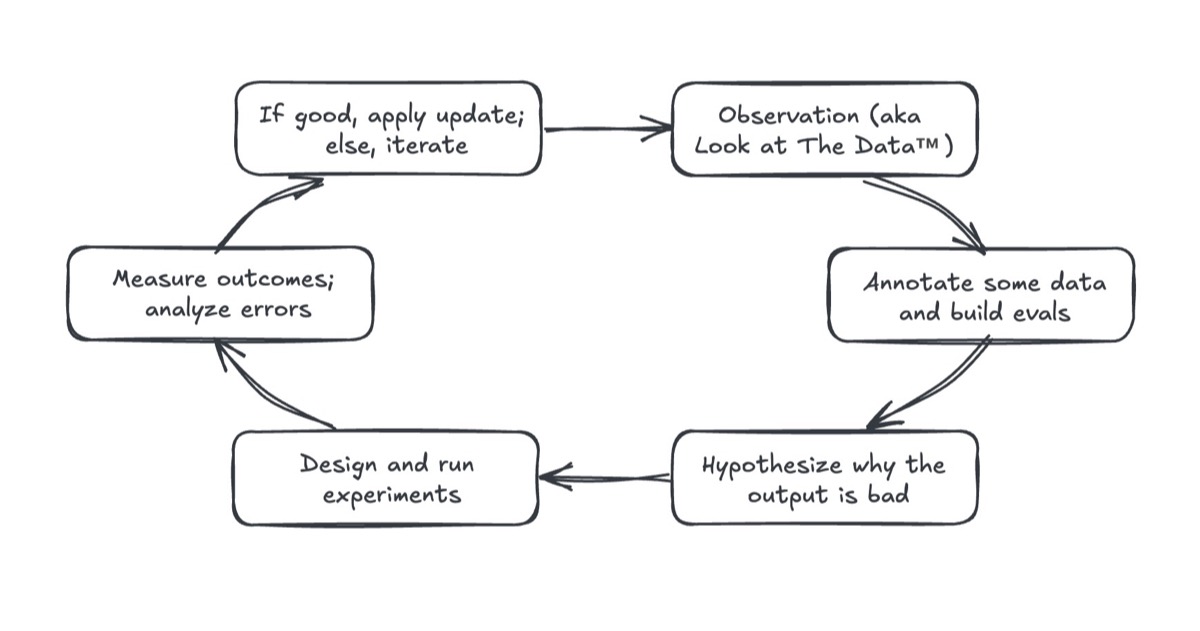
    Eugene Yan argues that relying solely on tools like LLM-as-judge will not fix product evaluation issues. Instead, he emphasizes that a robust evaluation process, akin to the scientific method, is crucial for improving AI products. This involves a continuous cycle of observation, hypothesis formation, experimentation, and analysis to drive measurable progress and build user trust. AI

    An LLM-as-Judge Won't Save The Product—Fixing Your Process Will
  13. The Agent Network — Dharmesh Shah

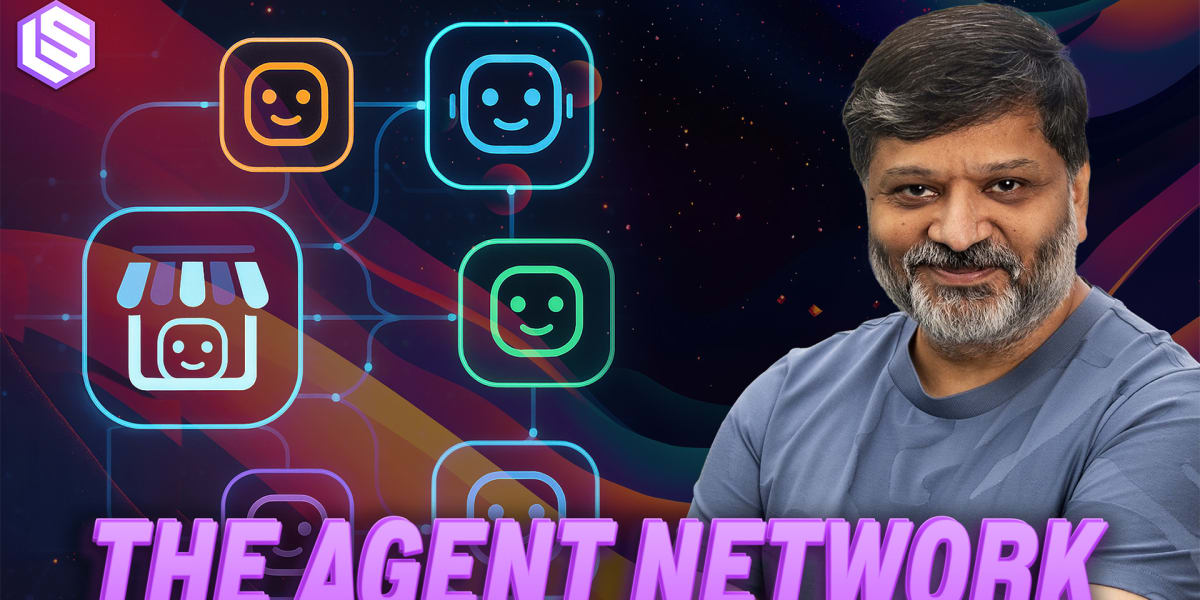
    Dharmesh Shah, co-founder of HubSpot, discussed the future of work with AI agents on the Latent Space Podcast. He introduced the concept of "hybrid teams," where humans and AI collaborate as colleagues, predicting this as the next evolution in workplace organization. Shah also differentiated between "Work as a Service" (WaaS) and "Results as a Service" (RaaS) business models for AI, arguing that WaaS is often more appropriate than RaaS for many AI applications. The conversation also touched upon technical challenges in AI agents, such as memory sharing and granular data access control, highlighting opportunities for infrastructure development in secure agent communication. AI

    The Agent Network — Dharmesh Shah
  14. NVIDIA GTC 2025 - Building LLM-Powered Applications

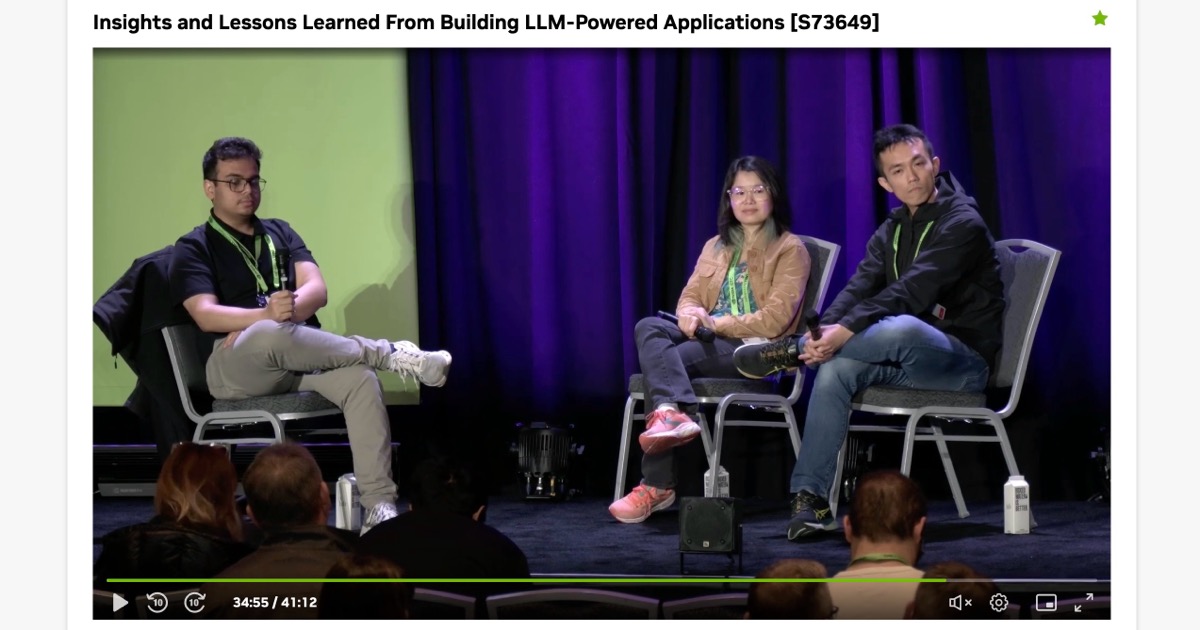
    Eugene Yan presented at NVIDIA GTC 2025 on a panel discussing the development of applications powered by large language models. The session, titled "Insights and Lessons Learned From Building LLM-Powered Applications," focused on practical aspects of LLM engineering and production. A recording of the panel is available on the NVIDIA GTC attendee portal. AI

    NVIDIA GTC 2025 - Building LLM-Powered Applications
  15. LaunchDarkly's approach to AI-powered product management

    Claire Vo, Chief Product and Technology Officer at LaunchDarkly, believes AI will significantly alter the role of product managers. She suggests that AI automation of routine tasks will push PMs towards either more commercially focused roles with direct business performance accountability or a convergence with engineering and design into end-to-end product development leaders. Vo advocates for integrating product and engineering teams to foster collaboration and accelerate development, emphasizing that AI frees up PMs to focus on higher-value strategic contributions. AI

    LaunchDarkly's approach to AI-powered product management
  16. Navigating a Broken Dev Culture

    A developer working on an AI team describes a dysfunctional corporate culture with nonexistent engineering practices, where management is overly reliant on AI hype. The developer, who has self-taught various AI and development skills, is seeking a full-time role in FOSS. Another article details building an analytics and recommendations dashboard for a loyalty program using FastAPI, React, and Docker. AI

    IMPACT Highlights the disconnect between AI hype and practical engineering, and the search for sustainable careers in open-source AI development.

  17. Introducing the Intelligence Age

    OpenAI has launched a campaign to frame artificial intelligence as the next major technological revolution, akin to the wheel or the internet. The company highlights ChatGPT's rapid adoption, reaching 100 million users in just two months, and its use by a significant portion of the American adult population and California State University students. OpenAI emphasizes its mission to ensure that advancements in AI, particularly artificial general intelligence (AGI), benefit everyone and aims to inspire curiosity about AI's potential to enhance human capabilities and productivity. AI

    Introducing the Intelligence Age
  18. AI and Startup Moats

    Startups aiming to succeed in the AI era should prioritize solving real customer problems with measurable ROI over simply incorporating AI into their products. The focus should be on building AI-native systems that leverage proprietary data as a competitive advantage and clearly communicate the tangible outcomes, such as cost reduction or speed improvement, rather than the underlying technology. Furthermore, embracing AI agents for autonomous actions and building trust through transparency and responsible AI practices are crucial for scaling and adoption. AI

    IMPACT Startups must focus on outcome-based value creation and data moats to differentiate in the AI-driven market.

  19. Is AI progress slowing down?

    Recent reports suggest that major AI labs like OpenAI, Anthropic, and Google Gemini are encountering difficulties with their next-generation models, leading to a shift in the industry narrative away from pure model scaling. While some believe this indicates a slowdown in AI progress, others argue that declaring the death of model scaling is premature and that new approaches like "inference scaling" could offer short-term gains. However, concerns are also emerging about the potential for AI agents to negatively impact software quality and development velocity, with examples of degraded user experiences and increased outages being cited. AI

    Is AI progress slowing down?
  20. Clones, commerce & campaigns

    This podcast episode discusses the potential impact of a second Trump presidency on AI policy and innovation. It also explores new AI models, such as Qwen, that are closing the performance gap between open-source and proprietary systems. Additionally, the hosts examine emerging AI tools for creating meeting clones and facilitating AI-driven commerce, raising questions about the trade-offs between digital convenience and authentic human interaction. AI

    Clones, commerce & campaigns
  21. How we name things

    Replit's CEO discusses the critical importance of naming products and features, arguing that these decisions are often undervalued compared to company names. He proposes three principles for effective naming: ensuring names complement the main brand and set accurate expectations, using realistic rather than fantastical names, and choosing names that clearly communicate the product's function. The blog post uses examples from Google, Tesla, and Replit's own Ghostwriter (now Replit AI) to illustrate these points. AI

    How we name things

    IMPACT Provides guidance on naming AI products to manage user expectations and brand perception.

  22. Building the Silicon Brain - with Drew Houston of Dropbox

    Drew Houston, the CEO of Dropbox, has dedicated significant personal time to coding with AI and is now pivoting his company's strategy around this technology. He envisions AI as a new driver of economic growth, akin to electricity, and aims to equip individuals with a "silicon brain" to handle routine tasks. Houston believes the future value in AI will lie not in the models themselves, but in applications that leverage them, particularly those with strong customer relationships. AI

    Building the Silicon Brain - with Drew Houston of Dropbox
  23. Understanding what's possible, doable & scalable

    AI architect Mike Lewis discusses the practical application and scalability of Large Language Models (LLMs) and Generative AI (GenAI) in enterprise settings. He shares insights from his experience in the field, focusing on how to achieve tangible business value with these technologies. The conversation addresses the current disillusionment surrounding AI, offering a counterpoint by highlighting achievable successes. AI

    Understanding what's possible, doable & scalable
  24. How good are LLMs at fixing their mistakes? A chatbot arena experiment with Keras and TPUs

    Current methods for evaluating large language models, such as MMLU and HumanEval, may be insufficient as they do not capture the nuances of interactive, goal-oriented conversations. A more effective approach would involve assessing chatbots based on their ability to engage in multi-round dialogues with users to achieve specific objectives, mirroring human interaction patterns. This 'purposeful dialogue' could enhance user experience and unlock new capabilities, even in areas like code generation and personalized assistance. AI

    How good are LLMs at fixing their mistakes? A chatbot arena experiment with Keras and TPUs
  25. AI companies are pivoting from creating gods to building products. Good.

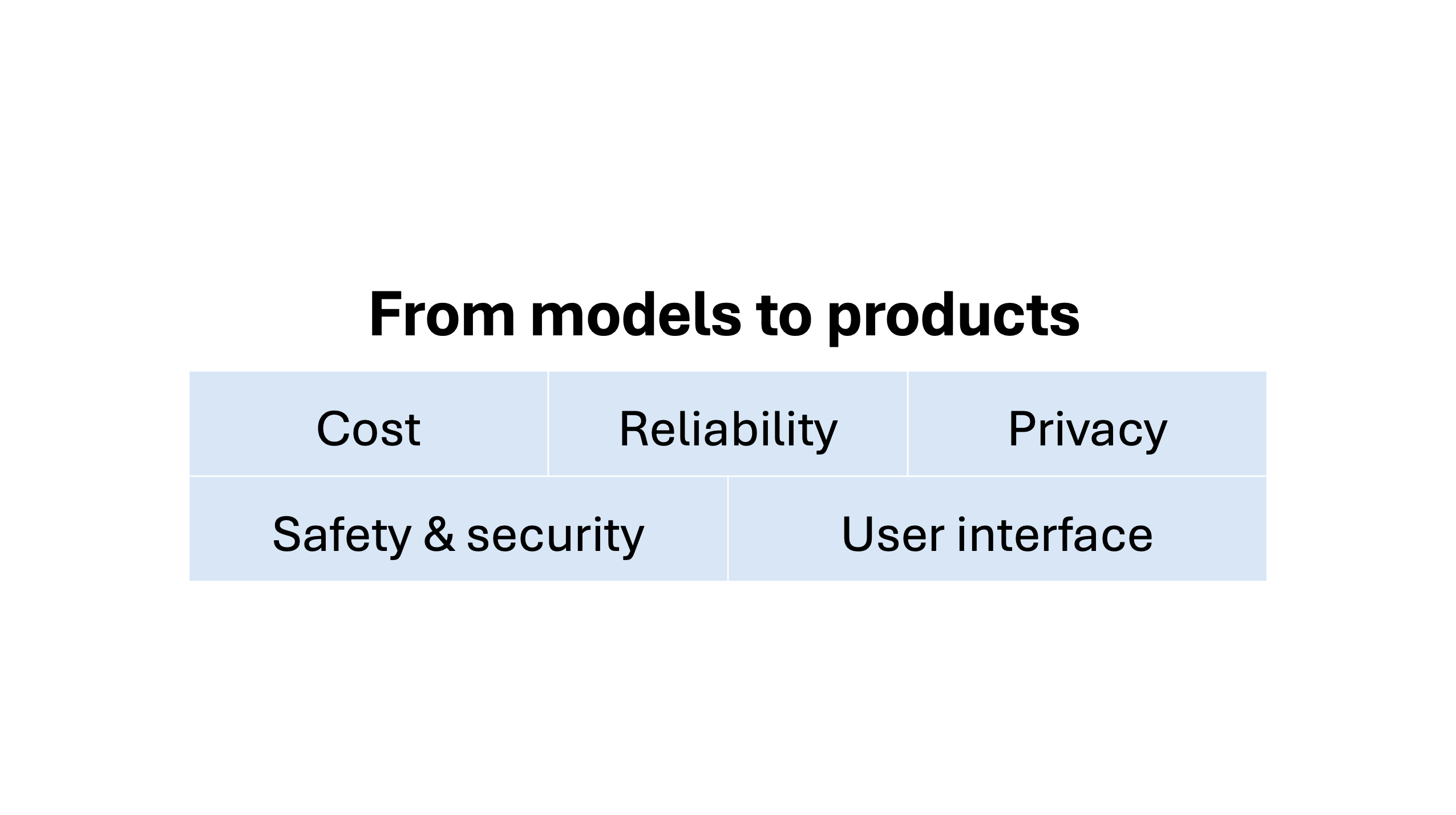
    AI companies are shifting their focus from developing advanced AI models to creating practical products, a move necessitated by the significant investment in hardware and data centers with limited commercial returns thus far. This pivot addresses past missteps, such as OpenAI and Anthropic's initial neglect of product development and Google and Microsoft's rushed integration of AI. The industry now faces five key challenges in building compelling AI consumer products, aiming to achieve product-market fit after realizing that simply prompting models is insufficient. AI

    AI companies are pivoting from creating gods to building products. Good.
  26. Only as good as the data

    This podcast episode delves into the critical role of data in artificial intelligence, explaining the different types of data used for training, testing, and evaluating AI models. The discussion also touches upon the evolving landscape of AI regulation, specifically mentioning the implementation of the EU's AI Act. Sponsors highlight AI-powered speech-to-text and data analysis tools. AI

    Only as good as the data
  27. Broccoli AI at its best 🥦

    This podcast episode features Bengsoon Chuah, a data scientist in the energy sector, discussing the practical application of AI, termed "Broccoli AI," which focuses on beneficial and healthy AI integration for real-world businesses. The conversation delves into the challenges and strategies for deploying NLP pipelines within organizations that have on-premise infrastructure, limited data science expertise, and operate in high-risk environments. AI

    Broccoli AI at its best 🥦
  28. Where's the raccoon with the ham radio? (ChatGPT Images 2.0)

    AI's rapid advancement is prompting a re-evaluation of its impact on productivity and the economy, with some analysts predicting significant shareholder value destruction for hyperscalers due to massive capital investments versus revenue growth. Concurrently, new AI image generation models like OpenAI's ChatGPT Images 2.0 are demonstrating impressive capabilities, though their ability to solve complex visual puzzles remains a challenge. Experts advise embracing AI as a tool while critically assessing its societal implications, particularly concerning power concentration and potential economic disruption, as AI's transformative nature reshapes industries and career paths. AI

    Where's the raccoon with the ham radio? (ChatGPT Images 2.0)

    IMPACT AI's transformative potential is reshaping economic forecasts, productivity, and societal structures, prompting critical evaluation of its benefits and risks.

  29. Why AI Infrastructure Startups Are Insanely Hard to Build

    Building AI infrastructure startups is exceptionally difficult due to intense competition and a lack of sustainable differentiation. These companies struggle to capture enterprise clients because major cloud providers and established tech firms rapidly replicate innovations. Furthermore, the fast-evolving AI landscape causes enterprise customers to delay onboarding new vendors, lengthening sales cycles and increasing churn for startups. AI

    Why AI Infrastructure Startups Are Insanely Hard to Build

    IMPACT Highlights the significant challenges for AI infrastructure startups in achieving venture-scale success due to competitive pressures and rapid commoditization.

  30. What We've Learned From A Year of Building with LLMs

    Eugene Yan's article distills a year's worth of experience in developing applications powered by large language models. The insights cover a broad spectrum, from the practical, hands-on aspects of implementation to the strategic considerations for long-term business success. The piece aims to provide a comprehensive overview of the lessons learned in the LLM development lifecycle. AI

  31. What I mean when I say that machine learning in Elixir is production-ready

    The author argues that machine learning is now production-ready within the Elixir programming language ecosystem. This readiness is attributed to advancements in libraries and tools that simplify the integration of ML models into Elixir applications. The presentation aims to demonstrate practical applications and successful deployments, encouraging wider adoption. AI

    IMPACT Suggests that Elixir developers can now more readily integrate and deploy machine learning models into production systems.

  32. Should kids still learn to code?

    NVIDIA CEO Jensen Huang's comments at GTC regarding coding education for children were discussed, alongside the concept of community within the AI sector. The conversation also touched upon the difficulties non-technical individuals face when adopting generative AI technologies. Finally, the evolving relationship between generative AI interfaces and traditional search engines was explored. AI

    Should kids still learn to code?
  33. Selecting The Right AI Evals Tool

    Hamel Husain, an AI consultant, emphasizes the critical need for robust evaluation systems in developing successful AI products, drawing from his experience with projects like CodeSearchNet and Rechat's AI assistant, Lucy. He argues that rapid iteration, enabled by effective evaluation, debugging, and modification processes, is key to AI product success. Husain highlights three levels of evaluation: unit tests, model and human evaluation, and A/B testing, stressing that streamlining the evaluation process is paramount for continuous improvement. AI

    Selecting The Right AI Evals Tool
  34. Claude 3 is officially America's Next Top Model

    Anthropic's Claude 3 model family has been recognized as America's Next Top Model, a title that signifies its advanced capabilities and potential impact. This designation highlights the model's performance and its standing within the competitive AI landscape. The recognition underscores the rapid advancements and growing influence of large language models. AI

  35. Gemini vs OpenAI

    The podcast "Practical AI" discussed Google's rebranding of Bard to Gemini and compared its GenAI offerings with competitors like OpenAI and Anthropic. The episode also covered the FCC's recent decision to ban AI voices in robocalls, speculating on its implications for government regulation of AI in 2024. The show aims to make AI practical, productive, and accessible, focusing on real-world implementations. AI

    Gemini vs OpenAI
  36. Notebooks = Chat++ and RAG = RecSys! — with Bryan Bischof of Hex Magic

    Bryan Bischof of Hex Magic discussed how notebooks can serve as an enhanced chat interface, offering advantages over traditional chat UIs by allowing for easier editing and better organization of tasks through atomic cells. He also drew parallels between Retrieval-Augmented Generation (RAG) systems and recommendation systems, suggesting that established principles from recommendation engines can be applied to improve RAG pipelines. Bischof highlighted the complexity of the LLMOps landscape, likening it to an 'iron mine' requiring significant effort to extract value. AI

    Notebooks = Chat++ and RAG = RecSys! — with Bryan Bischof of Hex Magic
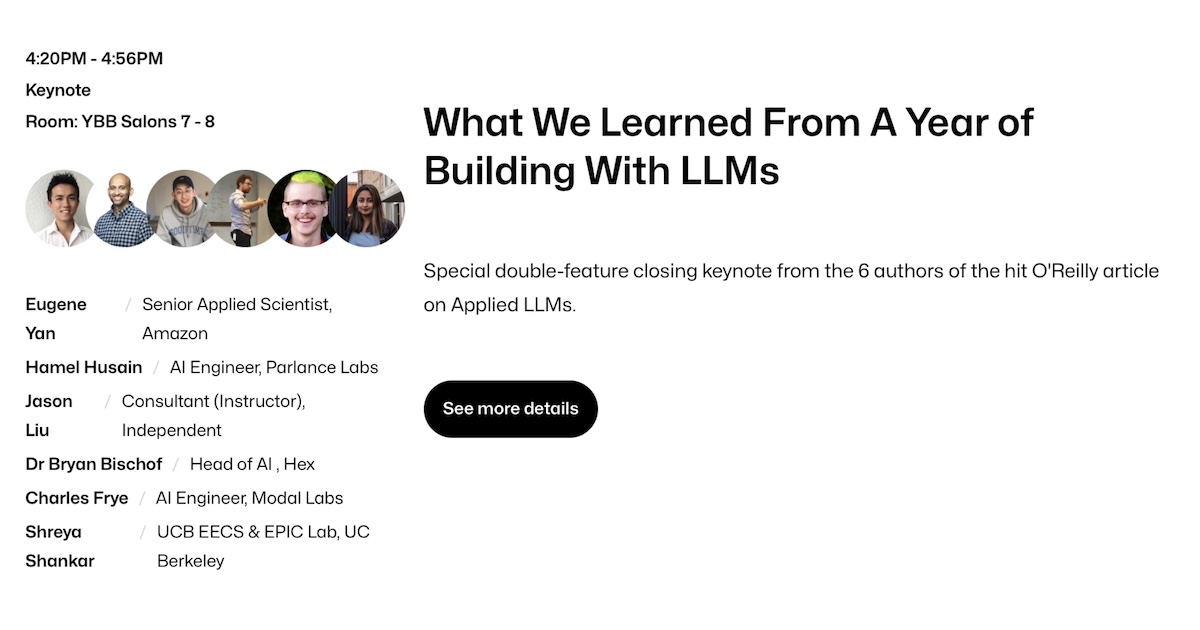
  37. AI Engineer 2024 Keynote - What We Learned from a Year of LLMs

    Eugene Yan presented key learnings from building with Large Language Models (LLMs) at the AI Engineer World's Fair 2024. The keynote, co-authored with others, focused on practical aspects of LLM system development, including evaluations, Retrieval-Augmented Generation, and guardrails. Yan also discussed challenges in consistently evaluating LLMs, citing concerns raised by researchers at OpenAI, Anthropic, and others regarding benchmark reliability and task relevance. AI

    AI Engineer 2024 Keynote - What We Learned from a Year of LLMs
  38. AI trends: a Latent Space crossover

    The Latent Space podcast hosted a crossover episode discussing the rapid evolution of AI over the past year, particularly focusing on the shift from pre-training to inference-time scaling laws. Speakers noted the surprising lack of widespread adoption for open-source models like Llama, despite their availability. The conversation also touched upon the rise of AI agents, the debate between vertical and horizontal AI startups, and the increasing importance of domain-specific model training and agent experience. AI

    AI trends: a Latent Space crossover
  39. Interacting with LLMs with Minimal Chat

    Eugene Yan proposes alternative user experiences for interacting with large language models, moving beyond traditional chat interfaces. He suggests that for tasks like online shopping, users might prefer visual and interactive methods, with LLMs providing contextually aware assistance rather than solely relying on text input. Yan's prototype demonstrates a system that combines recommendation engines with LLMs, allowing users to filter items and receive personalized suggestions based on their past behavior and preferences, minimizing the need for extensive chat. AI

    Interacting with LLMs with Minimal Chat
  40. Accelerated data science with a Kaggle grandmaster

    This podcast episode features a discussion with Christof Henkel, a Kaggle Grandmaster and Senior Deep Learning Data Scientist at NVIDIA. Henkel shares his perspective on how engaging in Kaggle competitions can enhance a data scientist's abilities and career prospects. He also discusses his methods for boosting AI productivity, highlighting the use of GPU-accelerated tools such as NVIDIA RAPIDS and DALI. AI

    Accelerated data science with a Kaggle grandmaster
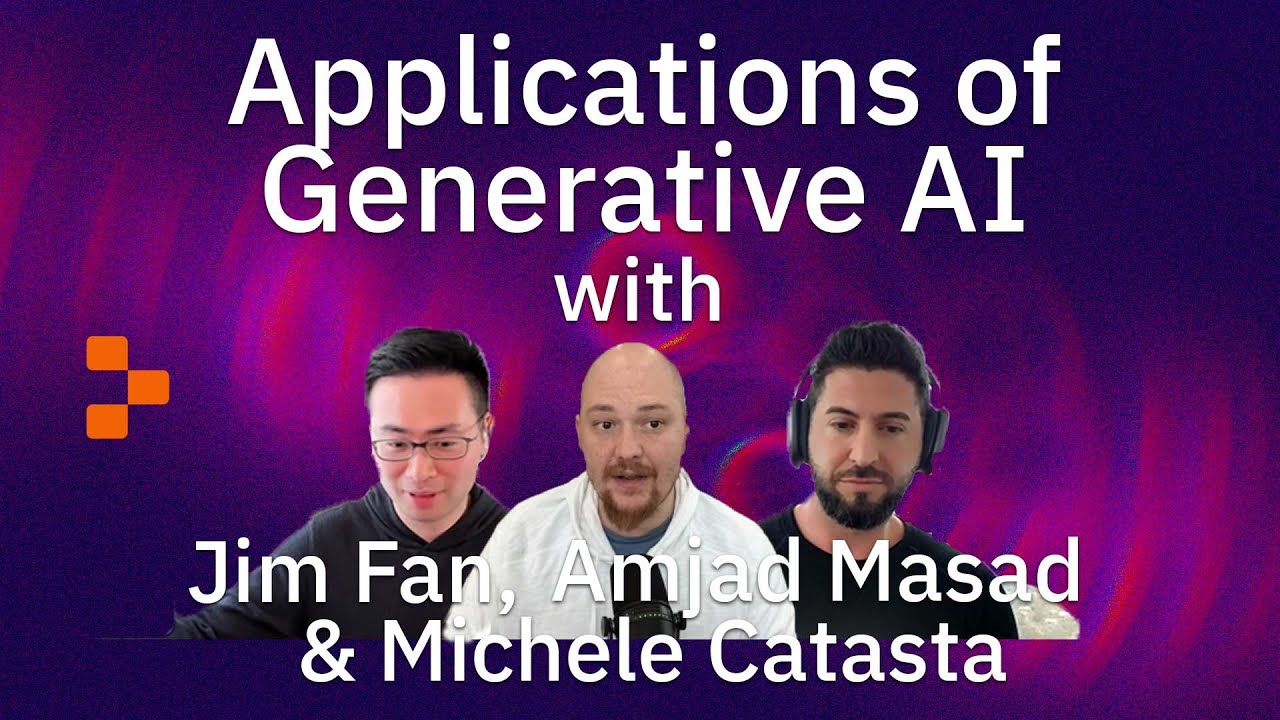
  41. Applications of Generative AI Webinar

    Replit hosted a webinar featuring NVIDIA AI researcher Jim Fan and Replit CEO Amjad Masad to discuss generative AI advancements. The conversation highlighted the growing importance of multi-modality in AI, enabling richer interactions with systems by incorporating images, video, and 3D data. They also touched upon the evolution of large language models, user experience improvements like ChatGPT's interface, and the increasing power of models beyond just parameter count. The discussion concluded with predictions about AI's future impact on coding and various industries, emphasizing Replit's own AI coding assistant, Ghostwriter. AI

    Applications of Generative AI Webinar

    IMPACT Discusses future trends in multi-modal AI and its impact on coding and various industries.

  42. Success (and failure) in prompting

    This podcast episode discusses the practical challenges and successes encountered when prompting generative AI models. Hosts Chris and Daniel explore the varied behaviors, both positive and negative, exhibited by recent AI models from companies like OpenAI, Cohere, and Anthropic. They also share insights and tips for effective prompting and integrating these models into applications, referencing guides and examples of AI outputs that have gone awry. AI

    Success (and failure) in prompting
  43. MLOps is alive and well

    This podcast episode brings together hosts from Practical AI and the MLOps.Community to discuss the impact of foundation and generative models on machine learning operations. The conversation covers how these advanced models are influencing MLOps tooling, workflows, and general perceptions within the field. It highlights the ongoing relevance and evolution of MLOps practices in the current AI landscape. AI

    MLOps is alive and well
  44. My Experience as a Replit Design Intern

    Three individuals shared their internship experiences at Replit, highlighting diverse roles and significant contributions. Nathan, a technical intern, focused on code search and frontend engine improvements, learning new libraries and collaboration tools like Graphite. Lily, a community intern, managed moderation, organized events, and engaged with influencers, contributing to over 1,000 toxic account takedowns. Clément, a design intern, revamped interfaces, designed new features like the following feed, and shipped over 200 PRs, gaining experience in Figma, React, and the company's design system. AI

    My Experience as a Replit Design Intern

    IMPACT Provides insight into the practical application of skills and team collaboration within an AI-adjacent tech company.

  45. Leaky UIs

    Replit's blog post details the challenges of creating a flexible and intuitive tiled layout system for user interfaces. The company found that using a binary tree data structure, while seemingly simple, led to problematic interactions where resizing one pane could unintentionally affect others. This is because the binary tree's constraint of at most two children per node does not naturally map to the desired layout where panes can be arranged side-by-side in arbitrary numbers. AI

    Leaky UIs

    IMPACT This article discusses UI/UX development challenges, which are relevant to building AI-powered applications but does not directly concern AI models or research.

  46. Creating a culture of innovation

    This podcast episode features Lukas Egger from SAP Business Process Intelligence discussing how to foster a culture of innovation within an organization. Egger shares insights on integrating this innovative mindset into product development processes. The conversation also addresses strategies for overcoming common obstacles and challenges encountered during innovation initiatives. AI

    Creating a culture of innovation
  47. Towards stability and robustness

    Many AI projects fail to deliver value in production due to unstable models and data drift. Roey Mechrez from BeyondMinds discussed strategies for improving AI robustness, including filtering input data and detecting risky outputs. The conversation focused on practical approaches to make AI systems more reliable in real-world applications. AI

    Towards stability and robustness
  48. Mailbag: How to Bootstrap Labels for Relevant Docs in Search

    Eugene Yan's blog post addresses a reader's question about bootstrapping labels for semantic search systems without relying on expensive human annotators. Yan suggests starting with traditional lexical search methods like BM25 and then using user click data as implicit labels to train a semantic search model. This approach aims to make the process more economically feasible for building search engines with custom data. AI

    Mailbag: How to Bootstrap Labels for Relevant Docs in Search
  49. Vector databases (beyond the hype)

    The emergence and subsequent hype around vector databases, spurred by the rise of embedding-based AI applications like those using Retrieval-Augmented Generation (RAG) after ChatGPT's launch, is being re-evaluated. While companies like Pinecone initially led this specialized infrastructure category, a growing perspective suggests that traditional information retrieval methods remain equally valuable. Practitioners are now exploring the nuances and trade-offs of various vector database options, moving beyond the initial excitement to focus on practical implementation and the convergence of search technologies. AI

    Vector databases (beyond the hype)
  50. Lessons on CS Equity from the RESPECT Conference

    Replit attended the RESPECT conference, which focused on equity in computer science education. The company highlighted its platform's features, such as multiplayer and Teams for Education, as tools to foster a more inclusive and supportive learning environment. Discussions at the conference emphasized culturally responsive pedagogy and modeling productive persistence to better engage diverse student populations. AI

    Lessons on CS Equity from the RESPECT Conference

    IMPACT Highlights how platforms can support diversity and inclusion in technical education.