PulseAugur / Brief
LIVE 19:32:36

Brief

last 24h
[50/275] 186 sources

Multi-source AI news clustered, deduplicated, and scored 0–100 across authority, cluster strength, headline signal, and time decay.

  1. Checking the math behind OpenAI and Anthropic’s latest headlines

    Gary Marcus is questioning the significance of OpenAI's recent mathematical discovery, suggesting it may be more of a marketing effort than a true advancement in AI-assisted mathematics. He highlights that the AI's success stemmed from systematically exploring avenues that human mathematicians, biased by existing beliefs, might overlook. Marcus likens this AI capability to architectural tools that enhance human creativity rather than replace it, and he speculates that the high cost of running OpenAI's new reasoning model might limit its practical application, suggesting a future focus on smaller, more efficient models. AI

    Checking the math behind OpenAI and Anthropic’s latest headlines

    IMPACT Questions the practical application and marketing motives behind advanced AI model capabilities in specialized fields.


  2. Top 10 Claude Prompts That Make AI Feel Like a Real Assistant

    This article explores how effective prompting can transform AI interactions from basic usage to genuinely valuable assistance. It emphasizes that the quality of prompts is the key differentiator in extracting meaningful output from AI tools like Claude. The piece aims to guide users in crafting better prompts to enhance their AI experience. AI

    Top 10 Claude Prompts That Make AI Feel Like a Real Assistant

    IMPACT Provides practical advice for users to better leverage existing AI models for daily tasks.

  3. I tried monetizing my MCP server with x402 — production needs more than npm install

    The author attempted to integrate micropayments into their free MCP server, DomainIntel, using the x402 protocol. While the x402 protocol aims for accountless payments for clients, the author discovered that developers monetizing their services still require accounts with facilitators like the Coinbase Developer Platform. Despite the protocol's potential for AI agents, the author found that setting up production monetization involves account creation and a suitable facilitator, which contradicts the initial promise of a fully accountless system for developers. AI

    IMPACT Explores a payment mechanism for AI agents interacting with MCP servers, potentially impacting how AI tools are monetized.

  4. Hating AI Is Good

    An opinion piece argues that a growing segment of the population is actively rejecting artificial intelligence, viewing it as a liability rather than an inevitability. The author suggests that this 'anti-AI evangelist' movement is a legitimate constituency that should be taken seriously, especially as public opinion on AI appears to be souring rapidly. The piece highlights instances of graduates booing speakers who promote AI, indicating a generational divide and a desire to resist the technology's perceived imposition. AI

    IMPACT Suggests a growing public backlash against AI could influence its adoption and development.

  5. On # AI Security https://www. schneier.com/blog/archives/202 6/05/on-ai-security.html # cybersecurity

    Bruce Schneier's latest blog post discusses the evolving landscape of AI security, highlighting the unique challenges and potential vulnerabilities that arise with advanced artificial intelligence systems. The piece emphasizes the need for robust security measures tailored to the specific characteristics of AI, moving beyond traditional cybersecurity paradigms. Schneier suggests that as AI becomes more integrated into critical infrastructure, addressing its security implications is paramount to prevent misuse and ensure reliable operation. AI

    IMPACT Discusses the critical need for specialized security measures as AI systems become more sophisticated and integrated into infrastructure.

  6. Think tank to UK government: You can't build the future on systems from the past

    A UK think tank has warned the government that its reliance on outdated IT systems poses a significant risk to its digital transformation goals. The report highlights that these legacy systems are deteriorating and could hinder the successful implementation of future digital initiatives. It urges the government to prioritize modernization to ensure its technological infrastructure can support its ambitions. AI

    Think tank to UK government: You can't build the future on systems from the past

    IMPACT Warns of potential roadblocks for government AI adoption due to outdated infrastructure.

  7. Why Codex Agents Are Devouring Every Workflow

    The article discusses how AI agents, particularly those powered by models like Codex, are rapidly transforming workflows across various industries. These agents are moving beyond simple automation to handle more complex tasks, integrating with existing tools and platforms. This shift signifies a move towards more sophisticated AI-driven operational efficiency. AI

    Why Codex Agents Are Devouring Every Workflow

    IMPACT AI agents are increasingly capable of handling complex tasks, indicating a future where operational workflows are heavily automated and managed by AI.

  8. The Model Is Not Your Product. The Harness Is.

    The core of successful AI products lies not in the underlying model, but in the surrounding 'harness' engineered by developers. This harness encompasses prompt scaffolding, tool integration, context management, retrieval systems, error handling, and evaluation loops. While models provide raw capability, the harness transforms this into a usable product that can withstand real-world user interaction and deliver consistent value. AI

    The Model Is Not Your Product. The Harness Is.

    IMPACT Highlights that the engineering effort around AI models, rather than the models themselves, is key to shipping successful products.

  9. A musical Turing test for AI consciousness | Letters

    A letter to The Guardian proposes a "musical Turing test" to gauge AI consciousness, suggesting that an AI's ability to name its favorite song, rather than objective metrics, could indicate sentience. The author contrasts this with AI's tendency to rely on quantifiable data. Another letter recounts an unsettlingly anthropomorphic response from Claude, raising questions about AI's perceived trustworthiness and the nature of its interactions. AI

    A musical Turing test for AI consciousness | Letters

    IMPACT Explores philosophical questions about AI consciousness and user trust in chatbot interactions.

  10. Three RAG failures that look like model problems but aren't

    This article discusses three common failures in Retrieval-Augmented Generation (RAG) systems that are often misattributed to the underlying large language model (LLM). It highlights issues such as incorrect chunking strategies, ineffective prompt engineering, and problems with the retrieval mechanism itself. The author emphasizes that optimizing these components is crucial for improving RAG performance, rather than solely focusing on the LLM. AI

    IMPACT Addresses common pitfalls in RAG implementation, guiding developers to optimize retrieval and prompting for better AI application performance.

  11. Agent Series (1): What Is an Agent — It's Not Just an LLM That Can Call Tools

    The term "AI Agent" has become overused, with many products merely wrapping LLM API calls. A true AI Agent, however, is fundamentally different from a standard LLM or chatbot. While LLMs are powerful language processors and chatbots add memory, an Agent possesses the crucial ability to autonomously decide when and which tools to use to accomplish a task, going beyond simply responding to prompts. AI

    IMPACT Clarifies the definition of AI agents, helping developers and users distinguish true autonomous systems from basic LLM wrappers.

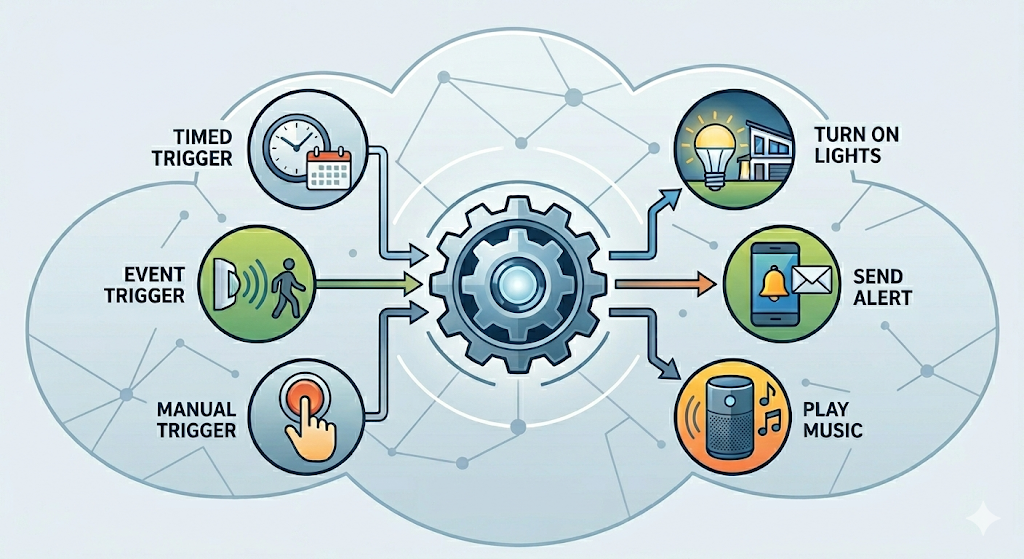
  12. From Smart Home to Agentic Home

    Gregor Roth proposes MCP, a target architecture for autonomous LLM agents, aiming to bridge the gap between current smart homes and future agentic homes. This framework emphasizes deterministic background rules to ensure predictable agent behavior. The goal is to create more reliable and intelligent home automation systems. AI

    From Smart Home to Agentic Home

    IMPACT Proposes a new architectural framework for LLM agents, potentially influencing future smart home automation.

  13. Why AI Still Misses the Mark in Security Operations Centers

    Despite advancements in AI for security operations centers (SOCs), many still struggle with high mean time to resolution (MTTR), analyst burnout, and missed attacks. Current AI deployments excel at correlating alerts and providing investigation starting points, reducing raw alert volume and false positives significantly. However, AI's effectiveness is limited by fragmented systems, data quality, and workflow integration, particularly in the post-detection phase where coordination and approvals cause significant delays. AI

    IMPACT AI integration in security operations centers faces challenges in reducing response times and analyst workload, despite successes in alert triage and reduction.

  14. AI Cyber Defense for Critical Infrastructure: From SOC Triage to Autonomous Protection

    Critical infrastructure is increasingly integrating AI, expanding its attack surface to include models, data, and ML pipelines. Traditional security measures and human-only Security Operations Centers (SOCs) are overwhelmed by the volume of data and the speed of AI-native attacks. To counter this, organizations must adopt AI SecOps, embedding continuous security checks into operational pipelines and using AI-driven tools to match the speed and reasoning of adversarial AI. AI

    IMPACT Critical infrastructure must secure AI systems and defend with AI to counter evolving threats and data overload.

  15. On May 20th, 4 million AI professionals listened to nearly 20 speeches & dialogues on QbitAI | The 4th China AIGC Industry Summit

    The fourth China AIGC Industry Summit, hosted by QbitAI, brought together nearly 20 AI leaders to discuss the future of AI, particularly the role of Agents. Key themes included Agents as potential super-entry points, the true explosion points for AI applications, and the impact of multimodal and spatial intelligence. Speakers highlighted that AI is evolving from a tool to a productivity system, moving from content generation to task completion. Discussions also touched upon the economic implications of AI, such as token consumption and the compression of individual growth paths, while identifying roles AI cannot replace. AI

    IMPACT Provides insights into the evolving AI landscape, focusing on the practical applications and future direction of AI agents and productivity systems.

  16. He Xiaopeng: Robotaxi's overseas scale-up will be faster than domestic, XPeng GX is the first supervised L4 model

    He Xiaopeng, chairman of XPeng, stated that the scaled deployment of Robotaxi services will likely occur faster overseas than in China. He also revealed that the XPeng GX is the company's first model with supervised L4 autonomous driving capabilities, which will be used for initial testing before its technology is integrated into other vehicles. He anticipates that supervised L4 will be the first to achieve large-scale implementation, followed by unsupervised L4. AI

    IMPACT XPeng's chairman discusses the future of Robotaxi and L4 autonomous driving, indicating potential shifts in autonomous vehicle deployment strategies.

  17. Securing AI Cloud Systems: Intelligent Testing For Intelligent Systems

    Traditional software testing methods are insufficient for modern, AI-integrated cloud systems that learn and adapt over time. These systems are event-driven and produce variable outputs based on context, making deterministic testing challenging. The article proposes an evolution towards "intelligent testing," leveraging AI itself to automate test case generation, potentially using large language models and knowledge graphs to improve coverage and accuracy. AI

    Securing AI Cloud Systems: Intelligent Testing For Intelligent Systems

    IMPACT Suggests new testing methodologies are needed for AI-driven systems, impacting how software quality is ensured.

  18. AI Might Not Bring On A Job Crisis, But A Workforce ‘Mismatch’ Could

    A new report from Indeed Hiring Lab suggests that artificial intelligence may not cause widespread job loss, but rather a significant workforce mismatch. This mismatch is predicted to arise from a combination of retiring baby boomers, slower immigration, and AI's reshaping of white-collar jobs. Without intervention, unemployment could nearly double to 8% by 2040, necessitating proactive strategies from both employers and workers. AI

    AI Might Not Bring On A Job Crisis, But A Workforce ‘Mismatch’ Could

    IMPACT Predicts a future workforce mismatch due to AI, highlighting the need for strategic adaptation by employers and workers.

  19. Why Post-Quantum Compliance For Banks Starts In Containers

    Financial institutions must urgently prepare for post-quantum cryptography due to the standardization of new quantum-resistant algorithms by NIST and the threat of 'harvest now, decrypt later' attacks. A significant challenge lies in identifying and managing legacy cryptography hidden within container images and third-party libraries, as current environments often lack the necessary cryptographic visibility. Experts recommend starting the transition by securing containers, which are frequent targets for attackers and also the most accessible place to manage cryptographic sprawl. AI

    Why Post-Quantum Compliance For Banks Starts In Containers

    IMPACT This article discusses the implications of post-quantum cryptography for financial institutions, a critical area for AI security and data protection.

  20. A Tiny First-Call Checklist Before Trusting Any LLM Gateway

    A developer shared a concise checklist for evaluating new LLM gateways, emphasizing auditable first calls over pricing alone. The process involves verifying API keys, checking logs for model usage and costs, and testing error handling before proceeding to more complex features. This approach is particularly useful for gateways that route across multiple providers or integrate with less common models like Qwen or DeepSeek. AI

    IMPACT Provides a practical guide for developers integrating with LLM services, focusing on reliability and cost transparency.

  21. Role Prompting: How to Assign Personas to Get Expert Results — Prompt to Profit · Day 3 of 30

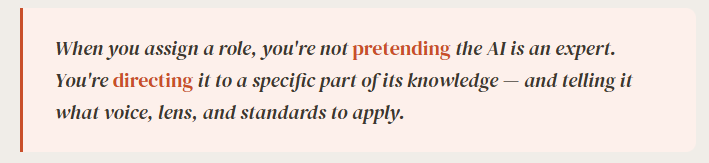
    This article explains the technique of role prompting, which involves assigning specific personas to AI models to elicit more expert and tailored results. By defining a detailed persona with a title, experience, and lens, users can guide the AI to access specific knowledge domains and thinking frameworks, moving beyond generic outputs. The piece provides examples of effective role prompts and outlines common mistakes to avoid when implementing this strategy. AI

    Role Prompting: How to Assign Personas to Get Expert Results — Prompt to Profit · Day 3 of 30

    IMPACT Enhances user control over AI outputs by enabling more specific and expert-level responses through detailed persona assignment.

  22. LLM Rules and Instructions for Accurate, Relatable and Reliable Responses

    This article discusses how to improve Large Language Model (LLM) outputs by focusing on three key areas: accuracy, relatability, and reliability. It suggests customizing instructions and rules to guide the LLM, aiming to reduce user frustration and enhance the quality of generated responses. The goal is to achieve more predictable and useful interactions with AI. AI

    LLM Rules and Instructions for Accurate, Relatable and Reliable Responses

    IMPACT Provides guidance for users to better interact with and leverage AI tools for improved outcomes.

  23. How I Stopped Arguing with LLMs and Built a Zero-Hallucination Engineering Loop

    A software engineer has developed a novel engineering loop designed to eliminate hallucinations when using large language models (LLMs) for coding. This approach aims to prevent the common issue of LLMs generating incorrect or nonsensical code, particularly for complex projects beyond simple APIs or standard UI components. The system focuses on creating a more reliable and trustworthy interaction between developers and AI coding assistants. AI

    IMPACT Offers a method for developers to improve the reliability of AI-generated code, reducing common errors and hallucinations.

  24. Why Performance Has Become The New Currency In Advertising

    The advertising industry is shifting its focus from traditional input-based metrics to measurable outcomes, with performance now serving as the central currency. This transformation is largely driven by artificial intelligence, which is accelerating execution, enhancing precision, and raising expectations for tangible business results. As AI becomes more integrated into marketing processes, it enables continuous iteration and real-time optimization, allowing campaigns to adapt dynamically to performance data. AI

    Why Performance Has Become The New Currency In Advertising

    IMPACT AI is fundamentally reshaping advertising by enabling real-time performance measurement and continuous campaign optimization.

  25. Hot Chinese concept stocks fall in pre-market US trading, Nio rises over 7%

    Chinese electric vehicle stocks experienced a mixed performance in pre-market trading, with NIO showing a significant gain of over 7% while other major companies like Netease, Alibaba, and Bilibili saw declines. In related news, XPeng's chairman, He Xiaopeng, indicated that the large-scale deployment of Robotaxis is expected to progress faster overseas than in China. He also revealed that XPeng's GX model will be the first to feature supervised L4 autonomous driving capabilities, which will later be integrated into other models. AI

    IMPACT Provides insight into the pace of autonomous vehicle deployment and market sentiment for EV manufacturers.

  26. Vibe Coders are Doing You a Favor

    The article discusses the phenomenon of "vibe coders," individuals who prioritize aesthetics and perceived trends over rigorous technical execution in software development. It suggests that while often criticized, these coders can inadvertently highlight areas where traditional development practices might be lacking or overly complex. The author encourages readers to pay attention to the underlying reasons for this approach, implying there might be valuable lessons to learn about user experience and efficient development. AI

    Vibe Coders are Doing You a Favor

    IMPACT This commentary on software development practices may offer insights into team dynamics and project management within AI development teams.

  27. I realized I was only using half of what Claude Code has to offer

    A user has discovered lesser-known features within Claude Code, a tool for software development. The author highlights the utility of the `/rc` command, which enables smartphone control of a PC-based Claude Code session, allowing for development tasks to be managed remotely. Additionally, the article emphasizes the importance of the `/init` command for establishing project context and the CLAUDE.md file for persistent instructions, noting that these features significantly improve Claude Code's understanding and performance. AI

    IMPACT Highlights advanced usage patterns for AI coding assistants, potentially improving developer productivity.

  28. How I Started Learning MCP with Figma and Claude as a UI/UX Designer

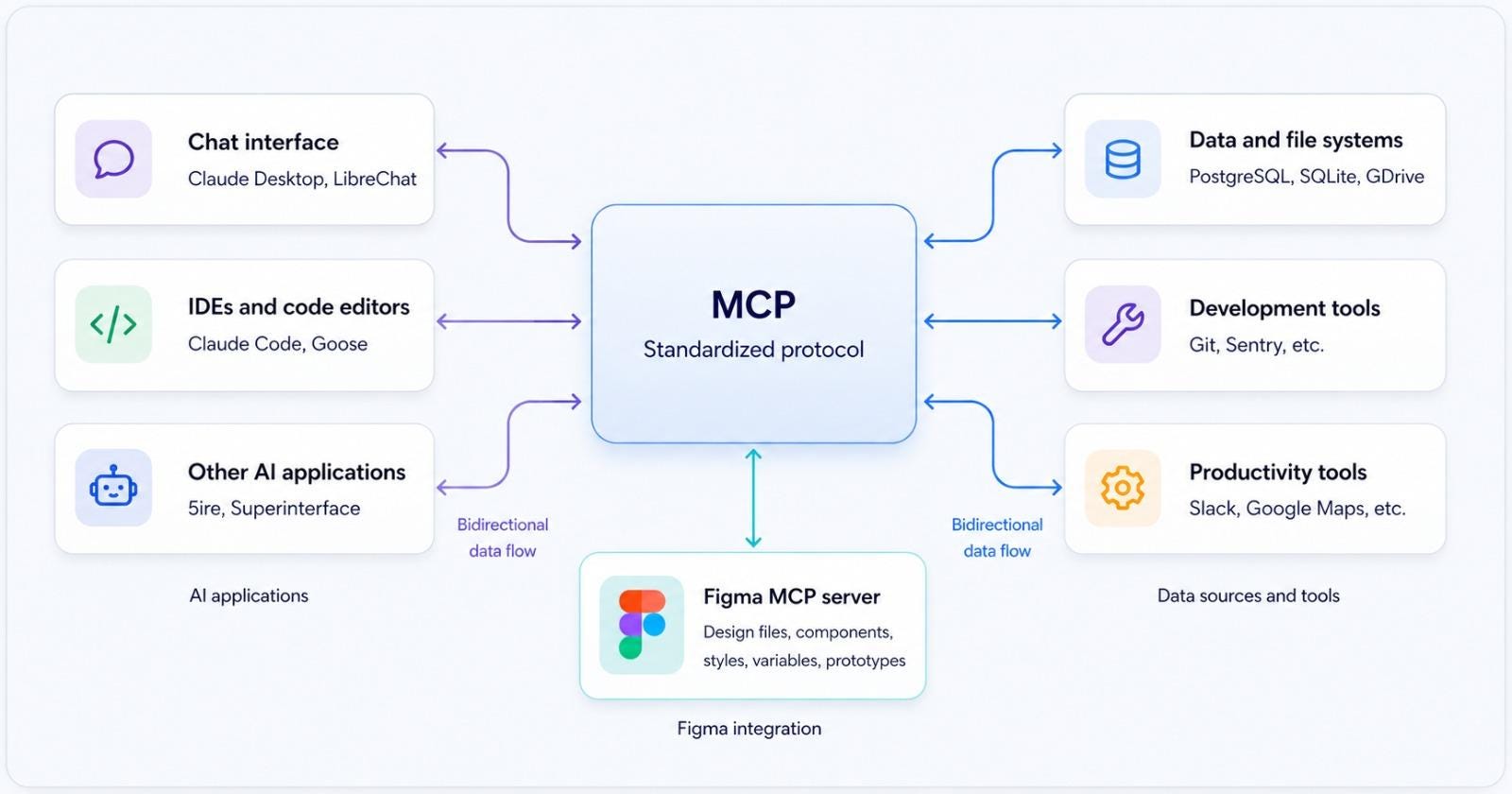
    A UI/UX designer shares their experience learning about "MCP" (Multi-modal Conversational Processing) using tools like Figma and Anthropic's Claude. The designer found Claude to be a valuable assistant in understanding and applying MCP concepts to their work. AI

    How I Started Learning MCP with Figma and Claude as a UI/UX Designer

    IMPACT Offers a user perspective on how AI assistants can aid in learning complex technical concepts.

  29. An Interview with Parallel Founder Parag Agarwal About Valuing Content on the Agentic Web

    This article is an interview with Parag Agarwal, the founder of Parallel, discussing the challenges of valuing content and incentivizing its creation within an agent-driven internet. The conversation also touches upon Agarwal's past experiences, including his time at Twitter. The piece is presented as a subscriber-exclusive interview from Stratechery, highlighting the value proposition of their premium content offerings. AI

    IMPACT Discusses the future of content valuation and creation in an agentic web, a key consideration for AI operators.

  30. I Planned to Connect 5 More MCP Servers to My AI Agent. The Research Stopped Me.

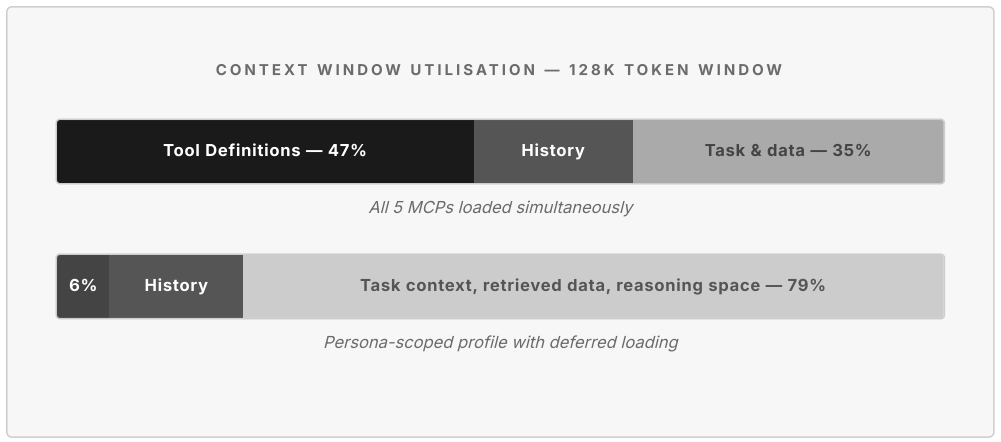
    The author, a data engineer, planned to integrate five additional MCP servers into their AI agent. However, research into the implications and potential drawbacks of such an integration halted their plans. The piece advises other data engineers to thoroughly understand the consequences before adding more tools to their AI agent setups. AI

    I Planned to Connect 5 More MCP Servers to My AI Agent. The Research Stopped Me.

    IMPACT Offers practical advice for AI operators on the potential complexities of integrating new tools into agent systems.

  31. Semiconductor and computing power sectors suffer heavy losses, industry institutions: short-term volatility and adjustments help release high-level risks

    The semiconductor and computing power sectors experienced a significant downturn on May 21st, following recent substantial gains. Industry analysts attribute this sharp correction to fluctuating expectations regarding US Federal Reserve policy and profit-taking pressures. Despite the short-term volatility, the long-term outlook for the storage sector remains strong, with continued emphasis on domestic semiconductor self-sufficiency. AI

    IMPACT Market volatility in semiconductor and computing power sectors may impact AI infrastructure development and costs.

  32. Of All The Professions AI Is Disrupting, Accounting Has The Worst Math

    The accounting profession faces a severe succession crisis exacerbated by AI's impact on entry-level roles. Unlike law or consulting, accounting is experiencing a demographic shift with a large portion of CPAs nearing retirement, while the pipeline of new professionals has been shrinking for years. AI is further complicating this by automating tasks that previously served as training grounds, leading to a potential loss of critical judgment skills among junior accountants who may accept AI outputs without sufficient scrutiny. AI

    Of All The Professions AI Is Disrupting, Accounting Has The Worst Math

    IMPACT AI's automation of entry-level tasks threatens the training pipeline for future accounting professionals, potentially leading to a skills gap and exacerbating an existing succession crisis.

  33. Stellantis plans to invest around 60 billion euros by 2030, launching over 60 new models

    Stellantis is set to invest approximately 60 billion euros by 2030 to launch over 60 new vehicle models, with a significant portion allocated to its core brands like Jeep and Ram. BOE Technology announced a cooperation memorandum with Corning, clarifying that their ventures in glass substrate packaging, perovskites, and optical interconnects are still in the research phase and have not yet generated revenue, with no current business collaboration with Nvidia. In other news, Nvidia reported a Q1 net profit of $58.3 billion, Google's Gemini has reached 900 million monthly active users, and Sushi Ro is addressing concerns about hygiene. AI

    IMPACT Nvidia's financial results and Google's Gemini user numbers offer insights into the AI market's growth and adoption.

  34. Goldman Sachs says hedge funds are taking profits on soaring chip stocks while maintaining overall exposure to AI themes

    Hedge funds are taking profits on surging chip stocks while maintaining their overall exposure to AI themes, according to Goldman Sachs traders. These funds have been net sellers of semiconductor and semiconductor equipment stocks in the US over the past month. Concurrently, they have increased short positions in macro products, indices, and ETFs, reaching a 10-year high, typically used for broader market hedging. AI

    IMPACT Provides insight into investor sentiment and trading strategies within the AI sector, indicating continued but cautious investment.

  35. Fengxing Online CEO Yi Zhengchao: First All Staff Coding, Then All In Crowd Creation | AIGC2026

    Fengxing Online CEO Yi Zhengchao advocates for widespread AI coding literacy across all company roles, not just engineers, to drive business results. He believes that while AI can amplify self-satisfaction, focusing on delivering tangible outcomes is the key to mitigating this risk. The company has seen over a tenfold profit increase in three years by enabling employees to leverage AI for tasks, shifting organizational focus from individual roles to task-oriented workflows and fostering a collaborative ecosystem. AI

    IMPACT Emphasizes AI literacy and task-oriented workflows for broad business impact, suggesting a shift in organizational strategy.

  36. Happy Reading Thursday ☕ New issue: TSBT #65: Code, Culture and Complexity. This week explores AI coding agents, team topologies, sustainable startups, GitHub r

    The latest issue of TSBT, titled "Code, Culture and Complexity," delves into the evolving landscape of software engineering. It examines topics such as AI coding agents, team topologies, sustainable startups, and GitHub's reliability. The publication emphasizes that despite technological advancements, effective systems still rely on human judgment, communication, and thoughtful processes. AI

    Happy Reading Thursday ☕ New issue: TSBT #65: Code, Culture and Complexity. This week explores AI coding agents, team topologies, sustainable startups, GitHub r

    IMPACT Explores the impact of AI coding agents on software development practices and quality.

  37. @ johntinker 6/ However, we have now scaled up those primitive, aggressive animal instincts by feeding them into global, hyper-efficient macro systems—like AI t

    The use of AI in targeting algorithms and automated drone warfare has amplified primitive human instincts into global kill-chains. This escalation, driven by hyper-efficient macro systems, poses an existential threat if humanity cannot detach from these evolutionary impulses. The integration of AI into warfare transforms basic survival instincts into automated, large-scale destructive capabilities. AI

    IMPACT AI integration into warfare amplifies destructive capabilities, posing an existential threat if not managed.

  38. ​How AI Is Changing The Economics Of Integration

    Artificial intelligence is fundamentally altering the economics of system integration, traditionally a costly and time-consuming process. Instead of requiring perfect upfront alignment between disparate systems, AI can interpret data, adapt to local variations, and manage differences dynamically. This shift allows organizations to realize value much faster by reducing the need for extensive hard-coded customization and enabling systems to connect earlier. AI

    ​How AI Is Changing The Economics Of Integration

    IMPACT AI's role in system integration is shifting costs and timelines, enabling faster value realization for organizations.

  39. Good point. Many orgs are redesigning their web sites for #AI #accessibility faster than they did for human accessibility, often providing the same #accommodati

    Organizations are prioritizing website redesigns for AI accessibility over human accessibility. This trend often results in the implementation of features like machine-readable HTML, which have long been requested for human users with disabilities. The focus on AI accessibility suggests a shift in web development priorities, potentially leaving human accessibility needs secondary. AI

    IMPACT Highlights a potential disparity in web development priorities, where AI needs may overshadow human accessibility.

  40. Developing An Executive Cybersecurity Strategy When Director Duties Extend To The Home Router

    Cybersecurity strategies for executives are increasingly complex as their personal digital lives intersect with corporate responsibilities. Traditional corporate security measures often fail to account for risks originating from personal devices and home networks used for business. This gap creates significant unowned risks for directors, who may face personal liability due to evolving regulations in regions like the US and Australia. AI

    Developing An Executive Cybersecurity Strategy When Director Duties Extend To The Home Router

    IMPACT Highlights the growing need for robust cybersecurity strategies that account for the intersection of personal and professional digital lives, particularly relevant for AI governance.

  41. PM Weekly Retro: Three Publish Failures We Turned Into Rules

    A product manager shared lessons learned from three recent publishing failures for AI tools, emphasizing the need for robust distribution channels. Failures included marketplace authentication issues, unobservable npm token states, and inadequate error handling for product creation flows. The team adopted rules to treat marketplace lockouts as operational risks, ensure observable authentication, and log raw API responses for better error detection. Content distribution, such as writing operational posts, proved to be the fastest reliable channel when platform authentication or tooling failed. AI

    IMPACT Highlights the importance of distribution channel resilience for AI developer tools, suggesting content and package distribution as key alternatives when primary channels fail.

  42. Possible red is red

    The author explores the nature of qualia, specifically focusing on whether a "possible red" experienced by a hypothetical mind is equivalent to actual red. They distinguish between "open" qualia (currently experienced) and "closed" qualia (not currently observed), arguing that if closed qualia lack qualitative states, then "possible qualia" are meaningless. The piece posits that qualia are self-dependent, meaning their properties are intrinsic and not derived from external factors, suggesting that a possible quale's reality is independent of whether the mind experiencing it is real or merely possible. AI

  43. How SMEs Unlock Greater Value From AI

    Many small and medium-sized enterprises (SMEs) are successfully adopting AI by focusing on strategic execution rather than broad experimentation. While AI usage is increasing, with global adoption at 39% and generative AI at 26%, the key differentiator for SMEs is their ability to make clear, impactful choices. Instead of chasing every new tool, successful SMEs prioritize initiatives that offer high impact with low effort, often by integrating AI into existing workflows to remove friction and boost productivity. This focused approach, emphasizing value over hype, allows them to achieve significant gains in efficiency and performance without the extensive resources of larger corporations. AI

    How SMEs Unlock Greater Value From AI

    IMPACT SMEs can achieve significant productivity gains by strategically integrating AI into existing workflows, rather than broad experimentation.

  44. Angry tiny Texas town council member proposes total ban on cellular and GPS devices in protest over AI dispute — says 'Let’s take Bandera back to 1880' after town votes to dump AI-powered license plate reader

    A Texas town council member has proposed a ban on all cellular and GPS devices after his town voted to cancel its contract with an AI license plate reader company. The council member, Jeff Flowers, argued that if residents are concerned about privacy with AI surveillance, they should embrace a completely pre-digital lifestyle. Bandera, Texas, is one of at least 53 jurisdictions that have recently rejected Flock Safety's AI-powered license plate readers due to privacy and trust concerns. AI

    Angry tiny Texas town council member proposes total ban on cellular and GPS devices in protest over AI dispute — says 'Let’s take Bandera back to 1880' after town votes to dump AI-powered license plate reader

    IMPACT Highlights local resistance to AI surveillance and the resulting political discourse.

  45. Tokenmaxxing is useless, counterproductive… and, yes, stupid

    The author argues that the practice of "tokenmaxxing," which rewards users for burning tokens, is a flawed strategy that leads to counterproductive behavior. This approach, by incentivizing token expenditure rather than genuine productivity or value creation, ultimately proves to be detrimental to the platform and its users. Instead of fostering meaningful engagement, it encourages superficial activity and misaligns incentives. AI

    Tokenmaxxing is useless, counterproductive… and, yes, stupid

    IMPACT This commentary critiques a user engagement strategy that could be applied to AI-powered platforms, suggesting potential pitfalls in reward mechanisms.

  46. MCP Tool Discovery When a Publish Channel Is Blocked

    The author details a strategy for maintaining MCP tool discovery when a primary distribution channel, like a marketplace, is blocked. The approach emphasizes separating deployment from discovery, creating concise explanations for small tools, and rerouting efforts to alternative channels such as dev posts or direct documentation when a primary route fails. This playbook prioritizes consistent daily publishing and opinionated tool catalogs with clear jobs and install paths to ensure continuous progress despite potential vendor bottlenecks. AI

    IMPACT Focuses on development and distribution strategies for tools within a specific ecosystem, offering insights into operational resilience for software developers.

  47. Why Small, Elite Teams Outperform Big Ones

    This article argues that small, elite teams often outperform larger ones in the tech industry due to reduced communication complexity and increased efficiency. The author, Vitalii Dodonov, uses examples like Instagram and WhatsApp to illustrate how smaller, highly talented groups can achieve greater product velocity and customer value. He emphasizes hiring top-tier generalists, fostering a culture of ownership, and scaling headcount only when absolutely necessary to avoid organizational drag. AI

    Why Small, Elite Teams Outperform Big Ones

    IMPACT Discusses organizational strategies relevant to AI development teams, emphasizing efficiency and talent density.

  48. Andrej Karpathy Has Been Right About AI for a Decade. He Just Made His Most Interesting Move Yet.

    Andrej Karpathy, a prominent AI researcher, has joined Anthropic, a leading AI safety and research company. This move follows Karpathy's decade-long career marked by insightful predictions about the trajectory of artificial intelligence. His decision to join Anthropic is seen as a significant development, given his past contributions and influence in the field. AI

    Andrej Karpathy Has Been Right About AI for a Decade. He Just Made His Most Interesting Move Yet.

    IMPACT Andrej Karpathy's move to Anthropic could influence the direction of AI safety research and development at a key industry player.

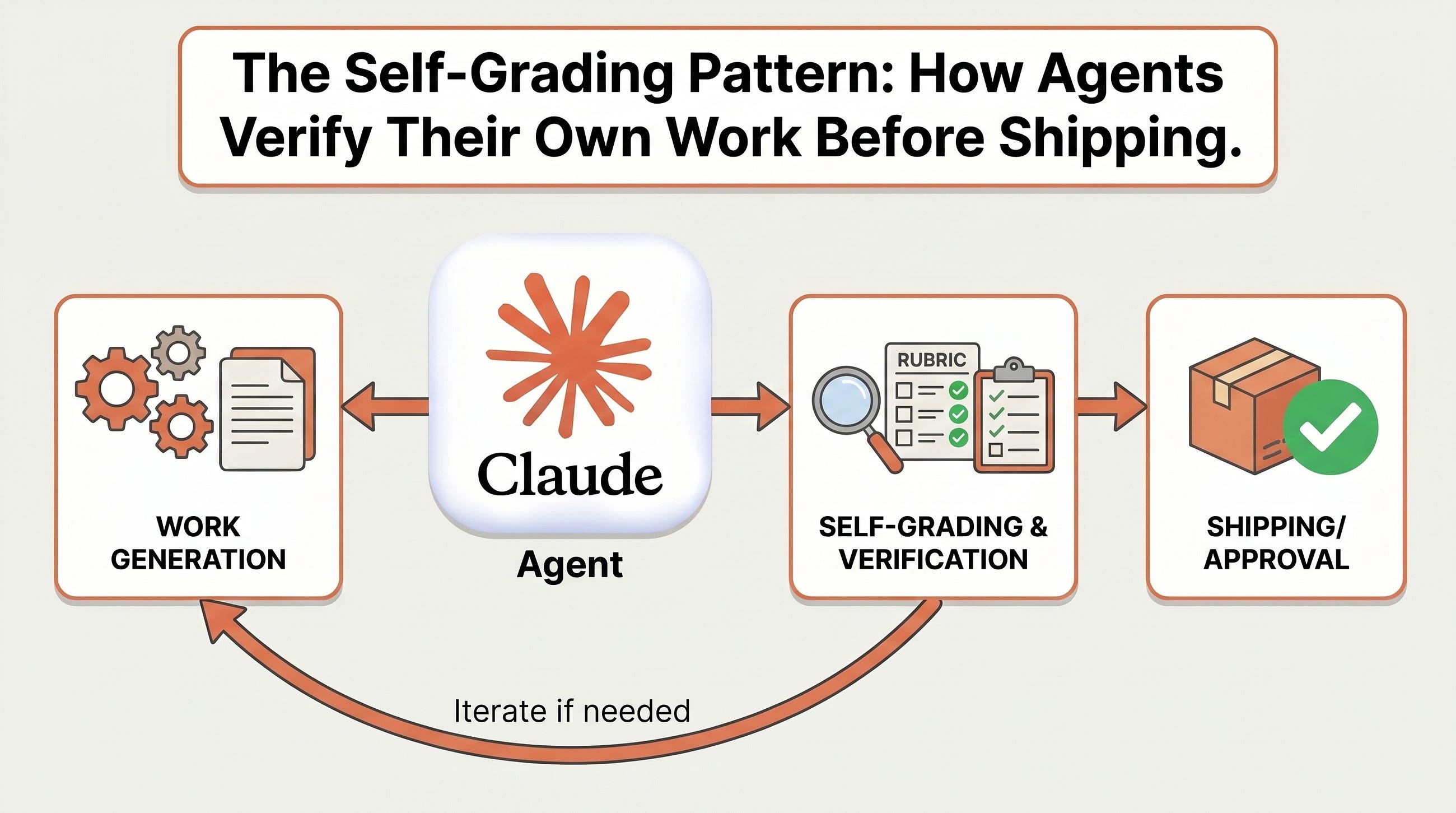
  49. The Self-Grading Pattern: How Agents Verify Their Own Work Before Shipping

    The self-grading pattern is presented as a crucial design principle for AI agents, emphasizing their ability to independently verify their own work before deployment. This approach aims to create more robust and reliable agent frameworks that can withstand rapid evolution in the field. By incorporating self-verification, agents can ensure higher quality outputs and more consistent performance. AI

    The Self-Grading Pattern: How Agents Verify Their Own Work Before Shipping

    IMPACT This pattern could lead to more reliable and robust AI agents, improving their utility in various applications.